Trout Fishing in Connecticut
Ah, trout fishing in Connecticut! There's something truly special about heading out to a pristine stream or a tranquil pond, rod in hand, hoping to outwit one of these beautiful, wily fish. But if you've ever felt overwhelmed by the sheer number of rivers, the confusing regulations, or just where to even start, you're not alone. This guide is here to untangle the complexities and reveal the incredible world of trout fishing right here in our own backyard, from the vibrant rainbows to the elusive native brookies.
The Allure of Trout Fishing in Connecticut's Diverse Waters
Connecticut might be a small state, but when it comes to trout fishing, it packs a serious punch. We're blessed with an incredible variety of waters, from roaring freestone rivers carving through granite to serene, spring-fed ponds nestled deep in the woods. This diversity means that no matter your preferred style of angling, there’s a trout experience waiting for you. It’s not just about catching fish; it’s about connecting with nature, enjoying the quiet solitude of the riverbank, and the thrill of the chase.
Why Connecticut Stands Out for Trout Anglers
What truly sets Connecticut apart as a trout fishing destination? Well, for starters, our dedicated Department of Energy and Environmental Protection (DEEP) does an exceptional job with their stocking program. Each spring, and often throughout the year, countless trout are released into public waters, ensuring ample opportunities for anglers of all skill levels. We're not just talking about a few fish here and there; it's a significant effort that makes trout fishing accessible even in highly populated areas. Beyond the stocked waters, we also have an impressive network of wild trout streams, where native brook trout thrive, offering a completely different, often more challenging, but incredibly rewarding experience. Imagine hiking deep into a state forest, finding a hidden pool, and coaxing a vibrant, wild brook trout from its lair – that's a memory you won't soon forget.
The variety of environments is also a huge draw. One day you could be casting flies on the wide, famous waters of the Farmington River, known for its trophy browns. The next, you might be exploring a tiny, overgrown brook somewhere in the Litchfield Hills, searching for a flash of red and blue from a native brook trout. This constant change of scenery and fishing conditions keeps things fresh and exciting, preventing any single trip from feeling repetitive. It truly offers a lifetime of exploration for the dedicated angler.
The Unique Challenges and Rewards of Pursuing Trout Here
Let’s be honest, trout fishing isn't always easy. These fish are smart, easily spooked, and often incredibly selective about what they’ll eat. In Connecticut, these challenges are compounded by the variable water conditions – from high, fast flows in spring to low, clear trickles in summer, and the ever-present pressure from other anglers. You might spend hours without a bite, meticulously changing flies or lures, questioning your technique, and wondering if the fish are even there. That’s a common frustration, and it can be disheartening.
But that’s precisely where the immense reward lies. The moment your line tightens, the rod bends, and you feel that unmistakable head shake of a fighting trout, all those hours of patient persistence pay off. Landing a beautiful rainbow, a cunning brown, or a jewel-toned brook trout, especially one you’ve truly worked for, is an incomparable feeling of accomplishment. It’s a testament to your skill, your patience, and your connection to the water. Plus, there's the sheer beauty of the fish themselves, often adorned with vibrant colors and intricate patterns that are a joy to behold before a careful release.
Discovering Connecticut's Native and Stocked Trout Species
When you're out on the water in Connecticut, you're primarily going to encounter three main species of trout: rainbow, brown, and brook. Each has its own characteristics, preferred habitats, and fighting styles, making every encounter unique. Knowing a bit about what to expect from each can really help you tailor your approach and appreciate the diversity swimming beneath the surface. For a full rundown, be sure to check out our Trout Species Identification Guide for Connecticut.
Unpacking the Rainbow Trout: A Popular Fighter
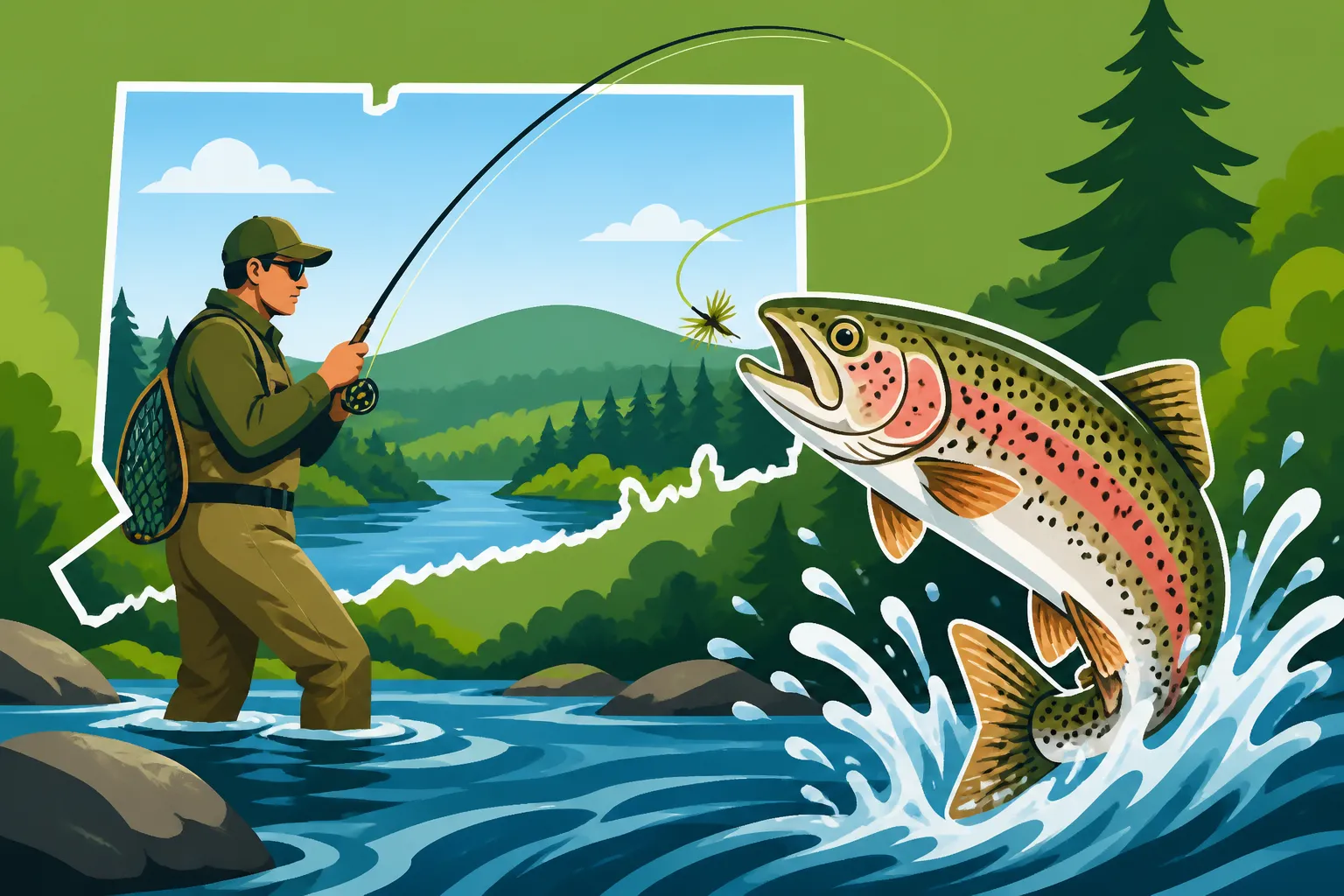
Rainbow trout are probably the most commonly stocked trout in Connecticut, and for good reason! They’re aggressive, take a variety of baits and lures, and put up a fantastic fight on the end of a line. Often identifiable by the iridescent pink or red stripe running down their side (hence "rainbow"), these fish are a favorite among anglers, especially during the bustling spring season. They adapt well to many environments, from fast-flowing rivers to calm ponds, making them a staple of our state's stocking program.
You'll find these spirited fish throughout most of our stocked trout waters. They're often the first to grab a worm or powerbait after a fresh stocking, and they'll readily strike a spinning lure or a well-presented fly. While some anglers might see them as "easy" catches due to their initial eagerness, a large, holdover rainbow can be a formidable opponent, making powerful runs and acrobatic leaps that will test your tackle and your nerves. They're a fantastic species for beginners to gain confidence, and for experienced anglers to enjoy consistent action. For more on where these feisty fish are introduced, read our guide on Rainbow Trout Stocking in Connecticut.
The Elusive Brown Trout: A Challenge and a Trophy
Brown trout are the true enigma of Connecticut's trout waters. Known for their intelligence, wariness, and often nocturnal habits, they present a greater challenge than rainbows. They’re recognizable by their golden-brown flanks adorned with distinct dark spots, sometimes ringed with lighter halos. While they are stocked in many of the same waters as rainbows, they also thrive and reproduce naturally in colder, cleaner streams, often becoming true trophy fish that have evaded countless anglers.
If you're looking for a real angling quest, chasing large brown trout is it. They demand patience, stealth, and a keen understanding of their behavior. These fish often hold in deeper pools, under submerged logs, or along undercut banks, preferring cover and shade. They're less likely to fall for an obvious bait and often require precise presentations of flies or lures. The reward, however, is immense. A big Connecticut brown trout is a prized catch, a powerful fish that will fight deep and hard. Targeting them requires a different mindset, one that embraces the challenge and savors the quiet hunt. Delve deeper into their habits with Brown Trout Habits in Connecticut Streams.
Connecticut's Own Brook Trout: Gems of the Wild
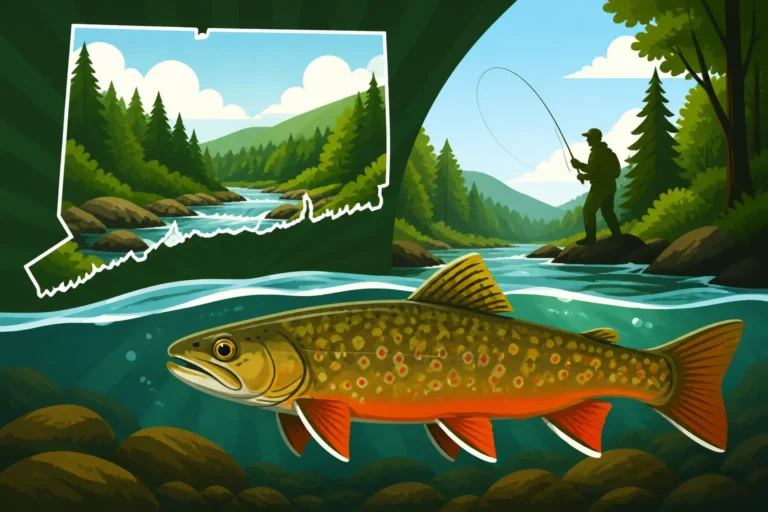
The brook trout holds a special place in the hearts of many Connecticut anglers – it is, after all, our state's native trout species. These dazzling fish are true jewels of our cold, pristine streams. With their worm-like markings (vermiform patterns) on their backs, red spots encircled by blue halos on their sides, and white leading edges on their fins, they are arguably the most beautiful of our trout. Unlike rainbows and browns, brook trout are primarily found in smaller, wilder streams and headwaters, often requiring a hike to access their secluded haunts.
Catching a brook trout feels different. It’s often not about sheer size – though they can surprise you – but about the wildness of the fish and the beauty of their untouched habitat. They are indicator species, meaning their presence signifies excellent water quality. Pursuing brook trout often means bushwhacking, navigating overgrown banks, and practicing a delicate approach. They're quick to strike small flies or tiny spinners but just as quick to dart back into cover. Each brook trout caught is a testament to the health of our natural environment and a link to Connecticut’s wild past. To learn more about these incredible fish, check out Brook Trout: Connecticut's Native Trout.
Other Trout and Salmon You Might Encounter
While rainbow, brown, and brook trout are the main stars, Connecticut's diverse waters occasionally offer glimpses of other related species or unique stocking programs. Sometimes, coho salmon are stocked, primarily as a put-and-take fishery in specific locations, providing an exciting, albeit rarer, opportunity. These fish can grow quite large and offer a powerful fight, distinct from their trout cousins. They are recognizable by their silver flanks and faint spots, often developing a darker hue as they mature.
Additionally, some of our deeper lakes might hold the potential for lake trout, though these are not as widely distributed or commonly targeted as the other three. These deep-dwelling fish prefer colder waters and are often found in the thermocline during warmer months. While not a primary target for most Connecticut trout anglers, their presence adds another layer of mystique to our state's varied fisheries. Always be sure to consult the most current Connecticut Fishing Regulations Explained to identify any special rules or seasons for these less common species.
Navigating Connecticut's Premier Trout Fishing Destinations
Connecticut boasts an impressive array of trout fishing destinations, catering to every angler's preference. Whether you love the challenge of a wild river, the tranquility of a lake, or the convenience of a regularly stocked pond, you'll find it here. Knowing where to go is half the battle, and our state's waters offer everything from renowned fly-fishing havens to family-friendly spots.
Legendary Trout Rivers and Streams
When we talk about trout fishing in Connecticut, certain rivers immediately come to mind. The Farmington River, particularly its West Branch, is practically legendary among fly anglers throughout the Northeast. Its cold, consistent flows and abundant insect life make it a prime habitat for large, wild, and holdover brown and rainbow trout. It's a challenging river, demanding skillful presentations and a good understanding of trout behavior, but the rewards can be incredible. Many fly fishermen consider it a true blue-ribbon fishery. You can find detailed rules for this iconic spot in Connecticut Farmington River Trophy Trout Stream Rules.
Similarly, the Housatonic River, especially its upper stretches and designated Trout Management Area (TMA), offers exceptional trout fishing. This river is known for its incredible scenery and robust populations of brown and rainbow trout. It’s a bigger, broader river than the Farmington in many sections, offering diverse water types from riffles and runs to deep pools. Both rivers are incredibly popular, and for good reason – they consistently produce quality trout. For those looking for pure stream fishing adventure, exploring their many access points is a must. Don't forget to check out Best Trout Streams in Connecticut for more great options.
Productive Trout Lakes and Ponds
While rivers often steal the spotlight, Connecticut’s lakes and ponds offer equally fantastic trout fishing, especially for those who prefer still water or are looking for easier access. Many of our state parks and municipal water bodies are regularly stocked with trout, providing excellent opportunities for bank anglers, kayakers, and those with small boats. Lakes like Highland Lake in Winchester, West Hill Pond in New Hartford, or Mashapaug Lake in Union are often stocked with thousands of trout, including some larger broodstock fish, making them exciting destinations.
These stillwater fisheries can be especially productive during the spring and fall. In early spring, trout are often cruising the shallower areas as the water warms, making them accessible from shore. As the season progresses, they’ll move to deeper, cooler waters, requiring boats or longer casts to reach them. Ice fishing for trout in these lakes can also be incredibly rewarding during winter months, offering a unique cold-weather angling experience. Always consult the Connecticut Interactive Trout Stocking Map, Explained to find out which lakes and ponds are slated for stockings and when.
Exploring Wild Trout Waters and Remote Opportunities
For the angler seeking solitude and a true wilderness experience, Connecticut also has a surprising number of wild trout waters. These are typically smaller, colder tributary streams, often found within state forests or less developed areas, where brook trout reproduce naturally. Fishing these wild waters is a completely different ballgame. It often involves hiking, navigating dense brush, and employing stealthy tactics to avoid spooking the wary native fish.
You won't find crowds or big fish in most wild trout streams, but what you will find is pristine beauty and the immense satisfaction of catching a truly wild, native brook trout. These fish are typically smaller but are vibrant, feisty, and a testament to untouched nature. These areas are usually designated "Wild Trout Management Areas" (WTMA) and have special regulations, often favoring catch-and-release and limiting tackle to protect these delicate populations. It's a chance to connect with the raw, untamed side of Connecticut's outdoors. Finding these hidden gems can take some exploration, but the reward is a tranquil experience far from the beaten path.
Essential Gear for Your Connecticut Trout Adventures
Having the right gear can make all the difference between a frustrating day and a fantastic one. You don't need the most expensive equipment, but understanding what you need for the type of trout fishing you plan to do in Connecticut will set you up for success. Remember, comfort and utility are key, whether you're fly fishing a renowned river or spin casting in a local pond.
Rods, Reels, and Line: Matching Your Method
For fly fishing, a lightweight setup is generally preferred for Connecticut's trout streams. A 3-weight to 5-weight rod, typically 7.5 to 9 feet long, is versatile enough for most situations. A 4-weight is a fantastic all-around choice. Pair this with a matching reel that balances the rod and holds an appropriate amount of fly line and backing. For fly lines, a weight-forward floating line is standard, allowing for easy casting and mending. Leaders and tippet are crucial for stealth – typically 7.5 to 9-foot tapered leaders ending in 4x to 6x tippet, depending on fly size and water clarity. You can find great starter fly fishing combos on Amazon that will get you on the water without breaking the bank.
If spin fishing is more your style, a light to ultralight spinning rod is ideal. A 6 to 7-foot rod with a fast action will give you the sensitivity to detect subtle bites and the backbone to fight fish. Pair this with a small, smooth spinning reel spooled with 4 to 6-pound test monofilament or fluorocarbon line. Braided line can also be used, especially in situations requiring longer casts, but you'll want to add a fluorocarbon leader for abrasion resistance and stealth. The lighter line allows for better lure presentation and more exciting fights with smaller trout.
Waders, Boots, and Apparel: Staying Comfortable and Safe
Waders are practically non-negotiable for serious trout anglers in Connecticut, especially when fishing rivers and streams. They allow you to safely enter the water, access prime fishing spots, and stay dry and warm in often chilly conditions. Chest waders are the most versatile, offering protection up to your chest, while hip waders can suffice for shallower wading. Look for breathable waders, especially if you plan to hike to your spots, as they prevent overheating. Neoprene waders are warmer but less breathable.
Pair your waders with comfortable, sturdy wading boots that provide good ankle support and excellent grip on slippery rocks. Felt soles are traditional for grip but are often restricted in some areas due to invasive species concerns; rubber soles with studs or cleated soles are becoming more popular. Beyond waders, layered clothing is essential. Think moisture-wicking base layers, insulating mid-layers, and a waterproof, windproof outer shell. A good fishing hat and polarized sunglasses are also critical for eye protection and spotting fish under the surface. Don't forget a vest or pack to carry your gear, and a landing net – a rubberized net is best for protecting fish during catch and release. Many reliable brands of wading gear can be found and compared on Amazon.
Tackle Box Essentials for Both Fly and Spin Anglers
For fly anglers, your "tackle box" will primarily consist of fly boxes filled with a variety of patterns. You'll want a selection of dry flies for surface activity (e.g., Caddis, Adams, Mayflies), nymphs for subsurface fishing (e.g., Pheasant Tail, Hare's Ear, stoneflies), and streamers for enticing larger trout (e.g., Woolly Buggers, Sculpins). Don't forget strike indicators, split shot, forceps, nippers, and floatant.
Spin anglers should have a good assortment of small spinners (like Mepps, Rooster Tails), spoons (Kastmasters, Little Cleos), and small jerkbaits or crankbaits. Soft plastics, such as small worms or grubs fished on jig heads, can also be incredibly effective. For bait fishing, worms, corn, and PowerBait are classic choices. Remember, the key is to have a variety to match conditions and trout preferences. Small tackle boxes or utility trays can keep your lures organized, and many anglers like to have a magnetic tray to keep small items secure on the water. A good pair of pliers or hemostats for hook removal is also essential.
Mastering Effective Trout Fishing Techniques
Trout fishing in Connecticut offers a canvas for various techniques, each with its own nuances and effectiveness depending on the water, time of year, and trout species you’re targeting. Whether you prefer the elegance of fly fishing or the straightforwardness of spin fishing, honing your skills will undoubtedly lead to more success on the water.
Fly Fishing: The Art and Science
Fly fishing is often seen as the quintessential trout fishing method, and for good reason. It’s an art form that blends casting skill with an understanding of entomology and fish behavior. In Connecticut, particularly on rivers like the Farmington or Housatonic, fly fishing is incredibly popular and effective. The core principle involves presenting an artificial fly, designed to imitate aquatic insects or baitfish, in a way that appears natural to the trout. This requires learning proper casting techniques – the overhead cast, roll cast, and various mends – to deliver your fly accurately and without drag. You can find excellent resources for learning to fly fish and even starter kits on Amazon.
There are several key fly fishing approaches:
- Dry Fly Fishing: This is perhaps the most exciting and visually rewarding method, involving casting a floating fly to rising trout that are feeding on insects on the surface. Timing is crucial, as you need to "match the hatch" – use a fly that resembles the insects currently emerging. The take is often explosive and visible.
- Nymphing: This is often the most productive method, as trout feed subsurface for the vast majority of their lives. Nymphs imitate immature aquatic insects drifting along the bottom or through the water column. Techniques range from indicator nymphing, where a small bobber signals bites, to Euro nymphing, which uses a specialized rig for direct contact and sensitivity.
- Streamer Fishing: For targeting larger, more aggressive trout, especially brown trout, streamers are incredibly effective. These flies imitate baitfish, leeches, or other larger prey. They are typically retrieved with erratic strips and pauses, mimicking a struggling minnow, often eliciting powerful strikes from predatory trout. For a deeper dive, check out our guide on Fly Fishing for Trout in Connecticut.
Spin Fishing: Versatility and Accessibility
Spin fishing for trout is incredibly versatile and accessible to anglers of all skill levels, making it a popular choice across Connecticut's diverse waters. The beauty of spin fishing lies in its ability to cover water effectively and present a wide range of lures or natural baits. It's often the go-to method for newly stocked waters and for targeting trout in lakes and ponds.
Key spin fishing techniques include:
- Lure Fishing: This involves casting and retrieving various artificial lures such as spinners, spoons, and small crankbaits. Spinners, with their flashing blades, are particularly effective in rivers and streams, mimicking darting baitfish or insects. Spoons, often resembling small fish, are great for casting long distances in lakes. The key is to vary your retrieve speed and depth until you find what the trout are responding to.
- Bait Fishing: This is arguably the simplest and often most effective method for freshly stocked trout. Worms (nightcrawlers, mealworms), corn, and commercially prepared dough baits like PowerBait are all highly attractive to trout. Baits can be fished on the bottom with a simple sinker rig, or suspended under a bobber in still waters.
- Jigging: Small soft plastic jigs or marabou jigs can be very effective, especially in deeper pockets of rivers or in lakes. These are fished by casting out, letting them sink, and then imparting a jigging motion with the rod tip during the retrieve. This erratic action can trigger strikes from trout that are less interested in a steady retrieve.
Bait Fishing: Time-Tested Tactics for Success
While some anglers prefer the challenge of artificial lures, there's no denying the effectiveness of natural bait for trout, especially in our heavily stocked waters. Bait fishing is often the best choice for beginners, children, or anyone simply looking to maximize their chances of catching fish. It's a time-honored tradition that often results in a full creel.
The most common and consistently effective baits in Connecticut include:
- Worms: Earthworms, nightcrawlers, and even mealworms are natural food sources for trout. They can be fished on a simple hook with a split shot, either on the bottom or suspended under a bobber. The natural scent and movement of a worm are often irresistible to hungry trout.
- PowerBait/Dough Baits: These commercially produced baits come in a variety of colors, scents, and forms (nuggets, worms, dough). They are particularly effective for stocked rainbow trout in lakes and ponds. Many anglers mold PowerBait into a small ball around a treble hook or a single hook, allowing it to float just off the bottom, which is often where trout feed.
- Corn: Believe it or not, canned corn is a surprisingly effective bait for stocked trout, especially in areas where anglers regularly use it. It's inexpensive, easy to use, and trout seem to readily take it. It's usually fished on a small hook, often a size 10 or 12.
Remember, when bait fishing, lighter lines and smaller hooks often yield better results, as trout can be line-shy, especially in clear water. Patience is also key – let the bait sit, and wait for the characteristic "tap-tap" of a trout taking the hook.
Understanding Connecticut's Trout Fishing Regulations
Navigating fishing regulations can sometimes feel like trying to decipher an ancient scroll, but understanding Connecticut's rules for trout fishing is absolutely essential. These regulations are designed to protect our fish populations, maintain healthy ecosystems, and ensure sustainable fishing opportunities for everyone. Ignorance of the law is never an excuse, and a quick glance at the current rules before you head out can save you from a costly penalty.
General Statewide Rules and Seasons
Connecticut has general statewide regulations that apply to most waters unless specifically noted otherwise. These cover things like the minimum length, daily creel limits (how many fish you can keep), and general season dates. For trout, the most significant date is often "Opening Day," usually in mid-April, when many rivers and ponds officially open for trout fishing after initial heavy stockings. Prior to this, many waters are closed or have special catch-and-release rules. After opening day, the general season typically runs until late winter, with specific dates varying slightly each year.
The daily creel limit for trout usually refers to the total number of all trout species combined you can keep per day. There are also often minimum length limits for certain species to protect smaller, immature fish. It's crucial to consult the annual Connecticut Fishing Regulations Explained booklet or the DEEP website for the most current figures and dates. Failing to do so could mean accidentally breaking the law. For example, knowing the Connecticut Trout Limit and Possession Rules is paramount to avoid fines.
Special Regulation Waters: What You Need to Know
Beyond the general statewide rules, Connecticut has numerous "Special Regulation Waters" that have unique rules to achieve specific management goals. These are often the most productive and popular trout fishing spots, but they also require extra attention to detail regarding regulations. These categories typically include:
- Trout Management Areas (TMAs): These sections of rivers, like parts of the Farmington and Housatonic, often have extended seasons, catch-and-release only sections, or modified tackle restrictions (e.g., fly fishing only, artificial lures only). They are managed to promote trophy trout opportunities and enhance the angling experience.
- Trophy Trout Streams: Similar to TMAs, these waters are managed for larger fish, often with higher minimum length limits and lower creel limits than general waters.
- Wild Trout Management Areas (WTMAs): As discussed earlier, these streams protect native brook trout populations. Regulations are typically catch-and-release only, with strict tackle restrictions (e.g., single barbless hooks, artificial lures/flies only) to minimize harm to these delicate fish.
- Winter Trout Management Areas: Some waters remain open for trout fishing during the colder months with specific rules, providing year-round opportunities.
It is absolutely critical to identify if the water you plan to fish falls under any of these special regulations. Signs are often posted at access points, but the official DEEP fishing guide is your best source. Many frustrating moments for anglers come from assuming general rules apply everywhere. Always, always check the specific rules for your chosen spot.
Licenses and Stamps: Staying Legal on the Water
Before you even think about casting a line, you need to make sure you have the proper licensing. In Connecticut, anyone 16 years of age or older needs a valid fishing license to fish in fresh or marine waters. This is a fundamental requirement. Licenses can be purchased online through the DEEP website, at many town clerks' offices, or at participating outdoor retailers. For a detailed walkthrough, refer to our Connecticut Fishing License Guide for 2026.
In addition to the general fishing license, if you plan to fish for trout (or salmon) in inland waters, you'll also need to purchase a Trout & Salmon Stamp. This stamp provides the critical funding that supports Connecticut's robust trout stocking and management programs, directly benefiting the fishery you're enjoying. Without it, you cannot legally keep trout, even if you have a general fishing license. These stamps are usually an add-on to your regular license purchase and are easily obtained at the same time. While a license is a statewide pass, the stamp is specific to trout and salmon fishing in inland waters.
| License Type | Requirement (Age 16+) | Required for Trout? (Inland) | Supports |
|---|---|---|---|
| Connecticut Fishing License | Yes, for all fishing | Yes, as base license | General fisheries management |
| Connecticut Trout & Salmon Stamp | Yes, in addition to license | Yes | Trout/Salmon stocking & management |
Ensuring you have both your base fishing license and the Trout & Salmon Stamp (if targeting trout inland) is the simplest way to avoid fines and contribute to the health of our state's fisheries. Keep them with you while fishing, either a printed copy or on your phone as allowed.
Timing Your Trip: Best Seasons for Connecticut Trout
Understanding the seasonal patterns of trout and water conditions is a game-changer for success in Connecticut. Each season brings its own set of challenges and opportunities, influencing where trout hold, what they eat, and what techniques are most effective.
Spring: The Excitement of Opening Day and Early Season Action
Spring in Connecticut is synonymous with trout fishing. The air is crisp, the landscape is awakening, and most importantly, the state's trout stocking efforts are in full swing. This is when thousands upon thousands of rainbow and brown trout are released into rivers, streams, and ponds, making for incredible fishing opportunities. The biggest event, of course, is "Opening Day," traditionally the third Saturday in April. This day sees an almost festive atmosphere on popular waterways, with anglers of all ages eagerly casting their lines.
During the early spring, water temperatures are cold, and trout are often lethargic but also very hungry. They'll readily take power bait, worms, and shiny lures that grab their attention. As spring progresses, water temperatures slowly rise, leading to insect hatches, which in turn kickstarts significant dry fly and nymphing action. Rivers can be high and fast due to snowmelt and spring rains, requiring careful wading and presentation. It’s a time of abundance, energy, and the highest catch rates of the year, especially on stocked waters. For more on how to hit the ground running, check out Spring Trout Fishing Techniques for Connecticut Streams.
Summer: Adapting to Warmer Waters and Lower Flows
Summer can be a challenging time for trout fishing in Connecticut, especially as July and August bring warmer air and water temperatures. Trout, particularly wild trout and holdover fish, prefer cold, oxygen-rich water. As water temperatures rise above 68-70°F, trout become stressed, and fishing can become detrimental to their survival, even with catch and release. This is when many ethical anglers switch to targeting warm-water species like bass or pike.
However, summer isn't entirely a write-off. The key is to seek out coldwater refuges. This often means fishing early in the morning or late in the evening when water temperatures are at their coolest. Focus on spring-fed streams, tailwaters below dams (like the lower Farmington), deep lakes, or higher elevation mountain streams where water stays consistently colder. Night fishing for large brown trout can also be very productive in summer, as these fish often become more active under the cover of darkness. Always carry a thermometer and be mindful of water temperatures. If the water is too warm, it's best to give the trout a break. The Connecticut Housatonic River Seasonal Closure Explained details how some areas are closed to protect trout during warm months.
Fall: Chasing Colors and Spawning Browns
Autumn is arguably one of the most beautiful and rewarding seasons for trout fishing in Connecticut. As the leaves turn vibrant shades of red and gold, water temperatures begin to cool, rejuvenating trout populations. The lower sun angles and fewer crowds make for a truly tranquil angling experience. Fall offers a fantastic blend of active feeding and the excitement of the brown trout spawn.
During this time, trout become more aggressive, feeding heavily to build up energy for winter. This translates into excellent fishing with both flies and lures. Brown trout, in particular, begin their spawning rituals in the fall, moving into shallower, gravelly areas of rivers and streams. While targeting actively spawning fish is often discouraged to protect their reproductive success, their increased activity means they are often easier to locate and entice in nearby holding areas. Larger streamers and nymph patterns can be especially effective, as can small crankbaits or spoons. The crisp air and stunning scenery make every cast a joy, even if the fish aren't biting every time.
Winter: Ice Fishing and Coldwater Opportunities
Winter trout fishing in Connecticut might not be for everyone, but for those willing to brave the cold, it offers unique and often highly rewarding opportunities. Once safe ice forms on many of our stocked lakes and ponds, ice fishing for trout becomes a popular pastime. The trout stocked in these waters often remain active under the ice, providing a different kind of angling experience. Small jigs tipped with bait like mealworms, wax worms, or PowerBait, fished with ultralight rods or tip-ups, are the go-to methods. For those interested in this frosty pursuit, our Ice Fishing in Connecticut guide provides essential tips.
For river anglers, winter offers a chance to target holdover trout in the state's designated "Winter Trout Management Areas" or specific tailwaters where water temperatures remain above freezing. While the fishing can be slower, the trout caught are often larger and hard-fighting. Deep nymphing tactics with heavy flies, or slowly retrieved streamers, are generally most effective. The peace and quiet of a snow-covered riverbank, with steam rising from the water, is an experience not to be missed by the truly dedicated angler. Always prioritize safety on the ice and cold water, and dress in layers.
Practicing Responsible Angling and Conservation
As anglers, we are stewards of the natural resources we enjoy. Practicing responsible angling and actively participating in conservation efforts is not just a nice idea; it's essential for ensuring that future generations can experience the same joy of trout fishing in Connecticut that we do today. Every decision we make on the water has an impact.
Catch and Release Best Practices
Many trout anglers, especially those targeting wild trout or larger trophy fish, practice catch and release. If you choose to release a fish, doing it properly is crucial for its survival. A few simple steps can dramatically increase a trout's chances:
- Minimize Handling: Try to keep the fish in the water as much as possible. If you must remove it, do so quickly and gently.
- Wet Hands: Always wet your hands before touching a fish. Dry hands can remove the fish's protective slime coat, making it vulnerable to disease.
- Barbless Hooks: Consider using barbless hooks or pinching down the barbs on your hooks. They make hook removal much easier and cause less damage to the fish's mouth. Many fly anglers swear by them.
- Quick Hook Removal: Use forceps or pliers to quickly remove the hook. If the fish is deeply hooked, it may be better to cut the line as close to the hook as possible rather than risk further injury.
- Revive Gently: If the fish seems lethargic, hold it upright in the water, facing upstream, and gently move it back and forth to force water through its gills until it regains strength and swims away on its own. Avoid squeezing the fish, especially around its belly.
Remember, the goal of catch and release is to ensure the fish lives to fight another day, contributing to the population and offering future angling opportunities.
Respecting Our Waterways and Fellow Anglers
Our shared passion for fishing comes with a shared responsibility. Respecting the environment and other anglers contributes to a positive experience for everyone. This means:
- Leave No Trace: Pack out everything you pack in. This includes old fishing line, bait containers, and any other trash. Ideally, leave the area cleaner than you found it. Plastic waste, especially discarded fishing line, can be deadly to wildlife.
- Stay on Marked Trails: When accessing fishing spots, stick to established trails or designated access points to minimize disturbance to riparian vegetation and private property.
- Practice Courtesy: If you encounter another angler, give them plenty of space. Don't crowd their spot, and if you need to pass, do so quietly and politely. A friendly nod or a brief chat can enhance the experience, but always respect others' solitude.
- Know Your Boundaries: Be aware of private property lines and designated no-fishing zones. These are in place for various reasons, and trespassing can jeopardize public access to other areas.
By adhering to these principles, we can ensure that Connecticut's fishing spots remain beautiful, accessible, and enjoyable for all who visit them.
Supporting Connecticut's Trout Management Efforts
The incredible trout fishing we enjoy in Connecticut doesn't happen by accident. It's the result of dedicated work by the Connecticut Department of Energy and Environmental Protection (DEEP), supported by anglers like us. The purchase of your Connecticut Trout and Salmon Stamp, Explained directly contributes to funding their stocking programs, habitat restoration projects, and research initiatives. These efforts are vital for maintaining and improving trout populations across the state.
Beyond purchasing your license and stamp, there are other ways to support conservation. Consider joining local conservation groups or angling organizations that advocate for clean water and healthy fisheries. Participate in stream clean-ups, or volunteer for habitat improvement projects. Even something as simple as reporting suspicious activity (like poaching or pollution) to DEEP can make a difference. Every little bit helps ensure that Connecticut remains a premier destination for trout anglers for generations to come.
Disclaimer
This article is for general informational purposes only and does not constitute professional advice. Laws, prices and regulations vary by location and change over time. Consult a qualified professional for guidance on your specific situation.