Best months to catch smallmouth bass in Connecticut
There’s nothing quite like the thrilling fight of a smallmouth bass in Connecticut. These feisty, hard-fighting fish are a favorite among anglers, but nailing down when and where to find them can feel like a constantly moving target. If you’ve ever found yourself wondering if you’re fishing the right spot at the right time, you’re not alone. This comprehensive guide is designed to cut through the confusion, pinpointing the best months to target smallmouth bass across Connecticut’s diverse waters and offering proven strategies to increase your success.
The Seasonal Dance: Understanding Smallmouth Bass Behavior in Connecticut
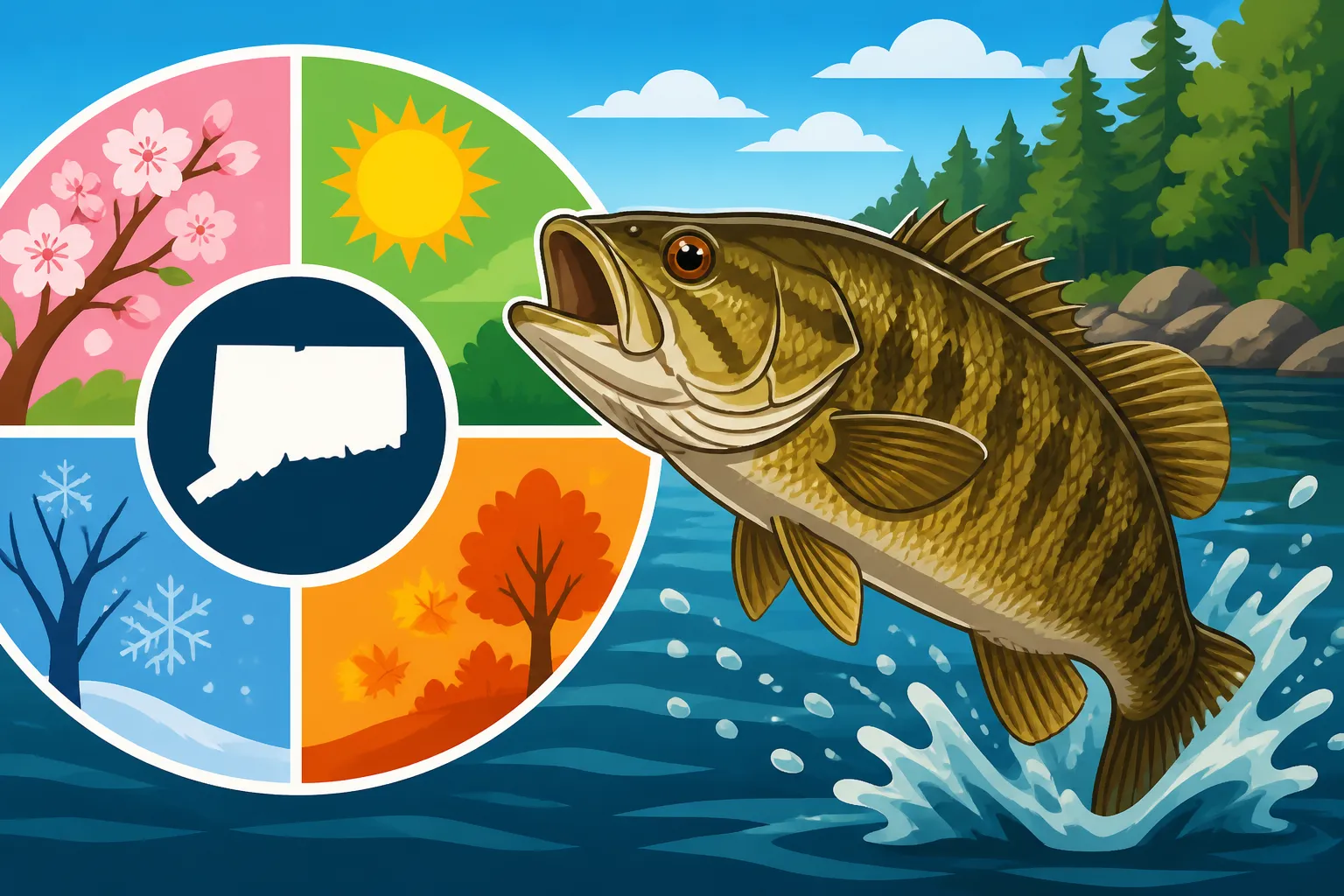
To consistently catch smallmouth bass in Connecticut, you first need to understand that these fish are highly tuned to their environment, especially water temperature and light conditions. Their behavior—where they live, what they eat, and how aggressively they feed—changes dramatically with the seasons. It’s not just about throwing a lure; it’s about understanding the rhythm of their lives throughout the year.
Why Water Temperature is Your Best Friend
Smallmouth bass are cold-blooded creatures, which means their body temperature, metabolism, and activity levels are directly controlled by the water around them. Imagine trying to run a marathon in freezing weather versus a comfortable spring day – it’s a similar concept for fish. When the water is cold, their metabolism slows down significantly, making them sluggish and less inclined to chase a meal. As the water warms up, their metabolism kicks into high gear, making them more active and aggressive feeders. This is a critical piece of the puzzle for knowing the Best time of year to fish in Connecticut for smallmouth.
Typically, smallmouth become most active when water temperatures range from the low 50s to the high 60s Fahrenheit, with their ideal comfort zone often considered to be around 60-65°F. Outside of this range, you'll need to adjust your tactics. For instance, in colder water (below 50°F), a smallmouth might still bite, but it'll likely require a much slower presentation right in front of its face. They’re conserving energy, so they won’t expend much to chase down a fast-moving bait. Conversely, in warmer water (above 70°F), they might retreat to deeper, cooler sections or become more nocturnal in their feeding habits. Knowing the Best water temperature for smallmouth bass fishing is truly key to unlocking consistent action.
Key Stages: Pre-Spawn, Spawn, Post-Spawn, and Wintering
Understanding the annual cycle of smallmouth bass is crucial for timing your trips. Each stage offers unique opportunities and challenges:
- Pre-Spawn (Late March – Mid-May): As ice melts and water temperatures climb into the 40s and 50s, smallmouth begin to shake off their winter lethargy. They move from their deep wintering holes into shallower areas, often staging near spawning grounds. This is a period of intense feeding as they bulk up for the energy-intensive spawning process. Fish are often aggressive and can be found in predictable locations.
- Spawn (Mid-May – Early June): When water temperatures consistently reach the high 50s to low 60s, smallmouth begin to spawn. Males guard nests in shallow, rocky, or gravelly areas. While some anglers target spawning fish, many prefer to let them complete their reproductive cycle undisturbed. If you do fish during this time, consider catch-and-release techniques to ensure the health of the population.
- Post-Spawn (Mid-June – Early July): After spawning, both male and female smallmouth can be somewhat lethargic and dispersed as they recover. This period can be a bit tougher, but as they regain energy, they'll resume feeding, often moving to deeper structure or cover to escape the increasing summer heat.
- Summer (July – August): With water temperatures peaking in the 70s and sometimes even higher, smallmouth often seek cooler, deeper water or areas with strong current in rivers. Their feeding may shift to early mornings, late evenings, or even nights to avoid the brightest sun and highest temperatures.
- Fall (September – November): As water temperatures begin to drop from their summer highs, smallmouth enter a major feeding period to build up fat reserves for the coming winter. They often school up and become incredibly aggressive, making this one of the most exciting times to target them.
- Winter (December – February): Once water temperatures fall below 40-45°F, smallmouth retreat to deep wintering holes, often in large schools. Their metabolism slows dramatically, and while they can still be caught through the ice or with very slow presentations in open water, they are far less active.
Springtime Explosion: The Best Months for Aggressive Smallmouth
Spring truly marks the awakening for Connecticut smallmouth bass, offering some of the most consistent and exciting fishing of the year. The transition from cold, dormant winter waters to warming, life-filled flows brings these fish to life.
Early Spring (March-April): The Thaw and First Bites
As winter’s grip loosens and ice recedes from Connecticut’s lakes and rivers, typically around March or early April, smallmouth bass begin to stir. The water temperature might only be in the low 40s to low 50s, which means fish are still pretty lethargic. You might be out there shivering, wondering if anything’s even alive, and it’s easy to get frustrated by a lack of bites. But this is a crucial time to intercept fish moving from their deep wintering areas towards shallower, warmer waters.
During this early window, smallmouth will often hold tight to rocky structure, deep bends, or current breaks in rivers. Think about sections of the Housatonic River Fishing Guide or the larger tributaries of the Connecticut River. They’re not actively chasing bait far, so your presentation needs to be slow and right in their strike zone. Jigs, blade baits, and suspending jerkbaits like a Rapala Husky Jerk or a Lucky Craft Pointer are excellent choices. Cast these baits near suspected holding areas, let them sink, and retrieve with incredibly slow, deliberate twitches and long pauses. The goal isn't to provoke a chase, but to present an easy meal that's too tempting to ignore. Don't be afraid to leave that suspending jerkbait motionless for 10, 15, even 20 seconds. It feels like forever, but that's often when a cold smallmouth decides to strike.
Peak Spring (May-Early June): Pre-Spawn & Spawning Frenzy
This is arguably the absolute best time of year to target smallmouth bass in Connecticut. As water temperatures climb into the mid-50s to low 60s, usually from mid-May through early June, smallmouth enter their pre-spawn and spawning phases. This is when they become incredibly active and aggressive, driven by the urge to feed and reproduce.
During the pre-spawn, you'll find smallmouth staging in shallower areas adjacent to their spawning flats. Look for rocky points, gravel beds, hard bottom areas, and even submerged wood in depths ranging from 5 to 15 feet. They’re looking for warmth and abundant forage to fuel the spawn. This is a fantastic time for a variety of baits. Spinnerbaits, crankbaits, tube jigs, and swimbaits become highly effective. For example, if you're fishing a place like Candlewood Lake, focus on rocky shorelines and points where smallmouth will patrol. You can often see them cruising.
Once water temperatures consistently hit the high 50s to low 60s, smallmouth will move onto their actual spawning beds. Males will typically be in very shallow water, guarding their nests. While fishing for bedding fish is a hot topic, if you do choose to target them, practice extreme catch-and-release to ensure the next generation. A tube jig or a small creature bait worked slowly around the bed can often provoke a strike from a territorial male. After the spawn, the fish might be a little sluggish for a week or two, but they quickly transition into their post-spawn recovery, moving to slightly deeper waters but still feeding aggressively to regain lost energy. Many anglers find success at this time with a Texas-rigged soft plastic or a shaky head, especially around submerged cover.
Navigating the Summer Heat: Smallmouth Tactics for July and August
Summer in Connecticut brings beautiful weather, but it also means warmer water temperatures that can change smallmouth behavior dramatically. If you're used to the spring bite, summer can feel like a totally different ballgame, demanding new strategies and a shift in your thinking.
Deep Water Retreats: Finding Summer Smallmouth
As July and August settle in, Connecticut's lakes and larger rivers experience their highest water temperatures, often climbing into the 70s or even higher. When this happens, smallmouth bass, particularly the larger ones, will often seek refuge in deeper, cooler waters. They're not gone; they've simply moved. This is where understanding structure and depth becomes paramount. You might not see them cruising the shallows anymore, which can be a real head-scratcher if you're not prepared.
In lakes like Candlewood Lake or even the wider sections of the Connecticut River, smallmouth will gravitate towards deeper rock piles, humps, submerged ledges, and channels. If you have sonar, this is where it really shines, helping you locate these hidden sweet spots. Look for areas where the main lake basin drops off sharply, or where there's a distinct thermocline (a layer of water where the temperature changes rapidly) providing cooler, oxygenated water. Targeting these deeper zones often requires specialized techniques like drop-shotting, vertical jigging with spoons or blade baits, or slow-rolling deep-diving crankbaits. For instance, if you're on a deep lake, a drop-shot rig with a small plastic worm or creature bait can be deadly, allowing you to present your bait precisely at the fish's depth without a heavy sinker dragging it away. Many seasoned anglers stock up on these deep-water essentials from reliable online retailers like Amazon before the summer heat hits.
Early Mornings and Evenings: Exploiting Low Light Conditions
While deep water holds many smallmouth during the summer, don't completely discount shallower areas. Smallmouth are opportunists, and during periods of low light — dawn, dusk, and even overnight — they'll often venture into shallower feeding zones where they can ambush baitfish more effectively. The cooler air temperatures also mean the surface water hasn't heated up to its midday peak.
Rivers with consistent current, such as sections of the Farmington River West Branch Trout Fishing (though primarily a trout stream, its influence highlights the importance of current) or the flowing stretches of the Housatonic, offer another summer haven. The moving water is typically cooler and more oxygenated than stagnant lake coves. Here, smallmouth will position themselves in current seams, behind rocks, or in eddies, waiting for bait to be swept by. Topwater fishing can be explosive during these low-light periods. Poppers, walk-the-dog style baits, and prop baits can draw incredible strikes as smallmouth smash them off the surface. As the sun gets higher, switch to subsurface offerings like spinnerbaits or buzzbaits fished near submerged cover. For night fishing for smallmouth, which can be surprisingly effective, dark-colored jigs or slow-moving swimbaits are often the ticket, as the fish rely more on lateral lines and silhouette against the faint moonlight.
Fall Feast: Capitalizing on Autumn's Bounty
As the leaves turn brilliant hues and the air crisps up, Connecticut’s smallmouth bass enter another prime feeding period. This fall bite is often just as good, if not better, than the spring, making September and October some of the most anticipated months for smallmouth anglers.
September and October: The Pre-Winter Power Feed
When the long, hot days of summer begin to shorten and water temperatures gradually cool from the high 70s down into the 60s and then 50s, typically through September and October, smallmouth bass go on a feeding frenzy. This is their crucial time to pack on calories, building up energy reserves that will see them through the lean winter months. They become incredibly aggressive and are often found schooled up, making it possible to have "banner" days if you locate a productive school.
During this period, smallmouth will often move back to shallower to mid-depth structures than they occupied in summer. Look for rocky humps, points, submerged islands, and ledges in 10-25 feet of water. They're actively chasing baitfish like alewives, shiners, and perch. This means faster-moving baits are often highly effective. Deep-diving crankbaits in shad or perch patterns can be phenomenal, especially when retrieved rapidly over structure. Jigging spoons, weighty swimbaits, and football jigs tipped with plastic craws are also excellent choices for targeting these hungry fish. For river smallmouth, like those in the Housatonic River Trout Management Area Fishing or the lower Connecticut River, they'll congregate in deeper pools and runs, still chasing bait but beginning to gather for winter. Understanding How to fish a river for smallmouth bass is particularly crucial during this active fall period.
Late Fall (November): The Last Hurrah Before Ice
As November brings colder air and plummeting water temperatures, dropping into the 40s, the smallmouth bite begins to slow, but it's not over. This is often the "last hurrah" before winter truly sets in and ice cover becomes a possibility in many of Connecticut's waters. The fish are still feeding, but their metabolism is winding down, requiring a more patient approach.
During late fall, smallmouth will generally move into their deeper wintering holes. These are often the deepest sections of lakes or rivers, protected from current and offering stable temperatures. While they may not be as aggressive as in early fall, they will still bite, especially on warmer, sunny days that might slightly raise the water temperature in shallower staging areas. Vertical presentations are key here. Blade baits worked slowly off the bottom, drop-shot rigs with small, subtle plastics, or even small jigs tipped with live bait like shiners can be very effective. The strikes might be very subtle, feeling more like a slight weight on the line rather than a violent tug, so pay close attention. This is also a time when you might find smallmouth mixed in with other species like pike or walleye, all seeking the same deep, comfortable zones. If you're a fan of ice fishing, November is a great time to start scouting those deeper wintering spots before the hard water arrives, because when winter truly sets in, ice fishing is often the only way to reach them effectively.
Essential Gear and Prime Connecticut Smallmouth Hotspots
Having the right gear and knowing where to go can make all the difference in your smallmouth bass fishing endeavors, especially when tailoring your approach to Connecticut's unique waters. A well-equipped angler is a successful angler!
Rods, Reels, and Line: Matching Your Setup
Smallmouth bass are notorious fighters, and having the appropriate tackle can mean the difference between landing a trophy and telling a tale of "the one that got away."
- Rods: For most smallmouth applications, a medium to medium-heavy spinning or casting rod, typically 6'6" to 7'6" in length, will serve you well. A fast action rod tip is generally preferred as it provides excellent sensitivity for detecting subtle bites and quick hook sets. For finesse techniques like drop-shotting or working lighter jigs, a medium-light spinning rod offers better feel. If you're throwing larger crankbaits or swimbaits in the fall, a medium-heavy casting rod will provide the necessary backbone. You can find a fantastic selection of rods for all these techniques on Amazon, often with detailed reviews to help you choose.
- Reels: Pair your spinning rods with a 2500-3000 series spinning reel, which offers a good balance of line capacity and smooth drag. For casting setups, a baitcasting reel with a gear ratio around 6.4:1 to 7.1:1 is versatile enough for most lure types, allowing for both faster retrieves and slower, more controlled presentations. Smooth drag is crucial for smallmouth, as they make powerful runs and head shakes.
- Line: The choice of fishing line is vital. For spinning setups, 6-10 lb test fluorocarbon or braid with a fluorocarbon leader (6-10 lb) is a popular choice. Fluorocarbon offers excellent sensitivity and is nearly invisible underwater, while braid provides superior casting distance and strength, with the leader maintaining stealth. For casting setups, 10-15 lb fluorocarbon is common for crankbaits and jigs, or 30 lb braid with a fluorocarbon leader for heavier cover.
Lure Selection for Connecticut Smallmouth
Smallmouth bass are opportunistic feeders, so having a diverse lure selection is smart. The key is to match your lure to the season, water conditions, and forage present.
- Jerkbaits: Suspending jerkbaits (like those mentioned in the early spring section) are absolutely deadly in cold water. They imitate stunned or dying baitfish and can be worked with long pauses that cold smallmouth can't resist.
- Tube Jigs: These soft plastic lures are incredibly versatile. Rigged on an internal jig head, they mimic crawfish, gobies, or baitfish and are effective year-round, especially when dragged or hopped along the bottom. They are a staple for How to Catch Smallmouth Bass in Connecticut Rivers.
- Drop Shots: When fish are deep or lethargic, a drop-shot rig allows you to present a small plastic worm, minnow, or creature bait suspended above a weight, keeping it in the strike zone longer. This is a finesse technique that shines in summer and late fall.
- Spinnerbaits: Particularly effective in spring and fall when smallmouth are aggressive and chasing baitfish. Choose blade combinations (Colorado for thump, Willowleaf for flash) based on water clarity and depth.
- Crankbaits: From shallow-diving models for aggressive spring and fall fish to deep-diving crankbaits for summer depths, these excel at covering water and triggering reaction strikes.
- Topwater Lures: Poppers, walk-the-dog baits, and prop baits create exciting surface commotion. These are fantastic for exhilarating strikes during low-light hours in summer and early fall, particularly on calm mornings. If you're exploring Topwater Fishing for Smallmouth Bass in Connecticut, you'll want a good selection.
- Swimbaits: Realistic soft plastic swimbaits can mimic various baitfish, effective when retrieved steadily or jigged around structure.
- Creature Baits/Soft Plastics: Imitating crawfish or other invertebrates, these are great on Texas rigs, Carolina rigs, or shaky heads, especially around rocky cover.
Prime Connecticut Smallmouth Waters
Connecticut boasts several fantastic smallmouth bass fisheries, each with its own unique character.
- The Housatonic River: Without a doubt, the Housatonic is a premier smallmouth bass river in Connecticut. From the Massachusetts border down to the tidewater sections, it offers incredible opportunities. The upper and middle sections, particularly through Kent, Cornwall, and Falls Village, are renowned for their healthy populations. The river’s rocky bottom, varied current, and abundant insect life make it a perfect smallmouth habitat. Anglers using kayaks or wading can access many prime spots. You'll find plenty of resources, including detailed access points and fishing tips, in our Housatonic River Fishing Guide.
- The Connecticut River: As the largest river in New England, the Connecticut River offers diverse smallmouth opportunities, especially in its tidal and lower reaches. While often known for Connecticut River Striped Bass Fishing and shad runs, its countless rocky points, bridge abutments, and creek mouths hold excellent smallmouth. Fishing from a boat often provides the best access to prime spots on this expansive waterway.
- Candlewood Lake: Located in western Connecticut, Candlewood Lake is the state’s largest lake and a known trophy smallmouth fishery. Its deep, clear waters, abundant rocky structure, and healthy forage base (including alewives) create an ideal environment for large smallmouth. Fish here can be found deep during the summer, but they move shallower in spring and fall. A comprehensive Candlewood Lake Fishing Guide can help you navigate its extensive waters.
- Other Lakes and Rivers: Don't overlook other smaller rivers and lakes. Lakes like Lake Lillinonah and Lake Zoar also hold good populations. Many smaller impoundments and even some state park ponds can surprise you with solid smallmouth action, especially in the spring. Scouting local spots and checking the Connecticut DEEP’s fisheries resources can reveal hidden gems.
| Season | Best Months | Typical Water Temps (°F) | Key Locations (Examples) | Primary Techniques |
|---|---|---|---|---|
| Early Spring | March – Early April | 40-50 | Housatonic River, CT River Tribs, Deep Lake Basins | Jerkbaits (suspending), Blade Baits, Jigs |
| Peak Spring | Late April – June | 50-68 | Housatonic River, Candlewood Lake (rocky points) | Spinnerbaits, Crankbaits, Tube Jigs, Swimbait |
| Summer | July – August | 68-75+ | Deep Lake Structures, River Rapids, Cool Tailwaters | Drop Shots, Deep Cranks, Topwater (low light) |
| Fall | September – October | 50-65 | Rivers, Lake Edges, Rocky Reefs | Crankbaits (deep), Jigs, Swimbaits, Spoons |
| Late Fall/Winter | November – February | Below 50 | Deep Pools, Wintering Holes, Ice Covered Lakes | Slow Jigs, Blade Baits, Live Bait (winter) |
Disclaimer
Fishing conditions and regulations in Connecticut can change. Always check the latest Connecticut Department of Energy and Environmental Protection (DEEP) fishing regulations before heading out. This guide provides general information and should not be considered a substitute for official regulations or professional advice. Always prioritize safety on the water.