How barometric pressure affects Connecticut bass fishing
Have you ever had those days on the water where the bass bite is just off, even though everything else seems perfect? Or maybe you've experienced those magical hours where the fish are practically jumping into the boat? Often, the unseen hand at play is barometric pressure. It's a factor many anglers overlook, but understanding how it subtly (or not so subtly!) influences bass in our beloved Connecticut waters can absolutely transform your success. This guide will help you decode the mysteries of atmospheric pressure and give you practical strategies to adapt your bass fishing techniques.
Understanding Barometric Pressure's Grip on Bass
Let's cut through the scientific jargon and get right to what matters for us anglers. Barometric pressure is essentially the weight of the air above us. When that air mass changes, it affects everything from our comfort to the fish swimming beneath the surface. For bass, these changes are a huge deal because they live in an environment where pressure is constant and predictable – until it isn't.
What is Barometric Pressure and Why is it Important for Fishing?
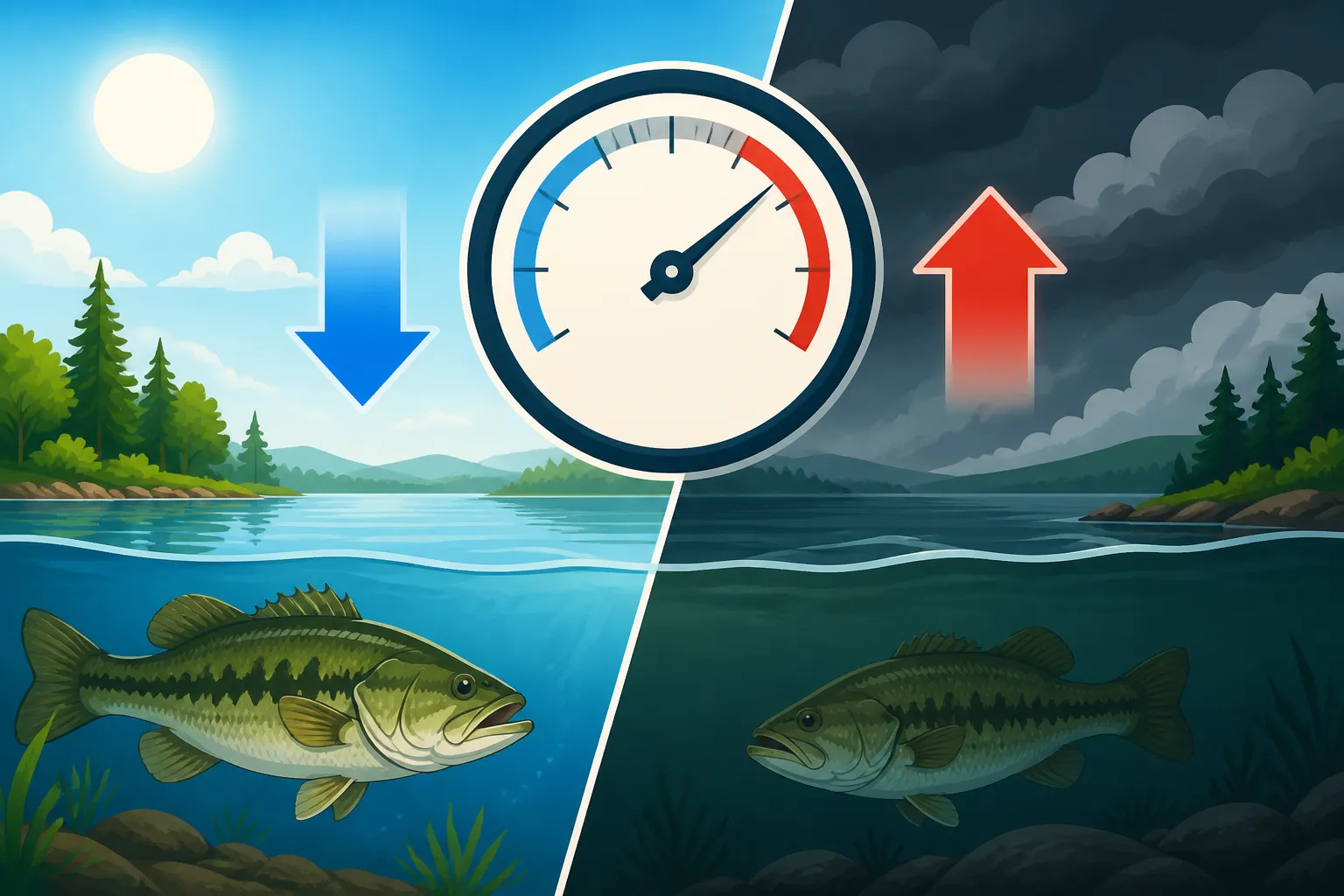
Imagine a giant, invisible blanket of air pressing down on the Earth. That's atmospheric pressure. When weather fronts move in and out, the weight of that blanket changes. A rising barometer means the air is getting heavier, often associated with clear skies and stable, cooler weather. A falling barometer means the air is getting lighter, usually signaling an approaching storm, rain, or unstable conditions.
For bass, and most other fish, these pressure changes can profoundly impact their comfort, their metabolism, and their willingness to feed. It's not just a subtle shift; it can dictate whether they're actively chasing bait in open water or hunkering down deep in cover, waiting for conditions to improve. Ignoring this factor is like trying to catch fish without knowing the water temperature – you're missing a huge piece of the puzzle!
How Does Barometric Pressure Affect Bass Physiology and Behavior?
Fish, unlike us, don't have lungs that can easily adjust to rapid pressure changes. They have a swim bladder, an internal organ that helps them maintain buoyancy. When the external barometric pressure changes, the gas in their swim bladder expands or contracts. Imagine feeling like you're constantly inflating or deflating – it's uncomfortable!
- Rising Pressure (High Pressure Systems): As the pressure increases, the gas in a bass's swim bladder gets compressed. To compensate, they often have to move deeper to equalize the pressure. This can make them feel sluggish and less inclined to chase fast-moving baits. They might retreat to deeper structure, dense cover, or the bottom. Their metabolism can slow down, and they might become more selective feeders.
- Falling Pressure (Low Pressure Systems): Conversely, when pressure drops, the gas in their swim bladder expands. This can push them shallower, making them feel more active and sometimes uncomfortable. Before a storm, when the barometer is falling steadily, bass often go on a feeding binge. It's almost as if they instinctively know bad weather is coming and they need to eat while the eating is good. After the storm, when the pressure is very low and unstable, they might feel disoriented and lethargic.
These physiological responses translate directly into their feeding habits and preferred locations. Understanding these shifts means you can predict where bass are likely to be and what kind of presentation they'll respond to.
Decoding High-Pressure Patterns for Bass
High pressure often brings those beautiful, blue-sky days we all love for being on the water. But for bass fishing, especially right after a front, these conditions can be notoriously tough. Don't let the pretty weather fool you; the fishing can be brutal if you don't adjust your approach.
Rising Barometric Pressure: The Golden Window
When the barometric pressure is steadily rising after a period of low pressure (like after a storm has passed), this can actually be a fantastic time to fish. The pressure isn't yet stable and high, but it's on an upward trend. Bass, which might have been feeling the discomfort of the falling pressure and pre-front frenzy, are now starting to stabilize. They often become more active as conditions improve and the water clears up.
During this "golden window," you might find bass moving out of their deepest cover and starting to forage more aggressively. They're still a bit wary, but the discomfort is easing, and their metabolism is picking back up. This is a time to be on the water, taking advantage of the improving conditions before the full effects of stable high pressure set in. You might see them moving onto flats, points, or the edges of drop-offs looking for an easy meal.
Stable High Pressure: The Post-Front Blues
This is arguably the most challenging time to catch bass in Connecticut. Those clear, bright, calm days right after a cold front has swept through often mean tough fishing. The stable high pressure has settled in, pushing bass deep and making them extremely finicky. The water might be clear, and the bright sun penetrates deep, making bass feel exposed and vulnerable.
Under these conditions, bass typically retreat to the darkest, densest, and deepest cover they can find. Think heavy weed beds, thick brush piles, deep rock piles, or shaded areas under docks and overhangs. Their strike zone shrinks significantly, and they are far less likely to chase a bait. You'll need to work slowly, methodically, and precisely to coax a bite. This is when fishing becomes a true test of patience and finesse. Many anglers get frustrated and give up, but those who adapt can still find success.
Navigating Low-Pressure Scenarios for Bass
Low pressure, especially when it's falling, can signal some of the most exciting bass fishing opportunities. It's often associated with impending storms, which can make for an adventurous day, but the rewards can be incredible.
Falling Barometric Pressure: Pre-Front Feeding Frenzy
This is generally considered the best time to fish for bass. As a low-pressure system moves in, the barometer begins to fall. Bass sense the approaching change – whether it's the reduction in atmospheric pressure itself or other associated factors like increased cloud cover or a slight drop in light – and they often go on a massive feeding spree. It's an instinctive response to stock up before conditions become unfavorable.
During a falling barometer, bass are often more aggressive, more willing to chase, and might move into shallower water than usual. They're looking for big, easy meals. If you can get on the water before a significant storm hits, those hours when the pressure is actively dropping can provide some phenomenal action. You might see them busting bait on the surface or actively cruising shoreline cover. This is when you can often catch the largest bass, as they become less cautious and more focused on feeding.
Stable Low Pressure: Generally Tougher Fishing
Once a low-pressure system has fully settled in, often bringing prolonged rain or very cloudy, dreary conditions, the fishing can become challenging again, though usually not as tough as post-front high pressure. When the pressure is stable and low, bass can feel sluggish and disoriented. The prolonged unstable weather can make them uncomfortable, and they might hunker down, much like they do in stable high pressure, but perhaps not quite as deep.
They might remain in cover or suspend in the water column, but their feeding activity usually decreases. They're not in the same aggressive pre-front mood. You might find them suspended over deep structure or buried in heavy cover, waiting for the system to pass. While they might still bite, your presentations will likely need to be slower, more subtle, and placed directly in front of them. It's less about chasing and more about tempting a sluggish fish.
Putting Pressure into Practice: Adapting Your Bass Fishing Strategy
Knowing what the pressure is doing is one thing; knowing how to react is another. The key to consistent success in Connecticut bass fishing is to have a versatile tackle box and be willing to change your approach.
Tactics for Rising Pressure
When the barometer is on the rise after a period of bad weather, bass are getting their mojo back. This is a time to target transition areas where they might move from deep to shallow.
- Moderate Retrieval Speeds: They're not in a full-blown feeding frenzy, but they're not totally lethargic either. Try medium-paced retrieves.
- Targeting Transition Zones: Focus on points, humps, channel swings, and the edges of weed lines where bass can intercept bait as they move.
- Versatile Lures: Crankbaits, spinnerbaits, and ChatterBaits can be very effective as bass become more willing to chase. Don't be afraid to try some of your favorite lipless crankbaits, which you can find readily on Amazon. Also consider jigs and Texas-rigged plastics worked along the bottom.
- Cover and Shade: Bass might still hold tight to isolated cover, especially if the sun starts to peek out. A well-placed jig or Texas rig into a brush pile can be money.
Tactics for Stable High Pressure
These are the tough days, but they're not impossible. Think finesse, slow, and precise.
- Deep and Dense Cover: Bass will be buried. Flip and pitch jigs or heavy Texas-rigged plastics directly into the heart of the thickest cover you can find – laydowns, heavy hydrilla, submerged brush.
- Finesse Techniques: Drop shot rigs, Ned rigs, and shaky head jigs are your best friends. These small, subtle presentations are key to getting a bite from finicky bass. Light line and a slow retrieve are crucial.
- Slow, Bottom-Oriented Baits: Work worms, creature baits, and jigs agonizingly slowly along the bottom. Let them sit. Twitch them. Let them sit again. The strike often feels like just a little "tick" or added weight.
- Target Shade: If it's a sunny day, look for any available shade – under docks, bridge pilings, or overhanging trees. Bass will use these areas to escape the bright light and feel more secure.
- Deep Water: Don't be afraid to fish offshore structures, deep humps, or channel edges with deep-diving crankbaits or heavy jigs. Sometimes bass will simply go as deep as possible. You might find some good tips in our guide on How to Catch Largemouth Bass in Connecticut.
Tactics for Falling Pressure
This is the time to be aggressive and capitalize on the bass's heightened activity.
- Fast-Moving Baits: Burn crankbaits, spinnerbaits, and chatterbaits. Bass are often willing to chase. Topwater baits can be incredibly effective if they're feeding shallow.
- Target Shallows and Open Water: Bass will often move shallower, onto flats, points, and along shorelines, actively hunting. Look for schooling baitfish.
- Reaction Strikes: Use baits that elicit a reaction strike – loud topwaters, aggressive swimbaits, or fast-retrieved lipless crankbaits.
- Cover All Water Depths: Start shallow and work your way deeper if you're not finding them. They could be anywhere from inches to 15 feet. Our article on Best Baits for Smallmouth Bass on the Housatonic might offer some ideas for aggressive presentations.
Tactics for Stable Low Pressure
Similar to stable high pressure, but often with less extreme depth preferences. Patience is still key.
- Medium-Depth Cover: Bass might be in slightly shallower cover than high pressure, but still tight. Think sparse weed lines, fallen trees, or shaded banks.
- Moderate Finesse: While not as extreme as post-front, finesse still works. Jigs, slow-rolled spinnerbaits, and plastics are good choices.
- Focus on Structure: They'll relate to structure more than open water. Rock piles, stumps, and submerged timber are prime spots.
- Consider Jerkbaits: Under cloudy, stable low light conditions, a suspended jerkbait can often trigger a strike from a neutral fish.
Here's a quick reference table to summarize these pressure scenarios:
| Barometric Pressure Trend | General Bass Behavior | Preferred Locations | Recommended Tactics |
|---|---|---|---|
| Falling (Pre-Front) | Highly Active, Aggressive Feed | Shallower water, flats, points, shoreline cover | Fast retrieves, topwater, crankbaits, spinnerbaits |
| Rising (Post-Storm) | Moderately Active, Improving | Transition areas, edges of cover, humps, channel swings | Medium retrieves, jigs, Texas rigs, crankbaits |
| Stable High | Lethargic, Finicky, Deep | Deep, dense cover, bottom, shade, offshore structure | Finesse (drop shot, Ned rig), slow bottom baits |
| Stable Low | Sluggish, Disoriented, Neutral | Medium-depth cover, structure, suspended over deep | Slower finesse, jigs, slow-rolled spinnerbaits, jerkbaits |
Tools and Resources for Tracking Barometric Pressure
You can't effectively factor in barometric pressure if you don't know what it's doing! Luckily, there are plenty of ways to keep an eye on the forecast.
Dedicated Barometers
While not as common for the average angler, some dedicated fishing boats or serious anglers carry a small, portable barometer. These devices give you a real-time reading of the pressure and, more importantly, the trend (rising, falling, or stable). A good handheld barometer can be a valuable tool, helping you see the immediate changes that might not yet be reflected in a general weather forecast. You can find various models for personal use on Amazon. Just remember that it's the trend more than the exact number that truly matters for fishing.
Weather Apps and Forecasts
For most of us, modern technology has made tracking barometric pressure incredibly easy. Most reliable weather apps on your smartphone will show you not only the current pressure but also a graph or trend line over the last few hours or days. This trend line is gold! Look for apps that provide detailed hourly forecasts, as this will give you the best indication of pressure changes throughout your fishing day.
Pay close attention to severe weather warnings. These often come with rapidly falling pressure, signaling a prime time to hit the water before the storm. Conversely, clear forecasts right after a storm usually mean stable high pressure is settling in, so you'll know to switch to your finesse tactics. Checking these apps before you even leave the house to fish spots like Candlewood Lake Bass Fishing or the Housatonic River Fishing Guide can give you a significant advantage.
Understanding and adapting to how barometric pressure affects Connecticut bass fishing isn't about finding a magic bullet, but it is about adding a crucial layer of insight to your angling strategy. It helps you understand why bass are behaving the way they are and gives you the power to adjust your tactics accordingly. The next time the bite is tough, don't just blame the fish – check the barometer, and you might just unlock a whole new level of success on the water!
Disclaimer
This article is for general informational purposes only and does not constitute professional advice. Laws, prices and regulations vary by location and change over time. Consult a qualified professional for guidance on your specific situation.