Best line for surfcasting from the beach
Standing on a sandy stretch or rocky jetty along Connecticut's coastline, ready to cast your line into the vast expanse of Long Island Sound, you might find yourself staring at your spool and wondering if you've got the right stuff. Choosing the best fishing line for surfcasting from the beach isn't just a minor detail; it’s a make-or-break decision that impacts casting distance, sensitivity, and ultimately, whether you land that fish of a lifetime or watch it break off in frustration. This guide will cut through the noise and help you pick the perfect line for your Connecticut surfcasting adventures.
Understanding the Demands of Connecticut Surfcasting
Connecticut’s coastline, from the sandy beaches of Hammonasset to the rocky points of Stonington, presents a unique set of challenges and opportunities for the surf angler. It’s not just about throwing a line into the water; it’s about understanding the dynamic environment you’re fishing in and equipping yourself appropriately. Your choice of fishing line is right at the heart of that preparation.
The Battle Against Current and Structure
One of the first things you'll notice when fishing the Connecticut shoreline, especially in areas like the mouths of rivers or around prominent points, is the strength of the currents. These can be surprisingly powerful, particularly during tide changes, and they put immense strain on your line. A weak line or one that creates too much drag can easily get swept away, making it difficult to keep your bait or lure in the strike zone. Beyond currents, we're often dealing with a bottom full of structure. Think about fishing a rocky jetty or a stretch of beach littered with oyster shells and hidden boulders; these are prime spots for abrasion. Your line will inevitably rub against these unforgiving surfaces, and if it's not up to the task, you're looking at frayed lines and lost fish.
Imagine you’re fishing near a breakwall in Bridgeport, and you feel a solid thud – a big striper has just hit your plug. Now, this fish is probably heading straight for the rocks, trying to break you off. If your line can’t handle the sudden surge and the subsequent friction, that fish is gone. It's a heartbreaking scenario many of us have faced. The right line minimizes these risks, giving you the confidence to fight the fish and the environment simultaneously. You'll want a line that offers resilience against these harsh conditions, allowing you to focus on the fight rather than worrying about a premature break.
Targeting Diverse Species
Surfcasting in Connecticut isn't a one-trick pony; you're casting into waters that hold a fantastic variety of species. You might be explicitly targeting a trophy striped bass, but a hard-fighting bluefish could just as easily smash your lure. Perhaps you're soaking bait for fluke or blackfish (tautog) in the deeper pockets near shore. Each of these species, and the techniques used to catch them, places different demands on your line. Striped bass, for instance, are known for powerful runs and often hugging structure, while bluefish are notorious for their razor-sharp teeth that can sever lines instantly.
A line that works perfectly for the subtle bite of a fluke might be completely overwhelmed by the explosive strike of a big bluefish. This diversity means that while there's no single "perfect" line for every situation, understanding the strengths and weaknesses of different line types will help you assemble a versatile setup. You might even find yourself switching leaders or spooling different reels depending on what you're hoping to encounter. The key is to be adaptable and prepare for the unexpected encounters that make Connecticut surfcasting so thrilling. Having a game plan for the species you anticipate will guide your line selection effectively.
Casting Distance and Abrasion Resistance
When you're standing on a wide-open beach, whether it's at Sherwood Island State Park or a less-known access point, getting your lure or bait out to where the fish are holding often means making long casts. That requires a line that can fly off the spool with minimal friction and resistance. Thicker lines or those with a lot of memory can significantly cut down your casting distance, leaving your offerings short of the feeding grounds. Every extra foot you gain can mean the difference between a blank day and a successful outing. So, a low-diameter, smooth-casting line is crucial for reaching those distant rips and sandbars.
But casting distance isn't the only factor; as we touched on earlier, abrasion resistance is paramount. Once your line is in the water, it's not just sitting there. Waves, currents, and the movement of your lure or bait constantly drag it across sand, barnacle-covered rocks, and shell beds. A line with poor abrasion resistance will quickly weaken, leading to frustrating snap-offs when you hook into a good fish or even during a hard cast. It’s a delicate balance: you want a thin line for casting, but it also needs to be tough enough to withstand the relentless grind of the saltwater environment. Finding a line that excels in both areas is the ultimate goal for any serious surfcaster.
The Main Contenders: Braided, Monofilament, and Fluorocarbon
When you walk into a tackle shop or browse online, you're typically confronted with three primary types of fishing line: braided, monofilament, and fluorocarbon. Each has its own unique characteristics, making them suitable for different applications in the world of Connecticut surfcasting. Let's break down what each brings to the table.
Braided Line for Power and Sensitivity
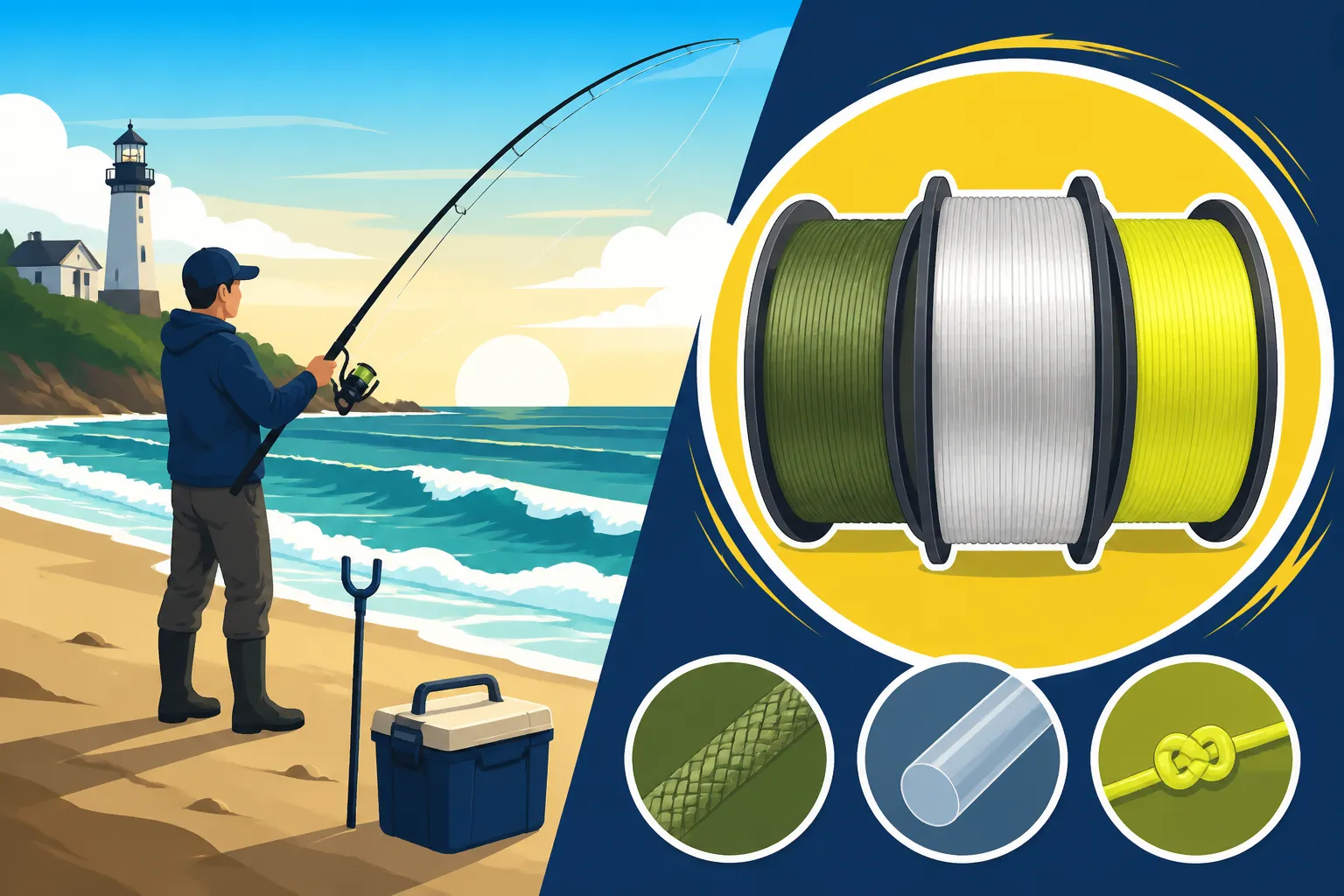
Braided line, often simply called "braid," is a multi-strand line woven from synthetic fibers like Spectra or Dyneema. It's become incredibly popular in recent years, especially among serious surfcasters, and for very good reason. Its properties make it a powerhouse for specific techniques and target species. One of its most impressive features is its incredible strength-to-diameter ratio. This means you can use a much thinner line for a given breaking strength compared to monofilament. A 30 lb braid, for example, will be significantly thinner than a 30 lb mono, and that translates directly to longer casting distances.
Another huge advantage of braid is its near-zero stretch. When a fish bites, you feel it instantly, like a direct connection to the fish. This heightened sensitivity is crucial for detecting subtle strikes, especially when fishing at long ranges or in windy conditions where it's hard to feel what's happening at the end of your line. It also allows for incredibly solid hooksets, as all the energy from your rod is transferred directly to the hook point. However, braid isn't without its downsides. It can be more expensive than mono, and its thinness can lead to frustrating "wind knots" if not managed carefully. While incredibly strong, it has very low abrasion resistance on its own and can be easily cut by sharp rocks or even fish teeth, which is why it's almost always paired with a leader. When you're looking for that direct connection and maximum casting distance, especially when throwing heavy lures or jigs for larger fish like those found in Striped Bass Fishing in Long Island Sound, braid is often the main line of choice. You can find a good selection of quality braided lines on platforms like Amazon.
Monofilament for Forgiveness and Affordability
Monofilament, or "mono," is the traditional fishing line many of us grew up with. Made from a single strand of nylon, it's widely available and generally more affordable than braided line. Its primary characteristic is its stretch. Unlike braid, mono can stretch quite a bit under pressure, which can be both a blessing and a curse. This elasticity acts like a shock absorber, cushioning sudden strikes from powerful fish and preventing hooks from tearing out of a fish's mouth. It also provides a bit of forgiveness for less-than-perfect drag settings or during sudden lunges by a fish, making it a good choice for beginners or those who prefer a more relaxed fight.
Monofilament also boasts good knot strength, meaning the knots you tie with it tend to be strong and reliable. It’s easier to handle than braid for many anglers, especially when tying knots or dealing with tangles. On the flip side, the stretch that provides forgiveness also means reduced sensitivity. You won't feel those subtle bites as readily, and hooksets might not be as immediate or powerful. Mono also has "memory," meaning it retains the shape of the spool, which can lead to coiling and reduced casting distance, particularly with heavier lines. While its abrasion resistance is generally better than braid without a leader, it will still fray and weaken over time when exposed to sharp structure. For general bait fishing or when you need a bit of give in your setup, mono remains a perfectly viable option, especially for Best Shore Fishing Spots in Connecticut where the bottom might be less aggressive.
Fluorocarbon as a Stealthy Leader Material
Fluorocarbon is often thought of as the best of both worlds, and in many ways, it is – but usually as a leader, not a main line for surfcasting. Made from polyvinylidene fluoride (PVDF), its most famous trait is its near invisibility underwater. This is due to its refractive index being very close to that of water, making it incredibly difficult for fish to see, even in clear conditions. For wary fish or in heavily fished areas, this stealth factor can be a significant advantage. It's also remarkably abrasion resistant, making it an ideal material to tie between your main line (especially braid) and your lure or hook, providing a buffer against sharp rocks, oyster beds, and the rough mouths of fish.
Fluorocarbon has less stretch than monofilament but more than braid, offering a good balance of sensitivity and shock absorption. However, fluorocarbon is typically much stiffer than both mono and braid, which can make it challenging to spool as a main line, leading to memory issues and reduced casting performance. It's also significantly more expensive, making it cost-prohibitive for many to use as an entire spool of main line on a surfcasting reel. For these reasons, fluorocarbon shines brightest as a leader material. Whether you’re fly fishing for trout or casting plugs for striped bass, a fluorocarbon leader is often the secret weapon to connect your presentation to your main line with maximum stealth and abrasion protection. Many anglers carry spools of various pound-test fluorocarbon for their leader needs, easily available from retailers like Amazon.
Making Your Choice: Factors to Consider
Deciding on the best line isn't a simple "this one size fits all" answer. It’s a nuanced decision that depends heavily on what you’re trying to catch, how you’re trying to catch it, what gear you already have, and even your personal fishing style. Let’s break down the key factors that should guide your selection for Connecticut surfcasting.
Your Target Species and Technique
The kind of fish you're after and the method you're using to catch them are paramount in line selection. If you're primarily throwing artificial lures, like plugs or soft plastics, for striped bass or bluefish, you'll want a line that maximizes casting distance and sensitivity. For these techniques, a braided main line of 20-40 lb test, paired with a 20-50 lb fluorocarbon leader, is often the go-to. The braid gives you the distance and feel, while the fluoro leader provides stealth and crucial abrasion resistance against the structure these fish often inhabit and the sharp teeth of bluefish. For example, if you're trying to reach those distant blitzes for striped bass, a setup featuring Best Lures for Striped Bass in Long Island Sound on braid will give you the edge.
On the other hand, if you're primarily bait fishing, perhaps soaking chunks of bunker for a relaxed afternoon catching whatever comes by, monofilament might be a more forgiving and economical choice for your main line. A 15-25 lb mono offers enough strength and stretch to absorb the sudden take of a bait-eating fish, and its memory can be less of an issue when you're not constantly casting. Even then, many bait anglers will still opt for a fluorocarbon or heavy monofilament leader for added abrasion resistance against the sandy or rocky bottom and any potential toothy critters. Understanding the specific behaviors and typical habitats of your target species will always steer you towards the most appropriate line choice.
Rod and Reel Compatibility
It's not just about the line itself; it's also about how that line interacts with your rod and reel. Certain lines perform better on certain setups. Modern spinning reels, for instance, are often designed with features like slow oscillation and precise line lay that make them incredibly efficient at handling braided line. The thin diameter of braid means you can spool on a lot more line for extended casting and fighting bigger fish, and the reel's design helps prevent those frustrating wind knots. However, older or less expensive reels might not handle braid as gracefully, sometimes leading to tangles or inconsistent casting.
Monofilament, with its thicker diameter and more forgiving nature, is generally easier to manage on a wider range of reels. If you have a trusty older reel that you've used for years, spooling it with mono might give you better overall performance than trying to force braid onto it. Your rod's action and power also play a role. A fast-action rod designed for sensitivity might pair beautifully with braid, allowing you to feel every bump. A more moderate action rod, which provides more flex, might benefit from the added stretch of monofilament to prevent hooks from pulling out when fighting a strong fish. Consider your entire fishing system – rod, reel, and line – as a cohesive unit. A balanced setup will always outperform mismatched components, giving you the best chance to land fish.
Budget and Maintenance
Let's be real: fishing can get expensive, and line choice is often a place where anglers try to save a buck. Monofilament is typically the most budget-friendly option upfront. You can buy a decent spool of mono for a relatively low cost, making it accessible for beginners or those who don't fish frequently. However, mono needs to be replaced more often due to its stretch and memory degrading over time, especially with exposure to sunlight and saltwater. So, while cheaper initially, its long-term cost can add up if you're diligent about replacing it regularly (which you should be!).
Braided line, on the other hand, usually has a higher upfront cost. A good spool of quality braid can be a significant investment. But here's the silver lining: braid is incredibly durable and lasts a very long time. It doesn't degrade in the same way mono does, and many anglers can get several seasons out of a single spool of braid. Even when the very end of your braid gets worn, you can often simply cut off a few feet and keep going, or even reverse the line on your spool to use the fresh line that was previously at the bottom. Fluorocarbon leaders, while excellent, are also on the pricier side, which is why they are typically used in shorter lengths. When considering your budget, think about both the initial outlay and the long-term cost and maintenance. If you’re a frequent angler, investing in quality braid and fluorocarbon leaders can actually save you money over time compared to constantly replacing mono. You can often find competitive prices and a wide selection of all line types on Amazon, allowing you to compare options and find what best fits your budget.
Skill Level and Personal Preference
Finally, your personal skill level and what simply feels good to you on the water are crucial considerations. If you're just starting out in surfcasting, the forgiving nature of monofilament might be a better entry point. Its stretch can help absorb some of the common mistakes made by new anglers, like over-setting the hook or failing to adjust drag properly during a fight. It's also generally easier to tie knots with mono, which can reduce frustration for those still learning the ropes. As you gain experience, you might then transition to braid to take advantage of its sensitivity and casting prowess.
Many seasoned anglers swear by braided main lines with fluorocarbon leaders, valuing the direct feel and long casts above all else. They've learned how to manage braid's potential for wind knots and have mastered the art of tying strong leader knots. However, some experienced anglers still prefer mono for certain applications, perhaps finding it more enjoyable for soaking bait or enjoying the softer feel. Ultimately, there’s no right or wrong answer; it’s about what gives you confidence and enjoyment on the water. Don't be afraid to experiment with different setups. Ask other local anglers what they use when fishing in similar conditions, like those along Long Island Sound Fishing Guide, but always tailor the advice to your own comfort and skill.
Recommended Setups for Connecticut Surfcasting
Given the varied conditions and target species encountered when surfcasting the Connecticut shoreline, having a few go-to line setups can make a big difference. These recommendations aim to provide a balance of performance, versatility, and durability, catering to common scenarios you'll face from the beach.
The Go-To Braided Line Setup
For many dedicated surfcasters targeting striped bass and bluefish with artificial lures, the braided main line with a fluorocarbon leader is the undisputed champion. This setup offers the best combination of casting distance, sensitivity, and stealth.
-
Main Line: Opt for a 20 to 40 lb test braided line. If you're primarily throwing lighter lures (under 2 ounces) and focusing on schoolie stripers or in calmer conditions, a 20-30 lb braid is excellent. It offers maximum casting distance due to its thinner diameter. For heavier lures (over 2 ounces), stronger currents, or when targeting larger fish and needing to muscle them away from structure, move up to a 40 lb braid. Some anglers even go heavier, but beyond 40 lb, the diameter can start to noticeably impact casting distance, and it becomes overkill for most typical Connecticut surfcasting. Brands like PowerPro and Sufix are very popular for their reliability and performance, and you can readily find them on Amazon.
-
Leader Material: A 20 to 50 lb fluorocarbon leader is essential. The length of your leader is also important; aim for about 3-6 feet. A shorter leader (3-4 feet) is easier to cast, especially for beginners, and keeps your knots out of your guides. A longer leader (5-6 feet) provides more stealth in clear water and more abrasion protection when fishing very rocky areas or when bluefish are around, as their sharp teeth can cut through even tough fluoro if they get it deep enough. For striped bass, a 20-30 lb fluoro leader is usually sufficient, offering stealth and decent abrasion resistance. If bluefish are prevalent, or you're fishing extremely rough structure, bumping up to 40-50 lb fluoro is a smart move for extra protection. This leader attaches directly to your braid, usually with a strong, slim knot like the FG knot or a modified Albright.
-
When to Use: This setup is ideal for throwing plugs (like poppers, swimmers, darters), metal jigs, and soft plastics when fishing for striped bass and bluefish. The no-stretch braid allows you to feel every twitch of your lure and every bump of the bottom, while the fluorocarbon leader provides that critical unseen connection to your offering and protection against sharp edges or toothy grins. This is your power setup for active fishing and situations where every bit of sensitivity and casting distance counts. When you're trying to reach that outer bar or work a plug through a rip, this is the way to go. Consider reading How to Catch Striped Bass in Long Island Sound for more on techniques where this line excels.
The Versatile Monofilament Setup
While braid often takes center stage, monofilament still has a strong place in the surf bag, especially for those who prefer a simpler approach or engage in more relaxed bait fishing.
-
Main Line: A 15 to 25 lb test monofilament line is a versatile choice. For general all-around bait fishing, where you might be casting out a clam, squid, or chunk of bait, 20 lb mono is a great starting point. It offers a good balance of strength, castability, and shock absorption. If you're fishing lighter tackle for smaller fish or in very calm conditions, 15 lb could work. For heavier bait rigs or when there's a good chance of encountering larger fish (and you want to forgo braid), 25 lb mono provides more muscle. It's often easier to manage, less prone to wind knots for new anglers, and more forgiving if you're not constantly focused on your technique.
-
When to Use: This setup shines when you're soaking bait. The stretch in monofilament helps prevent fish from feeling too much resistance and dropping the bait, and it can absorb the shock of a big fish taking a sudden run. It's also a great option for new anglers learning the ropes of surfcasting, as it's generally more forgiving than braid. If you're using bottom rigs for species like fluke or scup and don't need the extreme sensitivity of braid, mono can certainly get the job done. While typically used without a specific leader in these scenarios, some anglers will still add a foot or two of heavier mono or fluorocarbon just above their hook or rig for added abrasion resistance, especially if fishing Connecticut Saltwater Fishing Regulations by Species for bottom dwellers around structure. Even if you switch to bait for other fish, like the smallmouth discussed in Best Baits for Smallmouth Bass on the Housatonic, the principles of using mono for bait are similar.
Mastering the Leader Knot
Regardless of whether you choose braid or mono as your main line, understanding and mastering a reliable leader knot is critical. If you're using a braided main line, a strong connection to your fluorocarbon leader is the weakest link if not tied correctly. Many anglers spend hours choosing the perfect line, only to lose a fish because of a poorly tied knot.
There are several popular and highly effective leader knots for connecting braid to fluorocarbon:
- FG Knot: This knot is often considered the gold standard for connecting braid to a monofilament or fluorocarbon leader. It's incredibly strong, very slim (which helps it pass through rod guides smoothly during casting), and retains almost 100% of the breaking strength of both lines. It takes practice to tie, but once you master it, it's a game-changer.
- Modified Albright Knot: Easier to tie than the FG knot, the modified Albright is another excellent choice for braid-to-fluoro connections. It's strong and relatively streamlined, making it a popular choice for many surfcasters.
- Uni-to-Uni Knot: While not as strong or as slim as the FG or modified Albright, the uni-to-uni knot is perhaps the easiest to learn and tie quickly on the water. It's a reliable option for connecting lines of similar diameter and can be used for braid to heavier mono or even for attaching a mono leader to a mono main line.
Practice these knots at home until you can tie them quickly and confidently, even in adverse conditions. A strong, consistent knot is the final, crucial component in a line setup that can handle the rigors of surfcasting in Connecticut. Your line is only as strong as its weakest link, and often, that link is the knot you've tied. Without a solid connection, even the best line in the world won't prevent a heartbreak when a trophy fish finally bites. Don't underestimate this fundamental skill; it pays off immensely in the long run.
| Line Type | Pros | Cons | Best Use in Surfcasting |
|---|---|---|---|
| Braided | Extreme strength, thin diameter, no stretch (sensitive), long casting | High cost, visible, low abrasion (needs leader), wind knots | Main line for lures/jigs, big stripers, bluefish, long casts |
| Monofilament | Affordable, good knot strength, stretch (shock absorption), easy to tie | Memory, thicker diameter (less casting), less sensitive, degrades | Main line for bait fishing, beginners, general purpose |
| Fluorocarbon | Nearly invisible, excellent abrasion resistance, good sensitivity | Very stiff, high cost, difficult to knot, not ideal as main line | Leader material (braid to lure/hook), stealth, abrasion protection |
Disclaimer
This article is for general informational purposes only and does not constitute professional advice. Laws, prices and regulations vary by location and change over time. Consult a qualified professional for guidance on your specific situation.