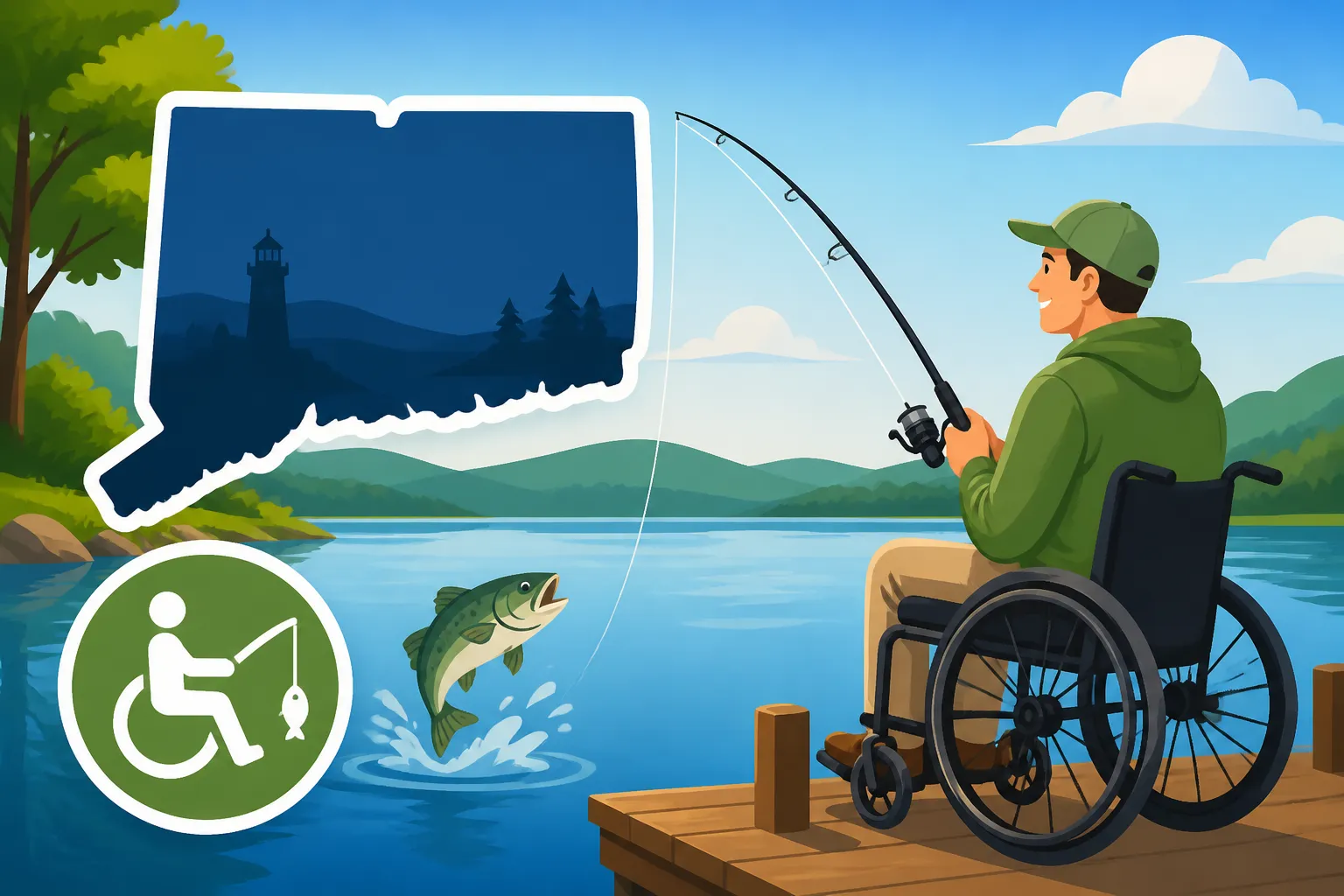
Connecticut Fishing License for Disabled Residents
Trying to navigate the ins and outs of fishing licenses in Connecticut can feel like a daunting task for anyone, but if you're a disabled resident, the process might seem even more complex, raising questions about eligibility, discounts, and how to actually get your hands on that permit. This comprehensive guide is here to untangle all those knots, providing clear, empathetic, and detailed information specifically for disabled anglers in our beautiful state.
Understanding Eligibility for Disabled Resident Licenses
It's a common misconception that all disabled individuals automatically qualify for a free or discounted fishing license. While Connecticut is supportive of its disabled community, there are specific criteria and definitions that need to be met. It’s not just about having a disability; it’s about having a disability that falls under the state’s guidelines for these particular benefits. This can be frustrating, especially when you feel like your disability is clearly impactful, but the bureaucratic language doesn't quite match your lived experience.
Defining "Disabled" in Connecticut's Context for Fishing Licenses
When the Connecticut Department of Energy and Environmental Protection (DEEP) talks about "disabled residents" in the context of fishing licenses, they're typically referring to individuals who meet certain conditions. For instance, blind individuals, those with intellectual disabilities, or residents who have lost a limb are often considered. The key here is that the disability must be profound enough to meet the statutory definitions that trigger eligibility for these special licenses. It's not always a simple self-declaration; there's usually a recognized standard or a specific type of impairment.
For a resident to qualify, the disability must often be permanent and significantly impair major life activities, aligning with classifications like those used by the Social Security Administration for total disability. This isn't meant to exclude anyone, but rather to ensure that the benefits are directed to those for whom they were primarily designed. Sometimes, a partial disability, while still challenging, might not meet the strict "total disability" requirement for a free or deeply discounted license. This can be a point of confusion and disappointment for many, so it's crucial to understand these distinctions from the outset.
Required Documentation and Verification
Once you believe you meet the definition, the next step, and often the most cumbersome, is providing the necessary proof. Connecticut DEEP isn't just going to take your word for it – and honestly, that's fair to ensure the system works as intended. You'll typically need official documentation to verify your disabled status. This could include a letter from the Social Security Administration stating your total disability, a statement from a licensed physician detailing your condition and its permanence, or in the case of blindness, a certificate from the Board of Education and Services for the Blind.
It's vital that your documentation is current, clearly states the nature of your disability, and explicitly confirms its permanence or the period of its duration. Think of it like this: they need a clear, official paper trail that leaves no room for doubt. Keep in mind that sometimes you might need to renew this documentation periodically, even for a lifetime license, if the initial approval was for a temporary disability. Always check with the DEEP directly or refer to the current year's Connecticut Fishing Guide for the most up-to-date requirements. Having all your ducks in a row before you apply can save you a lot of headache and back-and-forth later on.
Specific License Options and Discounts
Connecticut truly tries to make fishing accessible, offering a range of benefits for disabled residents. These options aren't just about saving a few bucks; they're about recognizing the challenges and providing an avenue for enjoyment and connection with nature that might otherwise be out of reach. It's a small but significant way the state acknowledges the diverse needs of its community.
Free Lifetime Fishing License for Disabled Veterans
This is arguably one of the most significant benefits offered. If you're a Connecticut resident veteran with a service-connected disability rating of 100% permanent and total, you are likely eligible for a free lifetime fishing license. This isn't just for a year or a few years; it's lifetime. This particular benefit is a heartfelt thank you for your service and sacrifice, acknowledging that your disability is a direct result of defending our country. It means you can fish for the rest of your life without ever worrying about renewals or fees.
To qualify for this incredible benefit, you'll need to provide official documentation from the U.S. Department of Veterans Affairs (VA) that clearly states your 100% permanent and total service-connected disability. This can be a VA benefits letter or a comparable official document. It's not enough to simply have a disability rating; it must be the 100% P&T designation. Once approved, this license covers both inland and marine waters, essentially giving you full access to all of Connecticut's fantastic fishing opportunities. It's a wonderful program, and if you qualify, it's absolutely worth pursuing. You can find more details in resources like the official guide on Free and Discounted Fishing License Options in Connecticut.
Discounted Licenses for Other Disabled Residents
For disabled residents who don't meet the criteria for the 100% P&T disabled veteran lifetime license, there are still significant discounts available. Connecticut offers an annual fishing license at a reduced rate for certain other categories of disabled residents. These typically include:
- Blind individuals: A certificate from the Board of Education and Services for the Blind is usually required.
- Individuals with intellectual disabilities: Documentation from a state-recognized agency or medical professional confirming the disability is generally needed.
- Other permanent, total disabilities: For those whose disability significantly impacts their ability to engage in daily activities, similar to Social Security Administration's definition of total disability, a discounted license may be available. This often requires a physician's statement.
The exact discount amount can vary year to year, so it's always wise to check the current How Much Does a Connecticut Fishing License Cost for the most up-to-date figures. While not free for life, these discounted annual licenses make fishing far more accessible financially, helping to offset the costs that can sometimes be a barrier for those on fixed incomes or with increased medical expenses. It’s a thoughtful way to ensure that the joy of fishing isn't out of reach.
The Combination Hunting and Fishing License Angle
For many outdoor enthusiasts, fishing is just one passion. If you're a disabled resident who also enjoys hunting, Connecticut offers combination licenses that bundle both activities. This can be a fantastic way to simplify your licensing needs and often results in additional savings compared to purchasing separate licenses.
If you qualify for a free or discounted fishing license due to your disability, those benefits often extend to the combination license as well. For instance, a 100% P&T disabled veteran would also receive a free lifetime combination hunting and fishing license. For other qualifying disabled residents, the discounted rate applies to the combined package. This means you get access to both pursuits under one streamlined permit. It's important to understand the specific requirements for hunting licenses too, as they often involve hunter safety courses or other certifications separate from fishing. You can explore the full range of options, including these bundled permits, by looking into Connecticut Combination Hunting and Fishing License Options. This allows you to plan your outdoor adventures without the hassle of multiple transactions.
How to Apply: Step-by-Step Process
Applying for any fishing license can feel like navigating a maze, and when you're dealing with specific disability requirements, it can add another layer of complexity. However, the process is designed to be as straightforward as possible, with multiple avenues for application to accommodate different needs. Don't let the paperwork deter you; breaking it down into steps makes it manageable.
Online, In-Person, and Mail Applications
Connecticut DEEP offers several ways to apply for your fishing license, including special disability licenses, ensuring accessibility for all residents.
-
Online: For many, the online system is the most convenient. You can typically create an account on the CT DEEP Sportsmen's Licensing System, fill out the application, and upload any necessary documentation. However, for a first-time application for a disabled resident license, especially a lifetime one requiring verification of a permanent disability, you might need to submit physical documentation initially or visit an office. Once your disabled status is verified and recorded in the system, renewals or subsequent purchases might be easier online. It's always best to call DEEP if you're unsure about applying online for your specific disability status initially. Many find the convenience of a digital license helpful, and details on Printing or Carrying a Digital Fishing License in Connecticut are readily available.
-
In-Person: If you prefer face-to-face assistance, or if your application requires original documentation, visiting a DEEP vendor or a DEEP office is a solid option. Authorized license vendors, often sporting goods stores or town clerks, can process many types of licenses. For complex disability applications, however, a DEEP office might be better equipped to review your documentation and provide immediate assistance. This is particularly helpful if you have questions or need clarification on specific requirements. They can walk you through the process and ensure everything is correctly submitted.
-
Mail: For those who cannot easily access online services or in-person locations, applying by mail is also an option. You'll need to download the appropriate application form from the DEEP website, fill it out completely, and mail it along with copies of your required disability documentation and payment (if applicable). Make sure to send copies, not originals, of sensitive documents, and consider using certified mail for tracking purposes. While it takes longer, it provides a viable pathway for many residents.
Navigating the CT DEEP Sportsmen's Licensing System
The CT DEEP Sportsmen's Licensing System is the central hub for all licensing activities in Connecticut. If you plan to apply online, you'll need to create an account first. This involves providing personal information such as your name, address, and date of birth. Once your account is established, you can log in, select the type of license you wish to purchase, and follow the prompts.
For disabled resident licenses, the system might have a specific section or prompt where you indicate your disability status. This is where you'd be asked to upload or indicate that you'll be submitting your verifying documentation. If you've been previously approved for a lifetime or discounted license, the system should remember your status, making future transactions smoother. If you encounter any issues or confusion, don't hesitate to reach out to the DEEP licensing division directly. Their customer service can guide you through the digital interface, especially if it's your first time navigating the system with special circumstances. For a more general overview of purchasing options, check out Where and How to Buy a Connecticut Fishing License.
Important Considerations and Common Pitfalls
Even with all the information at your fingertips, there are still a few key areas where disabled anglers might run into snags or overlook important details. Being prepared for these can save you a lot of grief and ensure your fishing experience is as smooth as possible.
Annual Renewals vs. Lifetime Licenses
This is a critical distinction. If you qualify for a free lifetime fishing license, typically as a 100% P&T disabled veteran, you generally won't need to renew it annually. It's truly a one-and-done process for the fishing component. However, even with a lifetime license, it's a good practice to confirm its active status periodically and ensure your contact information with DEEP is up to date.
For discounted annual disabled resident licenses, you absolutely need to renew it each year. These licenses expire, usually at the end of December, and you'll need to purchase a new one for the upcoming year. While your disability status might be on file, you'll still go through the renewal process and pay the applicable discounted fee. Missing a renewal means you're fishing without a valid license, which can lead to penalties. If you've had a change in your disability status that might affect your eligibility, it's your responsibility to inform DEEP. Understanding the difference between these types of licenses is paramount to staying compliant.
Reciprocity and Special Regulations
Fishing isn't just about the license; it's also about understanding the rules of the water. Even with a valid Connecticut disabled resident fishing license, you must still adhere to all state and local fishing regulations. This includes size limits, daily creel limits, season dates, and specific rules for certain water bodies, such as Trout Management Areas. For example, knowing the Connecticut Fishing Regulations Explained is crucial for any angler.
Furthermore, reciprocity agreements with neighboring states are extremely limited. Your Connecticut license, whether discounted or free, is generally only valid for fishing within Connecticut's waters. If you plan to fish in shared waters like the Connecticut River bordering Massachusetts, or Long Island Sound near New York, you'll need to check the specific reciprocity agreements or purchase an additional license for the other state, if required. For specific species, like striped bass, there may be interstate agreements on regulations, but the license itself is usually state-specific. Always double-check before casting a line in unfamiliar waters, especially those near state lines.
Ensuring Accessibility at Fishing Spots
While the license grants you the legal right to fish, it doesn't automatically mean every fishing spot is accessible. This is a common and understandable frustration. Many of Connecticut's most beautiful fishing locations, particularly streams and rivers, can be rugged and challenging to access for those with mobility impairments. However, many state parks, municipal ponds, and larger lakes offer accessible fishing piers, paved paths, or areas specifically designed for easier access.
When planning your trip, consider places like Connecticut State Park Fishing Guide entries that might highlight accessible features. Look for locations with paved parking close to the water, accessible restrooms, and level fishing platforms. Websites like the DEEP's own interactive maps often note accessible features. Don't be afraid to call ahead to the park or town hall to ask about specific accessibility details. Sometimes, a quick phone call can save you a wasted trip and help you find a truly enjoyable and manageable fishing experience.
Beyond the License: Gear and Resources
Getting your license is a fantastic first step, but it's just the beginning of your fishing journey. For disabled anglers, there are often additional considerations that can significantly enhance the experience, from specialized gear to supportive communities.
Adaptive Fishing Gear Considerations
The world of fishing gear has made incredible strides in inclusivity. If you have mobility limitations, reduced grip strength, or other physical challenges, there's a good chance there's a piece of adaptive gear out there to help you fish more comfortably and effectively. This can range from simple aids to more complex solutions.
- Rod Holders and Mounts: These can be invaluable for anglers with limited arm strength or who use wheelchairs. They securely hold your rod, allowing you to wait for a bite without constant strain. Some can even be mounted directly to a wheelchair or a boat rail.
- Electric Reels: For those with severe hand or arm limitations, electric reels can take the effort out of retrieving lines, especially when fishing for larger species or in deep water.
- Adaptive Grips: Many aftermarket products offer larger, more ergonomic grips for rods and reels, making them easier to hold for extended periods or for those with conditions like arthritis.
- Portable Seating: Lightweight, sturdy, and comfortable chairs or specialized fishing stools can make a huge difference if standing for long periods is difficult. Look for designs that offer back support and are easy to transport.
Websites like Amazon are great places to start looking for these kinds of specialized items. You can find everything from universal rod holder attachments to ergonomic reel handles. When purchasing items like these, always read reviews from other disabled anglers to ensure the product genuinely meets adaptive needs. Sometimes, a simple search on Amazon for "adaptive fishing gear" can open up a whole new world of possibilities.
Connecting with Local Disability Fishing Groups
One of the most powerful resources for any disabled angler is other disabled anglers. Community and shared experience can make all the difference. Many regions have fishing clubs or informal groups specifically for individuals with disabilities, or general fishing clubs that are particularly welcoming and knowledgeable about adaptive needs.
These groups offer more than just companionship; they can be a treasure trove of local knowledge. Members can share tips on accessible fishing spots, recommend specific adaptive gear, or even help organize group outings to places like accessible piers on Best Fishing Lakes in Connecticut. They often know which local vendors are most helpful, or which charter captains offer particularly accommodating trips. Searching online or asking at local bait shops can often lead you to these communities. Organizations like Casting for Recovery (though primarily for breast cancer survivors, they offer a model of therapeutic fishing) or local chapters of national disability sports organizations might also have fishing programs or know of relevant groups. Connecting with others who understand your challenges can transform your fishing experience from solitary struggle to shared joy.
| License Type | Eligibility | Cost (approx. 2026) | Key Feature | Renewal Frequency |
|---|---|---|---|---|
| Disabled Veteran Lifetime | CT resident, 100% P&T service-connected disability | Free | Lifetime, no renewal | Never |
| Other Disabled Resident Annual | Blind, intellectually disabled, or other permanent total disability (CT resident) | Discounted (e.g., $8-10) | Annual | Annually |
| Combination Disabled Veteran Lifetime | CT resident, 100% P&T service-connected disability | Free | Lifetime, Hunting & Fishing | Never |
| Combination Other Disabled Resident Annual | Blind, intellectually disabled, or other permanent total disability (CT resident) | Discounted (e.g., $15-20) | Annual, Hunting & Fishing | Annually |
Note: Costs are approximate and subject to change. Always verify current prices with CT DEEP.
Disclaimer
The information provided in this guide is for general informational purposes only and does not constitute legal advice. While we strive to keep the information up-to-date and accurate, regulations can change. Always consult the official Connecticut Department of Energy and Environmental Protection (DEEP) website or contact them directly for the most current and specific details regarding fishing licenses and regulations for disabled residents.