How to wade the Farmington River safely
Wading the Farmington River is an iconic experience for any Connecticut angler, offering some of the best trout fishing in the Northeast. However, the river's beauty can mask serious challenges: swift currents, unpredictable depths, and notoriously slick rock beds can quickly turn a peaceful outing into a perilous one. This guide is here to walk you through everything you need to know to wade the Farmington safely, ensuring you can focus on catching fish without compromising your well-being.
Understanding the Farmington River's Unique Challenges
The Farmington River, particularly its West Branch and main stem sections that are heavily managed for trout, is a dynamic waterway. Its characteristics contribute to both its fantastic fishing and its potential dangers for waders. Ignoring these nuances can lead to a less-than-ideal, or even dangerous, day on the water.
Water Flow and Depth Variations
One of the most significant factors making the Farmington River a challenging wading environment is its variable flow and depth. The river's flow is heavily influenced by releases from the Goodwin Dam at Hogback Reservoir, which can change throughout the day without much warning. A section you waded easily in the morning might be a torrent by afternoon. These rapid fluctuations mean that even familiar spots can become hazardous. Heavy rainfall can also swell the river quickly, creating powerful currents that are difficult to stand against.
Imagine you're targeting a deep seam on the "Farmington River West Branch Trout Fishing" section near the permanent dead-end sign in Riverton. You've scouted it, and it looks manageable. But then, an upstream dam release increases the flow by several hundred cubic feet per second (CFS). Suddenly, what was waist-deep becomes chest-deep, and the current you could lean into now threatens to sweep you off your feet. This isn't a hypothetical; it's a regular occurrence. Always check the flow rates from the U.S. Geological Survey (USGS) gauges, particularly the Riverton gauge, before heading out and even while you're fishing. A quick glance at the river's edge markers or a phone app like RiverApp can give you crucial real-time data.
Bottom Composition and Hazards
The bottom of the Farmington River is a mosaic of challenges: smooth, moss-covered rocks; loose, shifting gravel; and larger, embedded boulders. The smooth rocks, often coated in a slick layer of algae, are arguably the biggest culprit for slips and falls. They offer almost no traction, even with the best wading boots, turning what looks like a simple step into a treacherous slide. This is especially true in sections with moderate current, where the water pressure can exacerbate any loss of footing.
Beyond the slipperiness, there are hidden hazards. Deep pockets and sudden drop-offs can appear out of nowhere. You might be wading comfortably across a shallow flat only to step into a submerged hole that instantly pulls you off balance. Submerged logs, branches, and debris, especially after high water events, also pose tripping hazards or can snag your line and even your feet. It's not uncommon to find discarded fishing line or other detritus wrapped around rocks, adding to the unpredictable nature of the riverbed. Always proceed with caution, understanding that what you see on the surface only tells half the story of what lies beneath.
Seasonal Considerations
While the Farmington River offers incredible fishing year-round, each season presents its own unique set of wading challenges. Spring brings higher, colder water from snowmelt and heavy rains, making currents stronger and hypothermia a greater risk. The river is often high and discolored after April showers, making it impossible to see the bottom. This is when a strong wading staff becomes absolutely non-negotiable.
Summer can bring lower, warmer flows, which might seem safer, but it also means more exposed, algae-covered rocks and a greater chance of thermal stress for the trout, which can lead to fishing closures in certain sections. Conversely, lower water exposes more obstacles, which can become trip hazards when the water rises again. Fall offers stable, often beautiful conditions, but the water temperature starts to drop significantly, and wet leaves can make riverbanks and trails incredibly slick. Winter wading, especially during ice formation or when navigating icy banks, demands extreme caution and specialized gear. The water is brutally cold, and a fall could lead to severe hypothermia in minutes. This is when being keenly aware of the Connecticut Cold Water Life Jacket Rule (October to May) is not just a suggestion but a life-saving necessity.
Essential Gear for Safe Wading
Having the right gear isn't just about comfort; it's about safety. Equipping yourself properly for the Farmington's conditions is the first step towards a confident and secure day of fishing. Trying to "make do" with inadequate equipment is a recipe for disaster on this river.
Waders and Boots
Your waders are your primary defense against the elements, and your boots are your anchor. For the Farmington, breathable chest waders are generally preferred for their versatility across seasons. Look for durable materials that can withstand scrapes against rocks and branches. While stockingfoot waders require separate wading boots, this combination often provides better ankle support and allows for more customizable traction options.
When it comes to wading boots, traction is paramount. Felt soles, while traditionally popular, are often banned in other states due to invasive species concerns (though currently permitted in CT). They offer excellent grip on wet, slimy rocks, which are abundant in the Farmington. However, they can be incredibly slick on muddy banks or snow. Rubber soles with aggressive tread patterns are a good alternative, especially when studded. Many anglers opt for rubber soles with added carbide-tipped studs for superior grip on slick riverbeds. Brands like Orvis, Simms, and Patagonia offer excellent choices that can often be found on platforms like Amazon, providing a wide range of options for both felt and studded rubber soles. Consider trying on boots with your waders to ensure a comfortable, secure fit that won't chafe or restrict circulation.
Wading Staff and Safety Tools
A sturdy wading staff is not optional; it's a non-negotiable safety tool on the Farmington River. This isn't just for balance; it's your third point of contact, your probe for hidden depths, and your brace against strong currents. A collapsible aluminum or carbon fiber staff is ideal, as it can be easily stored on your pack or wader belt when not in use. It should be long enough to reach the bottom comfortably when fully extended, allowing you to gauge depth and stability before committing your weight.
Beyond the staff, other safety tools are crucial. A quality knife or line cutters, easily accessible, are vital for freeing yourself from tangled lines or brush if you fall. A whistle can be used to signal for help if you're in distress. A small, dry bag (often available on Amazon) containing a fully charged cell phone (in a waterproof case), a first-aid kit, and an emergency blanket should always be carried. Many anglers also attach a small bear bell or similar jingler to their staff or pack to alert wildlife (and other anglers) to their presence, especially when moving through dense riparian vegetation.
Layering and Personal Flotation Devices
Dressing in layers is key to comfort and safety, especially with the Farmington's constantly cold water. Even on a hot summer day, a dip in the 50-degree water can lead to rapid chilling. Start with moisture-wicking base layers, add insulating mid-layers like fleece, and finish with your waders and a waterproof-breathable wading jacket. Avoid cotton, as it loses its insulating properties when wet.
A Personal Flotation Device (PFD) is another item that far too many waders overlook, but it's an absolute game-changer for safety. While not strictly required for wading in most areas, it provides invaluable buoyancy if you take an unexpected swim. Inflatable PFDs are less bulky and allow for a full range of motion, inflating automatically or manually if you enter the water. These are particularly important when fishing sections with strong currents or deeper pools, especially during high water events or the colder months covered by the "Connecticut Cold Water Life Jacket Rule (October to May)". Think of it as cheap insurance—you hope you never need it, but you'll be profoundly grateful if you do. Investing in a low-profile PFD from a reputable brand (also widely available on Amazon) can make all the difference.
Wading Techniques and Best Practices
Once you have your gear, the next step is to master the art of safe wading. It's not about brute force; it's about finesse, observation, and respect for the river's power. Learning these techniques will allow you to explore more of the river's prime fishing spots without undue risk.
Reading the Water
Before you even step foot in the current, take the time to "read" the water. This means observing the speed, depth, and character of the flow. Look for subtle cues: where the current is fastest (often indicated by whitewater or a distinct V-shape), where it's slower (smooth, darker sections), and where potential hazards lie. The "Wading Techniques for Connecticut Trout Streams" are incredibly useful here. Pay attention to upstream conditions: is there discolored water indicating recent rain? Are there any visible debris flows?
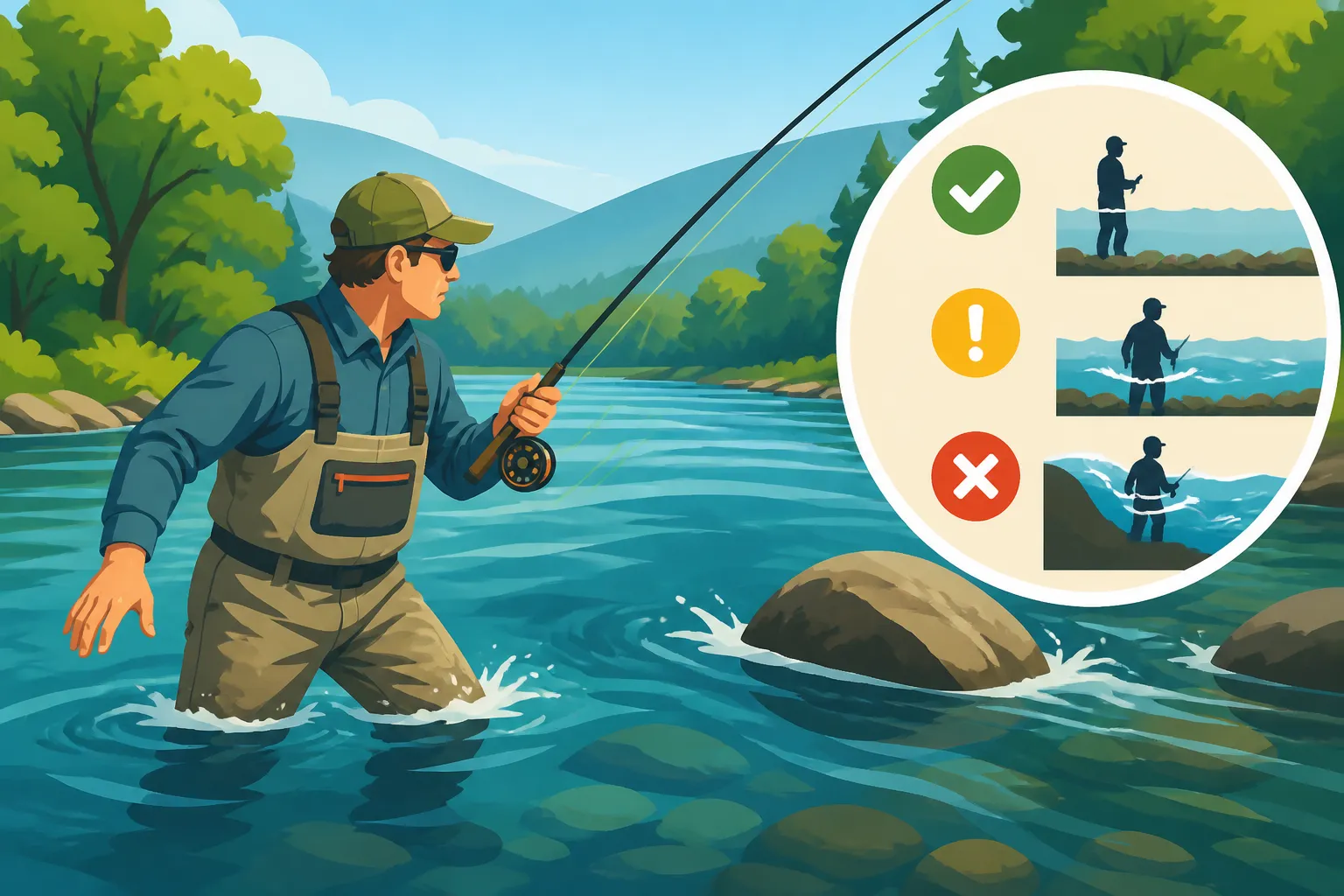
Identify your crossing points carefully. Look for wider, shallower sections where the current is dispersed, or areas with larger, stable rocks that can offer solid footing. Avoid crossing directly above or below major rapids or waterfalls. When looking at a new section of the river, try to spot existing angler trails or paths that indicate where others have successfully waded. Never try to wade through water that is moving faster than a quick walk, or deeper than mid-thigh. If you can't see the bottom, assume there are hidden dangers. Sometimes, the safest approach isn't to wade across, but to walk around.
The Art of the Shuffle and Three-Point Contact
When you do commit to wading, adopt the "wader's shuffle" and maintain three-point contact. The shuffle involves sliding your feet rather than lifting them, keeping them low to the bottom. This minimizes the chance of catching your toe on an unseen rock and helps you feel the riverbed before fully committing your weight. It's a slow, deliberate movement, not a hurried stride.
Three-point contact means that at all times, either two feet and your wading staff, or one foot and your wading staff, are firmly planted on the riverbed. Your wading staff becomes an extension of your body, probing the bottom ahead of you, testing for stability and depth, and acting as a steadying brace against the current. As you move, place your staff slightly upstream and to the side of your lead foot. This angle allows the current to push the staff into the riverbed, increasing its stability, rather than pushing it away. Remember, the river is constantly trying to trip you up; your job is to give it as few opportunities as possible.
Crossing Currents and Obstacles
Crossing strong currents requires a specific strategy. Face slightly upstream and angle your body into the current. This presents a smaller profile to the water, reducing drag. Lean into the current, using your body weight as a counterbalance. Keep your knees slightly bent to absorb unexpected shifts in the bottom or surges in the current. Your wading staff is crucial here, providing a stable pivot point.
When encountering obstacles like submerged logs or large boulders, don't try to climb over them if they're slick or unstable. Instead, assess if you can safely wade around them. If you absolutely must navigate a difficult spot, move extremely slowly, using your staff to feel for secure holds. If the current is too strong, or the bottom too treacherous, the safest option is always to retreat. Remember that no fish is worth risking a serious injury or worse. Sections of the river designated as "Farmington River Trophy Trout Stream Rules" or "Connecticut Trout Management Area Regulations" often have popular but challenging wading spots, so extra care is advised. You might find some useful insights in a guide to Float Fishing the Farmington River, even if you're primarily wading, as it can highlight treacherous areas to avoid.
Dealing with Unexpected Situations and Emergencies
Despite all precautions, things can still go wrong. Being prepared for emergencies and knowing how to react can significantly mitigate risks and even save lives. The Farmington River is beautiful, but it demands respect.
What to Do If You Fall
Falling in the Farmington is a rite of passage for many, but knowing how to react can prevent a minor spill from becoming a serious incident. The first thing to do if you fall is not to panic. Immediately turn onto your back with your feet pointed downstream. This allows you to push off obstacles with your feet, protecting your head and body from impact. Keep your waders and boots on; while they might feel heavy, they actually provide crucial insulation and some buoyancy, especially if you have a PFD on.
Work your way towards the nearest shallow or slower moving water. Try to orient yourself so you can reach for submerged rocks or branches to pull yourself towards the bank. If you have a wading staff, try to hold onto it and use it to help regain your footing. Once out of the main current, assess yourself for injuries and check your gear. If you're soaked through, especially in cold weather, prioritize getting warm immediately to prevent hypothermia. This means heading back to your vehicle, changing into dry clothes, and warming up.
Recognizing and Avoiding Hypothermia
Hypothermia is a very real threat on the Farmington, even on seemingly mild days, due to the constantly cold water. It occurs when your body loses heat faster than it can produce it, leading to a dangerously low body temperature. The symptoms progress from shivering, confusion, and clumsiness to slurred speech, irrational behavior, and eventually loss of consciousness.
To avoid hypothermia, always dress in appropriate layers (non-cotton!), and seriously consider a PFD, especially during the colder months when the Connecticut Cold Water Life Jacket Rule (October to May) is in effect. If you fall in, get out of the water and change into dry clothes as quickly as possible. If you or a fishing buddy starts exhibiting symptoms, seek immediate medical attention. Get the person out of the cold, remove wet clothing, wrap them in dry blankets or a sleeping bag, and offer warm (non-alcoholic) drinks. Early recognition and action are crucial.
Emergency Communication and Preparedness
Fishing, especially wading, can take you to remote areas of the Farmington where cell service might be spotty. Always let someone know where you are going and when you expect to return. Carry a fully charged cell phone in a waterproof case, ideally in a dry bag (many affordable options are available on Amazon). Consider carrying a portable power bank as well.
In truly remote areas or if you frequently venture alone, a personal locator beacon (PLB) or satellite messenger device (like a Garmin InReach) can be a literal lifesaver, allowing you to send an SOS signal even without cell service. These devices, while an investment, offer peace of mind when venturing into the wilder stretches of rivers that are part of the "Best Fly Fishing Rivers in Connecticut". Ensure your first-aid kit is adequately stocked with essentials like bandages, antiseptic wipes, pain relievers, and any personal medications. Knowing basic first aid and CPR is also highly recommended. Being prepared doesn't mean being paranoid; it means being smart about enjoying the outdoors responsibly.
Practical Wading Gear Checklist for the Farmington River
To help you prepare for a safe and enjoyable outing, here’s a quick overview of essential gear and considerations for wading the Farmington River.
| Gear Category | Item | Key Feature / Why It's Needed | Notes for Farmington River |
|---|---|---|---|
| Waders & Boots | Breathable Chest Waders | Keeps you dry and insulated, offers full coverage | Durable material crucial for rocky banks and tight brush. |
| Wading Boots (studded rubber/felt) | Superior traction on slick, algae-covered rocks and varied bottom | Choose rubber for banks/snow, felt for pure rock grip. Studs are a huge plus. | |
| Safety Equipment | Wading Staff | Essential for balance, probing depth, and stability in current | Collapsible, sturdy, easily accessible. Your third leg! |
| Personal Flotation Device (PFD) | Provides buoyancy in case of a fall, prevents hypothermia | Inflatable vests are low-profile. Critically important in cold water. | |
| Knife/Line Cutters (accessible) | For freeing yourself from tangles or cutting line in an emergency | Keep it on a lanyard or retractor on your vest. | |
| Whistle | For signaling for help if you're in distress or injured | Simple, effective. | |
| Layering | Moisture-Wicking Base Layers | Wicks sweat away, keeps you dry and warm (even when damp) | Avoid cotton! Merino wool or synthetic. |
| Insulating Mid-Layers (fleece) | Provides warmth; crucial for cold river water | Layer according to air and water temperature. | |
| Waterproof-Breathable Jacket | Protects from rain, wind, and spray | Essential for comfort and protection from elements. | |
| Emergency/Misc. | Waterproof Phone Case & Dry Bag | Protects phone, keeps essentials dry, provides emergency communication | Also good for keys, wallet, first-aid kit. |
| First-Aid Kit | For minor injuries, cuts, scrapes, and emergencies | Include pain relievers, antiseptic, bandages. | |
| Water Bottle | Stay hydrated, even on cool days | Keep it easily accessible. | |
| Headlamp/Flashlight | For early morning or late evening fishing, or unexpected delays | Crucial if you're out past dusk. | |
| Sunscreen/Insect Repellent | Protect from sun and biting insects | No one wants a sunburn and bug bites. |
Remember, this isn't just a list of suggestions; these are critical items that will enhance your safety and enjoyment on the Farmington River.
Disclaimer
Please remember that all information provided in this guide is for educational and informational purposes only. Wading in rivers carries inherent risks, and conditions can change rapidly. Always exercise extreme caution, use your best judgment, and prioritize your safety above all else. Neither the author nor the publisher assumes any responsibility for accidents or injuries incurred while following the advice in this guide. Always be aware of current weather, water conditions, and local regulations before heading out.