How to catch striped bass on the outgoing tide
You’ve been out on the water, you’ve watched the tide charts, and you know the incoming tide can be lights out for striped bass. But what about when that water starts to recede? Many anglers get frustrated by the outgoing tide, feeling like the fish shut down or become impossible to locate. It’s a common misconception, but I'm here to tell you that the outgoing tide offers some of the most consistent and exciting striped bass action in Connecticut, if you know how to read the water and adapt your approach. This guide will walk you through exactly how to unlock the secrets of fishing the outgoing tide for striped bass, turning those challenging moments into memorable catches.
Understanding the Outgoing Tide and Striped Bass Behavior
The ebb and flow of the tide are more than just water levels changing; they're a massive conveyor belt for bait and a dynamic environment that dictates how and where striped bass hunt. While the incoming tide brings fresh bait into an area, the outgoing tide often concentrates it, creating predictable ambush points that savvy anglers can exploit.
What Makes the Outgoing Tide Special for Stripers?
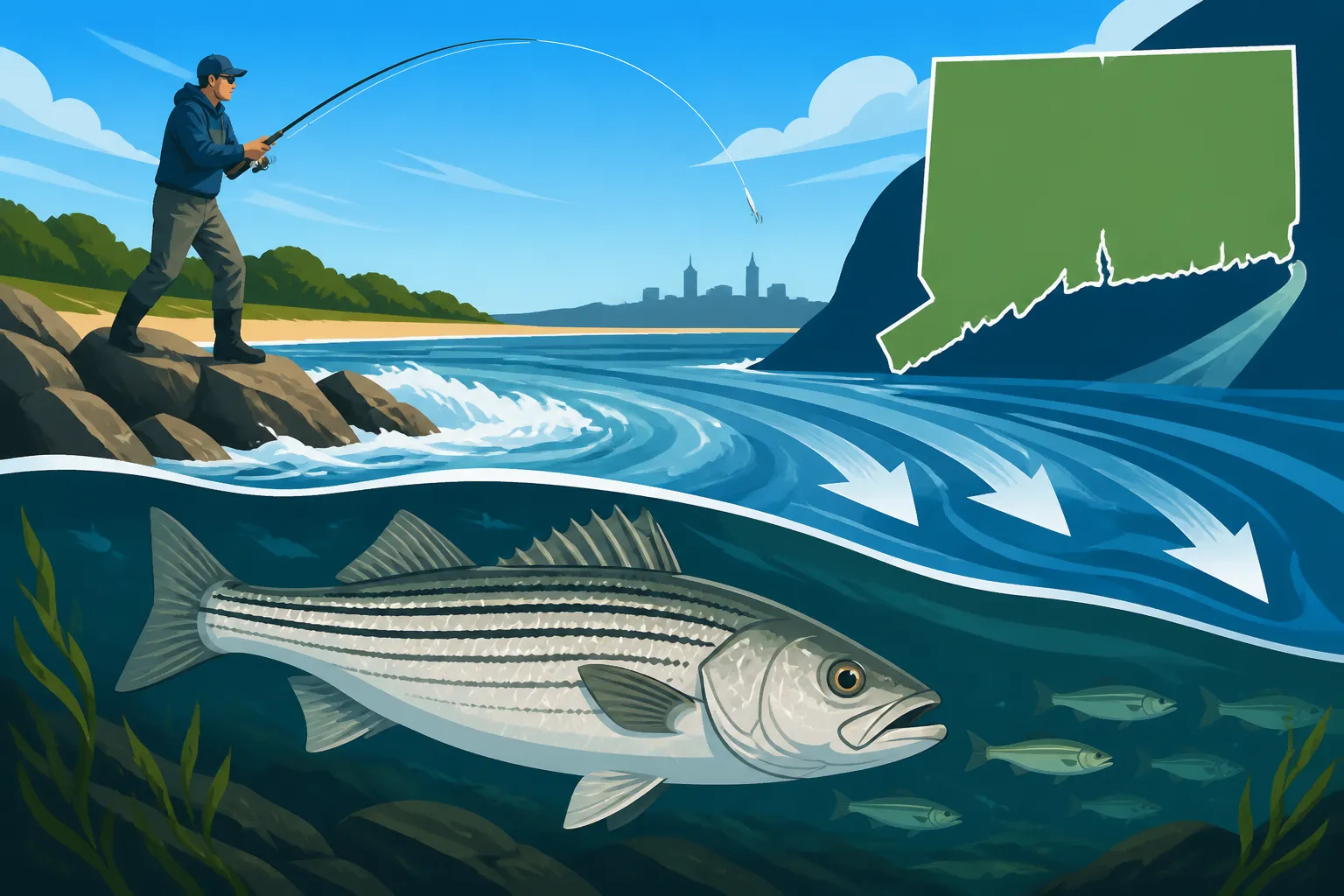
Think of the outgoing tide like a giant drain. As the water rushes out, it pulls everything with it: crabs scurrying from exposed rocks, small baitfish flushed out of shallow coves, and even larger prey forced out of deeper channels. This current isn't just strong; it's also highly directional, creating distinct current seams, eddies, and rips where baitfish get disoriented and easy pickings for hungry stripers. The key is understanding that stripers are opportunistic predators; they want to expend the least amount of energy for the greatest reward. The outgoing tide naturally creates these energy-efficient feeding lanes.
Often, areas that were bustling with bait on a high tide might seem barren as the water drops, but this is precisely when the dynamics change. Baitfish that were scattered across wide flats during the flood tide might now be funneled into narrower channels or forced over specific points and ledges. This concentration makes them easier for stripers to ambush. It’s less about the sheer volume of water and more about the movement and direction of the water, which dictates the buffet line for the bass. The cooler, denser water also tends to sit lower in the water column, and as the tide recedes, this can sometimes bring those cooler, oxygen-rich waters to shallower areas, stimulating fish activity.
Where Striped Bass Position Themselves
During an outgoing tide, striped bass will often position themselves in strategic locations to conserve energy while waiting for bait to be delivered to them. Think of them like a baseball outfielder waiting for a fly ball – they know where the ball is going to land. Prime locations include the down-current side of structure, rips, current seams, and the edges of channels. They use the current to their advantage, holding just out of the main flow, darting out to snatch prey as it passes.
Consider a rocky point extending into Long Island Sound. On an incoming tide, stripers might be on the up-current side, facing into the flow. But on an outgoing tide, they'll often shift to the other side of that same point, or just below it, where the current forms an eddy or a slack water pocket. This allows them to stay out of the direct force of the current but still be perfectly positioned to ambush anything pushed past the point. Similarly, along a river mouth or a strong tidal creek, the bass will sit in the slacker water directly adjacent to the main current, waiting. Understanding these preferred holding patterns is crucial to putting your bait or lure right in their strike zone. Looking at an area like the Connecticut River Striped Bass Fishing spots, you’ll see how these principles apply to specific geographical features.
Essential Gear for Outgoing Tide Striped Bass Fishing
When the current is ripping, your gear choice becomes paramount. You need equipment that can stand up to the strain of heavy water and fighting strong fish, while still allowing you to present your offering effectively. Skimping on tackle here can lead to frustrating break-offs and lost fish.
Rods, Reels, and Line Selection
For outgoing tides, especially in areas with significant current like coastal rivers or around major points in Long Island Sound, you’re going to want gear with a bit more backbone. A medium-heavy to heavy power spinning rod, typically 7 to 9 feet in length, is a good starting point. This length gives you the casting distance needed to reach distant rips and the leverage to fight fish in strong currents from shore or boat. For boat fishing, a shorter, more powerful rod (6'6" to 7'6") might be preferred for vertical jigging or working closer to structure.
Pair your rod with a robust spinning reel in the 4000 to 6000 size range, capable of holding a good amount of strong braided line. Look for reels with a smooth, powerful drag system, because you'll be putting it to the test. Speaking of line, braided line is almost always the way to go. Its lack of stretch provides superior sensitivity, crucial for feeling subtle bites in current, and its thin diameter for its strength helps cut through the water, reducing bow in your line. A 30 to 50 lb braid is a common choice. Always tie on a fluorocarbon leader of 30 to 50 lb test. Fluorocarbon is less visible to fish and more abrasion-resistant, which is vital when fishing around barnacle-encrusted rocks or mussel beds. You can find excellent quality braided lines and fluorocarbon leaders on Amazon, often at competitive prices.
Lures and Baits That Excel in Moving Water
The goal on an outgoing tide is often to imitate baitfish being swept along by the current, or to present a bait that can hold its position effectively. Heavy lures are your friends.
- Jigs: Bucktail jigs are legendary for a reason. Their compact profile and lead head allow them to sink quickly and stay near the bottom, even in strong currents. Tipped with a pork rind or a soft plastic trailer, they imitate squid, crabs, or various baitfish. Cast them up-current and let them drift and bounce along the bottom, working them back with slow lifts and drops. Jig weights often range from 1 to 4 ounces or more, depending on current strength and depth.
- Plugs: Sinking or heavily weighted plugs, like lipped swimmers or certain metal-lipped darters, can be very effective. These lures dive and wobble, imitating disoriented baitfish struggling in the current. Look for those designed to be fished in strong current, which typically have a tighter wobble. They can be cast and retrieved, or trolled slowly near current seams.
- Soft Plastics: Paddle tail swimbaits rigged on heavy jig heads are another excellent option. Their soft, lifelike action is irresistible. Experiment with colors and sizes, but natural baitfish patterns like pearl, olive, or bunker imitations are usually reliable. You can buy a variety of these from brands like Z-Man or Keitech on Amazon.
- Live Bait: If you're fishing with live bait, eels are a top choice for big stripers, especially at night or in lower light. Chunk bait like fresh bunker or mackerel can also be extremely effective. The scent trail travels far in the current, drawing stripers in. Use a fish-finder rig with enough weight to hold bottom, letting your bait drift just above the structure. For more on what striped bass eat, check out our guide on What striped bass eat in Long Island Sound.
Proven Techniques for Fishing the Outgoing Tide
Having the right gear is only half the battle; knowing how to use it in the dynamic environment of an outgoing tide is where the magic happens. Success hinges on reading the water, anticipating fish behavior, and precise presentations.
Targeting Rips and Current Seams
Rips and current seams are absolute magnets for striped bass on an outgoing tide. A "rip" is where strong current flows over an uneven bottom, creating turbulent water on the surface, often indicating a drop-off or submerged structure below. Current seams are the distinct lines where faster water meets slower water, or where two currents converge. These are prime ambush points because baitfish are often pushed into these areas, becoming disoriented or struggling in the chaotic water.
When you identify a rip or seam, position your boat or cast from shore so your lure or bait drifts naturally into or alongside the seam. If you're boat fishing, use your motor to hold your position, or drift slowly with the current, fan-casting ahead of your drift. If shore fishing, cast well up-current and allow your offering to sweep downstream into the target zone. The goal is to make your lure look like an easy meal caught in the current. This is a situation where heavier jigs and sinking plugs really shine, as they can get down to where the fish are holding in the turbulent water. Sometimes, a faster retrieve is necessary to keep your lure from snagging on bottom in the deeper, rougher parts of a rip, while other times a slow, controlled drift is best. This takes practice and observation.
Fishing Structure Effectively
Striped bass love structure, and during an outgoing tide, they use it to their advantage. Jetties, rock piles, bridge pilings, submerged ledges, and even docks become natural current breaks and ambush points. The bass will often sit on the down-current side of these structures, just out of the main flow, waiting for bait to be swept past them.
When fishing structure, cast your lure or bait up-current of the structure and let it drift naturally alongside or over the structure. For example, if you're fishing a jetty, cast parallel to it, allowing your lure to tumble and sweep along the rocks. As your lure passes the tip or an irregularity in the structure, that’s often when a strike will occur. For bridge pilings, cast slightly up-current of the piling and let your jig or soft plastic swing around the downstream side. Always be prepared for a hit as your bait clears the structure, as that's where the bass are often hiding. This requires precise casting and understanding the specific dynamics of each piece of structure. Many Best Shore Fishing Spots in Connecticut will highlight how important structure is for stripers.
Adapting to Different Outgoing Tide Stages
The outgoing tide isn't a static event; it changes intensity and dynamics throughout its cycle. Understanding these stages and adapting your tactics is crucial.
- Early Outgoing: As the tide first starts to turn, the current might be slow, and fish could still be scattered from the high tide. This is a good time for covering water with lighter lures, like smaller paddle tail swimbaits or even topwater plugs if conditions allow. Baitfish might be starting to move out of shallower areas, making them vulnerable. This stage can be similar to fishing the tail end of the incoming tide, so techniques for Best time of day to catch striped bass on the incoming tide might still apply here.
- Mid-Outgoing (Strongest Current): This is often the prime time. The current is at its strongest, creating the most defined rips and seams, and flushing the most bait. This is when you'll want to deploy your heaviest jigs and most current-resistant plugs. Focus on the most intense current areas and distinct ambush points. Stripers will be actively feeding, so get your presentation right in their face. This is when the Best Lures for Striped Bass in Long Island Sound really shine.
- Late Outgoing (Slack Before Low): As the current starts to slow down towards dead low, fish might move out of the strongest current areas. They might push into slightly deeper holes adjacent to structure, or follow the last bits of receding water out of coves and flats. This can be a good time for live bait presentations or working soft plastics very slowly along the bottom. Sometimes, the last hour of the outgoing tide, just before the turn to incoming, can bring a final flurry of activity as stripers clean up any remaining bait before the water goes completely slack.
It's really about observing the water and seeing how the current is moving and where the bait is being pushed. Don't be afraid to change up your lure or your fishing spot as the tide progresses.
Here's a quick overview of how different lures might perform across the outgoing tide stages and types of water:
| Lure Type | Early Outgoing | Mid-Outgoing (Strong Current) | Late Outgoing (Slack Before Low) | Primary Water Type |
|---|---|---|---|---|
| Bucktail Jigs | Good for probing edges, moderate weight. | Excellent for deep water, rips, heavy current. | Slower retrieve near structure, lighter weights. | Rips, channels, structure, deeper water |
| Paddle Tail Swimbaits | Effective, versatile, lighter jig heads. | Heavier jig heads for maintaining depth, current seams. | Slow retrieve along bottom, shallow flats. | Structure, channels, flats, current seams |
| Sinking Plugs | Good for covering water, moderate current. | Designed for strong current, tight wobble. | Bouncing off structure, very slow retrieve. | Rips, channels, rocky points |
| Topwater Plugs | Possible in calm eddies, lower light. | Rarely effective in strong current. | Possible in slack water, very shallow areas. | Calm bays, shallow flats, dawn/dusk, very specific conditions |
| Live/Chunk Bait | Drifting into current. | Excellent for anchoring in strong current. | Soaked in holes, edges of channels. | Any, but excels in strong current or slack with scent. |
Safety and Best Practices on the Water
Fishing the outgoing tide can be incredibly productive, but it also presents unique challenges, particularly concerning safety. Strong currents, changing water levels, and sharp submerged structures demand respect and preparedness.
Navigating Strong Currents
Whether you’re fishing from a boat or wading, strong outgoing currents can be dangerous. From a boat, always be aware of your position relative to hazards like rocks, jetties, and bridge pilings. The current can push you faster than you anticipate, and losing control can lead to serious trouble. Keep an eye on your boat’s position with respect to shore and structure, and always be ready to use your motor to correct your drift or hold your spot. It's often safer to approach an area from the up-current side and drift through it, rather than trying to power against the strongest flow. This also means understanding Connecticut Boating Laws for Anglers and having all required safety equipment on board.
For wade anglers, strong currents can be especially treacherous. Always scout an area at low tide if possible to understand the bottom contour and identify potential hazards. Wear appropriate wading boots with good grip, and consider using a wading staff for stability. Never wade alone in strong current, and always wear a PFD (personal flotation device). Even in relatively shallow water, a strong current can sweep you off your feet. As a good rule of thumb, if you can feel the current pushing hard against your legs, it’s probably too strong to wade safely. You can find reliable PFDs and wading staffs on Amazon to ensure you're well-equipped.
Responsible Catch and Release
Even though stripers are often aggressively feeding on an outgoing tide, it’s still critical to practice responsible catch and release, especially for fish you don't intend to keep. Striped bass are powerful fish, and fighting them in strong currents puts extra strain on them.
Here are a few tips to maximize their survival chances:
- Fight the Fish Quickly: Try to land the fish as quickly as possible without over-stressing it. Prolonged fights in strong current can exhaust a striper, reducing its chances of survival.
- Use Appropriate Tackle: Using too light of tackle will extend the fight unnecessarily. Match your gear to the conditions and the potential size of the fish.
- Circle Hooks: If you're using natural bait, the Connecticut Circle Hook Requirement for Striped Bass is in effect, and it’s a best practice regardless. Circle hooks dramatically reduce gut-hooking, which is a major cause of mortality for released fish.
- Minimize Air Time: Keep the fish in the water as much as possible. If you must remove it for a quick photo, do so gently and quickly.
- Support the Fish: When handling, support the fish horizontally, especially larger ones, to avoid damaging internal organs. Avoid holding them vertically by the jaw.
- Revive Carefully: If the fish seems sluggish, hold it gently in the water, facing into the current, until it regains strength and can swim away on its own. Don’t just toss it back; make sure it's ready to go.
For more detailed advice, read up on Striped bass catch and release survival tips.
Disclaimer
This article is for general informational purposes only and does not constitute professional advice. Laws, prices and regulations vary by location and change over time. Consult a qualified professional for guidance on your specific situation.