Lake Lillinonah bass fishing spots
Lake Lillinonah can be a truly fantastic place to chase bass, but let's be honest, it's not always the easiest lake to figure out. Its unique, almost riverine nature, combined with fluctuating water levels and abundant cover, can leave even seasoned anglers scratching their heads trying to pinpoint those elusive largemouth and smallmouth hotspots. This guide is here to cut through the confusion and arm you with the knowledge you need to consistently find and catch bass on this beautiful, challenging body of water.
Understanding Lake Lillinonah's Unique Bass Habitat
Lake Lillinonah isn't your typical, perfectly round, or easily navigable lake. It's actually a sprawling, 1,900-acre impoundment of the Housatonic River, formed by the Shepaug Dam. This means it retains many river characteristics, like strong currents in certain areas, deep channels, and an abundance of rocky structure and submerged timber. It’s these very features that make it such a phenomenal bass fishery, but also what makes finding the fish a bit more complex than on a classic pond.
The Riverine Nature and Cover
Because it's essentially a dammed river, Lake Lillinonah's main channel is deep and often has a discernible flow, especially after heavy rains or when generation is happening at the dam. This riverine influence creates distinct current breaks, eddies, and deeper scour holes where bass love to hide. The shores are a mix of steep rocky banks, bluff walls, and occasional shallower coves with submerged vegetation. Anglers often find largemouth bass tucked into the more protected, shallower areas with heavy cover, while smallmouth bass tend to favor the main lake's rocky points, ledges, and deeper current breaks. Understanding the general habits of these fish is key, and our guide on How to Catch Largemouth Bass in Connecticut can provide a great foundation.
The abundance of fallen trees, stump fields, and man-made structures like old foundations and rip-rap along the shorelines also provides prime ambush points. These areas offer shelter, shade, and easy access to prey. During high water periods, even more terrestrial cover gets submerged, expanding the available habitat for bass. Conversely, during low water, these areas become exposed, concentrating fish into deeper channels and known structures. This constant change means adaptability is crucial when fishing Lillinonah.
Forage and Ecosystem
The bass in Lake Lillinonah thrive on a diverse diet, which contributes to their healthy size and fighting spirit. The primary forage includes alewives, which are a major baitfish species, as well as yellow perch, sunfish, and various minnows. Crayfish are also a significant food source, especially for smallmouth bass inhabiting rocky areas. The presence of such abundant forage means that bass can be aggressive, but also that they can be selective if they're keyed into a particular baitfish or invertebrate. Matching the hatch, or at least the general profile and action of the local forage, often leads to more hookups.
The ecosystem of Lake Lillinonah also supports other popular sportfish, including northern pike and chain pickerel in the weedy sections, and even some walleye, though they are less common. For anglers keen on a broader fishing experience on the lake, our comprehensive Lake Lillinonah Fishing Guide dives into all its offerings. The sheer variety of life here means a healthy food chain for the bass, but also means you might hook into something unexpected, which is always a fun surprise!
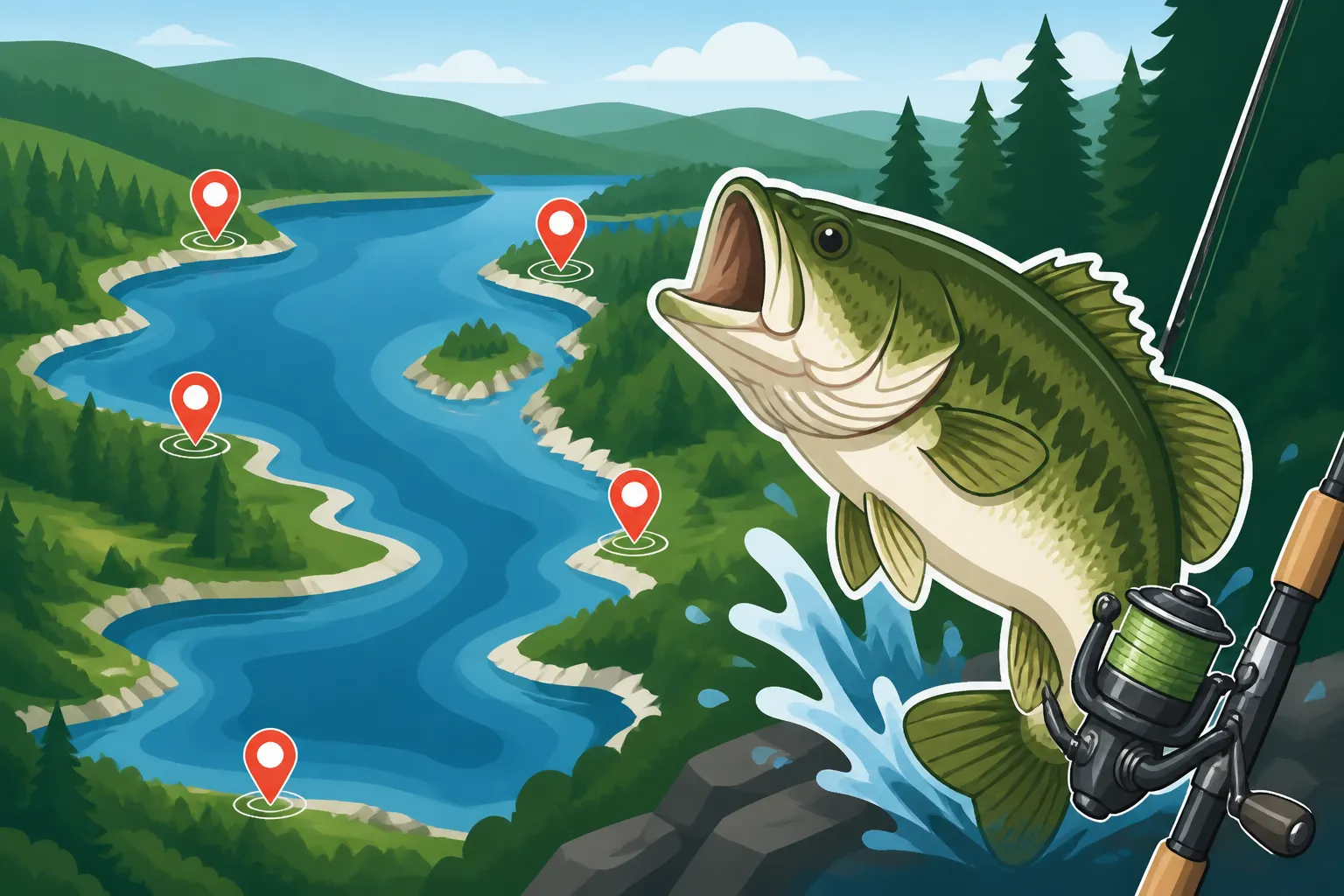
Key Bass Fishing Hotspots on Lake Lillinonah
When you're out on Lillinonah, thinking about where bass might be hiding, remember that these fish are often associated with structure and transition zones. The lake offers an incredible array of such spots, each requiring a slightly different approach.
The Rocky Points and Drop-offs
Lake Lillinonah is absolutely riddled with rocky points and dramatic drop-offs, particularly along the main lake channel. These are prime smallmouth bass territory, especially during the warmer months and into the fall. Smallmouth will congregate on these structures, ambushing baitfish that swim by in the current. Look for points that extend far out into the lake, creating underwater ledges, humps, and sudden depth changes. These aren't always visible from the surface, so a good fishfinder is invaluable here.
Fishing these spots often involves vertical jigging with spoons or drop-shot rigs, or casting crankbaits and swimbaits that imitate the lake's alewife population. Fan-casting across a point, letting your lure bump along the bottom as it falls into deeper water, can be incredibly effective. Pay close attention to current breaks formed by these points, as smallmouth will often sit on the calmer side, waiting for food to be swept past them. A few specific points to check out are those leading into the larger coves or the ones on the main lake near the lower sections, closer to the dam.
Creek Mouths and Inflows
Lake Lillinonah has several creeks and smaller rivers that feed into it, such as Squantz Brook and the Aspetuck River. These inflows are magnetic to bass, especially during periods of heavy rain or cooler water temperatures. The current from these creeks creates natural funnels, bringing in nutrients, baitfish, and oxygenated water. In spring, these areas warm up faster, drawing in pre-spawn bass, while in summer, the slightly cooler water can offer a welcome reprieve for fish.
The mouths of these creeks often feature mudlines, current seams, and areas where finer sediment has settled, allowing for some aquatic vegetation to take hold. Largemouth bass will often be found in the slack water pockets just outside the main current, hiding in submerged brush or around visible weed lines. Smallmouth might lurk a bit further out, capitalizing on the baitfish being flushed into the main lake. Flipping jigs, spinnerbaits, or Texas-rigged worms into the cover near these inflows can be highly productive. During a strong shad run, these areas can be absolutely phenomenal for both species. If you're wondering how to maximize your chances, our guide on How to Fish a River for Smallmouth Bass offers useful tips applicable to these riverine sections.
Submerged Timber and Weed Lines
Given its river origins, Lake Lillinonah boasts an impressive amount of submerged timber, especially in the shallower backs of coves and along older shorelines. These flooded trees and stump fields are classic largemouth bass cover. These areas provide excellent ambush points, shade from the sun, and protection from predators. Finding these "bass condos" can be tricky, as they're often invisible from the surface, but your fishfinder will become your best friend in locating these underwater forests.
In addition to timber, some of the shallower coves and flats can develop healthy weed lines, especially coontail and pondweed. These provide excellent cover for both baitfish and bass. Target the edges of these weed lines, as well as pockets and holes within the vegetation. Topwater frogs and weedless swim jigs are fantastic for fishing over and through dense weeds, while Texas-rigged soft plastics can be pitched into the thicker stuff. Always approach these areas quietly, as largemouth can be skittish in shallow cover.
Docks and Marinas
Like many developed lakes, Lake Lillinonah features numerous docks, boat lifts, and even small marinas scattered along its shoreline. These man-made structures are absolute magnets for bass. They provide shade, cover from overhead predators, and often hold baitfish seeking refuge. Bass will patrol the pilings, hover under the pontoons, and relate to any sunken objects or weed growth around these structures.
Fishing docks can be a stealthy affair. Skipping jigs or wacky-rigged worms far back under docks, especially those with deeper water nearby, is a deadly technique. The key is to be precise with your casts and patient with your presentation. Don't just cast to the front of the dock; try to get your lure as far back into the shadows as possible. Many of the larger, more elaborate docks in the wider sections of the lake hold significant fish, so don't overlook these easily accessible, albeit sometimes busy, spots. For those who prefer a guided experience to learn the best spots and techniques, exploring local options on platforms like FishingBooker can connect you with knowledgeable captains who specialize in bass fishing Lillinonah's structure.
Seasonal Strategies for Bass Fishing on Lake Lillinonah
Bass behavior is heavily influenced by the seasons, and Lake Lillinonah is no different. Understanding how these fish move and feed throughout the year is crucial for consistent success.
Springtime Spawning and Pre-spawn Action
Spring on Lake Lillinonah is an exciting time for bass anglers. As the ice recedes and water temperatures slowly begin to climb into the 40s and 50s, bass move from their deep wintering holes into shallower, sun-warmed areas. This is the pre-spawn period, characterized by hungry fish actively feeding to build energy for the upcoming spawn. Look for them along northern shorelines, in shallow coves, and near the mouths of incoming creeks, which tend to warm faster. Slow-rolling spinnerbaits, jerkbaits, and lipless crankbaits can be very effective as bass cruise these shallower flats.
As water temperatures reach the mid-50s to low-60s, the bass transition to their spawning grounds. Largemouth will typically seek out protected, shallow pockets with some form of hard bottom (like gravel or sand) and often near submerged wood or lily pads. Smallmouth might spawn on shallower rock flats or hard bottom areas along points in slightly deeper water. During the spawn, sight fishing for bedding bass with soft plastics or jigs can be productive, but always practice good conservation and release these fish quickly to protect the fishery. Remember that Connecticut fishing license age requirements and other regulations apply, so always be sure you're compliant.
Summer Deep Water and Early Morning Bites
Summer fishing on Lake Lillinonah can be challenging due to high boat traffic and warm surface temperatures, but the bass are still there! They simply change their patterns. During the heat of the day, both largemouth and smallmouth will often retreat to deeper, cooler water. This means focusing on main lake points, offshore humps, deep rock ledges, and the main river channel. Look for suspended schools of baitfish and target areas directly below or near them.
Early mornings and late evenings, when the sun is lower and boat traffic is minimal, can offer fantastic topwater action, especially for largemouth bass in the shallower coves and around docks. Poppers, walk-the-dog lures, and frogs can draw explosive strikes. As the day progresses, switch to deeper presentations like Carolina rigs, deep-diving crankbaits, or heavy jigs dragged along the bottom. Vertical jigging spoons or blade baits can also be deadly when you mark schools of fish suspended over deep structure. A local guide found through a service like FishingBooker can be especially helpful in unlocking these summer deep-water patterns, as they often have extensive knowledge of the lake's hidden contours.
Fall Feeding Frenzy
Fall on Lake Lillinonah is a spectacular time to target bass. As water temperatures cool, baitfish schools become more active and consolidate, triggering a strong feeding frenzy in bass. Both largemouth and smallmouth will aggressively chase bait, trying to pack on weight for the upcoming winter. This is a great time to cover water with fast-moving baits.
Look for bass relating to main lake points, the mouths of major coves, and any areas where baitfish are congregating. Crankbaits, lipless crankbaits, spinnerbaits, and swimbaits are all excellent choices for covering water and triggering reaction strikes. Smallmouth bass will often be found shallower on rock flats and points during overcast days, while largemouth will aggressively feed in the remaining weed beds and around submerged timber. As the fall progresses and water temperatures drop further, bass will start moving back to their deeper wintering areas, making deep jigs and slow presentations more effective. The change of seasons also offers some of the Best Time of Year to Fish in Connecticut across all species.
Essential Gear and Techniques for Lake Lillinonah Bass
Having the right tools for the job can make all the difference when tackling Lake Lillinonah's diverse bass habitats. From the lures you tie on to the rods you choose, a thoughtful approach will pay dividends.
Top Lures and Baits for Lillinonah Bass
Given the varied conditions and structure of Lake Lillinonah, a versatile tackle box is a must. Here's a breakdown of some go-to options:
| Lure Type | Best Use Case | Target Species | Notes |
|---|---|---|---|
| Jigs (Flipping/Pitching) | Heavy cover, docks, submerged timber, weed lines | Largemouth | Pair with a craw or creature trailer. Black/Blue, Green Pumpkin are staples. |
| Spinnerbaits | Covering water, stained water, sparse weeds, around timber | Largemouth/Smallmouth | White, chartreuse, or natural baitfish colors. Excellent for searching. |
| Crankbaits (Deep/Shallow) | Rocky points, ledges, main channel, open water schools | Smallmouth/Largemouth | Match depth to structure. Chrome/blue, crawfish patterns work well. |
| Soft Plastics (Worms/Creatures) | Versatile, Texas/Carolina/Wacky Rig, drop-shot | Largemouth/Smallmouth | Green Pumpkin, Black/Blue, Watermelon. Effective in all cover types. |
| Topwater (Poppers/Walkers) | Low light, calm conditions, shallow coves, docks | Largemouth/Smallmouth | Frog patterns over weeds. Buzzbaits for aggressive strikes. |
| Swimbaits | Imitating alewives, open water, around bait schools | Largemouth/Smallmouth | Paddle tail or jointed. Natural baitfish colors. Often fished around points and humps. |
| Drop Shot Rigs | Deep water, rocky points, suspended fish, finesse | Smallmouth/Largemouth | Finesse presentation for finicky fish. Small worms or minnow imitators. |
Don't be afraid to experiment! Bass can be particular, and sometimes an unconventional choice is exactly what they're looking for. For deeper insights into targeting specific bass species, you might find our article on Best Techniques for Largemouth Bass in Connecticut Ponds a helpful resource, as many principles apply to Lillinonah's more pond-like sections.
Recommended Rod and Reel Setups
Just as varied as the lures are the rod and reel setups you'll want to employ. A versatile angler will bring a few different combos to tackle the diverse presentations Lillinonah demands.
- Heavy Cover Setup: For flipping jigs into thick timber or around docks, a heavy to extra-heavy power baitcasting rod (7' to 7'6") with a fast action is ideal. Pair this with a high-speed baitcasting reel (7.1:1 or higher gear ratio) spooled with 15-20 lb fluorocarbon or 30-50 lb braided line. This setup gives you the power to pull big bass out of dense cover.
- General Purpose/Crankbait Setup: A medium-heavy power baitcasting rod (6'6" to 7'2") with a moderate-fast action works well for spinnerbaits, chatterbaits, and medium-diving crankbaits. A versatile gear ratio reel (6.4:1 to 7.1:1) with 12-17 lb fluorocarbon is a great all-around choice.
- Finesse/Spinning Setup: For drop-shotting, wacky rigging, or light jigs, a medium-light to medium power spinning rod (6'6" to 7') with a fast action is indispensable. Match this with a 2500-3000 series spinning reel spooled with 8-10 lb braided line and a 6-8 lb fluorocarbon leader. This setup allows for subtle presentations and detects light bites.
It's also crucial to remember safety on the water. Before you even think about dropping a line, ensure you're up to speed on Connecticut Safe Boating Certificate Requirement if you're operating a boat, and understand all Connecticut Boating Laws for Anglers. A safe day on the water is always a good day, especially when you're navigating a dynamic body like Lake Lillinonah.
Remember, every day on the water is a learning experience. Lake Lillinonah is a complex and rewarding fishery. By understanding its unique characteristics, targeting specific hotspots, adapting to seasonal changes, and having the right gear, you'll significantly increase your chances of having a successful and memorable bass fishing adventure. And if you're ever looking for a local perspective to fast-track your learning curve, checking out charter options on FishingBooker for Lake Lillinonah is a fantastic way to gain invaluable insight.
Disclaimer
Fishing conditions and regulations in Connecticut can change. Always consult the latest official Connecticut Department of Energy and Environmental Protection (DEEP) fishing guide and local regulations before heading out on the water. This information is provided for general guidance only.