Best Techniques for Largemouth Bass in Connecticut Ponds
Frustrated by those finicky largemouth bass lurking in Connecticut's countless ponds? It's a common struggle, whether you're a seasoned angler trying to crack a new spot or just starting out and finding these green fish elusive in smaller waters. This comprehensive guide will equip you with the insights and proven techniques to consistently hook into chunky largemouth bass in Connecticut's ponds, turning those frustrating days into memorable fishing adventures.
Understanding Connecticut Pond Dynamics for Largemouth Bass
Connecticut is blessed with an abundance of ponds, from small farm ponds to larger, state-managed impoundments. Each offers unique challenges and opportunities for largemouth bass fishing. Unlike expansive lakes or flowing rivers, ponds are more contained ecosystems, which means understanding their specific dynamics is crucial for consistent success.
Key Environmental Factors and Their Impact
Ponds, by their very nature, are more susceptible to changes in environmental factors than larger bodies of water. These factors directly influence where largemouth bass will hold, what they'll eat, and how actively they'll feed.
Water temperature is perhaps the most critical factor. Largemouth bass are cold-blooded, and their metabolism is dictated by the water temperature around them. In Connecticut, pond temperatures can swing wildly from frigid ice-covered conditions in winter to warm, even hot, bath-like temperatures in summer. During the pre-spawn in spring, when water temperatures start climbing into the 50s Fahrenheit, bass become active and aggressive, moving into shallower areas to feed. As temperatures rise into the 60s and 70s during the spawn, bass are focused on reproduction. Once summer heat pushes surface temperatures into the high 70s and 80s, bass will seek deeper, cooler water or dense cover with shade. Knowing the optimal temperature range for bass activity, generally between 65-75°F, helps you predict their behavior. Beyond temperature, factors like dissolved oxygen, water clarity, and pH levels also play a role, though often less dramatically than temperature in typical pond scenarios. Ponds with good weed growth and ample shade tend to hold more stable conditions, especially in summer.
Water clarity is another major player. In clear ponds, bass rely heavily on sight to hunt, making natural-colored baits and finesse techniques more effective. Conversely, in murky or stained ponds, bass use their lateral line more, and brighter, more vibrating lures (like spinnerbaits) can be deadly. Sunlight penetration also affects clarity; bright, sunny days often push bass deeper or under heavy cover, while overcast conditions might bring them out to feed more openly. Understanding these nuances helps you select the right presentation. For more general insights into where to find these fish, check out our guide on Largemouth Bass Habits in Connecticut.
Seasonal Movements and Habitat Preferences
Just like clockwork, largemouth bass in Connecticut ponds adjust their behavior and location with the changing seasons. What works in spring won't necessarily cut it in the dog days of summer.
In spring, as ice recedes and water warms, bass move from their deeper winter haunts into shallower coves, flats, and sun-warmed areas. They're looking for baitfish, crayfish, and eventually, suitable spawning grounds. This is a fantastic time for aggressive presentations as they feed heavily to regain energy. Think shallow-diving crankbaits, spinnerbaits, and even some early topwater action. When water temperatures hit the mid-60s, they'll begin their spawning ritual, often around submerged vegetation, logs, or sandy patches in 2-5 feet of water. During this time, they become very protective of their nests, making them susceptible to sight fishing with soft plastics or jigs if you can spot them.
Summer brings consistent warm water, and with it, bass will seek out thermal refuge. This means they'll often be found in deeper water adjacent to drop-offs, near submerged timber, brush piles, or beneath dense lily pads and docks that provide shade and cooler temperatures. Early mornings and late evenings offer brief windows for topwater action as bass venture into the shallows to feed. During the heat of the day, pitching jigs or worms into heavy cover or fishing deep ledges becomes the go-to strategy. Remember that a pond's size often dictates the depth available; smaller ponds might only offer dense vegetation as a refuge.
Fall is a favorite season for many bass anglers. As water temperatures begin to drop, bass start feeding aggressively again, fattening up for winter. They often move back to the shallower areas they occupied in spring, chasing schools of baitfish. Crankbaits, jerkbaits, and swimbaits become highly effective as bass actively pursue their prey. They'll frequent creek channels, points, and areas with dying vegetation that still holds bait. This period of intense feeding can last well into late fall until the water gets truly cold, often when water temperatures fall below 50 degrees Fahrenheit. For more specific strategies on how bass react to changing conditions, our article on Cold Front Fishing Tactics for Connecticut Bass offers valuable tips that apply to pond fishing too.
Finally, in winter, when ponds often freeze over, largemouth bass become much less active. They'll retreat to the deepest available water, usually near structure like stumps, logs, or rock piles. Their metabolism slows dramatically, and they feed infrequently. Ice fishing for bass is possible, but it requires much slower presentations with small jigs, spoons, or live shiners fished right on the bottom.
Essential Gear and Tackle for Pond Bass Fishing
Having the right tools for the job can make a world of difference when targeting largemouth bass in Connecticut ponds. You don't need a boatload of expensive gear, but a thoughtful selection of rods, reels, lines, and lures will certainly increase your chances of success.
Rod, Reel, and Line Selection for Ponds
When it comes to rods and reels, versatility is key for pond fishing. You'll likely encounter a variety of situations, from open water casting to pulling bass out of thick slop.
For rods, a medium-heavy power, fast action casting rod (baitcaster) in the 6'6" to 7'6" range is a fantastic all-around choice. This setup gives you enough backbone to fight larger bass and pull them through weeds, while the fast action provides the sensitivity needed to detect subtle bites and accurately cast a wide range of lures. If you're primarily fishing open water or smaller ponds with lighter lures, a medium power, fast action spinning rod around 6'9" to 7' might be more appropriate. Many anglers find a 7-foot medium-heavy fast-action baitcasting rod to be their workhorse for pond bass, capable of handling everything from spinnerbaits to jigs to frogs. You can find excellent options for various budgets on platforms like Amazon.
Reels should match your rod choice. For baitcasting, a reel with a gear ratio between 6.3:1 and 7.5:1 offers a good balance of power for slower presentations and speed for burning baits or quickly retrieving slack line. Make sure it has a smooth drag system. For spinning setups, a 2500-3000 series reel provides ample line capacity and a good retrieve rate. A smooth retrieve and a reliable drag are non-negotiable for both types of reels.
Line choice depends on your technique and the pond environment.
- Braided Line: This is a top choice for fishing around heavy cover like lily pads, submerged timber, or thick weeds. Its zero-stretch properties give you incredible sensitivity and power to rip lures free from snags and pull bass out of cover. A 30-50 lb test braided line is common. It also floats, making it ideal for topwater frogs.
- Fluorocarbon Line: Excellent for presentations where stealth and sensitivity are crucial, such as Texas-rigging worms or fishing jigs in clearer water. Fluorocarbon is nearly invisible underwater, sinks, and has low stretch, providing good feel. A 12-20 lb test is standard for largemouth bass.
- Monofilament Line: While less popular for dedicated bass fishing, monofilament still has its place, particularly for topwater lures (due to its buoyancy) or crankbaits (where its stretch can act as a shock absorber). A 10-17 lb test is usually sufficient.
Many anglers employ a combination: braided main line with a fluorocarbon leader for specific presentations, especially in clear water. This gives you the strength and castability of braid with the invisibility of fluorocarbon.
| Line Type | Key Characteristics | Best Use Cases | Pros | Cons |
|---|---|---|---|---|
| Braided | Strong, no stretch, opaque, floats | Heavy cover, topwater frogs, punching mats, jigging | High sensitivity, strong, cuts through weeds, long casts | Visible, can dig into spool, requires a leader sometimes |
| Fluorocarbon | Low stretch, nearly invisible, sinks, moderate abrasion resistance | Finesse techniques, jigs, Texas rigs, clear water, deep cranking | High sensitivity, stealthy, good abrasion resistance | Stiffer, more expensive, can be harder to cast |
| Monofilament | Stretchy, buoyant, visible, moderate abrasion resistance | Topwater, crankbaits, beginner-friendly | Affordable, good knot strength, easy to cast | Low sensitivity, visible, poor for heavy cover |
Must-Have Lures and Baits for Connecticut Bass
Your tackle box for Connecticut pond bass should be well-rounded, covering various depths, cover types, and bass moods. Here's a rundown of essential lures:
- Soft Plastics: These are arguably the most versatile and effective lures for largemouth bass.
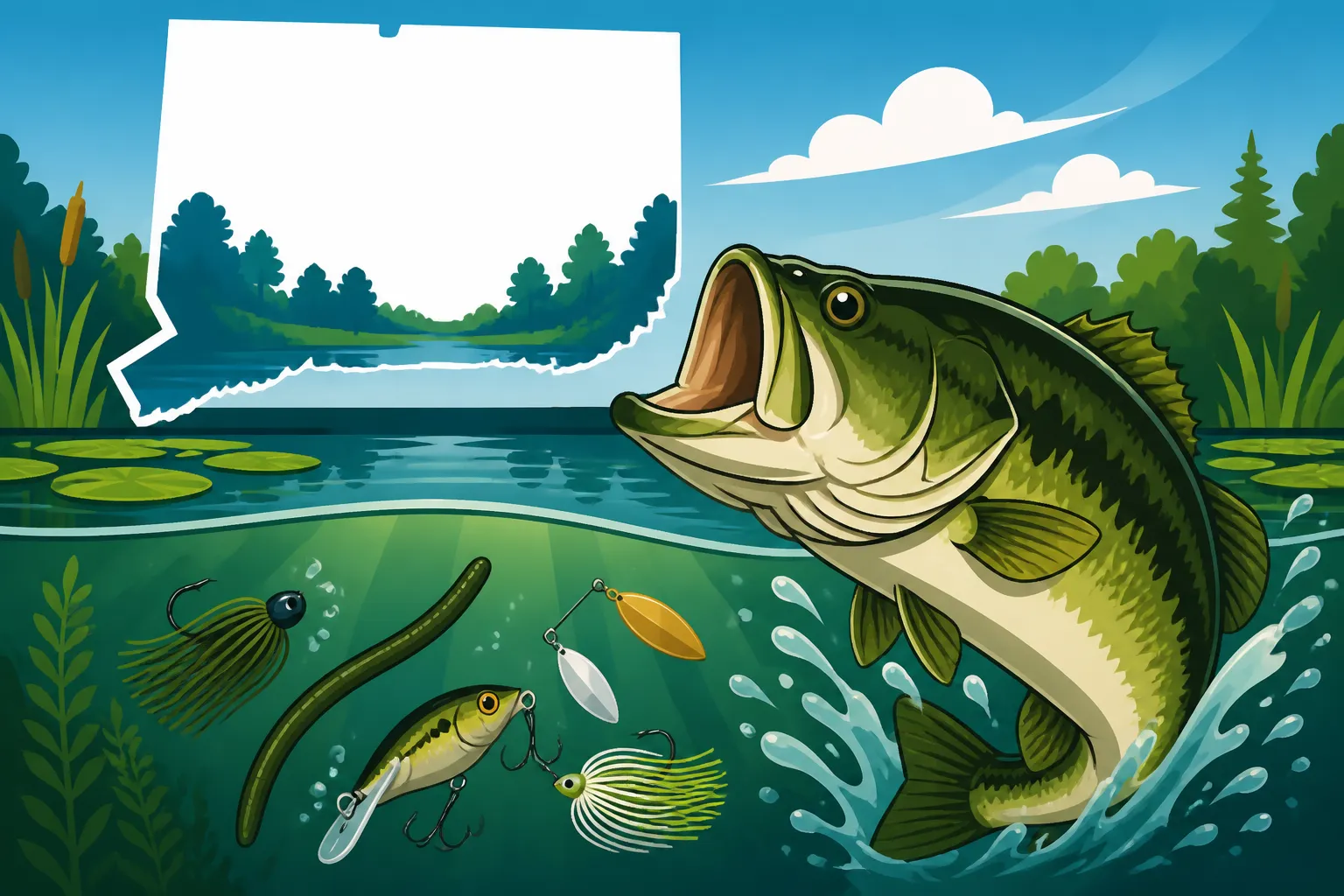
- Plastic Worms: Texas-rigged or Carolina-rigged, worms like the Senko, Trick Worm, or Ribbon Tail Worm are deadly. They imitate various forage and can be fished slowly to entice hesitant bass. Good colors include green pumpkin, black, and junebug.
- Creature Baits & Jigs: These mimic crawfish, bluegill, or other bottom-dwelling prey. Pitching jigs (e.g., Strike King, Z-Man) into heavy cover or along weed lines is a prime tactic. Pair them with a suitable soft plastic trailer for added bulk and action.
- Swimbaits: Paddle-tail swimbaits on weighted hooks can be incredibly effective, especially when bass are feeding on baitfish. They can be slow-rolled or burned. Check out the wide variety of soft plastics available on Amazon.
- Crankbaits & Jerkbaits:
- Crankbaits: Squarebill crankbaits are excellent for bumping off stumps, rocks, and shallow cover without snagging. Deeper-diving crankbaits work well on points and drop-offs. Colors vary with water clarity; natural baitfish patterns for clear water, and bright colors like chartreuse for stained water.
- Jerkbaits: Especially effective in cooler water (spring and fall) when retrieved with a "twitch, twitch, pause" cadence. They mimic injured baitfish.
- Spinnerbaits & Chatterbaits:
- Spinnerbaits: Excellent search baits, especially in stained water or around moderate cover. The flash and vibration attract bass from a distance. White, chartreuse, and white-chartreuse combinations are staples.
- Chatterbaits: (e.g., Z-Man ChatterBait) combine the flash of a spinnerbait with the erratic action of a crankbait. They are fantastic for fishing around grass and submerged cover.
- Topwater Lures: The most exciting way to catch bass!
- Frogs: Soft plastic hollow-body frogs (e.g., Spro, Livetarget) are unbeatable for fishing over dense lily pads, matted grass, or heavy slop without snagging.
- Poppers & Walkers: Excellent for open water, docks, or sparse cover, especially during low light conditions or cloudy days. Poppers make a "bloop" sound, while walkers (like the Heddon Super Spook) create a side-to-side "walk-the-dog" action.
- Terminal Tackle: Don't forget essentials like various weights (bullet weights for Texas rigs, drop shot weights), hooks (EWG, straight shank, circle hooks), swivels, and spare line.
Having this assortment ensures you're prepared for whatever Connecticut's ponds throw your way, maximizing your chances of a successful outing when targeting How to Catch Largemouth Bass in Connecticut.
Top Largemouth Bass Techniques for Pond Success
Once you have your gear ready, it's time to put it to work. Fishing small, contained waters like ponds often requires a slightly different approach than vast lakes or flowing rivers. Precision, stealth, and understanding the nuances of how bass interact with limited cover become paramount.
Mastering Soft Plastic Presentations
Soft plastics are, without a doubt, one of the most productive categories of lures for largemouth bass in Connecticut ponds. Their versatility allows them to imitate a huge variety of forage, and they can be fished effectively in nearly any situation.
Texas Rigging: This is perhaps the most fundamental and effective way to fish a soft plastic. It involves threading a bullet weight onto your line, then tying on an offset worm hook. The hook is then "skinned" into the plastic worm or creature bait, making the entire setup weedless. This rig is incredible for pitching into thick cover like lily pads, submerged brush, or dock pilings, where bass often hide. The weight helps the bait penetrate cover, and the weedless design prevents snags. A slow, subtle retrieve with occasional twitches and pauses is often all it takes. Bass will usually pick up the bait and move off with it, creating a distinct "thump" or just a feeling of pressure. Using a bait like a Strike King Rage Bug or a classic Zoom Trick Worm in green pumpkin or black is a solid starting point. This technique excels when bass are lethargic or holding tight to cover, making it a reliable choice for different pond conditions.
Jig Fishing: A jig-and-trailer combination is a powerhouse, mimicking crawfish, small bluegill, or other bottom forage. Flipping and pitching jigs into heavy cover, under docks, or along deep weed lines is incredibly effective. A common jig setup involves a football jig or a casting jig (e.g., a Booyah Boo Jig) paired with a creature bait or a chunk-style soft plastic trailer. The trailer adds bulk, profile, and action. For ponds, opt for jigs in the 1/4 to 1/2 ounce range. The retrieve is often a series of hops, drags, and shakes along the bottom or through cover. Pay close attention to your line for any subtle movement or pressure, as bass will often "mouth" the jig before fully committing. The heavy weed guard on most jigs also makes them incredibly snag-resistant, a huge plus in ponds filled with vegetation.
Wacky Rigging and Senkos: When bass are pressured or finicky, a wacky rig is often the answer. This simple setup involves hooking a stick bait (like a Yamamoto Senko) directly through its center. When cast, both ends of the worm wiggle enticingly as it sinks slowly. This subtle, natural action is irresistible to bass. It's best fished weightless in open pockets of weeds, around docks, or along shoreline cover. The key is to let it sink on a slack line, watching for any twitch or movement in your line, which indicates a bite. The Senko is a legendary bass bait for a reason, and a wacky-rigged Senko is a secret weapon for pond anglers when other baits fail. The slow, natural fall is often what triggers strikes from even the most hesitant bass, especially in clear, shallow waters.
Crankbait and Spinnerbait Strategies
While soft plastics are often about slow, deliberate presentations, crankbaits and spinnerbaits are excellent for covering water quickly and eliciting reaction strikes, especially when bass are actively feeding.
Crankbait Tactics: Crankbaits are designed to mimic baitfish or crawfish and dive to various depths depending on their lip design. For most Connecticut ponds, especially those with varying depths and structures, a few key types are essential.
- Squarebill Crankbaits: These are your shallow-water workhorses. Their square lip allows them to deflect off wood, rocks, and even dense grass without snagging, triggering violent reaction strikes. Cast them parallel to shorelines, over submerged cover, and around dock pilings. The key is to "crash" them into cover and let them bounce off. Retrieve them at a steady pace, mixing in occasional pauses or twitches. Popular choices include the Rapala DT-4 or a Strike King KVD 1.5.
- Medium-Diving Crankbaits: For targeting slightly deeper areas like submerged humps, ledges, or weed edges in 5-10 feet of water, a crankbait with a larger lip will be effective. Work these along contour lines or cast them out and retrieve them to bump the bottom. Vary your retrieve speed until you find what the bass prefer.
The beauty of crankbaits is their ability to call fish in from a distance with their wobble and rattle. Consider adding a few different depths and colors to your tackle box, readily available on Amazon.
Spinnerbait and Chatterbait Attacks: These lures excel in stained water or around moderate cover where their flash and vibration are highly effective at attracting bass.
- Spinnerbaits: Composed of a wire frame with one or more spinning blades and a weighted head with a skirted hook, spinnerbaits are fantastic search baits. They can be slow-rolled along the bottom, buzzed just under the surface, or retrieved at a medium pace through sparse weeds or around docks. The thumping vibration of the blades and the flash are major attractants. In stained water, try bright colors like chartreuse or white. In clearer water, natural baitfish patterns might be better. They are particularly effective in spring and fall when bass are actively chasing baitfish. For techniques specific to different water conditions, you might find valuable crossover tips in our guide on How to fish a spinnerbait for Connecticut lake bass.
- Chatterbaits (Bladed Jigs): These hybrids combine the vibration of a bladed lure with the profile of a jig-and-trailer. The vibrating blade creates an erratic, irresistible action that mimics fleeing baitfish or crawfish. They are excellent for fishing around grass, wood, and other shallow to medium-depth cover. Pair them with a matching soft plastic trailer for added bulk and swimming action. A Z-Man ChatterBait with a Yamamoto Zako trailer is a classic combination. A steady retrieve often works best, but experimenting with jerks and pauses can sometimes trigger more strikes.
Topwater Action and Frogging
There's nothing quite as exhilarating as a largemouth bass exploding on a topwater lure. These techniques are often best in low light conditions (dawn, dusk, overcast days) or when bass are actively feeding in shallow water or over matted vegetation.
Poppers and Walkers: These are your go-to topwater baits for open water, sparse cover, or along the edges of weed lines and docks.
- Poppers: (e.g., Rebel Pop-R, Storm Chug Bug) have a cupped face that "chugs" or "pops" water when twitched. This creates a disturbance that mimics a struggling baitfish or insect. A retrieve of "pop, pause, pop-pop, pause" is generally effective, letting the ripples dissipate before the next series of pops.
- Walkers: (e.g., Heddon Super Spook, Rapala Skitter Walk) are stick baits designed to be worked with a rhythmic rod tip action to create a "walk-the-dog" retrieve, where the lure glides from side to side across the surface. This highly realistic action mimics a fleeing baitfish and can be incredibly effective when bass are chasing. The key to mastering the "walk" is a consistent, downward twitch of the rod tip, reeling in slack as the lure moves. This can be one of the most exciting ways to catch fish, and it works wonderfully around any shallow cover or open water where bass are feeding.
Hollow Body Frogs: When Connecticut ponds get choked with lily pads, matted grass, or dense submerged vegetation, the hollow-body frog (e.g., Spro Bronzeye Frog, Livetarget Frog) becomes your best friend. These lures are completely weedless, allowing you to cast them directly onto and over the thickest cover where other lures would snag instantly.
The technique involves walking or popping the frog slowly over the mat, letting it pause in open pockets. The idea is to make the frog look like it's struggling or hopping across the vegetation. When a bass explodes, resist the urge to set the hook immediately. Wait a second or two until you feel the weight of the fish, allowing the bass to fully engulf the lure, then set the hook hard. Fishing a frog requires heavy braided line (50-65 lb test) and a stout rod to pull bass out of the thick stuff. There are very few places a frog can't go, opening up otherwise inaccessible fishing opportunities.
Reading the Water and Locating Largemouth in Ponds
Successful pond fishing isn't just about having the right lures; it's about knowing where to cast them. Largemouth bass are ambush predators, and they'll position themselves in areas that offer cover, concealment, and proximity to food. Learning to "read the water" is a skill that comes with practice, but understanding the basics will significantly improve your catch rates.
Identifying Key Structures and Cover
Unlike vast lakes with complex underwater topography, ponds often have more straightforward structures, making them easier to decipher. However, understanding what constitutes prime bass habitat is still crucial.
Docks and Piers: These are absolute magnets for largemouth bass. They provide shade, overhead cover from predators, and often have submerged pilings or brush underneath that create excellent ambush points. Bass will often hold on the shady side or directly under the dock. Pitching jigs, Texas-rigged worms, or skipping soft plastics far back under the structure can be incredibly effective. Even if the dock is shallow, the shade and cover it provides are enough to attract bass, especially on bright, sunny days. Don't be afraid to try different angles and depths around each dock; sometimes, a bass will only strike if the bait approaches from a specific direction.
Vegetation: This is perhaps the most critical type of cover in many Connecticut ponds.
- Lily Pads and Mats: Dense lily pad fields and matted vegetation (like milfoil or hydrilla) create an overhead canopy that offers shade, cooler water, and a haven for baitfish and frogs. Bass will hide underneath, waiting to ambush prey. This is prime frog fishing territory, but you can also punch through holes in the mat with heavy jigs or Texas-rigged creature baits.
- Submerged Grass/Weed Lines: Even if you can't see the vegetation on the surface, healthy green submerged grass is a bass factory. These weed beds provide oxygen, cover for baitfish, and ambush points for bass. Look for areas where weed lines meet open water, or where points of weeds extend further out. Casting spinnerbaits, chatterbaits, or even lipless crankbaits parallel to these edges can be very productive.
- Standing Timber and Brush Piles: Any submerged wood, whether it's a lone stump, a fallen tree, or a man-made brush pile, is a high-percentage target. Wood provides excellent ambush cover and often attracts baitfish. Pitching jigs or Texas-rigged worms into and around these structures is a classic bass fishing tactic. Be prepared for snags, but the rewards are often worth it.
Bottom Transitions and Points: While ponds might not have dramatic ledges, they often have subtle depth changes or underwater points that extend from the shoreline. Bass will use these transitions as travel corridors or ambush points. For instance, a point where a hard bottom meets a soft, mucky bottom, or where a shallow flat drops into slightly deeper water. Casting crankbaits, jigs, or slow-rolling spinnerbaits across these transition zones can be very effective, as bass will patrol these areas looking for food. Even in smaller ponds, these subtle changes can concentrate fish.
Understanding Forage and Feeding Patterns
Knowing what largemouth bass are eating in a particular pond and when they prefer to feed is like having a cheat code. Matching your lure selection and presentation to the local forage will significantly increase your success.
Common Pond Forage: In Connecticut ponds, largemouth bass primarily feed on:
- Baitfish: Minnows, shiners, young sunfish, and small bluegill are staple food sources. If you see schools of small baitfish flickering on the surface, bass are likely nearby. Lures that mimic these (swimbaits, crankbaits, jerkbaits, spinnerbaits) will be effective.
- Crawfish (Crayfish): These crustaceans are a favorite meal for bass, especially in rocky or gravelly areas. Jigs and creature baits in crawfish colors (browns, greens, oranges) are deadly when bass are rooting them out from the bottom.
- Frogs: In ponds with abundant lily pads or shoreline vegetation, frogs become a significant part of a bass's diet. Hollow-body frogs are designed specifically to imitate these.
- Insects and Other Critters: While less primary, bass will also opportunistically feed on larger insects, salamanders, or even small rodents that fall into the water. Topwater lures can often mimic these struggling creatures.
Matching the Hatch: The concept of "matching the hatch" from fly fishing applies here. If you notice bass spitting up small bluegill or see schools of shiners, use lures that match their size, shape, and color. For example, if you're fishing a pond known for abundant bluegill, a jig with a bluegill-patterned skirt and trailer can be irresistible. Similarly, if you're seeing a lot of crawfish activity, a dark-colored jig crawled along the bottom is a smart choice.
Feeding Windows: Largemouth bass typically have peak feeding times.
- Low Light: Dawn and dusk are prime times, especially for topwater action or fishing in shallower areas. The reduced light gives bass a predatory advantage.
- Overcast Days: Cloudy days can extend the low-light feeding window throughout the day, often bringing bass into more open or shallower areas than they would occupy on bright, sunny days.
- Post-Frontal Conditions: While tough, bass will eventually feed after a cold front. It might require slower presentations and fishing tight to cover, but they still need to eat. Our guide on How barometric pressure affects Connecticut bass fishing offers more detailed insights into these challenging conditions.
Observing your surroundings, checking the stomachs of any fish you catch, and paying attention to seasonal patterns of forage availability will sharpen your ability to select the right lure and target the most productive areas. This approach is key to understanding Best Techniques for Largemouth Bass in Connecticut Ponds.
Advanced Tactics for Tricky Pond Bass
Sometimes, the bass in Connecticut ponds can be incredibly stubborn. Whether it's due to heavy fishing pressure, extreme weather, or simply their mood, you'll need to pull out some more advanced tactics to coax them into biting.
Finesse Fishing in Pressured Waters
Ponds, especially those close to population centers or with easy access, can receive a lot of fishing pressure. When bass see countless crankbaits and spinnerbaits, they become "wise" to aggressive presentations. This is where finesse techniques shine, offering a more subtle, natural approach that can trick wary fish.
Drop Shot Rig: This is a deadly finesse technique, especially when bass are suspended or hugging structure in clear water. The drop shot involves tying a hook directly to the main line (using a Palomar knot is common), leaving a tag end of line below it. A weight is then tied to the very end of this tag line. This setup allows your soft plastic bait (often a small worm, minnow imitation, or creature bait) to suspend horizontally at a specific depth, just above the bottom or in the strike zone, while the weight keeps it anchored. You can shake your rod tip to impart action to the bait without moving the weight from the fish's zone. Ideal for targeting individual fish you spot on electronics or those holding tight to subtle breaks. Light fluorocarbon line (6-10 lb test) on a spinning rod is the standard setup.
Neko Rig and Wacky Weight: These are variations of the popular wacky rig, adding a subtle twist for different scenarios.
- Neko Rig: Similar to a wacky rig, but instead of hooking the worm in the center, you insert a small nail weight into one end of the worm. The hook is then O-ringed or hooked through the center, allowing the weighted end to sink faster and the worm to stand up slightly on the bottom, mimicking a feeding critter. This creates a different, more head-down action than a traditional wacky rig.
- Wacky Weight (O-Ring weights): These are small, external weights that can be added to a standard wacky-rigged Senko. They allow the worm to sink faster and reach deeper depths while maintaining that irresistible wacky fall. They are perfect for when you need to get a wacky rig down through a deeper water column or in areas with current without losing the delicate action.
Shaky Head Jigs: A shaky head jig is a light jig head with a screw-lock keeper designed to hold a plastic worm straight. The idea is to cast it out, let it sink to the bottom, and then gently "shake" your rod tip, causing the worm to quiver and enticingly stand on its head on the bottom. This subtle action drives bass crazy, especially when they're not committing to larger, faster-moving baits. A 1/8 to 1/4 ounce shaky head with a 4-7 inch straight-tail worm in natural colors is a go-to for pressured fish.
These finesse techniques require patience, a keen eye for line movement, and the understanding that slower is often better. They might not always produce explosive strikes, but they will consistently catch fish when other methods fail, offering a more analytical approach to Finesse Fishing Clear Water Bass that can be applied to pond fishing.
Fishing During Tough Weather Conditions
Bass don't always cooperate, especially when Mother Nature throws a curveball. Learning to adapt your approach to extreme weather conditions like cold fronts or scorching heat waves can turn a tough day into a successful one.
Cold Front Strategies: A cold front rolling through Connecticut can dramatically shut down the bite. Bass often become lethargic and move off their primary feeding areas.
- Slow Down and Downsize: This is the golden rule. Forget fast-moving baits. Instead, opt for slow-fished jigs, Texas-rigged worms, or drop shots. Work your lures meticulously and slowly, giving bass ample time to react.
- Target Heavy Cover and Deep Water: Bass will often bury themselves in the thickest cover available (dense brush piles, deep weed mats) or retreat to the deepest parts of the pond to find more stable water temperatures. Pitching jigs or heavy Texas rigs into these sanctuaries is key. For more in-depth advice on this specific challenge, consult our article on How to catch bass during a cold front in Connecticut.
- Focus on Post-Front Recovery: The toughest bite is often right after the front passes. The bite might improve a day or two later as bass begin to adjust. During this recovery period, continue with slow presentations but be ready for them to become slightly more active. Remember, consistency is not the enemy here; patience is your friend.
Heat Wave Tactics (Summer Dog Days): When summer temperatures soar and the water heats up, bass again seek refuge.
- Early Morning and Late Evening: These low-light periods are crucial. Bass will often move into shallower water to feed before the sun gets high. This is your best chance for topwater action or burning spinnerbaits.
- Target Shade and Deep Water: During the midday heat, bass will be deep or in the darkest shade they can find. This means focusing on deeper drop-offs, areas with significant submerged timber, dense lily pad fields that provide shade, or the shady sides of docks. Pitching jigs, heavy Texas rigs, or even deep-diving crankbaits can reach these fish.
- Oxygenated Water: Look for any source of moving water or aeration, even subtle ones, as these areas often have higher dissolved oxygen, which bass prefer. This could be a small inlet, an aerator, or simply areas with abundant healthy green vegetation producing oxygen.
- Hydration is Key (for you!): Don't forget your own well-being on those hot days. Bring plenty of water to stay hydrated.
Fishing in challenging conditions truly tests your adaptability and persistence. By understanding how largemouth bass react to these environmental shifts, you can adjust your tactics and still find success when others are struggling.
Disclaimer
Fishing regulations can change, and it is always your responsibility to check the latest rules and guidelines from the Connecticut Department of Energy and Environmental Protection (DEEP) before heading out. This guide is for informational purposes only and does not supersede official regulations. Always prioritize safety on the water and practice ethical angling, including proper catch and release techniques.