What percentage of stocked trout survive the season
It's a question every angler who loves chasing trout in Connecticut has probably asked themselves at some point: you see the trucks roll up, the fish tumble into the stream, and a few days later, the fishing frenzy starts. But what happens to all those stocked trout a few weeks or months down the line? It's a valid concern, especially when you're hoping for a strong fishery that lasts beyond opening day. This guide dives deep into the realistic survival rates of stocked trout in our beautiful Connecticut waters, exploring the factors that help some thrive and why others, unfortunately, don't make it to see another season.
The Optimistic Intent Behind Stocking Trout in Connecticut
Let's be honest, there's a certain magic to trout stocking day. The Connecticut Department of Energy and Environmental Protection (DEEP) does a tremendous job, and for many anglers, it's the highlight of their spring. But it’s not just about that initial excitement; there’s a strategic purpose behind all those finned deliveries.
Why Connecticut Stocks Trout
The primary reason Connecticut invests heavily in stocking trout, year after year, is to provide diverse and accessible fishing opportunities for its residents and visitors. Our state has a lot of fantastic waters, but not all of them can sustain robust wild trout populations due to habitat, temperature, or other environmental factors. Stocking bridges that gap, creating a vibrant recreational fishery. It introduces a fresh supply of catchable fish into rivers, streams, lakes, and ponds that might otherwise offer limited trout fishing. The goal is to ensure a high success rate for anglers, especially beginners, families, and those who just want to enjoy a day on the water with a good chance of reeling in a fish. It's about participation and making fishing enjoyable and rewarding for as many people as possible.
Imagine bringing a child out for their first fishing trip. The excitement of a bite, the thrill of seeing that fish come out of the water – that's often fueled by a recently stocked trout. Without stocking, many of our popular fishing spots would simply not offer the same experience, and we'd miss out on introducing new generations to the sport. It's a crucial part of managing our fisheries for recreational benefit. For more general information on what rules apply to these efforts, you might want to read our guide on Connecticut Fishing Regulations Explained.
The Immediate Post-Stocking Phase
There's no denying the immediate aftermath of a stocking event. Anglers flock to the rivers and ponds, and for good reason! This is often characterized by a "frenzy" of activity, where the fish are still settling into their new environment, sometimes a bit disoriented, and often quite willing to bite. They've been accustomed to being fed in the hatchery, so a well-presented worm, PowerBait, or even a simple spinner can be incredibly effective.
This period, typically the first few days to a couple of weeks, is when the catch rates are at their highest. For many, this is precisely the point of stocking: to create a "put-and-take" fishery where fish are stocked with the expectation that they will be caught shortly after. This ensures that the efforts and resources put into raising and transporting the fish translate directly into angler success. It’s a guaranteed good time for many, and it helps to spread out the fishing pressure from the more delicate wild trout populations. It's truly a win-win for many, offering a unique opportunity to experience high volume fishing. If you're looking to capitalize on this, our article on Spring Trout Fishing Techniques for Connecticut Streams could be a great resource.
The Reality Check: Factors Influencing Stocked Trout Survival
While the initial surge of fishing after stocking is exhilarating, the long-term survival of these trout in the wild is a far more complex picture. It's not always a fairytale ending, and various natural and human-induced factors play a significant role in determining how many make it through the season, let alone to the next year.
Predation and Competition
Once those hatchery-raised trout hit the water, they're no longer in the protected environment of the hatchery. They're suddenly part of a natural food web, and unfortunately, they're often easy targets.
- Natural Predators: Connecticut's ecosystems are teeming with creatures eager for a meal. Ospreys, kingfishers, and various wading birds patrol from above, while otters, mink, and even raccoons can feast from the banks. Larger fish already residing in the water, such as bigger bass, pickerel, or even other holdover trout, view these newly introduced fish as an easy snack. Hatchery trout often lack the innate wariness and survival instincts of their wild counterparts, making them particularly vulnerable. They haven't had to hunt for food or evade predators in a complex environment before.
- Competition for Resources: It's not just about being eaten; it's also about finding enough to eat and a safe place to live. When a large number of trout are stocked into a system, even if it's considered good habitat, there's suddenly increased competition for food resources like aquatic insects, nymphs, and small baitfish. There's also competition for prime holding lies – those protected spots in the current, under logs, or in deeper pools where a trout can conserve energy and feel safe. Overcrowding can lead to stress, reduced feeding, and increased susceptibility to disease.
Water Conditions and Habitat Limitations
Connecticut, while beautiful, presents a range of aquatic environments. Not all of them are ideal for long-term trout survival, especially as the seasons change.
- Temperature: Trout are coldwater fish. Period. They require specific water temperatures to thrive, typically below 68°F (20°C). As Connecticut summers heat up, many of our smaller streams and even larger river sections can experience significant temperature spikes. Water temperatures above this threshold cause extreme stress, reduce oxygen levels, and can quickly lead to mortality. Even if a fish isn't caught, a prolonged period of warm water can be a death sentence. This is why you'll often hear about "cold water refugia" – spots where trout can escape the heat, but these are not always abundant or accessible.
- Oxygen Levels: Higher water temperatures also mean lower dissolved oxygen. Trout, with their high metabolic rate, need ample oxygen. Stagnant pools or warm, slow-moving sections of rivers can become oxygen-depleted, further contributing to stress and mortality.
- Flow and Habitat: Rivers and streams can experience fluctuating water levels. Low water conditions concentrate fish, making them more vulnerable to predators and increasing competition. High flows, after heavy rains, can displace fish, forcing them out of prime habitat and into less favorable areas where they might struggle to find food or shelter. Not all stocked waters have the complex structure – logs, boulders, undercut banks, deep pools – that trout need for cover and refuge. Many stocked ponds, while great for catching, lack the deep, cold, oxygenated water needed for trout to survive year-round. Knowing What water temperature trout need to survive is key to understanding this challenge.
Angler Harvest and Pressure
Let's be real, a significant portion of stocked trout don't survive because… well, we catch them! This is a core part of the "put-and-take" philosophy that underpins many stocking programs.
- High Catchability: As mentioned, hatchery-raised trout are often less wary than wild fish. They're used to a consistent food source and haven't developed the same instincts to avoid hooks and lines. This makes them relatively easy to catch, especially in the days and weeks following stocking.
- Angler Intent: Many anglers fish with the intention of harvesting their catch for the dinner table, which is perfectly legal and encouraged within the state's daily creel limits. When a stream is stocked with thousands of fish, and hundreds of anglers descend upon it, a large percentage of those fish are harvested quite rapidly. It's important for anglers to be aware of Connecticut Trout Limit and Possession Rules to ensure they are compliant.
- Cumulative Pressure: Even with catch-and-release practices, there's still a degree of stress on the fish. While many anglers are diligent about proper handling, some fish may suffer delayed mortality from being hooked, fought, and released, especially in warmer water temperatures or if mishandled. The sheer volume of fishing pressure on popular stocked waters means that even if every fish isn't kept, a substantial number are removed from the population by various means within a short timeframe.
Stress from Handling and Transportation
The journey from hatchery to stream is not an easy one for a trout. They are highly sensitive creatures, and the process of being netted, loaded into trucks, transported, and then released into a new environment is inherently stressful.
- Physical Trauma: Fish can be jostled, bumped, or even suffer scale damage during transport. While hatchery staff and volunteers are highly skilled, some level of physical stress is unavoidable when handling thousands of fish.
- Environmental Shock: Moving from the consistent, controlled environment of a hatchery raceway to a wild river with different water chemistry, temperature, and flow can be a shock to a trout's system. They have to adjust rapidly, which can weaken their immune system and make them more susceptible to disease or predation.
- Oxygen Deprivation: Despite aeration systems in stocking trucks, oxygen levels can fluctuate during transport, adding to the stress. A fish weakened by low oxygen is less able to cope with its new surroundings. This initial stress can lead to "post-stocking mortality," where fish die shortly after release, even if they weren't caught by an angler. It's a testament to the hardiness of these fish that so many do survive this initial ordeal and go on to provide great angling opportunities.
Estimating Survival Rates: What the Experts Say (and What We See)
So, with all these challenges, what's the actual likelihood of a stocked trout making it through the season? The honest answer is: it varies wildly, but for the majority, the long-term prospects are pretty slim.
The "Put-and-Take" Philosophy
It's crucial to understand that for many stocked waters in Connecticut, especially the heavily fished rivers and ponds in spring, the stocking program operates on a "put-and-take" philosophy. This means the fish are literally put in to be taken out by anglers. The primary objective is not long-term survival or reproduction, but rather to provide immediate recreational opportunities.
In these scenarios, the DEEP measures success not by how many fish survive to spawn, but by the number of angler hours generated and the catch rates reported. For these specific fisheries, a "good" survival rate to the next season might be considered low because the expectation is that most fish will be harvested within weeks or a couple of months. It’s about providing a consistent supply of fish for a concentrated period of fishing activity, often coinciding with Connecticut Trout Season Opening Day for 2026 and the spring months.
Variability Across Waters and Species
The "percentage of stocked trout that survive the season" isn't a single, universal number for Connecticut. It's highly dependent on where the fish are stocked and what species they are.
- Ponds and Lakes: In many ponds and lakes, especially those that warm up significantly in summer or have high predator populations (like bass and pickerel), the survival rate of stocked trout beyond a few months can be very low, often less than 10-20% making it to autumn, and even fewer to the next spring. These waters are often managed purely for put-and-take.
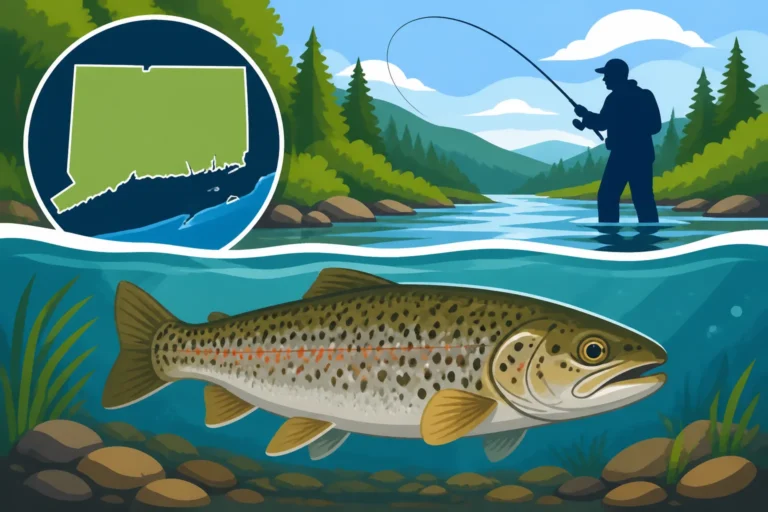
- Coldwater Streams (Trout Management Areas – TMAs): These are different. Waters designated as Connecticut Trout Management Area Regulations or wild trout management areas have specific rules designed to protect trout. These streams typically have colder, cleaner water, better habitat, and often catch-and-release or reduced harvest regulations. In these environments, a higher percentage of stocked trout, particularly brown trout which are generally more resilient and adaptable than rainbows, can survive for extended periods, even years, and grow to larger sizes, becoming "holdover" fish. Some estimates suggest that in prime coldwater habitat with low harvest pressure, a significant portion can survive for a season, though rates vary greatly.
- Species Differences:
- Rainbow Trout: Often the most commonly stocked species, rainbows are known for being relatively easy to catch and are popular with anglers. However, they can be less tolerant of warm water and predatory pressure than brown trout. Their survival tends to be shorter-term in put-and-take scenarios.
- Brown Trout: Generally hardier and more adaptive to varied conditions, brown trout are more likely to become holdovers, especially in good coldwater habitat. They are also more wary and can be more challenging to catch as they adapt to the wild.
- Brook Trout: Connecticut's native trout, brook trout, are also stocked but are very sensitive to water quality and temperature. While they can thrive in pristine, cold mountain streams, their survival in general stocked waters can be more challenging.
General Survival Estimates
Given all these variables, providing an exact percentage is tough, but we can offer some realistic ranges.
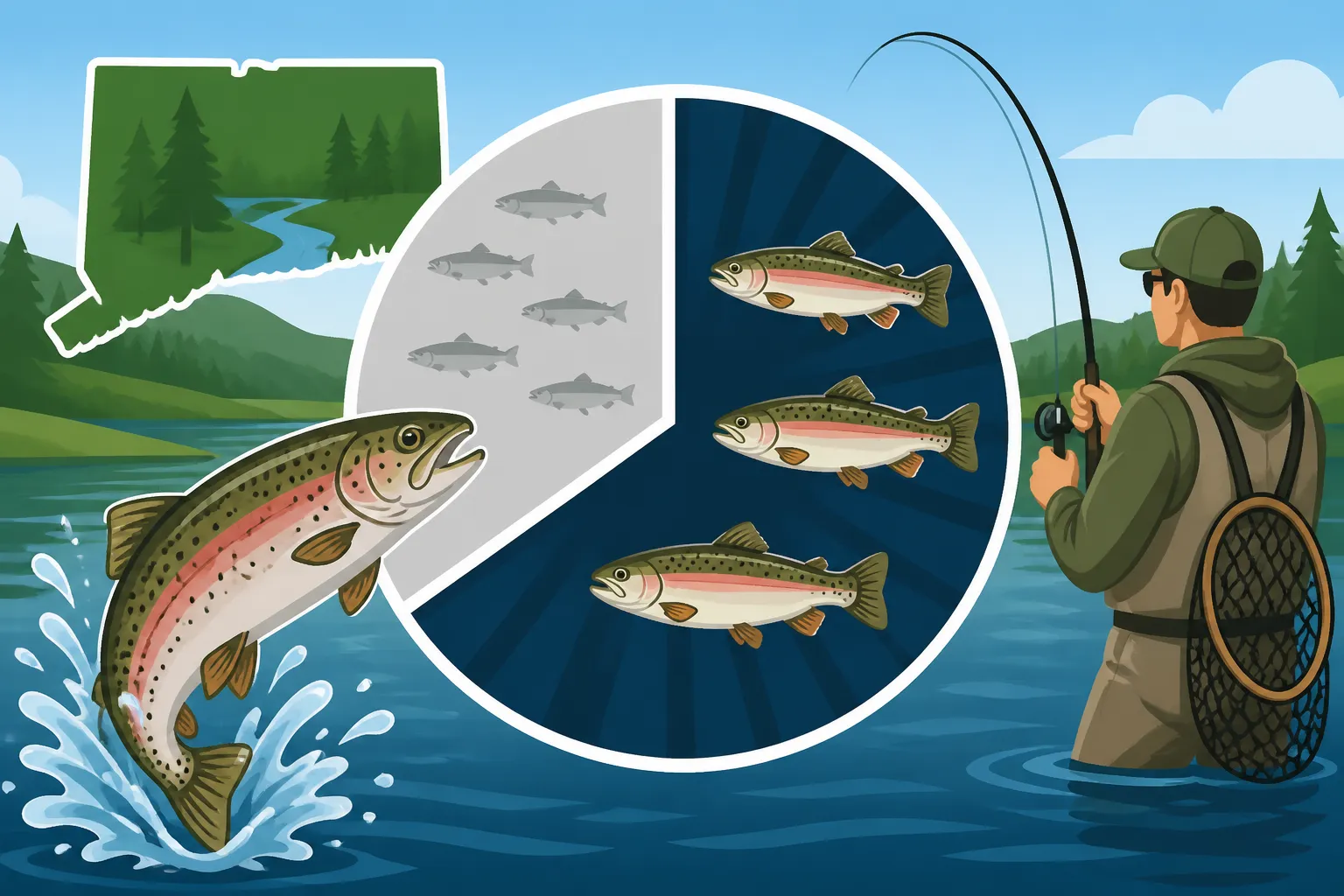
For the vast majority of put-and-take stocked waters, where harvest is encouraged and habitat may be marginal for long-term survival, it's widely accepted that a high percentage (often 70-90% or more) of stocked trout are caught by anglers within weeks or a couple of months after stocking. Of those that aren't caught, a significant number may succumb to predation, stress, or unsuitable water conditions before the season is over. This means that a very small percentage, perhaps less than 10-20%, are likely to survive past their initial stocking season in these waters, and even fewer into the next year.
However, in well-managed coldwater fisheries like specific Trout Management Areas with excellent habitat and catch-and-release rules, that survival rate can be substantially higher. In these special areas, a good portion of stocked trout, particularly browns, can adapt, grow, and contribute to the fishery for a longer duration, sometimes with 30-50% or even higher survival rates through the first year for some studies, though these are exceptions rather than the rule for the average stocked pond or stream. This is why these areas are so prized by anglers seeking a different kind of trout fishing experience. The Trout Fishing in Connecticut guide talks more about these distinct types of fisheries.
The key takeaway is that the survival of stocked trout is not a simple metric. It's a complex interplay of environmental factors, fishing pressure, species resilience, and the specific management goals for each waterbody.
| Factor Affecting Survival | Impact on Stocked Trout Survival | General Outcome |
|---|---|---|
| Angler Harvest | High catchability and legal limits for removal. | High mortality, especially shortly after stocking. |
| Predation | Vulnerability to birds, mammals, and larger fish. | Significant mortality, particularly for disoriented fish. |
| Water Temperature | Trout need cold, oxygenated water. Warm water is lethal. | High mortality in warm months or poorly oxygenated water. |
| Habitat Quality | Lack of cover, deep pools, and stable flows. | Increased stress, exposure, and mortality. |
| Competition | Too many fish for available food and space. | Reduced growth, increased stress, and disease susceptibility. |
| Hatchery Stress | Trauma from handling, transport, and new environment. | Initial post-stocking mortality. |
| Species (Rainbow vs Brown) | Brown trout generally hardier; Rainbows less so. | Brown trout have better long-term survival prospects. |
| Management Goals | "Put-and-take" vs. "Quality/Wild Trout Management". | Varies from very low long-term survival to moderate. |
Maximizing Your Catch and Supporting Sustainable Fishing
Understanding the survival rates of stocked trout doesn't mean you should feel discouraged. Quite the opposite! It helps us appreciate the role of stocking and guides us on how to be more effective anglers and stewards of our fisheries.
Fishing Smart After Stocking
If your goal is to maximize your catch and enjoy the bounty of recently stocked trout, timing and technique are everything.
- Be Timely: The best fishing for stocked trout is almost always right after the stocking truck has been through. Keep an eye on the Connecticut Trout Season and Stocking Rules and the DEEP's online stocking reports. The fresher the stock, the higher your chances.
- Location, Location, Location: Stocked trout don't always disperse widely right away. They might congregate near the release point, or in the first available deep pool or cover. Look for slower moving water, deeper pockets, or areas with some current break. The Connecticut Interactive Trout Stocking Map, Explained can be an invaluable tool to identify where and when stocking occurs.
- Simple Baits and Lures: Don't overthink it, especially in the first few days. PowerBait, corn, worms, small spinners (like Mepps or Rooster Tails), and even basic spoons are often incredibly effective. These fish are used to a pellet diet, so something readily visible and easily accessible will often trigger a bite.
- Vary Your Presentation: If one thing isn't working, switch it up. Try different colors, different retrieve speeds, or different depths. Sometimes, a subtle change can make all the difference.
Promoting Long-Term Survival (If That's Your Goal)
If you're more interested in seeing some of these stocked fish survive to grow larger or become "holdovers," your approach needs to change.
- Catch and Release Ethic: Embrace catch-and-release, especially in designated Trout Management Areas (TMAs) or if you're fishing later in the season when fewer fresh fish are available. Use single, barbless hooks, land fish quickly, keep them in the water as much as possible, and handle them gently. Avoid touching their gills or squeezing them too hard.
- Fish During Cooler Times: If you plan to release, try to fish during cooler parts of the day or year. Trout struggle much more with stress in warm water, so a catch-and-release fish in July has a much lower survival chance than one released in April.
- Know the Regulations: Understand the specific regulations for the waterbody you're fishing. Some areas have length limits, reduced creel limits, or are strictly catch-and-release. Respecting these rules is paramount to fostering a healthy fishery. Our article on Connecticut Trout Management Area Regulations delves into these specifics.
- Target Holdovers: Look for areas with excellent coldwater habitat – spring-fed creeks, deep pools, heavily shaded sections of rivers. These are the places where stocked trout are most likely to survive and adapt, becoming more challenging and rewarding to catch. Using techniques like fly fishing, as explored in Fly Fishing for Trout in Connecticut, can often be more effective for these warier fish.
The Bigger Picture: Beyond the Numbers
Ultimately, the stocked trout program in Connecticut is a huge success, measured by angler participation and satisfaction. While the survival percentage of individual stocked trout through a full season might be lower than some hope, the program achieves its goal of providing fantastic recreational opportunities.
- Support Fisheries Management: Your fishing license dollars directly fund these stocking programs, habitat improvements, and fisheries research. By purchasing a Connecticut Fishing License Guide for 2026, you're contributing to the future of fishing in our state. Even understanding How Much Does a Connecticut Fishing License Cost helps you appreciate where your investment goes.
- Educate Others: Share your knowledge with fellow anglers, especially newer ones. Teach them about responsible catch-and-release practices, the importance of regulations, and the different goals of various stocked fisheries.
- Appreciate the Experience: Whether you keep your limit for a delicious dinner or release every fish, take a moment to appreciate the effort that goes into providing these opportunities. Stocking is a vital tool in Connecticut's fisheries management, ensuring that both experienced anglers and newcomers can enjoy the thrill of trout fishing.
Disclaimer
This article is for general informational purposes only and does not constitute professional advice. Laws, prices and regulations vary by location and change over time. Consult a qualified professional for guidance on your specific situation.