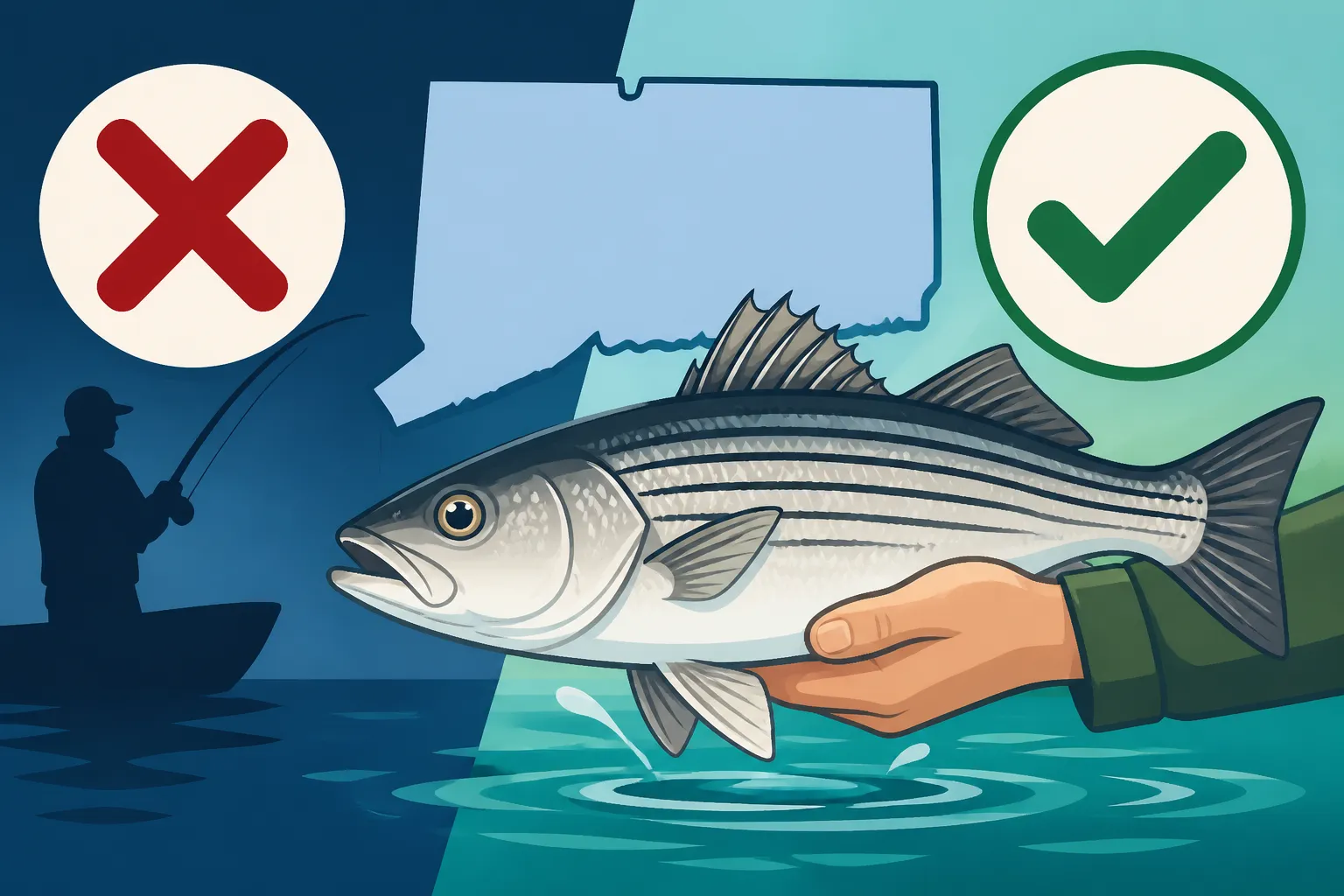
Is It Legal to Release a Striped Bass You Catch in Connecticut?
It's an age-old question that many passionate anglers grapple with, especially as regulations shift and conservation efforts become ever more critical: "Is it legal to release a striped bass you catch in Connecticut?" You’ve put in the effort, battled a beautiful striper, and now you’re standing there, hook in hand, wondering what the right — and legal — next step is. This guide will cut through the confusion, clearly outlining Connecticut's regulations around striped bass release and, just as importantly, sharing the best practices for ensuring any fish you send back into the water has the best chance of survival.
The Legality of Releasing Striped Bass in Connecticut
Let's get straight to the point: Yes, it is absolutely legal to release a striped bass you catch in Connecticut. In fact, for many striped bass you encounter, releasing them isn't just an option; it's a legal requirement! The key lies in understanding the specific regulations that dictate which fish you can keep and which must be immediately returned to the water. These rules are designed with the long-term health of the striped bass population in mind, and every angler plays a crucial role in their success.
The waters around Connecticut, particularly Long Island Sound, are vital nurseries and feeding grounds for these magnificent fish. But the striped bass population has faced its share of challenges over the years, leading to stricter regulations. These rules aren't meant to frustrate us; they're a collective effort to ensure that future generations can enjoy the same incredible fishing experiences we do today. So, while releasing a hard-won fish might sometimes feel tough, especially a big one, it's often the law and always a good practice.
Understanding Connecticut's Striped Bass Regulations
Connecticut, like many coastal states, employs a "slot limit" system for striped bass. This means there's a specific size range within which you are allowed to keep a fish. Any striped bass caught that is either too small (under the minimum length) or too large (over the maximum length) for the current slot limit must be released. It's not a suggestion; it's a non-negotiable rule. This system helps protect juvenile fish, allowing them to grow and reproduce, and also safeguards the larger, more prolific breeding stock.
The exact dimensions of the slot limit and the daily creel limit (how many fish you can keep per day) can change. It's imperative to always check the most current Connecticut Striped Bass Slot Limit and Season and the Connecticut Striped Bass Daily Limit before you head out. These regulations are typically updated annually, and ignorance is never an excuse in the eyes of the law. For example, if the current slot limit is 28 to 31 inches, and you catch a 26-inch bass, you must release it. The same goes for a magnificent 35-inch 'cow' bass – back in the water it goes to spawn another day.
The Role of Conservation in Release Decisions
Beyond the legal mandate, the principle of conservation underpins much of why responsible catch and release is so important. Striped bass populations are dynamic, influenced by everything from environmental factors to fishing pressure. When we choose to release a fish, particularly those outside the slot limit, we are actively participating in the stewardship of this valuable resource.
Think about it: those large, older female striped bass, often affectionately called 'cows,' are incredibly important spawners. They produce millions more eggs than smaller fish, making them vital to the species' reproductive success. Releasing these giants ensures they continue their crucial role in replenishing the stock. Similarly, releasing smaller, undersized fish gives them a chance to reach reproductive maturity. Your decision to carefully release a fish contributes directly to healthier fish populations and more abundant fishing opportunities for everyone down the line. It's about looking at the bigger picture and understanding that every single release makes a difference.
Essential Practices for Successful Catch and Release
Knowing that you can and often must release striped bass is one thing, but doing it in a way that gives the fish the best chance of survival is another entirely. A poorly handled release can be just as detrimental as keeping a fish when you shouldn't. The goal isn't just to let the fish go; it's to let it go strong and healthy. This is where thoughtful preparation and careful technique come into play.
Many anglers feel a huge sense of satisfaction from a successful, vigorous release – watching that fish kick its tail and disappear back into the depths. It's a testament to good angling practice and respect for the resource. Taking the time to learn and implement these techniques not only benefits the fish but also enhances your overall fishing experience, making you a more skilled and ethical angler. This is particularly important for species like striped bass, which can be quite hardy if treated well but are also susceptible to stress. For more general insights into targeting these fish, check out Striped Bass Fishing in Long Island Sound.
Gear Selection for Minimizing Harm
The tools you choose can significantly impact a fish's survival rate post-release. It starts before the fish even bites.
- Appropriate Tackle: Using tackle that's too light for the fish you're targeting often leads to prolonged fights. While a long fight might be exciting for you, it can utterly exhaust a fish, making it less able to recover after release. Match your rod, reel, and line strength to the potential size of the striped bass you expect to encounter. For instance, if you're targeting larger fish in the rips of Long Island Sound, a heavier setup will allow you to bring the fish in more quickly, reducing its stress.
- Circle Hooks: This is perhaps the most critical gear choice for catch and release. Connecticut has a Connecticut Circle Hook Requirement for Striped Bass when fishing with natural bait for a reason. Circle hooks are designed to hook fish in the corner of the mouth, rather than deep in the gullet, which is often fatal. When using natural bait, always choose a circle hook. Even when using artificial lures, consider crushing barbs on treble hooks or swapping them out for single, barbless hooks to make removal easier and less damaging. You can find a wide variety of quality circle hooks and de-hookers on platforms like Amazon.
- Landing Nets: A good landing net can be a fish's best friend. Opt for nets with rubberized, knotless mesh. This type of mesh is much gentler on a fish's delicate slime coat, fins, and scales compared to traditional knotted nylon nets, which can strip away protective mucus and cause abrasions. A net also allows you to keep the fish in the water for unhooking, minimizing air exposure.
- De-hooking Tools and Pliers: Keep a pair of long-nosed pliers or a specialized de-hooking tool readily accessible. These allow for quick and efficient hook removal, especially when dealing with deeply set hooks or trying to avoid sharp teeth. Again, check Amazon for a wide selection of these essential tools.
Handling Techniques for Striped Bass
Once you've hooked a striper, how you handle it in those crucial moments before release can make all the difference.
- Minimize Air Exposure: This is rule number one. A fish out of water is like a person holding their breath; it causes extreme stress and can lead to organ damage. Try to keep the fish in the water as much as possible, especially during unhooking. If you must remove it from the water for a quick photo, do so for only a few seconds, holding your breath yourself as a reminder of how long the fish is out of its element.
- Proper Gripping: Never hold a striped bass vertically by its jaw or tail. This puts immense pressure on its internal organs and spine, potentially causing irreparable damage. Instead, support the fish horizontally, using two hands if necessary – one supporting the belly and the other gently gripping the base of the tail. If possible, cradle it in the water or a rubberized net. For a quick photo, the goal is to keep the fish horizontal and well-supported.
- Wet Hands: Always, always wet your hands thoroughly before touching a fish. Dry hands can strip away the protective slime coat, leaving the fish vulnerable to infections and parasites. Think of the slime coat as the fish's immune system; damaging it weakens its defenses.
- Removing Hooks Quickly: With your wet hands or de-hooking tool, remove the hook as quickly and gently as possible. If the hook is firmly embedded, a good pair of pliers or a de-hooker will be invaluable. Don't yank or twist aggressively.
- Reviving the Fish: After unhooking, gently hold the fish in the water, facing into any current. If there's no current, gently move it back and forth to force water over its gills. This helps flush oxygen through its system. You'll feel the fish start to stiffen and eventually try to swim away. Don't release it until it's strong enough to swim off on its own. It might take a few seconds or a few minutes, depending on the length of the fight and the water temperature. This process is often detailed in Striped Bass Catch and Release Survival Tips.
Common Scenarios and Considerations for Release
Fishing isn't always textbook, and you'll inevitably encounter situations that challenge your catch-and-release ethics. Knowing how to react in these common scenarios can further improve the survival chances of released striped bass. It’s about making smart, quick decisions when you're on the water.
Sometimes the excitement of the catch or the frustration of a difficult situation can make judgment cloudy. But a true conservationist makes the best decision for the fish, even if it's not the easiest or most personally gratifying one.
When a Fish is Hooked Deep or Bleeding
This is probably the toughest scenario for any angler committed to catch and release. Despite using circle hooks, sometimes a fish takes the bait deep, or a hook slips and causes significant bleeding.
- Assessing the Damage: First, quickly assess the severity of the injury. If the fish is bleeding heavily from the gills or gut, its chances of survival are unfortunately very low, even with the best release practices.
- Cutting the Line vs. Removal: If the hook is deeply swallowed and you can't easily see or remove it without tearing more tissue, do not try to rip it out. This will almost certainly do more harm than good. Instead, cut the line as close to the hook as possible. Stainless steel hooks will eventually rust out, and even non-stainless hooks can often be encapsulated by the fish's body, allowing it to survive. The act of tearing its throat or stomach to retrieve a deeply set hook is almost always fatal.
- Ethical Considerations: If a deeply hooked fish is bleeding profusely and appears unlikely to survive, it raises an ethical dilemma. In some cases, if the fish is within the legal slot limit, some anglers might choose to keep it rather than letting it die and go to waste. However, if it's outside the slot limit, it still must be released, even if its chances are slim. It's a tough call, but adhering to regulations is paramount.
Dealing with Out-of-Slot Fish
As mentioned, for any striped bass that falls outside the current legal slot limit (either too small or too large), release is mandatory. There's no gray area here.
- Immediate Release: As soon as you determine the fish is out of the slot, it needs to go back into the water. Don't put it in a livewell, don't keep it on deck for longer than absolutely necessary, and don't try to stretch it to make it fit the slot.
- The Temptation: It can be incredibly tempting to keep a monster striper, perhaps the biggest you've ever caught, even if it's over the slot. Or maybe you've been skunked all day, and that slightly undersized fish looks awfully good. Resist this temptation. Not only is it illegal, but it undermines the very conservation efforts designed to protect the species. Those big breeders are too important to the future of the fishery, and the small ones need time to grow. Respecting the slot limit is a cornerstone of responsible Connecticut Fishing Regulations Explained.
Release During Different Seasons and Water Temperatures
Environmental conditions play a huge role in a fish's survival post-release.
- Warm Water Stress: Striped bass are particularly susceptible to stress in warm water, typically when water temperatures climb into the high 70s or 80s Fahrenheit. Warmer water holds less oxygen, and a fish that has just fought a battle is already oxygen-deprived. During summer months, be extra diligent with quick releases, keeping the fish in the water, and ensuring a thorough revival. Consider fishing during cooler parts of the day (dawn/dusk) or targeting different species if the water is excessively warm. This is why some areas, like sections of the Connecticut Housatonic River Seasonal Closure Explained, have specific fishing closures or restrictions during warmer months to protect stressed fish.
- Colder Water Resilience: In contrast, striped bass generally handle catch and release much better in colder water (spring, fall, and even mild winter days). The higher oxygen content and lower metabolic rate of the fish make them more resilient. While still important to be gentle, you'll often find fish revive much more quickly in chilly temperatures.
| Practice | Good Catch & Release | Bad Catch & Release |
|---|---|---|
| Hook Type | Circle hooks (for bait), barbless (for lures) | J-hooks (for bait), barbed treble hooks |
| Landing | Rubberized, knotless net; hand-land (wet hands) | Gaff; knotted nylon net; beaching on rough surfaces |
| Handling | In-water unhooking; horizontal support (wet hands) | Vertical jaw/gill plate hold; dry hands; prolonged air exposure |
| Unhooking | Pliers/de-hooker; quick, gentle removal; cut line if deep | Ripping/yanking deeply set hooks; no tools |
| Revival | Face into current; gentle motion until swims strongly | Tossing fish back before full recovery |
| Photography | Quick, minimal air time; fish supported horizontally | Prolonged photos; fish held vertically/unsupported |
| Out-of-Slot Fish | Immediate, careful release | Attempting to keep; prolonged retention |
The Benefits of Responsible Release for Anglers and Ecosystems
Engaging in responsible catch and release isn't just about following rules; it's a philosophy that deepens your connection to the sport and the natural world. It shifts the focus from purely harvesting to enjoying the entire experience, from the thrill of the strike to the satisfaction of watching a fish swim away healthy. This mindful approach ensures that the joy of fishing can continue indefinitely.
Ultimately, we are all stewards of our shared natural resources. Every single angler has the power to make a positive impact, and the collective actions of many can lead to profound benefits for the ecosystem and the sport itself.
Sustaining the Fishery for Future Generations
The most obvious and profound benefit of responsible catch and release is the direct contribution to the sustainability of the fishery. When you release fish, especially those crucial breeders or those that need more time to grow, you are quite literally putting fish back into the system.
Imagine a world where every angler practiced perfect catch and release for non-keeper fish. The impact on fish populations would be immense. It means more fish reaching maturity, more fish spawning, and ultimately, more fish for everyone to enjoy catching. It's a self-sustaining cycle that relies on angler participation. Your actions today directly influence the fishing opportunities that will be available to your children and grandchildren in Connecticut's rivers and the Long Island Sound Fishing Guide. It's a legacy we can all contribute to.
The Joy of Catching and Releasing Trophy Fish
For many seasoned anglers, the true trophy isn't a fish on the dinner plate; it's the memory of a magnificent specimen, safely released to fight another day. There's an incredible satisfaction in battling a truly large striped bass, admiring its power and beauty, and then knowing you've given it the best possible chance to continue its life cycle.
The thrill of a strong pull, the bent rod, and the sight of a powerful striper is often enough. Not every catch needs to become a meal. In fact, many of the largest striped bass are often outside the legal slot limit anyway, making their release mandatory. Knowing that you've handled a fish well and returned it to the water empowers it to grow to its maximum potential. For those interested in the growth potential of these fish, exploring Striped Bass Growth Rate to Trophy Size can offer fascinating insights into why releasing larger fish is so vital. This mindset fosters a deeper respect for the fish and promotes a conservation-first approach to angling, ensuring that the magic of Connecticut fishing continues for years to come.
Disclaimer
This article is for general informational purposes only and does not constitute professional advice. Laws, prices and regulations vary by location and change over time. Consult a qualified professional for guidance on your specific situation.