Connecticut Inland vs Marine vs All-Waters License, Explained
Trying to figure out which Connecticut fishing license you actually need can feel like trying to untangle a particularly stubborn fishing knot, especially when you’re just trying to enjoy a relaxing day on the water. With options like "Inland," "Marine," and "All-Waters," it’s easy to get confused and worry about accidentally breaking the rules. This guide will meticulously break down each type of license, explain exactly what waters they cover, and help you confidently choose the right one for your fishing adventures in Connecticut.
Understanding Connecticut's Diverse Waters and License Needs
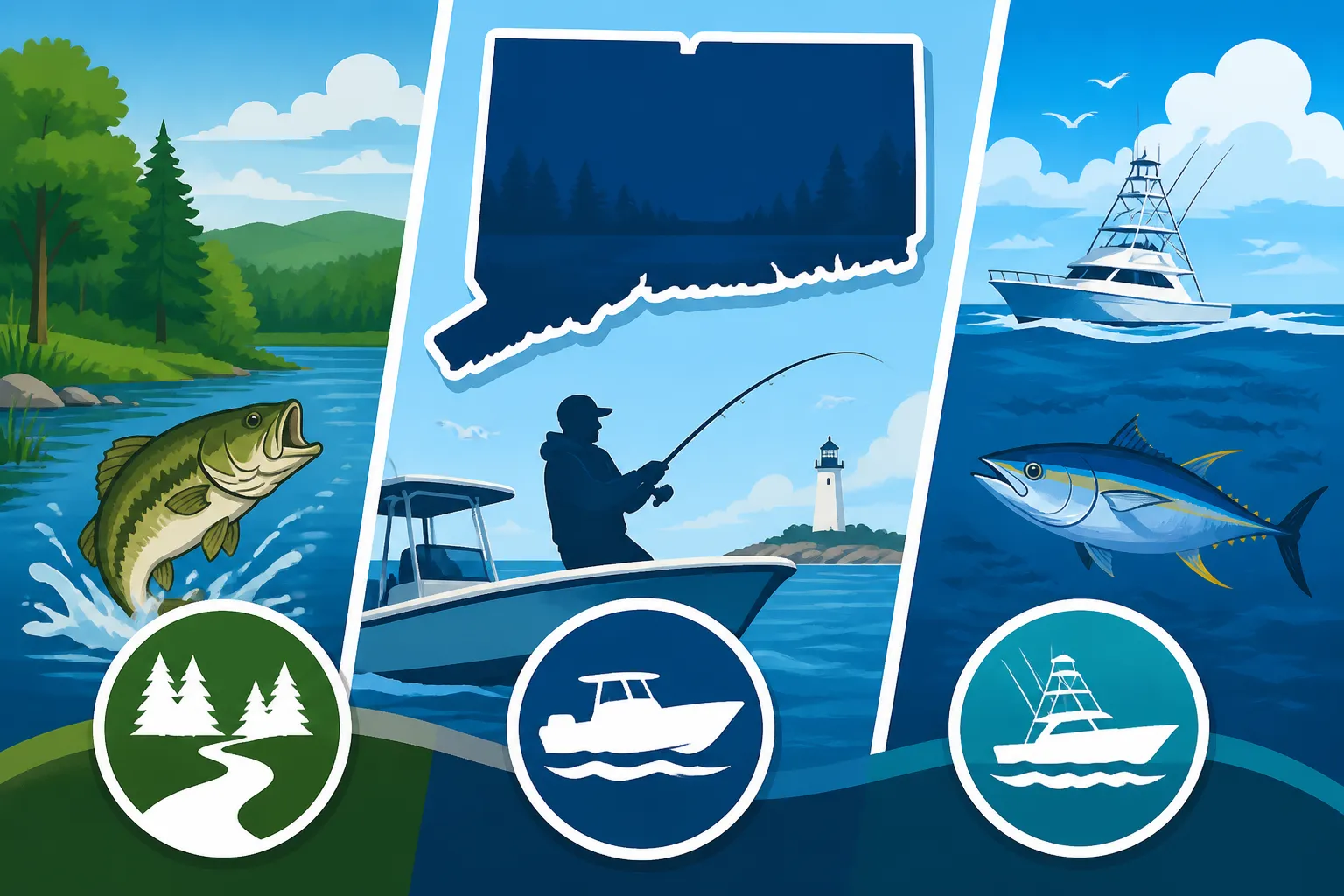
Connecticut is blessed with incredible fishing opportunities, from the rushing rivers and tranquil lakes of its interior to the expansive, briny waters of Long Island Sound. But with such diversity comes a bit of complexity when it comes to licensing. The state has wisely categorized its waters, and thus its fishing licenses, to manage fish populations effectively and ensure sustainable angling for everyone. This system, while sometimes a little perplexing at first glance, is designed to protect both the freshwater and saltwater ecosystems that make our state a fishing paradise. It's a fundamental part of the overall Connecticut Fishing License Guide for 2026.
The Core Reason for Separate Licenses
At its heart, the division into inland and marine licenses reflects the distinct environments and the unique fish species that inhabit them. Freshwater ecosystems, like rivers, streams, and lakes, require different management strategies than the tidal, saline environment of Long Island Sound. Different species thrive in these varied habitats, from trout and bass in our inland waterways to striped bass and fluke in the Sound. The Department of Energy and Environmental Protection (DEEP) tailors its stocking programs, catch limits, and seasonal regulations based on these distinctions. Therefore, your license contributes directly to the conservation efforts specific to the type of fishing you enjoy most. It also helps track angler participation in specific areas, which is vital data for resource management.
The Impact on Your Wallet and Your Day
The type of license you need also impacts the cost. A dedicated inland or marine license might be perfectly adequate and more budget-friendly if you stick to one type of water. However, if your fishing excursions often take you from casting for trout in the Farmington River to chasing bluefish off the coast of Niantic, then an All-Waters license starts to look like a much more convenient and, potentially, more economical option in the long run. Many anglers initially try to piece together separate licenses, only to realize later that a combined option would have saved them hassle and maybe even some money. Understanding the differences upfront helps you avoid those "darn, I should have just gotten the other one" moments.
Diving Deep into the Inland Fishing License
The Inland Fishing License is your passport to Connecticut's vast network of freshwater fisheries. Think shimmering lakes, winding rivers, babbling brooks, and serene ponds. This license is a must-have for anyone who plans to cast a line in any body of water that isn't directly influenced by the tides of Long Island Sound.
Waters Covered by an Inland License
When we talk about "inland" waters in Connecticut, we're referring to a huge variety of freshwater habitats. This includes everything from the smallest beaver pond tucked away in the woods to major rivers like the Connecticut River (above the tidal influence line, typically around Middletown), the Housatonic River, and the Naugatuck River. It covers all the lakes, reservoirs, and streams that dot our landscape, whether they're privately owned (with permission, of course) or part of state parks and public access areas.
For example, if you're planning a trip to catch largemouth bass on Candlewood Lake, or if you're heading to the Farmington River for some world-class trout fishing, an Inland Fishing License is what you'll need. It also covers ice fishing on many of these lakes and ponds during the colder months. This license ensures you're legally equipped to pursue species like trout, bass (both largemouth and smallmouth), pike, pickerel, perch, crappie, and sunfish in their natural freshwater environments. Always be mindful of specific regulations for certain areas, such as the Connecticut Housatonic River Seasonal Closure Explained or special rules for other Trout Management Areas.
Common Inland Species and Fishing Pursuits
With an Inland Fishing License, the possibilities are almost endless for freshwater anglers. Connecticut's inland waters are renowned for their trout fisheries, with consistent stocking programs ensuring plenty of brook, brown, and rainbow trout. Many anglers eagerly await the Connecticut Trout Season and Stocking Rules each spring. You'll find fantastic opportunities for smallmouth bass fishing in Connecticut rivers like the Housatonic, and many lakes offer superb largemouth bass fishing.
Panfish, such as bluegill, perch, and crappie, are abundant in most ponds and lakes, providing excellent opportunities for family-friendly fishing. For those seeking a bigger challenge, northern pike can be found in larger lakes like Bantam Lake and Mansfield Hollow Lake. Whether you prefer fly fishing, spin casting, or even bait fishing, this license opens up a world of freshwater angling pursuits. It's important to remember that while the license covers the right to fish, you still need to adhere to all specific species regulations, including length and daily limits, which you can usually find in the annual Reading the Connecticut Fishing Guide.
Limitations and What It Doesn't Cover
It’s crucial to understand that an Inland Fishing License does not grant you permission to fish in Connecticut's marine district, which includes Long Island Sound and its tidal tributaries. Even if a river flows into the Sound, once you're in the tidal portion, you'll need a marine license. A common misconception is that if you're on a boat in a tidal river, your inland license covers you. This isn't the case. The determining factor is whether the water is saline and tidal.
Furthermore, an Inland License alone won't cover certain specialized fishing activities, such as targeting trout and salmon in designated "Trout and Salmon Stamp" waters if you plan to keep them. For these instances, you'd need the additional Connecticut Trout and Salmon Stamp, Explained if you're harvesting fish. So, while comprehensive for freshwater, it has distinct boundaries that you need to be aware of to avoid any unintentional legal issues.
Navigating the Waters with a Marine Fishing License
If the smell of salt in the air and the vast expanse of Long Island Sound call to you, then a Marine Fishing License is your essential piece of gear. This license is specifically designed for saltwater angling within Connecticut's marine district.
Where a Marine License Takes You
The Marine Fishing License covers all of Connecticut's marine district. This includes the entirety of Long Island Sound within state waters, as well as all bays, harbors, estuaries, and the tidal portions of rivers and streams that flow into the Sound. For instance, if you're fishing from the breakwater in Niantic, dropping a line from a party boat out of Old Saybrook, or kayak fishing in the tidal flats of the Housatonic River estuary, you need a marine license.
This license is your gateway to targeting popular saltwater species from shore, piers, jetties, or any type of vessel. It's important to note that even if you're fishing in relatively shallow, brackish water that's part of a tidal creek, if it connects to the Sound and experiences tidal fluctuations, it falls under the marine district. Think of it as any water where the ocean's influence is felt, whether subtly or dramatically.
Popular Saltwater Species and Activities
With a Marine Fishing License, you'll be able to pursue a thrilling array of saltwater game fish. Striped bass fishing in Long Island Sound is arguably the most popular pursuit, with anglers chasing these powerful fish throughout the season. You'll also find fantastic opportunities for fluke (summer flounder), blackfish (tautog), black sea bass, and bluefish. Many anglers enjoy casting for these species from the beaches, or venturing out on a boat for bottom fishing or trolling.
Shore-based anglers will find plenty of action from piers and jetties along the coast, such as those in Milford or New Haven, targeting species like scup (porgy) and small striped bass. For those who enjoy the challenge of targeting bottom dwellers, the numerous reefs and wrecks scattered across Long Island Sound offer prime habitat for blackfish and black sea bass. Just remember to check the Connecticut Saltwater Fishing Regulations by Species for specific rules, as these can change annually.
Restrictions and Key Distinctions
A Marine Fishing License is strictly for saltwater environments. It does not permit you to fish in any freshwater body, even if that freshwater body is just a stone's throw from the coast. For example, you can't use your Marine License to fish for trout in a small pond in a coastal town. The distinction is clear: freshwater is inland; saltwater is marine.
Another important point: while some recreational shellfish harvesting licenses exist, a standard Marine Fishing License does not cover the taking of shellfish like clams or oysters. Those activities often require separate permits issued by specific towns or the state. So, if you're dreaming of a day of fishing and clamming, make sure you've got all your bases covered before heading out.
The Convenience of an All-Waters Fishing License
For the angler who truly embraces all that Connecticut has to offer, from mountain streams to the vast Sound, the All-Waters Fishing License is the ultimate solution. This single license combines the privileges of both an Inland and a Marine Fishing License, offering unparalleled flexibility.
What an All-Waters License Encompasses
An All-Waters Fishing License grants you permission to fish in all fishable waters of Connecticut – both freshwater and saltwater. It's the most comprehensive option available, designed for anglers who don't want to be limited by geographical boundaries or the need to purchase multiple licenses. Imagine being able to spontaneously decide to fish for trout in the morning and then head to the coast for striped bass in the afternoon, all without a second thought about your licensing. That's the freedom an All-Waters license provides.
This means you can fish in any lake, river, pond, stream, Long Island Sound, its estuaries, and tidal portions of any river. It truly simplifies your fishing life, especially if your angling interests are as broad as Connecticut's diverse ecosystems. It’s also often a component of a Connecticut Combination Hunting and Fishing License Options, making it even more appealing for multi-sport outdoors enthusiasts.
Who Benefits Most from This Option
The All-Waters license is ideal for several types of anglers:
- The Versatile Angler: If you enjoy both freshwater and saltwater fishing throughout the year, switching between species and environments, this license is perfect. It eliminates the hassle of buying and keeping track of two separate licenses.
- The Explorative Angler: For those who love to discover new fishing spots, whether they're hidden inland ponds or lesser-known coastal areas, the All-Waters license means you're always covered, no matter where your exploration takes you.
- The Family Angler: If you fish with family members who might have different preferences (some wanting to fish a lake, others wanting to hit the beach), this license covers you for all scenarios.
- The Frequent Visitor (Non-Resident): Non-residents who spend a significant amount of time fishing in Connecticut often find the All-Waters license to be the most practical and cost-effective choice compared to purchasing separate non-resident inland and marine licenses. For more details on non-resident options, check out Nonresident All-Waters Fishing License Cost in Connecticut.
While it might have a slightly higher upfront cost than a single license, the peace of mind and convenience it offers often make it a worthwhile investment for many.
When the All-Waters License Might Not Be Necessary
While the All-Waters license is incredibly convenient, it's not always the absolute best choice for everyone. Consider these scenarios where a single license might be more appropriate:
- Dedicated Single-Discipline Angler: If you only fish for trout in freshwater streams and never venture to the coast, or vice versa, then an Inland or Marine license respectively would be sufficient and more economical. There's no need to pay for coverage you won't use.
- Infrequent Anglers: If you only fish once or twice a year, and those trips are always in the same type of water, a single license might suffice. However, if those infrequent trips do span both fresh and salt, then the All-Waters could still be a good choice for simplicity.
- Budget-Conscious Anglers with Limited Scope: For those on a very tight budget who know they will exclusively stick to one type of water, opting for the less expensive single license makes sense.
Essentially, the All-Waters license is about maximizing your flexibility. If your fishing habits don't demand that flexibility, then you can save a few dollars by sticking to a specialized license.
Making the Right Choice: Comparing License Options
Deciding on the right fishing license in Connecticut really boils down to understanding your own fishing habits and preferences. There’s no single "best" option for everyone, but by laying out the key differences, you can make an informed decision that suits your needs.
A Side-by-Side Comparison
Let's break down the core features of each license type to help you visualize the distinctions. This table should provide a quick reference for the main points we've covered.
| Feature | Inland Fishing License | Marine Fishing License | All-Waters Fishing License |
|---|---|---|---|
| Coverage | All freshwaters (lakes, rivers, ponds, streams) | All saltwaters (Long Island Sound, tidal rivers/estuaries) | All freshwaters AND saltwaters (most comprehensive) |
| Primary Species | Trout, Bass, Pike, Pickerel, Panfish | Striped Bass, Fluke, Blackfish, Bluefish, Sea Bass | All species in both fresh and saltwater |
| Cost (Resident Annual) | Lowest individual cost | Moderate individual cost | Highest single cost (but often cheaper than buying both separately) |
| Flexibility | Limited to freshwater | Limited to saltwater | Maximum flexibility, no water type restriction |
| Best For | Dedicated freshwater anglers | Dedicated saltwater anglers | Anglers who fish both fresh and saltwater frequently or want maximum coverage |
| Additional Stamps | May require Trout/Salmon Stamp for harvest | Not applicable for marine fishing | May require Trout/Salmon Stamp for freshwater trout/salmon harvest |
Note: The actual How Much Does a Connecticut Fishing License Cost can vary based on residency, age, and any discounts you might qualify for, so always check the latest figures from DEEP.
Weighing the Cost Versus Convenience
When it comes to cost, an Inland Resident Annual Fishing License in Connecticut is typically the most affordable standalone option. A Marine Resident Annual Fishing License is usually a bit more. The All-Waters Resident Annual Fishing License will naturally be the most expensive single license, but it's often less than the combined cost of buying both an Inland and a Marine license separately.
For example, if a resident inland license costs $28 and a marine license costs $10, an all-waters license might be $38. In this hypothetical scenario, you save nothing by buying the all-waters, but you gain the convenience of one license. However, these numbers fluctuate, and sometimes the all-waters represents a small savings over buying both. The true value of the All-Waters license often lies more in its convenience and the peace of mind of knowing you're covered, regardless of where your angling takes you.
Consider how often you switch between freshwater and saltwater. If you fish exclusively in one type of water, saving a few dollars with a specific license might make sense. But if you find yourself buying both licenses year after year, or constantly wishing you had the other, the All-Waters license is a clear winner for efficiency and ease.
How to Purchase Your Connecticut Fishing License
Once you've decided which license is right for you, purchasing it is quite straightforward. The Connecticut DEEP offers several convenient ways to buy a fishing license:
- Online: This is by far the easiest and quickest method. You can visit the official CT DEEP website, purchase your license, and print it right from home. This process is detailed in How to Buy a Fishing License Online in Connecticut. You can even save a digital copy on your phone!
- Authorized Vendors: Many bait and tackle shops, sporting goods stores (like certain Dick's Sporting Goods locations), and town clerks across Connecticut are authorized license vendors. This is great if you prefer an in-person transaction or need to pick up some gear at the same time. You can often find a list of these local agents on the DEEP website.
- DEEP Offices: You can also purchase licenses directly at certain DEEP offices during business hours.
Regardless of where you purchase it, make sure you understand the Connecticut Fishing License Age Requirements and other regulations that apply to you, such as residency definitions, before making your purchase. And don't forget, you can typically choose to either print your license or carry a digital version on your phone, as explained in Printing or Carrying a Digital Fishing License in Connecticut.
Beyond the Basics: Other Important Considerations
Getting the right license is a huge step, but a few other details can make your Connecticut fishing experience even smoother and more compliant. These often overlooked aspects can save you from unexpected surprises or missed opportunities.
Trout and Salmon Stamps
For those who fish inland waters and specifically target or plan to harvest trout and salmon, there's an additional requirement: the Connecticut Trout and Salmon Stamp. This isn't a separate license, but an endorsement you add to your existing Inland or All-Waters Fishing License. If you're simply catch-and-release fishing for trout, you generally don't need the stamp. However, if you intend to keep any trout or Atlantic salmon from designated Trout Management Areas, Wild Trout Management Areas, or other stocked waters, this stamp is mandatory. The funds from these stamps directly support Connecticut’s trout and salmon stocking and management programs. You can find more information about its specific costs and regulations in Connecticut Trout and Salmon Stamp, Explained.
Special Permits and Regulations
While your fishing license covers general angling, some very specific activities or locations might require additional permits or adhere to unique regulations. For instance:
- Fishing Tournaments: If you're participating in or organizing a fishing tournament, especially one with prizes or a large number of participants, you might need a separate permit from DEEP.
- Private Waters: While your license allows you to fish in public waters, fishing in private ponds or lakes still requires the property owner's permission, even if you have a valid state license.
- Ice Shanty Registration: If you use an ice shanty for ice fishing, it might need to be registered with DEEP, especially if it's left on the ice overnight. Always check the specific rules for the water body you plan to fish.
- Shellfishing: As mentioned, taking clams, oysters, or other shellfish typically requires municipal or state shellfishing permits, not just a fishing license.
Always consult the latest Connecticut Fishing Regulations Explained or the DEEP website for any unique rules pertaining to your chosen fishing method or location.
Gear and Supplies: Ensuring You're Ready
Having the right license is just the start; you also need the right gear! Whether you're targeting freshwater species with a spinning rod and a box of PowerBait, or heading to the Sound with heavy tackle for striped bass, preparation is key. Many anglers find it useful to organize their gear by license type, so they always have what they need for an inland stream or a marine outing.
For freshwater fishing, a medium-light rod, some basic lures like spinners and jigs, and a selection of live bait (worms, shiners) are usually sufficient. For saltwater, you might need heavier rods, stronger line, a variety of metal jigs, topwater plugs, and perhaps some specialized tackle for bottom fishing or chunking. Online retailers like Amazon offer a vast selection of fishing tackle for both freshwater and saltwater, making it easy to stock up on essentials or even find specialized gear. Don't forget essentials like a good pair of polarized sunglasses, a hat, sunscreen, and a cooler for your catch. Having a quality tackle box, easily found on platforms like Amazon, helps keep your freshwater and saltwater gear separate and organized. And, of course, a reliable fishing knife is indispensable.
What Happens if You Fish Without a License?
It's tempting sometimes, especially if you're just "dunking a worm" with a child, to think a license isn't a big deal. However, fishing without the proper license in Connecticut is a violation and can result in significant penalties. These can range from fines to confiscation of your gear, and even a loss of future fishing privileges. The fines can quickly outweigh the cost of a license, making it a very expensive mistake.
Enforcement officers from DEEP routinely patrol our waters, both inland and marine, and they are well-versed in checking licenses. It's simply not worth the risk. Make sure you understand Fishing Without a License in Connecticut: Penalties and always carry your license (either physical or digital) while fishing. It’s part of being a responsible angler and respecting the regulations designed to protect our natural resources.
Final Thoughts on Your Connecticut Fishing Journey
Navigating the world of Connecticut fishing licenses doesn't have to be a daunting task. By understanding the clear distinctions between the Inland, Marine, and All-Waters options, you can confidently select the license that best fits your angling lifestyle. Whether you're drawn to the serene beauty of a quiet trout stream or the thrilling challenge of saltwater giants, there's a license structured to support your passion.
Remember, each license plays a vital role in funding the conservation and management efforts that keep Connecticut's waters teeming with fish. So, armed with the correct license, your gear, and a sense of adventure, you're all set to explore the incredible fishing opportunities that await you across our beautiful state. Now go get that line wet!
Disclaimer
The information provided in this guide is intended for general informational purposes only and is subject to change. While we strive to offer the most accurate and up-to-date details, fishing regulations, license costs, and requirements in Connecticut can be updated by the Department of Energy and Environmental Protection (DEEP) without prior notice. Always consult the official Connecticut DEEP website or the current year's Connecticut Angler's Guide for the most precise and legally binding information before engaging in any fishing activities.