Long Island Sound Striped Bass Spots
It's incredibly frustrating, isn't it? You stare out at the vastness of Long Island Sound, knowing that magnificent striped bass are out there, but pinpointing their exact locations can feel like searching for a needle in a haystack. The tides, the bait, the structure – it all combines into a complex puzzle that often leaves even seasoned anglers scratching their heads. This comprehensive guide is here to demystify the art of finding stripers in Connecticut's Long Island Sound, breaking down the prime spots and tactics to make your next fishing trip a resounding success.
Understanding Striped Bass Behavior in Long Island Sound
Before we dive into specific locations, it’s crucial to understand the striped bass itself. These powerful anadromous fish are highly migratory, their movements dictated by water temperature, food availability, and spawning instincts. Long Island Sound serves as a critical habitat for them, offering rich feeding grounds and transit routes. Knowing their general patterns can save you countless hours of unproductive casting and trolling.
Seasonal Migrations and Patterns
Striped bass are true nomads, their presence in Long Island Sound fluctuating significantly throughout the year. Typically, the first whispers of their arrival begin in spring, usually around April or May, as warmer waters draw them from their overwintering grounds in the Mid-Atlantic. These early migrants are often hungry and aggressive, following schools of baitfish like bunker (Atlantic menhaden) and herring into the Sound. They’re looking to feed heavily after their long journey and before their spawning rituals in major river systems like the Hudson.
As summer progresses, a substantial population of stripers settles into the Sound, taking advantage of the abundant food supply. They'll frequent cooler, deeper waters during the hottest parts of the day, often moving into shallower feeding grounds during dawn, dusk, and nighttime. During this time, you might find them congregated around specific structures that offer ambush points or cooler temperatures. Then, in the fall, from September through November, the Sound experiences a spectacular "fall run." Stripers, along with their bluefish companions, gorge themselves in preparation for their southward migration, creating some of the most exciting fishing opportunities of the year. This period is often marked by massive schools of bait, leading to frenzied surface feeding.
Preferred Habitats and Structures
Striped bass aren't just swimming aimlessly; they are creatures of habit and structure. They seek out areas that provide current, oxygen, and most importantly, an ample supply of food. Understanding these preferred habitats is key to narrowing down your search in the immense expanse of Long Island Sound. From rocky outcroppings to submerged reefs, each type of structure plays a role in attracting and holding these prized game fish.
One of their absolute favorite haunts are rips and reefs. These are areas where strong currents collide with submerged rocks, shoals, or drastic changes in bottom contour. The turbulent water disorients baitfish, making them easy targets for hungry stripers lying in wait. Examples like "The Race" off the eastern end of the Sound are famous for this exact reason. Tidal rips create a conveyer belt of food, and the stripers simply sit and feed. Secondly, rocky points and shorelines are magnets for stripers. The rocks provide cover, ambush points, and often hold crustaceans and smaller baitfish. The currents around these points also concentrate food, making them prime feeding locations, especially during moving tides.
Finally, estuaries and river mouths are critical highways and feeding zones. Major rivers like the Connecticut River, the Housatonic, and the Thames bring freshwater and nutrients into the Sound, attracting massive schools of baitfish and, consequently, stripers. These areas are often productive during outgoing tides, as the current flushes bait out into the Sound, or on incoming tides as stripers move into the estuaries to feed. Deep channels and sudden drop-offs nearby also offer excellent staging areas for these fish.
Top Striped Bass Hotspots Along Connecticut's Coast
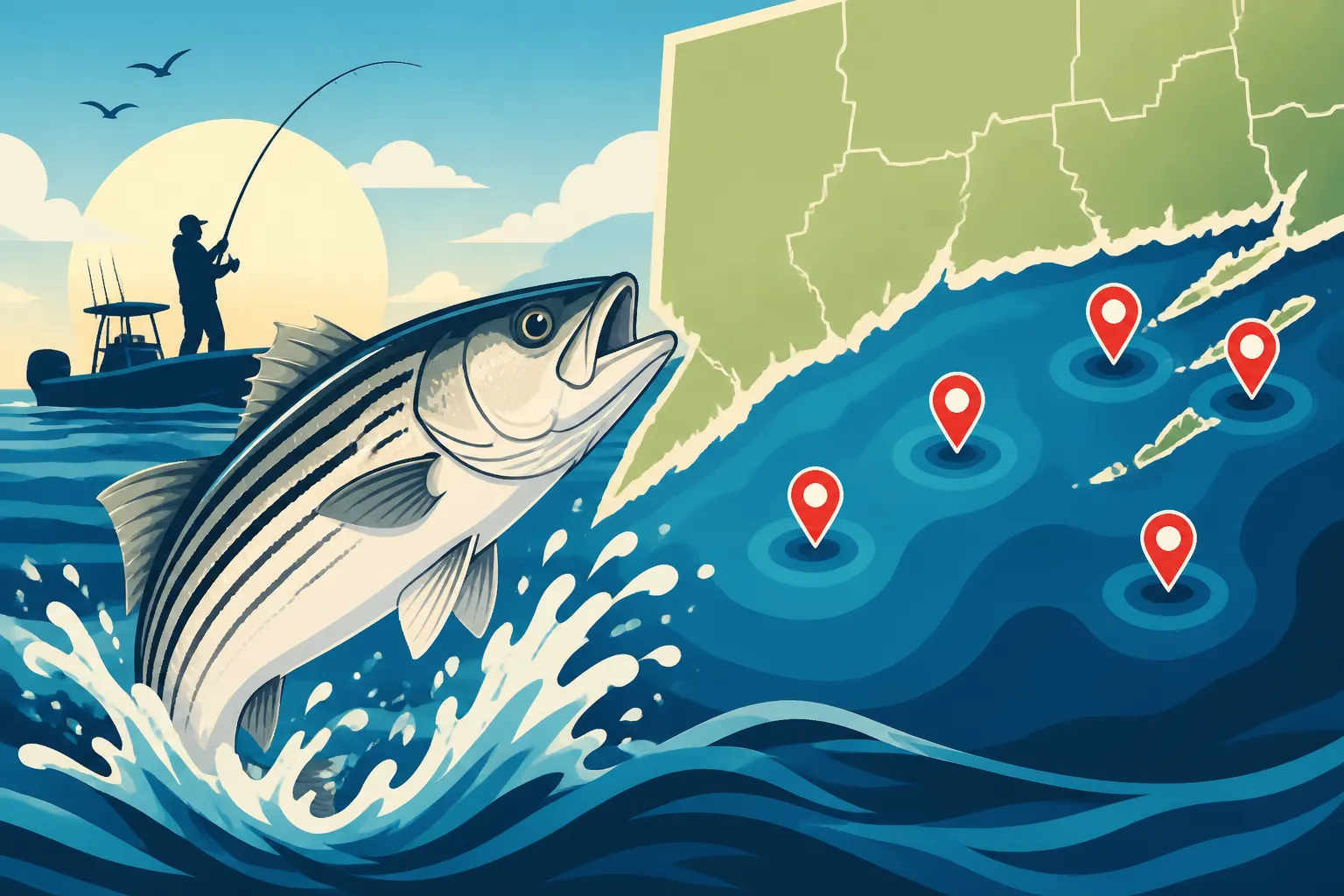
Connecticut's coastline on Long Island Sound is dotted with incredible opportunities for striped bass. From the bustling harbors of the west to the rugged rips of the east, each section offers unique characteristics that attract these powerful fish. Let's break down some of the most consistently productive areas.
Western Long Island Sound Gems (Greenwich to Bridgeport)
The western end of Long Island Sound, closer to New York, often sees earlier arrivals of stripers in the spring. This area is characterized by numerous islands, rocky shorelines, and busy harbors, all of which can hold significant numbers of fish. Anglers here benefit from both proximity to urban centers and some surprisingly wild fishing grounds.
Starting in Greenwich, the multitude of small islands and rocky points are fantastic. Islands like the Falkner Island, the Thimble Islands (though closer to Branford, the principle applies to smaller island groups here), and other unnamed rocky outcroppings create ideal current breaks and ambush points. Fishing the moving tides around these structures, especially at dawn or dusk, can yield excellent results. Local knowledge of the subtle contour changes and hidden rocks is paramount here. Moving eastward, Stamford offers productive fishing around its harbor mouth and the various local reefs and wrecks scattered offshore. These structures act as congregating points for bait and stripers alike.
Further along, Norwalk is a true hotspot, largely due to its numerous islands, particularly Sheffield Island and the Norwalk Islands chain. These islands create significant rips and current eddies where baitfish get disoriented, making them easy prey. The Norwalk Harbor itself can hold stripers, especially during migration periods. Finally, Bridgeport provides excellent opportunities around its breakwaters and the inner harbor. The lighthouse and the jetties offer shore access, while boaters can explore the deeper channels and the outer harbor structures. This entire western stretch is known for both resident and migratory stripers throughout the season.
Central Long Island Sound Productive Zones (New Haven to Old Saybrook)
The central portion of Connecticut's Long Island Sound coastline features a mix of urban ports, historic shoreline towns, and critical river mouths. This region is a prime crossroads for striped bass moving through the Sound and offers a diverse array of fishing environments.
New Haven is a major fishing hub, boasting a large harbor and prominent breakwaters. The outer portions of the New Haven Harbor breakwaters are particularly renowned, attracting stripers that feed on the abundant baitfish moving in and out with the tides. Boat anglers can work the deep channels leading into the harbor, while shore anglers can target the ends of the jetties. Just east, the towns of Branford and Guilford are famous for the iconic Thimble Islands. This archipelago of rocky islands and ledges creates some of the most dynamic fishing in the Sound. The strong currents and varied depths around these islands make them a consistent producer of striped bass. Trolling large plugs or live-lining eels and bunker around these structures can be incredibly effective, especially as the sun begins to set.
Further along the coast, Clinton and Westbrook are significant because of their estuaries and shallow flats, most notably around the Hammonasset River mouth. These areas attract stripers looking for easy meals in shallower, warmer waters, particularly during the spring and fall runs. On an outgoing tide, bait is flushed out, and stripers will stack up to ambush it. For anglers who prefer lighter tackle, casting soft plastics or topwater lures in these shallower zones can be exhilarating. Finally, Old Saybrook stands out as it guards the mouth of the mighty Connecticut River, arguably the most important river for anadromous fish in New England. The confluence of the river with the Sound creates massive baitfish migrations, drawing in huge numbers of stripers. Fishing the rips and channels directly at the river mouth, particularly during moving tides, is legendary. Long Sand Shoal, just offshore, is another prime area. For those looking for the full experience, consider checking out guided trips that specialize in Connecticut River Striped Bass Fishing.
Eastern Long Island Sound Bountiful Waters (Niantic to Stonington)
The easternmost section of Long Island Sound is where things get truly dynamic, characterized by stronger currents, deeper waters, and world-famous fishing grounds. This area is often where the largest migratory stripers are encountered due to its proximity to the open ocean and the dramatic underwater topography.
Starting in Niantic, the mouth of the Niantic River and the rocky structure around Black Point are fantastic spots. The Niantic River sees strong tidal flows that carry bait in and out, making its mouth an excellent ambush point. Black Point, with its rocky shoreline and submerged ledges, provides habitat and current breaks that stripers adore. Anglers often find success casting large plugs or live-lining bait along these rocky edges. As you move towards Waterford and New London, the fishing becomes even more legendary. This is the gateway to "The Race," one of the most famous rips on the East Coast. The Race, located between Fisher's Island and the mainland, is an area of incredibly strong currents and turbulent water. Massive schools of baitfish, primarily bunker and squid, are pushed through this gauntlet, attracting colossal striped bass and bluefish. While challenging to navigate, fishing The Race can offer truly trophy-class stripers. Local charter captains often frequent this area for a reason.
Finally, the Stonington and Mystic area offers a wealth of fishing opportunities. Locations like Ram Island, south of Stonington, are known for their rocky structures and deep-water access. Further east, towards the Rhode Island border, you have Watch Hill Reef, another prominent offshore structure that consistently holds stripers throughout the season. These eastern waters are often where you’ll find the biggest concentrations of fall-run stripers, as they stage before their offshore migration. If you're looking to explore this productive region, especially without your own boat, finding a reputable charter captain is a smart move. Services like FishingBooker can help you connect with experienced local guides who know these waters intimately.
Key Factors for Success: Tides, Bait, and Time of Day
Even the best spots can be dead if you're not paying attention to the rhythms of the Sound. Striped bass fishing is a game of understanding patterns, and three elements reign supreme: tides, bait, and the time of day. Ignoring any of these crucial factors can turn a potentially epic outing into a frustrating blank.
Decoding Tidal Movements for Stripers
If there's one thing every successful striped bass angler emphasizes, it's the tide. Stripers are opportunists, and moving water means moving food. Understanding the ebb and flow of the tides is not just helpful; it's absolutely essential for consistently catching fish in Long Island Sound. The sheer volume of water moving in and out, especially around points, islands, and river mouths, creates feeding opportunities that stripers exploit.
Generally, moving tides – both incoming and outgoing – are preferred over slack tide. On an incoming tide, stripers often move into shallower areas, estuaries, and along structure edges, following baitfish that are carried in with the rising water. This can be a great time for casting artificials or live bait into areas that were previously too shallow. Conversely, an outgoing tide can be equally productive, particularly around river mouths and constricted channels, as baitfish are flushed out into deeper water, creating an ambush alley for stripers. Strong current lines, eddies, and rips form during these moving tides, concentrating food and making it easier for stripers to feed. Understanding your local tide charts and how the currents react in specific spots is crucial. Sometimes, a spot that's dead on an incoming tide will explode with action on the outgoing, and vice-versa.
Matching the Hatch: Baitfish Identification and Presentation
Just like fly anglers "match the hatch" with insects, successful striped bass anglers "match the bait." Stripers are incredibly tuned into their prey, and presenting a lure or bait that closely mimics what they're actively feeding on will drastically increase your chances. Long Island Sound is home to a diverse array of forage species, and their presence heavily influences striper movements and feeding behaviors.
The most prominent baitfish in the Sound is the Atlantic menhaden, locally known as bunker. These oily, schooling fish are a primary food source for large stripers and bluefish. When bunker are plentiful, stripers will often key in on them exclusively. Live-lining a large bunker (caught with a cast net or snagging hook) can be deadly for trophy fish. If the stripers are tearing up schools of bunker, throwing large swimming plugs or soft plastics that imitate the bunker's profile and wobble is a great strategy. Other important baitfish include silversides, spearing, sand eels, and herring. Smaller lures like soft plastic shads, smaller plugs, or bucktails can be effective when these smaller baits are present. Eels are another top choice, especially for night fishing or targeting bigger stripers around rocky structure. Live eels can be fished on a standard three-way swivel rig or simply drifted with the current. Carrying a variety of lures and baits that imitate these different forage species is always a good idea. Knowing what bait is in the water on any given day is a huge part of being successful.
Optimal Fishing Times
While you can catch striped bass at any time, certain periods offer significantly better chances, often coinciding with their natural feeding rhythms and the movements of their prey. The time of day, along with tidal movements, forms a powerful combination that can unlock incredible fishing.
Dawn and dusk are universally recognized as prime times for striped bass. During these low-light periods, stripers feel more confident moving into shallower water to feed, and baitfish are often more active. The changing light also provides an advantage to the predatory stripers. Topwater fishing can be particularly exciting during these times, as stripers ambush unsuspecting baitfish on the surface. Imagine the explosion as a big striper crushes a popper in the fading light! Many dedicated striper anglers swear by night fishing. Under the cover of darkness, large stripers, which can be shy during daylight, become much more aggressive. They often move into very shallow water to hunt, offering unique opportunities for shore anglers and boaters alike. Live eels, large dark-colored plugs, and jigs are popular choices for night ops.
Beyond these classic low-light windows, overcast and rainy days can also be surprisingly productive. The reduced light penetration often mimics dawn or dusk conditions, encouraging stripers to feed throughout the day. Conversely, bright, sunny days with flat calm conditions can be the toughest, forcing stripers into deeper, cooler water or tight to structure. Sometimes, however, even on the brightest days, a strong moving tide can overcome these conditions and trigger a bite. Understanding these nuances is part of the art of Best Time of Year to Fish in Connecticut.
Navigating and Accessing These Spots
Now that you know where the fish might be and when they're likely to bite, the next logical step is figuring out how to get there. Long Island Sound offers diverse access options, from launching your own vessel to casting from shore. Each approach has its pros and cons, and understanding them will help you plan your striper expedition effectively.
Boat vs. Shoreline Access Points
The choice between fishing from a boat or from shore often comes down to personal preference, equipment availability, and the specific spots you want to target. Both offer unique advantages for striped bass fishing in Long Island Sound.
Boaters have the distinct advantage of mobility, allowing them to access offshore reefs, rips, and remote island chains that are otherwise unreachable. Connecticut boasts numerous public boat launches and marinas along its coastline, from Stamford to Stonington. State parks like Hammonasset Beach State Park in Madison or Rocky Neck State Park in East Lyme offer excellent ramps, allowing easy access to central and eastern Sound waters. Private marinas like Captain's Cove Seaport in Bridgeport or the various facilities in Old Saybrook and Mystic also provide launching points. Having a boat means you can follow bait schools, chase surface blitzes, and work various structures throughout the day. It also opens up possibilities for different techniques, such as trolling with Mojo rigs or umbrella rigs, which are often highly effective for locating fish.
However, if you don't own a boat or prefer the simplicity of land-based angling, shoreline access points can still be incredibly productive. Jetties, piers, and beaches are fantastic places to intercept striped bass, especially during the spring and fall migrations, or at night. The numerous jetties guarding harbor mouths along the coast, such as those in New Haven, Bridgeport, and Stonington, offer prime casting locations where currents concentrate bait. Public beaches, particularly those with deep water access or nearby structure like rocks and drop-offs, can also yield stripers. For instance, the rock piles along West Haven's beaches or the deep water off Bluff Point State Park in Groton are known for producing fish. Always be mindful of local regulations and private property restrictions when accessing the shoreline. Learning about Connecticut Boating Laws for Anglers is also crucial for boaters to ensure a safe and legal outing.
Hiring a Local Charter or Guide
Sometimes, the best way to unlock the secrets of Long Island Sound's striped bass fishing is to lean on the expertise of a seasoned professional. Hiring a local charter or guide can dramatically shorten your learning curve and put you on fish when you might otherwise struggle. This is especially true for those new to the area, visitors, or anglers looking to target specific, challenging spots like The Race.
A good charter captain possesses invaluable local knowledge. They know the current bait movements, the best tides for specific spots, and the nuances of various techniques that produce fish in their home waters. They also come equipped with all the necessary gear, from rods and reels to a full livewell of prime bait, eliminating the need for you to invest heavily in specialized equipment. This makes charter trips an excellent option for beginners, families, or groups of friends who want to experience serious striper fishing without the hassle. Charter captains also stay on top of the ever-changing Connecticut Fishing Regulations Explained, ensuring a legal and ethical trip.
When you're ready to explore these areas but don't have your own boat, finding a reputable charter captain is key. Services like FishingBooker can connect you with experienced guides throughout Connecticut, from New Haven to Stonington. You can browse different boats, read reviews, and find a captain whose expertise aligns with your fishing goals, whether it's trophy stripers or a fun family day out. Many top-notch captains operate out of ports like Niantic, Old Saybrook, and Mystic, offering everything from half-day inshore trips to full-day excursions targeting the Sound's most productive rips. Finding a good guide through platforms like FishingBooker can make all the difference in a successful trip, and it’s a great way to learn specific techniques and gain insights you wouldn't get on your own. For more details, explore options like Best Striped Bass Charters on Long Island Sound.
Essential Gear and Techniques for Long Island Sound Stripers
Having the right equipment and knowing how to use it effectively is paramount when targeting powerful fish like striped bass in Long Island Sound. From your rod and reel setup to the lures and baits you deploy, every piece of the puzzle plays a role in success. Don't let inadequate gear or unfamiliar techniques be the reason you miss out on a trophy fish.
Rods, Reels, and Line Selection
The sheer power and size of Long Island Sound stripers demand robust and reliable gear. You're not typically dealing with dainty fish, especially when they're feeding aggressively in strong currents. Your setup needs to be able to handle explosive strikes, long runs, and the strain of fighting a powerful fish, often in heavy cover or turbulent water.
For rods, a medium-heavy to heavy power spinning rod, typically 7 to 8 feet long, is a versatile choice for casting lures and baits from shore or boat. If you prefer conventional tackle, a similar power rod, perhaps slightly shorter, is ideal for jigging, trolling, or live-lining. The length provides good casting distance and leverage for fighting fish. Reels should be equally robust, with a smooth, powerful drag system and sufficient line capacity. For spinning, look for a 5000-8000 series reel from reputable brands like Shimano, Daiwa, or Penn. Conventional reels in a 15-30 size range are also excellent. A well-maintained drag is critical, as a sticky or inconsistent drag can quickly lead to lost fish.
When it comes to line, braided line has become the standard for most striper fishing due to its incredible strength-to-diameter ratio and lack of stretch. This sensitivity allows you to feel subtle bites and detect contact with structure, while its strength provides confidence when battling big fish. A main line of 30-50 lb test braid is common. Always use a fluorocarbon leader of 40-80 lb test, depending on the conditions and target size of fish. Fluorocarbon is nearly invisible underwater, more abrasion-resistant around rocks, and offers a bit of stretch, acting as a shock absorber. This connection between your main line and your lure or bait is a critical point of failure if not properly tied and tested.
Lures, Baits, and Rigs That Produce
With a variety of baits present in Long Island Sound and diverse fishing conditions, having a versatile tackle box filled with proven striper producers is essential. The key is often to observe what the fish are feeding on and adjust your offerings accordingly.
For lures, swimming plugs are a classic choice. Brands like Rapala X-Rap, SP Minnow, or Bomber Long A are effective for casting and trolling, especially when mimicking bunker or herring. Their tight wobble and darting action are irresistible to stripers. Soft plastic shads rigged on jig heads (e.g., Al Gag's Whip-It Fish, Tsunami Holographic Swim Shads) are incredibly versatile. They can be jigged, cast, or trolled and come in various sizes and colors to match different baitfish. Bucktail jigs are another old-school, yet highly effective, option. Tipped with a pork rind or a soft plastic trailer, they can be bounced along the bottom or jigged through the water column, imitating a wide range of prey. These are especially good for targeting stripers holding tight to structure.
When it comes to natural baits, live eels are arguably the most effective offering for trophy stripers, particularly at night or in rocky areas. They can be fished on a simple three-way swivel rig or a Carolina rig. Live bunker (menhaden) are another top choice, especially when fish are keyed in on large bait schools. They can be slow-trolled or fished with a weighted treble hook. For bait fishing with cut bait, bunker chunks are excellent, especially when fished on the bottom in current. Regardless of your chosen bait or lure, always ensure your hooks are sharp and strong enough to handle a powerful striper. Remember, for striped bass, a Connecticut Circle Hook Requirement for Striped Bass is in place when fishing with natural bait, so make sure you're compliant. For a deep dive into successful methods, check out How to Catch Striped Bass in Long Island Sound.
Conservation and Regulations for Striped Bass
As stewards of our natural resources, it's not enough to know how to catch striped bass; we also need to understand how to protect them. Striped bass populations face significant pressures, and adherence to regulations and the practice of responsible angling are crucial for ensuring the long-term health of this iconic fishery in Long Island Sound.
Understanding Current CT Regulations
Connecticut's Department of Energy and Environmental Protection (DEEP) sets specific regulations for striped bass to manage the population sustainably. These rules are not arbitrary; they are based on scientific data and regional management plans aimed at rebuilding and maintaining healthy fish stocks. Staying informed about these regulations is not just about avoiding fines; it's about contributing to the conservation effort.
Currently, striped bass in Connecticut are managed under a slot limit, meaning only fish within a specific length range can be harvested. For example, in recent years, the slot limit has often been around 28 to 31 inches. This regulation aims to protect both juvenile fish, allowing them to reach spawning maturity, and the largest, most prolific breeders, which are vital for reproduction. There are also daily possession limits (e.g., one fish per angler per day) and specific season dates when fishing for stripers is permitted. These dates are designed to protect fish during critical periods like spawning. It’s also crucial to remember the Connecticut Circle Hook Requirement for Striped Bass rule for natural bait. This mandates the use of non-offset circle hooks when fishing with natural bait to minimize gut hooking and improve the survival rate of released fish. You can find the most up-to-date and detailed information in the annual Connecticut Fishing Regulations Explained guide provided by CT DEEP, usually available online or at license vendors. Be sure to consult this document before every season, as rules can and do change.
Practicing Responsible Catch and Release
Given the conservation efforts surrounding striped bass, practicing responsible catch and release is more important than ever, even if you are keeping a legal-sized fish. Many anglers choose to release all but the largest legal fish, or even practice 100% catch and release, especially for the larger, older breeders. Every effort we make to minimize stress and injury to released fish contributes to the health of the fishery.
When practicing catch and release, several key steps can dramatically improve a fish's chances of survival. Firstly, minimize the fight time. Use appropriate tackle that allows you to land the fish efficiently without exhausting it to the point of no return. Secondly, handle the fish as little as possible, and always use wet hands if you must touch it. Avoid touching the gills or eyes, and never hold a striped bass vertically by its jaw, as this can damage its internal organs and spine. If possible, try to de-hook the fish while it's still in the water. Use a de-hooking tool or needle-nose pliers to quickly remove the hook. The mandatory circle hook rule already helps significantly in preventing deep hooking, making de-hooking much easier and less traumatic for the fish.
Finally, if the fish appears lethargic upon release, take the time to revive it. Hold the fish gently upright in the water, facing into the current, and move it back and forth to force water over its gills until it regains strength and swims away on its own. Avoiding excessive photography, especially for larger fish, also helps. Remember, these are precious resources, and our actions as anglers directly impact their future. For more practical advice on this, you might find valuable tips in Striped Bass Catch and Release Survival Tips. If you’re ever unsure about the rules, or even about where to acquire your necessary permits, refer to resources on Where and How to Buy a Connecticut Fishing License or even Printing or Carrying a Digital Fishing License in Connecticut.
| Fishing Spot Area | Key Features | Best Techniques | Peak Season | Target Species (besides Stripers) |
|---|---|---|---|---|
| Western Sound (Greenwich to Bridgeport) | Numerous islands, rocky points, busy harbors, estuaries | Casting plugs, soft plastics; Live-lining eels/bunker; Light trolling | Spring (April-May), Fall (Sept-Oct), Summer nights | Bluefish, Fluke, Black Sea Bass |
| Central Sound (New Haven to Old Saybrook) | Thimble Islands, breakwaters, river mouths (CT River, Hammonasset), shallow flats | Live-lining bunker/eels; Trolling Mojos/umbrella rigs; Topwater casting | Spring (May-June), Summer (June-Aug), Fall (Sept-Nov) | Bluefish, Fluke, Scup, Weakfish |
| Eastern Sound (Niantic to Stonington) | The Race, Black Point, Watch Hill Reef, deep rips, strong currents | Live-lining eels/bunker; Heavy jigging; Trolling large plugs/Mojos | Summer (July-Aug for big fish), Fall (Sept-Nov for abundance) | Bluefish, Black Sea Bass, Scup, False Albacore |
Disclaimer
Please note that fishing regulations, including size limits, bag limits, and seasons, can change. Always consult the official Connecticut Department of Energy and Environmental Protection (CT DEEP) website or the latest Connecticut Angler's Guide before heading out to fish. The information provided here is for general guidance and informational purposes only and should not be considered legal advice regarding fishing regulations.