Trolling Techniques for Long Island Sound Striped Bass
Trying to dial in those striped bass on Long Island Sound can feel like you're playing a high-stakes game of hide-and-seek, especially when they're scattered or holding deep. It's frustrating when you know the fish are there, but your usual casting methods just aren't cutting it. This comprehensive guide will dive deep into proven trolling techniques, equipping you with the knowledge and strategies to consistently hook up with striped bass, no matter what challenges the Sound throws your way.
Why Trolling is So Effective for Long Island Sound Striped Bass
Let's face it, striped bass can be nomadic, especially in a vast body of water like Long Island Sound. They follow bait, move with the tides, and can be holding anywhere from the shallowest rocky reefs to the deepest channels. This unpredictable behavior is precisely why trolling becomes such a powerful tool in your fishing arsenal. It's not just about covering water; it's about systematically presenting your offerings in a way that maximizes your chances of interception.
Covering Vast Expanses of Water
One of the biggest advantages of trolling is its ability to search large areas efficiently. Unlike casting, where your lure is only in the water for a short time and covers a limited distance, trolling keeps multiple lures actively fishing for extended periods. Imagine trying to cast and retrieve over miles of open water – it’s exhausting and often unproductive if the fish aren't concentrated.
When you're trolling, your boat acts as a moving platform, dragging your lures through different depths and bottom structures. This is particularly crucial when the striped bass aren't schooling up in obvious spots or when you're exploring new areas of the Sound. You can systematically work your way along contour lines, across flats, or through channels, increasing the probability of encountering a cruising striper. This ability to search widely is especially beneficial during periods of lower fish density or when the bass are more spread out due to bait distribution or water temperature fluctuations. It removes a lot of the guesswork and allows the fish to essentially "find" your bait as you move through their territory.
Presenting Lures at Consistent Depths and Speeds
Another critical aspect where trolling shines is the ability to maintain precise control over your lure presentation. Striped bass often feed within a very specific water column, and if your lure isn't in that zone, you might as well be fishing in a bathtub. Trolling allows you to consistently present your baits at the exact depth where the fish are holding, whether they're suspended mid-water or hugging the bottom.
This consistency extends to speed as well. Different lures, baits, and even water temperatures or baitfish behavior dictate optimal retrieve speeds. Trolling lets you fine-tune your boat speed to mimic natural bait movements, enticing strikes from even finicky fish. If the bass are chasing fast-moving bait, you can troll at higher speeds. If they're lethargic or feeding on slower-moving forage, you can slow your presentation down. This level of control is hard to replicate with other fishing methods, making trolling incredibly effective when you've pinpointed the fish's preferred depth and feeding tempo.
Essential Gear for Trolling Striped Bass
To become a successful troller for striped bass on Long Island Sound, having the right gear is paramount. It’s not just about having a boat; it’s about having a system that allows for efficient and effective presentation of your baits. From the rods and reels to the specialized equipment that gets your lures down deep, each component plays a crucial role in your success.
Rods, Reels, and Line Selection
When it comes to trolling, you'll want a setup that can handle the sustained drag of lures and the powerful runs of a large striped bass, which can be quite impressive, especially those trophy fish. Medium-heavy to heavy conventional rods, typically 6 to 7.5 feet in length, are ideal. Look for rods with a parabolic bend that can absorb shock, which helps prevent hooks from pulling out. A good quality rod also offers the backbone needed to exert leverage on bigger fish.
Matching these rods with robust conventional reels is key. Reels like the Penn Squall or Shimano Tekota are popular choices, known for their smooth drag systems and line capacity. For line, many serious trollers opt for braided line, typically 30 to 65 lb test, because of its low stretch and sensitivity. This allows you to feel subtle bumps and detect when your lure might be fouled. However, a monofilament or fluorocarbon leader (30-60 lb test) of 6 to 10 feet is essential to absorb shock and provide invisibility to wary stripers. Some anglers even use monofilament main lines (20-40 lb test) for their stretch properties if they prefer a more forgiving setup. You can often find great deals on specific rod and reel combos and line on Amazon.
Downriggers, Planer Boards, and Lead Core Line
Getting your lures to the precise depth where striped bass are feeding is often the biggest challenge and the most critical factor in trolling success. This is where specialized depth control equipment comes into play.
Downriggers are mechanical devices that use a heavy ball (cannonball) attached to a wire, allowing you to "clip" your fishing line to the wire and deploy your lure down to a specific, measured depth. When a fish strikes, the line pops free from the clip, and you fight the fish directly. For covering wider areas and presenting multiple lines, planer boards are invaluable. These devices tow your lures out to the sides of the boat, effectively widening your trolling spread and helping to prevent tangles, especially when you're running several lines. This can be a game-changer when you're trying to fish different depths and presentations simultaneously without spooking fish directly under your boat.
Another popular method for depth control, especially in moderate depths, is using lead core line. This specialized fishing line has a lead core wrapped in a braided sheath, causing it to sink. The general rule of thumb is that one color (usually 10 yards) of lead core line will get your lure down approximately 5-7 feet at typical trolling speeds. By deploying different amounts of lead core, you can target various depths without the need for downriggers, though it requires a bit more trial and error to dial in the exact depth. These specialized tools truly allow you to target fish holding at any depth in the water column, from the surface to the bottom, especially when you're fishing in areas like the deep channels around Long Island Sound Striped Bass Spots.
Popular Trolling Lures and Baits for Long Island Sound
The world of striped bass trolling lures is vast and exciting, with options ranging from natural baits to highly realistic artificials. The key is to have a diverse selection in your tackle box, as what works one day might be ignored the next. Understanding when and where to deploy each type of lure is crucial for maximizing your hook-up ratio.
Umbrella Rigs and Mojos
Umbrella rigs are arguably one of the most effective trolling presentations for striped bass in Long Island Sound, especially when the bass are feeding on schools of baitfish like bunker (menhaden) or mackerel. These rigs consist of a central "spreader bar" with multiple arms, each trailing a small lure or teaser (often plastic shads or tubes). At the end of the main line, a larger "target" lure, usually a bigger soft plastic shad or a spoon, is attached. The overall effect mimics a small school of baitfish, which is incredibly enticing to predatory stripers.
Mojo rigs are another heavy-hitting option, particularly for targeting larger, deeper-holding striped bass. A Mojo rig typically features a large, heavy jig head (often 8 to 24 ounces or more) dressed with a substantial soft plastic body, usually a bunker imitation. These are trolled slowly and steadily along the bottom, or just above it, and are deadly when striped bass are feeding on bigger baitfish and aren't shy about a slower, larger meal. Many anglers stock up on their favorite umbrella rigs and Mojo lures from online retailers like Amazon, ensuring they have a variety of colors and sizes.
Spoons, Tubes, and Plugs
Beyond the multi-lure setups, individual spoons, tubes, and plugs also have their place in the striped bass troller's arsenal.
- Spoons: Large, heavy trolling spoons like the Tony Acetta Spoon or similar flutter spoons are excellent for imitating various baitfish, from silversides to peanut bunker. Their flash and erratic wobble are incredibly attractive to stripers, especially when trolled at higher speeds. They can be deployed behind planer boards, downriggers, or with lead core line to reach different depths.
- Tubes: Trolling tubes, often red, black, or blue, are extremely simple yet incredibly effective. These soft, flexible tubes, often rigged with a worm or squid tentacle for added scent, create a subtle, enticing wiggle in the water. They are particularly good for imitating sand eels or slender baitfish and are often trolled slowly, either plain or behind a small umbrella rig as teasers.
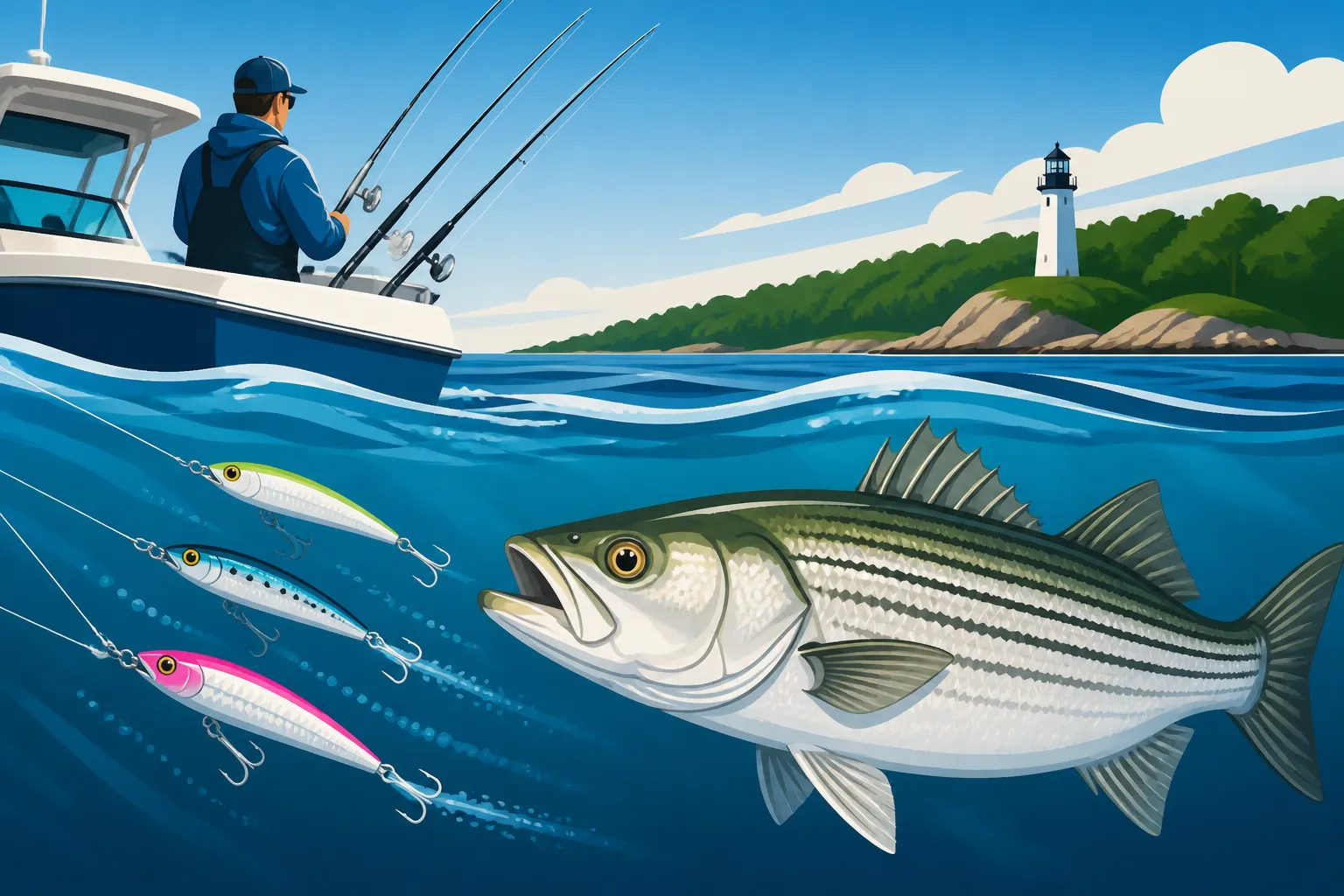
- Plugs: Deep-diving lipped plugs, such as those from Rapala, Bomber, or Mann's, are perfect for targeting specific depth ranges. These plugs are designed to dive to a predetermined depth when trolled, making them excellent for hitting distinct thermoclines or feeding lanes. Their wobbling action and vibrant colors can trigger aggressive strikes from actively feeding fish. Understanding the diving capabilities of various plugs allows anglers to perfectly match the depth of the fish, a critical strategy highlighted in any good Long Island Sound Fishing Guide.
Mastering Trolling Depth and Speed
The difference between a frustrating day of dragging lures and a banner day of bent rods often comes down to precisely matching your trolling depth and speed to the conditions. Striped bass can be incredibly particular, and even slight variations can make all the difference. This section will help you dial in those critical variables.
Adjusting to Water Column and Structure
Striped bass are opportunists, but they're also efficient predators. They'll position themselves in the water column where bait is abundant, where current provides an advantage, or near structure that offers ambush points. Your job as a troller is to figure out where they are and put your lure right in front of them.
If you're marking fish on your fishfinder suspended mid-water in open areas, that's where your lures need to be. Downriggers are king here, allowing you to set multiple lines at precise depths, perhaps staggering them a few feet apart to "find" the strike zone. For instance, if you're marking a bait ball at 20 feet with stripers below it at 25-30 feet, you might run one downrigger at 20 feet, another at 25, and a third at 30. When fishing near bottom structure like reefs, ledges, or wrecks – common features throughout Long Island Sound – you'll want your lures hugging the bottom without constantly snagging. Lead core line or MoJo rigs are excellent for this, allowing you to tick the bottom occasionally to stir up sediment, which can trigger a strike. Always pay attention to your fishfinder; it's your eyes underwater, guiding your depth adjustments.
Finding the Optimal Trolling Speed
Trolling speed is not a "set it and forget it" parameter; it's a dynamic variable that needs constant adjustment based on baitfish activity, water temperature, and the specific lures you're deploying. Generally, a good starting point for striped bass trolling in Long Island Sound is between 2.5 to 4.5 knots. However, this is just a baseline.
When targeting stripers that are actively chasing bait, a faster troll speed (3.5-4.5 knots) can be highly effective. This makes your lures appear like fleeing prey, triggering a predatory response. If you're using spoons or plugs designed for a lot of action, a quicker pace will often enhance their intended wobble. Conversely, if the bass are lethargic, perhaps due to a cold front or slack tide, or if they're feeding on slower-moving forage like crabs or eels, slowing your boat down to 2-3 knots can be more productive. This slower speed is particularly effective for umbrella rigs or Mojo rigs, making them look like a struggling, easy meal. Experimentation is key: try varying your speed in 0.5-knot increments until you start getting bites. Many seasoned captains will tell you that the right speed can sometimes be the only difference between an empty cooler and a full one when fishing for Striped Bass Fishing in Long Island Sound.
Here's a quick reference for common trolling setups:
| Lure Type | Typical Target Species | Optimal Speed (Knots) | Typical Depth Range (Feet) | Notes |
|---|---|---|---|---|
| Umbrella Rig | Striped Bass, Bluefish | 2.5 – 4.0 | 10 – 40+ | Mimics bait schools, effective with Mojo heads. Often used with downriggers. |
| Mojo Rig | Striped Bass (large) | 2.0 – 3.0 | 20 – 60+ | Heavy jig, targets bottom-oriented fish. Slow and steady. |
| Trolling Spoon | Striped Bass, Bluefish | 3.0 – 5.0 | 5 – 30 | Flashy action, good for active fish. Use lead core or downriggers. |
| Trolling Tube | Striped Bass | 1.5 – 2.5 | 5 – 20 | Subtle action, often tipped with bait. Very slow troll. |
| Deep Diving Plug | Striped Bass, Bluefish | 2.5 – 4.0 | 10 – 25+ | Depth specific to lure, great for hitting thermoclines. |
Advanced Trolling Strategies and Situational Adjustments
Once you've got the basics down, it's time to refine your approach. Long Island Sound is a dynamic environment, and the most successful trollers are those who can adapt their strategies to changing conditions, understanding that every ripple and current can influence striped bass behavior. It’s about more than just dragging a lure; it’s about tactical deployment and constant observation.
Reading the Tides and Current
Tides and current are perhaps the most influential factors when fishing Long Island Sound, and trolling for striped bass is no exception. Stripers are highly attuned to moving water, using it to their advantage for feeding and migration. Understanding how current affects baitfish and, consequently, the bass themselves, is paramount.
When the current is strong, especially during a ripping tide, striped bass will often position themselves on the "down-current" side of structure – rocks, ledges, islands, or even subtle changes in depth – waiting for baitfish to be swept past them. This is an ideal time to troll along these current seams and ambush points. You might need to increase your trolling speed slightly against the current to maintain proper lure action, or significantly slow down with the current to ensure your lures stay in the strike zone longer. Conversely, during slack tide, when the water is still, striped bass might become more spread out or less active. This could be a time for slower presentations, or perhaps focusing your efforts on deeper channels or areas where baitfish might be congregating. Always check the tide charts for your specific fishing area and plan your trolling passes to maximize your time in productive current. Knowing the intricacies of Connecticut Fishing Season Dates and Closures can also help you predict peak feeding times.
Adjusting for Baitfish and Water Temperature
Striped bass are driven by their stomach, and understanding what they're eating is a huge piece of the puzzle. Long Island Sound hosts a variety of forage, from tiny bay anchovies and silversides to larger bunker (menhaden), mackerel, and squid. Your lure selection should ideally mimic the prevalent bait.
If you're seeing huge schools of peanut bunker on the surface, deploying smaller umbrella rigs or spoons that imitate these baitfish is a smart move. If bigger bunker are present, larger Mojo rigs or substantial plugs will likely draw more attention. Observing bird activity or bait boils can give you critical clues. Water temperature also plays a significant role in a striper's metabolism and behavior. In colder water (early spring or late fall), stripers are often more sluggish and prefer slower, larger baits. As the water warms in summer, they become more active and might chase faster-moving lures. Pay attention to surface temperatures and adjust your lure size, color, and trolling speed accordingly. Sometimes, even a slight color change from a blue-back to a green-back lure, mimicking a different baitfish, can be the difference. Remember to always adhere to Connecticut Saltwater Fishing Regulations by Species to ensure your catches are legal.
Troubleshooting Common Trolling Issues
Even the most experienced trollers run into problems. Lines tangle, lures don't run right, or the fish just aren't biting. Knowing how to quickly diagnose and fix these issues can save your day on the water.
Problem: Lines constantly tangling.
- Solution: Check your trolling speed. Too fast or too slow can cause lures to swing erratically and cross lines. Ensure all lures are running true and not spinning. Stagger your lure depths and distances behind the boat. Using planer boards can dramatically reduce tangles by spreading lines out wide. Consider using a heavier leader to prevent line twist.
Problem: Lures not running true.
- Solution: Inspect your lures. Are they bent? Is there debris caught on the hook or in the lip? Sometimes a slight bend in a spoon or a plug's eye can cause it to track incorrectly. If using a soft plastic, ensure it's rigged straight on the jig head. Test each lure next to the boat before deploying it fully. For umbrella rigs, check that all teaser baits are correctly aligned.
Problem: Not getting any bites.
- Solution: This is the big one! First, re-evaluate depth and speed. Are you marking fish on the finder but not getting hits? You might be too high, too low, or too fast/slow. Change lure colors or sizes. Sometimes a subtle change from a bright chartreuse to a natural bunker color can make a huge difference. Try different lure types – if plugs aren't working, switch to an umbrella rig. Move to a new area if you're not seeing bait or fish. Check your hooks – are they sharp? Are they clean? For striped bass, especially those in the slot limit, it’s important to practice proper catch and release to protect the fishery. More on handling fish responsibly can be found in resources like Striped Bass Catch and Release Survival Tips.
Safety and Regulations for Trolling in Connecticut
Fishing on Long Island Sound, especially when trolling, involves specific safety considerations and a firm understanding of Connecticut's marine regulations. It's not just about protecting yourself and your crew, but also about preserving the fishery and respecting fellow boaters.
Boating Safety and Navigation
Trolling requires continuous boat movement, often in busy waters. Always maintain a vigilant lookout for other vessels, especially smaller boats, kayaks, and stand-up paddleboards that might not be as visible. Remember, while trolling, you are operating a vessel, and the rules of navigation apply. Give way when required and make your intentions clear.
Ensure your boat is equipped with all required safety gear, including enough life jackets for everyone on board – especially if you have children, as Life Jacket Requirements for Connecticut Boaters are strict. Have flares, a whistle or horn, a fire extinguisher, and a properly functioning VHF radio. It’s also wise to have a backup form of communication, like a fully charged cell phone. Familiarize yourself with the navigation rules of the road and always operate at a safe speed, particularly in congested areas or when visibility is poor. Knowing where you are at all times is key, so a reliable GPS/chartplotter is a non-negotiable piece of equipment.
Understanding Striped Bass Regulations
Connecticut has specific regulations for striped bass, which are subject to change, so always check the latest Connecticut DEEP fishing guide before heading out. These regulations typically include minimum and maximum size limits (often referred to as a "slot limit"), daily possession limits, and specific gear restrictions like the Connecticut Circle Hook Requirement for Striped Bass when using bait.
It's your responsibility as an angler to know and follow these rules. For example, the current slot limit for striped bass in Connecticut aims to protect both juvenile fish and the large, breeding females, allowing for a sustainable fishery. Misidentifying your catch or exceeding possession limits can result in significant fines. Always measure your fish carefully and release any that don't meet the legal requirements as quickly and safely as possible. Keeping an up-to-date physical copy of the Connecticut DEEP Angler's Guide on board, or having access to the digital version, is highly recommended to stay informed on Connecticut Fishing Regulations Explained.
Connecticut Fishing License and Permits
Last but certainly not least, you need to ensure you have the proper Connecticut fishing license for saltwater fishing. Whether you're a resident or a non-resident, an annual marine fishing license is required for anyone 16 years of age or older to fish in the marine waters of Long Island Sound. Even if you're on a charter boat, you might still need your own license, so always clarify with the captain.
You can purchase your license easily online through the Connecticut DEEP website, or at various license vendors across the state. It's quick, easy, and absolutely necessary. Fishing without a valid license can lead to fines and legal trouble, which nobody wants. Make sure your license is current and readily accessible while you're fishing. For more detailed information on obtaining your license, check out our guide on Where and How to Buy a Connecticut Fishing License. Sometimes, even if you are out on the water, you might need an additional permit for specific activities or to access certain areas, so it's always worth a quick double-check. Don't let a simple oversight ruin your fishing trip!
Disclaimer
Please note that fishing regulations and conditions can change rapidly. Always consult the official Connecticut Department of Energy and Environmental Protection (DEEP) website or the most current Connecticut Angler's Guide for the latest and most accurate information on fishing licenses, seasons, size limits, and other regulations before heading out on the water. This guide is for informational purposes only and should not replace official sources.