Drift Fishing for Trout in Connecticut Rivers
There's nothing quite as frustrating as showing up at your favorite Connecticut river, knowing those beautiful trout are in there, but just not being able to entice a bite with traditional cast-and-retrieve methods. Sometimes it feels like they're just ignoring everything you throw at them, hunkered down, and unwilling to move. This comprehensive guide is here to teach you the art and science of drift fishing, a highly effective technique that will help you present your offerings naturally and consistently trick those wary trout in our varied New England waters.
Understanding Drift Fishing for Connecticut Trout
Drift fishing is less about actively retrieving your bait or lure and more about letting the river do the work for you. It's about presenting your offering as naturally as possible, mimicking the movement of food items that are dislodged from the riverbed and carried downstream by the current. This method is incredibly effective because it targets the trout's natural feeding instincts without alarming them with unnatural movements.
What is Drift Fishing?
At its heart, drift fishing is the technique of allowing your bait, lure, or fly to float freely with the current, creating a presentation that appears utterly natural to a feeding trout. Imagine a small insect larva or a plump worm being washed out from under a rock or a bank; it tumbles and drifts downstream, at the mercy of the water flow. That's precisely what you're trying to replicate. Unlike casting a spinner and reeling it back, or even bottom fishing with a stationary weight, drift fishing involves careful line management to ensure your offering moves at the exact speed of the current. This natural presentation is key, as trout spend much of their lives facing upstream, waiting for food to come to them. When they see something effortlessly drifting into their strike zone, they're far less hesitant to grab it.
This method often involves light tackle, sensitive rods, and just enough weight to get your bait down into the feeding column without anchoring it to the bottom. It requires you to "read the water" – understanding where the current flows, where eddies form, and where trout are likely to hold, conserving energy while waiting for an easy meal. The magic of drift fishing lies in its subtlety; you're not forcing the fish to react to an aggressive lure but rather giving them an irresistible, easy meal. It's a method that truly respects the river's flow and the trout's natural behavior, making it a favorite among experienced anglers seeking to outsmart finicky fish.
Why it Excels in Connecticut Rivers
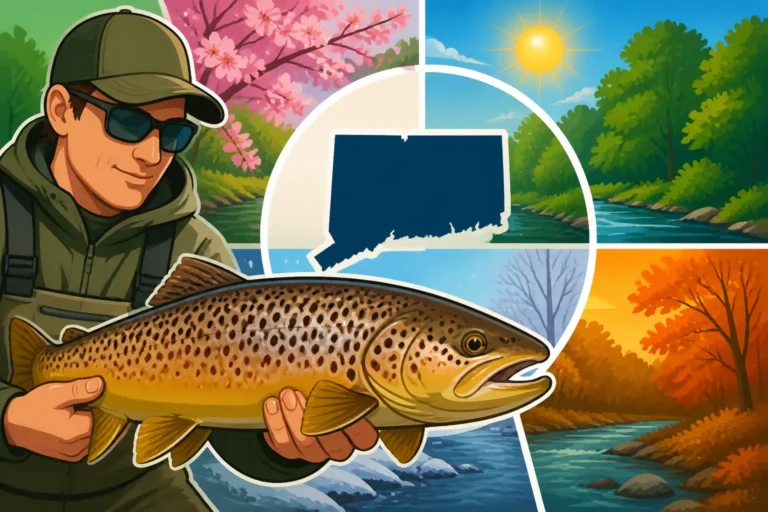
Connecticut boasts a fantastic network of rivers and streams, from the renowned Farmington and Housatonic Rivers to countless smaller, lesser-known tributaries. These waterways are characterized by diverse currents, a mix of riffles, runs, and deep pools, and plenty of natural structure like fallen trees, boulders, and undercut banks. It's precisely this varied environment that makes drift fishing such an exceptionally productive technique here. Trout in these rivers — whether it's the beautiful wild brown trout, acrobatic rainbow trout, or our native brook trout — have adapted to feed on items carried by the current. They often position themselves in strategic locations where food is funneled past them, or where they can dart out from cover to grab a passing morsel.
For instance, in a river with a moderate current, a trout might hold just behind a large rock, letting the water flow over them, and then quickly move a foot or two to snatch a drifting nymph. A spinner or a bait held stationary might not ever enter that exact narrow feeding lane. Drift fishing allows your bait to naturally enter these subtle holding spots, reaching trout that might otherwise be unapproachable. It enables you to cover a significant amount of water efficiently, systematically working through pools, seams, and runs. The Housatonic River, for example, with its powerful flows and deep channels in sections, greatly benefits from drift fishing, allowing you to get your offering down to trout holding near the bottom. Similarly, on the more technical, clearer waters of the Farmington River, a precise, natural drift with a small fly or bait can be the only way to fool wary holdover trout. It’s about mimicking nature's buffet line, and in Connecticut’s diverse riverine habitats, that’s a strategy that consistently pays off.
Essential Gear for Successful Drift Fishing
Having the right gear makes all the difference when you're trying to achieve a perfect, natural drift. You don't need to break the bank to get started, but thoughtful selection of your rod, reel, line, and terminal tackle will significantly improve your sensitivity and success rate.
Rod, Reel, and Line Selection
Choosing the right rod, reel, and line setup is paramount for effective drift fishing. For spinning gear, a sensitive rod with a moderate-fast action is ideal. You want enough backbone to cast your weighted rig and fight a strong trout, but a sensitive tip to detect subtle bites. Rods in the 7 to 9-foot range are popular for river drift fishing in Connecticut. The extra length helps with line control, allowing you to mend your line over tricky currents and keep your bait drifting naturally without drag. For reels, a lightweight spinning reel in the 2000 to 2500 series will balance well with these longer rods. Look for a reel with a smooth drag system, which is crucial for handling energetic trout that make sudden runs. Many anglers find reliable and affordable options for both rods and reels on platforms like Amazon, making it easy to assemble a quality setup without overspending.
When it comes to line, a good starting point for your main line is 6-10 lb test monofilament or braid. If you opt for braid, remember it has virtually no stretch, which is excellent for sensitivity, but you'll absolutely need a fluorocarbon leader. Fluorocarbon is nearly invisible underwater, extremely abrasion-resistant (a big plus around river rocks and snags), and has a lower stretch than mono, giving you better feel. For leaders, 4-6 lb test fluorocarbon is a common choice, usually tied directly to your main line with a blood knot or Albright knot. The length of your leader can vary, but typically 3-6 feet works well. This setup provides the stealth needed for clear Connecticut waters and the strength to land a respectable fish.
Terminal Tackle and Weights
The "business end" of your drift fishing setup consists of your hooks, weights, and any swivels or floats you might use. This is where precision really counts. For hooks, small, sharp, and strong are the keywords. Depending on your bait, you might use size 8 to 14 egg hooks for trout eggs or corn, or wide-gap octopus hooks for worms and small plastics. Barbless hooks are highly recommended, especially in catch-and-release areas like many sections of the Connecticut Trout Management Area Regulations, as they reduce harm to the fish. When you’re browsing for these essential components, you'll find a vast selection of hook styles and sizes on Amazon, ensuring you have the right fit for any bait.
Weight is crucial for getting your bait into the feeding zone. Split shot is the most common and versatile choice for drift fishing. You'll want an assortment of sizes, from tiny BB shot to larger D or AAA shot. The key is to use just enough weight to get your bait ticking along the bottom or hovering just above it, without dragging heavily. Too much weight and your drift will be unnatural; too little, and your bait won't reach the fish. Small barrel swivels can be used to connect your main line to your leader, helping to prevent line twist. Finally, if you're fishing with bait or an artificial that doesn't inherently sink quickly, a small, sensitive bobber or strike indicator might be necessary. These indicators provide visual cues for strikes, especially when trout are biting subtly.
Baits and Lures for Drifting
The beauty of drift fishing lies in its versatility, allowing you to present a wide array of baits and lures naturally. For many traditional bait anglers, natural offerings like worms are king. Small garden worms, mealworms, or even wax worms threaded onto a small hook can be incredibly effective, especially after rain when worms are naturally washed into the river. PowerBait eggs or similar artificial scented baits are also excellent choices, mimicking natural fish eggs, a common food source for trout. These can be drifted individually or in small clusters.
Beyond natural baits, small artificial lures and flies lend themselves perfectly to drift fishing techniques. Micro jigs, often paired with tiny soft plastic bodies resembling larvae or small minnows, can be incredibly potent. These are typically weighted internally or fished with small split shot above them to achieve the desired drift. For fly anglers, nymph patterns like Copper Johns, Pheasant Tail Nymphs, or Prince Nymphs are classic drift fishing options. These flies imitate various aquatic insects in their larval or pupal stages, which are constantly drifting in the current. Even small wet flies can be swung through currents to imitate emerging insects. The key with any of these choices is a natural, unencumbered drift, ensuring the trout sees an easy, appetizing meal rather than something tethered or moving unnaturally.
Mastering Drift Fishing Techniques in Connecticut Rivers
Simply casting your line and hoping for the best isn't drift fishing; it's just casting. True mastery of this technique involves a nuanced understanding of river dynamics and precise execution. You need to be able to read the river, present your offering perfectly, and then respond instantly when a trout decides to strike.
Reading the River and Identifying Holding Water
Before you even make your first cast, the most crucial step in drift fishing is learning to "read the river." This means understanding how water flows, where trout prefer to hold, and where food naturally accumulates. Trout are energy-efficient creatures; they'll position themselves in places where they can expend minimal energy to stay in place while maximizing their chances of intercepting food. Look for current breaks – any obstruction that slows down the main flow, creating a "soft spot" where trout can rest. This includes large boulders, fallen trees, bridge pilings, or even subtle changes in the riverbed contour.
Another prime location is the "seam," which is the boundary between fast-moving and slow-moving water. Trout often sit in the slower water, darting into the faster current to grab food as it washes by. Deeper pools, especially those with an influx of current, are also excellent holding areas. Undercut banks, where the river has eroded the soil beneath the bank, provide both shelter and prime ambush points. In Connecticut, rivers like the Naugatuck River and the Salmon River offer a great mix of these features. Spend some time just observing the water flow without casting; watch leaves or debris float downstream to understand the current lines. This observational skill is invaluable and will tell you exactly where to aim your drift.
The Perfect Cast and Drift
Achieving the "perfect cast and drift" is the core skill of this technique. Your goal is to get your bait or lure into the feeding lane and have it drift at the exact same speed as the current, free from any unnatural drag from your line. This usually means casting slightly upstream and across the current, allowing your weight to sink to the desired depth as it begins its downstream journey. As your bait drifts, you'll need to continuously manage your line to prevent it from being pulled faster or slower than your bait by differing currents on the surface – this is called "mending." Mending involves subtly flicking your rod tip upstream to throw a small loop of slack line, effectively repositioning your line so it doesn't pull on your bait.
Maintaining a relatively tight line is also important, not so tight that it creates drag, but tight enough that you can feel what your bait is doing and detect strikes. This delicate balance is learned through practice. You're aiming for a controlled, natural float, allowing your bait to tumble over rocks and through seams just like a natural food item would. For example, when fishing a specific run on the Farmington River West Branch Trout Fishing, you'd want your bait to sink and drift through the entire length of the run before retrieving and recasting. Don't be afraid to experiment with your casting angle and mending to achieve that truly uninhibited drift; it's what separates a good drift from a great one.
Detecting Strikes and Setting the Hook
Detecting strikes while drift fishing can be incredibly subtle, often requiring keen observation and a delicate touch. Unlike an aggressive take on a spinner, a trout taking a drifting bait might just feel like a slight "tick," a momentary pause in your line's movement, or a tiny dip of your bobber or strike indicator. Sometimes, your line might simply stop moving or begin moving unnaturally fast. If you're using a sensitive rod, you might feel a faint vibration or a subtle increase in weight. It's crucial to pay constant attention to your line, particularly where it enters the water, and to any indicator you might be using.
Once you detect a strike, a quick, firm, but controlled hook set is necessary. You don't want to rear back and try to yank the fish out of the water; a sharp wrist flick is usually sufficient to bury the hook. Because your line is often relatively light and your hooks small, an overly aggressive hook set can easily break your line or pull the hook free from the fish's mouth. The moment you feel that subtle resistance or see your indicator hesitate, react immediately. Many times, trout will inhale a drifting bait and then quickly expel it if they feel anything unnatural. Practice makes perfect here; the more you drift fish, the more attuned you'll become to those telltale signs that a trout has taken your offering.
Advanced Tips and Specific Connecticut Scenarios
Once you've got the basics down, you can start fine-tuning your drift fishing approach to adapt to the ever-changing conditions of Connecticut's rivers and target specific situations. This adaptability is what truly elevates your success.
Adjusting to Different Water Conditions
Connecticut rivers are dynamic, constantly changing with rainfall, seasons, and dam releases. Successful drift fishing means adjusting your tactics to these varying water conditions. In high, murky water, often after heavy rains, trout tend to move to the banks and into slower eddies to escape the strong current. This is when heavier split shot and slightly larger, more visible baits or lures can be effective. A larger worm or a brightly colored PowerBait egg might be more easily spotted in low visibility. Fish closer to the banks and target obvious current breaks.
Conversely, in low, clear water conditions, which are common during summer and fall, trout become much warier. This calls for a finesse approach: lighter line (down to 4 lb test), smaller hooks, and very natural-looking baits or tiny flies. Stealth is paramount; approach the water carefully, keep a low profile, and make accurate, delicate casts. Fish during low light conditions like dawn or dusk, or on overcast days, when trout feel more secure. In these conditions, even a slight drag on your line can spook a fish, so perfect mending and an utterly natural drift become even more critical. Understanding these shifts and adapting your setup and presentation accordingly will dramatically increase your hook-up rate regardless of what the river throws at you.
Targeting Specific Connecticut Trout Waters
Connecticut is blessed with incredible trout fishing, each river presenting its own unique character and challenges. The Farmington River, particularly its West Branch, is renowned for its trophy trout and technical fly fishing opportunities. Here, drift fishing with delicate nymph patterns or tiny egg imitations under an indicator is often the most effective method. Due to the clear water and educated trout, perfect drag-free drifts are non-negotiable. Anglers will often focus on the subtle seams and deeper pockets. When planning a trip, be sure to check the specific rules for the Connecticut Farmington River Trophy Trout Stream Rules as some sections have special regulations.
The Housatonic River offers a different experience, known for its larger volume and robust populations of brown and rainbow trout, especially in its Trout Management Area sections. Here, drift fishing can involve slightly heavier setups, targeting deeper runs and larger current breaks. Worms, larger PowerBait offerings, or even small soft plastic swimbaits rigged to drift can be incredibly productive. The sheer size of the river means you can cover more ground with a slightly bolder approach. Beyond these giants, countless smaller, regularly stocked streams across the state, such as the Natchaug River or the Salmon River, respond exceptionally well to simple drift fishing with corn, worms, or small spinners, making them perfect spots for beginners to hone their skills. Each waterway demands a slightly different adaptation of the core drift fishing principles.
Integrating Fly Fishing Drifting Techniques
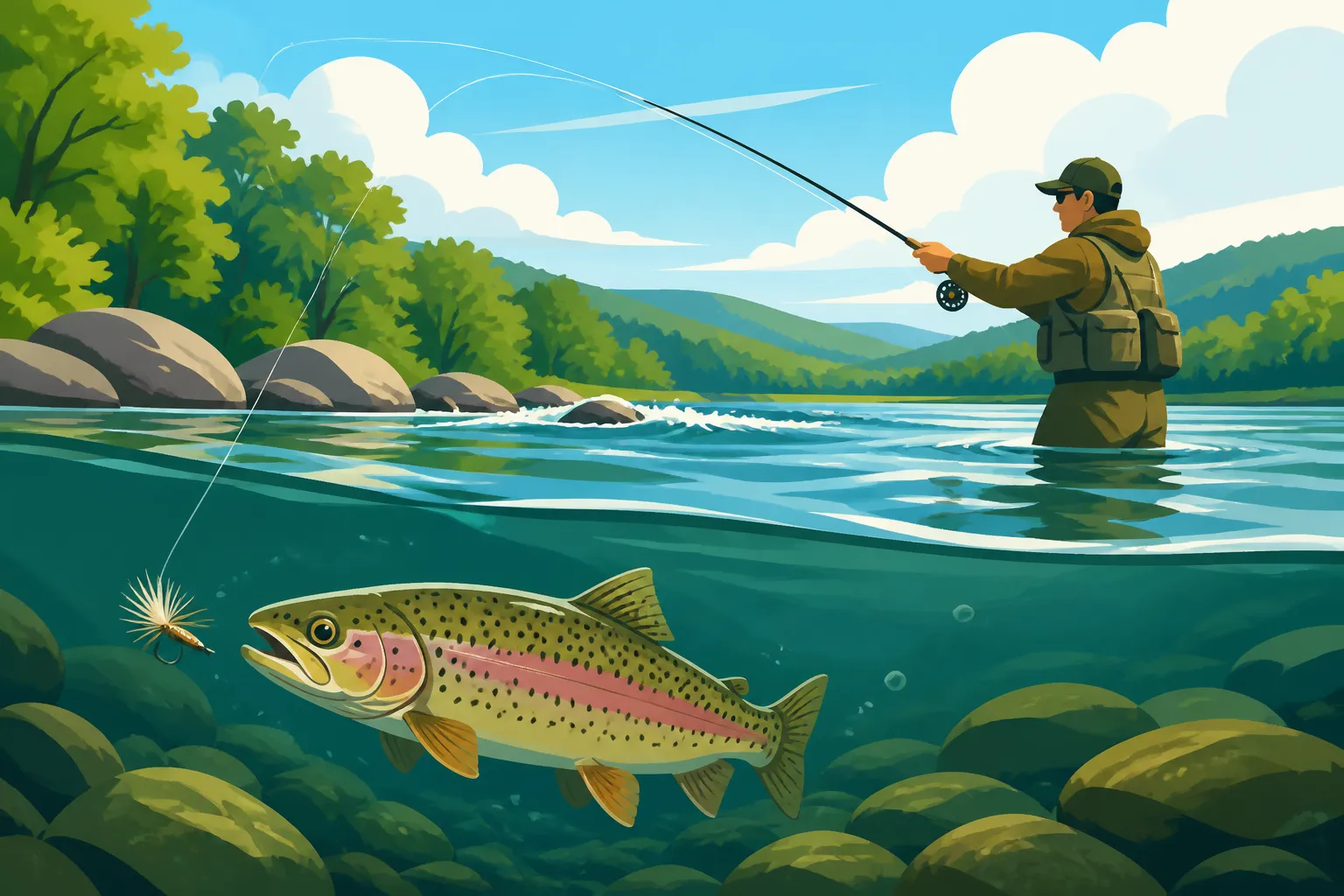
For fly anglers, drift fishing is practically a foundational technique, epitomized by nymphing. Nymphing, whether it's traditional indicator nymphing or the increasingly popular Euro nymphing, is essentially an advanced form of drift fishing with a fly rod. Instead of a spinning rod and bait, you're using a fly rod, fly line, and a specific leader setup to drift weighted nymph patterns through the water column, mimicking aquatic insects. With indicator nymphing, a small buoyant indicator (like a bobber) signals strikes, similar to how bait anglers watch their float. The key is to achieve a drag-free drift where the nymphs tumble naturally downstream.
Euro nymphing takes this a step further, often using no indicator but rather a sighter (a brightly colored section of leader) and a very long, sensitive rod to maintain direct contact with the nymphs. This allows for incredibly subtle strike detection and precise depth control. Fly fishing for trout in Connecticut, especially on famous rivers like the Farmington, relies heavily on these drifting techniques. Beyond nymphs, even wet flies can be drift-fished or swung through currents to imitate emerging insects. The principles remain the same: read the water, achieve a natural drift, and be ready to detect and react to a strike. Whether you're a spin fisherman or a fly angler, understanding these shared principles of drift fishing will make you a more versatile and successful trout angler. If you're looking to dive deeper into this specialized world, resources like Fly Fishing for Trout in Connecticut can provide excellent foundational knowledge.
Regulations and Conservation for Connecticut Trout
As responsible anglers, it's not just about what we catch, but how we fish and our understanding of the rules designed to protect our precious natural resources. Being familiar with Connecticut's fishing regulations and practicing good conservation habits ensures healthy trout populations for generations to come.
Understanding Connecticut's Trout Regulations
Before you even think about heading out with your drift fishing setup, it is absolutely essential to familiarize yourself with the current Connecticut Fishing Regulations Explained. These regulations are published annually by the Connecticut Department of Energy and Environmental Protection (DEEP) and cover everything from fishing license requirements to specific daily creel limits and season dates. For instance, the general statewide trout season has specific start and end dates, but many areas, particularly Trout Management Areas (TMAs) and Wild Trout Management Areas (WTMAs), often have year-round fishing with special regulations.
These special regulation waters might have different daily limits, minimum length requirements, or even require catch-and-release only. It's crucial to know these details, especially when targeting specific rivers like the Farmington or Housatonic, which have multiple designated sections. The Connecticut Trout Season and Stocking Rules outlines when and where DEEP stocks trout, which can be immensely helpful for planning your trips. Always double-check the latest guide, often available online or at local tackle shops, and understand that specific rules can apply to different bodies of water within the state. Ignoring these rules, even unintentionally, can lead to fines and penalties, overshadowing an otherwise enjoyable day on the water.
Best Practices for Catch and Release
While drift fishing can be incredibly effective for catching trout, practicing responsible catch and release, especially for wild or larger holdover trout, is vital for conservation. Minimizing stress and injury to the fish ensures they survive to spawn or be caught another day. One of the simplest and most important practices is to use barbless hooks. If your hooks aren't barbless, you can easily pinch down the barb with a pair of pliers. This makes hook removal quicker and causes less tissue damage. Another critical step is to keep the fish in the water as much as possible. Trout need oxygen, and exposing them to air, especially for extended periods, can be fatal. If you must handle the fish for a quick photo, wet your hands thoroughly beforehand to protect their protective slime coat.
Avoid squeezing the fish, especially around the gills or belly. Use a gentle grip, supporting the fish horizontally. A soft, rubberized net can help land and temporarily hold the fish in the water while you prepare your camera or pliers. When reviving a tired fish, hold it gently facing upstream in a moderate current, allowing water to flow over its gills. Don't let go until it actively tries to swim away. By following these simple guidelines, you contribute to the health and sustainability of Connecticut's trout populations, particularly in areas designated as Connecticut Catch and Release Fly Fishing Only Waters or wild trout streams where every fish counts. It's about respecting the resource and ensuring that future generations can enjoy the thrill of drift fishing for trout in our beautiful state.
Drift Fishing Gear Comparison
| Feature | Spinning Setup for Drift Fishing | Fly Fishing (Nymphing) Setup for Drift Fishing |
|---|---|---|
| Rod Length | 7-9 feet | 9-11 feet |
| Rod Action | Moderate-Fast, sensitive tip | Fast, sensitive tip (Euro Nymphing Rods) |
| Reel Type | Spinning reel (2000-2500 series) | Fly reel (3-5 weight) |
| Main Line | 6-10 lb Mono or Braid | Fly Line (WF or specialized Nymphing Line) |
| Leader Material | 4-6 lb Fluorocarbon (3-6 ft length) | Fluorocarbon (4-7X tippet, 9-20 ft length) |
| Weight | Split shot, small pencil weights | Weighted flies, tungsten beads |
| Strike Detection | Bobber/indicator, line watch, rod feel | Indicator, sighter, line watch, rod feel |
| Primary Baits/Lures | Worms, PowerBait, small plastics, micro jigs | Nymphs (Copper John, Pheasant Tail), Wet Flies |
| Advantages | Versatile, easier for beginners, covers more water | Highly natural presentation, stealthy, precise depth control |
| Disadvantages | Can create more line drag if not careful | Steeper learning curve, requires specialized casting |
Disclaimer
The information provided in this guide is for general informational purposes only and is not intended as legal or professional advice. Fishing regulations in Connecticut can change frequently. Always consult the official Connecticut Department of Energy and Environmental Protection (DEEP) website or their most current printed fishing guide for the most accurate and up-to-date regulations before heading out on the water. We are not responsible for any inaccuracies or outdated information.