Best water temperature for smallmouth bass fishing
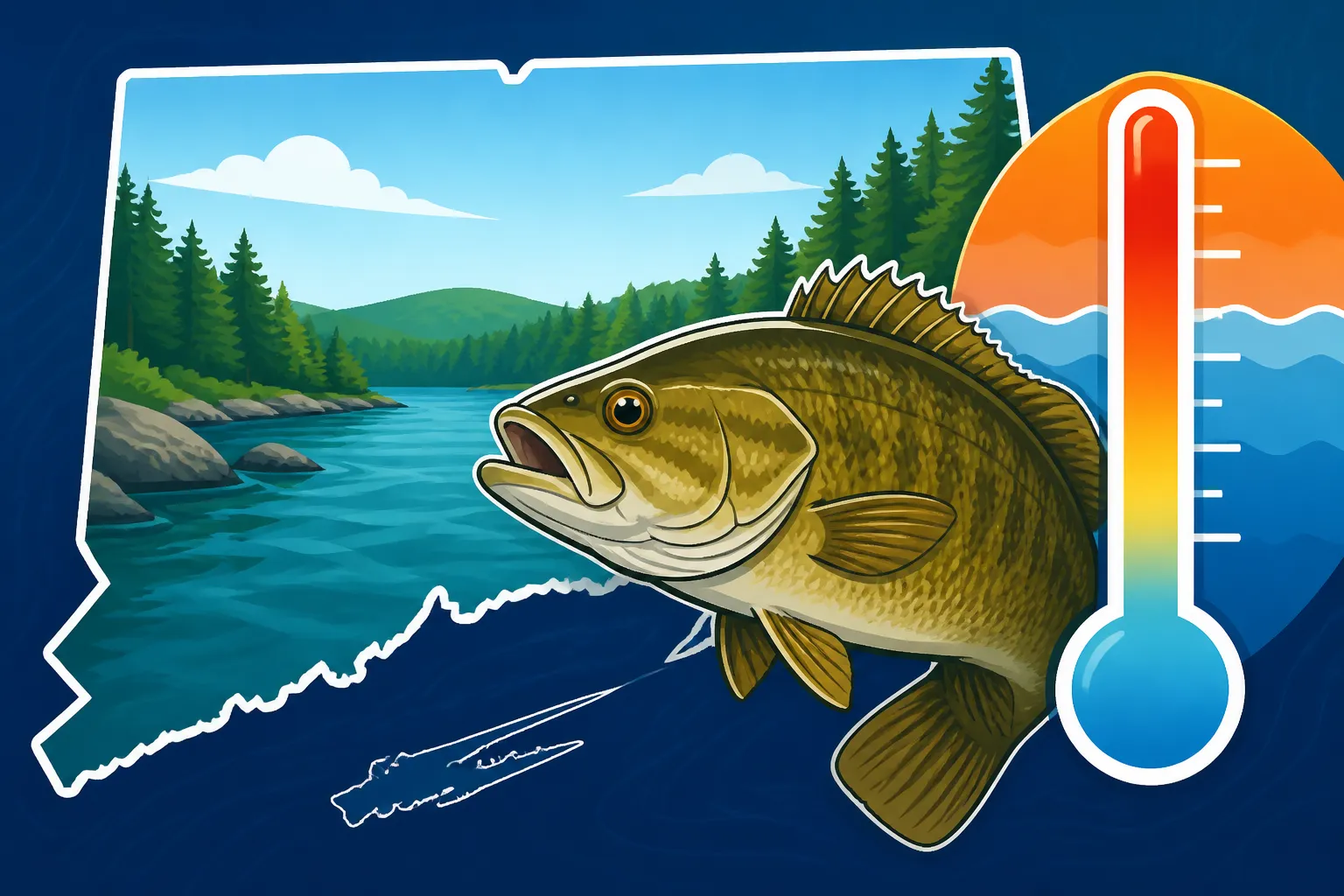
It's incredibly frustrating, isn't it? You head out to your favorite Connecticut lake or river, armed with your best smallmouth bass lures, confident you're going to have a banner day, only to find the fish are completely shut down. Or maybe you hit a new spot, and it just doesn't produce. Often, the hidden culprit isn't your skill or your tackle, but something far more fundamental: the water temperature. Understanding the best water temperature for smallmouth bass fishing is like having a secret weapon, unlocking their activity, aggression, and precise location. This guide is going to break down exactly how water temperature dictates smallmouth behavior, and how you can use that knowledge to catch more fish, more consistently, right here in Connecticut.
Why Water Temperature is the Key to Smallmouth Success in Connecticut
Smallmouth bass are incredible game fish, known for their aggressive strikes and acrobatic fights. But like all cold-blooded creatures, their entire world revolves around temperature. It’s not just a preference; it's a physiological imperative that dictates everything from their metabolism to their spawning cycles. Ignoring this crucial factor means you're often fishing blind, wondering why they aren't biting.
The Science Behind Smallmouth Behavior and Temperature
Think of water temperature as the smallmouth bass's internal thermostat, directly impacting their metabolism. When the water is cold, their metabolic rate slows dramatically. They digest food slower, move less, and their need to feed decreases. This means they'll be less active, conserving energy, and you'll need a much slower, more deliberate presentation to coax a strike. Conversely, when the water warms up to their comfort zone, their metabolism kicks into high gear. They need to eat more frequently to sustain this higher energy level, becoming much more aggressive and willing to chase down prey. This is when you'll find them actively hunting and less hesitant to strike.
Oxygen levels also play a role, and they are intertwined with temperature. Colder water holds more dissolved oxygen, which is great, but fish are less active. As water warms, it holds less oxygen. In very warm water, especially in stagnant areas, low oxygen can make smallmouth lethargic and force them to seek out cooler, more oxygenated pockets, like deeper breaks or areas with current. Understanding this connection is vital for figuring out where these bronze beauties will be holding, whether you're on the Housatonic River or a deep lake like Candlewood.
How Connecticut's Seasons Dictate Water Temperature Swings
Connecticut offers a diverse range of smallmouth habitats, from sprawling lakes to winding rivers, and each experiences significant seasonal temperature changes that directly influence smallmouth activity.
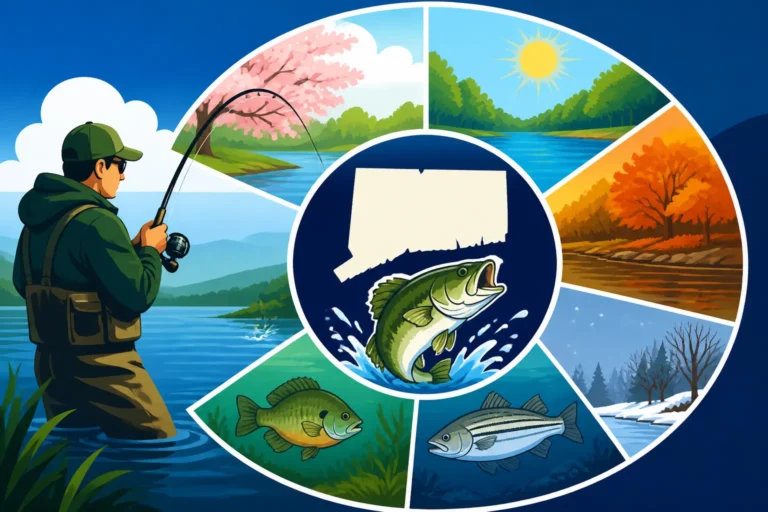
- Spring Warming: As winter ice recedes and spring arrives, the sun begins to warm the shallower areas first. These shallow flats, coves, and north-facing banks become magnets for smallmouth looking to warm up and become more active. The water temperature can fluctuate wildly day by day with sunny periods and cold fronts, making consistent fishing a challenge until the water stabilizes. This is a critical time for anglers as smallmouth transition from their deep wintering holes to shallower pre-spawn staging areas.
- Summer Heat: By summer, Connecticut's lakes and rivers can get quite warm. While smallmouth thrive in warm water, extreme heat can push them deeper to find cooler, more oxygenated water, often around thermoclines or areas with springs and current. They’ll also become more nocturnal, feeding heavily during cooler low-light conditions at dawn, dusk, or even throughout the night. Targeting them during the heat of the day often requires searching out deeper structure or shaded areas.
- Fall Cooling: As autumn colors paint the landscape, water temperatures begin to drop. This signals a crucial feeding period for smallmouth, as they know winter is coming. They gorge themselves on baitfish and crayfish, bulking up for the lean months ahead. This can lead to some of the most consistent and aggressive fishing of the year, particularly in areas where baitfish are schooling. They’ll actively hunt in shallower water during the day as the sun warms it, retreating to deeper breaks as the temperature drops overnight.
- Winter Chill: When ice forms on lakes and rivers, or water temperatures plummet below 40°F, smallmouth become incredibly sluggish. They congregate in deep, stable areas, often near vertical structure or rock piles, in a state of semi-hibernation. While not impossible to catch, they require extremely slow presentations, and bites can be very subtle. Targeting them requires patience and precise bait placement directly in front of their faces.
Knowing these seasonal patterns in Connecticut is the first step to truly understanding where and how to present your bait effectively. It's not just about knowing "what water temperature smallmouth bass prefer" in general, but how that preference shifts with the changing calendar.
Decoding the Smallmouth Bass Temperature Sweet Spots
Every species has a preferred temperature range where they are most comfortable and active. For smallmouth bass, these ranges are distinct and directly influence their behavior, making them either aggressive hunters or lethargic loafers. Tailoring your approach to these specific temperature zones is paramount for consistent success.
The Awakening: Cold Water Below 50°F
When water temperatures are below 50°F, smallmouth bass are still pretty sluggish. This is typical of early spring right after ice-out, or late fall and winter conditions. Their metabolism is slow, so they're not expending a lot of energy. This means they won't chase a fast-moving bait very far, if at all.
In these conditions, smallmouth tend to congregate in deeper areas, often near vertical structure like rock walls, bluff ends, or deep points where they can suspend. They're looking for stable temperatures and minimal current. You'll often find them schooled up, so if you catch one, there are likely more nearby. Your retrieve needs to be painfully slow. Think subtle twitches, long pauses, and baits that hang in the strike zone for an extended period. Hair jigs, blade baits, spybaits, or Ned rigs fished on the bottom or slowly suspended are excellent choices. Don't expect a violent strike; it's often a gentle tap or just a feeling of "weight" on the line. Patience is definitely a virtue when targeting smallmouth in cold Connecticut waters.
The Spawning Prime: Moderate Water (50°F to 60°F)
This is perhaps the most exciting time for smallmouth bass fishing in Connecticut! As water temperatures climb into the low to mid-50s, smallmouth begin their pre-spawn staging. They move shallower, seeking out hard-bottomed areas like gravel beds, rocky points, and shallow flats adjacent to deeper water. They're still cold-blooded, so they'll move between these shallower warming zones and deeper sanctuaries as fronts roll through or the sun dictates. Their metabolism is increasing, and they are actively feeding to build energy reserves for spawning.
Once the water hits the upper 50s, typically around 58-62°F, smallmouth bass will begin to spawn in Connecticut. They construct nests, usually in gravelly or sandy areas, often near submerged logs or boulders, in relatively shallow water (2-10 feet deep). While on the beds, the males guard the eggs and fry aggressively, making them highly susceptible to reaction strikes if a lure invades their territory. Spinnerbaits, jerkbaits, and swimbaits become effective as they mimic baitfish. Soft plastics, like tubes and creature baits, dragged or hopped along the bottom, are also deadly, especially when trying to aggravate a bedded fish. Remember, while they are aggressive, respect the fish and consider catch-and-release to protect future generations, especially during this vulnerable period. You can learn more about specific regulations in the Connecticut Fishing Regulations Explained guide.
Summer Aggression: Warm Water (60°F to 75°F)
Once smallmouth have spawned and water temperatures settle into the 60s and low 70s, they enter their most active feeding phase of the year. Their metabolism is running hot, and they're constantly on the prowl for food. This is when you can experience some truly explosive topwater action, especially during low-light conditions. These fish will readily chase down fast-moving baits.
In summer, smallmouth utilize a wider range of habitat. In deeper lakes, they'll often relate to thermoclines – the layer where warm surface water meets cooler, deeper water – as these areas often concentrate baitfish and offer comfortable temperatures. They'll also be found on main lake points, humps, ledges, and deep rock piles. In rivers like the Housatonic, they'll relate to current breaks, eddies, and submerged rock gardens, actively ambushing prey. Crankbaits, topwater lures, chatterbaits, and finesse jigs are all excellent choices. If the water gets above 75°F, especially in stagnant areas, they might become a bit lethargic and seek out shade or deeper, cooler water. Adjusting your lure choice and presentation speed is key here; for instance, some of the best smallmouth bass lures for the Housatonic in summer often involve a mix of reaction baits and precise finesse offerings.
Fall Feast: Cooling Water (50°F to 65°F)
As the days shorten and Connecticut's foliage turns brilliant, water temperatures begin their gradual descent. This fall period, generally from 65°F down to the low 50s, triggers a massive feeding response in smallmouth bass. They are acutely aware that winter is approaching, and they need to pack on as much weight as possible. This is a fantastic time for trophy smallmouth.
Smallmouth will often school up and actively chase baitfish, frequently moving into shallower water during the day to feed on sun-warmed flats, then retreating to deeper points and ledges as night falls. Look for them around baitfish schools on your sonar, or look for surface activity. Crankbaits, spinnerbaits, swimbaits, and jerkbaits that imitate baitfish are incredibly effective. Target main lake points, creek mouths, rock humps, and steep drops. This is a high-energy period, and aggressive tactics often pay off. They're essentially putting on their winter coat, and they won't pass up an easy meal. Many anglers find the Best Time of Year to Fish in Connecticut to be during this exciting fall period, not just for smallmouth, but for many species across the state.
Essential Tools and Techniques for Tracking Water Temperature
Knowing the ideal temperature ranges is one thing, but actually knowing the temperature of the water you're fishing is another. You can't just guess! Modern angling offers some fantastic tools to help you accurately track water temperature and put you directly on the fish.
Gear Every Smallmouth Angler Needs
While some old-school anglers might just dip a hand in, that's hardly precise enough for serious smallmouth fishing. You need actual temperature readings.
- Digital Water Thermometers: These are affordable and indispensable. Many come on a lanyard or a small float, allowing you to quickly get a surface reading. Some even have probes that can be lowered to get readings at various depths. I've found a good quality digital thermometer to be a game-changer; you can pick up a reliable one from sites like Amazon for a reasonable price. Getting an accurate reading at your fishing spot, not just a general air temperature, will inform all your decisions.
- Fish Finders with Temperature Sensors: If you're fishing from a boat or kayak, a modern fish finder is a huge advantage. Almost all decent fish finders come with a transducer that reads water temperature. This isn't just a surface reading; it's often the temperature right at the depth of your transducer, giving you real-time data as you move across the water. Many advanced units, like those from Humminbird or Lowrance, can even show you temperature changes at different depths, helping you locate thermoclines – those crucial layers where smallmouth often stack up in warmer months. This real-time feedback is invaluable for figuring out why fish are holding at a certain depth or feature.
- Smartphone Apps and Online Resources: While not always real-time for your specific spot, many weather apps and fishing forecast sites will provide approximate water temperatures for larger bodies of water. These can give you a general idea before you even leave the house. Also, local fishing reports often mention water temperatures, which can be a good starting point. However, always verify with your own thermometer once you're on the water, as conditions can vary.
Having these tools, especially a personal thermometer and a fish finder with temperature, allows you to become a true detective on the water, understanding why the smallmouth are behaving the way they are.
Understanding Temperature Stratification and Microclimates
Water isn't a uniform temperature from top to bottom, nor is it the same across an entire lake or river. These variations are called stratification and microclimates, and understanding them can significantly improve your smallmouth success.
- Temperature Stratification in Lakes: In deeper lakes, especially during summer, water stratifies into layers. The warm, oxygen-rich surface layer (epilimnion) is separated from the cold, dense, and often oxygen-depleted bottom layer (hypolimnion) by a transitional zone called the thermocline. Smallmouth, particularly larger ones, will often suspend or relate to structure along the thermocline. This is their comfort zone – cool enough, but still with sufficient oxygen and often abundant baitfish. A good fish finder will show you this layer, and knowing its depth allows you to target fish precisely. In spring and fall, the lake undergoes "turnover," where the water mixes as temperatures equalize, providing more uniform conditions.
- River Microclimates: Rivers are constantly moving, which prevents significant stratification, but they still have microclimates. Current, depth, and runoff can create noticeable temperature differences. For example, a shallow, sun-exposed flat will warm faster than a deep, shaded pool. The inflow from a cold spring or a smaller tributary can create a cooler "seam" of water that smallmouth will exploit, especially on a hot day. Conversely, a dark-bottomed, slack-water backwater might warm faster in spring, attracting early-season fish. Kayak fishing on the Housatonic River allows you to explore these subtle temperature changes firsthand, finding those hidden pockets where smallmouth are comfortable.
- Reading the Subtleties: Pay attention to more than just your thermometer. Notice where the sun is hitting the water, how strong the current is, and if there are any springs or feeder creeks. Dark bottom areas (like mud or dark rock) absorb more solar radiation and warm faster than light, sandy bottoms. Wind can also push warmer surface water into certain coves or against certain banks. All these factors create localized temperature differences that smallmouth use to their advantage. By observing and actively measuring, you’ll gain an intuitive understanding of where the most comfortable smallmouth will be holding.
Adapting Your Fishing Strategy to Current Water Conditions
Once you understand the water temperature and how it influences smallmouth, the next step is to adjust your approach. This isn't just about changing lures; it's about altering your presentation, your retrieve speed, and where you focus your efforts.
Lure Choice and Presentation by Temperature Zone
Matching your lure and technique to the water temperature is critical. It’s the difference between casting aimlessly and truly presenting an irresistible meal.
- Cold Water (Below 50°F): In this range, smallmouth are lethargic. Fast, erratic retrieves will often be ignored. You need to present something slow and subtle that stays in their strike zone for a long time. Hair jigs, Ned rigs, blade baits, and suspending jerkbaits are prime choices. For hair jigs and Ned rigs, use a slow drag or hop along the bottom. Suspending jerkbaits should be twitched with very long pauses – sometimes 10-20 seconds – allowing the bait to hang enticingly. Vertical jigging spoons or dropshot rigs are also excellent for pinpointing deep, schooling fish. Think "easy meal, minimal effort."
- Moderate Water (50°F to 60°F): This is the pre-spawn and spawning period, where aggression levels fluctuate. During pre-spawn, when they are staging, jerkbaits, lipless crankbaits, and swimbaits become highly effective as smallmouth become more active and start chasing bait. As they move onto beds in the upper 50s, tubes, creature baits, and jigs become deadly for targeting those territorial fish. You can fish these with a mix of slow drags, hops, and aggressive shakes to trigger a reaction. Don’t be afraid to experiment with different retrieve speeds as the fish's activity level can change quickly with the weather.
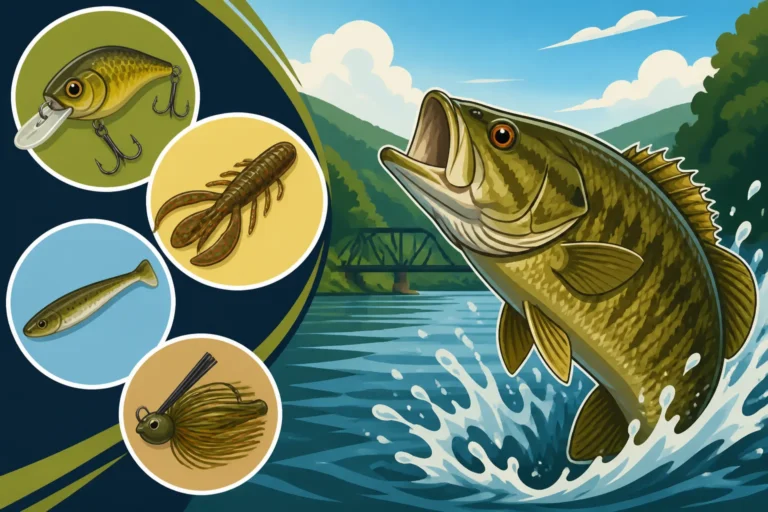
- Warm Water (60°F to 75°F): This is prime time for active, aggressive smallmouth. You can speed up your retrieve and use more erratic actions. Topwater lures (poppers, walk-the-dogs) are fantastic in low light. Spinnerbaits, chatterbaits, and medium-diving crankbaits that imitate baitfish are excellent search baits for covering water. When smallmouth are deeper, finesse jigs, dropshots, and Carolina rigs can effectively target them on structure. If the water pushes above 75°F, consider slowing down slightly and focusing on cooler, deeper water or shaded areas, where a dropshot or Ned rig might outperform a fast crankbait. For specific lures that really shine, check out our guide on Best Baits for Smallmouth Bass on the Housatonic. You can find a wide variety of these proven baits on Amazon, often with quick delivery to your door.
- Fall Cooling (50°F to 65°F): This is another high-activity period, similar to the moderate-to-warm range. Smallmouth are actively feeding. Crankbaits (both shallow and deep diving), large spinnerbaits, swimbaits, and jerkbaits are all excellent for imitating the schooling baitfish they are gorging on. Focus on covering water and finding those schools. Don't be afraid to size up your baits a bit, as they're looking for substantial meals. The aggressive "hunt" is on!
Locating Smallmouth: Structure and Depth Cues
Understanding temperature also guides your choice of fishing locations. Smallmouth will adjust their depth and position based on comfort.
- Cold Water Holds: In colder conditions, smallmouth often hug bottom or suspend tightly to deep structure. Look for them on the deepest ends of main lake points, channel swings, sharp drop-offs, and vertical rock walls. They'll seek out the most stable water they can find, which is usually deep. If you're on a river, they'll often be in the deepest, slowest pools or behind large current breaks that offer a reprieve from the flow.
- Pre-Spawn and Spawning Staging: As water warms, they move to shallower staging areas – flats, gravel points, and humps adjacent to deep water. These are transitional areas. When bedding, they'll be in very specific shallow, hard-bottomed areas, usually protected from strong wind and current. Observing these specific areas can greatly increase your chances of finding fish ready to spawn, as detailed in our article, When smallmouth bass spawn in Connecticut.
- Summer Retreats: During the heat of summer, smallmouth may go deep to find cooler water, often near the thermocline. Look for them on offshore humps, deep ledges, brush piles, and rock reefs. In rivers, they'll still relate to current, but might hold in deeper eddies or behind larger boulders, seeking the slightly cooler water that current often provides. Don't overlook shaded areas like bridge pilings or overhanging trees, especially in the mornings and evenings.
- Fall Foraging Grounds: In the fall, smallmouth will follow baitfish. This often means they’ll be on main lake points, creek channels, and large flats where baitfish congregate before moving to wintering holes. They'll actively feed in shallower water during sunny periods, then slide deeper to structure at night or during cold snaps. Using your electronics to find bait schools is key here; where the bait is, the smallmouth won't be far behind.
Putting It All Together: A Day on the Water Example
Let's imagine you're fishing a Connecticut lake in mid-April. You launch your boat, and your fish finder reads 48°F. That immediately tells you the smallmouth are still in their cold-water mode. You won't start by slinging a topwater bait. Instead, you head to a known deep main lake point that drops off quickly into 25-30 feet of water. You idle over it, watching your fish finder, looking for schools of fish or large individual arches. You see some fish suspended around 20 feet, near a rocky ledge.
You pick up a rod rigged with a dropshot and a small plastic minnow imitation, or perhaps a hair jig, and position your boat to cast parallel to the ledge. Your presentation is slow – a few subtle twitches, then long pauses, letting the bait just hang there. After a few casts, you feel a slight tap, set the hook, and boom, a nice smallmouth is on! You mark the spot on your GPS.
Later in the day, the sun has been beating down, and you decide to check a shallow, rocky flat in a protected cove. You notice the surface temperature here has climbed to 52°F. This is a subtle but significant change! Knowing this, you tie on a suspending jerkbait. You cast it out, twitch it a few times, and then let it sit for a good 10-15 seconds. On the third cast, a smallmouth absolutely wallops the lure during a pause, a much more aggressive strike than you had earlier.
This hypothetical scenario illustrates the power of understanding water temperature. It tells you where to start, what to throw, and how to present it, rather than just blindly trying every lure in your tackle box. This knowledge is fundamental for successful Smallmouth Bass Fishing in Connecticut.
Smallmouth Bass Temperature Guide
Here's a quick reference table summarizing how smallmouth bass activity and location generally shift with water temperature in Connecticut. This isn't an exact science, as other factors like clarity, current, and pressure can play a role, but it's a solid framework to start with.
| Water Temperature Range | Smallmouth Activity Level | General Location | Recommended Lures/Techniques |
|---|---|---|---|
| Below 45°F (Winter) | Very Low (Lethargic) | Deepest holes, stable rock piles, tight schools | Vertically jigged spoons, small jigs, Ned rigs (extremely slow) |
| 45-50°F (Early Spring/Late Fall) | Low (Slow to moderate) | Deep points, channel bends, transition zones | Hair jigs, blade baits, suspending jerkbaits (long pauses), dropshots |
| 50-60°F (Pre-spawn/Spawn) | Moderate to High (Active & Aggressive) | Staging on rocky points, shallow flats, gravel beds | Jerkbaits, lipless cranks, swimbaits (pre-spawn); Tubes, jigs, creature baits (on beds) |
| 60-75°F (Summer) | High (Very active, aggressive) | Main lake points, humps, ledges, thermoclines, current breaks | Topwater, crankbaits, spinnerbaits, chatterbaits, finesse jigs, dropshots |
| Above 75°F (Hot Summer) | Moderate (Seeking cool, oxygenated water) | Deeper structure, shaded areas, near springs or current | Deeper dropshots, Ned rigs, slow-rolled jigs, nocturnal topwater/jerkbaits |
Disclaimer
The information provided in this guide is for general informational purposes only and is based on common angling practices and biological understanding of smallmouth bass. Fishing conditions, fish behavior, and specific regulations can vary. Always consult the official Connecticut Department of Energy and Environmental Protection (DEEP) fishing regulations for the most current and accurate rules and laws before heading out on the water. Fishing can be inherently dangerous; always prioritize safety and wear appropriate personal flotation devices.