How to fish a wooly bugger for trout
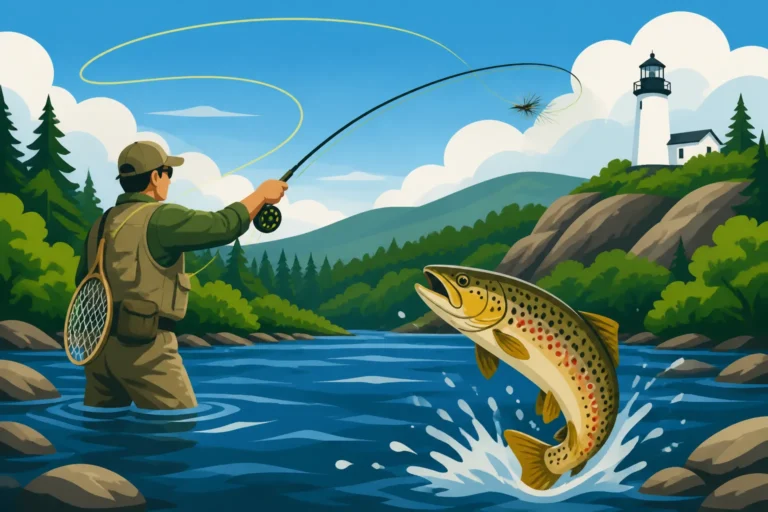
There's nothing quite like the feeling of stepping into a crisp Connecticut trout stream, rod in hand, ready to outsmart a wary brown or rainbow. But let's be honest, sometimes choosing the right fly feels like half the battle, and then figuring out how to present it effectively can be even more daunting. This guide is here to unravel the mystery of one of the most versatile and effective trout flies ever invented: the Wooly Bugger. We'll dive deep into how to fish it like a pro, helping you put more beautiful trout in your net, whether you're on a roaring spring river or a quiet fall pond.
Why the Wooly Bugger is Your Go-To Fly for Connecticut Trout
If there's one fly I could recommend to every angler, from absolute beginner to seasoned veteran, it's the Wooly Bugger. Seriously, it's the Swiss Army knife of fly patterns. When you're standing on the banks of the Farmington or the Housatonic, wondering what those trout are feeding on, a well-fished Wooly Bugger often has the answer. Its incredible versatility stems from the fact that it doesn't just imitate one thing; it imitates many things. This ambiguity is its superpower, making it irresistible to hungry trout.
The Anatomy of a Killer Fly
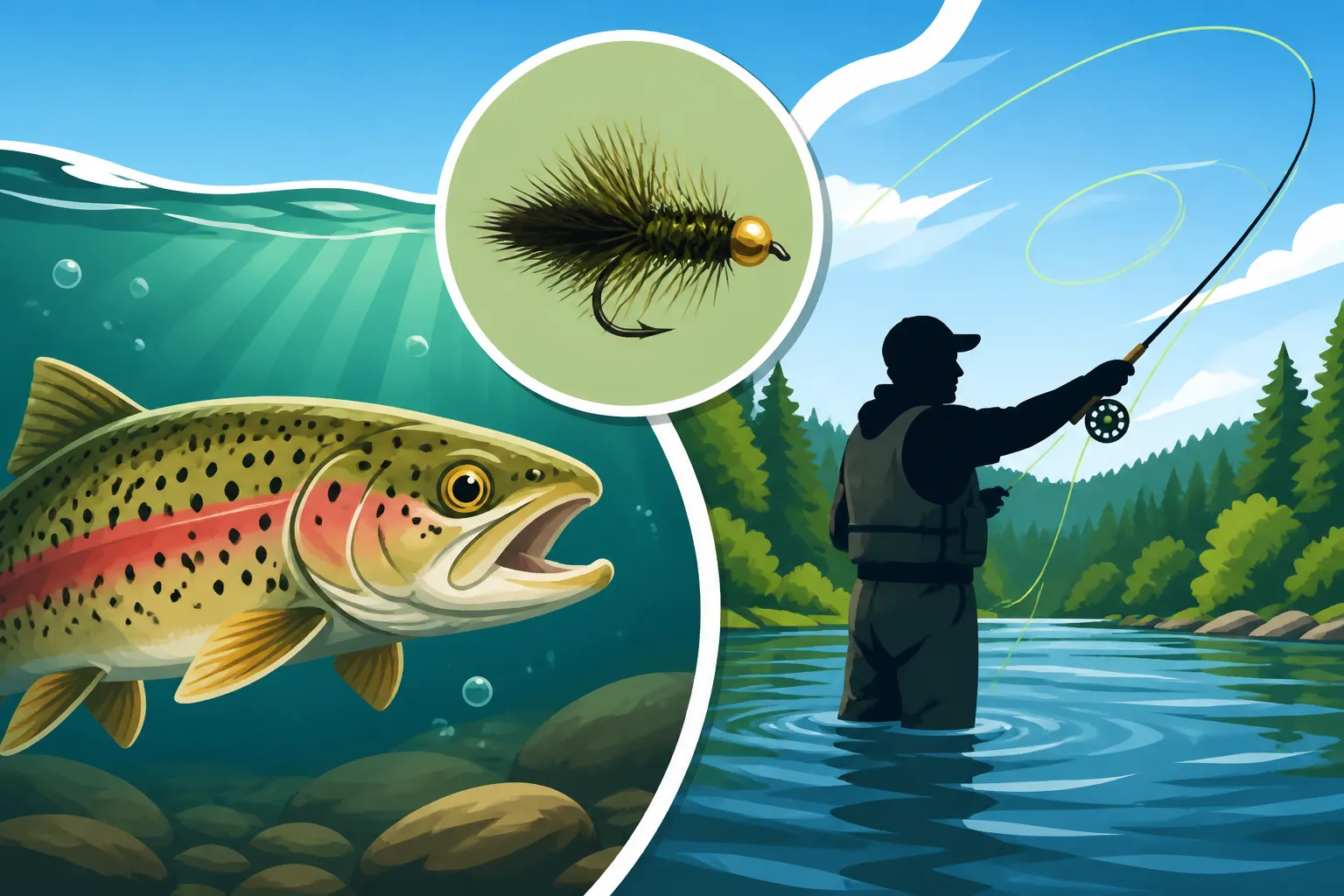
At first glance, a Wooly Bugger might look deceptively simple: a chenille body, a palmered hackle, and a marabou tail. But each of these components plays a crucial role in its effectiveness. The marabou tail breathes life into the fly with every twitch and current swirl, mimicking the natural undulations of a swimming baitfish or a struggling aquatic insect. The hackle provides bulk and movement, pushing water and creating a natural silhouette that predatory trout key in on. Even the chenille body, often overlooked, adds subtle flash and texture that can trigger a strike. It's a symphony of subtle movements that makes this fly so deadly.
You'll find Wooly Buggers in a dizzying array of colors and sizes. While olive, black, and brown are perennial favorites for trout in Connecticut, don't be afraid to experiment. Sometimes, a white or chartreuse bugger can be just the ticket in murky water or when targeting aggressive fish. The size matters too; smaller #10 or #12 buggers are great for finicky trout, while larger #4 or #6 patterns can tempt a trophy brown trout that's looking for a substantial meal. Having a variety in your fly box, perhaps a collection you've picked up from a local fly shop or even a bulk order from Amazon, ensures you're ready for whatever the day throws at you.
Mimicking Nature's Buffet
The genius of the Wooly Bugger lies in its ability to imitate a wide range of trout prey. Think about it: a small baitfish darting through a run, a leech slithering along the bottom, a stonefly nymph tumbling in the current, or even a crayfish scuttling away. The Bugger can be all of these things, depending on how you present it. This makes it incredibly effective across various water conditions and seasons. For example, if you're fishing a deep pool in the Salmon River and suspect trout are feeding on sculpins, an olive or black Wooly Bugger fished low and slow is a perfect imitation.
This adaptability also means you can often keep a Wooly Bugger tied on even if conditions change. If a hatch suddenly dies down and trout stop looking up, you can switch from a dry fly to a Bugger without completely re-rigging your setup. It's an excellent "search pattern" when you're exploring new water, like some of the smaller, lesser-known streams nestled in the Litchfield Hills, because it presents a tempting meal that most trout won't pass up.
Gear and Setup for Fishing a Wooly Bugger
Fishing a Wooly Bugger effectively isn't just about the fly itself; it's also about having the right tools to present it. While you don't need highly specialized gear, a balanced setup will make your day on the water much more enjoyable and productive. Matching your rod, reel, and line to the size of the flies you're casting and the conditions you're fishing in is key.
Rod, Reel, and Line Essentials
For most Connecticut trout fishing scenarios with a Wooly Bugger, a 4 to 6-weight fly rod is ideal. A 5-weight is often considered the perfect all-around choice. It has enough backbone to cast weighted buggers and handle larger trout, but it's still sensitive enough to feel subtle takes. An 8.5 to 9-foot rod length offers good line control and casting distance, which is invaluable when you're trying to reach that sweet spot across the current or mend your line to avoid drag.
Your reel doesn't need to be anything fancy; a standard single-action fly reel with a smooth drag system will do the trick. The most important part of your line setup is the fly line itself. While a weight-forward floating line is versatile, consider a sinking-tip or full-sinking line if you plan to consistently fish deeper pools or faster currents, especially if you're targeting larger trout in places like the Housatonic River Fishing Guide where they might hold close to the bottom. Sinking lines get your fly down quickly and keep it there, allowing for a more natural presentation of a baitfish or leech imitation.
Leaders and Tippets for Stealth and Strength
Connecting your fly line to your Wooly Bugger is your leader and tippet, and their choice can significantly impact your success. A 7.5 to 9-foot tapered leader is a good starting point. The taper helps transfer casting energy smoothly from your fly line to your fly, allowing for more accurate and delicate presentations. For most bugger fishing, a 3X or 4X leader butt section is appropriate.
However, you'll want to attach a section of tippet to the end of your leader. Fluorocarbon tippet is often preferred for fishing Wooly Buggers because it sinks faster than monofilament and is nearly invisible underwater, which can be a huge advantage when dealing with spooky trout in clear water. For most general trout fishing with Wooly Buggers, 3X to 5X fluorocarbon tippet is a solid choice. If you're using very small buggers or facing extremely clear, low-water conditions (which sometimes happens in summer on rivers like the Farmington West Branch), you might even drop down to 6X. On the other hand, if you're casting big, weighted buggers for aggressive fish in stained water, a heavier 2X or even 1X tippet will give you more confidence when setting the hook and fighting a strong trout. Don't forget to check your knots frequently, especially after a fish or a snag!
Mastering the Retrieve: Techniques for Success with a Wooly Bugger
Fishing a Wooly Bugger isn't just about casting it out and letting it sit. While that can sometimes work, the true magic of this fly comes alive through various retrieve techniques that impart lifelike action. The way you work the fly through the water directly influences what it imitates and how appealing it appears to a trout. Experimentation is your best friend here, as different conditions and moods of the fish will call for different approaches.
The Dead Drift and Subtle Swings
Sometimes, the most effective retrieve is almost no retrieve at all. A dead drift, where the Wooly Bugger tumbles naturally with the current, can effectively mimic a drowned insect, a dislodged baitfish, or even a crayfish being swept downstream. To achieve a good dead drift, cast upstream or up and across, and immediately mend your line to eliminate any slack and prevent drag. Watch your line and leader for any hesitation or subtle movement that might indicate a strike.
Once the dead drift transitions into a natural swing downstream, pay close attention. Trout often hit the fly right as it begins to swing across the current, presenting a broadside profile that looks like an easy meal trying to escape. This is a particularly deadly technique in the tailouts of pools or around current seams where trout often lie in wait. You can even add a very subtle twitch with your rod tip during the swing to give the fly a little extra kick, making it look like it's trying to swim away.
Stripping and Jigging: Active Presentations
When trout are aggressive, or you suspect they're keying in on baitfish, an active retrieve is often the ticket. Stripping the fly line in short, erratic pulls will make the Wooly Bugger dart and pulse, mimicking a fleeing minnow. Vary your retrieve speed and the length of your strips. Sometimes a few quick strips followed by a long pause is what it takes, while other times a steady, slow retrieve is more effective. Think about what a baitfish does when it's trying to get away: short bursts of speed, then a brief pause.
Jigging is another fantastic active technique, especially when you're fishing deeper water or around structure where fish might be holding tight to the bottom. Cast your weighted Wooly Bugger out, let it sink to the desired depth, and then use short, sharp lifts of your rod tip to make the fly "jump" off the bottom, then allow it to sink again on a semi-slack line. The marabou tail will flare and collapse, looking incredibly lifelike. This method is particularly effective when you're fishing rocky areas or drop-offs, trying to imitate a crayfish or an injured baitfish struggling near the bottom.
The 'Leach' Retrieve: Slow and Deliberate
For colder water conditions, whether it's early spring or late fall, or when trout are less active, a slow, deliberate "leach" retrieve can be incredibly effective. Cast your Wooly Bugger upstream or up and across, let it sink deeply, and then retrieve it with very slow, long pulls of your line, punctuated by extended pauses. The goal here is to keep the fly in the strike zone for as long as possible, presenting a languid, easy meal. The marabou will pulsate subtly even with minimal movement, and this often triggers strikes from lethargic trout that might ignore a faster presentation.
This technique is excellent for probing deep runs and pools on larger rivers. Imagine a big brown trout tucked away under an undercut bank in the Naugatuck River during a chilly October morning; a slowly wiggling black or olive Wooly Bugger presented right to its nose might be just the thing to coax it out. Patience is key with this retrieve, but the rewards can be substantial, often in the form of larger, more cautious fish.
Here's a quick table to summarize common Wooly Bugger retrieve techniques:
| Retrieve Style | Imitation | Water Conditions | Trout Activity Level | Key Characteristics |
|---|---|---|---|---|
| Dead Drift | Drowned insect, dislodged baitfish, nymph | Medium to fast current, seams | Passive to active | Minimal movement, natural tumble, mend line often |
| Subtle Swing | Fleeing baitfish, drifting nymph | Current seams, pool tailouts | Passive to active | Let current move fly, slight rod tip twitches |
| Short Strips | Fleeing minnow, wounded baitfish | Varied (rivers, ponds) | Active | Erratic, short pulls, varied speeds, pauses |
| Jigging | Crayfish, injured baitfish, nymph | Deep pools, structure, eddies | Active to passive | Short, sharp rod lifts, let fly sink, feel for strikes |
| Slow 'Leach' Pulls | Leech, slow-moving baitfish | Cold water, deep pools, slow currents | Passive, lethargic | Long, slow pulls, extended pauses, stay in strike zone |
Where and When to Fish a Wooly Bugger in Connecticut
Knowing how to fish a Wooly Bugger is only half the battle; knowing where and when to present it can dramatically increase your success. Connecticut offers a diverse range of trout habitats, from freestone rivers to stocked ponds, and the Wooly Bugger shines in many of them. Whether you're chasing recently stocked rainbows or wily holdover browns, this fly has a place in your arsenal.
River and Stream Tactics
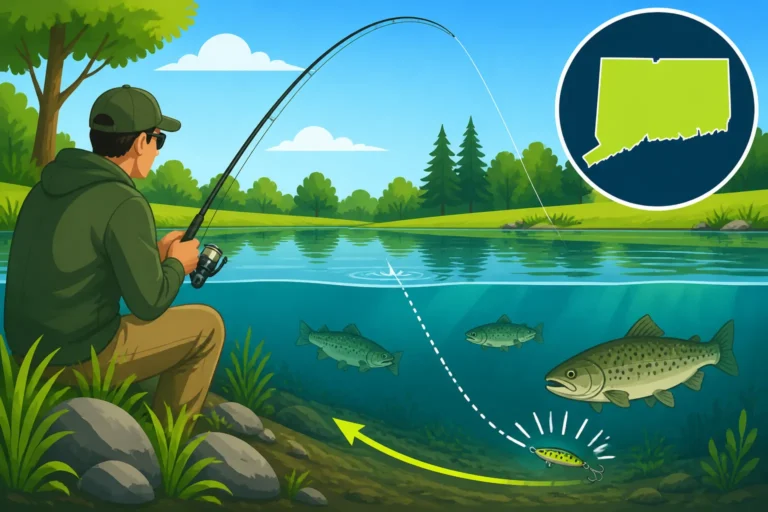
Connecticut is blessed with incredible trout streams, from the renowned Farmington River Trophy Trout Stream Rules to the wild sections of the Eightmile River. On rivers and streams, concentrate your efforts on classic trout lies. This includes the deeper sections of pools, especially where the current slows down, allowing trout to conserve energy while looking for food. Cast your Wooly Bugger upstream of these areas, letting it sink and drift naturally through the holding water.
Also, pay close attention to undercut banks, fallen trees (log jams), and large rocks. These structures provide excellent cover and ambush points for trout. A cast that puts your Wooly Bugger right against an undercut bank, followed by a slow retrieve, can often entice a large trout hiding in the shadows. Don't overlook riffles and runs, especially those with deeper pockets. While often associated with nymphing, a small, unweighted Wooly Bugger drifted through these faster sections can imitate a nymph struggling in the current. Remember to consult the Connecticut Trout Season and Stocking Rules to plan your trips, especially for stocked waters.
Pond and Lake Strategies
While often thought of as a river fly, the Wooly Bugger is equally effective in Connecticut's numerous trout-stocked lakes and ponds. Here, the presentation often shifts from current-driven drifts to more active retrieves. From shore, cast your Wooly Bugger out and allow it to sink for a few seconds before beginning a slow, steady strip retrieve. Vary the depth by counting down different amounts before starting your retrieve. Trout in ponds often cruise along drop-offs, weed lines, or around submerged structure, so focus your casts on these areas.
If you're fishing from a kayak or float tube, you have the advantage of covering more water. Fan cast around the perimeter of the pond, and then work your way towards deeper, open water. The "leach" retrieve mentioned earlier is especially potent in still waters, mimicking a slow-moving food source. When fishing near boat ramps or popular access points, remember that fish might be a bit more educated, so a more subtle presentation or a smaller fly might be required. For deeper exploration, a fish finder can help locate underwater structure, and you can stock up on some great beginner models on Amazon to aid your search. You can also explore the Connecticut Interactive Trout Stocking Map, Explained to find recently stocked ponds near you.
Seasonal Considerations
The beauty of the Wooly Bugger is that it's a four-season fly, though your approach will change with the time of year.
- Spring: This is prime time for Wooly Buggers. After the initial trout stocking, fish are often aggressive and looking for an easy meal. High, murky water from spring rains makes darker, larger buggers very effective. Focus on slow retrieves in the calmer, deeper sections of rivers or along the edges of ponds. This is also a great time to fish for Spring Trout Fishing Techniques for Connecticut Streams.
- Summer: As water temperatures rise, trout become more lethargic, and many streams can become too warm to fish responsibly. However, on larger, colder rivers like the Housatonic or in tailwater sections below dams, evening and early morning hours can be productive. Use smaller buggers (size 10-14) and slower, more subtle retrieves in deeper pools or around cold-water springs. Remember to check water temperatures, and if they're too high, consider finding some Best Time of Year to Fish in Connecticut options in colder, spring-fed waters.
- Fall: This is another fantastic season for big trout, especially brown trout that are becoming aggressive before spawning. They're looking to pack on weight and won't hesitate to smash a larger Wooly Bugger. Black, olive, and brown patterns are excellent choices. Concentrate on classic holding water and use active retrieves to trigger a strike.
- Winter: While challenging, winter fly fishing can yield some of the biggest trout. Fish are slow-moving, so your presentation needs to be even slower and more deliberate. Focus on the deepest, slowest pools, and use heavily weighted black or olive Wooly Buggers. Let them sink to the bottom and retrieve with agonizingly slow pulls and long pauses. A cold, clear day can be surprisingly productive if you're patient.
No matter the season or the specific water, the Wooly Bugger is a fly that demands your attention and rewards your efforts. Keep a variety of sizes and colors in your fly box, learn to vary your retrieve, and don't be afraid to experiment. Happy fishing! You can find more specific advice on patterns in our guide on Fly Patterns for Connecticut Trout Streams and techniques in our overarching Fly Fishing for Trout in Connecticut article. And for those interested in catching other species with this versatile fly, don't forget it's also highly effective for How to Catch Smallmouth Bass in Connecticut Rivers!
Disclaimer
This article is for general informational purposes only and does not constitute professional advice. Laws, prices and regulations vary by location and change over time. Consult a qualified professional for guidance on your specific situation.