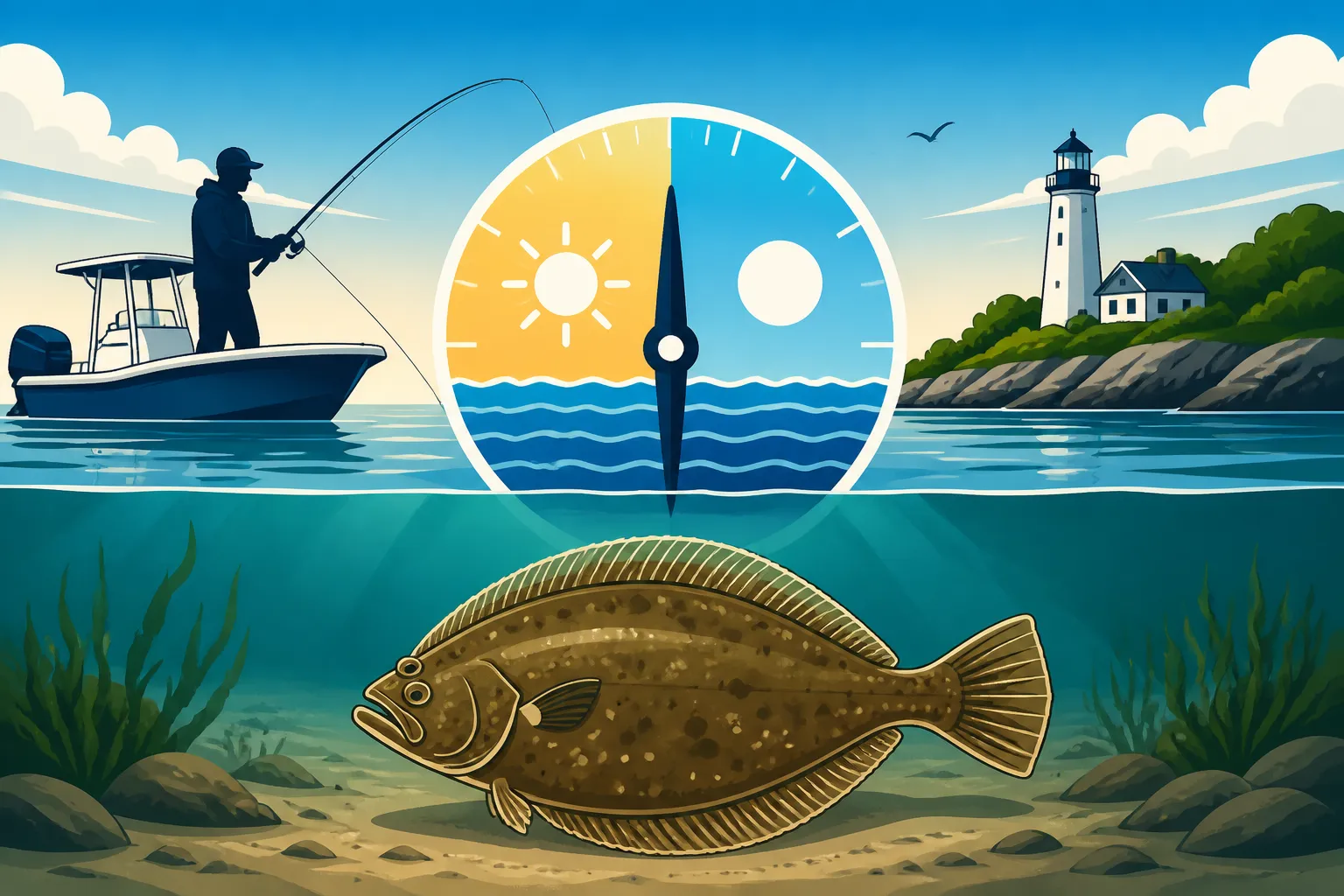
Best time to fish for fluke at slack tide
It’s a common scenario for many of us who love chasing fluke in Connecticut's waters: you get to your favorite spot on the outgoing or incoming tide, feeling confident, only for the bite to shut down completely as the current dwindles. That lull, that period of minimal water movement, often leaves anglers wondering if they should just pack up and wait for the next tidal swing. The truth is, while many swear by moving water for fluke, slack tide isn't necessarily a death sentence for your fishing trip. With the right approach and a little understanding of what these flatfish are up to, you can absolutely turn a seemingly "dead" period into a productive one.
Understanding the Fluke's Reliance on Current
Fluke, also known as summer flounder, are ambush predators, and their entire existence revolves around positioning themselves to snatch an easy meal. This is precisely why moving water is so often touted as the best time to fish for them.
Why Moving Water is Typically Prime Fluke Time
Think about it from a fluke’s perspective: when the tide is ripping, baitfish, crabs, and shrimp are all getting swept along in the current. This creates a natural conveyor belt of food. A fluke will bury itself partially in the sand or mud, often on the downstream side of a piece of structure or a channel edge, with its eyes scanning upward, waiting for an unsuspecting meal to drift by. When that meal comes within striking distance, the fluke bursts from its cover, ambushing its prey. The stronger the current, often the more active this feeding behavior becomes, as more food is dislodged and carried past their hiding spots.
For anglers, this means that drifting with the current, presenting baits or bucktails that mimic these disoriented prey items, is often incredibly effective. You're covering ground, finding actively feeding fish, and letting the current do a lot of the work for you. Many experienced anglers focus almost exclusively on these active tidal periods, swearing that once the current slows, the bite dies with it. And to be fair, in many situations, they're right. The dynamic movement of the water column is what these fish are designed to exploit. To learn more about where these fish hang out, check out our guide on Fluke Habits in Long Island Sound.
The Nuance of Slack Tide for Fluke Fishing
So, if moving water is so good, why bother with slack tide? Well, "slack tide" isn't a single, monolithic moment. It's a transition. There’s the period just before the full high or full low, when the current is visibly slowing, and the period just after, when it's starting to pick up again in the opposite direction. True, absolute slack—when the water is completely still—might only last a few minutes. It's these transition moments, and the slightly longer periods of minimal current, that offer unique opportunities if you know how to leverage them.
During true slack water, the "conveyor belt" of food shuts down. Baitfish aren't getting swept along as readily, and crabs aren't fighting a strong current. This means the fluke have to adjust their strategy. They can no longer simply lie in wait for food to come to them. This is where the nuance comes in. Instead of thinking of it as "dead," consider it a period where the fish might be less inclined to chase a fast-moving bait, but more inclined to investigate something presented right on their nose, or something that looks particularly vulnerable. It's also a time when fish might move out of strong current areas and hold tight to structure, conserving energy, or even moving into shallower, calmer waters to feed on different prey.
Strategies for Fishing Fluke During Slack Tide
Fishing effectively during slack tide requires a shift in mindset and technique. You can't just drift passively and expect the same results as you would on a strong current.
Locating Fluke During Still Water
When the current dies, fluke might reposition themselves. They're still looking for food, but their ambush points might change.
- Focus on Structure and Drop-offs: Without a strong current to hold them, fluke often relate more tightly to bottom structure. Think about rocky reefs, wrecks, mussel beds, and sharp depth changes. These areas provide cover and concentrate bait even when currents are minimal. If you've been drifting open flats, now is the time to pivot to these harder-to-reach spots. You might have to anchor up, or make precise drifts with your trolling motor, to properly work these areas. The fluke will be tucked in, waiting for something to swim right by them.
- Search for Baitfish Schools: Even during slack, baitfish don't disappear. Sometimes, they'll school up more tightly in calmer water, or they'll be found in shallower coves or flats where the lack of current makes them feel safer. If you can locate schools of bunker, spearing, or silversides, there's a good chance fluke won't be far behind. They might not be actively chasing, but they'll certainly eat if an easy meal presents itself. Keep an eye on your fishfinder for bait balls, and look for surface activity if you're in shallower water.
- Channel Edges and Deep Pockets: While the main current of a channel might slow, the edges and deeper pockets can still hold fish. Fluke might drop down into the deeper, cooler water, or position themselves along the very edge of a channel, anticipating the current's return. Work these areas slowly and methodically, ensuring your bait stays on the bottom.
Effective Lures and Techniques for Slack Tide Fluke
This is where finesse and precision become your best friends. You need to entice fish that might not be in a super aggressive feeding mood.
- Slower Presentation is Key: Forget fast drifts or aggressive jigging. During slack tide, you want to present your bait as naturally and slowly as possible. If you're drifting, try to do so at the absolute slowest speed possible, or even anchor and cast.
- Bucktails and Gulp!: A classic combination, bucktails tipped with a strip of Gulp! or natural bait can be deadly. For slack water, use lighter bucktails than you would in current. A 1/2 to 1 oz bucktail might be sufficient in many areas. The key is to barely lift it off the bottom, letting it settle back down slowly, mimicking a stunned or easy prey. The scent and action of the Gulp! (like the popular Amazon-sold Berkley Gulp! Swimming Mullet) can be incredibly effective in drawing strikes when fish aren't actively chasing.
- Live Bait: Live bait, like killifish (mummichogs), spearing, or peanut bunker, can be irresistible to a less aggressive fluke. Rig them on a standard fluke rig (sometimes called a "top-and-bottom" rig or a "hi-lo" rig) with a light lead sinker. Let the live bait do the work, swimming naturally near the bottom. The natural movement is often what triggers a strike when artificials fail. You can find pre-tied fluke rigs and various sinkers on Amazon for convenience.
- Scented Soft Plastics: Beyond Gulp!, other scented soft plastics can work well. Look for ones with a lot of natural action in very little current, such as paddle tails or curly tails made from very soft plastic. Rig them on a light jig head and work them slowly along the bottom, giving them subtle twitches.
- "Jigging" (More Like Lifting and Dropping): When I say jigging during slack, I don't mean aggressive snaps. Think of it more as a controlled lift-and-drop. Lift your rod tip slowly a foot or two, then let your bait or lure flutter back to the bottom on a semi-slack line. The bite often comes on the fall. This subtle motion can be enough to get a fluke's attention without spooking it.
- Chumming (If Permitted and Practical): In some areas, light chumming with crushed bunker or spearing can help draw fluke to your anchored boat, especially during slack tide. Just be mindful of local regulations and other species you might attract.
Here's a quick comparison of strategies:
| Feature/Condition | Moving Tide Strategies | Slack Tide Strategies |
|---|---|---|
| Fluke Behavior | Ambush predators using current to feed | Less active, holding tight to structure, opportunistic feeders |
| Typical Locations | Channel edges, current breaks, open flats | Hard structure (reefs, wrecks), deeper pockets, bait schools |
| Presentation Speed | Faster drifts, active jigging | Very slow drifts, anchored, subtle lifts and drops |
| Lure/Bait Choice | Heavier bucktails, faster retrieved plastics, trolling | Lighter bucktails, live bait, scented soft plastics |
| Targeting Approach | Covering ground to find active fish | Precise placement over structure, enticing less active fish |
| Required Patience | Moderate, often immediate action | High, subtle bites, more methodical |
When Slack Tide is Truly Challenging and What to Do
Let's be realistic: sometimes, no matter how skilled you are, slack tide can be a real grind. There are instances when the fish just aren't interested, or the conditions are too tough.
Recognizing Unproductive Slack Periods
Not all slack tides are created equal. Sometimes, the fish just aren't going to cooperate.
- Extreme Water Temperatures: If the water is unusually cold or hot, fluke can become lethargic. During a hot summer day, if slack tide coincides with the warmest part of the day, fish might simply shut down and sit in the coolest available water. Conversely, in early spring, if the water is still very cold, a lack of current might mean even less feeding activity.
- Post-Frontal Conditions: If a strong cold front has just passed, the fish can be finicky for a day or two, regardless of the tide. The stable, high-pressure conditions often make fish less aggressive. Trying to force a bite during slack tide in these conditions can be particularly frustrating.
- Lack of Bait: If there's simply no bait around your chosen area, slack tide or not, your chances of catching fluke diminish significantly. Fluke are where the food is. If the local bait population has moved on, so will the fluke. You might need to move your boat and find a new area entirely. This is why having good electronics, like a reliable fishfinder you can find on Amazon, is so important for scouting new locations.
Maximizing Your Chances Beyond Slack
If you find yourself in a truly unproductive slack period, don't despair! You have a few options to make the most of your time.
- Target the Transition Period: The absolute best fishing during "slack tide" often isn't the dead center of slack, but the 30-45 minutes before and after it. As the current starts to dwindle or just begins to pick up in the opposite direction, fluke can become more active. They're either making their last pushes in the fading current or getting ready for the new flow. Pay close attention to these critical windows. This is often when a more aggressive approach, like that described in Jigging for Fluke in Long Island Sound, can be effective.
- Move to a Different Area: Sometimes, the best solution is to change locations. If your current spot isn't producing, motor to an area with a different tidal influence. For example, if you're in a bay and the current has died, maybe head out to a main channel or an area closer to the open sound where the tide might still be moving or will pick up sooner. Alternatively, consider exploring the Best Shore Fishing Spots in Connecticut if you're stuck in a lull from a boat.
- Switch Species: If fluke are just not cooperating, why not try for something else? Long Island Sound offers a plethora of species. During slack tide, you might have better luck targeting black sea bass around wrecks or reefs, or even scup (porgies) which are often less reliant on strong currents and can be quite aggressive biters. You might even find some striped bass lurking in deeper channels, especially if there's structure. Understanding Connecticut Black Sea Bass Regulations for 2026 or Connecticut Scup (Porgy) Regulations will be helpful.
- Maintain Focus and Experiment: Even if the fishing is slow, stay engaged. Try different depths, switch up your bait or lure colors, adjust your retrieve speed, or try a different type of rig. Sometimes a minor adjustment is all it takes to trigger a bite. Keep your lines in the water and stay ready!
Fishing for fluke at slack tide isn't always easy, and it certainly goes against the conventional wisdom of "no current, no fish." But by understanding how fluke adapt to these periods of minimal water movement, adjusting your locations to structure and bait, and employing slower, more subtle presentations with the right tackle (easily available from retailers like Amazon), you can absolutely turn a challenging situation into a rewarding one. It often takes more patience and precision, but the reward of figuring out these finicky flatfish during a tough bite is truly satisfying.
Disclaimer
Fishing conditions and regulations in Connecticut can change rapidly. Always consult the latest Connecticut Department of Energy and Environmental Protection (DEEP) fishing guide and local advisories before heading out on the water. This guide is for informational purposes only and does not constitute official legal advice.