Best time to fish for striped bass at dusk
Ah, the end of the day. You've worked hard, maybe wrangled the kids, and now that golden hour is approaching, your mind turns to the water. There's a persistent whisper among anglers that dusk, that magical transition from day to night, is absolutely prime time for striped bass in Connecticut. But knowing when exactly that window opens and how to make the most of it can be a real head-scratcher. This guide is here to unravel the mysteries of fishing for striped bass at dusk, ensuring you maximize your chances when the sun dips below the horizon.
Why Dusk is the Golden Hour for Striped Bass Anglers
There's a reason why so many experienced anglers swear by the hours surrounding sunset for targeting striped bass. It’s not just romantic notion; it's rooted deeply in the behavior of these magnificent predators and their prey. As the daylight fades, a whole new dynamic unfolds in our Connecticut waters, creating perfect conditions for a successful striper outing.
The Advantage of Diminishing Light
Think about it from a striped bass's perspective. During the bright parts of the day, they're often more cautious, seeking deeper water or shaded structure to avoid predators themselves (like seals or larger sharks) and to ambushing their prey from cover. But as the sun dips and the light dims, their world changes. Stripers are opportunists with excellent low-light vision, giving them a distinct advantage over many of their prey species. This fading light creates an illusion of safety for the baitfish, drawing them out from their daytime hiding spots, often closer to shorelines, jetties, and shallow flats.
This shift in light quality means that structure that might have been less productive during midday can suddenly come alive. Rocky points, oyster beds, and even sandy beaches become prime hunting grounds as the bass feel more comfortable moving into shallower, bait-rich areas. It’s a natural feeding trigger, signaling to the stripers that it’s time to hunt actively without the glaring sun revealing their presence. Many an angler has experienced a quiet day turn into a furious bite as the last rays of sun disappear, proving this low-light advantage repeatedly.
Baitfish Activity and Predatory Instincts
Dusk isn't just about the stripers; it's also about what their dinner is doing. Many baitfish species, like silversides, bunker, and sand eels, become more active and less wary during twilight hours. They might be moving from deeper waters to shallower feeding grounds, or simply becoming more exposed as the bright light that offered them a sense of security fades. This increased movement and decreased wariness make them easier targets for hungry striped bass.
Imagine a school of bunker, nervous during the day, now pushing closer to the surface or tighter to a rocky point as the light fades. A striped bass, sensing this vulnerability, will often push them right up against the shore or a prominent piece of structure, creating a feeding frenzy. This is when topwater plugs can be absolutely devastating, mimicking a frantic baitfish trying to escape. Understanding these baitfish movements is key to maximizing your dusk fishing efforts, as the stripers will almost always be where the food is.
Key Factors for Maximizing Dusk Striper Success
While dusk is generally a fantastic time to target striped bass, not all dusks are created equal. Several environmental factors play a crucial role in determining just how good the bite will be. Paying attention to these elements can transform a good fishing trip into an unforgettable one.
Tides and Current: The Lifeblood of Striper Fishing
For saltwater anglers, especially those chasing striped bass, understanding the tide is paramount. At dusk, the tide cycle can amplify or diminish the feeding frenzy. Generally, an incoming or outgoing tide is preferable over slack tide. Moving water creates current, which disorients baitfish and sweeps food past waiting predators. This concentrated flow of bait and oxygen gets stripers active and triggers their hunting instincts.
An incoming tide at dusk can be particularly productive, as it often pushes new bait into shallower areas or draws bass from deeper channels onto flats and into estuaries. Conversely, an outgoing tide can be excellent as well, pulling baitfish out of backwater areas and concentrating them at choke points like inlets, river mouths, or around prominent points. Many seasoned anglers focus their efforts on the last few hours of an incoming tide right through the beginning of the outgoing tide during the dusk window. If you're planning your trip, consider checking local tide charts to align with these productive periods. The Best time of day to catch striped bass goes into even more detail on this.
Moon Phase and Weather Patterns
While less critical than tides, the moon phase can certainly influence night and dusk fishing. A full moon can provide more ambient light, potentially making stripers a bit more wary if they are accustomed to darker nights, or it could allow them to hunt more effectively if their vision is truly superior in low light. A new moon, offering maximum darkness, often leads to incredibly aggressive feeding during the dim light of dusk as stripers embrace the cover of darkness. This doesn't mean you can't catch fish during other moon phases, but it's another piece of the puzzle to consider.
Weather patterns, particularly sudden changes, also impact striper behavior. A stable period of weather leading up to dusk is generally better than a rapidly changing front. While a Best time to fish before a cold front can sometimes trigger a pre-front feeding binge, stripers might shut down after a strong front passes. Barometric pressure changes significantly affect how fish feed. A steady or rising barometer usually means more active fish. Conversely, a rapidly dropping barometer, often associated with approaching storms, can sometimes trigger a bite, but a sustained low pressure often slows things down. Keep an eye on the forecast, not just for your comfort, but for the fish too.
Essential Gear and Techniques for Dusk Striped Bass Fishing
When fishing for striped bass at dusk, your gear choices and fishing techniques need to adapt to the low-light conditions. What works perfectly in broad daylight might be less effective when shadows lengthen and visibility drops. Having the right tools and knowing how to use them can make all the difference.
Lure Selection and Presentation
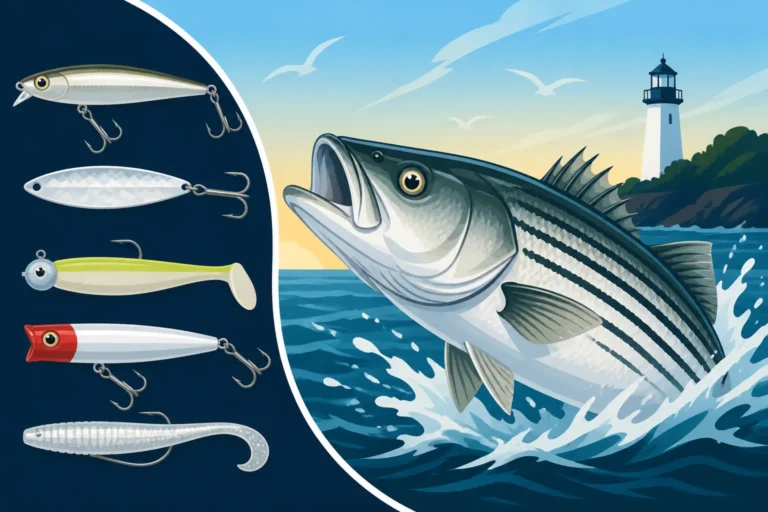
For dusk fishing, topwater lures are often king, especially during the last half-hour of light and into true twilight. Poppers and walk-the-dog style baits like a Super Spook or a T-Man Lures popper create irresistible commotion on the surface, mimicking fleeing baitfish. The silhouette of a topwater lure against the dim sky is incredibly effective. Once it gets darker, or if stripers aren't hitting the surface, soft plastics rigged on jig heads, swimbaits, or even bucktail jigs can be deadly. Something like a 7-inch "Amazon" sourced soft plastic in white, pearl, or chartreuse can be absolutely crushed. These offer a more subtle presentation that can be very appealing when stripers are focused on subsurface prey.
When it comes to presentation, focus on slower retrieves than you might use during the day. Stripers rely more on vibration and scent in low light, so a slightly slower retrieve allows them more time to zero in on your offering. If using topwater, a steady retrieve with pauses can be very effective, allowing the lure to sit tantalizingly still before it pops or walks again. For soft plastics and bucktails, a slow retrieve with gentle hops or sweeps along the bottom or through the water column often triggers strikes. Remember the Connecticut Circle Hook Requirement for Striped Bass if you're using bait, as it's crucial for the health of the fish.
Live Bait vs. Artificial Lures
Both live bait and artificial lures have their place when fishing for striped bass at dusk. Live bait, such as bunker, eels, or even large shiners, can be incredibly effective because it offers natural scent and movement, which are amplified in low light. If you're fishing from a boat or a fixed structure like a pier, live-lining a fresh bunker can be hard to beat. Just make sure you understand the Connecticut Striped Bass Slot Limit and Season and other specific regulations for bait use and size limits.
However, artificial lures offer the advantage of covering more water and can be cast repeatedly without needing to re-bait. They also allow for quicker changes in depth and presentation. Often, a combination is best: start with topwater or soft plastics at dusk to cover ground and find active fish, and if the bite slows, switch to live bait to entice more cautious feeders. The key is to experiment and see what the fish are keying in on that particular evening. For more options, check out the Best Lures for Striped Bass in Long Island Sound.
Rods, Reels, and Line Choices
For dusk striper fishing, you'll want a reliable rod and reel setup that can handle powerful fish. A medium-heavy to heavy spinning rod, around 7 to 9 feet in length, paired with a 4000 to 6000 series reel, is a versatile choice. This setup gives you the casting distance needed from shore or boat and the backbone to fight a strong striper. For line, braided line in the 30-50 lb test range is a popular choice for its sensitivity and casting distance. Always tie on a fluorocarbon leader, typically 30-50 lb test, as it's nearly invisible in the water and provides abrasion resistance against rocky structure or the bass's rough mouth.
| Gear Category | Recommended for Dusk Striper Fishing | Why It Matters |
|---|---|---|
| Rods | 7-9 ft Medium-Heavy to Heavy Spinning Rod | Casting distance, power for fighting fish, versatility for various lures/bait |
| Reels | 4000-6000 Series Spinning Reel | Adequate line capacity, smooth drag, durable for saltwater |
| Main Line | 30-50 lb Braided Line | Sensitivity for subtle bites, long casting, strength |
| Leader Material | 30-50 lb Fluorocarbon Leader (3-6 ft length) | Low visibility, abrasion resistance, shock absorption |
| Lures (Early Dusk) | Topwater Poppers (e.g., Super Spook, T-Man), Walk-the-Dog baits | Mimics struggling baitfish, creates surface commotion, visible silhouette |
| Lures (Late Dusk) | Soft Plastics (white/pearl/chartreuse), Swimbaits, Bucktail Jigs | Subsurface presentation, natural movement, scent/vibration focus in darkness |
| Bait | Live Bunker, Eels, Mackerel (if available) | Natural scent and movement, highly effective for larger fish |
| Headlamp | Red light option preferred | Essential for rigging, moving, and unhooking fish; preserves night vision |
| Pliers/Cutters | Strong, saltwater-resistant | Safely remove hooks, cut line |
| Landing Net/Gaff | Large, rubberized net (boat), Flying gaff (for large fish to be kept) | Securely land fish, reduce harm (net) |
| Life Jacket | USCG-approved PFD | Absolute must, especially when boating or wading in unfamiliar areas |
Safety and Best Practices for Dusk Fishing
Fishing at dusk, and potentially into the night, adds an extra layer of challenge and excitement, but it also comes with increased safety considerations. Taking the necessary precautions ensures that your pursuit of striped bass remains enjoyable and safe.
Lighting and Visibility
The most immediate concern when fishing at dusk is the rapidly diminishing light. A reliable headlamp is absolutely non-negotiable. Look for one with a red light setting, as red light preserves your natural night vision much better than white light. This is crucial for tying knots, unhooking fish, and navigating your surroundings without blinding yourself or your fishing partners. You can find excellent, waterproof options on "Amazon". Always carry extra batteries, or ideally, a second headlamp as a backup.
If you're fishing from a boat, ensure all your navigation lights are in perfect working order. Connecticut Boating Laws for Anglers clearly outline lighting requirements for different vessel types, and these are strictly enforced. Visibility isn't just about what you can see, but also what others can see of you. If fishing from shore near boat channels or popular casting spots, consider wearing reflective clothing or attaching a small reflective patch to your hat or vest.
Wading and Shoreline Navigation
Many anglers prefer wading for stripers at dusk, particularly on flats or along rocky shorelines. While exhilarating, this poses significant risks in low light. Always, always scout your wading spots in daylight first. Know the bottom composition, any sudden drop-offs, submerged obstacles, and how the current behaves. Wear appropriate wading boots with good grip. A wading staff is highly recommended for maintaining balance and probing the bottom ahead of you.
Never wade alone at dusk or night, and always let someone know where you're going and when you expect to return. The changing tides can also sneak up on you, potentially cutting off your return path. Be aware of your surroundings, listen for breaking waves, and keep an eye on landmarks (if visible) to maintain your bearings. For those who enjoy getting out on the water, remember the Life Jacket Requirements for Connecticut Boaters are there for your safety, and it's always best to wear one, especially in cold water or at night.
General Safety and Awareness
Beyond lighting and navigation, common sense safety applies even more so at dusk. Always tell someone your float plan or where you'll be fishing from shore. Bring a fully charged cell phone in a waterproof case, along with a whistle or air horn for emergencies. Pack a small first-aid kit for minor cuts or hook incidents. Insect repellent can be a lifesaver, as mosquitoes and gnats often become more active at dusk.
Be mindful of other anglers. Sound travels differently over water at night, so keep noise to a minimum, especially if you're fishing close to others. Respect private property boundaries if you're on shore. And finally, when you hook into that big striper in the fading light, remember to stay calm and play the fish deliberately. The chaos of a strong fish in low light can lead to mistakes. Taking your time, using a proper landing net if possible, and being mindful of those sharp hooks will help ensure a safe and successful end to your dusk fishing adventure. For more in-depth guidance on fishing locations, you might find the Long Island Sound Fishing Guide helpful for exploring specific areas for night fishing.
Dusk Fishing Locations and Strategies in Connecticut
Connecticut offers a diverse range of environments perfect for targeting striped bass at dusk, from the expansive reaches of Long Island Sound to the tidal sections of its many rivers. Knowing where to go and what strategies to employ can significantly boost your success.
Long Island Sound Shorelines and Estuaries
The entire Connecticut shoreline of Long Island Sound comes alive at dusk. Rocky points, jetties, and sandy beaches that might have been quiet during the day often become striper hotspots. The fading light encourages baitfish to move shallower, and stripers follow right behind them. Key areas include the mouths of rivers like the Connecticut River or the Housatonic River, where tidal currents create ideal ambush points. These areas are excellent for both casting artificials and soaking live bait. Consider exploring various access points along the shore, as many public beaches and state parks offer fantastic opportunities. Checking out a guide on Striped Bass Fishing in Long Island Sound can give you a better idea of target-rich environments.
When fishing these areas at dusk, focus on structure. Cast parallel to jetties, work soft plastics slowly along rocky bottom, or fan cast a topwater plug across a shallow flat. Pay attention to changes in depth and current. Sometimes, the fish will be right in the wash, crashing bait in mere inches of water; other times, they'll be just beyond the breakers. Vary your retrieve and lure choice until you find what they're hitting. Kayak anglers also find immense success paddling out to nearshore reefs or structure during the dusk bite. For them, a guide to Best Kayak Fishing Spots in Connecticut would be invaluable.
Tidal River Sections
Connecticut's tidal rivers, such as the lower stretches of the Connecticut River, Thames River, and Housatonic River, are fantastic nurseries and highways for striped bass, especially as they move into and out of Long Island Sound. Dusk fishing in these rivers can be particularly productive due to the funneling effect of the current and the abundance of forage. Stripers often hold in eddies, behind bridge pilings, or along sharp drop-offs, waiting to ambush bait swept downstream.
Here, strategies might include casting swimbaits or larger soft plastics to submerged structure, or drifting live eels or chunks of bait through current seams. Pay close attention to the tide—an outgoing tide can be especially effective as it flushes bait out of the river system. If you're fishing from a boat, safely navigating these rivers in low light is critical, requiring a good understanding of the channels and any hazards. Many anglers also find that the darker waters of the rivers provide an extra layer of cover for stripers, leading to more aggressive feeding. More specific tactics can be found in a detailed article on How to Catch Striped Bass in Long Island Sound, which often covers river mouths as well.
Understanding Striper Habits at Dusk
To truly excel at dusk fishing, understanding general striped bass habits is key. They are highly migratory, but they also develop local patterns. During dusk, they are often actively foraging, meaning they will move to find bait. If a spot isn't producing, don't be afraid to move a short distance. Sometimes, a subtle change in structure, current, or depth can make all the difference. Listen for tell-tale signs: the splash of a bass on the surface, the nervous flutter of baitfish, or even the distinct thump you feel when a striper inhales your lure.
Many trophy striped bass are caught during these low-light conditions because the bigger, more cautious fish feel confident enough to move into shallower water to feed. While you're out there, remember that patience and persistence are just as important as the right gear and location. Embrace the quiet beauty of dusk on the water, and you'll often be rewarded with one of Connecticut's most exciting fish. If you're serious about the bigger fish, definitely consult resources like Night Fishing for Striped Bass in Connecticut for tactics that extend beyond sunset.
Disclaimer
This article is for general informational purposes only and does not constitute professional advice. Laws, prices and regulations vary by location and change over time. Consult a qualified professional for guidance on your specific situation.