Best leader for blackfish around structure
It's incredibly frustrating, isn't it? You feel that tell-tale tap, set the hook, and suddenly, you're connected to a solid blackfish, only for your line to go slack a few seconds later, rubbed clean through on a sharp rock or mussel-covered pilings. Losing a tautog, especially a big one, because of a weak link in your setup is a heartbreaker. This guide will walk you through everything you need to know about choosing and rigging the best leader for blackfish, specifically when you're targeting them around their favorite gnarly, structure-rich haunts.
Understanding Blackfish and Their Preferred Lairs
Before we even dive into leader materials, it’s crucial to understand the blackfish, or tautog, themselves. These aren't your average open-water swimmers. Blackfish are structure-loving machines, perfectly adapted to living in and around some of the roughest underwater terrain imaginable. They thrive in rocky reefs, mussel beds, jetties, bridge pilings, wrecks, and even old sunken tires – basically anywhere there's hard bottom and plenty of places to hide and ambush crabs and other crustaceans.
The Blackfish's Brutal Battle Tactics
When you hook a blackfish, their first instinct is to dive straight back into the structure. They're trying to cut you off, plain and simple. Imagine a bulldog trying to get back into its kennel. This means your line is going to be dragged over jagged rocks, sharp barnacles, abrasive mussel shells, and rusty metal. A typical monofilament or even a lighter fluorocarbon leader just won't stand a chance against this kind of punishment. That quick dive and immediate rub-off are why so many anglers lose their prized tautog. It’s not just about setting the hook; it’s about having a leader that can withstand the subsequent underwater brawl. You can learn more about Blackfish Habits Around Structure to truly appreciate the challenge.
Why Standard Leaders Fall Short in Tautog Terrain
Many anglers, especially those new to tautog fishing, might use leaders that are fine for other species but completely inadequate for blackfish. A lot of general-purpose saltwater leaders, while strong in terms of breaking strain, lack the specific abrasion resistance needed for this type of fishing. They might be designed for open water where fish run rather than dive into cover. Blackfish fishing is a brutal game of inches, and every component of your tackle, especially your leader, needs to be up to the task. If your leader isn't specifically designed for this kind of abuse, you're essentially handing the fish a victory before the fight even begins.
Key Characteristics of the Best Blackfish Leaders
When it comes to tautog, your leader isn't just a connection between your main line and your hook; it's a shield, a shock absorber, and your last line of defense against a fish determined to break you off. It needs to be tough, discreet, and properly sized for the job.
Abrasion Resistance: The Non-Negotiable Trait
This is arguably the single most important characteristic. Your leader will come into contact with sharp, unforgiving surfaces. Therefore, it needs to be made from a material that can withstand incredible rubbing and scraping without fraying or snapping. Think about it: a small nick or burr on a rock can spell disaster for a lesser leader. High-quality fluorocarbon, especially those specifically marketed for "shock leader" or "abrasion resistance," are prime candidates. They have a hard, dense surface that makes them far more resistant to cuts and scrapes than standard monofilament. You want something that can take a beating and keep on fighting.
Breaking Strength: Finding the Right Balance
While abrasion resistance is key, you also need sufficient breaking strength. For most Connecticut blackfish fishing, especially around challenging structure, you'll want to be in the 30 lb to 50 lb test range for your leader. Going too light means instant break-offs. Going too heavy can make tying knots difficult and, more importantly, might spook the fish in clearer water. Blackfish aren't generally leader-shy to the extent some other species are, but finesse can still play a role. A good rule of thumb is to match your leader strength to the potential size of the fish and the severity of the structure. For average tautog in moderate cover, 40 lb test is often a sweet spot. If you're targeting trophy-sized blackfish in exceptionally heavy cover, don't hesitate to bump it up to 50 lb.
Material Choice: Fluorocarbon Reigns Supreme
There's often a debate between monofilament and fluorocarbon for leaders, but for blackfish around structure, fluorocarbon is the hands-down winner.
- Fluorocarbon: Its density makes it sink faster, which is great for getting your bait down to the bottom quickly where blackfish feed. More importantly, its refractive index is very close to that of water, making it nearly invisible underwater. This stealth factor, combined with its superior abrasion resistance, makes it the ideal choice. Brands like Seaguar and Berkley offer excellent fluorocarbon leader material. You can often find great deals on these spools on Amazon, making it easy to stock up.
- Monofilament: While generally cheaper and easier to knot, monofilament stretches more and has much lower abrasion resistance. It also floats more, which can be a disadvantage when trying to keep your bait on the bottom. For blackfish, monofilament should generally be avoided for the leader section, unless you are in very open, clean bottom areas, which are rare for tautog.
- Braided Line: Never use braided line as a leader for blackfish. While incredibly strong and sensitive, it has virtually no abrasion resistance and will snap like thread on rocks. Braided line is excellent for your main line, but it needs a robust fluorocarbon leader to protect it.
Leader Length: Not Too Short, Not Too Long
The ideal leader length for blackfish is typically between 18 inches and 36 inches.
- Shorter Leaders (18-24 inches): These are great for feeling subtle bites, especially when the fish are finicky. They also reduce tangles, which can be a common problem when fishing around heavy structure. A shorter leader can also help in getting your bait to the bottom quickly in strong currents.
- Longer Leaders (24-36 inches): A slightly longer leader offers more protection from abrasive structure higher up in the water column if a fish tries to run or if your main line accidentally scrapes against something. It also provides a bit more stretch to absorb sudden shocks during a powerful run. However, too long can make casting awkward and decrease sensitivity.
- Finding Your Sweet Spot: Experimentation is key. Start with around 24 inches and adjust based on the specific conditions, depth, and how aggressively the fish are biting. Remember, the goal is enough protection without sacrificing feel or creating tangles.
Rigging Your Blackfish Leader for Success
Having the right leader material is only half the battle. How you rig it, from the knots you tie to the terminal tackle you choose, profoundly impacts your success.
Tying Reliable Knots
Knots are the weakest point in any fishing line, so they need to be strong and tied correctly.
- Leader to Main Line (Braid to Fluorocarbon): For connecting your braided main line to your fluorocarbon leader, the FG knot or the Albright knot are fantastic choices. The FG knot is incredibly strong and passes through guides smoothly, though it can be a bit tricky to learn. The Albright is easier and still very reliable. Practice these knots at home until you can tie them quickly and correctly, even in less-than-ideal conditions. A knot that's not tied well can lose 50% or more of its breaking strength, rendering even the best leader useless.
- Leader to Swivel/Hook: For tying directly to your swivel or hook, a Palomar knot or an improved Clinch knot are excellent. The Palomar is simple, strong, and highly recommended for fluorocarbon. Ensure you moisten all knots before tightening to prevent friction heat from weakening the line.
- Testing Your Knots: Always, always test your knots with a good tug before sending your bait down. It's better to discover a weak knot on the boat than when a trophy blackfish is on the line.
Essential Terminal Tackle for Tautog Leaders
Your leader setup isn't complete without the right hooks and sinkers.
- Hooks: Blackfish have small, tough mouths, so sharp, strong, wide-gap hooks are essential. Octopus hooks or circle hooks in sizes 1/0 to 4/0 are popular choices. Circle hooks are particularly effective as they are designed to hook fish in the corner of the mouth, reducing gut-hooking and often making it easier to pull the fish away from structure. The hook size should be appropriate for your bait; usually, a green crab or hermit crab. Connecticut Circle Hook Requirement for Striped Bass is a good reminder of how specific regulations can be, so always check the latest rules for tautog as well.
- Sinkers: You'll need enough weight to hold your bait firmly on the bottom, often more than you'd expect due to current. Bank sinkers or flat 'coin' sinkers are common. The sinker is typically attached to a dropper loop or a three-way swivel, keeping it below your hook. Make sure your sinker is securely crimped or tied to prevent it from sliding up your leader during the fight. For rocky bottoms, some anglers prefer a sacrificial lighter leader for the sinker, so if it snags, you only lose the weight and not the entire rig.
- Swivels: A small, strong barrel swivel or SPRO power swivel can be used to connect your main line to your leader, or as part of a dropper rig. Swivels help prevent line twist, especially important when fishing with natural baits that might spin in the current. Ensure the swivel is rated for a higher breaking strength than your main line and leader. You can find quality swivels on Amazon, often in bulk packs.
Common Rigs for Blackfish with a Fluorocarbon Leader
Two main rigs dominate blackfish fishing, both relying on a robust fluorocarbon leader.
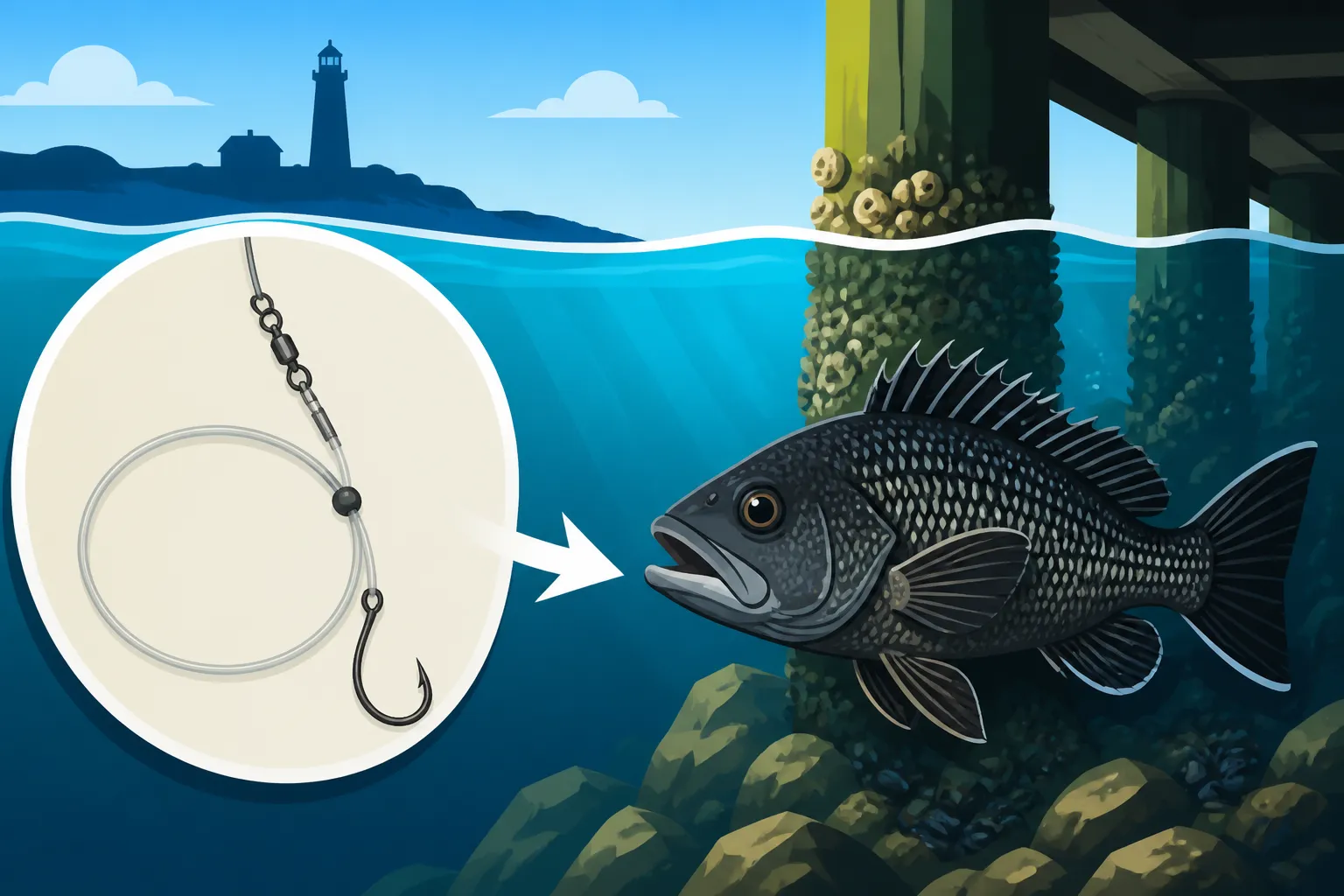
- Sinker on the Bottom (Carolina-style/Dropper Loop): This is perhaps the most popular rig. Your fluorocarbon leader runs from your main line down to your hook. A dropper loop is tied into the leader, or a three-way swivel is used, above the hook, where your sinker is attached. This keeps your bait slightly off the bottom, presenting it naturally, while the sinker holds everything in place. The tough leader protects the entire business end of the rig as it bounces and scrapes along the rocks.
- Traditional Tautog Rig (Hi-Lo Rig): This rig uses two hooks, one higher and one lower on the leader, with the sinker at the very bottom. It allows you to present two baits at different heights or use two different baits to see what the blackfish prefer. When using this rig, it's even more critical to have a high-abrasion resistance leader, as there are more points of contact with the structure. The fluorocarbon leader should be sufficiently long to accommodate both hooks and still have enough length for protection.
Leader Maintenance and Best Practices
Even the best leader won't perform if it's not maintained. A little proactive care can save you a lot of heartache (and lost fish).
Inspect, Inspect, Inspect
After every fish, and especially after getting snagged or rubbing against structure, always inspect your leader. Run your fingers slowly along the length of it. Feel for any nicks, nicks, rough spots, or signs of fraying. Even a small imperfection can compromise the integrity of the line. If you find any damage, no matter how minor, cut off the compromised section and re-tie your rig. It's a pain, yes, but it’s far less painful than losing a 10-pound blackfish. Remember, a blackfish has a powerful bite, and even though they primarily crush crabs, that action can weaken your leader too.
Changing Leaders Regularly
Even without visible damage, fluorocarbon can lose some of its strength and abrasion resistance over time due to UV exposure, stress from fighting fish, and general wear and tear. It's a good practice to replace your leader material every few trips, or even more frequently if you're fishing particularly gnarly spots. Think of it as cheap insurance. Keeping fresh, high-quality leader material on hand is always a smart move. You can buy spools of your preferred leader on Amazon, ensuring you're always ready.
Spool Storage and Care
Store your leader spools out of direct sunlight and away from extreme temperatures. UV light can degrade fishing line over time, making it brittle and weak. A tackle box or a dark drawer is ideal. When taking line off the spool, try to avoid introducing kinks or twists, which can create weak points.
Common Leader Mistakes to Avoid
Even experienced anglers can sometimes make mistakes that undermine their leader's effectiveness. Being aware of these pitfalls can help you avoid unnecessary break-offs.
Underestimating the Structure
One of the biggest mistakes is underestimating how brutal blackfish habitat truly is. You might think a spot "isn't that bad," only to find your leader shredded. Always assume the worst when it comes to tautog structure. This mindset will push you to use heavier, more abrasion-resistant leaders and stronger knots, which is exactly what you need. Don't cheap out on leader material or go lighter to "get more bites" – the bites won't matter if you can't land the fish. For more on the challenges, see Best Techniques for Blackfish Around Structure.
Ignoring Knot Quality
A poor knot is a catastrophic failure waiting to happen. It doesn't matter if your leader is 50 lb test fluorocarbon if your knot only holds at 15 lbs. Skipping practice or rushing a knot on the water are surefire ways to lose fish. Dedicate time to learning and mastering a few reliable knots for both connecting your leader to your main line and tying on your terminal tackle.
Not Inspecting or Replacing Damaged Line
As mentioned, this is critical. It's tempting to think, "Oh, it's just a small scuff, it'll be fine." It won't be. That small scuff is the precise point where a powerful blackfish will find leverage to break free. Be diligent, even when the bite is hot. A few minutes spent re-tying a fresh leader can mean the difference between landing a personal best and telling a sad story of the one that got away.
Using Incompatible Line Types
Mixing and matching lines without understanding their properties can be detrimental. For example, using a very heavy, stiff fluorocarbon leader with an ultralight main line might cause casting issues or an imbalance in your setup. While we advocate for heavy fluorocarbon leaders for blackfish, ensure it's balanced with your rod, reel, and main line. Your main line, typically braid, should be strong enough to withstand the initial shock of the hookset and reel in the fish, while your leader handles the direct contact with structure.
Summary of Leader Choices for Blackfish
To help you quickly reference the best options, here's a table summarizing leader characteristics for blackfish around structure.
| Characteristic | Ideal Choice for Blackfish Around Structure | Why It Matters |
|---|---|---|
| Material | 100% Fluorocarbon | Superior abrasion resistance, near invisibility underwater, fast sinking |
| Breaking Strength | 30 lb – 50 lb (40 lb is a great all-around choice) | Withstands brutal runs into structure; prevents break-offs on sharp objects |
| Abrasion Resistance | Extremely High (look for leader lines specifically marketed for "shock" or "abrasion") | Crucial for resisting cuts and fraying from rocks, barnacles, and mussels |
| Diameter | Thicker than typical leaders for other species (commensurate with breaking strength) | Adds to abrasion resistance and durability; less likely to be cut by structure |
| Leader Length | 18-36 inches (24 inches is a good starting point) | Balances protection from structure with sensitivity and ease of casting |
| Knots | FG or Albright (main line to leader); Palomar or Improved Clinch (leader to hook/swivel) | Maximizes knot strength and prevents premature failure |
Armed with the right leader, you'll be much better prepared to tackle the challenging but incredibly rewarding world of blackfish fishing in Connecticut. These fish are tough, but with the right setup, you can turn those frustrating break-offs into successful catches. Don't forget to check Connecticut Fishing Regulations Explained before you head out, and definitely look up Connecticut Blackfish (Tautog) Season Dates so you're hitting the water at the right time.
Disclaimer
This article is for general informational purposes only and does not constitute professional advice. Laws, prices and regulations vary by location and change over time. Consult a qualified professional for guidance on your specific situation.