Best technique for docks and laydowns
Ah, the humble dock and the tangled laydown—two of the most frustrating, yet undeniably productive, structures an angler can encounter in Connecticut's lakes and rivers. So many times, we see these fish magnets, cast once or twice, get snagged, and then just give up, leaving hungry bass and pickerel laughing at our retreating backs. This guide is all about turning that frustration into triumph, offering you the detailed techniques and insights you need to confidently dissect these hotspots and put more fish in your net.
Understanding Why Docks and Laydowns Hold Fish
Before we even talk about casting, it's crucial to understand why fish, particularly species like largemouth and smallmouth bass, but also chain pickerel and even panfish, are so drawn to docks and laydowns. It's not just a random hangout; these structures offer a perfect combination of necessities for fish survival. When you grasp this, you can start to predict where fish will be and how they'll react.
Shelter and Shade
Think of a scorching summer day on a Connecticut lake. The sun beats down, heating the shallow water, and leaving fish exposed to aerial predators like ospreys and bald eagles. Docks, with their solid pilings and overhead platforms, create deep shadows and cooler water underneath. This provides an immediate refuge from the sun's glare and helps regulate their body temperature, especially for cold-blooded creatures that can't just move to an air-conditioned room.
Laydowns, which are essentially fallen trees or branches extending into the water, offer similar benefits but often in an even more intricate way. The dense network of branches creates a labyrinth of dark nooks and crannies. This isn't just about avoiding the sun; it's also about feeling safe from larger predatory fish. A small perch or bluegill can tuck deep into a laydown, knowing a lurking pike will have a harder time reaching them. These are prime spots for fish to simply rest and conserve energy.
Ambush Points
Beyond simply hiding, fish are always looking for an advantage when it comes to feeding. Docks and laydowns are absolutely phenomenal ambush points. Imagine a bass tucked under the dark shadows of a dock, almost invisible from above or the side. When a baitfish, crawfish, or even an unsuspecting frog swims by the edge of that shadow, the bass can explode from cover, snatch its meal, and retreat back into the safety of its hideout in a flash.
The same principle applies to laydowns. The complex structure of branches creates natural corridors and pinch points. Baitfish often swim along these branches, browsing for insects or algae, unaware that a predator might be lurking just a few inches away, perfectly camouflaged by the dappled light filtering through the submerged wood. Learning to identify these potential ambush lanes is key to presenting your lure effectively.
Forage and Food Sources
It's not just that fish hide in these places; these structures are also buzzing with life, providing a consistent food source. Algae grows on dock pilings and submerged wood, which attracts insects and small baitfish that feed on the algae. Crawfish often scuttle around the bottom near these structures, providing a high-protein meal for bass. Spiders and insects often fall from the overhanging dock planks or branches, creating easy surface meals.
When a fallen tree becomes a laydown, it begins to decompose slowly, releasing nutrients into the water. This can attract all sorts of aquatic invertebrates, which in turn draw in smaller fish, completing the food chain. Understanding this means you're not just casting to a piece of wood or a man-made platform; you're casting to an entire micro-ecosystem that actively supports the fish you're trying to catch.
Essential Gear for Dock and Laydown Fishing
Fishing docks and laydowns isn't like open-water casting. These environments are notorious for snags, tight casting windows, and powerful fish trying to bury themselves deeper into cover. Having the right tools for the job isn't just helpful; it's often the difference between landing that trophy and losing your lure (and your temper!).
Rods, Reels, and Line Choices
When you're targeting fish in dense cover, you need tackle that can handle the abuse. For rods, a medium-heavy to heavy power rod, typically 6'8" to 7'6" in length, is your best friend. This extra backbone gives you the leverage to pull fish out of thick brush or from under dock pilings before they can wrap you up and break your line. A fast action tip is also desirable, allowing for precise casts and quick hooksets.
Matching that rod with a sturdy baitcasting reel is often preferred for these techniques. A reel with a high gear ratio (7.1:1 or higher) helps you take up line quickly after a cast, minimizing slack and allowing for fast hooksets, which is crucial when a fish hits deep in cover. You also need a reel with a robust drag system to help you winch fish out.
Now, for line, this is where many anglers make mistakes. Forget the light monofilament here. You need abrasion resistance and strength. Braided line is often the top choice for its incredible strength-to-diameter ratio and lack of stretch, which provides excellent sensitivity. A 30-50 lb braid is common. If you're concerned about fish seeing the bright braid, you can tie on a short fluorocarbon leader (12-20 lb test) using a strong knot like an FG knot. Fluorocarbon is nearly invisible underwater and has good abrasion resistance itself, though not as much as heavy braid. You can find a wide range of strong braided lines and fluorocarbon leaders on Amazon, perfect for handling the tough conditions around docks and laydowns.
Lures and Baits That Excel
The best lures for docks and laydowns are generally compact, weedless, and designed to penetrate cover. Here are some of the go-to options:
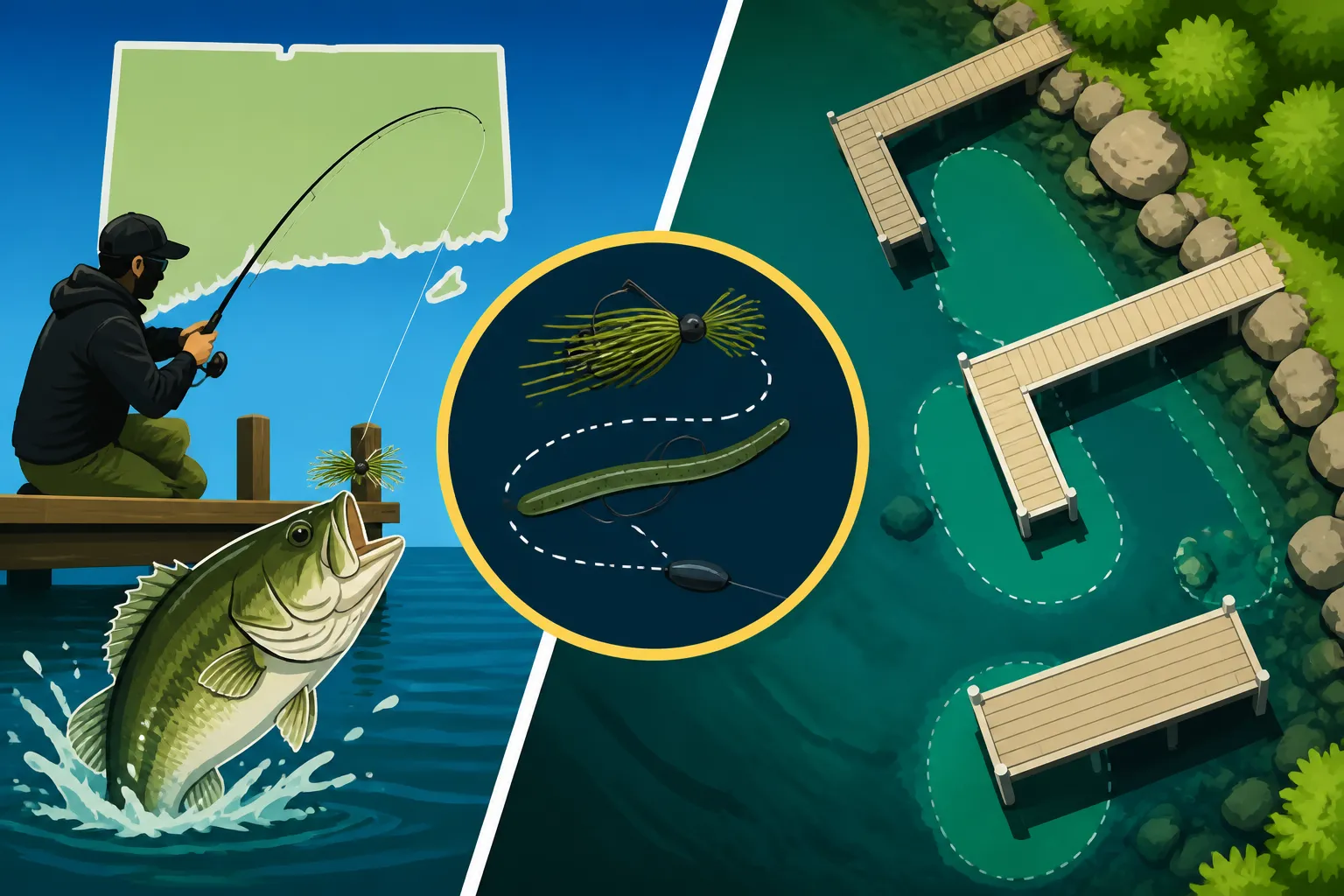
- Jigs (Flipping/Pitching Jigs): These are absolute workhorses. Paired with a soft plastic trailer (like a craw or creature bait), jigs mimic crawfish or small baitfish. Their compact design and weed guard allow them to slip through dense cover. The weight of the jig allows for precise drops into tight spots.
- Soft Plastics (Texas-Rigged Worms/Creature Baits): A Texas-rigged worm or creature bait is another classic. By burying the hook point into the plastic, it becomes almost entirely weedless. This allows you to drag it over submerged branches or let it fall through dock pilings without snagging. The subtle action of these baits can be irresistible to wary fish.
- Spinnerbaits and Chatterbaits (for edges): While not as weedless as jigs or Texas rigs, compact spinnerbaits and chatterbaits can be incredibly effective when retrieved along the edges of laydowns or parallel to dock lines. Their flash and vibration can draw fish out of deeper cover, especially on cloudy days or in stained water. Just be ready for potential snags if you get too deep into the structure.
- Topwater Frogs/Poppers (for overhead cover): When there's heavy overhead cover, like lily pads extending to a dock or thick branches creating a canopy, a weedless hollow-body frog or a small popper can be dynamite. These baits sit on the surface, mimicking a frog or an injured baitfish, and can provoke explosive strikes from fish lurking beneath.
When stocking your tackle box, ensure you have a variety of colors and sizes. Natural colors like green pumpkin, black, and brown are always good starting points, but don't shy away from brighter colors in stained water.
Tools for Navigation and Retrieval
Beyond your basic rod, reel, and lures, a few extra tools can make your dock and laydown fishing much more productive and less frustrating.
First, polarized sunglasses are non-negotiable. They cut the glare off the water, allowing you to actually see submerged logs, dock pilings, and even cruising fish that would otherwise be invisible. This visual advantage is immense for making accurate casts and identifying prime targets.
If you're fishing from a boat or kayak, a good depth finder/fish finder can help you understand the underwater topography around docks and laydowns. It reveals hidden stumps, drop-offs, and even baitfish schools that might be holding near the structure. Understanding the bottom contour helps you position your boat and present your lures more effectively.
Finally, a lure retriever is an absolute lifesaver. You will get snagged when fishing these areas, it's just part of the game. A good lure retriever, which typically involves a heavy weight on a cord that slides down your line to free the snagged lure, can save you dozens of dollars in lost tackle over a season. Many experienced anglers keep one handy, and you can find various models on Amazon. It's a small investment that pays for itself many times over.
Master Techniques for Fishing Docks and Laydowns
Now that you know why fish love these spots and what gear to use, let's dive into the actual techniques that will help you put your lure exactly where it needs to be and entice a bite. These aren't just random casts; they are precision maneuvers.
Flipping and Pitching for Precision
Flipping and pitching are cornerstone techniques for dock and laydown fishing, allowing for quiet, accurate presentations in tight quarters. The key is to keep your lure moving in a pendulum-like motion, landing softly without a big splash that might spook wary fish.
-
Pitching: This technique is used for slightly longer distances, typically 10-30 feet. You'll drop your lure towards the water, swing it forward like a pendulum, and with a gentle flick of the wrist and a slight push from your thumb on the spool, send it flying in a low arc. The goal is for the lure to land softly just beyond your target, allowing it to fall naturally. You'll often pitch jigs or Texas-rigged soft plastics into openings in laydowns or under the far side of a dock. Once the lure lands, keep a close eye on your line for any twitch or jump—that's a fish inhaling your bait. If you're targeting smallmouth bass that might be tucked into rocky structure near a dock, a well-pitched jig can be incredibly effective. To learn more about targeting specific species, check out How to Catch Smallmouth Bass in Connecticut Rivers.
-
Flipping: This is for extremely close-quarters combat, typically within 10 feet of your boat. You strip a good amount of line off your reel (enough to reach your target), hold the lure in your off-hand, and simply swing it underhand, releasing the lure and feeding line with your rod hand to guide it to the target. It's an incredibly stealthy and precise method for dropping a bait into a tiny hole in a brush pile or right next to a dock piling without making a sound. The rod tip does most of the work here, subtly placing the lure. This technique is often used for heavy cover where largemouth bass are known to hide. You'll find many anglers effectively using these techniques on lakes like Candlewood. For more tips on that specific fishery, see Best Bass Fishing Techniques for Candlewood Lake.
Skipping Docks and Overhanging Branches
Skipping is a more advanced casting technique that truly separates successful dock anglers from the rest. It involves making a low, sidearm cast that causes your lure to "skip" across the water's surface, like skipping a stone, allowing it to reach far under docks, overhanging trees, or into shallow, brushy areas that are otherwise impossible to access with a traditional cast.
To skip, you need a fairly limber rod tip and a lure that's relatively flat on the bottom, like a jig or a weighted soft plastic. The key is a low trajectory and a controlled release, hitting the water at a shallow angle. It takes practice, but once mastered, you can place your bait a surprising distance under cover, reaching fish that rarely see a lure. Imagine skipping a weedless frog deep into the shadows under a long dock on a sunny day – that's often where the biggest bass are hiding. Learning this technique will drastically increase your ability to work these areas.
Fan Casting and Probing the Edges
While precision is key for targeting specific spots, don't neglect the "fringe" areas around docks and laydowns. Fan casting involves making a series of casts that cover a wide, fan-shaped area around the structure. This is particularly effective when you're unsure exactly where the fish are holding or when fish are more active and cruising the perimeter.
Start by casting to the outermost edges of the laydown or dock, then gradually work your way closer, covering every possible angle. Lures like spinnerbaits, chatterbaits, or even shallow-diving crankbaits can be excellent for fan casting the edges, drawing reaction strikes from fish that might be patrolling just outside the densest cover. This can also be a great way to "wake up" a spot before moving in with more precise, slower techniques. Sometimes, a faster retrieve along the edge is all it takes to trigger a strike. If you're not getting bites inside the cover, always expand your search to the immediate surrounding areas.
Working Different Depths and Angles
Fish don't always hang at the same depth. Sometimes they are tight to the bottom, sometimes suspended, and sometimes right under the surface. It's crucial to experiment with different depths around a dock or laydown. Start by letting your lure sink all the way to the bottom, then work it back with various retrieves. Then, try stopping its fall at different depths to see if fish are suspended. Many anglers find success by letting a jig pendulum down alongside a dock piling, slowly fluttering its way to the bottom.
Also, consider your angle of approach. Don't just cast from one position. If you're in a boat or kayak, circle the dock or laydown, making casts from all four sides. A fish that wouldn't touch your lure coming from the east might strike aggressively if it approaches from the north, especially if you're targeting them from their blind side or presenting the lure along a natural escape route. This requires patience and repositioning, but it can make all the difference. Understanding how to pattern bass on an unfamiliar Connecticut lake often starts with systematically dissecting key structures from multiple angles.
Seasonal Considerations and Common Mistakes
Fishing docks and laydowns isn't a one-size-fits-all endeavor. Fish behavior changes dramatically with the seasons and water conditions, and there are some common pitfalls even experienced anglers fall into. Being mindful of these can greatly improve your success.
Adjusting for Water Temperature and Time of Year
The time of year and the prevailing water temperatures in Connecticut will heavily influence how fish relate to docks and laydowns.
-
Spring: As water temperatures rise into the 50s and 60s, fish (especially largemouth and smallmouth bass) will often move shallow and relate heavily to docks and laydowns for spawning and feeding. The warmer, shallower water under docks or in sunny laydown pockets provides ideal conditions. This is when a slow-falling Texas-rigged worm or a jig hopped along the bottom can be incredibly effective. Post-spawn, fish will aggressively guard fry under these structures.
-
Summer: During the heat of summer, docks and laydowns offer crucial shade and cooler water. Fish will often tuck deep into the densest cover, seeking refuge from the intense sun. Early morning and late evening can see them move to the edges, but midday usually means they are buried. This is a prime time for skipping jigs and soft plastics as far back under the cover as possible.
-
Fall: As water temperatures begin to drop and baitfish schools migrate, fish can be found both shallow and deep around these structures. Laydowns, particularly those on points or channel bends, can be excellent staging areas. Fish might be more active and willing to chase lures. Spinnerbaits and chatterbaits along the edges can shine, while jigs still get strikes from fish holding tight to cover.
-
Winter (Ice-Out/Pre-Ice): In the coldest months, open water fishing around docks and laydowns might be limited, but during the transition periods (just before ice-up or after ice-out), these structures can still hold cold-blooded fish seeking any available warmth or deep cover. Slow, vertical presentations like a jig or drop shot can be effective. If you're interested in cold-water tactics, exploring Best Techniques for Early Spring Trout or even Best Techniques for Winter Pickerel can offer some transferable insights, as these species often relate to similar cover in cold water.
Avoiding Common Pitfalls
Even with the right gear and techniques, it's easy to make mistakes that cost you fish.
-
Getting Snagged Too Much: This is the most common frustration. Using truly weedless setups (Texas rigs, jigs with good weed guards) is paramount. Also, learn to feel the structure. If you feel your lure bumping into wood, pause your retrieve or gently pull it over the obstruction rather than trying to power through it. This delicate touch comes with practice.
-
Spooking Fish: Docks and laydowns are often in shallow, clear water. Making loud noises, casting a shadow over the water, or repeatedly splashing your lure can send fish scattering. Approach stealthily, make soft presentations, and try to keep a low profile. Long casts and quiet boat positioning are your allies.
-
Rushing the Retrieve: Fish in cover are often ambush predators, waiting for prey to come to them. Don't retrieve your lure too quickly. Let jigs and soft plastics slowly fall, pause them, shake them, and give the fish time to react and grab the bait. A slow, methodical presentation often outproduces a speedy one around these structures.
-
Not Changing Angles: As mentioned earlier, hitting a spot from only one angle limits your chances. If a fish doesn't bite after a few casts from one direction, move your boat or position yourself differently and try again. Fish often have a preferred strike zone based on their position in the cover.
Respecting Property and Environment
Finally, a crucial aspect of fishing docks and laydowns, especially those around private property, is respect. Always assume a dock is private property unless it's clearly part of a public park or access area. Maintain a respectful distance and avoid casting directly onto lawns or swimming areas. Do not tie your boat to private docks without explicit permission.
Laydowns, while natural, are also part of the environment. Avoid leaving trash, tangled lines, or discarded plastics in these areas. Pick up any litter you see. Fishing these unique structures is a privilege, and we all have a responsibility to keep Connecticut's waterways clean and accessible for future generations. If you're passionate about preserving fishing spots, understanding regulations like Connecticut Fishing Regulations Explained can offer a broader context for responsible angling.
This table provides a quick reference for common lure choices when approaching docks and laydowns:
| Lure Type | Best Application | Key Feature | Retrieve/Action | Species Targeted Primarily |
|---|---|---|---|---|
| Flipping/Pitching Jig | Dense cover, dock pilings, submerged timber | Weed guard, compact | Slow hop, drag, subtle shake on bottom | Largemouth, Smallmouth, Pickerel |
| Texas-Rigged Soft Plastic | Slipping through branches, tight openings | Weedless, subtle | Slow fall, twitch, drag along cover | Largemouth, Smallmouth |
| Hollow Body Frog | Overhead cover, lily pads, matted vegetation | Weedless, floats | Walk-the-dog, pop, pause | Largemouth, Pike, Pickerel |
| Spinnerbait (compact) | Edges of cover, stained water, active fish | Flash, vibration | Steady retrieve, slow roll, stop-and-go | Largemouth, Pickerel |
| Chatterbait (compact) | Edges of cover, reaction strikes, stained water | Vibration, erratic action | Steady retrieve, rip-and-fall | Largemouth, Pickerel |
| Drop Shot Rig | Vertical presentations, deep dock pilings, wary fish | Finesse, vertical | Shake in place, subtle lifts, vertical jigging | Smallmouth, Largemouth |
Remember, successful fishing around docks and laydowns comes down to patience, precision, and understanding fish behavior. With the right techniques and gear, you'll soon be confidently pulling fish from these challenging but rewarding spots.
Disclaimer
This article is for general informational purposes only and does not constitute professional advice. Laws, prices and regulations vary by location and change over time. Consult a qualified professional for guidance on your specific situation.