Connecticut out-of-state college student fishing license rules
Navigating fishing license rules can feel like a pop quiz you didn't study for, especially when you're an out-of-state college student trying to figure out if you're a "resident" for fishing purposes. The good news is, Connecticut offers a fantastic and often overlooked provision that can save you a good chunk of change and get you on the water faster. This guide will clarify exactly what out-of-state college students need to know to get their fishing license in Connecticut, ensuring you're legal and ready to cast a line.
The Special Connecticut Residency Rule for Students
Many states make it tough for out-of-state students, often requiring them to buy a full non-resident license at a significantly higher cost. Connecticut, however, recognizes that you're investing your time and money in our state's institutions, and they extend a gracious hand to student anglers. This provision is a huge benefit, and understanding it is the first step to enjoying Connecticut's diverse fisheries.
How Out-of-State Students Qualify for Resident Rates
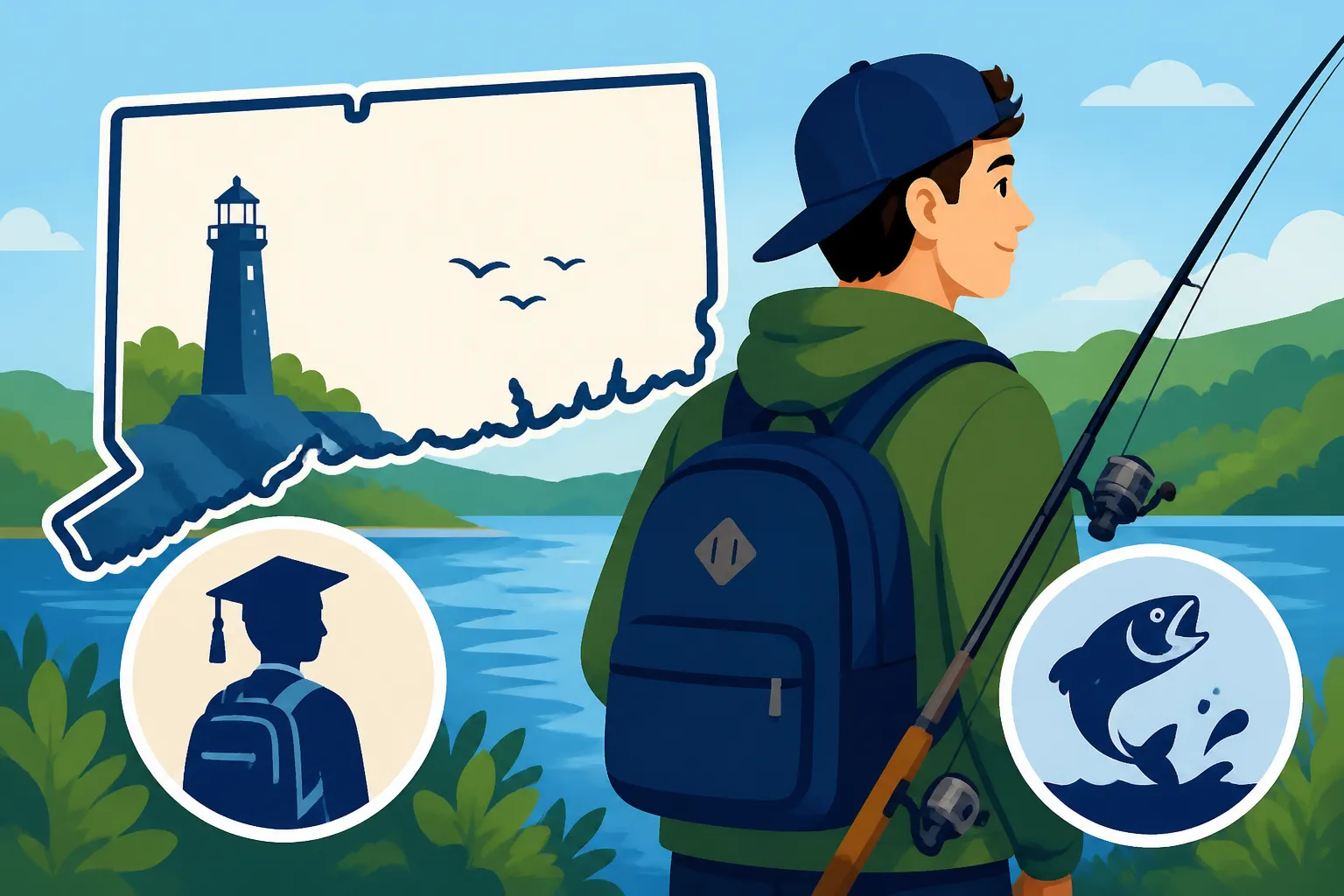
Here’s the golden nugget of information you've been looking for: the Connecticut Department of Energy and Environmental Protection (CT DEEP) allows non-resident students enrolled in a Connecticut institution of higher education to purchase an annual resident fishing license. This isn't just a small discount; it's a fundamental change that puts you in the same pricing category as a permanent resident. To qualify, you must be enrolled for at least one semester, demonstrating a clear commitment to your studies here. This policy reflects a desire to make fishing accessible to everyone contributing to the state's community, even if your permanent address is elsewhere. It’s a thoughtful approach that many other states don't offer, making Connecticut an even more appealing place for student anglers.
Documentation You'll Need to Prove Student Status
To take advantage of this fantastic resident rate, you'll need to present a couple of key pieces of identification and proof of enrollment. When you go to purchase your license, whether online or in person, you must have a valid student ID card from your Connecticut college or university. This card identifies you as an enrolled student. Additionally, you’ll need proof of your current enrollment. This could be something like a current semester class schedule, a tuition bill, or an official transcript. The crucial part here is that these documents must be current and clearly show your active enrollment. Don't show up with an ID from two years ago or a class schedule from a past semester; the vendor needs to verify your current student status. Keeping these documents handy, perhaps even a digital copy on your phone, will make the process smooth and quick.
Understanding Different License Types and What You Get
Once you're eligible for resident rates, you'll still need to choose the right type of fishing license to match your angling ambitions. Connecticut offers several options: the Inland Fishing License, the Marine Waters Fishing License, and the All-Waters Fishing License. Each serves a different purpose, and your choice will depend on where you plan to fish.
The Inland Fishing License covers all freshwater bodies within Connecticut's borders, including lakes, ponds, and rivers like the Farmington River or the Housatonic. If your college is nestled inland and you're dreaming of catching trout, bass, or panfish in local freshwater spots, this is your go-to.
The Marine Waters Fishing License is for those who find themselves drawn to the salty air and vast expanse of Long Island Sound. This license covers all marine and tidal waters, perfect for pursuing striped bass, bluefish, fluke, or blackfish. If your campus is closer to the coast, or you plan weekend trips to towns like Old Saybrook or Niantic, this is the one for you.
For the adventurous student who wants the best of both worlds, the All-Waters Fishing License is the ultimate choice. This comprehensive license combines both inland and marine privileges, allowing you to fish in any legal body of water in Connecticut. For many out-of-state students, especially those exploring a new state, this flexibility is invaluable. Imagine being able to hit a local trout stream on Saturday and then head to the Sound for striped bass on Sunday without worrying about different licenses. This option often provides the best value for students who want to experience the full spectrum of Connecticut fishing. You can delve deeper into these options by reading about the Connecticut Inland vs Marine vs All-Waters License, Explained.
Acquiring Your Connecticut Student Fishing License
Now that you know you can snag a resident license, let’s talk about the practical steps to actually get it in your hands. The process is straightforward, whether you prefer the convenience of online purchasing or a visit to a local vendor.
Where and How to Purchase
Connecticut has made it relatively easy to buy a fishing license. Your primary options are through the official CT DEEP online portal or by visiting one of the many authorized license vendors across the state.
Purchasing your license online is often the quickest and most convenient method. The CT DEEP website is user-friendly, and you can complete the transaction from your dorm room or library. You’ll need to create an online profile or log in if you already have one. While the system is designed to identify residency, you'll still need to be prepared to present your student ID and proof of enrollment if prompted, especially if there's any ambiguity in your information. After purchase, you can either print your license at home or carry a digital version on your phone, which is perfectly legal. If you want a detailed walkthrough, check out How to Buy a Fishing License Online in Connecticut.
Alternatively, you can purchase your license in person at an authorized license vendor. These vendors include many town clerk's offices, bait and tackle shops, and some sporting goods stores throughout Connecticut. This is often the best route for out-of-state students initially, as it allows you to physically present your student ID and proof of enrollment directly to a person who can verify your eligibility for resident pricing. Local tackle shops, in particular, are fantastic resources, not just for licenses but also for local fishing tips, bait recommendations, and camaraderie. When visiting a vendor, make sure to bring all your necessary documentation.
Costs and What to Expect for Resident Student Licenses
The beauty of the out-of-state student provision is that you'll pay the same affordable rates as Connecticut residents. This is a significant saving compared to what full non-residents would pay. As of the current regulations, a standard annual resident inland fishing license is quite affordable, usually around $28. For the marine waters, it’s typically about $15. And if you opt for the all-encompassing All-Waters fishing license, which grants you both inland and marine privileges, it's generally around $32. These prices are subject to minor changes, so it's always a good idea to check the current CT DEEP fee schedule.
To give you a clearer picture, here’s a comparison:
| License Type | Connecticut Resident (including eligible students) | Non-Resident (standard) |
|---|---|---|
| Annual Inland Fishing | ~$28.00 | ~$55.00 |
| Annual Marine Waters | ~$15.00 | ~$20.00 |
| Annual All-Waters | ~$32.00 | ~$63.00 |
Prices are approximate and subject to change; always verify current fees with CT DEEP.
As you can see, qualifying as a resident student can save you a significant amount, especially if you're looking for an all-waters license. All annual fishing licenses expire on December 31st of the year they are issued, regardless of when you purchase them. So, if you buy your license in July, it will still expire on December 31st. This means you'll need to renew it each year you continue your studies and wish to fish. For more details on the general costs, you can consult How Much Does a Connecticut Fishing License Cost or a more specific breakdown of Resident vs Nonresident Fishing License Costs in Connecticut. Don't forget to mark your calendar for the Connecticut annual fishing license expiration date to avoid any lapse in your fishing adventures!
Carrying and Displaying Your License
Once you've secured your fishing license, the next crucial step is making sure you have it on you whenever you're out fishing. Connecticut law requires anglers to carry their valid fishing license and display it upon demand to any conservation officer or other authorized law enforcement personnel.
The good news is that Connecticut embraces modern convenience. You don't necessarily need a physical paper copy, though many anglers prefer one for easy access and to avoid draining their phone battery. You are allowed to carry a digital image of your license on your smartphone or other mobile device. This means a clear photo or a downloaded PDF version is perfectly acceptable. Just make sure your phone is charged!
If you prefer a physical license, you can print it at home after an online purchase, or the vendor will provide a printed copy if you buy in person. When carrying a physical license, it's wise to protect it from the elements. Many anglers laminate theirs or keep it in a waterproof wallet or bag, especially if they’re wading streams or fishing from a kayak where it might get wet. Remember, alongside your fishing license, you should also have your student ID ready, as it serves as your proof of eligibility for the resident rate. Understanding the nuances of Digital vs paper fishing license in Connecticut can help you decide which method suits you best.
Avoiding Common Pitfalls and Staying Legal
Getting your license is a great start, but the world of fishing regulations goes a bit deeper. As an out-of-state student, you're responsible for knowing and following all applicable rules, just like any other angler. Ignorance of the law is rarely an excuse.
The Consequences of Fishing Without a Valid License
Fishing without a valid license in Connecticut is not just a minor oversight; it's a punishable offense. The penalties can include significant fines, and in some cases, even confiscation of your fishing gear. For a college student, a fine can be a substantial burden, impacting your budget for books, food, or even tuition. Beyond the financial hit, a violation can also create a legal record, which is something no student wants, especially if you're planning for future careers or advanced studies.
Conservation officers are serious about enforcing these rules to protect Connecticut's natural resources and ensure fair play for all anglers. They are frequently patrolling lakes, rivers, and coastal areas, and they will ask to see your license. Don't risk a run-in with the law; it's simply not worth it when getting a license is so straightforward and affordable for eligible students. You can learn more about the potential repercussions by reviewing the details on Fishing Without a License in Connecticut: Penalties.
Key Regulations to Be Aware Of
A fishing license is your entry ticket, but it's crucial to remember that it doesn't grant you carte blanche. Connecticut has a comprehensive set of fishing regulations that govern everything from catch limits and minimum sizes to specific seasons for certain species and restrictions on tackle or bait in particular waters.
For instance, trout streams often have very specific regulations regarding daily limits, bait use, and even catch-and-release only sections. Saltwater species like striped bass have slot limits and circle hook requirements, which are regularly updated. Even common species like largemouth and smallmouth bass have size and daily limits that you need to be aware of.
These regulations are designed to maintain healthy fish populations and ensure sustainable fishing for everyone. It's your responsibility to familiarize yourself with these rules before heading out. The CT DEEP publishes an annual Angler's Guide, which is an invaluable resource. You can pick up a physical copy at license vendors or access a digital version online. Spend some time studying it, especially the sections pertaining to the waters and species you plan to target. Getting familiar with the Connecticut Fishing Regulations Explained and knowing how to interpret Reading the Connecticut Fishing Guide will prevent unwelcome surprises.
Residency Changes After Graduation
Your ability to purchase a resident fishing license as an out-of-state college student is tied directly to your active enrollment. Once you graduate or cease to be an enrolled student, this special provision no longer applies. At that point, your status for fishing license purposes will revert to that of a non-resident, unless you take the formal steps to establish permanent residency in Connecticut.
Establishing permanent residency typically involves more than just living in the state. It often requires demonstrating intent to reside indefinitely, such as obtaining a Connecticut driver's license, registering to vote, paying state taxes, or owning property here. Simply remaining in Connecticut after graduation, perhaps for a job, does not automatically confer resident status for licensing purposes. So, enjoy the resident benefits while you're hitting the books, but be aware that your fishing license status will change once your student chapter closes. Plan accordingly if you wish to continue fishing in Connecticut after you earn your degree.
Enhancing Your Connecticut Student Fishing Experience
Connecticut is a fantastic state for fishing, offering a surprising diversity of opportunities from serene inland ponds to the vibrant marine waters of Long Island Sound. As an out-of-state student, getting involved in the local fishing scene can be a wonderful way to de-stress, explore your new surroundings, and meet like-minded individuals.
Exploring Connecticut's Diverse Fishing Opportunities
From the rolling hills of Litchfield County to the bustling coastline, Connecticut boasts an incredible array of fishing environments. If you're into freshwater, you'll find numerous lakes and ponds teeming with largemouth bass, smallmouth bass, crappie, and sunfish. Many of these waters are regularly stocked with trout, offering excellent spring and fall action. Rivers like the Housatonic and Farmington are renowned for their trout fisheries, including wild brown trout and trophy-sized stockers, and the Housatonic also offers fantastic smallmouth bass fishing. For those who prefer saltwater, Long Island Sound provides opportunities for striped bass, bluefish, fluke, blackfish, and black sea bass.
Don't be afraid to branch out from your usual species! Connecticut's varied habitats mean there's always something new to learn and catch. Consider exploring local state parks, which often have easily accessible ponds and lakes. A great starting point for finding new spots can be our guide on the Best Fishing Lakes in Connecticut. Many college towns are within a short drive of excellent fishing, providing a perfect escape from campus life.
Essential Gear and Resources
You don't need a huge budget or a boatload of fancy equipment to get started fishing in Connecticut. A basic spinning rod and reel combo, some line, a few hooks, sinkers, and lures or bait will get you a long way. For freshwater, a medium-light to medium action rod is versatile enough for most pond and river species. For saltwater, a medium to medium-heavy setup is generally preferred.
Where to get your gear:
- Local Tackle Shops: These are goldmines of information. Owners and staff often know the local waters intimately and can give you up-to-the-minute reports, recommend specific baits or lures for current conditions, and help you get exactly what you need without overspending. Plus, you’ll be supporting a local business!
- Sporting Goods Stores: Larger stores like Cabela's or Dick's Sporting Goods (which often have locations accessible from college towns) offer a wide selection of gear, though local advice might be less specific.
- Online Retailers: For specific items or deals, websites like Amazon are convenient for ordering gear, especially if you know what you're looking for. You can find everything from fishing line and hooks to tackle boxes and waders on Amazon, often with quick shipping. Just make sure to cross-reference with local knowledge if you're trying a new technique or targeting a new species.
Don't forget to leverage online resources from the CT DEEP, including their interactive trout stocking maps and weekly fishing reports. These can give you a significant advantage in finding where the fish are biting. Many towns also have local fishing clubs or groups on social media where you can ask questions and connect with other anglers.
Disclaimer
Please remember that fishing regulations and license requirements can change. While this guide provides the most current information available, it is always your responsibility to verify all details with the official Connecticut Department of Energy and Environmental Protection (CT DEEP) website or printed Angler's Guide before you head out to fish. This guide is for informational purposes only and does not constitute legal advice.