Digital vs paper fishing license in Connecticut
It's happened to the best of us: you're out on the water, the bite is hot, and suddenly you realize you left your fishing license on the kitchen counter, or worse, it's a soggy mess in your wallet. The anxiety is real! Thankfully, Connecticut has embraced modern solutions, offering both traditional paper and convenient digital options for anglers. This guide will walk you through the ins and outs of both, helping you understand which choice is right for you, and how to stay compliant on your next fishing adventure.
The Evolution of Fishing Licenses: From Paper to Pixels
For decades, the paper fishing license was the only game in town. It was a rite of passage, a tangible piece of proof that you were legally permitted to cast a line. But with the advent of smartphones and digital convenience, the game has changed. Let's explore the journey from the familiar feel of paper to the sleek accessibility of digital.
The Traditional Paper License: Comfort and Familiarity
Ah, the good old paper license. There's a certain nostalgia that comes with it, isn't there? For many, it's still the preferred method, offering a sense of security that a screen sometimes can't.
Historically, getting your paper license involved a trip to a local sporting goods store, bait shop, or even town clerk's office. You'd fill out a form, pay your fee, and walk out with a physical document, often tucked safely into your wallet or tacked to a corkboard by your fishing gear. The familiarity is a big draw – you know exactly what it is, and you know how to present it. There's no worrying about signal strength or battery life when you're deep in the woods or far out on the Sound. It's a simple, straightforward piece of paper that says "I'm licensed." For those who prefer a tangible item, especially older generations or those less comfortable with technology, the paper license offers an undeniable comfort. You can feel it, see it clearly, and don't need any special equipment to access it.
However, this tangible comfort comes with its own set of frustrations. I can't count how many times I've heard stories (or lived them!) of a paper license getting soaked through during an unexpected downpour on the boat, rendering the ink smeared and illegible. Or the classic scenario: you're halfway to your favorite fishing spot, maybe on the Farmington River West Branch Trout Fishing, and suddenly a cold dread washes over you – the license is still sitting on the kitchen counter. Or it slips out of your pocket while wading, lost forever to the currents. Paper is, by its very nature, fragile. It tears, it creases, it fades, and it’s easily misplaced. These vulnerabilities often lead to anglers needing to replace their licenses, which can be a hassle, requiring another trip or online process, and sometimes even an additional fee if you need a duplicate.
The Rise of Digital Licensing: Convenience in Your Pocket
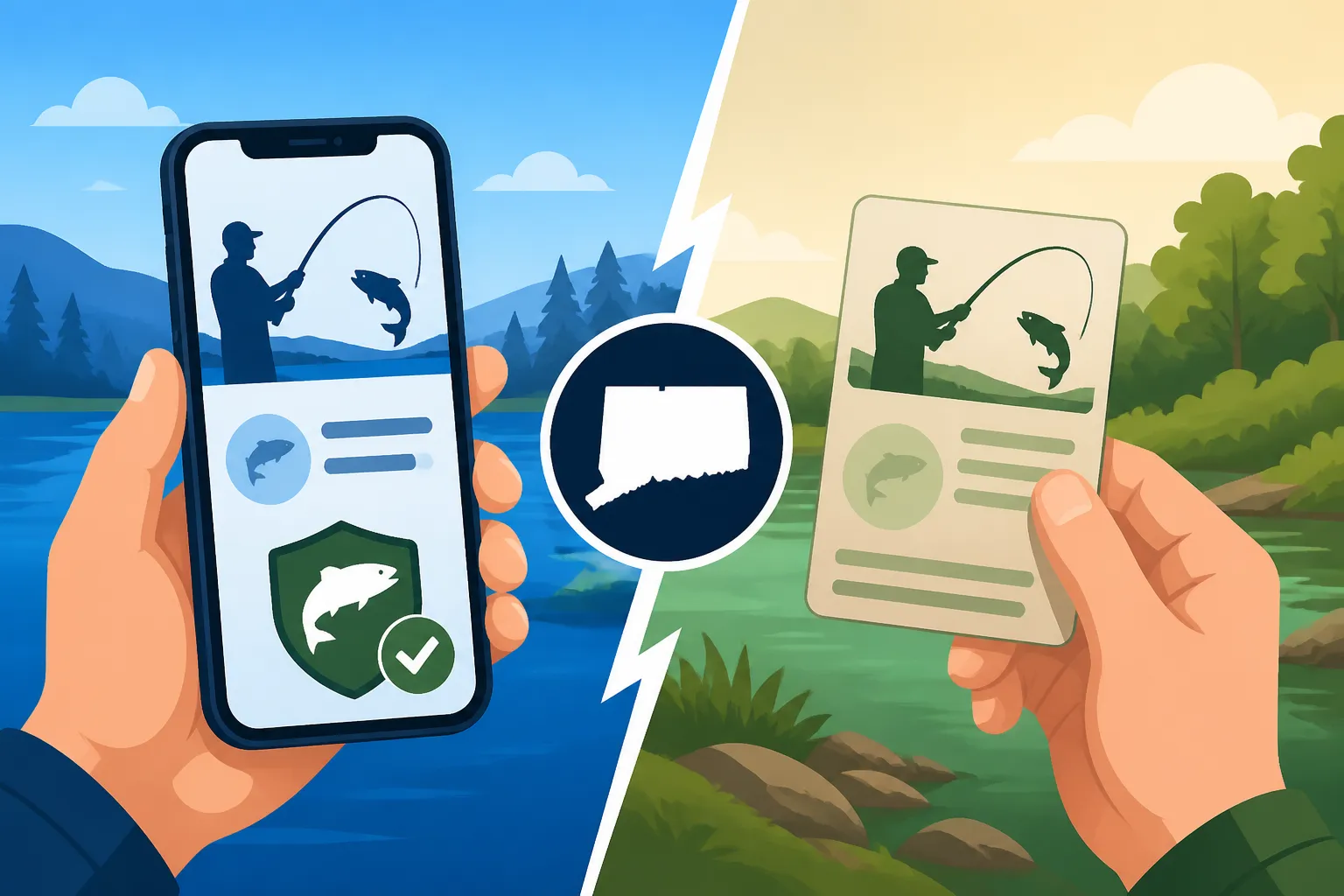
Enter the digital age, bringing with it the promise of unparalleled convenience. With a digital fishing license, your proof of eligibility is right there on your smartphone, accessible with a few taps. For many, this has been a game-changer, eliminating the fear of forgetting a physical piece of paper. You're far less likely to forget your phone than a piece of paper, right? It's always with you, tucked away in your pocket, ready to be displayed to a conservation officer at a moment's notice.
The benefits are clear. A digital license isn't susceptible to water damage in the same way paper is, assuming your phone is reasonably protected. It won't get ripped or folded into oblivion in your wallet. You can access it instantly, often through the same online portal where you purchased it. If you're out fishing in a remote area and a conservation officer approaches, you simply pull out your phone, open the PDF or image, and display your credentials. This seamless access can provide significant peace of mind, especially when you're focused on the fishing itself. The digital format also means you can easily store multiple licenses if you also hold a hunting license or other permits, keeping everything organized in one digital location. It’s definitely a step forward for the tech-savvy angler. You can even access and manage your Connecticut Fishing License Guide for 2026 and related permits all in one digital space.
But like any technology, digital licenses aren't without their quirks and challenges. The biggest one? Battery life. We've all been there: a long day of fishing, maybe snapping photos of your catches, and suddenly your phone battery dips into the red. A dead phone means no license to display, which can quickly turn a peaceful day into a stressful encounter with law enforcement. Another common issue is screen visibility, especially on bright, sunny days when glare makes it nearly impossible to read anything on your phone. And let's not forget the risk of dropping your phone in the water – a far more costly accident than losing a paper license. While waterproof cases, many of which are readily available on platforms like Amazon, can mitigate this risk, they don't eliminate it entirely. Finally, reliance on technology can be a barrier for some, and connectivity issues in remote areas might make it difficult to pull up your license if you haven't saved it directly to your device.
Navigating Connecticut's Digital License Options
So, how exactly does Connecticut handle these digital credentials? It's good to understand the official channels and what's considered acceptable proof when you're out on the water.
How Connecticut DEEP Handles Digital Licenses
The Connecticut Department of Energy and Environmental Protection (CT DEEP) has made it quite straightforward to manage your fishing licenses digitally. The official online licensing system is your go-to hub for purchasing, accessing, and printing all your recreational permits. When you purchase a license online, you're usually given the option to print it immediately, or to save it as a PDF. This PDF is your digital license. You can download it directly to your smartphone, tablet, or even keep it in a cloud storage service like Google Drive or Dropbox.
What's important to understand is that CT DEEP conservation officers are fully equipped and trained to accept digital proof of licensure. This means you don't have to print it out if you don't want to. A clear, legible display of your license on your electronic device is generally sufficient. The key word here is "legible." The officer needs to be able to clearly see all the pertinent information: your name, license type, license number, and expiration date. A dim screen, a cracked display, or a tiny screenshot that's hard to read might cause an unnecessary delay or even a misunderstanding. It's always a good idea to know How to Buy a Fishing License Online in Connecticut and then save it in a format that's easy to access and view.
Practicalities of Carrying Your Digital License
Making the digital license work for you really boils down to preparation. Once you've purchased your license online, the first practical step is to save it directly to your phone. Don't just rely on having email access or an internet connection to pull it up from the DEEP portal every time. Take a screenshot of the full license, or better yet, download the PDF file and store it in an easily accessible folder on your device. Many anglers create a dedicated "Fishing Docs" folder where they keep their license, Connecticut Fishing Regulations Explained, and even copies of their boating certificate.
Consider using a durable, waterproof case for your phone, especially if you're frequently around water. Brands like OtterBox or LifeProof offer robust protection, and there are many more affordable options available on Amazon that can guard against accidental splashes or drops. Another smart move is to email a copy of your license to yourself and perhaps a trusted fishing buddy. That way, if your phone completely fails or gets lost, you have a backup readily available via another device. Some anglers even use dedicated fishing apps that allow them to import and display their license along with other helpful information like tide charts or fishing logs. Just remember to keep your phone charged! A small, portable power bank can be a lifesaver on longer trips, ensuring your digital license (and your ability to capture that trophy fish photo!) remains accessible. Don't let a low battery be the reason you're caught unprepared; always have a contingency plan. For those interested in deeper insights, the article on Printing or Carrying a Digital Fishing License in Connecticut offers more specific tips.
The Enduring Role of the Paper License in a Digital Age
Even with the rise of digital convenience, the paper fishing license still holds its ground. There are specific scenarios where a physical copy isn't just a nice-to-have, but a truly wise choice.
When a Physical Copy Still Makes Sense
Despite the allure of digital, there are undeniable moments when having a physical copy of your license is simply superior. Imagine you're out ice fishing in the middle of winter; the biting cold can drain phone batteries at an alarming rate, making a digital display unreliable. Or perhaps you're fishing a remote stream in the Best Trout Streams in Connecticut where cell service is non-existent, making it impossible to retrieve a license from the cloud. In these situations, a paper license is impervious to technological failures. It doesn't need a signal, and it doesn't run out of battery.
For some anglers, particularly those who have been fishing for many years, there's a strong preference for the traditional method. They might not own a smartphone, or they simply prefer to keep their fishing separate from their digital life. The tactile nature of a paper license provides a sense of security and simplicity that can't be replicated by a screen. Moreover, a physical license is often easier for a conservation officer to quickly verify, especially if conditions like bright sun or dim light make phone screens difficult to read. Laminating your paper license is an excellent way to combine durability with tangibility. A laminated license is waterproof, tear-resistant, and will last the entire season without degrading, giving you the best of both worlds without relying on a battery.
Best Practices for Both Digital and Paper
The smartest approach for any angler in Connecticut is to be prepared for anything. This means considering both digital and paper options, not as competing choices, but as complementary tools. My personal recommendation, and one echoed by many seasoned anglers, is to carry both a digital and a physical copy of your current license. Think of the paper copy as your indestructible backup, and the digital version as your primary, easy-access proof.
If you choose to rely primarily on digital, still take the extra step to print a physical copy and keep it somewhere safe, like your tackle box, glove compartment, or a zippered pocket in your fishing vest. Laminate it if you can. If you prefer paper, make sure you also have a clear photograph or PDF of your license saved on your phone. This way, if your paper license gets truly destroyed or lost during a trip, you still have an immediate backup. Regularly check the expiration date of your license – whether digital or paper – to ensure you're always fishing legally. The Connecticut fishing licenses typically expire on December 31st each year, regardless of when you purchased them. If you ever lose or damage either version, remember that you can usually get a replacement through the CT DEEP online licensing system or from a local license agent. This foresight will save you a lot of grief and ensure your time on the water is spent catching fish, not worrying about paperwork. Remember to check the Connecticut Fishing License Refund and Replacement Policy if you ever find yourself in this situation.
Key Considerations for Anglers
Understanding the types of licenses is one thing, but how does it all translate to actual fishing trips? There are crucial points to remember to ensure you're always on the right side of the law and ready for whatever Mother Nature throws at you.
Ensuring Compliance and Avoiding Penalties
The bottom line is that you must have a valid fishing license in your possession while actively fishing in Connecticut, unless you fall under specific exemptions like youth anglers or those fishing on Free Fishing Days. It doesn't matter if it's digital or paper, as long as it's legible and immediately accessible to a conservation officer upon request. The officer needs to be able to confirm your identity and the validity of your license without undue delay or difficulty. This is why a charged phone with a clear screen is so important for digital licenses, and why a non-smeared, intact paper license is crucial for physical copies.
Being unable to produce a valid license when asked can lead to consequences. While a conservation officer might exercise discretion and allow you to retrieve a forgotten license, especially if you have valid identification, it's not a guarantee. You could be subject to a fine or other penalties for fishing without a license. It's simply not worth the risk. Understanding the Fishing Without a License in Connecticut: Penalties can really drive home the importance of being prepared. Always present your license respectfully and cooperate fully with any requests from a conservation officer. They are there to ensure the safety of anglers and the conservation of Connecticut's natural resources. Making their job easier by being prepared and compliant will always lead to a more pleasant interaction.
Planning for the Unexpected: Tech Fails and Beyond
Fishing is an outdoor activity, inherently unpredictable. Gear breaks, weather changes, and technology can fail at the most inconvenient times. Smart anglers plan for these eventualities. If you're relying on a digital license, always carry a fully charged portable power bank for your phone. There are many compact options available that can provide multiple charges, ensuring your phone stays alive throughout the day. Investing in a truly waterproof and robust case for your smartphone is also a non-negotiable for serious anglers; the peace of mind alone is worth it, protecting not just your license but your entire device.
For those carrying paper, consider a waterproof document holder or a Ziploc bag for your license and any other important papers. This protects against rain, spray, or an accidental dip in the water. Beyond just your license, think about other essential items that might be affected by the elements or unforeseen circumstances. Do you have extra line, a first-aid kit, and enough water? For boaters, this extends to vital safety equipment and understanding Connecticut Boating Laws for Anglers. A comprehensive pre-trip checklist that includes "check fishing license" and "charge phone" can prevent many headaches. The goal is to maximize your enjoyment and minimize stress, knowing that you're fully equipped and legally compliant, whether you're targeting striped bass in Long Island Sound Fishing Guide or trout in a small stream.
| Feature | Digital Fishing License (CT) | Paper Fishing License (CT) |
|---|---|---|
| Accessibility | Always with your phone; instant access after purchase. | Physical copy; requires bringing it with you. |
| Durability | Dependent on phone protection; immune to water/tear once saved. | Susceptible to water damage, tearing, fading. |
| Legibility | Dependent on screen condition/brightness; typically clear PDF. | Can become illegible if wet or creased; usually clear when new. |
| Battery Reliance | High reliance on phone battery; dead phone means no license. | No battery needed; always accessible. |
| Convenience | High; no physical item to remember beyond phone. | Medium; easy to forget, can be bulky. |
| Cost | Same as paper license. | Same as digital license. |
| Replacement Ease | Easy to re-download or screenshot if phone is functional. | Requires reprinting or obtaining duplicate from agent. |
| Storage | Digital files on phone/cloud, fishing apps. | Wallet, tackle box, glove compartment, lanyard. |
| Acceptance by DEEP | Fully accepted as valid proof if legible. | Fully accepted as valid proof if legible. |
Disclaimer
The information provided in this guide is for general informational purposes only and does not constitute legal advice. While we strive to provide accurate and up-to-date information, fishing regulations and licensing requirements can change. Always refer to the official Connecticut Department of Energy and Environmental Protection (CT DEEP) website or official publications for the most current and authoritative rules and regulations.