How to catch bass during a cold front in Connecticut
There's nothing quite like a promising day on the water, only to have a sudden cold front blow through and completely shut down the bite. It's a universal frustration for bass anglers, especially here in Connecticut where the weather can be so unpredictable. When that crisp, post-front air settles in, bass often become lethargic and seem to vanish, making what was once a hot bite turn into a challenging grind. This guide is all about equipping you with the knowledge and tactics to consistently put bass in the boat, even when Mother Nature throws a curveball with a cold front.
Understanding the Impact of a Cold Front on Bass
A cold front isn't just a drop in air temperature; it's a whole suite of changes that can dramatically alter a bass's behavior. For us anglers, it feels like the fish just disappear, but they're still there – they've simply shifted their focus and location in response to the environmental cues. Knowing these changes is the first step to adapting your strategy.
Behavioral Changes in Bass
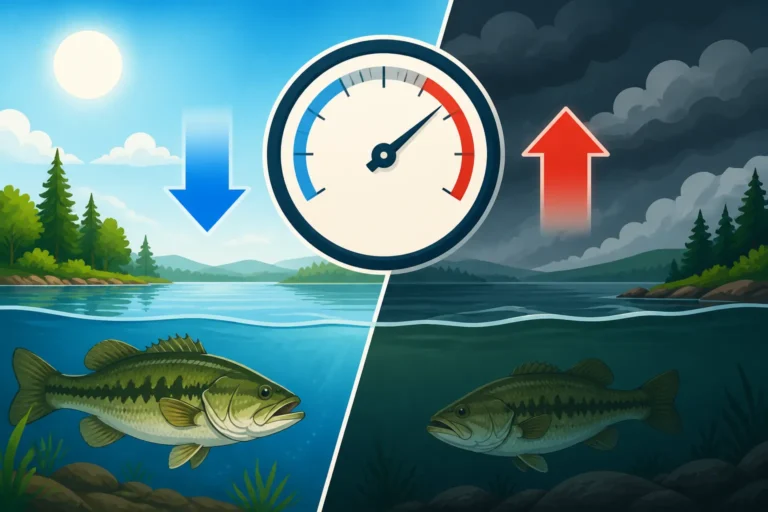
When a cold front hits, it's like someone turned off the "feed" switch for bass. Their metabolism slows down, and they become much less active. Instead of chasing down fast-moving baits, they're looking for an easy meal, if they're looking for one at all. They often retreat from shallow, exposed areas to seek refuge in deeper, more stable water where conditions are less volatile. This isn't just about temperature; it's also about barometric pressure. A dropping barometer before a front can trigger a feeding frenzy, but once the high-pressure system moves in after the front, fish tend to get lockjaw. Understanding How barometric pressure affects Connecticut bass fishing can give you a crucial edge.
Picture this: you've been hammering bass on topwater baits along the lily pads of Candlewood Lake all morning. Then, the wind shifts, the sky clears, and the air gets noticeably cooler. Suddenly, those aggressive strikes vanish. The bass haven't left the lake; they've simply moved off those pads and are likely holding tighter to the nearest deep cover or dropping into the thermocline. They're conserving energy, making them harder to entice. This dramatic shift in activity is why many anglers pack up, but it's precisely when a strategic approach can shine.
Weather and Water Effects
The most obvious impact of a cold front is the drop in air temperature, which, over time, cools the surface water. Clear skies and strong winds, often accompanying a post-front system, also play a significant role. Clear skies mean more sunlight penetration, which can make bass more light-sensitive and push them deeper or into denser cover. The wind can chop up the surface, making it harder to present baits accurately, but it can also create current and push baitfish, sometimes concentrating bass.
Beyond surface temperatures, the most crucial change is often the stability of the water column. Bass prefer stable conditions, and a cold front disrupts this stability. The turnover of cooler surface water can mix layers, affecting oxygen levels and baitfish distribution. This turbulence, coupled with the change in light and pressure, forces bass to seek out areas where conditions are more consistent. They're looking for comfort, which usually means deeper, more protected zones where the temperature and light penetration remain relatively constant. This is especially true in lakes like Lake Lillinonah, where deep structure is abundant. If you're wondering What water temperature smallmouth bass prefer, it's usually in a fairly narrow comfort range, and cold fronts push them out of it.
Strategies for Locating Cold Front Bass
Finding bass after a cold front is less about covering water quickly and more about methodically searching key areas where they're likely to have retreated. It requires patience and a good understanding of how fish relate to structure and depth.
Deeper Water Retreats
The most common advice for cold front bass fishing is to go deep, and for good reason. Deeper water offers more stable temperatures and less light penetration, providing a comfortable sanctuary for inactive bass. This doesn't necessarily mean the deepest part of the lake, but rather the deepest available cover near where they were previously active. Look for offshore humps, ledges, creek channels, and submerged timber in 15-30 feet of water. These areas provide vertical relief that bass can use to adjust their depth with minimal effort.
Think about the transition zones. If bass were in 5 feet of water along a weed line, they might move to the outside edge of that weed line where it drops off into 10-15 feet. Or they might move to a nearby point that extends into deeper water. Using good electronics, especially on larger bodies of water like Lake Zoar or Candlewood Lake, becomes indispensable for identifying these subtle changes in bottom contour and locating schools of fish that are holding tight to the bottom. Knowing how to use Best sonar settings for finding structure on Candlewood Lake will be a huge asset.
Structure and Cover Focus
Even when bass go deep, they rarely suspend in open water for long periods unless actively chasing bait. Instead, they'll relate tightly to structure or cover. This could be a submerged rock pile, a brush pile, standing timber, or a hard bottom transition. The key is that they're not just deep; they're deep and relating to something solid that offers protection and an ambush point, however subtle.
When you're searching, focus on the heaviest cover you can find in deeper water. Fallen trees, bridge pilings, or even boat docks with deep water access can be magnets for cold front bass. These spots offer overhead cover and a sense of security. Flipping jigs or Texas-rigged plastics into the densest parts of this cover, and leaving them there for an extended period, can often draw a strike from an otherwise reluctant bass. This is where patience truly pays off. Consider exploring Best deep water structure spots on Candlewood Lake for prime cold front locations.
Shallow Water Exceptions
While the general rule is "go deep," there are always exceptions, especially in bodies of water with varied depths and cover. Sometimes, during a cold front, bass will move into the very shallowest, darkest pockets of cover, especially in smaller ponds or coves that warm up slightly faster due to sun exposure. Think dense mats of weeds, heavy overhanging brush, or thick lily pad fields in protected coves. These spots might hold a few aggressive fish that are looking for easy prey trapped in the warming, dense cover.
This is a high-risk, high-reward strategy. You're looking for those few active fish that haven't completely shut down. This tactic is particularly effective in smaller, shallower ponds or during the latter stages of a prolonged cold front when the sun has had a chance to slightly warm these protected areas. A quick search of Best largemouth bass ponds in Connecticut could reveal some hidden gems for this approach. Remember, these fish will be spooky, so quiet approaches and accurate casts are critical.
Lure and Presentation Adjustments for Cold Fronts
The lures you throw and, more importantly, how you present them, are paramount during a cold front. Aggressive, fast-moving baits that worked yesterday will likely be ignored today. It's time to slow down, downsize, and focus on finesse.
Slow and Subtle Baits
When bass are lethargic, they aren't going to expend much energy chasing a meal. This means your baits need to be presented slowly and subtly, practically handed to them. Jigs, shaky heads, drop shots, and Neko rigs are your best friends. These baits can be fished painstakingly slow, allowing them to sit in the strike zone for extended periods, enticing even the most inactive bass.
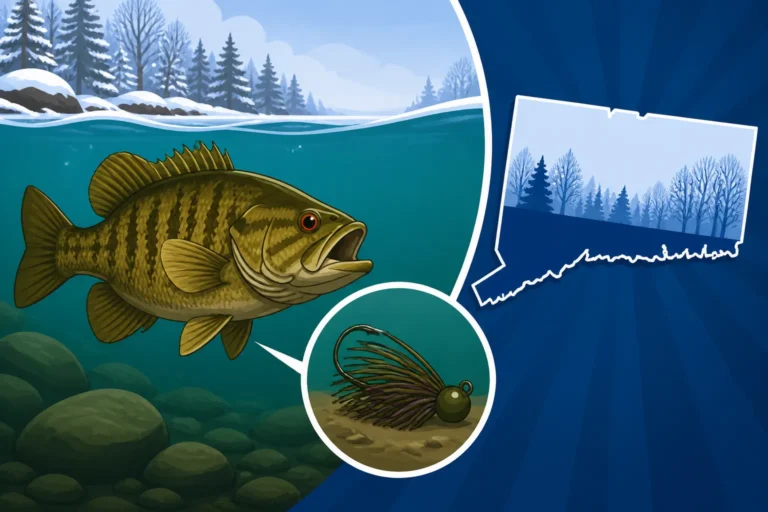
For example, a black and blue jig with a subtle trailer, hopped along the bottom near a rock pile on the Connecticut River, can be incredibly effective. Let it sit for 10-15 seconds after each hop, allowing the skirt to breathe and the bass to investigate without feeling threatened. Another excellent choice is a Ned rig, a small mushroom-head jig paired with a short, buoyant plastic worm. This bait stands up off the bottom, presenting a non-threatening profile that can often draw bites when nothing else will. You might find some useful tips in Best crankbait retrieve for Housatonic smallmouth but remember to drastically slow down that retrieve for cold front conditions.
Downsizing and Natural Colors
Big, flashy baits scream "danger" to wary, cold-front bass. Instead, opt for smaller, more natural-looking presentations. Think creature baits, finesse worms, and small crawfish imitations. These baits mimic the smaller, slower prey that inactive bass are more likely to target. For your soft plastics, a 3-inch or 4-inch worm on a drop shot or a small jig trailer can make all the difference.
Color choice also becomes more critical. While loud colors can work in dirty water, post-front conditions often bring clear skies and clear water. This calls for more natural, muted tones like green pumpkin, watermelon red, black and blue, or natural craw colors. The idea is to blend in, not stand out. Consider subtle variations, like a watermelon seed plastic with a touch of purple flake. You can find a huge variety of these finesse baits on Amazon, often in multi-packs, perfect for experimenting.
Finesse Presentations
The art of finesse fishing truly shines during a cold front. This isn't just about the lures; it's about the entire approach. Light line, sensitive rods, and barely perceptible movements are key. A 6'6" to 7' medium-light spinning rod with a fast action, paired with 6-8lb fluorocarbon line, is often the ideal setup. Fluorocarbon is crucial because it's nearly invisible underwater and provides excellent sensitivity, allowing you to detect those incredibly subtle cold-front bites that feel more like "mush" than a typical "thump."
A drop shot rig, where your hook is tied directly to the line and a weight is attached below, allows your bait to hover tantalizingly in the strike zone, independent of the bottom. This presentation keeps the bait visible and active, even when you're just shaking the line gently. Another top-tier finesse approach is the Neko rig, where a nail weight is inserted into one end of a straight worm, and the hook is rigged O-Wacky style. This causes the worm to stand up and wiggle enticingly with the slightest twitch. When you're fishing in clear, cold water, learning Best technique for finesse fishing clear water bass will be invaluable. Remember, the goal is to make the bait look as natural and easy to catch as possible.
Gear and Technique Considerations
Beyond lures and locations, your overall gear setup and mental approach can significantly impact your success during these challenging conditions. Fishing a cold front requires precision, patience, and the right tools for the job.
Rod and Reel Choices
For cold front bass, your rod and reel setup should lean towards sensitivity and precision. Spinning gear typically excels here. A quality 6'6" to 7'3" medium-light to medium power spinning rod with a fast or extra-fast action is ideal. This combination allows for long, accurate casts with lightweight finesse baits and provides the sensitivity needed to detect subtle bites. Rods from brands like St. Croix or Fenwick are known for their sensitivity, giving you that crucial feel for the lightest tap.
Pair this with a smooth, lightweight spinning reel in the 2500-3000 size range. A good drag system is important, especially if you hook into a larger, sluggish bass that decides to make a run. The smooth retrieve also helps maintain constant contact with your bait, which is essential for feeling those faint cold front bites. You can find some excellent value spinning combos on Amazon that will get the job done without breaking the bank.
Line and Leader Adjustments
As mentioned, fluorocarbon line is a game-changer for cold fronts. Its low stretch provides unparalleled sensitivity, and its refractive index makes it virtually invisible underwater, which is critical for wary bass in clear water conditions. Spool your spinning reel with 6-10lb test fluorocarbon directly, or use a braided main line (10-15lb test) with a 6-10lb fluorocarbon leader. The braid offers even more sensitivity and casting distance, while the fluorocarbon leader maintains stealth.
When tying your leader, a strong knot like the FG knot or a double uni-knot is essential to ensure a reliable connection. Make sure your knots are clean and tight; cold front bites can be light, and you don't want a faulty knot to be the reason you miss a fish. Changing your leader frequently, especially after fishing around abrasive structure, can prevent line breaks from unseen nicks.
Patience and Persistence
Perhaps the most crucial "technique" for cold front bass fishing is patience. You will not get as many bites as on a warm, stable day. Sometimes, it might be hours between strikes. The key is to trust your spots, trust your baits, and maintain a slow, methodical retrieve. Resist the urge to speed up or switch baits every five minutes. Pick a high-percentage piece of structure, make multiple casts from different angles, and work your bait meticulously through the strike zone.
Persistence also means being willing to fish uncomfortable conditions. Cold fronts often bring clear skies but also biting winds. Dress appropriately in layers, including waterproof outer shells, to stay warm and focused. If you're on a boat, use your trolling motor to hold position against the wind, allowing for precise bait presentation. It's a grind, but those single, hard-earned bites during a cold front are often the most satisfying. Consider exploring articles like Best time to fish after a cold front to help gauge when the bite might pick up slightly, but always be prepared for tough fishing.
Table: Cold Front Lure and Presentation Strategies
| Lure Type | Best Conditions | Presentation Style | Key Considerations |
|---|---|---|---|
| Jigs | Deep cover, heavy structure, stained to clear water | Slow drag, hop, or dead stick | Natural colors (black/blue, green pumpkin), subtle trailer |
| Drop Shot | Clear water, deep structure, suspended fish | Minimal rod tip quivering, long pauses | Small finesse worms (3-5"), light line, natural colors |
| Shaky Head | Bottom fishing, rock piles, sparse cover | Slow drag, light hops, stand-up action | Small worms or creatures (4-6"), light wire hook |
| Ned Rig | Ultra-finesse, tough bites, clear water, subtle action | Barely move, let it sit and stand, light jig head | Small, buoyant plastics, natural colors, light line |
| Swimbaits | Erratic feeding windows, baitfish schools | Slow roll near bottom or structure | Small, realistic profiles (3-4"), retrieve just above bottom |
Remember, the goal is to trigger a reaction strike or present an irresistible, easy meal. The slower you fish, the more time the bass has to decide to bite, which can be exactly what they need during a cold front.
Disclaimer
The information provided in this guide is for general informational purposes only. Fishing conditions and regulations can change rapidly. Always consult the official Connecticut Department of Energy and Environmental Protection (CT DEEP) website for the most current fishing regulations, license requirements, and any advisories before heading out on the water. Stay safe and respect our natural resources.