What water temperature smallmouth bass prefer
Ever feel like smallmouth bass vanish into thin air when the weather shifts, leaving you casting into what feels like empty water? It’s a common frustration, especially here in Connecticut where our waters can change temperature pretty quickly. The truth is, smallmouth bass are incredibly sensitive to water temperature, and understanding their preferences is arguably the most crucial piece of the puzzle for consistent angling success. This guide will dive deep into the ideal water temperatures for smallmouth bass, explaining how these feisty fighters react to different thermal conditions and, more importantly, how you can use this knowledge to put more fish in your net.
Understanding Smallmouth Bass Behavior and Water Temperature
Smallmouth bass, often affectionately called "bronze backs" for their vibrant coloring, are cold-blooded creatures. This means their body temperature, metabolism, and overall activity are directly regulated by the temperature of the water around them. Unlike us, they can't just throw on a jacket or crank up the AC; they have to find water that suits their needs, which changes constantly throughout the year. Ignoring water temperature is like trying to guess where to find candy in a huge store without any signs – you might get lucky, but you'll likely go home empty-handed.
The Ideal Temperature Range: The "Sweet Spot"
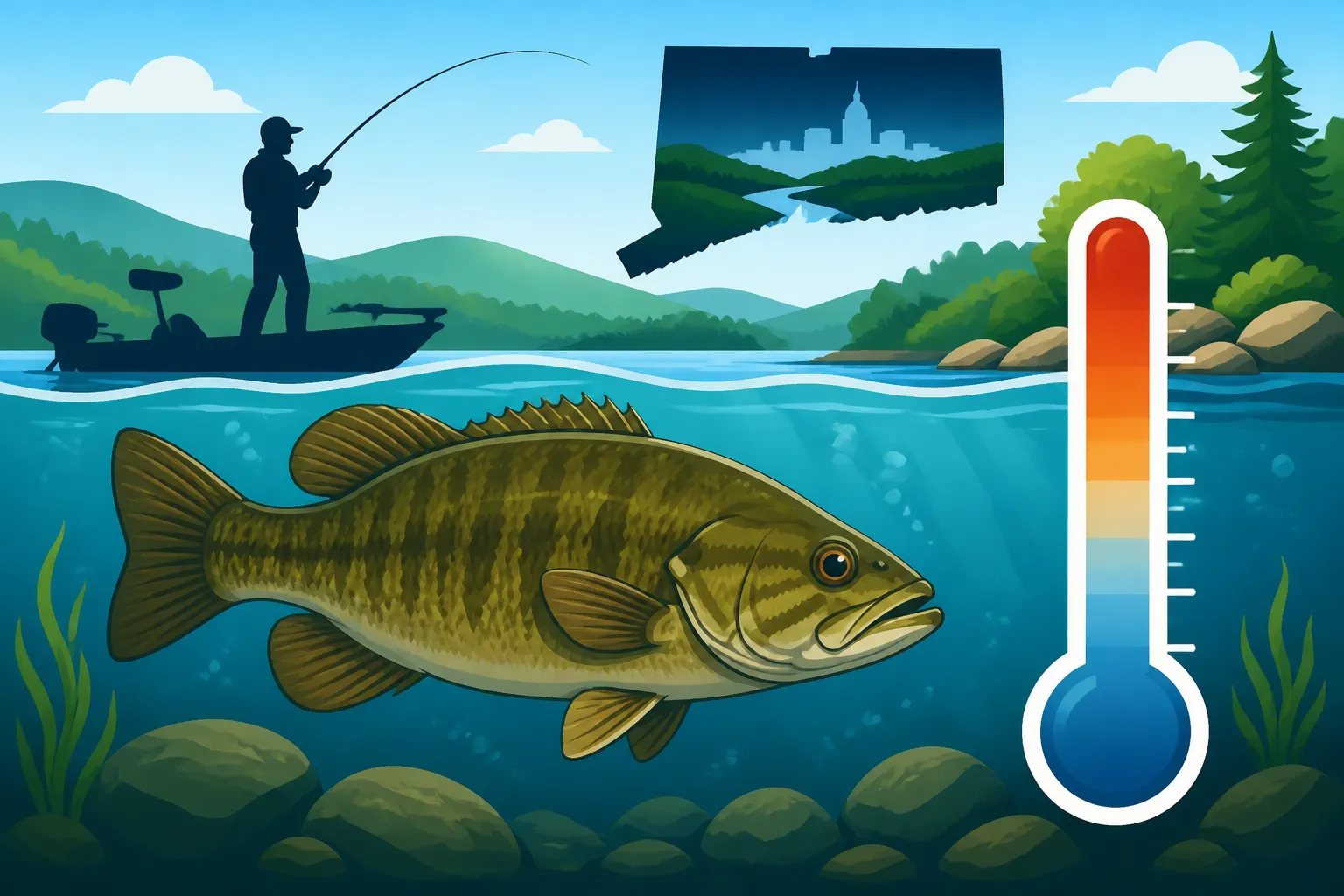
When it comes to smallmouth bass, there’s definitely a "sweet spot" where they are most active, aggressive, and eager to feed. Generally, smallmouth thrive in water temperatures ranging from about 60 to 70 degrees Fahrenheit (15-21 degrees Celsius). This is their metabolic prime, a comfortable zone where they can efficiently digest food, chase down prey, and aren't stressed by extreme heat or cold. Think of it as their perfect beach day where everything feels just right.
Within this ideal range, you'll often find smallmouth cruising shallower flats, lurking around rocky points, or patrolling current breaks in rivers. They’re actively looking for a meal and will strike with impressive ferocity. This is the temperature window when you can often expect the most explosive topwater bites, aggressive crankbait strikes, and consistent action on a variety of lures. Knowing this range helps you identify prime habitats and fishing techniques even before you make your first cast.
Why Water Temperature Matters So Much for Smallmouth
The reasons water temperature is such a critical factor for smallmouth bass are rooted in their biology and survival instincts. Firstly, it dictates their metabolism. In colder water, their metabolism slows down dramatically, meaning they need less food and move less. They conserve energy, becoming sluggish and less likely to chase a fast-moving lure. Conversely, in overly warm water, their metabolism can actually become stressed, leading to discomfort and a desire to seek cooler, more oxygenated areas.
Beyond metabolism, water temperature affects oxygen levels in the water. Colder water holds more dissolved oxygen, which is vital for fish survival. As water warms up, it holds less oxygen. This is why you often find smallmouth moving to deeper, cooler, more oxygenated areas during the dog days of summer. It also impacts their prey. Baitfish and crayfish also have preferred temperature ranges, and smallmouth will naturally follow their food sources to where they are most active and abundant. It's a complex underwater ecosystem, and temperature is the master conductor.
Seasonal Temperature Shifts and Smallmouth Movements
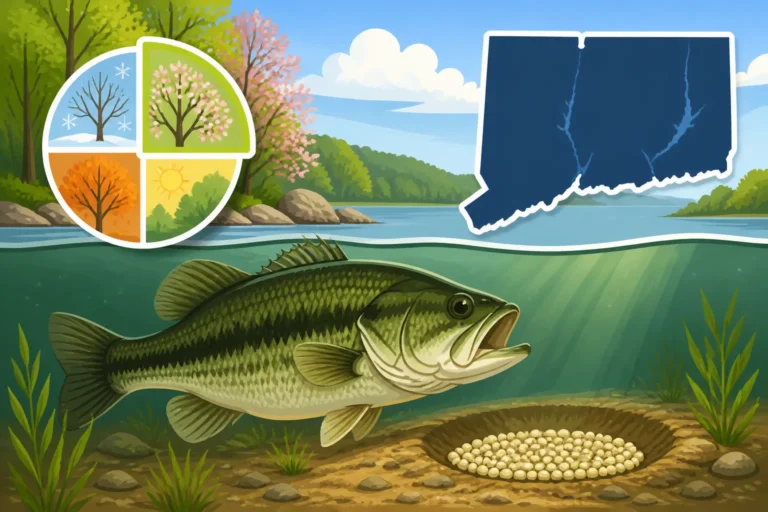
Connecticut experiences four distinct seasons, and each brings significant changes in water temperature, which in turn completely alters where and how smallmouth bass behave. Understanding these seasonal patterns is essential for adapting your approach and finding these elusive fish throughout the year, whether you're fishing a vast body like Candlewood Lake or a winding river like the Housatonic.
Early Spring: The Pre-Spawn Push
As ice recedes (if it formed at all) and winter’s grip loosens, early spring water temperatures typically range from 45 to 55 degrees Fahrenheit (7-13 degrees Celsius). At these temperatures, smallmouth bass are slowly emerging from their deep winter haunts, driven by the urge to feed and prepare for spawning. They haven't spawned yet, but they're thinking about it, moving from deep water towards shallower, sun-warmed bays and rocky points that heat up faster.
During this pre-spawn period, smallmouth can be found staging along transition areas – places where deep water quickly gives way to shallower flats. They'll often be lethargic at first, but as the water warms even a few degrees on a sunny day, they become more active. Slow-moving baits like jigs, Ned rigs, blade baits, or suspending jerkbaits fished patiently along these breaks can be incredibly effective. Look for the sunniest banks, dark bottom areas, or sheltered coves which will warm up first. This time of year demands a methodical approach, much like Best Techniques for Early Spring Trout fishing.
Late Spring/Early Summer: Spawning and Post-Spawn Recovery
This is arguably the most exciting time for many smallmouth anglers, as water temperatures climb into the 55 to 65 degrees Fahrenheit (13-18 degrees Celsius) range. This is the prime spawning window for smallmouth bass. Males move into shallower, hard-bottomed areas, typically rocky or gravel beds, to fan out nests. They become incredibly aggressive, protecting their nests from anything that ventures too close, including your lure.
After the spawn, both males and females need time to recover. The post-spawn phase can sometimes be a bit tricky, as fish are exhausted and might be less interested in feeding for a short period. However, they soon resume aggressive feeding to regain their strength. Focus your efforts on those same rocky spawning flats and nearby cover. Look for fish around submerged timber, docks, or rocky outcrops where they might be guarding fry or simply recuperating. For deeper insights into their habits around this time, check out When smallmouth bass spawn in Connecticut.
Summer: The Deep Water Retreat
When Connecticut's summer heat really kicks in, and water temperatures on the surface can soar above 70 degrees Fahrenheit (21 degrees Celsius), smallmouth bass often make a tactical retreat. While their preferred temperature range is 60-70°F, the surface can get much warmer, forcing them to seek refuge in cooler, deeper, more oxygenated water. This is when main lake points, deep humps, offshore ledges, and river channels with good current become prime real estate.
In rivers, smallmouth will often hold in deep pools, current seams, or near springs that introduce colder water. In lakes, they'll gravitate towards the thermocline – a layer where the warmer surface water meets the cooler, deeper water. Fishing during dawn, dusk, or even at night can be highly productive during summer, as fish move shallower under the cover of darkness to feed. You'll need to adjust your techniques, often focusing on vertical presentations like drop-shotting, jigging spoons, or deep-diving crankbaits. Exploring How to Catch Smallmouth Bass in Connecticut Rivers offers more specific strategies for summer river fishing.
Fall: The Feeding Frenzy
As autumn arrives and water temperatures begin to cool, dropping from the 65-degree Fahrenheit mark down into the low 50s (18-10 degrees Celsius), smallmouth bass enter what many anglers consider one of the best feeding windows of the year. This is their opportunity to gorge themselves, building up fat reserves for the lean winter months ahead. They become incredibly active and aggressive, often chasing baitfish in open water.
During fall, smallmouth can be found almost anywhere there's ample forage. They'll move shallower during sunny periods, especially on rocky banks or points that retain heat, and then push out to deeper breaks as the water cools overnight. Keep an eye out for schooling baitfish, as smallmouth will be close by. Reaction baits like crankbaits, spinnerbaits, and even topwater lures (on warmer days) can be deadly. Cover a lot of water and be prepared for explosive strikes. Just like with stripers in the fall, understanding the seasonal push can be key, as outlined in articles like Best Time of Year to Fish in Connecticut.
Winter: The Slow Down
Once water temperatures consistently dip below 45 degrees Fahrenheit (7 degrees Celsius), smallmouth bass activity slows dramatically. They become lethargic and seek out deep, stable water, often suspending in submerged timber, rock piles, or deep channels where the temperature is most constant. Their metabolism is at its lowest, and they feed very sparingly. For those interested in this colder season, Ice Fishing in Connecticut can provide useful context even if not directly for smallmouth.
Catching smallmouth in winter requires extreme patience and finesse. Vertical jigging with tiny baits, slow retrieves with Ned rigs or small spoons, and even dead-sticking can sometimes tempt a strike. The key is to present your bait right in front of the fish's nose and entice a reaction bite rather than a chase. They're not going to expend much energy, so your presentation needs to be almost effortless for them to grab.
Tools and Techniques for Measuring Water Temperature
You can't effectively fish based on water temperature if you don't know what it is! Fortunately, there are several tools and techniques available to help you pinpoint those crucial thermal zones. Don't leave home without one of these; it's like a chef trying to cook without knowing the oven temperature.
Onboard Electronics and Thermometers
Modern fish finders and depth sounders, especially those found on boats, almost universally come equipped with temperature sensors built into the transducer. These devices provide real-time surface water temperature readings, which are incredibly valuable. More advanced units can even help you identify thermoclines, giving you a complete picture of the thermal stratification of the water column. Many dedicated anglers swear by these integrated systems for their efficiency.
For those without boat electronics, or for bank anglers and kayakers, a simple, handheld water thermometer is an indispensable tool. These can range from basic models with a mercury or alcohol bulb on a string to more sophisticated digital units that give instant readouts. You can find a wide variety of reliable water thermometers on Amazon, from basic dip models to more advanced digital ones that connect to your phone. Always try to get a reading from the depth you're fishing, not just the surface, especially in deeper lakes.
Using Thermoclines to Your Advantage
In deeper lakes, especially during the summer, water often stratifies into layers of different temperatures. The warmest water is on top, and the coldest is at the bottom. In between, you'll find the thermocline – a distinct layer where the temperature drops rapidly. This invisible boundary is a critical habitat for smallmouth bass because it often represents the optimal balance of temperature and oxygen. Fish will frequently suspend right at, above, or below the thermocline, depending on the availability of baitfish and oxygen levels.
Locating the thermocline is typically done with a good fish finder. It often appears as a distinct band on your sonar screen where the density changes due to temperature differences. Once you've identified it, you can adjust your fishing depth to target fish holding in or around this thermal sweet spot. This technique is particularly effective for finding those deep-water summer smallmouth that seem to disappear from the shallows, making your Best Bass Fishing Lakes in Connecticut explorations much more productive.
Practical Strategies for Temperature-Driven Smallmouth Fishing in Connecticut
Knowing the preferred temperature range for smallmouth is one thing, but actually using that knowledge on the water to catch fish is another. It requires observation, adaptation, and a willingness to experiment. Fishing success often comes down to connecting the dots between water temperature, fish behavior, and your presentation.
Locating Warmer or Cooler Pockets
Smallmouth bass aren't necessarily looking for the exact perfect temperature everywhere in a body of water. Instead, they're looking for pockets or zones that offer their preferred conditions within the larger environment. In rivers, this might mean eddies behind large rocks, areas where a warm tributary enters the main flow, or deep pools with stable temperatures. Sun-exposed rock formations can absorb heat and create warmer spots, while springs can introduce cooler water.
In lakes, consider shallow, dark-bottomed coves that absorb sunlight and warm up quickly in spring, or deep main lake points that remain cooler and hold more oxygen in summer. Areas with current, even subtle ones, can also be key as they often bring in fresh, oxygenated water. Always be observant of your surroundings; small details can often point to a thermal advantage. This constant search for optimal conditions is why articles like Smallmouth Bass Habits on the Housatonic emphasize understanding location.
Adjusting Lure Choice and Presentation
Once you have a handle on the water temperature and where the smallmouth are likely holding, the next step is to choose the right lure and presentation. This is where the subtleties of fishing really come into play. In colder water (below 55°F), smallmouth are sluggish. They're not going to chase something quickly. Your best bet is slow, subtle presentations with smaller baits. Think about finesse jigs, Ned rigs, blade baits, or suspending jerkbaits that can be paused for extended periods.
As the water warms into their preferred 60-70°F range, smallmouth become much more active and aggressive. This is when reaction baits shine. Crankbaits, spinnerbaits, chatterbaits, and even topwater lures can trigger vicious strikes. For summer conditions in specific areas, Best smallmouth bass lures for the Housatonic in summer can offer great ideas. When the water gets too warm (above 70°F), and fish move deep, vertical presentations like drop-shot rigs, tube jigs, or heavy spoons become effective. The fish are still there, but your approach needs to match their mood and location.
The Importance of Local Knowledge and Current Conditions
While general temperature guidelines are incredibly helpful, there's no substitute for local knowledge and understanding current conditions. A cold front, for instance, can rapidly drop surface temperatures, sending smallmouth into a temporary funk, even if the overall seasonal trend is warming. Conversely, a few days of bright sunshine can quickly warm up shallow areas, drawing fish in. How to catch bass during a cold front in Connecticut delves into how bass react to such abrupt changes.
Talking to local bait shops, checking online forums for specific Connecticut lakes and rivers, and observing water conditions yourself are all critical. Pay attention to recent rainfall, air temperature trends, and water clarity, as these factors all interact with temperature to influence smallmouth behavior. The more information you gather, the better equipped you'll be to adapt and find success on any given day.
Here's a quick reference guide to help you remember the key temperature zones:
| Water Temperature Range (Fahrenheit) | Smallmouth Behavior | Recommended Techniques & Locations |
|---|---|---|
| Below 45°F | Very slow, lethargic, deep wintering holes | Vertical jigging, tiny baits, long pauses, deep stable structure |
| 45-55°F (Early Spring) | Pre-spawn movement, slowly active, staging | Slow jigs, Ned rigs, suspending jerkbaits, deep edges, sun-warmed coves |
| 55-65°F (Late Spring/Early Summer) | Spawning, aggressive nest protection, post-spawn recovery | Jigs, tubes, plastics, crankbaits, rocky flats, submerged cover, docks |
| 60-70°F (Prime Activity) | Most active, aggressive feeding, comfortable | Variety of baits, reaction baits, rocky points, current breaks, open flats |
| 70-75°F (Summer) | Seeking cooler water, deeper structure, reduced daytime activity | Deep diving crankbaits, drop-shots, jigs, spoons, dawn/dusk, thermoclines |
| 75°F+ (Extreme Summer) | Stressed, seeking deepest, coolest, oxygenated water | Very deep presentations, focus on cooler hours, target springs/inflows |
Ultimately, fishing for smallmouth bass is an ongoing learning process. By paying close attention to water temperature and understanding how these magnificent fish react to it, you'll dramatically increase your chances of having a memorable day on the water, whether you're exploring Best Fishing Lakes in Connecticut or navigating our scenic rivers.
Disclaimer
This article is for general informational purposes only and does not constitute professional advice. Laws, prices and regulations vary by location and change over time. Consult a qualified professional for guidance on your specific situation.