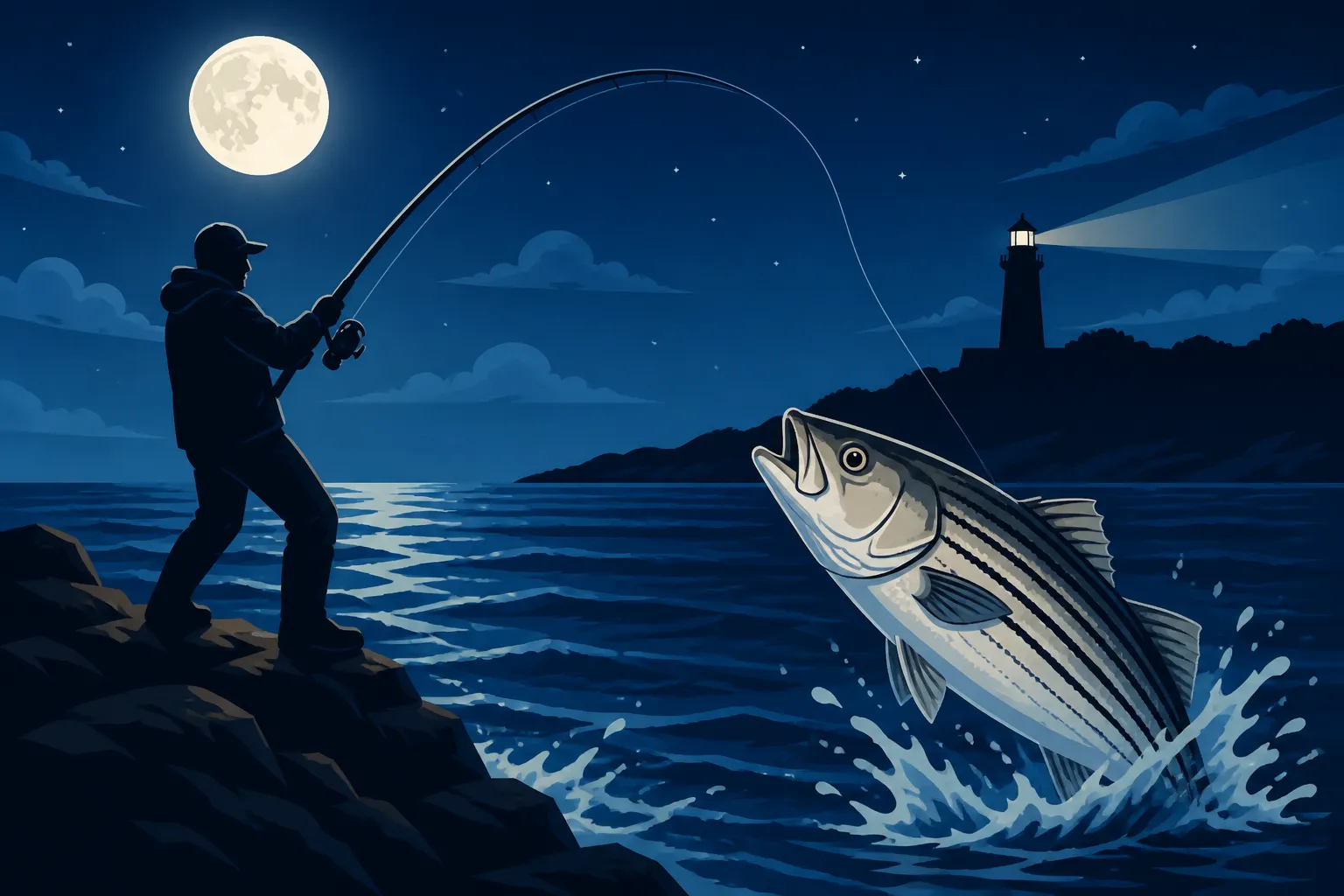
How to catch striped bass at night from shore
There's a special kind of magic that descends upon the Connecticut coastline after the sun dips below the horizon, and it's not just the quiet solitude. Many anglers find themselves frustrated during the day, struggling to fool wary striped bass that are hunkered down or pushed offshore by boat traffic and bright light. This guide will help you tap into the nocturnal world of striper fishing from shore, unlocking the secrets to finding and catching these elusive fish under the cloak of darkness.
Why Night Fishing for Striped Bass from Shore?
If you've ever spent a sunny Saturday trying to cast a line in a crowded tidal river or a popular beach spot, you know the feeling of exasperation. Striped bass are incredibly smart, and they often become highly sensitive to pressure, boat noise, and bright conditions. During the day, they might move into deeper, cooler water, or simply become less aggressive, making them a real challenge to target from shore. But when night falls, everything changes.
The Advantage of Darkness for Stripers
Think about it from a striped bass's perspective. Under the cover of darkness, they feel safer. The shadows offer them concealment, allowing them to move into shallower waters and closer to the shore, where they can ambush baitfish with less risk. This is when their predatory instincts truly kick into high gear. They rely heavily on their lateral line to detect vibrations and scent, and the reduced visibility actually works in their favor. The darkness also limits what baitfish can see, making them easier targets. For us anglers, it means more aggressive takes and often, the chance to connect with larger, more dominant fish that wouldn't dare show themselves during daylight hours.
Escaping the Crowds and Embracing the Solitude
Beyond the purely biological advantages for the fish, night fishing offers a profound benefit for the angler: peace and quiet. No more jockeying for position at the jetty, no more dodging pleasure craft, and no more constant pressure from other anglers. It’s just you, the rhythmic sound of the waves, and the anticipation of a hard strike. This solitude allows you to truly connect with the environment, to focus on your retrieve, and to experience the coastline in a completely different way. It's a chance to escape the hustle and bustle and find a deeper appreciation for the sport. Plus, parking is usually a breeze, which is a major win in many of our popular Best Shore Fishing Spots in Connecticut locations.
Essential Gear for Night Striped Bass Fishing
When the lights go out, your gear needs to be ready to work harder and smarter. You can't rely on sight alone, so every piece of equipment plays a critical role in your success and safety. From your rod and reel to your lures and personal safety items, being prepared is key to a productive and enjoyable night on the water.
Rods, Reels, and Line Built for Battle
For shore-based night fishing, especially when you're aiming for those bigger, bolder stripers, you'll want a setup that can handle some serious power. A medium-heavy to heavy action spinning rod, typically in the 9 to 11-foot range, is ideal. This length gives you the casting distance needed to reach distant rips and deeper water, and the backbone to fight a strong fish in the dark. Match this with a robust spinning reel in the 5000 to 8000 series. Corrosion resistance is paramount, especially if you’re fishing saltwater areas in Long Island Sound.
Spool your reel with braided line in the 30-50 lb test range. Braid offers superior casting distance, incredible sensitivity to detect subtle bites in the dark, and minimal stretch for powerful hooksets. Always tie a fluorocarbon leader of 30-50 lb test, about 3 to 5 feet long, to your main line. Fluorocarbon is nearly invisible underwater and highly abrasion-resistant, which is crucial when fishing around rocks and structure that stripers love. For more specific advice on setting up your surfcasting rig, check out our guide on Best Rod Setup for Surfcasting Striped Bass and Best Line for Surfcasting from the Beach.
Lures and Baits That Shine in the Dark
When fishing at night, visibility is low for both you and the fish, so you need lures and baits that either create a strong silhouette, emit vibrations, or have some glow factor.
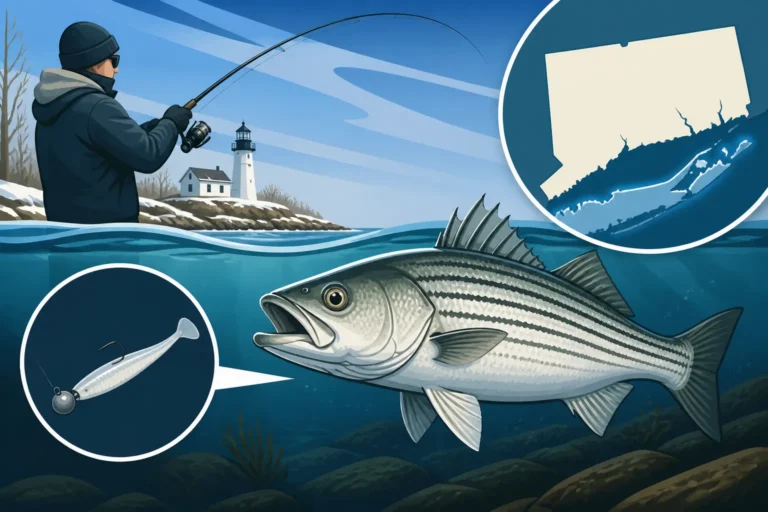
- Soft Plastics: These are incredibly versatile. Large paddle tail swimbaits rigged on heavy jig heads (1-3 oz) are fantastic. They create a strong thumping vibration that stripers can detect. Darker colors like black, blurple (blue/purple), or even translucent with glitter can create a great silhouette against the moonlight.
- Plugs and Swimmers: Sinking or suspending minnow plugs and lipped swimmers are excellent choices. Look for models with internal rattles to add an auditory element. Dark colors or those with a silver flash can be very effective. Slowly retrieving these just above the bottom or through the wash can elicit powerful strikes.
- Topwater Lures: Don't discount topwater at night! Spook-style walkers or large poppers can be absolutely exhilarating when a striper explodes on them under the stars. The commotion they create on the surface is often enough to draw fish in. Again, dark colors or black often work best, creating a clear profile against the sky.
- Live/Fresh Bait: If you prefer bait fishing, fresh chunks of bunker, mackerel, or eels are irresistible to stripers at night. Eels are particularly effective, and many trophy stripers are caught on them after dark. Rig them on a fish-finder rig with a heavy pyramid sinker to keep your bait in place. Remember, circle hooks are required when fishing with bait for striped bass in Connecticut, so familiarize yourself with the Connecticut Circle Hook Requirement for Striped Bass.
Consider carrying a variety of these, especially some with luminescent qualities. You can find excellent selections of all these lure types on platforms like Amazon, making it easy to stock up before your next night outing. For more ideas on what to tie on, take a look at our article on Best Lures for Striped Bass in Long Island Sound.
Safety and Comfort for Nocturnal Anglers
Night fishing isn't just about catching fish; it's also about staying safe and comfortable.
- Lighting: A reliable headlamp is non-negotiable. Look for one with a red light option to preserve your night vision and minimize disturbance to the fish. A small lantern for your immediate gear area can also be helpful.
- Footwear: Wear sturdy, waterproof boots with good grip. Rocks can be slippery, and you never know what the tide might leave behind.
- Clothing: Dress in layers, even in summer. Night air can get chilly quickly, especially by the water. Rain gear is always a good idea, regardless of the forecast.
- Essentials: Bring insect repellent, a first-aid kit, plenty of water, and a fully charged cell phone. Inform someone of your fishing plans and expected return time. A personal flotation device (PFD) is always a smart choice, especially if you're venturing out onto jetties or areas with strong currents. You can find durable headlamps and other safety essentials on Amazon.
Top Techniques for Shore-Based Night Stripers
Successfully targeting striped bass at night from shore involves a blend of specific casting, retrieving, and presentation techniques tailored to the low-light conditions. It's less about speed and more about finesse and understanding how fish react when visibility is limited.
Slow and Steady Wins the Race: Lure Presentation
Unlike daytime fishing where aggressive retrieves might be effective, night fishing often calls for a slower, more deliberate approach. Stripers aren't relying on sight to chase down fast-moving prey; instead, they're keying in on vibrations, scent, and silhouettes.
- Slow Roll: For soft plastics and lipped plugs, a slow, steady retrieve is usually best. You want your lure to wobble and pulsate just enough to create a strong vibration pattern. Keep your rod tip slightly down to maintain contact and feel for those subtle taps.
- Stop-and-Go: Incorporate pauses into your retrieve. Let your lure sink or suspend for a few seconds. Many strikes occur on the pause, as the lure appears to be a wounded baitfish.
- Twitch and Jerk: For topwater lures, a slower walk-the-dog or a gentle pop can be incredibly effective. The goal is to create just enough surface disturbance to attract attention without making it seem unnatural.
- Bait Presentation: If using bait, let the current do the work. Cast your chunk bait or eel up-current and allow it to drift naturally with the tide, presenting it as an easy meal. Ensure your rig is designed to minimize snagging on the bottom.
The key is to give the fish time to find your offering using their other senses. Sometimes, the difference between a frustrating night and a successful one is simply slowing down your retrieve by half.
Targeting Structure and Current
Striped bass are ambush predators, and at night, they'll often position themselves in prime ambush points.
- Rocky Outcroppings and Jetties: These are classic striper hangouts. The rocks create eddies, current breaks, and prime hiding spots for both stripers and their prey. Cast parallel to the structure, letting your lure drift into pockets and cuts. Be mindful of casting too close and snagging.
- Inlets and River Mouths: Areas where rivers meet the sound are hotbeds for nocturnal stripers. The converging currents disorient baitfish, and the varied bottom structure provides perfect ambush points. Focus on the edges of the current seams.
- Breaks in the Beach: Look for subtle changes in the shoreline – sandbars, troughs, or even small depressions. These can concentrate baitfish and provide hiding spots for stripers. Read the water during the day if possible to identify these features.
- Docks and Pilings: These man-made structures provide cover and attract baitfish seeking refuge. Cast around and under dock lights, if present, as these can concentrate bait. Remember to be respectful of private property.
Understanding Striped Bass Migration Along the Connecticut Coast can also help you anticipate where the fish might be concentrated during different times of the season.
The Importance of Tides
For shore anglers, tides are everything, especially at night. Stripers use the moving water to their advantage, and so should you.
- Moving Tides: The incoming and outgoing tides are generally the most productive. The current dislodges bait, creating feeding opportunities. Focus on the beginning and end of the tide cycle, when the current is often strongest and baitfish are most active.
- Slack Tide: While sometimes slower, slack tide can still be productive, especially in deeper channels or around very distinct structures. The absence of strong current might encourage stripers to move out and explore.
- Moon Phase: Many anglers swear by fishing around the new and full moons, as the stronger tidal currents associated with these phases can trigger more aggressive feeding. However, don't let a less-than-ideal moon phase deter you; stripers feed every night.
Always check the local tide charts for your chosen location. Arriving an hour or two before the peak of the moving tide will give you ample time to set up and observe the water. Our guide on Best Time of Day to Catch Striped Bass delves deeper into this fascinating topic.
Choosing Your Battleground: Best Locations and Conditions
Connecticut's shoreline offers a diverse range of environments perfect for night striper fishing. Knowing where to go and what conditions to look for will significantly increase your chances of success.
Prime Connecticut Shoreline Spots for Night Strikers
When thinking about where to cast your line after dark, consider areas that offer good access, varied structure, and known baitfish concentrations.
- The Connecticut River Mouth: This is a fantastic area, especially during the fall run. Stripers gather at the mouth as baitfish move in and out with the tides. Spots around Old Saybrook and Waterford can be excellent. The confluence of freshwater and saltwater creates a rich ecosystem that stripers actively exploit.
- Eastern Connecticut Jetties and Beaches: Locations like those in Niantic, Groton, and Stonington offer miles of rocky shorelines, jetties, and sandy beaches with easy access. These spots are known for holding good numbers of resident stripers, and they become even better during migration periods. The rock piles create perfect ambush points.
- Western Long Island Sound Inlets: Areas like Norwalk and Greenwich, with their numerous harbor mouths, estuaries, and rocky points, can be incredibly productive. These spots often have significant boat traffic during the day, making them excellent candidates for night fishing when the waters quiet down. Look for bridge pilings and bulkheads that hold bait.
- Coastal State Parks: Many of Connecticut's coastal state parks offer excellent access to the Sound, with a mix of sandy beaches and rocky areas. While they might be bustling during the day, they often become tranquil and productive at night. Just be sure to check park hours and regulations regarding night access.
For detailed information on local hot spots, our comprehensive Striped Bass Fishing in Long Island Sound guide provides a wealth of knowledge.
Understanding Optimal Weather and Water Conditions
While night fishing reduces the impact of sunlight, other environmental factors still play a significant role.
- Cloud Cover: Overcast nights are often preferred by anglers because they provide maximum darkness, encouraging stripers to be more aggressive and roam more freely. A bright, full moon can make fish a bit warier, but they still feed actively, just sometimes in deeper water or tighter to structure.
- Wind: A light breeze (5-10 mph) can be beneficial, creating a "chop" on the water that breaks up visibility for the fish and disguises your presence. Strong winds, however, can make casting difficult and create uncomfortable conditions. A light onshore breeze can push bait closer to shore.
- Water Clarity: Moderately clear water is generally best. Too clear, and the fish might still be a bit spooky; too murky, and they might struggle to find your lure, even with their lateral line. A slight stain or turbidity can be ideal, providing enough cover for the fish.
- Temperature: Striped bass are generally comfortable in a wide range of water temperatures, but rapid changes (like a sudden cold snap) can temporarily shut down the bite. Consistent water temperatures are usually more productive.
- Pre-Frontal Conditions: Just before a storm front rolls in, fish often feed aggressively. The dropping barometric pressure can trigger a strong bite. However, always prioritize safety and never fish during lightning or severe weather.
Night Fishing Conditions Quick Reference
| Condition | Impact on Stripers | Angler Approach |
|---|---|---|
| New Moon | Maximum darkness, strong tides, highly active feeding. | Ideal conditions; use dark lures, noisy plugs, or live bait. Focus on current rips and structure. |
| Full Moon | Brighter nights, fish can be warier, may hold deeper or tighter to cover. | Use slightly more subtle presentations, smaller profiles, or stick to live bait. Focus on deeper edges of structure. Red headlamp light is crucial. |
| Overcast Nights | Excellent conditions, fish feel secure to roam and feed aggressively. | High confidence night; experiment with various lures and retrieves. |
| Light Chop/Wind | Breaks up surface visibility, provides cover for fish, masks angler presence. | Ideal; lures create more natural movement. |
| Calm/Glassy Water | Fish can be warier, may detect vibrations easily. | Focus on very slow, subtle retrieves. Consider longer casts to avoid spooking fish. Walk softly on shore. |
| Rising Tide | Pushes bait into new areas, often triggers feeding. | Target points, inlets, and channel edges as the water rises. |
| Falling Tide | Concentrates bait in channels and outflows, excellent for ambush predators. | Focus on outflows, jetties, and deeper drop-offs as water recedes. |
| Pre-Frontal | Often signals aggressive feeding as fish sense changes. | Be ready for a hot bite, try a variety of lures, and cover water quickly. |
| Post-Frontal | Can cause a temporary slowdown as fish adjust. | Slow down, use subtle presentations, and focus on known holding areas with plenty of cover. |
Successfully catching striped bass at night from shore in Connecticut is a rewarding experience that offers both solitude and the thrill of the hunt. By understanding their nocturnal habits, equipping yourself with the right gear, and employing patient, strategic techniques, you'll greatly improve your chances of hooking into that trophy striper. Remember, patience is your best ally in the dark. Now go get 'em!
Disclaimer
This article is for general informational purposes only and does not constitute professional advice. Laws, prices and regulations vary by location and change over time. Consult a qualified professional for guidance on your specific situation.