Bluefish in Long Island Sound
Ah, the mighty bluefish! There's nothing quite like the raw power and aggressive fight of a bluefish on the end of your line. But for many anglers, figuring out where and when these toothy predators will show up in Long Island Sound, and what they'll hit, can feel like a bit of a moving target. If you've ever found yourself frustrated by a sudden bluefish blitz or baffled by their absence, this guide is here to shed some light on the habits, habitats, and hot techniques for tangling with bluefish in our beloved Sound.
Bluefish: An Introduction to Their Biology and Habits
Bluefish, scientifically known as Pomatomus saltatrix, are truly a force to be reckoned with in the marine environment. They are migratory, highly aggressive, and possess a voracious appetite that often leads to spectacular feeding frenzies. For anglers in Connecticut, understanding the basic biology of these powerful fish is key to successfully targeting them in Long Island Sound. They are not subtle creatures; they are built for speed and predation, and their entire existence revolves around finding and devouring baitfish.
Physical Characteristics and Identification
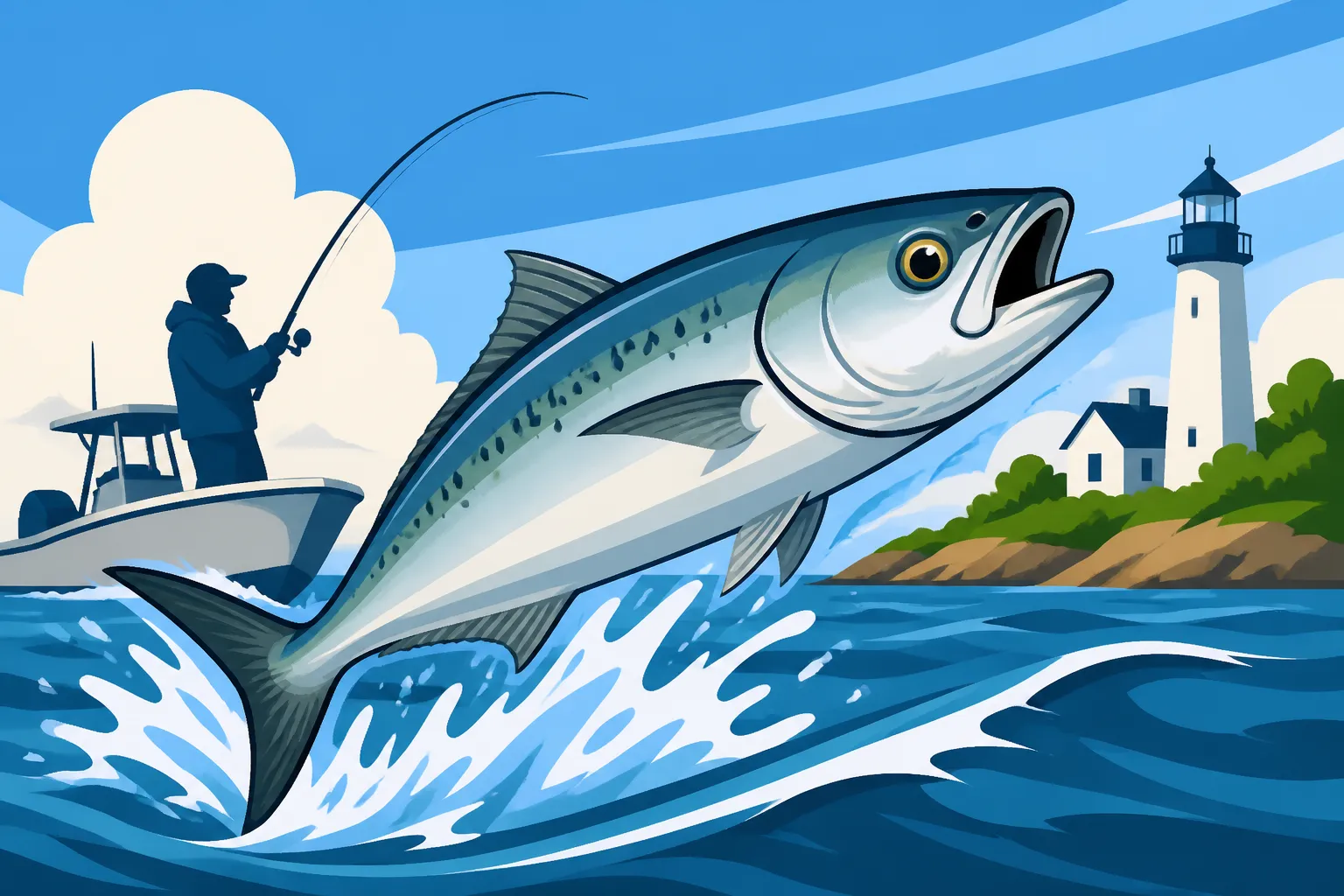
Bluefish are easily identifiable once you've seen a few, though their appearance can sometimes be confused with juvenile striped bass by the untrained eye. They typically have a greenish-blue back fading to silver on their sides and belly. Their body is streamlined and stout, built for powerful bursts of speed. Perhaps their most distinctive feature, and one that quickly reveals their predatory nature, is their mouth: it's large, armed with numerous razor-sharp teeth that are perfectly designed for tearing through baitfish. These teeth are no joke, and they necessitate using strong leaders when fishing for them to avoid being cut off. You'll also notice their distinctively forked tail, which propels them through the water with incredible force, making for an unforgettable fight on the line.
When comparing them to other common Long Island Sound species, the bluefish’s distinct coloration and formidable dental work are usually clear giveaways. They lack the distinct horizontal stripes of a Striped Bass Fishing in Long Island Sound or the delicate features of a fluke. Their reputation for aggression is well-earned, and their physical attributes reflect this perfectly. If you're ever in doubt, a quick peek inside their mouth, handled with extreme caution, will usually confirm you've got a bluefish.
Voracious Feeding Habits
The feeding habits of bluefish are legendary, often described as a "blitz" or "chop." These fish are opportunistic and relentless predators, consuming vast quantities of baitfish like bunker (menhaden), spearing, and anchovies. They will often travel in large schools, herding baitfish to the surface and creating a visual spectacle of splashing water and diving birds. This isn't just a casual meal; it's a frantic, competitive feeding event where bluefish will often regurgitate their last meal just to make room for more. They will literally eat until they can't eat anymore, and then they'll keep trying!
This aggressive feeding behavior is what makes them so thrilling to catch. When bluefish are actively feeding, they will strike at almost anything that moves, often with incredible force. Anglers frequently report bent hooks and mangled lures after a run-in with a schooling bluefish. Their sheer numbers and ferocity can turn a calm fishing trip into an adrenaline-pumping experience in moments. Understanding that they are often driven by these intense feeding urges is crucial for anglers looking to intercept them; find the bait, and you'll likely find the blues. It’s a classic predator-prey dynamic playing out right before your eyes in the Sound. How menhaden schools attract striped bass and bluefish is a great example of this, as these baitfish are prime targets for bluefish.
Where to Find Bluefish in Long Island Sound
Long Island Sound is a dynamic and productive ecosystem, and bluefish take full advantage of its varied habitats and abundant baitfish populations. Knowing where to focus your efforts in the Sound can dramatically increase your chances of connecting with these hard-fighting fish. Their movements are largely dictated by water temperature, food availability, and spawning instincts, making them a seasonal visitor to our waters.
Seasonal Movements and Migration Patterns
Bluefish are migratory fish, and their presence in Long Island Sound is highly seasonal. They typically begin to show up in late spring, usually around May, as the water temperatures rise and baitfish like bunker start to move into the Sound. As summer progresses, their numbers peak, and they can be found throughout the Sound, from the western reaches near Greenwich and Stamford all the way to the eastern Sound and beyond. The warmest months, July and August, are often prime time for bluefish action, especially when schools of baitfish are plentiful.
As fall approaches, usually September through October, bluefish remain active as they begin their migration south to warmer offshore waters. This autumn run can be particularly productive, as the fish are actively feeding to build up energy for their journey. The exact timing can vary year to year based on water temperatures and bait movements, but generally, by late October or early November, most of the larger bluefish have exited Long Island Sound. Keeping an eye on local fishing reports and water temperature charts can give you an edge in predicting their arrival and departure. For a broader view, check out Best Time of Year to Fish in Connecticut.
Preferred Habitats and Hotspots
Bluefish are highly mobile and can be found in a variety of habitats within Long Island Sound, but they do have their preferences, especially when actively feeding. They tend to congregate around areas where baitfish are abundant and where structure offers ambush points or current provides easy feeding opportunities. This includes tidal rips, rocky reefs, submerged humps, and the mouths of rivers. Anywhere baitfish are schooling or being funneled by currents, you're likely to find bluefish close by.
Estuaries and river mouths, such as the Connecticut River or the Housatonic River, can be particularly productive during certain times, especially when baitfish are moving in or out with the tides. Nearshore waters, especially around prominent points, jetties, and even open beaches, can also hold schools of bluefish, making them accessible to Best Shore Fishing Spots in Connecticut anglers. For those with boats, looking for diving birds is often the best indicator of a bluefish blitz, as gulls and terns will target the baitfish pushed to the surface by the feeding blues. Keep an eye on your fishfinder for large schools of bait and the predatory arcs of bluefish underneath them. The Long Island Sound Fishing Guide offers more general insights into the region.
Best Times to Target Bluefish
Timing is everything when it comes to fishing for bluefish. While they can be present for several months of the year, certain periods, tidal stages, and even times of day tend to be far more productive than others. Anglers who pay attention to these environmental cues often have the most success in landing these powerful fish. It's not just about being on the water, but being on the water when the bluefish are most likely to be active and aggressive.
Seasonal Peaks and Water Temperatures
As mentioned, the peak season for bluefish in Long Island Sound generally runs from late spring through early fall. May usually sees the first arrivals of smaller "snapper" blues, with the larger choppers and gators showing up in full force from June through September. Water temperature plays a critical role here. Bluefish prefer water temperatures generally ranging from the mid-60s to the low 70s Fahrenheit. As the Sound warms up in early summer, they move in, and as it begins to cool dramatically in late fall, they move out.
The absolute prime time often coincides with the warmest months, especially when vast schools of baitfish like bunker are thick in the Sound. A strong fall run can also occur in September and October as bluefish feed heavily before their southern migration. Many anglers consider the last push of summer and early fall to be the best for larger, more aggressive fish. Keeping an eye on local marine forecasts and water temperature readings can give you a significant advantage in planning your trips. Connecticut Fishing Season Dates and Closures can offer a general overview, though specific bluefish patterns are more dynamic.
Tidal Influences and Current
Tides and current are incredibly important factors when targeting bluefish. While bluefish can be caught at any stage of the tide, they are often most active during periods of strong tidal flow – either an incoming or outgoing tide. Moving water concentrates baitfish, pushing them against structure or through narrow channels, which creates ideal ambush points for predators like bluefish. The turn of the tide, especially the hour or two leading up to and following the peak of the current, can be particularly productive.
Slack tide, when the water movement is minimal, can sometimes see a slowdown in bluefish activity, as the bait disperses and the fish don't need to expend as much energy fighting currents to feed. However, even during slack tide, deep channels or areas with subtle underwater structure can still hold fish. The key is to observe where the bait is moving and how the current is influencing its concentration. If you're fishing from a boat, drifting with the current over likely bluefish haunts can be highly effective, allowing you to cover more ground and present your lure or bait naturally.
Time of Day and Weather Conditions
Bluefish can be caught throughout the day, but certain times often stand out. Dawn and dusk are prime feeding windows for many predatory fish, and bluefish are no exception. The low light conditions give them an advantage over their prey, and this is when you'll often see explosive surface activity. Early mornings, right as the sun is coming up, can be magical, with schools of bluefish attacking bait near the surface. Evening, as the sun dips below the horizon, can offer similar opportunities.
Overcast days or periods of light rain can also extend these feeding windows throughout the day, as the reduced light penetration helps obscure the bluefish from their prey. However, a full-blown bluefish blitz can happen at any time of day, under any weather conditions, as long as the bait is present and the fish are in a feeding mood. Rougher water conditions, caused by wind and chop, can sometimes stir up bait and trigger a bite, though these conditions can also make fishing challenging for the angler. Always prioritize safety, especially in rough waters.
Effective Techniques and Gear for Bluefish
Catching bluefish is exhilarating, but their aggressive nature and sharp teeth demand specific techniques and robust gear. If you go out unprepared, you might find yourself quickly losing lures and getting cut off, which is a frustration no angler wants to deal with. The right approach ensures both a successful day on the water and the longevity of your tackle.
Lures and Artificials
Bluefish are not particularly picky when they are in a feeding frenzy, but certain lures consistently outperform others. The key is to imitate the baitfish they are feeding on and to present something that can withstand their powerful strikes and sharp teeth.
- Metal Jigs/Spoons: These are perhaps the most popular and effective bluefish lures. Brands like Kastmaster or Deadly Dick jigs, often available on Amazon, are incredibly durable and can be cast a mile, reaching distant schools of fish. Their erratic, flashy action mimics a wounded baitfish perfectly. Sizes usually range from 1 to 3 ounces, depending on casting distance needed and the size of the bait bluefish are targeting. A simple retrieve, reeling at a steady pace with occasional jerks of the rod tip, is often all it takes to entice a strike.
- Topwater Plugs: Nothing beats the excitement of a bluefish exploding on a topwater plug! Poppers and walk-the-dog style lures create a commotion on the surface that drives bluefish wild. These are particularly effective during dawn and dusk, or when bluefish are actively busting bait on the surface. Again, look for durable, high-quality plugs with strong hooks, as bluefish will absolutely demolish weaker plastic lures.
- Soft Plastics/Swim Shads: While bluefish can destroy soft plastics quickly, they are still highly effective, especially when paired with a stout jig head. Large paddle-tail swim shads, rigged on a heavy jig head, can be cast and retrieved or jigged vertically. The natural swimming action is irresistible. Just be prepared to replace them frequently, or consider using tougher, more durable materials if you can find them.
- Trolling Lures: For covering large areas of the Sound, especially when fish are scattered or holding deeper, trolling can be very effective. Spoons, diving plugs, and tube-and-worm rigs are all popular choices. Trolling allows you to present multiple lures at different depths and speeds until you find what the fish are keying in on. Many of these effective lures can be found readily on Amazon, making it easy to stock up before your next trip. Best Lures for Striped Bass in Long Island Sound often overlap significantly with bluefish lures.
Live and Cut Bait
While artificials are thrilling, sometimes bait is simply king, especially when bluefish are being finicky or holding deeper. Live and cut bait offer a natural presentation that can be irresistible.
- Live Bunker (Menhaden): Without a doubt, live bunker is one of the best baits for large bluefish in Long Island Sound. Whether fished on a three-way rig near the bottom, drifted in the current, or free-lined near schools of fish, a lively bunker is a bluefish magnet. You'll need a cast net or a bait fish trap to catch them, and a good livewell to keep them frisky. Hook them through the nose or back with a large, strong circle hook. The frantic swimming of a live bunker is often too much for even the most hesitant bluefish to ignore.
- Live Eels: Similar to bunker, live eels are a highly effective bait, particularly for larger bluefish and striped bass, especially at night. Eels are durable, easy to cast, and their serpentine movement drives predatory fish wild. Fish them with a simple hook-and-leader setup, allowing them to swim naturally.
- Cut Bait (Bunker Chunks): When bluefish are around, chunks of fresh bunker can be incredibly effective, especially when fished on the bottom or drifted with the current. The scent trail they put out can attract bluefish from a distance. Use a fish-finder rig or a simple bottom rig with a strong circle hook. This is a great option for shore anglers or when fishing from anchor. A good sharp fillet knife, also readily available on Amazon, is essential for preparing fresh cut bait.
- Other Baitfish: Depending on what's available, other live baitfish like porgies (scup), small mackerel, or even large shiners can be used. The principle is the same: use what the bluefish are naturally feeding on in the area.
Rods, Reels, and Terminal Tackle
Given the aggressive nature and sharp teeth of bluefish, your tackle needs to be up to the task. Skimping on quality here will lead to lost fish, broken lines, and ruined gear.
- Rods: A medium-heavy to heavy action rod, usually 7 to 9 feet in length, is ideal. This gives you the backbone to cast heavy lures and baits, and the power to control a fighting bluefish. Whether you prefer spinning or conventional gear, make sure the rod has a strong blank and durable guides. A good quality rod will absorb the shock of their powerful runs and stand up to repeated abuse.
- Reels: Pair your robust rod with a strong, smooth reel. For spinning gear, a 5000-8000 size reel with a good drag system is recommended. For conventional setups, a 20-30 size lever drag or star drag reel will do the trick. The drag system is paramount, as bluefish make powerful, sustained runs. Ensure your reel holds plenty of line. Many reliable brands are available on Amazon, offering great value and performance.
- Line: Braided line is highly favored by many bluefish anglers due to its strength, sensitivity, and thin diameter, which allows for longer casts. A 30 to 50 lb test braided line is a good all-around choice. However, the most critical piece of terminal tackle is your leader. Bluefish will easily chew through monofilament or fluorocarbon. A strong, 50-80 lb test fluorocarbon leader is a good starting point, but many anglers opt for a short section of wire leader (steel or titanium) to prevent bite-offs, especially if bluefish are particularly aggressive. Use strong swivels and snaps to connect everything, and double-check all your knots.
- Hooks: Always use strong, corrosion-resistant hooks. Circle hooks are excellent for bait fishing as they reduce gut-hooking, which is important if you plan on releasing any fish. For lures, ensure the treble hooks are heavy-duty and sharp. Bluefish can bend and break lighter hooks surprisingly easily.
Bluefish Behavior and Their Role in the Ecosystem
Beyond just catching them, understanding the behavior of bluefish and their impact on the Long Island Sound ecosystem is fascinating. They are not just individual predators but a significant force that shapes the local marine environment. Their movements and feeding habits have ripple effects throughout the food chain.
The Infamous Bluefish Blitz
If you've ever witnessed or been part of a bluefish blitz, you know it's an unforgettable experience. This phenomenon occurs when large schools of bluefish aggressively target schools of baitfish, driving them to the surface. The water boils with frantic activity, as baitfish jump out of the water in a desperate attempt to escape, and bluefish crash through the surface, often leaping clear out of the water in pursuit. Overhead, gulls, terns, and other seabirds dive bomb the chaos, picking off stunned or injured baitfish.
A blitz is not just a feeding event; it's a spectacle of raw nature. It's often indicated by a congregation of birds diving into a specific area, signaling to observant anglers that a feeding frenzy is underway. When you encounter a blitz, casting almost any lure into the thick of it will likely result in an immediate strike. However, it's also a time when you can expect to lose a fair amount of gear to cut-offs and bent hooks due to the sheer aggression and numbers of fish involved. The bluefish's competitive nature means they'll strike anything that moves, often without hesitation.
Ecological Impact and Predatory Role
Bluefish play a crucial role as apex predators in the Long Island Sound ecosystem. Their voracious appetites help regulate populations of various baitfish species. Without such predators, certain baitfish populations could explode, potentially disrupting the delicate balance of the food chain. However, their impact isn't always seen as positive by other species. During a bluefish blitz, they are known to injure or kill far more fish than they actually consume, leaving behind a trail of dead and maimed baitfish. This "slash and burn" feeding style has earned them the nickname "choppers" and solidifies their reputation as one of the ocean's most destructive feeders.
This intense predation can also directly affect other game fish, especially striped bass, which often share the same hunting grounds and prey. While bluefish and striped bass sometimes feed together, bluefish are generally more aggressive and can dominate a feeding area. Understanding this dynamic helps anglers appreciate the complex interactions happening beneath the surface of the Sound. The presence and health of bluefish populations are often an indicator of a thriving baitfish population, which in turn supports a wider array of marine life in the Long Island Sound.
Regulations and Conservation of Bluefish
As with any popular game fish, managing bluefish populations through regulations is important to ensure their sustainability for future generations of anglers. Connecticut, in coordination with regional and federal agencies, sets guidelines for catch limits, size restrictions, and seasons. It's every angler's responsibility to understand and adhere to these rules.
Catch Limits and Size Restrictions
Regulations for bluefish in Long Island Sound can change, so it’s always crucial to consult the most current Connecticut Department of Energy and Environmental Protection (CT DEEP) fishing guide before heading out. However, generally, there are limits on the number of bluefish you can keep per person per day, and often minimum size limits as well. These regulations are put in place to protect the spawning stock and ensure enough fish survive to reproduce.
For example, anglers might face different possession limits depending on whether they are fishing recreationally or commercially, or whether they are targeting "snapper" blues (juvenile bluefish) versus larger adult "chopper" or "gator" blues. Typically, recreational anglers will have a bag limit for larger bluefish and a separate, higher bag limit for the smaller snapper blues. It is imperative to familiarize yourself with these specific numbers to avoid penalties. Ignorance of the law is never an excuse, so always double-check the latest guide. For broader context, see Connecticut Saltwater Fishing Regulations by Species.
Here's a simplified example of how regulations might look (always verify current rules with CT DEEP):
| Bluefish Category | Minimum Size (inches) | Daily Bag Limit (per person) | Notes |
|---|---|---|---|
| Recreational (Adult) | 18 (fork length) | 3 | Larger "chopper" blues |
| Recreational (Snapper) | None | 10 | Smaller, juvenile blues |
Disclaimer: This table represents a hypothetical example of regulations. Always consult the official Connecticut DEEP website or current fishing guide for the most up-to-date and accurate regulations. These numbers are subject to change annually.
Conservation Efforts and Sustainable Practices
Conservation efforts for bluefish, like many migratory species, involve cooperation among several states along the Atlantic coast, overseen by organizations like the Atlantic States Marine Fisheries Commission (ASMFC). The goal is to manage the stock across its entire range, ensuring that harvest levels are sustainable and that the population remains healthy. This often involves monitoring stock assessments, adjusting catch limits, and implementing measures to reduce bycatch.
As responsible anglers, we can contribute to bluefish conservation through sustainable practices. This includes adhering strictly to all regulations, practicing catch and release for fish we don't intend to keep, and using techniques that minimize harm to released fish. If releasing bluefish, handle them gently, try to keep them in the water as much as possible, and use dehooking tools to remove hooks quickly. Using circle hooks when bait fishing can also significantly reduce gut-hooking, improving the survival rate of released fish. Remember, while bluefish are plentiful now, sustainable fishing ensures that future generations can enjoy the same thrilling experiences that we do today.
Disclaimer
This article is for general informational purposes only and does not constitute professional advice. Laws, prices and regulations vary by location and change over time. Consult a qualified professional for guidance on your specific situation.