How many trout species live in Connecticut
If you've ever stood by a pristine Connecticut stream, rod in hand, and wondered exactly what kind of trout might be lurking in those cool waters, you're not alone. The world of trout fishing in our state can feel a little confusing, especially with all the talk about stocking, wild fish, and different regulations. It's easy to assume there are dozens of species, but understanding the core players can truly transform your angling experience, helping you identify your catch and appreciate the unique fisheries we have right here. This guide is here to untangle that mystery, giving you a clear picture of the trout species you can expect to encounter in Connecticut.
The Big Three: Core Trout Species in Connecticut
When we talk about trout in Connecticut, there are primarily three main species that anglers encounter, whether they are pursuing wild, native fish or enjoying the bounty of state stocking programs. These three species form the backbone of our trout fisheries, each offering a distinct challenge and charm to the dedicated angler. Understanding their characteristics, habitats, and behaviors is key to becoming a more successful and knowledgeable trout enthusiast.
Brown Trout: The Resilient and Wily Survivor
Brown trout ( Salmo trutta) are, without a doubt, one of the most popular and widespread trout species in Connecticut. Originally from Europe, they were introduced to American waters centuries ago and have since thrived. What makes brown trout so special is their incredible adaptability and resilience. They can tolerate slightly warmer water temperatures than brook or rainbow trout, which allows them to survive in a wider range of streams and rivers, especially those that might experience summer warming.
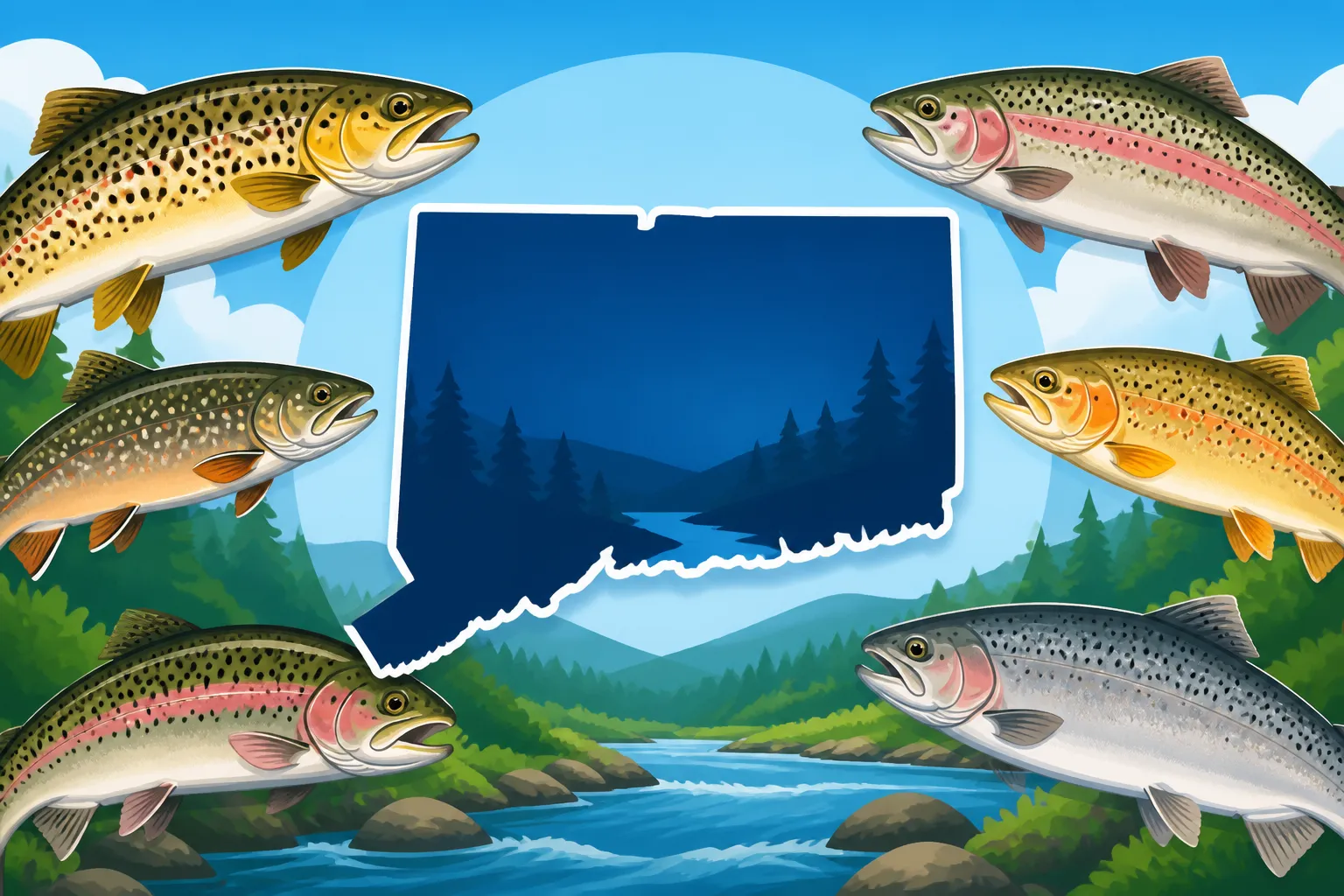
Visually, brown trout are recognized by their golden-brown to olive-green backs, fading to a creamy yellow or white belly. Their most distinctive feature is the scattering of large, dark spots, often encircled by a pale halo, along their sides, typically extending onto their dorsal and adipose fins. Many also have reddish-orange spots, particularly vibrant on their lower flanks. These fish are known for their cunning and wariness, making them a prized catch for experienced anglers. They can grow quite large in Connecticut, especially in larger rivers and lakes where they have access to abundant forage. You'll find these fish both wild-spawned in many of our state's river systems and heavily stocked by the Connecticut Department of Energy and Environmental Protection (DEEP) to bolster fishing opportunities. For those looking to understand their behavior better, checking out Brown Trout Habits in Connecticut Streams can provide valuable insights.
Rainbow Trout: The Stocking Workhorse and Eager Biter
Rainbow trout (Oncorhynchus mykiss) are probably the most recognized trout species, thanks to their widespread stocking and willingness to bite. Native to the Pacific drainages of North America and Asia, rainbows were brought east and have become a staple of recreational fisheries across the country, including here in Connecticut. The DEEP stocks hundreds of thousands of rainbow trout each year into rivers, streams, and lakes, particularly before and during the spring fishing season.
These beautiful fish are named for the iridescent, reddish-pink band that runs along their lateral line, often shimmering with all the colors of a rainbow, especially when caught in bright sunlight. Their bodies are typically silvery or olive-green with numerous small, dark spots covering their backs, sides, and fins, including their tails. Unlike brown trout, their spots usually don't have halos. Rainbows are known for their strong fights, often making aerial leaps when hooked, which makes them incredibly exciting to catch. They are particularly popular for put-and-take fisheries, where anglers can enjoy a high catch rate, especially in the weeks following a stocking event. To learn more about where and when these eager fish are introduced, take a look at Rainbow Trout Stocking in Connecticut.
Brook Trout: Connecticut's Native Gem and Coldwater Indicator
The brook trout (Salvelinus fontinalis) holds a special place in the hearts of Connecticut anglers because it is our state's only native trout species. In fact, it's technically a char, but commonly referred to as a trout. These magnificent fish are true indicators of cold, clean, highly oxygenated water, often found in the pristine headwaters and small mountain streams of our state. Finding a wild brook trout is a badge of honor for many anglers, a testament to the health of the ecosystem.
Brook trout are easily identified by their stunning coloration: a dark, mottled olive-green back with distinctive worm-like markings (vermiculations) that extend onto their dorsal fin. Their sides are often sprinkled with red and yellow spots, some with blue halos, and their lower fins (pelvic, pectoral, and anal) have a distinctive white leading edge, often followed by a black stripe, and then a reddish-orange hue. Their bellies can range from white to a vibrant orange or red, especially during spawning season. While naturally occurring populations are often smaller, typically in the 6-10 inch range, they are incredibly feisty for their size. Conservation efforts are crucial to protect these delicate populations, and understanding their unique characteristics is key. Delve deeper into their significance and habitats by reading Brook Trout: Connecticut's Native Trout.
Beyond the Big Three: Hybrids and the Nuance of Stocking
While the brown, rainbow, and brook trout are the primary species you'll encounter in Connecticut, the world of trout fishing can sometimes present a few interesting twists. These often come in the form of hybrids or specific stocking programs that introduce something a little different, adding another layer of excitement for anglers always on the lookout for a unique catch. It’s also important to distinguish between wild, naturally reproducing trout and those introduced through stocking efforts, as this impacts both fishing strategy and conservation considerations.
Tiger Trout: The Elusive, Striking Hybrid
Imagine a trout with the camouflage pattern of a tiger, and you've got a tiger trout. This visually stunning fish is a sterile hybrid, a cross between a male brown trout and a female brook trout. They are not naturally occurring in Connecticut waters; rather, they are occasionally stocked by the DEEP in very limited numbers for a special "trophy" experience. Because they are sterile, they put all their energy into growth, often becoming quite aggressive feeders.
Their appearance is truly captivating: a dark, mottled pattern of wavy, irregular lines that resemble a tiger's stripes or marble, often in shades of brown, black, and olive, against a lighter background. They typically have a streamlined body shape. Catching a tiger trout in Connecticut is a rare and memorable event, a true highlight for any angler lucky enough to encounter one. They represent a unique addition to our diverse fisheries, often found in waters alongside their parent species. If you're curious to know more about these striking fish, consider exploring What a tiger trout is and whether they are in Connecticut.
The Role of Stocking vs. Wild Populations: A Tale of Two Fisheries
It's absolutely crucial to understand the difference between a wild trout and a stocked trout in Connecticut. While both provide fantastic fishing opportunities, they represent different aspects of our aquatic ecosystems and often require different approaches from anglers.
-
Wild Trout: These fish are born and raised entirely in the natural environment. They have adapted to their specific stream or river, developing instincts that make them wary and challenging to catch. Wild populations, especially of native brook trout, depend on pristine water quality, cold temperatures, and intact habitats for successful reproduction and survival. Fishing for wild trout often means venturing into smaller, more remote streams and employing stealthy, often fly-fishing, techniques. Protecting these populations is a high priority for conservationists and the DEEP.
-
Stocked Trout: The vast majority of trout caught in Connecticut are stocked fish. The DEEP raises brown, rainbow, and sometimes tiger trout in hatcheries and releases them into designated fishing waters. These fish are bred for growth and survival in hatchery environments and are generally less wary than their wild counterparts, especially soon after release. Stocking programs are vital for providing abundant fishing opportunities, making trout fishing accessible to a wider range of anglers, including beginners and families. They are the reason we have such a robust "put-and-take" fishery, particularly during the spring.
Understanding this distinction is not just academic; it influences everything from your choice of bait or lure to your preferred fishing location and even the ethics of catch and release. For a deeper dive into this important topic, you might find Difference between wild and stocked trout in Connecticut incredibly insightful. Anglers interested in maximizing their chances on opening day often consult Connecticut Trout Season and Stocking Rules for the latest information.
Identifying Your Catch: Practical Tips for Anglers
Being able to correctly identify the trout species you've caught isn't just a fun part of fishing; it's also important for following regulations and appreciating the unique characteristics of each fish. While they share some similarities, each of Connecticut's primary trout species has distinct visual cues and behavioral patterns that set it apart. Learning these distinctions will make you a more informed and confident angler.
Key Visual Cues: Spotting the Differences
When you land a trout, take a moment to observe its features before deciding whether to release it or add it to your creel. Here’s a quick guide to the most reliable visual identifiers for the three main trout species in Connecticut:
-
Spots and Patterns:
- Brown Trout: Look for prominent dark spots, often with light "halos" around them, scattered across their sides and extending onto their gill plates and dorsal fin. They may also have red or orange spots, particularly on their lower sides. The tail is usually squared off or slightly forked, and typically has few to no spots.
- Rainbow Trout: These fish are typically covered in numerous small, dark spots over their entire body, including their head, dorsal fin, and notably, their caudal (tail) fin, which is often heavily spotted and slightly forked. The iconic pink or red stripe along their lateral line is also a dead giveaway.
- Brook Trout: Their most striking feature is the worm-like, maze-like (vermiculated) pattern on their back and dorsal fin, usually in dark olive or black against a lighter background. They have bright red and yellow spots on their sides, often with distinctive blue halos. Critically, their lower fins (pelvic, pectoral, and anal) have a crisp white leading edge, often bordered by a black line, before turning reddish. The tail is usually square or only slightly notched.
-
Body Shape and Coloration:
- Brown Trout: Often stockier build, varying from golden-brown to olive-green.
- Rainbow Trout: More torpedo-shaped, typically silvery-grey to olive, with the distinguishing pink stripe.
- Brook Trout: Generally more slender, with a dark back and often a vibrant, almost iridescent, belly during spawning.
To help visualize these differences, here's a handy comparison table:
| Feature | Brown Trout | Rainbow Trout | Brook Trout |
|---|---|---|---|
| Coloration | Golden-brown/olive; light belly | Silvery/olive; prominent pink stripe | Dark olive/green; often vibrant belly |
| Spots | Dark spots with light halos; red/orange | Numerous small dark spots, including tail | Red & yellow spots with blue halos |
| Back Pattern | Generally plain | Spotted | Distinctive worm-like (vermiculations) |
| Tail | Squared to slightly forked; few spots | Slightly forked; heavily spotted | Squared to slightly notched; unspotted |
| Lower Fins | Plain | Plain | White leading edge, often with black line |
| Native to CT? | Introduced | Introduced | Yes (native) |
For a comprehensive visual reference, don't forget to consult a Trout Species Identification Guide for Connecticut, which can be an invaluable tool for on-the-water identification.
Habitat and Behavior Clues: Where and How They Bite
Beyond visual identification, the environment in which you catch a trout and how it behaves can offer clues to its species:
- Brook Trout: If you're deep in a small, cold, crystal-clear feeder stream, especially in higher elevations or remote areas, and catch a small, aggressive fish with vibrant colors, chances are it's a brook trout. They often hide under logs, rocks, or undercut banks and can be very eager to strike small flies or lures. Their preference for specific, pristine conditions makes them excellent indicators of stream health.
- Rainbow Trout: In larger, more open sections of rivers, or in lakes and ponds that are regularly stocked, a strong, acrobatic fight with a fish that jumped multiple times often points to a rainbow. They tend to be less shy, especially soon after stocking, and will hit a variety of baits, lures, and flies. You'll often find them actively cruising or holding in moderate currents.
- Brown Trout: These wily fish are often found in larger rivers and streams, and sometimes in deeper sections of lakes. If you're using more subtle tactics, perhaps targeting structure or fishing during lower light conditions, and hook into a powerfully fighting, often larger trout, it could very well be a brown. They are known for being more nocturnal and can be incredibly elusive, making their capture a real triumph. Their ability to survive in slightly less pristine conditions means you might find them in areas where brook trout cannot.
Knowing these habitat and behavior preferences can help you predict what species you might encounter, and in turn, tailor your fishing approach. For example, specific fly patterns might be more effective for particular species in certain habitats, and you can find a huge array of options on platforms like Amazon to suit your needs.
Why Understanding Trout Species Matters for Anglers
Beyond the simple satisfaction of knowing what you've caught, understanding the different trout species in Connecticut has significant practical implications for every angler. It directly impacts how you fish, where you fish, and your contribution to the ongoing health and conservation of our precious aquatic resources. It's about being a responsible, effective, and ethical participant in the angling community.
Following Regulations and Conservation Efforts
One of the most critical reasons to know your trout species is to comply with fishing regulations. While many general trout waters have standard rules, certain areas, or even specific species, might have unique regulations in place.
For instance, native brook trout populations are often subject to stricter catch limits or even catch-and-release-only rules in certain streams to protect their vulnerable numbers. There might be different size limits for wild fish versus stocked fish, or specific rules for certain designated "Trout Management Areas" or "Wild Trout Management Areas." Failing to correctly identify your catch could inadvertently lead to violations, which can result in fines and even loss of fishing privileges. Keeping up to date with Connecticut Trout Limit and Possession Rules is essential. Moreover, understanding which species is native and which is introduced helps foster a deeper appreciation for conservation efforts, especially those aimed at preserving the unique genetic integrity of our wild brook trout. This knowledge encourages responsible angling practices, such as careful handling and release, particularly for native fish.
Improving Your Fishing Success and Gear Choices
Knowing the habits and preferences of each trout species can dramatically improve your fishing success. Different trout species often respond better to different baits, lures, and fishing techniques.
- Rainbow Trout: Often eager biters, especially soon after stocking. They might readily take power baits, corn, worms, or brightly colored lures and flies. If you're targeting recently stocked rainbows, a simple spinning setup with a spinner or a small spoon found on Amazon can be incredibly effective.
- Brown Trout: These fish are typically more wary and require a stealthier approach. They often prefer natural baits like minnows or larger insects, or realistic artificial lures and flies that imitate their forage. Fly anglers might use streamers or nymphs, while spin anglers might opt for small crankbaits or soft plastics. Their nocturnal tendencies mean they are often more active during dawn, dusk, or even at night.
- Brook Trout: In their smaller, wild habitats, brook trout often respond best to delicate presentations. Small dry flies, tiny nymphs, or micro spinners and ultralight tackle are usually the most effective. Heavy gear or noisy approaches will often spook them immediately. Their preference for cold, clear water also means specific fishing times might be better, which you can explore in guides like Best Time of Year to Fish in Connecticut.
By understanding these species-specific nuances, you can tailor your tackle, bait, and strategy, increasing your chances of a successful and rewarding day on the water. Whether you're a fly angler looking for Fly Fishing for Trout in Connecticut techniques or a spin angler browsing Amazon for the latest trout lures, knowledge of your target species is your best friend. Even specific regulations in areas like Connecticut Trout Management Area Regulations can influence your choice of gear and technique.
Disclaimer
This article is for general informational purposes only and does not constitute professional advice. Laws, prices and regulations vary by location and change over time. Consult a qualified professional for guidance on your specific situation.