Northern Pike Waters in Connecticut
For many Connecticut anglers, the pursuit of a true freshwater trophy means one thing: Northern Pike. These aggressive, toothy predators offer an exhilarating challenge, but knowing where to find them and how to entice them can feel like a well-kept secret. This guide is dedicated to unraveling the mystery of Northern Pike fishing in Connecticut, helping you pinpoint the prime waters, understand their habits, and equip yourself for success in landing one of these formidable fish.
Where Northern Pike Thrive: Understanding Their Preferred Domain
Northern Pike are fascinating creatures, built for ambush and designed for power. To consistently catch them, you first need to understand their preferred living conditions. They aren't just found anywhere; they seek out specific habitats that cater to their predatory lifestyle and reproductive needs. Ignoring these environmental cues is often why anglers struggle to find these elusive giants.
Preferred Habitat Characteristics
Pike are often associated with shallow, weedy environments, especially during certain times of the year. They absolutely love dense cover like lily pads, submerged timber, weed lines, and even fallen trees. These areas provide perfect ambush points from which they can explode onto unsuspecting prey. Think of them as aquatic snipers, patiently waiting in the camouflage of vegetation. They also prefer cooler, well-oxygenated water, which influences their depth selection throughout the seasons. While they’ll patrol shallower areas, especially in spring and fall, during the heat of summer, they might retreat to slightly deeper water, often still adjacent to prime cover. A keen eye for this type of structure, whether on a lake or a slow-moving river, is your first step to locating pike.
When scouting a new water body or revisiting a familiar one, pay close attention to areas that offer a mix of cover and depth. The edges where a weed bed drops off into deeper water, or where a channel runs alongside a flat covered in vegetation, are classic pike hangouts. These transition zones allow pike to quickly move from their concealed positions to deeper, cooler water if needed, or to patrol for prey without exposing themselves too much. Even areas with significant rock piles or old submerged foundations can hold pike, particularly if they are near a food source.
Diet and Forage Base
Northern Pike are apex predators in most freshwater ecosystems, meaning their diet is quite diverse and robust. They are opportunistic feeders and will consume almost anything they can fit in their sizable mouths, but they do have preferences. Their primary diet consists of smaller fish such as perch, shiners, suckers, and even smaller bass or trout. However, they aren't above devouring frogs, ducklings, and even small mammals if the opportunity arises. This broad diet means that understanding the local forage base is crucial for choosing the right baits and lures.
If a particular lake is known for a strong population of yellow perch, then mimicking a perch with your lure choice or using live perch as bait would be a highly effective strategy. Conversely, if shiners are abundant, a silver or gold spoon that flashes like a fleeing shiner will often draw strikes. Pike are incredibly efficient hunters, and they'll often hold position near large schools of baitfish, waiting for the opportune moment to strike. Understanding these "grocery stores" of the underwater world is key to intercepting a hungry pike. For anglers looking to stock up on a variety of versatile spoons, large swimbaits, or even heavy-duty leaders, checking out the fishing sections on Amazon can provide a wide range of options suitable for various forage imitations.
Key Northern Pike Waters in Connecticut
While Northern Pike aren't as widespread as bass or trout in Connecticut, several specific bodies of water have well-established populations and offer excellent opportunities for anglers seeking these toothy giants. Knowing these hotspots can save you hours of searching and significantly increase your chances of success. Each of these locations offers a unique fishing experience, from expansive lakes to more riverine environments. For a broader overview of state fishing locations, check out Best Fishing Lakes in Connecticut.
Bantam Lake: The Crown Jewel
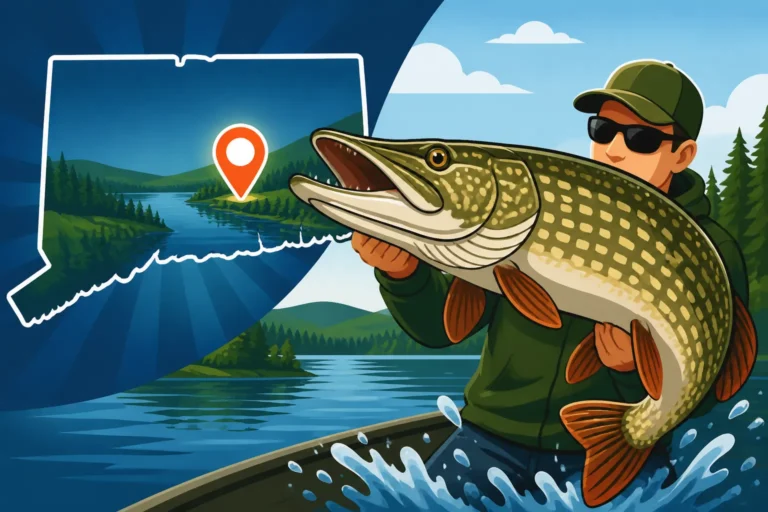
Bantam Lake, located in Litchfield, holds the reputation as Connecticut’s premier Northern Pike fishery. It’s a relatively large, shallow lake, spanning over 900 acres, and its extensive weed beds, lily pads, and submerged timber create ideal habitat for pike. This is where many anglers specifically target trophy pike, and for good reason—the lake consistently produces fish over the 30-inch mark, with some truly massive specimens being caught each year. The shallow nature of Bantam Lake means that pike are often accessible through various fishing methods, including casting, trolling, and especially ice fishing.
Fishing Bantam Lake effectively often involves exploring its numerous coves and bays, such as the expansive areas around Marsh Point or the southern reaches near the public boat launch. These zones feature abundant aquatic vegetation, perfect for pike to lie in ambush. During the open water season, large spinnerbaits, spoons, and swimbaits cast along weed lines are popular choices. When the lake freezes over, it transforms into an ice fishing paradise, drawing crowds eager to set out tip-ups baited with large shiners or suckers. It's a place where patience can truly pay off, as the rewards can be a true Bantam Lake monster. Dive deeper into this fishery with our Bantam Lake Fishing Guide.
Lake Lillinonah and Lake Zoar: Riverine Giants
Moving east, Lake Lillinonah and Lake Zoar, both impoundments of the Housatonic River, offer different but equally exciting opportunities for Northern Pike. These lakes are distinct from Bantam due to their riverine characteristics—they are longer, narrower, and generally deeper with more current, reflecting their origin as river sections. This means pike here might behave a bit differently, often congregating in slower sections, tributary mouths, or areas with significant submerged structure rather than vast weed flats.
Lake Lillinonah, upstream of Lake Zoar, is known for its dramatic changes in depth and current. Pike often relate to the deeper channels, drop-offs, and the mouths of creeks that feed into the lake. Anglers targeting pike here often find success trolling large crankbaits or fishing large shiners under floats in deeper pockets adjacent to cover. Lake Zoar, while similar, can sometimes offer more accessible pike fishing due to slightly less current in some areas and good sections of woody cover. Both lakes require anglers to adapt their tactics from traditional weed-bed fishing to a more structure-oriented approach. These river-lakes are known to produce solid pike, often in the 25-35 inch range, with potential for larger fish, making them an exciting challenge for those who understand their dynamics. Learn more about Lake Lillinonah Fishing Guide or Lake Zoar Fishing Guide.
Other Notable Pike Fisheries
While Bantam, Lillinonah, and Zoar are the mainstays, Connecticut has a few other waters where Northern Pike can be found, though perhaps in smaller numbers or with less consistent trophy potential. These spots might appeal to anglers looking for a less crowded experience or those exploring closer to home.
For instance, the Connecticut River itself, especially its slower-moving sections and oxbow lakes, can hold pike. These areas often feature extensive backwaters and coves with abundant vegetation and baitfish, providing ideal conditions. Fishing these large river systems can be challenging due to their vastness, but the rewards can be significant for persistent anglers. Additionally, some smaller ponds and lakes might occasionally yield pike, though these populations are often less documented and can be more hit-or-miss. It’s always worth checking the latest state fishing guides or local reports for unexpected pike encounters in lesser-known waters. Just remember that patience and adaptability are key when exploring these diverse fisheries.
Identifying Northern Pike: What to Look For
Before you can celebrate catching a Northern Pike, you need to be sure it's actually a pike! Connecticut waters are home to a very similar-looking fish, the Chain Pickerel, which can sometimes be confused with juvenile pike. Knowing the subtle differences is important not only for accurate identification but also because fishing regulations, such as size and creel limits, often differ between the two species.
Physical Characteristics
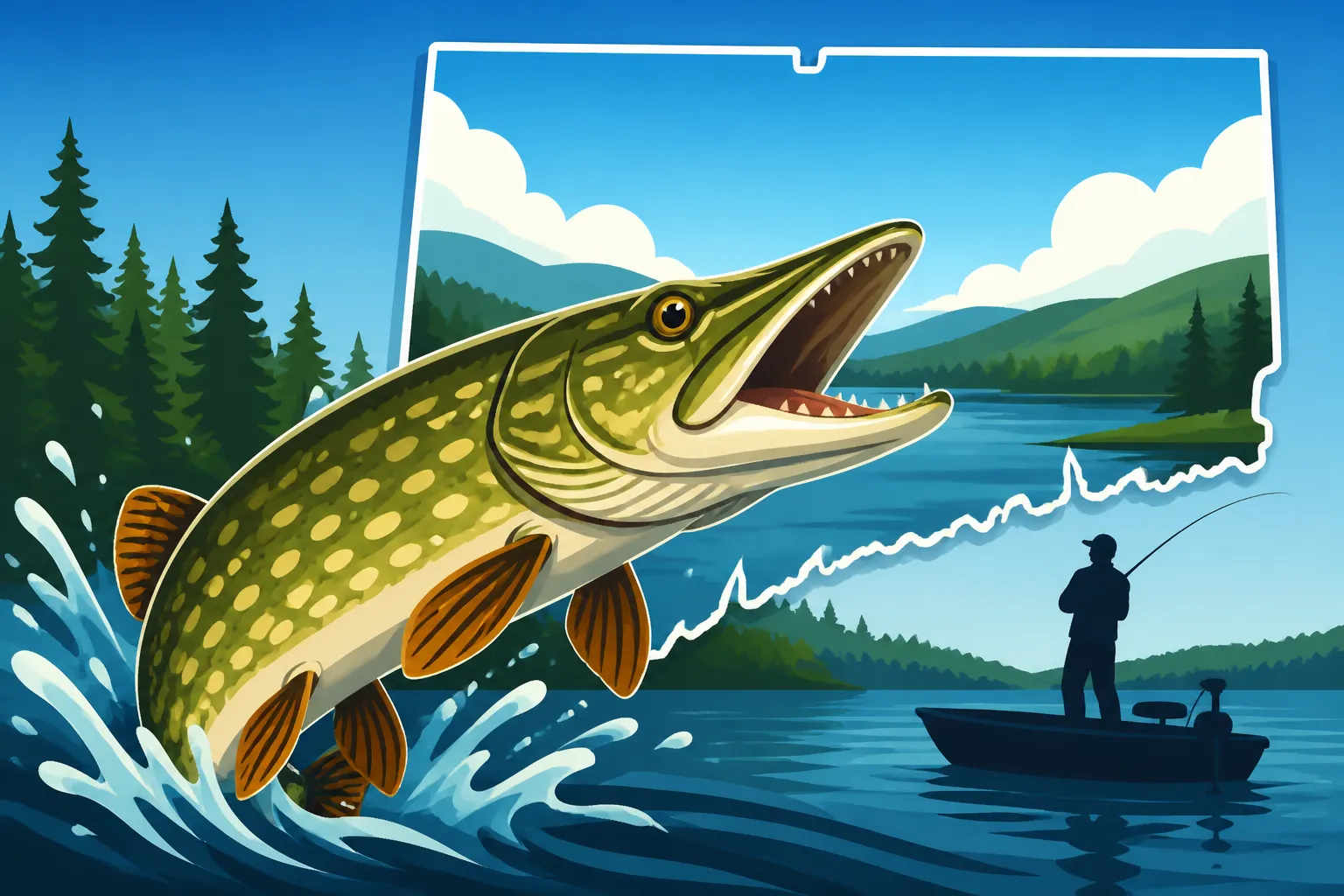
Northern Pike are characterized by their long, torpedo-shaped bodies, dorsal and anal fins set far back on the body, and a distinctive duck-bill shaped snout filled with rows of sharp, backward-pointing teeth. Their coloration is typically dark green to olive on the back, fading to a lighter, yellowish-white belly, with horizontal rows of light, bean-shaped spots or markings along their flanks. The dark markings are typically on a lighter background. One of the most telling features is the presence of fully scaled cheek and gill covers. If you run your hand (carefully!) over the gill cover, it should feel scaled all the way to the operculum's edge.
Their powerful tail fin is deeply forked, indicating their burst speed predator nature. The eyes are typically large and forward-facing, allowing for excellent vision to track prey. The mouth extends well past the eye, further emphasizing its predatory design. When you land a good-sized pike, their sheer power and size are unmistakable, often reaching lengths of 25-40 inches or more in Connecticut's top waters.
Distinguishing from Chain Pickerel
The most common mix-up in Connecticut is between Northern Pike and Chain Pickerel. While both are members of the Esox family and share similar body shapes and toothy grins, there are definitive ways to tell them apart. The easiest distinguishing feature is often found on their cheeks and gill covers. As mentioned, Northern Pike have fully scaled cheeks and gill covers. Chain Pickerel, on the other hand, have fully scaled cheeks but only the upper half of their gill covers are scaled; the lower half is bare. This is a crucial difference and the most reliable way to identify them visually. For more details on pickerel habits, see Chain Pickerel Habits in Connecticut Ponds.
Another key difference is their coloration and marking pattern. Chain Pickerel have a distinct, chain-like or reticulated pattern of dark markings on a lighter, greenish background, which is where they get their name. The dark markings are typically interconnected, forming a network. Northern Pike, conversely, have those lighter, bean-shaped spots on a darker background. While young pike can sometimes have less distinct spots, the gill cover scaling remains the most consistent identifier. Finally, while both can grow to respectable sizes, Northern Pike generally attain much larger sizes than Chain Pickerel in Connecticut, with most pickerel topping out around 20-24 inches, whereas a pike of that size is still considered relatively small.
Fishing Techniques for Connecticut Pike
Successfully targeting Northern Pike requires a combination of robust gear and strategic techniques. These fish are notorious for their aggressive strikes and powerful fights, so coming prepared is paramount. From the methods used in open water to the specific setups for ice fishing, each approach has its nuances.
Casting and Trolling Techniques
In the open water season, casting and trolling are the primary methods for catching Northern Pike. When casting, focus on weed lines, submerged structure, and drop-offs, basically any place a pike might lie in ambush. Large spoons (silver, gold, or red/white patterns are classics), spinnerbaits with big blades, and substantial crankbaits that dive to the depth of the weed tops are excellent choices. Large jerkbaits or swimbaits that imitate baitfish can also be incredibly effective. The key is to present a lure that is large enough to get a pike's attention and robust enough to handle its sharp teeth.
Retrieve speeds should vary; sometimes a fast, erratic retrieve triggers a chase, while other times a slower, stop-and-go presentation is more effective, particularly in colder water. Trolling is another highly productive method, especially on larger lakes like Bantam or Lillinonah. Using a boat to cover more water at a consistent speed, anglers can deploy large crankbaits, swimbaits, or even dead bait rigs behind the boat. Trolling allows you to explore different depths and identify active feeding zones. Always use a heavy-duty rod and reel, spooled with strong braided line, and a steel or heavy fluorocarbon leader to prevent bite-offs. Without a proper leader, those razor-sharp teeth will make short work of your line. Many anglers find durable, affordable options for these essential items on Amazon, from reliable braid to sturdy leaders.
Ice Fishing for Pike
When Connecticut’s lakes freeze over, a whole new world of pike fishing opens up: ice fishing. This is often when some of the largest pike are caught, as they remain active under the ice. The most popular method for ice fishing pike is using tip-ups. A tip-up is a device that holds a baited line in the water and signals a bite by flagging a brightly colored flag. Anglers typically set out several tip-ups, covering different depths and areas around known pike haunts like weed edges or drop-offs.
The preferred bait for ice fishing pike is often large live shiners or suckers, fished under a float or simply weighted to suspend at a specific depth, usually just above the weed tops or structure. Pike are attracted to the struggling movements of the live bait, which mimics an easy meal. Jigging with large spoons or swimbaits through holes can also be effective, especially for actively searching for fish. Remember to have a large auger (8-inch minimum is recommended for larger pike) and a gaff or large landing net designed for ice fishing on hand. And, of course, wear appropriate safety gear! Learn more about this exciting winter activity with our guide to Ice Fishing in Connecticut.
Recommended Gear and Lures
For any type of Northern Pike fishing, specific gear considerations are crucial to both your success and safety. The right equipment helps you land fish efficiently and protects your line from their formidable teeth.
- Rods and Reels: A medium-heavy to heavy action spinning or baitcasting rod, typically 7-8 feet long, paired with a robust reel capable of holding 20-50 lb braided line, is ideal.
- Line: Braided line is highly recommended for its strength, lack of stretch, and abrasion resistance.
- Leaders: This is non-negotiable. Pike have extremely sharp teeth that will easily cut through monofilament or fluorocarbon main line. Use steel leaders (wire leaders) or very heavy (80-100 lb) fluorocarbon leaders. Many anglers prefer a dark-colored steel leader, often found in multi-packs on Amazon, to avoid spooking the fish while providing maximum protection.
- Lures:
- Spoons: Classic metal spoons (Daredevils, Little Cleos, Johnson Silver Minnows) in silver, gold, red/white.
- Spinnerbaits: Large, single or tandem blade spinnerbaits, especially with big Colorado or willow blades for maximum flash and vibration.
- Crankbaits: Deep-diving or suspending crankbaits that mimic local baitfish.
- Swimbaits & Jerkbaits: Large, realistic soft or hard plastic swimbaits and suspending jerkbaits can be deadly.
- Miscellaneous: Long-nosed pliers or forceps for hook removal (those teeth are no joke!), a jaw spreader for safety, and a large landing net. Gloves can also protect your hands from gill rakers and teeth during handling.
Regulations and Conservation for Pike
Fishing for Northern Pike in Connecticut is a rewarding experience, but it comes with the responsibility of understanding and adhering to state regulations. These rules are in place to ensure sustainable populations for future generations of anglers. Ignoring them can lead to fines and negatively impact the fishery. It's always a good idea to consult the most current Connecticut Fishing Guide before heading out. For a general overview of all fishing rules, check out Connecticut Fishing Regulations Explained.
Size and Creel Limits
The Connecticut Department of Energy and Environmental Protection (DEEP) sets specific size and creel (bag) limits for Northern Pike, which can vary from other species or even from year to year. These limits are designed to protect larger, spawning-size fish and prevent overharvesting. For Northern Pike, you'll typically find a minimum length requirement, meaning any fish caught below that size must be immediately and carefully released. There will also be a daily creel limit, dictating how many pike an angler can keep per day.
For example, a common regulation might be a minimum length of 26 inches and a daily creel limit of two fish. However, these numbers are subject to change, and specific water bodies might have their own unique regulations that differ from the statewide rules. It's especially crucial to check for special regulations on waters like Bantam Lake, where specific management goals might be in place due to its status as a trophy pike fishery. Always double-check the latest guide to ensure you are compliant. These regulations are not arbitrary; they are the result of biological assessments aimed at maintaining healthy and robust pike populations for everyone to enjoy.
Catch and Release Practices
Given the desire to maintain and grow Connecticut's trophy pike fishery, catch and release is highly encouraged, especially for larger specimens. Releasing larger, older pike allows them to continue growing and contributing to the gene pool, producing more quality fish. Practicing proper catch and release techniques significantly improves a fish's survival rate.
Here are some best practices:
- Minimize handling time: Get the fish unhooked and back in the water as quickly as possible.
- Keep the fish wet: Avoid dragging the fish onto dry land or holding it out of the water for extended periods. If possible, unhook it in the water.
- Use appropriate tools: Long-nosed pliers or forceps are essential for removing hooks, especially from a pike's toothy maw. A jaw spreader can also be useful for safely accessing deeply hooked fish without injury to you or the fish.
- Support the fish: If you must lift a large pike for a photo, support its body horizontally with one hand under the belly and the other gripping the lower jaw (carefully!). Avoid holding a large fish vertically by the jaw as this can cause internal damage.
- Revive the fish: If the fish seems sluggish, hold it gently in the water, facing into any current, until it can swim away under its own power.
By following these guidelines, anglers can contribute to the long-term health and vitality of Connecticut's Northern Pike populations, ensuring that trophy fishing opportunities remain for years to come.
Best Times and Conditions for Pike Fishing
Timing is everything when it comes to fishing, and Northern Pike are no exception. Understanding their seasonal patterns and how various weather and water conditions influence their behavior can significantly increase your chances of a successful outing. Pike are active predators, but their activity levels can fluctuate dramatically depending on environmental factors.
Seasonal Patterns
Northern Pike are generally active year-round, but certain seasons offer peak opportunities for anglers.
- Spring (Ice Out to Early Summer): This is arguably the best time to target pike. As the ice melts and water temperatures begin to rise, pike become incredibly active. They move into shallower waters for spawning and then actively feed to recover. Targeting them along newly thawed weed lines, shallow bays, and tributary mouths with large spoons or swimbaits can be highly productive. The fish are often more accessible and aggressive during this period.
- Summer: During the heat of summer, pike can become a bit more challenging. They often retreat to deeper, cooler water, though they'll still relate to the cooler edges of weed beds, submerged springs, or deep structure. Early mornings and late evenings are often the best times, or after a good rain that might cool the surface waters. Trolling deeper diving crankbaits or fishing live bait in cooler depths can be effective.
- Fall: As water temperatures drop in the fall, pike once again become very active, aggressively feeding to build up reserves for winter. They can often be found back in shallower areas, near baitfish schools that are also moving shallower. Large crankbaits, jerkbaits, and big swimbaits worked along main lake points, rock piles, and remaining weed beds are excellent choices. This can be a prime time for catching larger, heavier fish.
- Winter (Ice Fishing): As discussed, ice fishing is a fantastic way to target pike. They remain active under the ice, continuing to feed, often more slowly, but still opportunistic. Using large live baits on tip-ups is the go-to method, particularly over weed beds and along drop-offs. The clear, cold water can make them wary, so subtle presentations and patience are key.
Weather and Water Conditions
Pike are sensitive to changes in weather and water conditions, and savvy anglers pay close attention to these details.
- Overcast Days & Low Light: Pike, being ambush predators, often prefer low light conditions. Overcast days, dawn, and dusk are frequently the most productive times, as the reduced light makes them feel more secure in shallow water and can improve their ambush success. Bright, sunny days can push them deeper or into denser cover.
- Barometric Pressure: A stable or falling barometric pressure often signals good fishing. A sudden drop in pressure before a storm can sometimes trigger a feeding frenzy, while high, stable pressure can make fish more lethargic.
- Water Clarity: Pike can tolerate a range of water clarities, but excessively muddy or turbid water can make hunting difficult for them. Clearer water, especially with some stain, allows them to see prey effectively while still providing some cover. In very clear water, they might be more wary, requiring longer casts and more subtle approaches.
- Wind: A moderate chop on the water surface, caused by wind, can often improve pike fishing. The disturbed surface breaks up light penetration, provides additional cover, and can make baitfish more disoriented, triggering pike strikes. A strong wind, however, can make boat control difficult and fishing unpleasant.
By aligning your fishing trips with these seasonal and environmental factors, you can dramatically improve your chances of encountering and successfully battling one of Connecticut's powerful Northern Pike.
| Water Body | Primary Type | Key Characteristics for Pike | Primary Season | Typical Pike Size (inches) | Accessibility |
|---|---|---|---|---|---|
| Bantam Lake | Natural Lake | Extensive shallow weed beds, lily pads, submerged timber | Spring, Ice Fishing | 25-40+ | Good boat launches |
| Lake Lillinonah | River Impoundment | Deep channels, current, submerged structure, tributary mouths | Spring, Fall | 25-35 | Good boat launches |
| Lake Zoar | River Impoundment | Similar to Lillinonah, less current in some areas, woody cover | Spring, Fall | 25-35 | Good boat launches |
| Connecticut River | River System | Backwaters, oxbows, coves with vegetation | Spring, Fall | Varies, potential for large | Multiple access pts |
Disclaimer
This article is for general informational purposes only and does not constitute professional advice. Laws, prices and regulations vary by location and change over time. Consult a qualified professional for guidance on your specific situation.