Striped Bass Growth Rate to Trophy Size
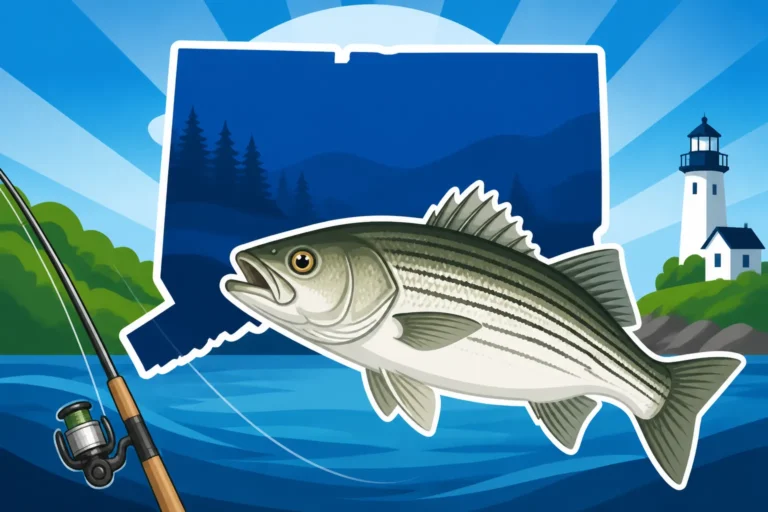
Oh, the elusive trophy striped bass! It's a dream many of us anglers share – that moment when your line screams, and you know, just know, it’s a fish of a lifetime. But let's be real, it can feel like you’re waiting for a unicorn sometimes, can’t it? Understanding how these magnificent fish grow, what fuels their journey to colossal sizes, and what it truly takes to encounter one is key to turning that dream into a reality. This guide is all about pulling back the curtain on the striped bass's growth rate, helping you understand their life story from a tiny fry to that awe-inspiring trophy.
Understanding Striped Bass Life Cycles and Growth
The journey of a striped bass from a microscopic egg to a formidable predator is a fascinating tale of survival, adaptation, and consistent growth, provided the conditions are right. They're not just born big; it's a marathon, not a sprint, though some stages are definitely faster than others!
From Egg to Juvenile: The Early Years
Striped bass, unlike many of their marine counterparts that spawn offshore, are anadromous. This means they spend most of their adult lives in saltwater but migrate to freshwater to reproduce. For our Atlantic coast stripers, major spawning grounds are found in large river systems like the Chesapeake Bay, Delaware River, and the Hudson River. It's a massive undertaking, and the success of each spawning season heavily influences the overall population for years to come.
Imagine millions of tiny eggs, fertilized and drifting with the current, completely at the mercy of the river's flow and temperature. These eggs hatch into larvae, barely visible, and then develop into juvenile fish. These little guys spend their first few years in the brackish waters of estuaries, which act as crucial nurseries. Think of these estuaries as protected playgrounds with an abundance of tiny crustaceans and small baitfish, offering both food and shelter from larger predators. This sheltered environment is vital for their initial growth, helping them put on size rapidly before they venture out into the big, wide ocean. The cleaner and healthier these nursery habitats are, the better the chances for a strong year class of stripers.
Adolescent Stripers: Fast Growth and Schooling Behavior
Once our young stripers are a couple of years old and have grown large enough to feel comfortable, they begin their migrations out of the estuaries and into the larger coastal waters, eventually joining the massive schools that migrate up and down the Atlantic coast. This is where their growth really kicks into high gear. They are essentially teenagers now, full of energy and a voracious appetite.
During these adolescent years, usually from about two to six or seven years old, striped bass are incredibly efficient predators. They form large schools, herding baitfish and capitalizing on abundant food sources. This schooling behavior offers protection in numbers and allows for efficient feeding. These fish are often what we call "schoolies" – eager to hit a variety of lures and baits, and they represent the future of our fishery. They're putting on length and girth at a relatively fast pace, especially compared to their later, slower-growing years. Their diet expands significantly to include larger baitfish, and they become active participants in the coastal food web, constantly on the move to find their next meal.
Factors Influencing Striped Bass Growth Rate
It’s not just about age; a striped bass's growth is a complex equation influenced by a host of environmental factors. Think of it like a gardener trying to grow prize-winning tomatoes – you need the right soil, water, and sunlight. For stripers, it’s all about the availability of food, water quality, and even their individual genetic makeup.
Food Availability and Forage Fish
This is arguably the single most critical factor determining how fast a striped bass grows. Simply put, more food means faster growth. Striped bass are opportunistic predators, and their diet consists almost entirely of smaller fish and crustaceans. When forage fish populations are booming, stripers have an all-you-can-eat buffet, allowing them to pack on pounds and inches rapidly.
In Connecticut waters and throughout Long Island Sound, key forage species include Atlantic menhaden (bunker), herring, squid, sand eels, and various smaller baitfish. If these bait schools are dense and prevalent, a striper spends less energy hunting and more energy growing. Conversely, if forage fish are scarce, stripers have to expend more energy to find food, leading to slower growth rates and sometimes even a decline in overall health. This direct correlation makes healthy baitfish populations absolutely vital for producing trophy-sized striped bass. It’s why you’ll often hear anglers talking about the "bunker schools" – it's the foundation of the food chain for our beloved stripers. We even have a dedicated article on Atlantic Menhaden as Forage Fish in Long Island Sound, highlighting their importance.
Water Temperature and Habitat Quality
Striped bass are cold-blooded, meaning their metabolism is directly affected by water temperature. There’s an optimal temperature range where they are most active, feed most efficiently, and therefore grow fastest. In Connecticut, during the spring and fall migrations, when water temperatures are in that sweet spot (typically 55-70 degrees Fahrenheit), stripers are on the move and feeding aggressively. During the peak of summer, if waters get too warm, they can become lethargic and seek deeper, cooler water, which can slow down their feeding and growth.
Beyond temperature, the overall quality of their habitat plays a huge role. Clean water with good oxygen levels is essential for healthy fish. Pollution, habitat degradation, and disruptions to their spawning rivers or coastal nurseries can severely impact their survival and growth potential. Areas with diverse structures like rocky reefs, mussel beds, and underwater channels offer ample hiding spots for baitfish, creating ideal hunting grounds for stripers. A healthy ecosystem provides the foundation for strong fish.
Genetics and Individual Variation
Just like people, not all striped bass are created equal. There's a genetic component to growth rate. Some fish are simply predisposed to grow faster and larger than others, even under identical environmental conditions. These are your "super growers" – the ones that seem to defy the average growth curves. While we can’t control genetics in the wild, it's a factor that contributes to the presence of truly exceptional, trophy-sized fish in the population.
This individual variation also means that while one 10-year-old striper might be 35 inches long, another 10-year-old might be pushing 40 inches. It adds an element of surprise and excitement to every catch. You never quite know if that strong pull on your line is just a feisty average fish or one of those genetically blessed monsters that has somehow managed to consume every bunker in its path!
The Journey to Trophy Size in Connecticut Waters
Catching a trophy striped bass is the pinnacle for many anglers, a testament to patience, skill, and a bit of luck. But what exactly qualifies as a "trophy" in Connecticut, and how long does it really take for these fish to reach such impressive dimensions?
Defining "Trophy Size" for Striped Bass
What constitutes a "trophy" can be subjective, often varying from angler to angler. For some, a 30-inch striper might be a trophy, especially if it’s their first big fish or caught on light tackle. However, in the broader angling community, particularly when discussing the potential of a seasoned striped bass, the bar is set a little higher.
In Connecticut, a true trophy striped bass is generally considered to be anything over 40 inches in length, and certainly anything pushing or exceeding 50 pounds in weight. These are the giants, the big breeders, the fish that have survived countless migrations and evaded untold numbers of predators and hooks. The state record for striped bass is a testament to the immense potential of these fish in our waters; for more details on that, you can check out Connecticut state record striped bass weight. Landing a striper in the 40-pound range is often regarded as a monumental achievement, a fish that demands respect and a swift, safe release.
How Long Does it Take? Age vs. Size
This is where it gets really interesting, and perhaps a little humbling. Striped bass are relatively long-lived fish, and the biggest trophies are, by definition, old fish. It takes a significant number of years for them to reach those impressive sizes.
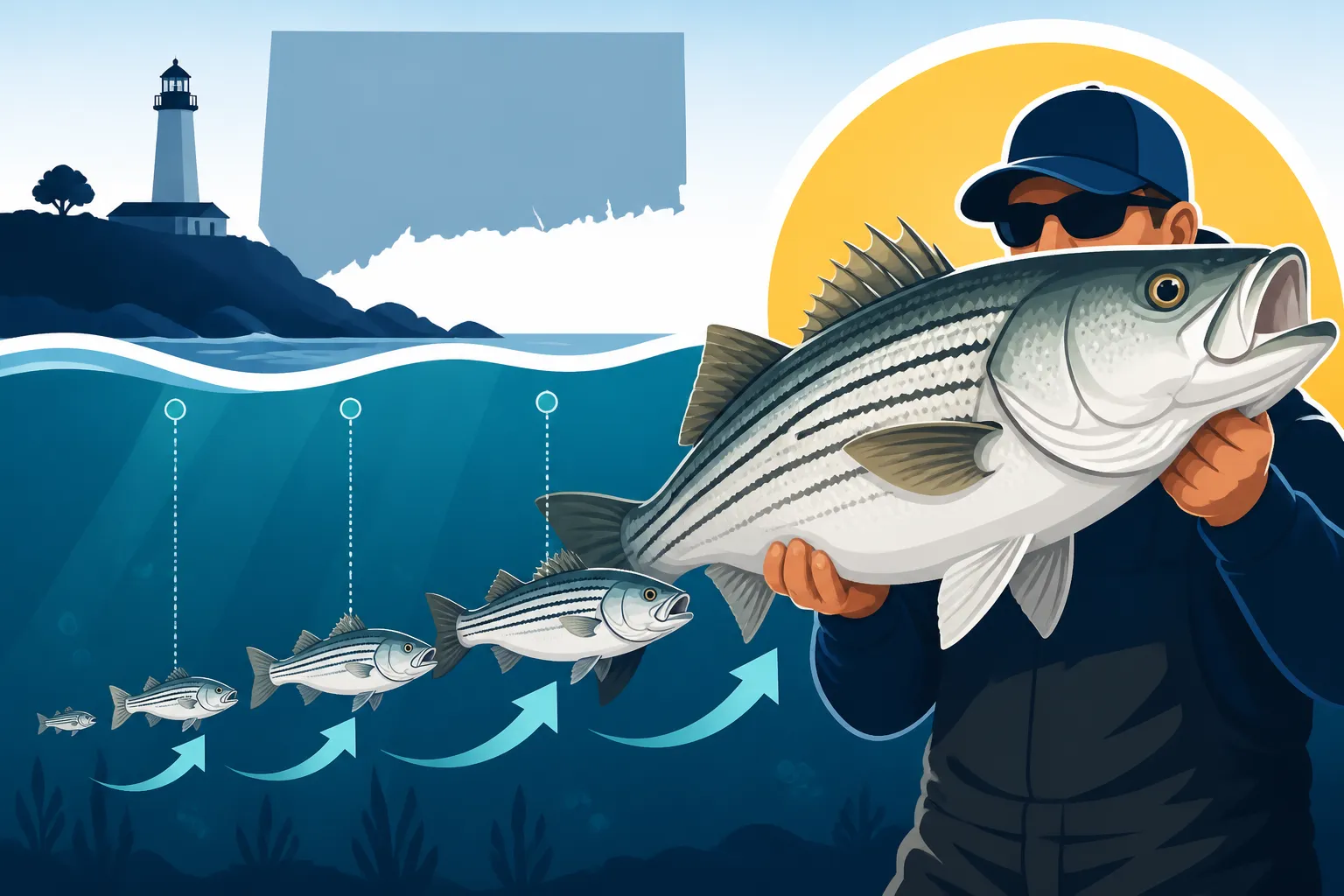
Here's a general idea of the average growth curve for an Atlantic striped bass:
- Year 1-2: Rapid growth in estuaries, reaching lengths of 8-15 inches.
- Year 3-5: Continued good growth, becoming part of the migratory schools, often reaching 20-30 inches. These are your common "schoolies."
- Year 6-8: Maturing into reproductively active adults, hitting the low to mid-30-inch range.
- Year 9-12: These fish are now substantial, often in the 35-40 inch range, and starting to approach "trophy" status.
- Year 13+: The really big fish, 40 inches and above, are typically well over a decade old. Some of the largest stripers caught can be 20, even 30 years old!
It's a testament to their resilience and the importance of conservation that these fish can live so long and reach such grand dimensions. Understanding How long striped bass live and How fast striped bass grow helps appreciate the journey each trophy fish has made.
To give you a clearer picture, here's a general estimation of age versus size:
| Average Length (Inches) | Average Weight (Pounds) | Estimated Age (Years) | Notes |
|---|---|---|---|
| 10-15 | 0.5-1.5 | 1-2 | Juvenile, often found in estuaries |
| 20-25 | 3-6 | 3-5 | Schoolie size, actively migrating |
| 30-35 | 10-18 | 6-8 | Mature adults, significant contribution to spawning |
| 36-40 | 18-25 | 9-12 | Approaching trophy size, strong fighters |
| 40-50+ | 25-60+ | 13-30+ | True trophy fish, often older breeders, found in specific holding areas |
Note: These are average estimations. Individual growth rates can vary significantly based on factors like genetics, food availability, and water conditions.
Prime Locations and Seasons for Larger Stripers
If you're dreaming of a true trophy, you need to think like a trophy fish. Big stripers are smart, experienced, and generally prefer certain environments, especially when they’re not actively migrating. In Connecticut, this means focusing on the robust ecosystems of Long Island Sound Fishing Guide and, to a lesser extent, the lower reaches of the Connecticut River Striped Bass Fishing.
Within Long Island Sound, trophy stripers are often found near deeper water structure, such as rocky reefs, wrecks, deep channels, and points where currents create rips and eddies. These areas concentrate baitfish and provide ambush points for large predators. Think about places where the water drops off sharply, or where tides create strong currents – these are often feeding zones for big fish. The mouths of major rivers, like the Connecticut River, especially during spring and fall migrations, can also be hotspots as stripers stage to enter or exit fresh water.
Seasonally, the best times to target truly large striped bass in Connecticut are during the spring and fall migrations.
- Spring: As water temperatures rise, large stripers move into Long Island Sound from their wintering grounds. They are hungry after the winter and actively feeding to regain strength. This period from May through early July can produce some incredible catches.
- Fall: From September through November, as temperatures begin to drop, stripers undertake their southward migration. They are in a full-on feeding frenzy, gorging on baitfish to build up fat reserves for the winter ahead. This "fall run" is legendary for its potential to yield massive fish.
During the peak of summer, when inshore waters can get quite warm, many of the largest stripers will move to deeper, cooler water, often offshore or to specific deep-water structures. Targeting them then often requires heavier tackle and a boat capable of reaching those spots.
The Role of Regulation and Conservation in Trophy Striper Management
Our ability to even dream of catching a trophy striped bass is deeply intertwined with the efforts made to conserve and manage this incredible species. It’s not just about luck; it's about protecting these fish so they have the chance to grow old and large.
Slot Limits and Harvest Restrictions
One of the most impactful conservation strategies for striped bass has been the implementation of slot limits and harvest restrictions. These regulations are designed to protect both the very young, ensuring they have a chance to mature, and the very largest, most reproductively valuable fish. In Connecticut, the current striped bass slot limit generally means you can only keep fish within a specific size range, for example, from 28 to less than 31 inches. This means anything smaller or larger must be released.
The logic behind protecting the largest fish is simple: they are the most prolific spawners. A large female striped bass, often called a "cow" striper, can produce tens of millions of eggs in a single spawning season. By protecting these big breeders, we ensure the continuation of strong year classes, which is absolutely vital for the long-term health of the fishery. These regulations directly allow fish to reach older ages and, consequently, trophy sizes. It's a bittersweet moment to catch a magnificent 45-inch striper and know you have to release her, but that action ensures she'll be back to spawn again, and perhaps grow even bigger for another angler to enjoy. For current details on these important rules, always consult Connecticut Striped Bass Slot Limit and Season.
Catch and Release Best Practices for Big Fish
Since many trophy-sized striped bass fall outside the legal harvest slot, mastering responsible catch and release techniques is not just good practice – it's crucial for conservation. Catching a big striper is thrilling, but the real victory is ensuring that fish swims away strong to spawn again or to challenge another angler.
Here are some best practices for handling a large striped bass:
- Minimize Fight Time: Use appropriate tackle that can handle the fish quickly. Prolonged fights exhaust the fish, reducing its chances of survival.
- Avoid Landing Nets (if possible): Large, knotless rubberized nets can be okay, but avoid traditional knotted nets that can strip slime and damage fins. Ideally, cradle the fish alongside the boat.
- Keep it Wet: Do everything you can to keep the fish in the water, especially if it's a hot day. If you must remove it for a quick photo, do so gently and quickly.
- Support Its Weight: If lifting, support the fish horizontally with one hand under its belly and another gripping its lower jaw (use a de-hooker or lip gripper if you have one). Never hang a large striper vertically by its jaw, as this can damage its internal organs and spine.
- Use Circle Hooks: These are a game-changer for striped bass. Circle hooks are designed to hook in the corner of the fish's mouth, rather than deep in the gullet, making them much easier and safer to remove. In fact, Connecticut striped bass circle hook requirement exists for a reason – they significantly reduce gut-hooking and improve post-release survival. You can find a good selection of quality circle hooks and other tackle on Amazon.
- Quick Release: Have your camera ready before the fish is landed. Measure and photograph quickly, then get the fish back in the water.
- Revive If Needed: If the fish seems lethargic, hold it gently in the water, facing into the current, allowing water to flow over its gills until it kicks its tail strongly and swims off on its own.
These practices, detailed further in resources like Striped bass catch and release survival tips, ensure that the fish you release has the best possible chance to continue its journey to even greater sizes.
Angler's Patience and Strategy for Targeting Big Stripers
So, you want to catch a trophy striper? It's not just about being in the right place at the right time; it's about preparation, understanding, and a healthy dose of persistence. These fish didn't get big by being easy to catch!
Gear Up for the Challenge
Targeting trophy striped bass isn't a job for your ultralight panfish rod. You need gear that can handle powerful runs, sudden surges, and the sheer weight of a massive fish. This means upgrading your tackle to match the potential fight.
- Rods: Look for stout spinning or conventional rods in the 7-8.5 foot range, rated for medium-heavy to heavy power. They should have enough backbone to turn a big fish but also enough tip action to cast larger lures or detect subtle bites.
- Reels: A high-quality, corrosion-resistant reel with a smooth, powerful drag system is essential. For spinning reels, think 5000-8000 series. For conventional, a reputable 20-30 class reel will do the trick. Capacity for at least 250-300 yards of line is crucial. I've often looked for reviews and deals on reputable brands on Amazon when assembling my heavy-duty setups.
- Line: Braided line is almost a must due to its strength-to-diameter ratio and lack of stretch, which gives you better feel and hook-setting power. Opt for 40-60 lb test braid. Pair this with a fluorocarbon leader of 30-80 lb test, depending on water clarity and what you're throwing.
- Lures and Baits: Big fish often prefer big meals. Consider large swimbaits, poppers, big minnow plugs, and jigs from 2-6 ounces. When it comes to bait, live or fresh dead bunker, eels, or large chunks of mackerel are perennial favorites for targeting trophy fish. Ensure your hooks are sharp and strong enough to handle a big striper's power. You'd be surprised at the variety of tackle you can find on Amazon these days.
Remember, investing in quality gear isn't just about catching fish; it's about being able to fight them effectively and release them in good shape.
Understanding Their Behavior
Trophy stripers are often solitary or travel in smaller pods, especially compared to the large schools of younger fish. They are wise, wary, and have learned to avoid danger. To catch them, you need to understand their patterns and preferences.
- Tidal Influence: Tides are paramount in saltwater fishing. Big stripers often feed most aggressively during specific stages of the tide – usually the beginning or end of an incoming or outgoing tide, when currents are strong and baitfish are disoriented. Understanding Best Time of Day to Catch Striped Bass is about understanding how tides dictate feeding windows.
- Structure: Big fish relate to structure – anything that breaks up the current or provides an ambush point. This includes reefs, rock piles, ledges, shipwrecks, mussel beds, and even bridge pilings. Learn to read your sonar or charts to identify these key areas. Our guide on How to read structure for striped bass in Long Island Sound can be a great starting point.
- Forage Movements: Always pay attention to baitfish. If you find large schools of bunker or herring, big stripers are likely to be lurking nearby. Birds diving, nervous water, or even bunker "flipping" on the surface are all clues.
- Moon Phases: Some anglers swear by specific moon phases, often around the new or full moon, believing it influences tides and fish activity. Keep a log and see if you notice any patterns in your local waters.
- Time of Day/Night: While you can catch stripers during the day, many of the largest fish are caught during low light conditions – dawn, dusk, and especially at night. Big stripers often feel safer and feed more confidently under the cover of darkness.
It's all about putting the puzzle pieces together. The more you observe and learn, the more successful you'll be.
The Long Game: Patience and Persistence
Let's be brutally honest: trophy striped bass fishing is often a grind. It's not about instant gratification. You might spend countless hours on the water, casting hundreds of times, or soaking baits for entire tides, only to come up empty-handed. This can be frustrating, especially when you see social media posts of massive fish.
But that's part of the allure. The challenge is what makes the reward so sweet. The anglers who consistently catch big stripers are often the ones who are out there day after day, week after week, learning the tides, the currents, the structure, and the subtle signs that indicate the presence of large fish. They experiment with different baits and lures, adjust their techniques, and don't give up after a slow outing.
Think of it as a journey, not just a single event. The knowledge you gain from every trip, even the "skunked" ones, adds to your understanding. The sunrise over Long Island Sound, the camaraderie with fellow anglers, the peace of being on the water – these are all parts of the experience. And then, one day, it happens. That rod bends over, the drag screams, and you know all those hours of persistence have finally paid off. It's a memory that lasts a lifetime. So, embrace the process, enjoy the chase, and remember that patience is truly a virtue in the pursuit of a Connecticut trophy striper. It's truly a special kind of fishing, and a fantastic example of Striped Bass Fishing in Long Island Sound.
Disclaimer
This article is for general informational purposes only and does not constitute professional advice. Laws, prices and regulations vary by location and change over time. Consult a qualified professional for guidance on your specific situation.