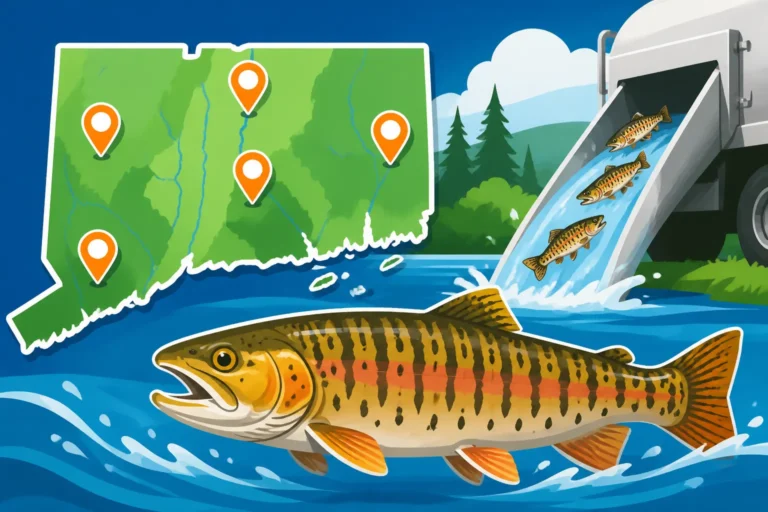
Difference between a tiger trout and a brown trout
It’s a scenario many of us have faced out on the water: you hook into a beautiful fish, and while it definitely looks like a trout, something about its markings just doesn't quite add up. Is it a brown trout? Or could it be one of those elusive, strikingly patterned tiger trout? Differentiating between these two can be a real head-scratcher, especially for new anglers or those fishing new waters in Connecticut. This guide is here to clear up the confusion, helping you confidently identify the unique characteristics that set a tiger trout apart from its brown trout parent.
What Exactly is a Tiger Trout?
Let's start with the one that often sparks the most questions and admiration. The tiger trout isn't a naturally occurring species in most places, and that's part of what makes it so special and, frankly, a little mysterious. They are truly stunning fish, and once you see one, you'll understand why anglers get so excited.
The Striking Appearance of a Tiger Trout
The most distinctive feature of a tiger trout, and the one that gives it its name, is its incredible vermiculated pattern. Imagine the stripes of a tiger, but instead of straight lines, they're more like an intricate labyrinth or maze-like swirling worm tracks that cover their entire body – from head to tail, often extending onto their fins. These patterns are typically dark, almost black, against a lighter, often yellowish-brown or olive-green background. It's truly a work of art from Mother Nature (with a little help from hatchery managers!).
Unlike a brown trout, which tends to have distinct spots, the tiger trout’s markings are interconnected, creating this flowing, marbled look. They often lack the prominent red or orange spots that are characteristic of brown trout, though sometimes you might see faint, diffuse reddish hints. Their fins, especially the dorsal and caudal (tail) fins, usually carry this same intricate pattern, which further sets them apart. When you're out there on a clear stream and one of these beauties flashes in the sunlight, the pattern is absolutely unmistakable. Many anglers spend years hoping to catch just one, making them a true trophy.
The Hybrid Origin Story
So, where do these magnificent fish come from if they're not naturally occurring? This is where the "hybrid" aspect comes in. A tiger trout is a sterile, intergeneric hybrid, meaning it's a cross between two different genera of fish: a female brown trout (Salmo trutta) and a male brook trout (Salvelinus fontinalis). It's a fascinating biological phenomenon!
Because they are a cross between two different species, tiger trout are almost always sterile. This means they cannot reproduce on their own in the wild. This sterility is actually a key reason why some hatcheries choose to stock them. They grow quickly and aggressively, providing a fantastic angling experience, but they don't impact the genetic integrity of native fish populations. Connecticut, like many other states, has explored and implemented stocking programs for these unique fish, often to provide a different angling opportunity or to manage specific fisheries. For more on stocking efforts in the state, you can check out Where tiger trout are stocked in Connecticut.
Getting to Know the Brown Trout
Now, let's talk about the brown trout. This species is a classic, beloved by fly anglers and spin fishermen alike for its cunning, strength, and beautiful appearance. While originally from Europe, they've been widely introduced across North America and have thrived in many of Connecticut's rivers and lakes.
Classic Brown Trout Markings
Brown trout typically have a much different appearance than their hybrid tiger cousins. Their bodies are usually golden-brown to olive-brown on top, fading to a lighter, creamy yellow or white belly. What truly defines a brown trout are its spots. They feature distinct, often dark brown or black spots scattered across their sides, back, and gill covers. Many of these spots are surrounded by a lighter halo, creating a striking contrast.
But here's the kicker: many brown trout also display bright red or orange spots, particularly along their lateral line, which often have a pale blue or purple halo around them. These vibrant spots are rarely, if ever, seen on a tiger trout in the same prominent way. The spots on a brown trout are generally separate and distinct, not forming the interconnected, worm-like patterns you'd find on a tiger trout. If you're looking for a good visual reference, field guides available on Amazon often have excellent diagrams showing these differences.
Brown Trout Behavior and Habitat
Brown trout are known for being a bit more elusive and wary than some other trout species, which makes catching them a real challenge and a rewarding experience. They are incredibly adaptable and can be found in a wide variety of habitats, from cold, clear mountain streams to larger rivers and even some lakes and ponds. In Connecticut, they thrive in many of our pristine waterways, including popular spots like the Farmington River and the Housatonic River. You can learn more about their specific behaviors in Brown Trout Habits in Connecticut Streams.
These fish are often nocturnal feeders, especially the larger, older "holdover" browns, and can grow to impressive sizes, earning them the nickname "river monsters." They prefer cover, often hiding under undercut banks, submerged logs, or large rocks, waiting to ambush prey. Their diet is quite varied, including insects, crustaceans, smaller fish, and even small rodents or amphibians if the opportunity arises. This predatory nature is one of the reasons they can grow so large, making them a sought-after species for trophy anglers.
Key Differences: Tiger Trout vs. Brown Trout
To truly nail down the identification, let's break down the core differences in a side-by-side comparison. It's not just about a pretty pattern; there are genetic and behavioral distinctions too.
Pattern and Coloration: The Dead Giveaway
This is by far the most obvious difference.
- Tiger Trout: Think vermiculated, maze-like, worm-track patterns. The dark markings are interconnected and swirl across the entire body, often in stark contrast to a lighter, olive-to-tan background. They typically lack the distinct red or orange spots.
- Brown Trout: Think distinct spots. They have dark brown or black spots, often ringed with a lighter halo, and critically, many possess prominent red or orange spots along their sides. The overall body color is usually a more uniform brown or golden-olive.
Imagine you're sorting through pictures on your phone after a day of Trout Fishing in Connecticut. If you see a fish that looks like someone took a dark marker and drew a topographic map directly onto its skin, you've likely got a tiger trout. If it looks more like someone splattered it with paint dots, especially red ones, that's your classic brown.
Body Shape and Fin Characteristics
While less pronounced than the patterns, there can be subtle differences in body shape and fin appearance:
- Tiger Trout: Tend to have a slightly more streamlined, almost torpedo-like body shape. Their fins are often darker and may also display the vermiculated pattern. The caudal (tail) fin can sometimes have a slightly more forked appearance than some brown trout, though this isn't a hard and fast rule.
- Brown Trout: Can vary in body shape depending on their environment and age, from slender in fast-flowing rivers to deeper-bodied in lakes. Their fins are generally lighter at the edges and may have spots, but rarely the intricate, interconnected patterns of a tiger trout.
Both species possess an adipose fin (the small, fleshy fin between the dorsal and tail fins), which is a characteristic of salmonids.
Genetic Make-Up and Reproduction
This is where the scientific distinction really shines.
- Tiger Trout: As we discussed, they are a sterile hybrid. This means they are a genetic "dead end" in terms of natural reproduction. This is why you'll primarily find them in waters where they've been specifically stocked. The absence of a natural breeding population is a huge indicator.
- Brown Trout: These are a true, fertile species. They reproduce naturally in suitable habitats, laying eggs in redds (nests) dug in stream beds. This ability to self-sustain is a critical ecological difference. When you hear about efforts to protect wild trout populations, brown trout are often a key part of that conversation, especially in waters like those covered in Best Trout Streams in Connecticut.
Habitat Preferences and Stocking Programs
While brown trout have a wide natural range and can sustain themselves, tiger trout are a product of human intervention (hatcheries).
- Tiger Trout: You'll primarily encounter them in waters where they've been specifically stocked by state fisheries departments, like the Connecticut DEEP. They are often stocked in ponds or streams where they can grow quickly due to their aggressive feeding habits, providing a unique catch-and-release or harvest fishery. Their inability to reproduce makes them a good choice for management in certain areas without worrying about overpopulation or genetic mixing with native species. For precise stocking information, the Connecticut interactive trout stocking map, explained is an invaluable resource.
- Brown Trout: While brown trout are also widely stocked in Connecticut to supplement populations and create excellent fishing opportunities (you can learn more about this in Connecticut Trout Season and Stocking Rules), they also have many naturally reproducing populations in the state's colder, cleaner streams and rivers. You might find wild, stream-born browns in remote areas where tiger trout would never naturally appear.
Here’s a quick table to help summarize the main distinctions:
| Feature | Tiger Trout | Brown Trout |
|---|---|---|
| Origin | Hybrid (Brook Trout x Brown Trout) | True Species (Native to Europe, widely introduced) |
| Reproduction | Sterile (Cannot reproduce) | Fertile (Reproduces naturally) |
| Pattern | Dark, intricate, interconnected worm-like marks | Distinct dark spots, often with red/orange halos |
| Coloration | Olive/tan to yellowish-brown background | Golden-brown to olive-brown background |
| Red Spots | Generally absent or very faint/diffuse | Often prominent, vivid red or orange spots |
| Primary Source | Hatchery stocking | Both hatchery stocking and natural reproduction |
| Growth Rate | Often aggressive, fast growers | Variable, can grow very large, especially older fish |
Why Does Identification Matter?
Knowing the difference between a tiger trout and a brown trout isn't just about showing off your fish ID skills at the boat ramp (though that's certainly part of the fun!). There are practical, and sometimes crucial, reasons why proper identification is important for every angler.
Navigating Fishing Regulations
This is probably the most significant practical reason. Fishing regulations are highly specific, and often, rules about size limits, daily creel limits, and even tackle restrictions can vary by species. In Connecticut, for instance, some waters might have different regulations for different trout species, or special regulations for a particular pond known for its tiger trout.
Imagine releasing what you thought was a small brown trout, only to find out later it was a trophy-sized tiger trout that had a special slot limit or daily bag limit you weren't aware of. Or, conversely, keeping a fish that you misidentified, only to discover you were over the limit for that specific species. Fishing without understanding the nuances of these rules can lead to fines and a lot of frustration. It’s always smart to consult the current Reading the Connecticut Fishing Guide before you head out, and a detailed guide on specific species like Trout Species Identification Guide for Connecticut can be incredibly helpful. Always verify the rules for the specific body of water you're fishing.
Conservation and Ecological Impact
For those of us who care deeply about the health of our fisheries, understanding the species we catch is vital for conservation. When you can correctly identify a wild brown trout, for example, you understand its role in the ecosystem and the importance of its natural reproduction. If you encounter a tiger trout, you know it's a stocked fish, and its presence is often part of a specific management strategy designed to enhance recreational fishing without impacting native populations.
Being able to differentiate helps you participate responsibly in catch-and-release efforts. If a stream relies on wild brown trout reproduction, handling those fish with extreme care to ensure their survival is paramount. Understanding what a holdover trout is versus a recently stocked one, which may sometimes be tiger trout, helps us make informed decisions about how we interact with the fish and their environment.
Improving Your Fishing Strategy
Believe it or not, knowing the species can even inform your fishing tactics. While both are trout and share many characteristics, there can be subtle differences in their behavior and preferred feeding habits.
Tiger trout, being hybrids, are often noted for their aggressive nature and rapid growth. They can be incredibly eager to strike a variety of lures and baits. If you know you're fishing a pond that's heavily stocked with tiger trout, you might adjust your lure selection to more aggressive presentations.
Brown trout, on the other hand, especially larger, wild browns, are often known for their wariness and can be more challenging to fool. Fly Fishing for Trout in Connecticut techniques, for instance, often focus on presenting natural-looking flies with precision to outsmart these cautious fish. You might find that larger brown trout prefer deeper, more secluded lies, requiring a different approach than the active feeders found in a recently stocked section. Understanding their typical behaviors, such as those covered in Brown Trout Habits in Connecticut Streams, can give you a significant advantage on the water. Every little bit of knowledge helps you become a more effective and responsible angler.
Disclaimer
This article is for general informational purposes only and does not constitute professional advice. Laws, prices and regulations vary by location and change over time. Consult a qualified professional for guidance on your specific situation.