Walleye in Lake Zoar
Ah, Lake Zoar, a gem nestled in the heart of Connecticut, often conjures images of tranquil waters, scenic beauty, and perhaps a feisty bass or two. But for a dedicated few, it holds a much more elusive and exciting promise: the walleye. If you've ever dreamt of battling one of these sharp-toothed, golden-eyed predators, only to feel overwhelmed by where to start in Connecticut, you're not alone. Walleye fishing here can feel like chasing a ghost, especially with their notoriously shy nature. This guide is here to demystify walleye fishing specifically in Lake Zoar, breaking down their habits, the best techniques, and the gear you'll need to finally bring one of these prized fish to your net.
The Allure of Walleye Fishing in Lake Zoar
There's something truly special about walleye. They're not just another fish; they're a challenge, a reward, and a testament to an angler's skill and patience. In Connecticut, finding a consistent walleye fishery can be tough, which makes Lake Zoar a real standout for those willing to put in the effort. It’s a pursuit that demands understanding, stealth, and often, a bit of old-fashioned grit, but the payoff is absolutely worth it.
Why Walleye are a Prized Catch in Connecticut
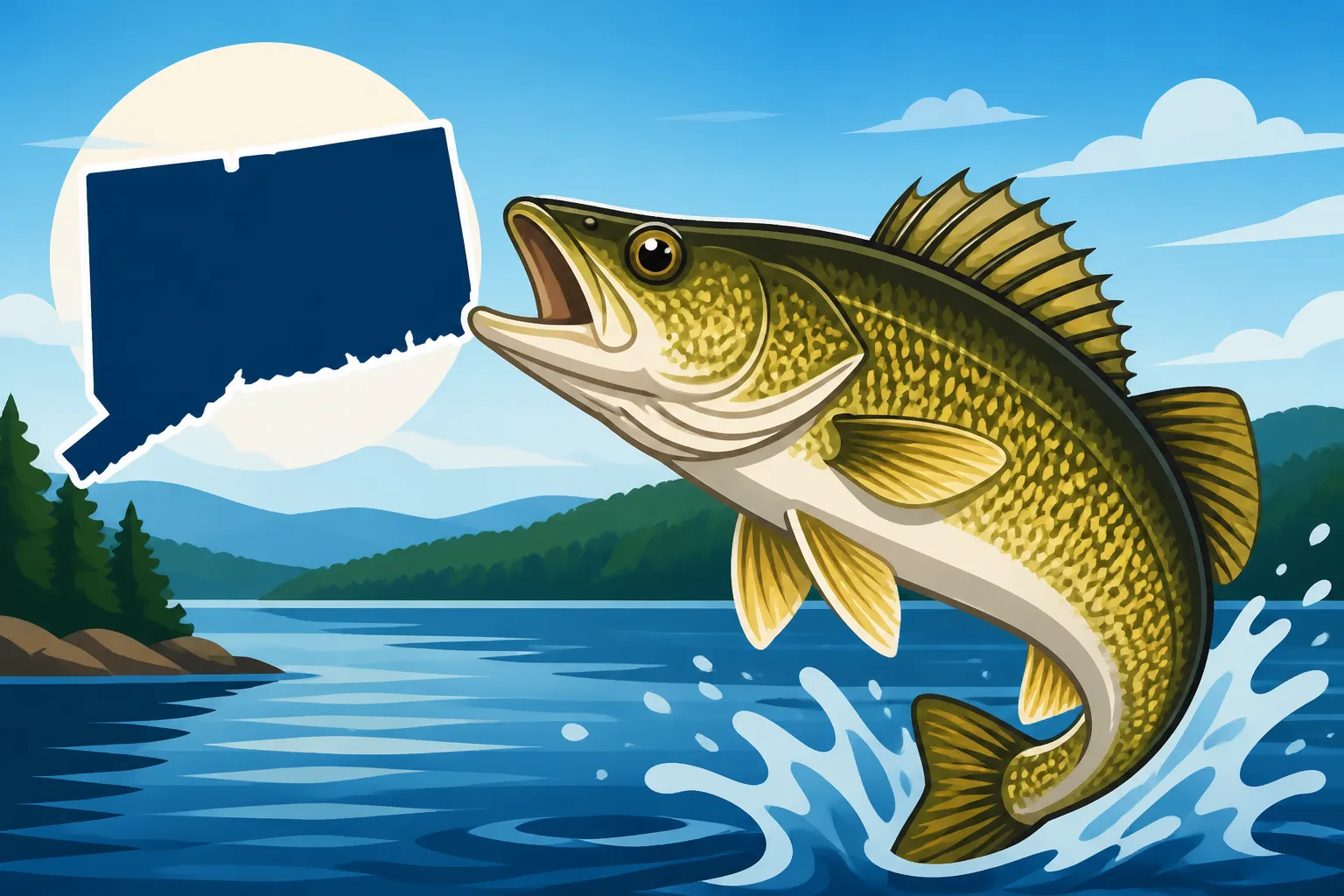
Walleye, with their distinctive glassy eyes that help them see in low light, are often referred to as "walleyed pike" due to their resemblance to pike, though they are actually part of the perch family. They are renowned for their delicious, flaky white meat, making them a highly sought-after species for the table. Beyond their culinary appeal, catching a walleye provides a thrilling fight. They're not always acrobatic, but their powerful runs and head shakes can test your tackle and your resolve. For many Connecticut anglers, landing a walleye feels like joining an exclusive club, a symbol of mastering a more advanced form of freshwater fishing. They're less common than bass or trout in many of our waters, which adds to their mystique and makes each successful catch all the more memorable. Connecticut State Fish Records by Species often highlight the impressive size these fish can attain, further fueling the drive to target them.
Their evasive nature means you can't just stumble upon them; you have to actively seek them out, understanding their subtle behaviors and preferred environments. This intellectual challenge, combined with their excellent eating qualities, elevates the walleye to a truly prized status among serious freshwater anglers in the state. Many dedicated walleye anglers spend years refining their techniques, studying sonar readings, and learning the nuances of specific bodies of water like Lake Zoar, all for that satisfying thump at the end of the line.
The Unique Character of Lake Zoar
Lake Zoar is one of Connecticut's larger lakes, formed by the Stevenson Dam on the Housatonic River. It spans portions of Monroe, Newtown, Oxford, and Southbury, offering a diverse range of habitats from deep channels to rocky points and submerged structures. This variety is precisely what makes it an ideal, albeit challenging, home for walleye. Unlike smaller, shallower ponds, Lake Zoar has the depth and the complex underwater topography that walleye crave. Its waters can fluctuate in clarity and temperature, adding another layer of complexity to the fishing experience. Lake Zoar Fishing Guide offers a broader look at the lake, but for walleye, it's about understanding the specific nooks and crannies where they hide.
The lake experiences significant boat traffic, especially in summer, which can make fishing certain areas tricky, but also means there are plenty of deep, quiet spots where these light-sensitive predators can retreat during brighter conditions. The bottom structure, a mix of rock, gravel, and silt, provides excellent ambush points and spawning grounds. Furthermore, the presence of varied forage fish populations, including alewives and yellow perch, ensures a robust food supply for growing walleye, allowing them to reach impressive sizes. Navigating Lake Zoar effectively for walleye requires not just fishing skill, but also a good understanding of boat control, electronics, and local knowledge of the lake's unique features and currents.
Understanding Walleye Biology and Habits in Lake Zoar
To catch walleye consistently, you have to think like a walleye. These fish are creatures of habit, driven by light conditions, water temperature, and the availability of food. Understanding their biology and how they interact with the specific environment of Lake Zoar is your biggest advantage. It’s a deep dive into what makes these elusive fish tick.
Walleye's Preferred Habitat and Structure
Walleye are champions of low-light conditions and prefer cooler, deeper waters, especially during the brighter parts of the day. In Lake Zoar, this means they'll often be found hugging the bottom in the deeper sections of the main channel, particularly around current breaks and submerged structures. Think about areas where the river channel flows through the lake—these are prime spots. They love rocky shoals, underwater humps, old creek beds, and sunken timber. These structures provide cover from predators, ambush points for prey, and a refuge from intense sunlight.
When scouting for walleye on Lake Zoar, pay close attention to depth contours, sudden drops, and any anomalies that show up on your sonar. A good fish finder is almost essential for locating these fish, as they often suspend just off the bottom or tuck themselves tight against cover. They are not typically shallow-water cruisers unless the light is very dim, such as during twilight hours or on heavily overcast days. Look for areas with a mix of rock and sand, as this often indicates good foraging grounds for their prey. The deep water near the Stevenson Dam, as well as the numerous rocky points and submerged islands throughout the lake, are classic walleye hideouts.
Seasonal Movements and Feeding Patterns
Walleye are highly migratory within Lake Zoar, moving significantly throughout the year in response to water temperature and spawning cycles.
- Spring: As ice-out occurs and water temperatures climb into the 40s and 50s, walleye begin their pre-spawn staging. They'll move into shallower, rocky areas with current, often near tributaries or the upper reaches of the lake where river flow is more pronounced. This is a crucial time, as they're actively feeding before and after spawning. Post-spawn, they'll often scatter and can be a bit harder to locate, but will still be recuperating and feeding.
- Summer: When the water warms up, walleye retreat to their deep-water sanctuaries. They'll spend their days in the main lake basin, often associated with thermoclines (if present) or the deepest structure available. Their feeding often shifts to dawn, dusk, and even nighttime, capitalizing on their superior low-light vision. They might also suspend over deep water, chasing baitfish schools.
- Fall: This is another excellent time for walleye fishing. As lake temperatures begin to drop in the 60s and 50s, walleye become very active, feeding heavily to build up fat reserves for winter. They often move shallower again, but will still be associated with structure. This feeding frenzy can make them more aggressive and easier to catch.
- Winter: During ice fishing season, walleye will hold to deep structure and breaks, often congregating in predictable patterns. They can be caught through the ice, especially during early and late ice periods, but their activity levels are generally lower.
Their diet consists mainly of baitfish like alewives, yellow perch, and shiners, but they will also opportunistically feed on crayfish, leeches, and even insect larvae. Matching the hatch, or in this case, matching the predominant baitfish, is key to success.
Identifying Walleye: Key Features
Knowing how to properly identify a walleye is not just for bragging rights, it’s crucial for adherence to Connecticut Fishing Regulations Explained. Walleye have a distinct appearance that sets them apart from other species you might encounter in Lake Zoar.
Here’s a quick rundown of their key identifying features:
- Eyes: This is perhaps their most defining characteristic. Walleye have large, glassy, opaque eyes that appear to "roll" or glaze over, giving them their name. This tapetum lucidum layer in their eyes enhances their night vision.
- Coloration: Their bodies are typically olive green to golden brown on the back, fading to lighter shades on the sides and a white belly. They often have several darker, irregular vertical bars along their sides, though these can be faint.
- Dorsal Fins: They possess two distinct dorsal fins. The first, spiny dorsal fin is quite prominent and separated from the second, soft-rayed dorsal fin.
- Teeth: Walleye have sharp, needle-like teeth, especially on their upper and lower jaws, which are essential for grasping slippery prey. Handle with care!
- Tail: Their tail fin is typically forked, and often, the lower lobe will have a distinct white tip. This is a very reliable identifier.
Here's a quick comparison table to help differentiate them from common look-alikes:
| Feature | Walleye | Yellow Perch | Smallmouth Bass |
|---|---|---|---|
| Eyes | Large, glassy, "walleyed" | Proportionate, clear | Proportionate, typically red |
| Color | Olive/golden brown, faint bars | Yellow/gold, distinct dark vertical bars | Bronze/brown, dark vertical bars or spots |
| Dorsal Fins | 2 distinct: spiny and soft-rayed | 2 distinct: spiny and soft-rayed (connected at base) | 1 continuous (deep notch) |
| Teeth | Sharp, needle-like | Small, fine teeth | Rough, sandpaper-like |
| Tail Fin | Forked, often white tip on lower lobe | Moderately forked | Moderately forked |
| Body Shape | Elongated, cylindrical | Deep-bodied, compressed | Robust, oval-shaped |
When you catch a fish and are unsure, always check multiple characteristics, especially the eyes, fin structure, and tail tip. This will help you ensure you're within the legal limits and regulations for Connecticut Trout Limit and Possession Rules if you happen to catch one of those instead, or any other species.
Essential Techniques for Walleye Fishing on Lake Zoar
Now that we know where and when to find walleye, let's talk about how to catch them. Walleye are not typically aggressive, ambush predators like pike or bass. They're more subtle, often preferring a slower, more methodical presentation. Patience and precision are your best friends here.
Trolling for Deep-Water Walleye
Trolling is arguably one of the most effective ways to cover large expanses of Lake Zoar and find actively feeding walleye, especially during the warmer months when they hold in deeper water. The key is to present your lure at the right depth and speed, directly in their strike zone.
You'll want to use crankbaits, stickbaits, or even crawler harnesses (spinner rigs with nightcrawlers) that dive to the specific depth you've identified walleye on your sonar. Brands like Rapala, Berkley, and Rebel offer a wide array of diving crankbaits in various colors and actions. For deeper presentations, you might need to employ lead core line, snap weights, or planer boards to get your offerings down to 15-30 feet or more, depending on the season and location in Lake Zoar. Many anglers find quality trolling gear, including specific weighted lines and lures, by checking out selections on Amazon.
- Speed is Crucial: Walleye typically prefer a slow troll, often between 1.0 to 2.5 miles per hour. Experiment with subtle changes; sometimes a slight acceleration or deceleration can trigger a strike. Using a GPS-enabled fish finder can help you maintain precise speed.
- Stay on Structure: Focus your trolling passes over known walleye hangouts: deep-water humps, points that drop into the main channel, and submerged river beds. Watch your sonar for baitfish schools and individual fish marks.
- Vary Your Spread: Run multiple lines at different depths and with different lure colors and actions until you find what the fish are responding to. Don't be afraid to experiment with brighter colors on overcast days or in stained water, and more natural patterns in clear conditions.
Jigging and Live Bait Strategies
When trolling isn't producing, or if you've pinpointed a specific concentration of fish on your electronics, jigging or presenting live bait can be incredibly effective. These techniques allow for a more vertical, precise presentation.
- Jigging: Using jigs tipped with soft plastics, live minnows, or even Gulp! products can be deadly. A 1/4 to 1/2 ounce jig, depending on depth and current, is a good starting point. Work the jig slowly along the bottom, using a lift-drop retrieve. The key is to keep it in contact with the bottom or just a few inches above it. Walleye often hit on the fall or when the jig is paused. Popular jig colors include white, chartreuse, black, and natural baitfish patterns. For a comprehensive selection of jig heads and soft plastics, you can often browse Amazon.
- Live Bait: Live bait is a walleye's weakness. Nightcrawlers, shiners, or fathead minnows presented on a slip bobber, a bottom-bouncing rig, or even just a plain hook with a split shot, can be irresistible.
- Bottom Bouncers: These are excellent for presenting live bait or crawler harnesses while drifting or slow trolling. They keep your bait just off the bottom, minimizing snags while still being in the walleye's strike zone.
- Slip Bobbers: When fishing around specific structure or in shallower areas (dawn/dusk), a slip bobber allows you to suspend a live minnow at a precise depth. The natural movement of the bait can be incredibly effective.
- Blade Baits & Spoons: In deeper water, vertical jigging with blade baits or spoons can also trigger strikes, especially when fish are tightly schooled. A rapid lift and fall, followed by a pause, can mimic a dying baitfish.
Regardless of the technique, the retrieve must often be subtle and slow. Walleye aren't usually in a hurry to chase down fast-moving prey. Focus on presenting your offering right in front of them and tempting them with a natural, easy meal.
Shore Fishing and Kayak Approaches for Walleye
While Lake Zoar's vastness often favors boat anglers, don't despair if you're limited to shore or a kayak. With a strategic approach, you can still find success targeting walleye.
- Shore Fishing: Identifying accessible shorelines that drop quickly into deeper water is key. Rocky points, dam areas, or bridge abutments where current is present and structure exists can hold walleye, especially during low-light conditions (dawn, dusk, and night). Cast crankbaits, heavy jigs, or live bait rigs (like a slip sinker rig with a minnow) out into the deeper water. Be patient, as shore fishing requires careful observation of where the fish might be staging. Often, the best shore spots are those less accessible, requiring a bit of a hike. Always check local regulations for specific access points. Best Shore Fishing Spots in Connecticut might provide broader guidance, but focus on Zoar-specific areas with deep drop-offs.
- Kayak Fishing: Kayaks offer a fantastic blend of stealth and access on Lake Zoar. You can reach areas that larger boats can't, like shallow coves during low light, or maneuver silently over deep structure without spooking fish.
- Quiet Trolling: A kayak allows for extremely slow and quiet trolling with small crankbaits or spinner rigs, often just paddling gently along contour lines or over submerged structure.
- Precise Jigging/Casting: You can position your kayak directly over fish marks on your portable fish finder and vertically jig. Or, quietly approach shorelines and rocky points at dawn/dusk to cast stickbaits and swimbaits for actively feeding walleye.
- Safety First: Always prioritize safety. Lake Zoar can get windy and have significant boat traffic. Wear your PFD, have appropriate lighting if fishing near dark, and be aware of weather conditions. Connecticut Safe Boating Certificate Requirement and Life Jacket Requirements for Connecticut Boaters are essential reading for any boater, including kayakers.
Best Times and Conditions for Walleye in Lake Zoar
Walleye are incredibly sensitive to environmental factors, and timing your trips to Lake Zoar can dramatically impact your success. It's not just about what you use, but when and where you use it.
Prime Seasons for Walleye Activity
While walleye can be caught year-round in Lake Zoar, certain seasons offer distinctly better opportunities due to their biological cycles and feeding behaviors.
- Early Spring (Post-Spawn): Once the ice melts and water temperatures hover in the upper 40s to low 50s, walleye are recovering from spawning and actively feeding to regain energy. They'll often be found shallower than other times of the year, making them more accessible. This period, typically late March through April, can be fantastic. Connecticut Spring Fishing Day and Opening Day Rules might refer more to trout, but the general warming trend applies to walleye activity too.
- Late Fall (Pre-Winter Feed): As water temperatures cool down in October and November, walleye embark on a serious feeding binge before winter sets in. They become more aggressive and predictable, often schooling up in deeper areas where baitfish are congregating. This can be one of the most productive times of the year for larger fish.
- Night Fishing in Summer: During the heat of summer, walleye are largely nocturnal feeders. Fishing from dusk through the night can yield excellent results, especially for large fish moving into shallower feeding grounds under the cover of darkness. This requires specialized gear and careful planning, but the rewards can be significant.
- Ice Fishing: For the dedicated ice angler, Lake Zoar offers walleye opportunities through the hard water. Early and late ice periods are generally best, as fish are more active. Focus on deep humps and structure, using jigs tipped with minnows or dead stick setups.
Reading the Weather and Water Conditions
Walleye fishing success isn't just about the season; it's about the daily conditions. Being able to read the weather and water can give you a significant edge.
- Cloud Cover and Low Light: Walleye are notorious for preferring low light. Overcast days, fog, dawn, and dusk are prime times. On bright, sunny days, they'll often retreat to the deepest, darkest parts of the lake. Adjust your fishing depth and location accordingly.
- Water Clarity: Walleye thrive in somewhat stained or turbid water. It further reduces light penetration and allows them to hunt more effectively. Extremely clear water can make them very wary and push them even deeper or make them purely nocturnal. If the water is very clear, try using more natural baitfish patterns and subtle presentations. If it's stained, brighter colors can be more effective.
- Wind: A moderate chop on the water surface (a "walleye chop") can actually improve fishing. It breaks up light penetration, disorients baitfish, and often gets walleye more active. Too much wind, however, makes boat control difficult and can push fish into more protected areas.
- Barometric Pressure: While not always a definitive factor, stable or slowly falling barometric pressure often corresponds with good feeding activity. A rapidly dropping barometer before a storm can trigger a bite, but a high, stable pressure system following a cold front can make walleye lethargic.
Optimal Times of Day for Success
Given their light sensitivity, certain times of day are inherently better for walleye fishing, though this can vary by season.
- Dawn and Dusk: These are classic walleye prime times. As the sun rises or sets, the light levels are ideal for walleye to emerge from deeper cover and hunt in shallower areas. These periods offer excellent opportunities for casting crankbaits or presenting live bait.
- Night Fishing: As mentioned, summer night fishing is extremely productive. Walleye will move into surprisingly shallow water after dark, often right up to shorelines or flats, to ambush baitfish. Fishing under the cover of darkness requires headlamps, glow-in-the-dark lures, and extreme caution, but it can produce some of the biggest walleye.
- Overcast Days: Any day with heavy cloud cover can extend the "prime time" beyond just dawn and dusk. The diffused light allows walleye to remain active and higher in the water column throughout the day.
- Mid-Day in Deep Water: On bright, sunny days, your best bet for daytime walleye is to target them deep, often 20-40 feet down, using trolling or vertical jigging techniques. They won't be as active as during low light, but they'll still strike if an easy meal comes by.
Gear Recommendations for Lake Zoar Walleye
Having the right tools for the job is essential for walleye fishing, especially with their subtle bites and often deep-water haunts. Don't skimp on quality, as a missed fish due to cheap gear is a frustrating experience.
Rods, Reels, and Lines for Walleye
Walleye fishing often requires sensitive yet powerful gear to detect light bites and handle strong runs.
- Rods:
- Casting/Spinning: For jigging and casting crankbaits, a 6'6" to 7'6" medium-light to medium power, fast action spinning rod is versatile. The fast action tip allows for sensitive bite detection, while the medium power provides enough backbone to set the hook and fight fish. For trolling, longer, more forgiving rods (7' to 9' medium action) designed specifically for trolling can be beneficial, especially with planer boards.
- Material: Graphite rods are preferred for their sensitivity, allowing you to feel even the slightest tap from a cautious walleye.
- Reels:
- Spinning Reels: A 2500 to 3000 series spinning reel is a good match for your spinning rod. Look for a smooth drag system, which is critical for handling those initial powerful runs. Brands like Penn, Shimano, or Daiwa offer reliable options.
- Baitcasting/Line Counter Reels: For serious trollers, a line counter reel (often a baitcaster style) is invaluable. It allows you to precisely know how much line you have out, ensuring your lure is at the correct depth.
- Lines:
- Braided Line (Main Line): 10-20 lb braided line is popular for its zero stretch and high sensitivity. It transmits even the faintest bites directly to your hand. Its thin diameter also helps lures dive deeper.
- Fluorocarbon Leader: Always tie on a 6-10 lb fluorocarbon leader (3-6 feet long) to your braided main line. Fluorocarbon is nearly invisible underwater, providing a stealthy presentation, and its abrasion resistance is key around Lake Zoar's rocky structure.
- Monofilament (for specific techniques): Some anglers prefer monofilament for trolling or specific live bait presentations due to its stretch, which can act as a shock absorber. 8-12 lb test is typical.
Lures, Baits, and Tackle Box Essentials
Your tackle box for Lake Zoar walleye should be well-stocked with a variety of proven producers. Variety is key because walleye can be picky.
- Crankbaits and Stickbaits:
- Deep Divers: For trolling, include crankbaits that dive to various depths. Brands like Rapala (Deep Husky Jerks, Shad Raps), Berkley (Flicker Shads), and Storm (ThunderSticks) are popular.
- Shallow Runners: For low-light casting, stickbaits like Rapala Original Floaters or Husky Jerks are excellent.
- Colors: Have a range: natural baitfish patterns (silver/black, perch), bright colors (firetiger, chartreuse) for stained water or aggressive fish, and subtle metallics.
- Jigs:
- Jig Heads: Assorted weights (1/8 oz to 1/2 oz) and hook sizes (1/0 to 3/0). Round heads, stand-up heads, and mushroom heads are all useful.
- Soft Plastics: Paddle tails, grubs, and finesse worms in colors matching local baitfish.
- Live Bait: Bring plenty of lively nightcrawlers and minnows (shiners, fatheads). Keep them cool and oxygenated.
- Rigs:
- Crawler Harnesses/Spinner Rigs: Pre-tied or components to tie your own, with different blade sizes and colors (silver, gold, chartreuse, orange).
- Bottom Bouncers: Various weights (1/2 oz to 2 oz) for drifting or slow trolling live bait.
- Slip Bobbers: Essential for suspending live bait at a precise depth.
- Terminal Tackle: A selection of swivels, snap swivels, hooks (Aberdeen, octopus, trebles), split shots, and sinkers. Make sure your hooks are sharp! You can find a vast array of these smaller, but crucial, tackle items readily available on Amazon.
Electronics and Accessories for the Serious Angler
In the often deep and complex waters of Lake Zoar, electronics are not just a luxury; they are a necessity for serious walleye anglers.
- Fish Finder/Sonar: This is arguably the most important piece of electronics. A good quality fish finder with Down Imaging and/or Side Imaging can help you:
- Locate Structure: Identify humps, channels, drop-offs, and submerged timber where walleye hide.
- Mark Fish: See individual fish and bait balls, confirming their depth and location.
- Monitor Depth and Temperature: Crucial for understanding walleye behavior.
- Brands like Humminbird, Lowrance, and Garmin offer excellent options across various price points. Look for models with GPS mapping capabilities to mark productive spots.
- GPS/Chartplotter: Often integrated into fish finders, GPS allows you to:
- Mark Waypoints: Save the exact coordinates of where you caught fish or found structure.
- Follow Contour Lines: Essential for precise trolling passes.
- Navigate Safely: Especially important on a large lake like Zoar, particularly in low light or fog.
- Electric Trolling Motor (with Spot-Lock): If you have a boat, a bow-mounted electric trolling motor with GPS "Spot-Lock" or "Anchor Mode" technology is a game-changer. It allows you to hold your boat precisely over a piece of structure or a school of fish, even in wind or current, freeing you up to focus on fishing. This is incredibly useful for vertical jigging or precise casting.
- Landing Net: A good, large landing net with rubberized mesh (to protect the fish and prevent hooks from tangling) is essential for safely landing walleye.
- Long-Nose Pliers/Hook Removers: Walleye have sharp teeth! Use long-nose pliers or a specialized hook remover to safely extract hooks without injuring yourself or the fish.
- Headlamp: Absolutely critical for night fishing or setting up before dawn. Look for one with a red light option to preserve your night vision.
- Cooler and Ice: For keeping your catch fresh if you plan to keep them for the table. Make sure to consult Connecticut Fishing Regulations Explained for daily limits.
- Portable Power Bank: To keep your phone, fish finder, and other electronic devices charged throughout your long day or night on the water. A robust, waterproof power bank can be found on Amazon.
Conservation and Responsible Angling on Lake Zoar
As passionate anglers, it's our responsibility to ensure the health and sustainability of Lake Zoar's walleye population for future generations. This isn't just about following the rules; it's about adopting an ethical approach to fishing.
Walleye Regulations and Limits
Connecticut, through its DEEP (Department of Energy and Environmental Protection), sets specific regulations for walleye in Lake Zoar to manage their population. These regulations are designed to allow for sustainable harvest while protecting spawning stocks and ensuring healthy fish numbers. It's your responsibility to know and abide by these rules.
- Size Limits: Walleye often have a minimum length requirement. This ensures that fish have a chance to spawn at least once before being harvested.
- Daily Creel Limits: There will be a maximum number of walleye you can keep per day. This prevents overfishing and helps distribute the catch among more anglers.
- Season Dates: While walleye seasons are often open for much of the year, there might be specific closures or modified limits during sensitive periods like spawning.
Always consult the most current Connecticut Fishing Regulations Explained or the official Connecticut Angler's Guide before each fishing season. Regulations can change, and ignorance is not an excuse. Carrying a physical or digital copy of the guide is always a good idea. Violating these regulations can result in hefty fines and even loss of fishing privileges, underscoring the importance of knowing the rules. Fishing Without a License in Connecticut: Penalties also highlights the importance of always having a valid fishing license.
Practicing Catch and Release for Future Generations
Even if you enjoy a walleye dinner, consider practicing catch and release, especially for larger, older fish. These trophy-sized walleye are often the most prolific spawners and contribute significantly to the genetic health of the population. Releasing them ensures they can continue to reproduce and create more fishing opportunities.
When practicing catch and release:
- Minimize Fight Time: Bring the fish in as quickly as possible to reduce stress.
- Handle with Care: Keep the fish in the water as much as possible. If you must remove it, support its body horizontally, especially heavier fish, to avoid damaging internal organs or the spine. Avoid touching their gills or eyes.
- Use Barbless Hooks: Crushing the barbs on your hooks makes removal much easier and less traumatic for the fish.
- Proper Hook Removal: Use long-nose pliers or a de-hooking tool to quickly and carefully remove the hook. If the fish is deeply hooked, cut the line as close to the hook as possible rather than trying to rip it out.
- Revive the Fish: If the fish seems lethargic, gently hold it upright in the water, facing into a mild current, until it can swim away strongly on its own.
Educating fellow anglers on proper catch and release techniques can also make a huge difference. Our collective actions directly impact the long-term viability of Lake Zoar's walleye fishery.
Maintaining Lake Zoar's Ecosystem
Responsible angling extends beyond just the fish; it encompasses the entire ecosystem of Lake Zoar. Every angler has a role in protecting this valuable resource.
- Pack It In, Pack It Out: Never leave trash, fishing line, or discarded bait behind. Fishing line, in particular, can be deadly to wildlife.
- Prevent Invasive Species: Be diligent about cleaning your boat, trailer, and gear when moving between different bodies of water. Invasive species like zebra mussels or Eurasian watermilfoil can devastate an ecosystem, altering habitats and food sources. Inspect your boat and gear thoroughly before launching into Lake Zoar, and again when taking it out.
- Respect Property and Other Users: Be mindful of private property along the shoreline, and give other anglers and boaters ample space. Follow all boating safety rules and courtesy guidelines. Connecticut Boating Laws for Anglers is a great resource to review.
- Report Violations: If you witness illegal fishing activity or environmental damage, report it to the Connecticut DEEP. They are the frontline protectors of our natural resources.
By adhering to regulations, practicing responsible catch and release, and being good stewards of the environment, we can all contribute to keeping Lake Zoar a premier destination for walleye fishing for many years to come.
Disclaimer
This article is for general informational purposes only and does not constitute professional advice. Laws, prices and regulations vary by location and change over time. Consult a qualified professional for guidance on your specific situation.