Bluegill Habits in Connecticut Ponds
One of the most accessible and genuinely fun fish to target in Connecticut, bluegill often get overlooked by anglers chasing bigger, flashier species. But if you've ever spent a frustrating afternoon on a local pond, seeing nothing but ripples while the kids (or you!) grow bored, then understanding the humble bluegill's habits can be a game-changer. This comprehensive guide will peel back the layers of these ubiquitous panfish, helping you pinpoint where they live, what makes them tick, and how to consistently bring them to the net for an afternoon of pure angling joy.
Understanding Bluegill in Connecticut Waters
Bluegill, with their vibrant colors and feisty fight for their size, are a staple in most Connecticut freshwater bodies. They're often the first fish a child ever catches, sparking a lifelong love for angling. But there's more to these little sunfish than meets the eye, and knowing their biology helps us understand their behavior.
Bluegill Identification and Characteristics
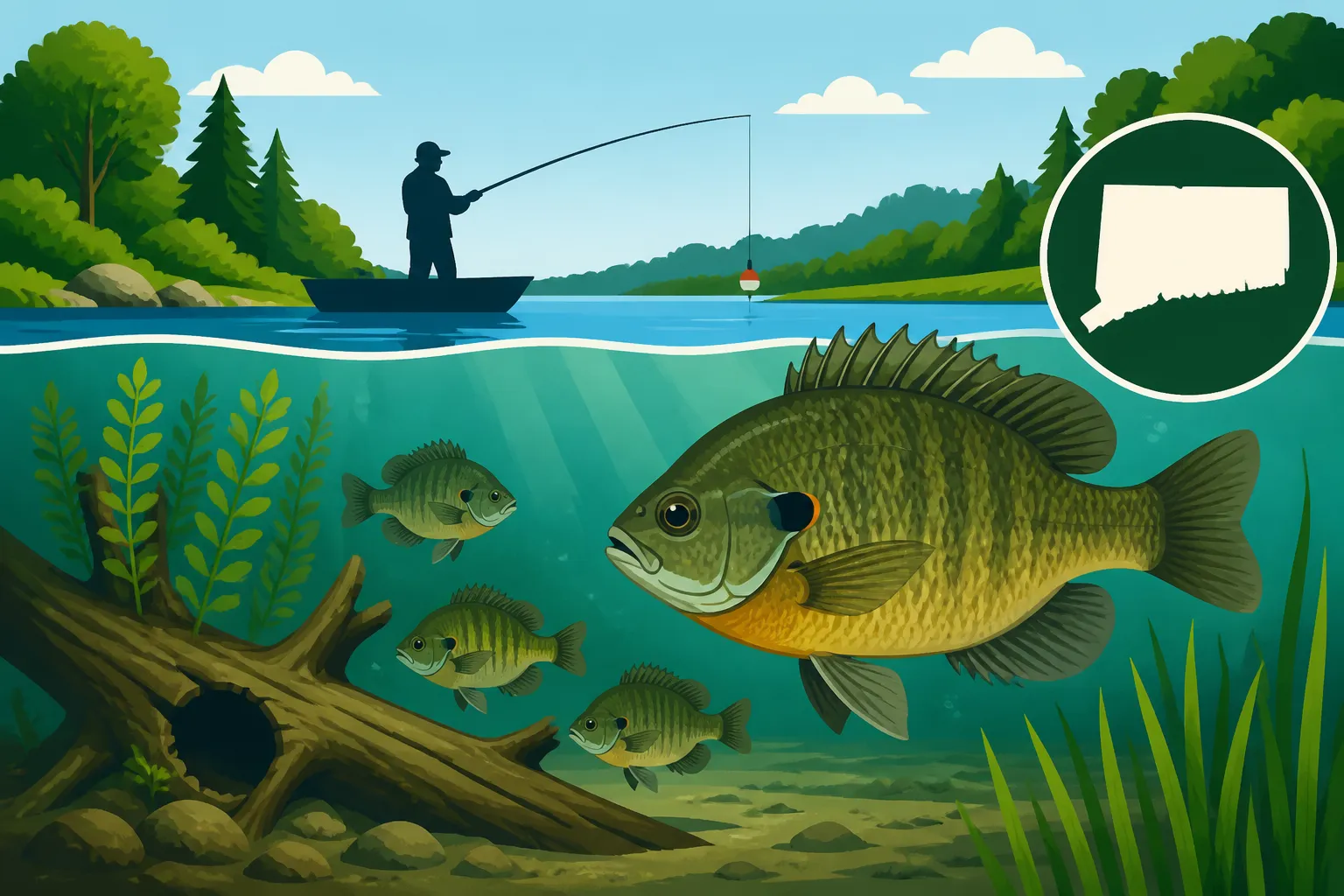
Identifying a bluegill is usually pretty straightforward, even for a beginner. They have that classic sunfish shape: a deep, compressed body, almost like a dinner plate on its side. Their backs are typically olive green, fading to a lighter, often yellowish-orange belly, and they usually sport a distinctive vertical barring pattern along their sides that can range from subtle to quite pronounced. The real giveaway, though, is the dark blue-black "ear flap" on the gill cover, which gives them their name. You might also notice a small black spot on the dorsal fin.
Compared to other sunfish like pumpkinseeds, which have iridescent blue lines and red spots on their ear flaps, bluegill are a bit more understated in their coloration but equally charming. They don't typically grow huge in Connecticut ponds, with most adults ranging from 6 to 10 inches, though you might occasionally hook into a true "hand-sized" slab of 12 inches if you're lucky and fishing a well-managed pond. Their small mouth means they prefer smaller baits and lures, which is a key factor in targeting them successfully. If you're looking for more details on identifying different species, check out our Panfish Species Identification Guide for Connecticut.
Native vs. Stocked Populations
Bluegill are native to a wide range of North America, including much of the eastern United States, and Connecticut is no exception. They thrive naturally in many of our state's ponds, lakes, and slower-moving rivers. These native populations are self-sustaining, relying on successful spawning and natural predation to maintain their numbers. Because of their adaptability and prolific breeding, bluegill are often used as forage for larger predatory fish, making them an important part of the aquatic food web.
While bluegill are common, state agencies might occasionally stock them, particularly in urban ponds or waters where fish populations need a boost to improve fishing opportunities. However, they are far less frequently stocked than trout or even channel catfish, simply because they do so well on their own. The populations you're encountering in most local ponds are likely healthy, self-sustaining groups that have been there for generations. This robust natural presence is fantastic for anglers, as it means consistent opportunities to catch them without relying heavily on stocking trucks.
Ecological Role in Pond Ecosystems
Bluegill play a crucial role in the health and balance of Connecticut's pond ecosystems. As omnivores, they primarily feed on insects, small crustaceans, and even some plant matter, helping to control insect populations and keep aquatic vegetation in check. This helps maintain water quality and prevents ponds from becoming overgrown. Think of them as the unsung heroes of the pond, constantly grazing and cleaning up.
Beyond their dietary contributions, bluegill are also a vital forage species for larger game fish. Bass, pickerel, and even larger trout will readily prey on juvenile and smaller adult bluegill. This interconnectedness is why a healthy bluegill population often indicates a healthy overall pond ecosystem. When you see swarms of bluegill, it's often a good sign that the pond is thriving, supporting a diverse array of aquatic life. It's a delicate balance, and bluegill are right at the heart of it, providing both food and environmental maintenance.
Where to Find Bluegill in Connecticut Ponds
Finding bluegill isn't usually the biggest challenge in Connecticut; they're almost everywhere! The real trick is finding concentrations of them, especially the larger, more aggressive ones. Once you understand their preferred habitats, you'll be able to quickly zero in on the best spots.
Preferred Habitat and Cover
Bluegill are creatures of cover. They love areas where they can feel safe from predators like largemouth bass or ospreys, and where their insect prey congregates. This means you'll often find them around submerged structures like fallen trees, brush piles, old docks, or even sunken boats. Aquatic vegetation is another huge draw; lily pads, cattails, and submerged grass beds offer both concealment and a buffet of bugs. They also appreciate gradual slopes and sandy or gravelly bottoms, especially during spawning season.
If you're looking at a pond, don't just cast out into the middle of nowhere. Scan the shoreline for anything that breaks up the uniformity of the bottom or surface. Overhanging trees, shady spots, and areas where creeks flow into the pond are all prime candidates. These spots provide cooler water, shelter, and concentrated food sources. Think of it like a fish-sized fort, where they can hide and ambush their meals.
Popular Connecticut Ponds for Bluegill
Connecticut is blessed with countless ponds and small lakes that are absolutely teeming with bluegill. Many of these are easily accessible, making them perfect for a quick trip or a family outing. Some popular examples include local town ponds, state park lakes, and smaller reservoirs. Places like Black Pond in Middlefield, Mashapaug Lake, or many of the smaller water bodies found within parks like Hopeville Pond State Park are known for their healthy panfish populations. Even smaller, unnamed farm ponds often hold good numbers of bluegill.
Don't overlook the obvious spots; sometimes the best bluegill fishing is right in your neighborhood. Always check local regulations for any specific pond, as some might have special rules or harvest limits, although for bluegill, they're usually quite generous. Many of these ponds are also great spots for other panfish and bass, so you might even hook into something bigger while targeting bluegill. If you want to explore further, our Best Fishing Lakes in Connecticut guide has some excellent suggestions, and many of these larger lakes contain prime bluegill habitat as well.
Reading the Water for Bluegill Hotspots
Learning to "read the water" is an invaluable skill for any angler, and it's particularly effective for bluegill. Start by observing the surface for any signs of fish activity, like subtle rises or ripples indicating insects are being eaten. Look for changes in water depth or structure. A gradual drop-off from a shallow flat to deeper water is often a productive transition zone.
Pay attention to subtle clues:
- Shade Lines: Bluegill will often hug the shady side of a dock or a fallen tree, especially on bright, sunny days.
- Wind-Blown Banks: Wind can push baitfish and insects towards a particular bank, concentrating food and, consequently, bluegill.
- Vegetation Edges: The line where lily pads meet open water, or where submerged weeds give way to a clear bottom, is a classic bluegill ambush point.
- Bottom Composition: While they can be found over mud, bluegill often prefer harder bottoms like sand or gravel, especially during spawning.
Using polarized sunglasses can make a huge difference, allowing you to peer through the glare and spot submerged structures or even the fish themselves. Don't be afraid to move around the pond. If you're not getting bites in one spot after 10-15 minutes, change locations until you find where the fish are holding. This active approach is key to consistently finding fish.
Seasonal Behavior and Feeding Habits
Bluegill, like all fish, adjust their behavior and feeding patterns with the changing seasons. Understanding these shifts is crucial for anglers hoping to consistently catch them throughout the year.
Springtime Aggression and Spawning Beds
Spring in Connecticut is a fantastic time for bluegill fishing. As water temperatures rise into the 60s Fahrenheit, usually around late May or early June, bluegill become incredibly active. This is when they move into shallower, warmer waters to spawn. Male bluegill will fan out circular nests, often close to each other, creating "bluegill cities" on sandy or gravelly bottoms. You can often spot these depressions from shore in clear, shallow water.
During this period, bluegill are highly aggressive. The males will guard their nests fiercely, striking at anything that comes too close – including your bait! This makes them relatively easy to catch. You'll find them in depths ranging from just a few inches to 3-5 feet. They're focused on reproduction, but their hunger for small insects and their territorial nature make them very susceptible to small jigs, worms, or even tiny spinners. It’s a prime time for family fishing, as the action can be fast and furious.
Summer Patterns and Deep Water Retreats
As Connecticut summer temperatures soar and the shallow waters warm considerably, bluegill tend to move away from the immediate shoreline and into slightly deeper, cooler water. They won't disappear entirely from shallow cover, especially during early morning or late evening hours, but their midday haunts will often be around deeper structures or thermoclines (layers of water where the temperature changes rapidly). You might find them suspended over drop-offs, near submerged brush piles in 8-15 feet of water, or tucked under the shade of deeper docks and bridge pilings.
Their feeding habits remain consistent – small insects, worms, and crustaceans – but their location shifts. This is when a small boat, kayak, or even a long cast from shore towards deeper water becomes advantageous. Patience is key in summer, as the bite can be slower during the brightest parts of the day. Early mornings and evenings often offer the most consistent action. Using a fish finder can really help locate those deeper bluegill schools, but even without one, targeting the transition areas between shallow and deep water, or prominent submerged features, can be very productive.
Fall Feeding Frenzies and Winter Hibernation
Autumn sees a resurgence in bluegill activity. As water temperatures begin to drop, bluegill go into a pre-winter feeding frenzy, trying to pack on calories for the lean months ahead. They’ll often move back into shallower areas, though not as shallow as during the spawn, and can be found cruising weed lines and submerged structures with renewed vigor. The bite can be fantastic, and they'll readily hit a variety of small offerings. It’s a great time to enjoy the fall foliage and some excellent panfishing.
Once winter truly sets in and the ponds freeze over, bluegill become much less active, but they don't truly "hibernate." They'll congregate in deeper basins of the pond, often near the bottom or suspended just above it. Their metabolism slows down considerably, and they feed much less frequently. Ice fishing for bluegill requires more finesse and smaller baits, but it can be incredibly rewarding. They'll respond to tiny jigs tipped with a grub or a small piece of worm, fished slowly right in front of their faces. While not as active as in spring or fall, winter bluegill can still provide some solid action for dedicated ice anglers.
Bluegill Reproduction and Life Cycle
The bluegill's life cycle is a fascinating example of parental dedication and rapid reproduction, which contributes to their abundance in Connecticut's waters.
Nesting Behavior and Parental Care
One of the most remarkable aspects of bluegill behavior is their elaborate nesting and parental care. In late spring or early summer, when water temperatures are just right, male bluegill move into shallow, protected areas of a pond – often bays, coves, or protected shorelines. They select a spot with a firm, sandy, or gravelly bottom and, using their tail and fins, fan out a shallow, circular depression that serves as the nest. These nests are typically 1-2 feet in diameter and often clustered together, forming dense "colonies" of nests. This communal nesting offers some protection against predators.
Once the nest is prepared, the male bluegill aggressively defends it, fanning his fins to attract a female. After a female lays her eggs in the nest, the male fertilizes them. Multiple females might lay eggs in a single nest. Following spawning, the male takes on the primary role of parental care. He continues to guard the nest fiercely, fanning the eggs to keep them aerated and free of silt, and chasing away any potential predators. This dedication lasts until the fry hatch and are capable of swimming off on their own, usually within a week or so, depending on water temperature. This strong parental instinct is a major reason why bluegill populations are so robust.
Growth Rates and Size in Connecticut Waters
Bluegill growth rates in Connecticut ponds can vary significantly depending on several factors: the pond's size, food availability, water quality, and the density of the bluegill population. In ponds with abundant food and a balanced predator-prey ratio, bluegill can grow quite quickly, reaching a harvestable size of 6-8 inches within 2-3 years. However, in overcrowded ponds, where there's too much competition for food, bluegill often become "stunted," remaining small and thin even as adults. This is a common challenge in some smaller, unmanaged ponds.
A healthy bluegill in a well-balanced Connecticut pond might reach 10 inches or more, often referred to as a "slab" or "dinner plate" bluegill. These larger specimens are prized by anglers for their fighting ability and delicious fillets. Knowing the typical size range for a particular pond can give you an idea of its overall health. If you're consistently catching very small bluegill, it might indicate an overpopulation issue, which can sometimes be remedied by selective harvesting to thin the numbers and allow the remaining fish to grow larger.
Factors Affecting Spawning Success
Successful bluegill spawning is influenced by a range of environmental conditions. Water temperature is paramount; they need consistent warmth (typically 67-75°F) for eggs to develop properly and hatch. The availability of suitable nesting sites – shallow, firm bottoms away from strong currents – is also critical. If prime spawning habitat is limited, it can impact the overall health of the population.
Water quality also plays a role. Ponds with excessive siltation or pollution can negatively affect egg survival. Heavy rain events during spawning season can wash out nests or drastically change water clarity, making it harder for the males to protect their eggs. Finally, predation pressure on eggs and fry by other fish, turtles, or even wading birds can reduce the number of young bluegill that survive to adulthood. Despite these challenges, bluegill are incredibly resilient, and their prolific spawning habits mean that even with some losses, populations tend to remain strong.
Fishing Techniques for Connecticut Bluegill
Bluegill are arguably one of the most fun fish to target, especially for beginners or when you just want a relaxing day on the water. The techniques are simple, the gear doesn't have to be expensive, and the bites are usually frequent!
Best Baits and Lures for Bluegill
Bluegill aren't picky eaters, which is a huge part of their appeal. When it comes to natural baits, worms are king. A small piece of a nightcrawler or a red worm threaded onto a tiny hook is incredibly effective. Other natural options include crickets, grasshoppers, and small grubs. You can often find a good selection of live bait at local tackle shops or even purchase small worm farms on Amazon for a continuous supply.
For artificials, think small. Tiny jigs, especially those tipped with a piece of plastic (like a small twister tail, grub, or tube jig), are phenomenal. Colors like chartreuse, white, or black often work well. Small spinners (like a Mepps or Rooster Tail in sizes #0 or #1) can also be very effective, especially when bluegill are more active. Fly anglers will find success with small wet flies, nymphs, or even dry flies imitating terrestrial insects like ants or hoppers. The key is to present a small offering that mimics the insects and larvae they naturally feed on.
Here’s a quick overview of popular bluegill offerings:
| Bait/Lure Type | Description | Ideal Conditions |
|---|---|---|
| Live Worms | Small pieces of nightcrawler, red worms. | All conditions, especially effective for beginners and slower bites. |
| Crickets/Grubs | Natural insects, great for active fish. | Warm weather, fish feeding on surface or near cover. |
| Tiny Jigs | 1/32 oz to 1/16 oz jigs with soft plastic bodies (grubs, tubes). | Any time, especially good when fish are deeper or slightly less active. |
| Small Spinners | Mepps, Rooster Tail (size #0-#1). | Active fish, covering water, slightly windy conditions. |
| Flies (Nymphs) | Small wet flies (Prince Nymph, Hare's Ear), micro jigs. | Fly fishing, clear water, fish feeding below surface. |
| Flies (Dry) | Small terrestrials (Ants, Beetles) or small midges. | Fly fishing, fish rising to surface, calm conditions. |
Simple Gear Setups for All Ages
You absolutely don't need fancy, expensive gear to catch bluegill. In fact, keeping it simple is often the best approach, especially when fishing with kids. A lightweight spinning rod and reel combo, about 5 to 6 feet long, spooled with 4-6 pound monofilament line, is perfect. This setup is light enough to feel the subtle bites but strong enough to handle a feisty bluegill. You can find excellent beginner combos for a very reasonable price online or at any sporting goods store.
The classic bobber setup is foolproof and incredibly effective for bluegill. Attach a small bobber (red and white round bobbers are iconic for a reason!) to your line a foot or two above a tiny hook (sizes #8 or #10 are ideal). Crimp a small split shot weight a few inches above the hook to help your bait sink. Cast it out near cover, and watch that bobber! When it dances or disappears, set the hook with a gentle upward sweep of your rod. For those who want a bit more finesse, a sensitive ultralight rod allows you to feel even the lightest taps. Don't forget a small pair of needle-nose pliers or a hook remover, as bluegill can often swallow small hooks. You might also want to grab a fishing tackle box with a variety of hooks, sinkers, and bobbers on Amazon.
Ice Fishing for Bluegill in Winter
When Connecticut's ponds freeze over, the bluegill fishing doesn't stop; it just changes. Ice fishing for bluegill is a fantastic way to enjoy the winter outdoors and can be incredibly productive. You'll need an ice fishing rod, which is much shorter and more sensitive than a typical spinning rod, often only 24-36 inches long. Small ice fishing reels are paired with these rods, spooled with light line, usually 2-4 pound test fluorocarbon or monofilament.
The key to ice fishing for bluegill is using tiny baits and presenting them slowly. Micro jigs, often 1/64 oz or smaller, tipped with a wax worm, a tiny plastic grub, or a kernel of corn, are the go-to baits. A small tear-drop shaped jig or a "tungsten" jig head will help get your bait down quickly. You'll jig these baits subtly, often just barely twitching your rod tip, to entice a bite. A flasher or fish finder can be invaluable for locating schools of bluegill under the ice and seeing how they react to your presentation. Dress warmly, bring a portable shelter if you have one, and enjoy the unique experience of pulling bright bluegill through a hole in the ice. Just remember to check ice thickness for safety – our How thick ice needs to be to fish safely in Connecticut guide has more on that.
Conservation and Management of Bluegill
While bluegill populations are generally robust, responsible angling practices and a basic understanding of conservation can help ensure healthy fisheries for generations to come in Connecticut.
Catch and Release Practices
For many anglers, especially those just starting out or families with kids, bluegill are a fantastic catch-and-keep species. They are delicious pan-fried, and their abundance means you can often keep a good number without harming the population. However, practicing responsible catch and release for some fish is also a good habit, especially for the larger "trophy" bluegill. Releasing these larger, older fish can contribute to the genetics of the population and ensure there are more big fish for others to catch.
If you plan to release bluegill, handle them gently. Use a barbless hook, or crimp down the barb on your hooks, to make removal easier and less damaging. Wet your hands before handling the fish to protect their protective slime coat. Remove the hook quickly and carefully, and if the fish has swallowed the hook, cut the line as close to the hook as possible rather than trying to rip it out. Release them headfirst back into the water, and if they seem sluggish, gently hold them upright until they swim away strongly. Teaching good catch and release habits, even with a common species like bluegill, instills respect for the resource.
Managing Pond Populations for Healthy Bluegill
Sometimes, bluegill populations can become too successful, leading to a phenomenon known as "stunting." This happens when there are so many bluegill in a pond that they outcompete each other for food, and none of them grow to a desirable size. You end up with a pond full of 3-4 inch fish that are too small to be satisfying to catch or eat. In such cases, selective harvesting can actually be a beneficial management tool.
If a pond is known to have stunted bluegill, keeping a liberal number of the smaller fish can actually improve the fishing. By removing some of the smaller fish, you reduce competition for food, allowing the remaining bluegill to grow larger and healthier. Conversely, if a pond consistently produces large bluegill, releasing a good portion of those bigger fish can help maintain that trophy potential. It's a balance, and understanding the specific dynamics of the pond you're fishing can help you decide how many to keep or release. The Connecticut Trout Limit and Possession Rules offers a good example of how regulations manage fish populations.
Bluegill and the Food Web
Bluegill are integral to the intricate food web of Connecticut's freshwater ponds. They act as a critical link between smaller invertebrates and larger predatory fish. By consuming insects, zooplankton, and aquatic vegetation, they convert these smaller organisms into biomass that then becomes food for species like largemouth bass, chain pickerel, and even some species of trout where their habitats overlap.
A healthy bluegill population ensures a robust food source for these predators. Without bluegill, or with a severely depleted population, the larger game fish would struggle to find enough to eat, impacting their growth and survival. This interconnectedness highlights why even targeting a seemingly small fish like the bluegill is part of a larger ecological picture. Understanding their role helps us appreciate the complexity of the aquatic environment and encourages us to be thoughtful stewards of our fisheries. For more on this, consider exploring Panfish Fishing in Connecticut and Connecticut Fishing Regulations Explained to understand broader principles.
Disclaimer
This article is for general informational purposes only and does not constitute professional advice. Laws, prices and regulations vary by location and change over time. Consult a qualified professional for guidance on your specific situation.