Connecticut state record brown trout weight
For many anglers, the pursuit of a trophy fish isn't just a hobby; it's a quest, a deep-seated desire to connect with something truly exceptional. In Connecticut, the brown trout holds a special place in the hearts of those who dream of a truly massive catch. If you've ever wondered about the pinnacle of brown trout fishing in our state – the legendary state record – this guide is for you. We'll explore the allure of these magnificent fish, where they might be hiding, the tactics you'll need, and how to understand the official process, should you ever be lucky enough to hook into a fish of a lifetime.
The Allure of the State Record Brown Trout
There's something uniquely captivating about brown trout, especially the giants. They're often considered the most elusive and challenging of the trout species, known for their cunning and solitary nature. For many, simply catching a brown trout is a thrill, but landing one that approaches state record dimensions? That's the stuff of legends, a story passed down for generations.
Why Brown Trout Capture Our Imagination
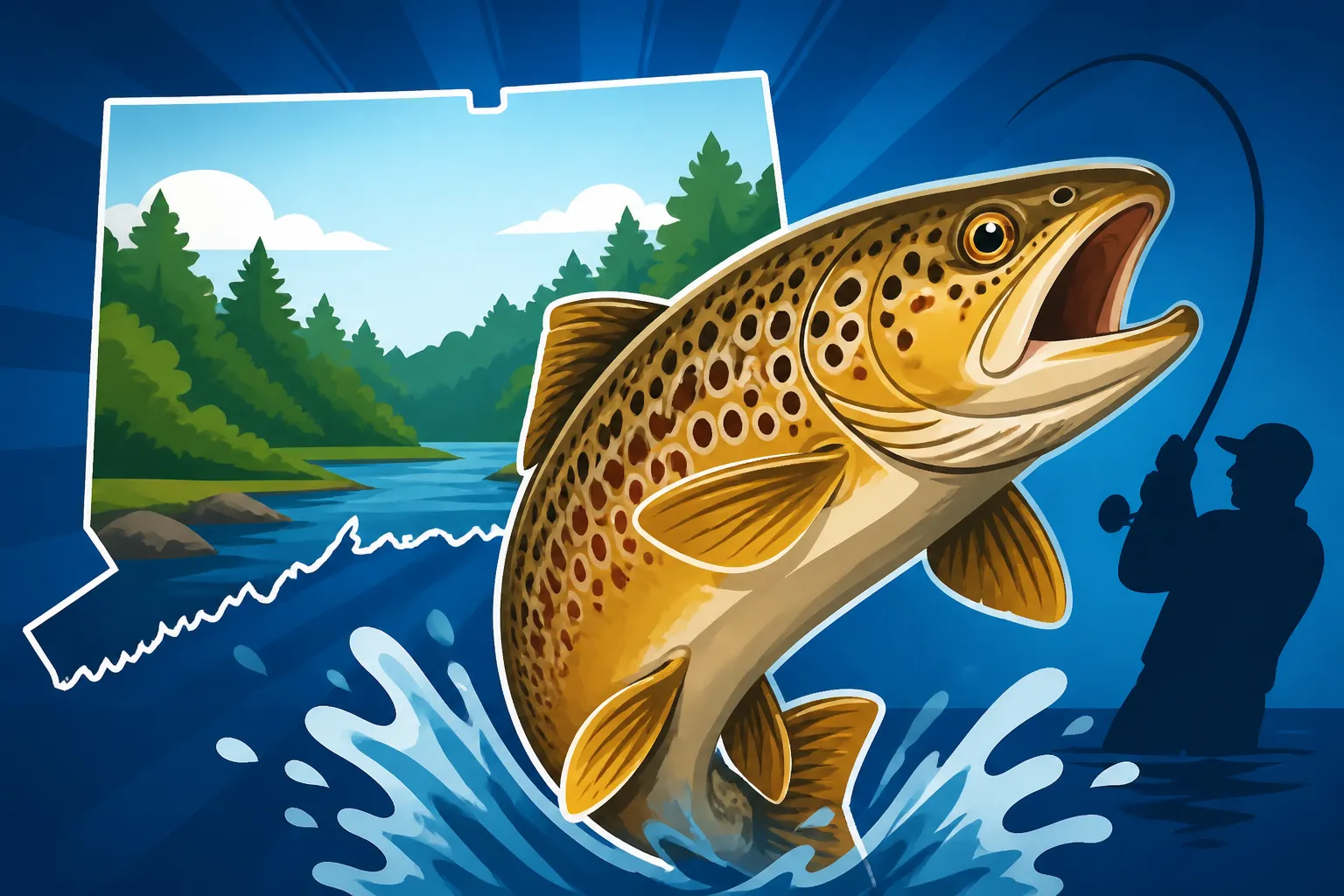
Brown trout, with their rich, earthy coloration, often adorned with dark spots, some ringed with lighter halos, are simply beautiful fish. But their beauty is only part of their mystique. They are notoriously intelligent, wary, and adaptable, capable of surviving in a wide range of habitats, from small, cold mountain streams to large lakes and even brackish estuaries. This adaptability, combined with their predatory nature, allows them to grow to impressive sizes, making them a prime target for anglers seeking a truly monumental catch. The thrill of outsmarting a wise old brown trout, one that has avoided countless lures and baits, is a challenge that keeps us coming back to the water. They are powerful fighters, often making spectacular runs and acrobatic leaps, ensuring that every encounter with a large specimen is an unforgettable battle.
The Connecticut State Record Brown Trout: The Legend and the Lore
The Connecticut state record for brown trout represents the pinnacle of angling achievement in our state. It's not just a number; it's the story of an incredible fish and a lucky, skilled angler who managed to bring it to the scales. While specific record weights can change over time as new giants are caught, the mere existence of such a record inspires us all. To even consider challenging that record means envisioning a brown trout of truly massive proportions, a fish that would dwarf almost any other freshwater catch. These fish are typically old, wise, and have fed voraciously over many years to reach such an astonishing size. If you're eager to know the current, official weight to beat, always check the Connecticut Department of Energy and Environmental Protection (DEEP) website. They maintain the official list of state records, ensuring you have the most up-to-date information on this incredible benchmark.
Where Connecticut's Trophy Brown Trout Live
So, where do you even begin your quest for a brown trout that could challenge the state record? Connecticut is blessed with diverse waterways, and while brown trout can be found in many of them, certain areas consistently produce larger specimens. It's about knowing where these giants have the ideal conditions to grow, thrive, and survive long enough to reach trophy size.
Famous Trout Management Areas (TMAs) and Trophy Waters
When you think of trophy trout in Connecticut, your mind naturally drifts to our renowned Trout Management Areas (TMAs). These special regulation stretches of rivers are managed intensively to foster healthy trout populations, often including significant numbers of larger, holdover brown trout. The Farmington River, particularly its West Branch, is arguably the crown jewel for brown trout anglers. Its cold, consistent flows and abundant aquatic insect life create a perfect environment for browns to grow large and wary. Anglers here often spend years perfecting their craft, understanding the subtle nuances of the river to tempt these giants.
Similarly, the Housatonic River, especially its upper sections and deeper pools, is another incredible fishery. While perhaps more famous for its smallmouth bass, it holds impressive brown trout, some of which are true leviathans. These rivers are not easy; they require skill, patience, and often a willingness to brave challenging conditions. But the reward, the chance to hook into a truly immense brown, makes it all worthwhile. Regulations in these areas can be complex, so always consult the Reading the Connecticut Fishing Guide to ensure you're fishing legally and ethically. Many dedicated anglers focus on areas with Connecticut Catch and Release Fly Fishing Only Waters or trophy sections where fish are protected, allowing them to grow to their full potential.
The Role of Lakes and Ponds
While rivers get a lot of the spotlight, don't overlook Connecticut's larger lakes and deep ponds. These expansive water bodies can offer a smorgasbord of food sources, from smaller baitfish to crayfish, allowing brown trout to pack on serious weight. Lakes like Candlewood Lake, for instance, are known for holding giant brown trout, often found in deeper, cooler waters during the warmer months, feeding on schools of alewives or other forage.
Other deep, clear lakes and reservoirs across the state can also harbor these elusive giants. The key is finding those with stable, cold-water layers, ample food, and enough depth for large trout to feel secure. Fishing these waters often requires different tactics than river fishing, such as trolling with downriggers or fishing deep with specialized baits. The sheer volume of water in a large lake makes finding these fish a needle-in-a-haystack endeavor, but the payoff can be truly spectacular. Think about exploring some of the Best Fishing Lakes in Connecticut if you're keen on finding those deeper water browns.
Tactics and Gear for Pursuing a Trophy Brown
Chasing a state record brown trout isn't just about luck; it's about strategy, persistence, and having the right tools for the job. These fish are not easily fooled, and decades of angling pressure have made them incredibly wary. To stand a chance, you need to think like a trophy fish.
Essential Techniques for Big Browns
Successfully targeting trophy brown trout often means employing specialized techniques tailored to their habits. In rivers, this might involve streamer fishing with large, articulated flies that imitate baitfish or sculpins. These patterns, stripped aggressively through deep pools, undercut banks, and current seams, can trigger a predatory strike from a large brown. Euro nymphing, a highly effective technique that uses weighted nymphs to probe deep pockets, can also be deadly, especially in pressured waters where trout are accustomed to seeing natural drifts. For those fishing with conventional gear, drift fishing with live shiners, large nightcrawlers, or PowerBait in deeper pools and runs can be incredibly effective. Sometimes, simply finding the deepest, slowest parts of a river and patiently presenting a large bait is the ticket.
In lakes, the game changes. Trolling with large stickbaits, spoons, or even live bait behind a boat is a common tactic. Downriggers are essential for getting your offerings down to the thermocline where these cold-water predators often lurk, especially during summer. Fishing during low light conditions – dawn, dusk, or even through the night – can also dramatically increase your chances, as larger browns often move into shallower water to feed under the cover of darkness. Many dedicated trophy hunters will also spend hours mapping out lake bottom contours and structure, looking for deep points, submerged humps, or old creek channels where a giant brown might ambush prey. You can learn more about specific approaches in our guide on Fly Fishing for Trout in Connecticut.
The Right Equipment Makes a Difference
Your gear is your lifeline to that once-in-a-lifetime fish. For trophy brown trout, you'll want to lean towards heavier-than-average tackle. A medium-heavy to heavy power rod with a fast action, typically in the 7 to 9-foot range, provides the backbone needed to handle a powerful fish and the sensitivity to detect subtle bites. Pair this with a high-quality spinning reel or baitcasting reel spooled with strong, low-stretch line – think 10-15 lb test monofilament or fluorocarbon, or even heavier braided line with a fluorocarbon leader for abrasion resistance. When it comes to lures and baits, don't be afraid to go big. Large swimbaits, jerkbaits, deep-diving crankbaits, and substantial streamers are often the ticket. These offerings are designed to imitate the larger forage that big browns key on.
Don't skimp on terminal tackle either; sharp, strong hooks are non-negotiable. Many anglers swear by particular brands or models, and you can often find a wide array of specialized hooks, leaders, and swivels on sites like Amazon, ensuring you have the best possible connection to your prize. Having a large, sturdy landing net is also crucial. A long-handled, rubber-coated net will protect the fish (especially if you plan to release it) and make landing a thrashing trophy much safer and easier. Remember, every piece of your setup needs to be able to withstand the fight of a true monster. For those who prefer to shop online, Amazon offers a vast selection of these specialized items, making it easier to find exactly what you need for your record pursuit.
Understanding Connecticut's Regulations for Trophy Fish
Catching a potential state record is thrilling, but the excitement can quickly turn to confusion if you're not aware of the rules. Connecticut has specific regulations in place to ensure fair play and the proper documentation of such significant catches. Ignoring these rules could not only disqualify your catch but also lead to penalties.
Catch and Release vs. Harvest for Record Contenders
This is a critical decision point for any angler who hooks a truly enormous fish. Many trophy anglers today are strong proponents of catch and release, especially for large, older fish that are vital for future generations. Releasing a huge brown trout allows it to spawn again and potentially be caught by another angler. However, if your goal is to have a fish officially recognized as a state record, you will need to harvest it. The official process typically requires the fish to be weighed on a certified scale, usually at a tackle shop or a general store that has one, and often in the presence of witnesses. It also often involves precise measurements of length and girth, and sometimes even a photo for identification.
This is a personal ethical choice that every angler must make. If you do decide to harvest, be absolutely certain the fish meets all current length and creel limits for the body of water you're fishing. Violating these regulations, even accidentally, can lead to serious consequences. Always be aware of Connecticut Trout Limit and Possession Rules before you head out.
How to Properly Document a Potential State Record
Should you be so fortunate as to land a brown trout that you suspect is a state record, the moments immediately following the catch are crucial. Haste and excitement can lead to mistakes that disqualify your entry.
Here’s a general rundown of the steps you'll typically need to follow, though you should always consult the official Connecticut DEEP guidelines for the most current and specific requirements:
- Keep the fish alive if possible, or preserve it immediately. If you intend to release it, get a quick photo, measure it, and let it go. If you intend to submit it for a record, keep it cool, ideally on ice, to maintain its weight and condition until it can be officially weighed.
- Locate a certified scale. This is non-negotiable. The fish must be weighed on a scale that has been inspected and certified for accuracy. Many bait and tackle shops, marinas, or grocery stores have such scales. Call ahead to confirm.
- Have witnesses present. Ideally, several impartial witnesses should be present during the weighing and measuring process.
- Take clear photographs. Document the fish from multiple angles, showing its full length, and potentially a photo of it on the scale. These photos are important for identification and verification.
- Obtain accurate measurements. Measure the fish's total length (from the tip of the nose to the tip of the tail) and its girth (the widest part of its body).
- Fill out the official application. The Connecticut DEEP will have a specific form for state record applications. This form will require details about the catch, including date, time, location, tackle used, and witness information.
- Identify the species. Be absolutely sure of the species. While a brown trout is fairly distinctive, sometimes confusion can arise with hybrids or other trout species. Trout Species Identification Guide for Connecticut can be a valuable resource here.
- Submit your application. Follow the DEEP's instructions for submitting all documentation, photos, and witness statements.
The process is rigorous for a reason: to ensure the integrity of the state records. But imagine the pride of seeing your name and that of your incredible brown trout etched into Connecticut's angling history!
The Hunt for Connecticut's Record Brown Trout: A Journey
The pursuit of a state record brown trout in Connecticut is more than just fishing; it's a testament to dedication, skill, and an unwavering passion for the sport. It’s about understanding the subtle habits of these magnificent creatures, knowing their preferred haunts, and meticulously selecting the right presentation. Whether you're casting flies on the Farmington, trolling deep on Candlewood, or soaking bait in a remote pond, the dream of a record-breaker drives many of us to spend countless hours on the water.
This quest teaches patience, resilience, and a profound respect for our natural resources. Even if you never break the state record, the journey itself—the knowledge gained, the challenges overcome, and the breathtaking beauty of Connecticut’s waterways—is a reward in itself. So, gear up, study the regulations, and keep casting. That legendary brown trout might just be waiting for you.
| Trout Species | Average Size in CT (Inches) | Max Potential Size (Inches) | Typical Habitat | State Record Potential |
|---|---|---|---|---|
| Brown Trout | 12-18 | 25-35+ | Rivers, Lakes, Reservoirs | High |
| Rainbow Trout | 10-16 | 20-25 | Rivers, Ponds, Lakes | Moderate |
| Brook Trout | 6-12 | 15-18 | Cold Streams, Mountain Ponds | Low |
| Lake Trout | 18-24 | 30-40+ | Deep, Cold Lakes (limited) | High (where present) |
Disclaimer
This article is for general informational purposes only and does not constitute professional advice. Laws, prices and regulations vary by location and change over time. Consult a qualified professional for guidance on your specific situation.