Do You Need Your Own Fishing License for a Connecticut Charter?
One of the most common questions I hear from folks planning a fishing trip in Connecticut, especially if they're new to the charter scene or visiting from out of state, is this classic: "Do I actually need my own fishing license if I'm going out on a charter boat? Isn't the captain's license enough?" It's a completely fair question, and the confusion is real. Let me tell you, navigating fishing regulations can feel like trying to untangle a particularly stubborn fishing line! This guide is here to clear up that mystery, explaining exactly when and why you need your own license, and how to make sure you're fully prepared for a fantastic day on the water without any unwelcome surprises.
The Straight Answer: Yes, You Almost Always Need Your Own License
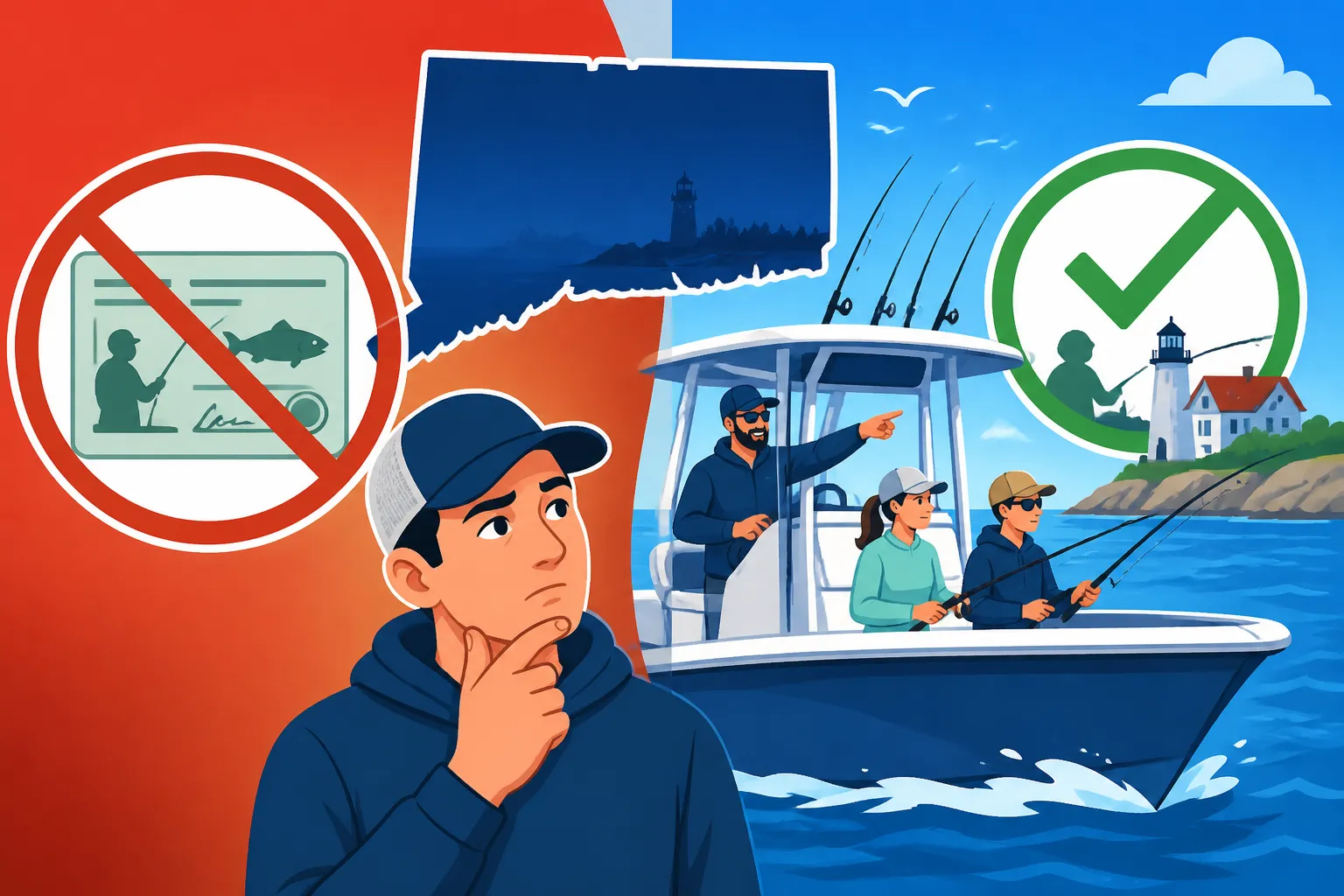
Let's cut right to the chase because nobody wants to get caught off guard: if you're planning to go fishing on a charter boat in Connecticut, you almost certainly need your own personal Connecticut fishing license. This applies whether you're heading out into Long Island Sound for striped bass or fluke, or venturing onto an inland lake for bass or trout. The captain's license covers them for operating a commercial vessel and carrying passengers for hire, but it doesn't extend to you, the individual angler, in terms of your right to catch and possess fish.
Imagine it like this: your car insurance covers you, the driver, but it doesn't cover your passenger if they decide to take the wheel without their own license. It's about individual accountability and ensuring everyone participating in the act of fishing is properly licensed according to the state's conservation laws. These laws are in place to help manage fish populations, fund stocking programs, and maintain the health of our precious aquatic ecosystems. So, while it might feel like an extra step, it's a vital one for the long-term enjoyment of fishing in our beautiful state.
Why This Catches People Off Guard
It's totally understandable why this isn't always clear-cut. For starters, some states do have different rules where a party boat or charter might hold a blanket license for all on board, or where children under a certain age are completely exempt, even on charters. Connecticut, however, generally requires individual licensing for most anglers. This discrepancy can definitely lead to confusion, especially for non-residents who might be used to different regulations back home.
Another source of confusion comes from the sheer professionalism of charter captains. They handle so much: the boat, the gear, knowing the best spots, and even cleaning your catch. It's easy to assume that since they're taking care of everything else, the licensing aspect for guests would also be covered. But that's just not how it works in Connecticut. They're providing the vessel and expertise, but you're still the one engaging in the recreational act of fishing. When you're browsing options on platforms like FishingBooker, you'll often see this requirement explicitly stated by captains in their booking details, which is a good reminder.
The Captain's Role and Your Responsibility
Your charter captain is an expert on the water, but they aren't responsible for verifying your personal fishing license. That responsibility falls squarely on your shoulders. While many reputable captains might remind you to get one when you book your trip, or even send out a pre-trip checklist, it's not their legal obligation to ensure every passenger has one. The Connecticut Department of Energy and Environmental Protection (DEEP) wardens are the ones who enforce these rules, and they can check licenses at any time.
So, while your captain will certainly get you to the fish, show you the ropes, and ensure a safe and enjoyable experience, make sure you've handled your part of the regulatory bargain. Don't put yourself or your captain in an awkward position by showing up unlicensed. It's better to be prepared and focus on the excitement of the catch!
What Kind of License Do You Need?
Okay, so you know you need a license. But which one? Connecticut has different types of fishing licenses depending on where you plan to cast your line. Most charter trips fall into one of two main categories: marine waters or inland waters.
Marine Fishing Licenses for Saltwater Charters
If you're chartering a boat to fish in Long Island Sound – targeting popular species like striped bass, fluke, blackfish (tautog), bluefish, or black sea bass – you'll need a Connecticut Marine Waters Fishing License. This is your go-to for saltwater adventures. This license covers all the coastal waters, estuaries, and tidal rivers.
It's important to understand that even if a portion of your trip takes you into a tidal river mouth, if the fish you're targeting are marine species or the primary fishing occurs in salty waters, the marine license is what you need. Most deep-sea or inshore charters operating out of coastal towns like Niantic, Old Saybrook, Stonington, or Norwalk will require guests to have this type of license. Always double-check with your specific charter operator if you're unsure, though for saltwater, the marine license is almost always the answer.
Inland Fishing Licenses for Freshwater Charters
While less common for larger charter operations, some guides offer trips on Connecticut's larger lakes and rivers for freshwater species. If you're going out on a guided trip on a lake like Candlewood Lake, Bantam Lake, or even a section of the Connecticut River that's considered inland for species like largemouth bass, smallmouth bass, or pike, you'll need a Connecticut Inland Fishing License.
This license covers all lakes, ponds, and non-tidal rivers and streams within the state. If your charter focuses on specific freshwater trophy fish or fly fishing in a river, this is the license class you'd need. For trout fishing in particular, you might also need an additional stamp. We'll get to that in a moment!
The "All-Waters" License: Your All-in-One Solution
If you're someone who loves both freshwater and saltwater fishing, or if your charter plans are still a little fluid, Connecticut offers an "All-Waters" Fishing License. This comprehensive license covers you for both inland and marine waters, effectively giving you peace of mind no matter where your fishing adventures take you. It's often the most convenient option for avid anglers or those who might book multiple types of trips in a season. While it might cost a bit more upfront than a single-type license, the flexibility and convenience can be well worth it. You can learn more about this by checking out Connecticut Inland vs Marine vs All-Waters License, Explained.
Special Stamps: The Trout & Salmon Stamp
For those targeting trout or Atlantic salmon in designated trout-stocked waters or trout management areas, you'll also need a Connecticut Trout and Salmon Stamp in addition to your regular inland or all-waters license. Many of Connecticut's rivers, like the Farmington River or the Housatonic River, are renowned for their trout fishing, and if your charter or guided trip focuses on these species, this stamp is mandatory. This includes both wild and stocked trout. This stamp helps fund the state's extensive trout stocking program, ensuring fantastic opportunities for anglers. Make sure to check Connecticut Trout and Salmon Stamp, Explained if this applies to your trip.
Here’s a quick overview of license types for charter guests:
| Scenario | License Type Needed | Additional Stamps (If Applicable) | Notes |
|---|---|---|---|
| Saltwater Charter (Long Island Sound) | Connecticut Marine Waters Fishing License | None | Covers striped bass, fluke, bluefish, blackfish, etc. |
| Freshwater Charter (Lakes/Rivers) | Connecticut Inland Fishing License | Trout & Salmon Stamp | Covers bass, pike, panfish in freshwater. Stamp needed for trout/salmon. |
| Mixed Fishing (Both Fresh & Salt) | Connecticut All-Waters Fishing License | Trout & Salmon Stamp | Most convenient for diverse trips. Stamp needed for trout/salmon. |
| Non-Resident, Short Trip | Connecticut Nonresident 3-Day Marine or Inland License | Trout & Salmon Stamp | Shorter-term options available. |
Exceptions to the Rule
While the general rule is that you need your own license, there are a few important exceptions or special considerations that might apply to you or someone in your group.
Kids and Minors
Connecticut is quite welcoming to young anglers! Generally, children under the age of 16 do not need a fishing license to fish in Connecticut waters. This is fantastic news for family fishing trips on charters. So, if you're bringing your kids or grandkids along for a day of fun on the water, they're likely exempt from the license requirement. This makes charter trips an excellent, hassle-free way to introduce youngsters to the joy of fishing. However, always confirm the current age requirements with the DEEP or your charter captain, as regulations can sometimes shift. For more specifics, you can check out Connecticut Fishing License Age Requirements.
Disabled Residents
Connecticut offers special provisions for disabled residents. For eligible residents with certain disabilities, discounted or free fishing licenses may be available, including a Connecticut Fishing License for Disabled Residents. If you fall into this category, it's worth exploring these options directly through the Connecticut DEEP website or by contacting their licensing division. This ensures that fishing remains accessible to everyone who wants to enjoy it.
Free Fishing Days
Periodically, Connecticut DEEP designates "Free Fishing Days" where residents and non-residents can fish without a license for a specific period, usually one or two days a year. These days are typically announced in advance and are a fantastic opportunity for newcomers or those just looking to wet a line without the upfront commitment of a license. However, these are rare and specific events, so they are unlikely to coincide with a pre-booked charter unless you've planned carefully. Always check the official DEEP calendar for these dates.
Reciprocity Agreements
Connecticut shares certain waters with neighboring states, such as the Connecticut River with Massachusetts and Long Island Sound with New York. In very specific, limited circumstances, there might be reciprocity agreements that allow anglers licensed in one state to fish in a shared border water without needing a second state's license. However, these agreements are often complex, highly specific to certain sections of water, and usually pertain to private recreational fishing, not necessarily commercial charter operations crossing into different state waters. For the vast majority of charter trips, especially those venturing well into Long Island Sound, assume you need a Connecticut license. It’s always best to have the proper Connecticut license to avoid any ambiguity. For example, you can learn more about Connecticut fishing license reciprocity on Long Island Sound with New York.
How to Get Your Connecticut Fishing License
Getting your fishing license in Connecticut is actually quite straightforward these days, thanks to online services. You have a few convenient options to ensure you're squared away before your charter trip.
Online Purchase: The Easiest Way
The quickest and most convenient method is to purchase your license directly online through the Connecticut DEEP's online licensing system. This platform is accessible 24/7, meaning you can buy your license from the comfort of your home at any time that suits you, even the night before your trip. You simply select the type of license you need (Marine, Inland, All-Waters), add any necessary stamps like the Trout & Salmon Stamp, provide your personal information, and complete the payment. Once purchased, you can often print a temporary license immediately or save a digital copy to your phone. This is a huge time-saver and my top recommendation. Check out How to Buy a Fishing License Online in Connecticut for a step-by-step guide.
When booking through a site like FishingBooker, you'll often have a short window before your trip to finalize these details, so getting your license online as soon as your booking is confirmed is a smart move.
In-Person at a License Vendor
If you prefer a more traditional approach or need assistance, you can also purchase your Connecticut fishing license in person at various license vendors across the state. These typically include many town clerks' offices, sporting goods stores, bait and tackle shops, and some department stores. These locations have staff who can help you navigate the options and answer any questions you might have. It's a good idea to call ahead to confirm their operating hours and that they process fishing licenses. This is particularly useful if you have last-minute questions or need a physical copy printed immediately.
When looking for a local vendor, you might search for a "Connecticut DEEP license agent list" to find the closest official location.
What You'll Need to Purchase
Regardless of whether you buy online or in person, you'll need to provide some basic information:
- Proof of Residency: If you're a Connecticut resident, you'll need to verify your residency (e.g., driver's license, state ID). This determines the cost of your license, as resident licenses are typically less expensive than non-resident ones.
- Personal Information: Your full name, date of birth, address, and sometimes a social security number (for identification purposes as required by law).
- Payment: A valid credit card for online purchases, or cash/card for in-person transactions.
It's a good practice to purchase your license a few days before your charter trip, just in case there are any technical glitches or questions that arise.
Penalties for Fishing Without a License
This is the part nobody wants to talk about, but it's crucial to understand the implications of fishing without the proper license. The Connecticut DEEP takes its conservation efforts seriously, and fishing without a valid license is a violation of state law.
Fines and Citations
If a DEEP Environmental Conservation (EnCon) Police Officer or other authorized law enforcement official checks your license and you don't have one, you could face a significant fine. The exact penalty can vary, but generally, it's not a small slap on the wrist. These fines are designed to deter unlicensed fishing and support the funding of fish and wildlife management. It’s certainly not the souvenir you want to bring home from your fishing trip! You can find more details by researching Fishing Without a License in Connecticut: Penalties.
Beyond the immediate financial penalty, getting a citation can also put a damper on your entire day, causing delays for your charter group and potentially leading to an early end to your fishing adventure. It’s simply not worth the risk.
Equipment Confiscation (In Some Cases)
While less common for a first offense, in more egregious or repeated cases of violation, law enforcement has the authority to confiscate fishing equipment. Imagine losing your favorite rod and reel, or even having your day's catch seized. This is an extreme measure, but it highlights the seriousness with which these regulations are enforced.
Impact on the Charter
Even though the license is your responsibility, a violation on board can still create an unpleasant situation for the charter captain and other guests. It can interrupt the flow of the trip, lead to uncomfortable conversations, and generally detract from the positive experience everyone came for. Reputable charter captains want their guests to have a seamless and enjoyable time, free from legal troubles.
So, please, just get the license. It's a small investment for peace of mind and ensures you're contributing to the sustainability of the sport you love. It’s also a sign of respect for the rules and the natural resources we all enjoy.
Planning Your Charter Trip with Confidence
Now that you're well-versed in the Connecticut fishing license requirements, you can plan your charter trip with complete confidence!
Communicating with Your Captain
When you book your charter, whether it's directly or through a platform like FishingBooker, it's always a good idea to confirm any specific requirements with the captain. They are a wealth of knowledge not just about fishing spots and techniques, but also about the local regulations that apply to their specific trips. While most will assume you know to get your license, a quick question like "Just confirming, do I need to bring my own Connecticut Marine Waters Fishing License for this trip?" is always a smart move.
Captains often provide valuable advice on what type of license is best for their particular excursions. For instance, if they plan to fish a specific area that might border a different water classification, they might recommend an all-waters license for maximum flexibility. This open communication ensures there are no surprises on the day of your trip. You can also ask them about things like What to Bring on a Connecticut Fishing Charter.
What to Carry on the Day of Your Trip
Once you have your license, make sure you have it with you in a readily accessible format on the day of your charter.
- Physical Copy: If you printed it, keep it in a waterproof bag or your wallet.
- Digital Copy: Most states, including Connecticut, accept a digital image of your license on your smartphone. Just make sure your phone is charged! I always recommend having a screenshot saved, in case you lose cell service out on the water. Check out Printing or Carrying a Digital Fishing License in Connecticut for official guidance.
Having your license ready means you can quickly present it if requested by an EnCon Officer, allowing you to get back to the fishing action without delay. It’s all about being prepared so you can truly relax and enjoy your time on the water.
Choosing the Right Charter
Knowing the license requirements is just one piece of the puzzle when choosing the perfect charter. Whether you’re looking for Best Striped Bass Charters on Long Island Sound, a family-friendly excursion, or a hardcore offshore adventure, taking the time to understand all the details beforehand will lead to a much more enjoyable experience. Don't be shy about asking questions when you're booking – a good captain will appreciate your preparedness.
Ultimately, a day out on a Connecticut fishing charter should be about making memories, reeling in some great fish, and enjoying the beautiful scenery. By taking a few minutes to secure your fishing license beforehand, you'll ensure that your only worry on the water is which bait to use next, not whether you're breaking any rules. Happy fishing!
Disclaimer
This article is for general informational purposes only and does not constitute professional advice. Laws, prices and regulations vary by location and change over time. Consult a qualified professional for guidance on your specific situation.