Connecticut fishing license reciprocity on Long Island Sound with New York
Fishing on Long Island Sound is an incredible experience, offering diverse opportunities for anglers from both Connecticut and New York. However, the excitement of chasing striped bass or fluke across these shared waters can quickly turn to anxiety when you start wondering, "Does my license cover me here?" This guide is here to untangle the often-confusing web of fishing license reciprocity between Connecticut and New York on Long Island Sound, helping you stay legal and focus on the fish.
Understanding Fishing License Reciprocity on Long Island Sound
The idea of "reciprocity" sounds simple enough: if you have a fishing license from one state, it should be valid in the bordering waters of another. Unfortunately, when it comes to the marine waters of Long Island Sound shared by Connecticut and New York, it's not quite that straightforward. Many anglers get caught off guard, assuming that because it's one continuous body of water, one license is all you need. That assumption can lead to some real headaches and potential fines.
What is Reciprocity and Why Does It Matter Here?
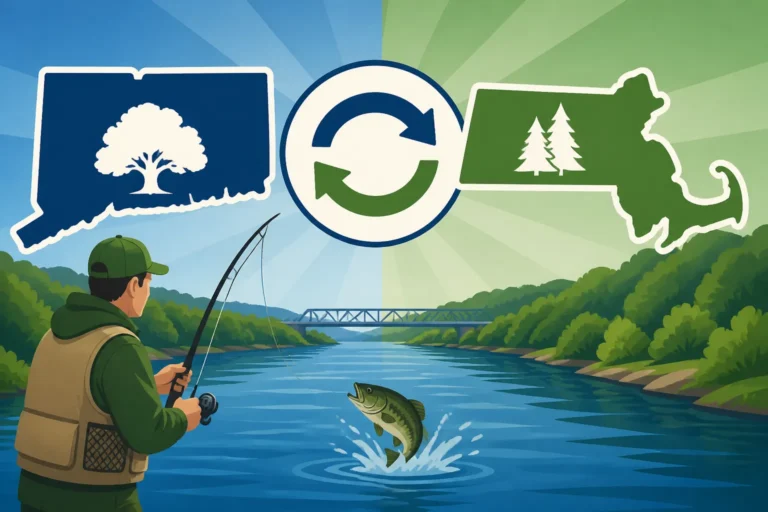
Reciprocity in fishing licenses generally means that states have an agreement where a license issued by one state is recognized as valid in certain border waters of another state. This is common in some freshwater rivers or lakes that straddle state lines, where anglers can fish from either side or even drift across the invisible boundary with just one state's license. It’s a wonderful convenience, simplifying things dramatically for those who frequent these shared fishing grounds.
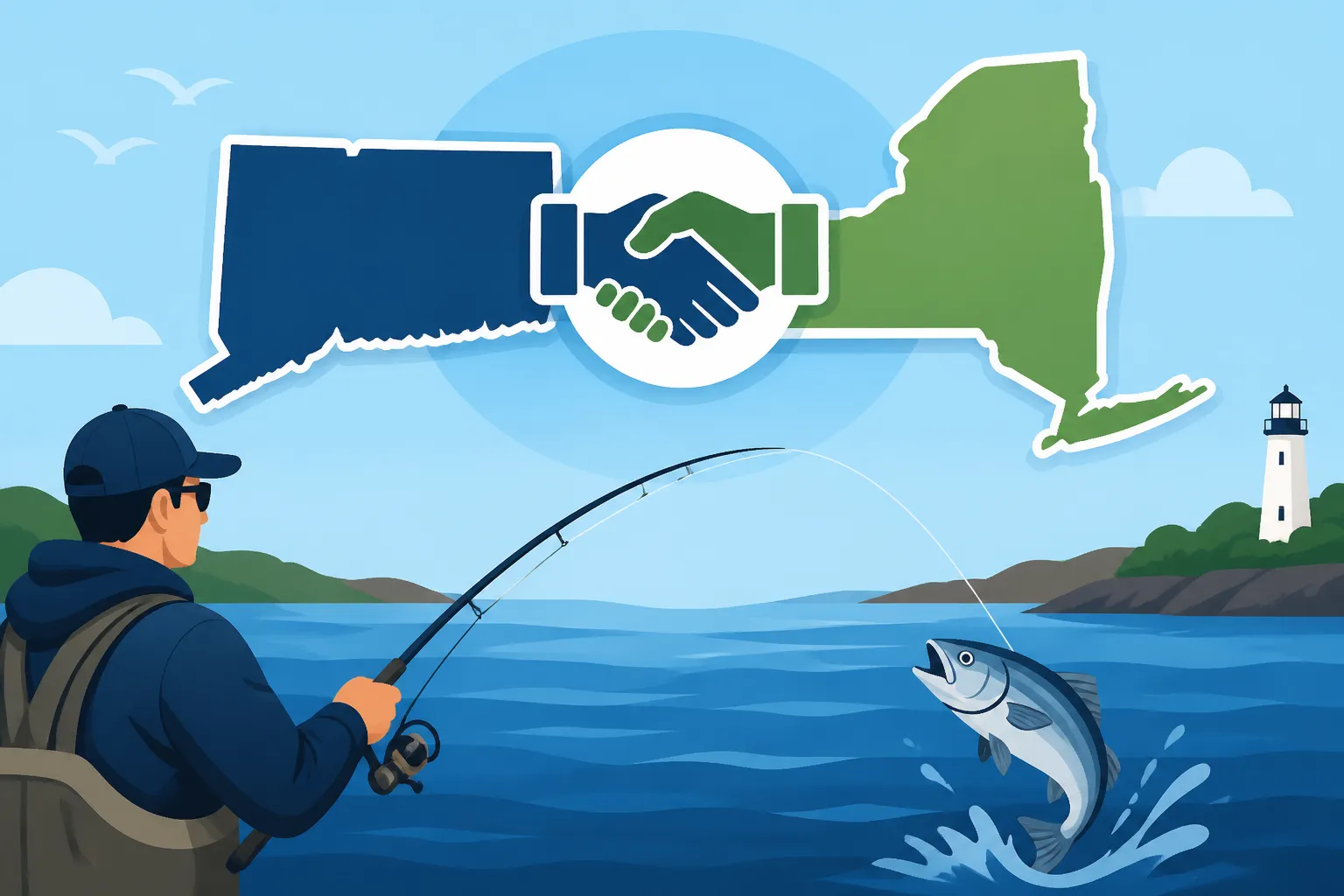
However, Long Island Sound, a vast tidal estuary, operates under different rules due to its complex marine environment and the independent regulatory bodies of Connecticut and New York. The absence of a broad reciprocity agreement for recreational marine fishing licenses between these two states means that your Connecticut marine fishing license generally only covers Connecticut waters, and your New York license only covers New York waters. This distinction matters immensely because violating these rules, even unknowingly, can result in significant penalties. Imagine you’re hooked up to a trophy striped bass, reeling it in, only to realize you’ve drifted a few hundred yards into the "wrong" state’s waters without the proper paperwork. It’s a frustrating scenario many anglers dread.
The Specifics: Connecticut vs. New York Regulations
At its core, the rule is simple: you need a fishing license from the state whose waters you are currently fishing in. This means if you are fishing in Connecticut's portion of Long Island Sound, you need a Connecticut Marine Waters Fishing License. If you're fishing in New York's portion, you need to be registered with the New York Marine Recreational Fishing Registry or hold a valid New York fishing license if you're targeting freshwater species in tidal rivers, or certain other specific scenarios.
The "boundary" between Connecticut and New York on Long Island Sound isn't marked by buoys or signs. It's an invisible line, primarily defined by geographical coordinates. For the most part, the line generally runs down the middle of the Sound, though it has some wiggles and turns, particularly as you get closer to the eastern and western ends. This invisible line creates a common point of confusion for anglers, especially when drifting or chasing fast-moving schools of fish. Knowing Connecticut Saltwater Fishing Regulations by Species is crucial, but equally important is knowing where those regulations apply. Without a clear understanding of these boundaries, you could find yourself in a tricky situation, facing enforcement from either the Connecticut Department of Energy and Environmental Protection (DEEP) or the New York Department of Environmental Conservation (DEC), depending on where you are.
Navigating the Waters: Where Your Connecticut or New York License Counts
Understanding which license is valid where is critical for anyone planning to fish Long Island Sound. The continuous nature of the water can be deceptive, and accidentally crossing an invisible state line can have consequences. Let's break down what each state's license allows.
Connecticut License Holders on Long Island Sound
If you hold a valid Connecticut Marine Waters Fishing License, you are legally permitted to fish in all of Connecticut's marine and tidal waters. This includes the entire stretch of Long Island Sound that falls within Connecticut's state boundaries, as well as its tidal rivers and estuaries. So, if you launch your boat from a Connecticut port like Old Saybrook, Milford, or Stonington, and you stick to the waters directly off the Connecticut shoreline, you're good to go with your CT license. These waters are well-known for Striped Bass Fishing in Long Island Sound and excellent bottom fishing for species like blackfish.
However, the moment your boat drifts or travels into waters designated as New York territory, your Connecticut license ceases to be valid for fishing purposes. This can happen quite easily, particularly in the wider sections of the Sound or when following a hot bite. For example, if you're fishing near the mouth of the Connecticut River and decide to venture further west into the central Sound, you could unknowingly cross into New York's jurisdiction without even realizing it. It's not uncommon for anglers to be so focused on their fishing that they lose track of their exact location relative to these invisible lines.
New York License Holders and Connecticut Waters
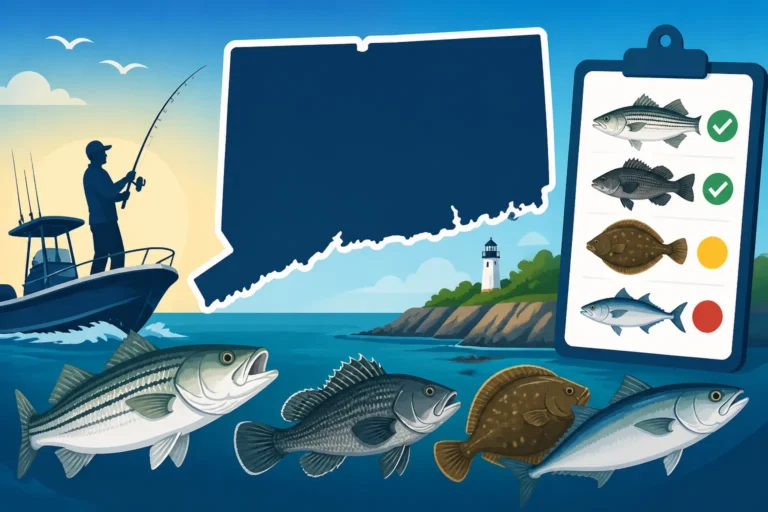
Similarly, if you are registered with the New York Marine Recreational Fishing Registry (which is essentially New York's marine fishing license system), you are authorized to fish in the marine waters of New York, including its portion of Long Island Sound and the Atlantic Ocean. This covers areas like the waters off Long Island's north shore, the South Shore bays, and Block Island Sound if you're still in NY jurisdiction. New York offers fantastic opportunities for Fluke Fishing in Long Island Sound, and anglers flock to their waters throughout the season.
However, a New York license does not grant you the right to fish in Connecticut's marine waters. If you launch from a New York port, such as Port Washington or Montauk, and travel eastward, you will eventually enter Connecticut's jurisdiction. An angler with only a New York license who drifts into Connecticut waters while jigging for black sea bass, for instance, would be fishing without a valid license in Connecticut. This is why many experienced anglers who regularly fish the entire breadth of Long Island Sound Fishing Guide opt for a dual-license strategy. While charter operations often have specific commercial licenses that allow them to transit and fish in both states, individual recreational anglers are still responsible for their own personal license compliance.
Practical Strategies for Anglers in the Sound
Given the complexities of shared waters and differing regulations, smart anglers employ various strategies to ensure they're always compliant, regardless of where the fish take them. It's all about preparation and using the tools at your disposal.
The "Two License" Approach for Peace of Mind
For those who frequently fish the broad expanse of Long Island Sound and don't want to constantly worry about crossing invisible lines, the most straightforward and stress-free approach is to obtain both a Connecticut Marine Waters Fishing License and a New York Marine Recreational Fishing Registry. While this involves an additional expense, many find it a worthwhile investment for the peace of mind it provides. You can easily find information on How Much Does a Connecticut Fishing License Cost and specific details on a Connecticut nonresident marine fishing license cost 2026 if you're primarily a New York resident.
Consider it an insurance policy against accidental violations. Instead of fretting about your GPS coordinates, you can focus entirely on the fishing. This dual-license strategy means you can launch from either state, follow the fish wherever they lead you within the Sound, and never have to second-guess whether you're legal. It’s an approach highly recommended for anglers who might chase migratory species that don't respect state boundaries, or who simply want the flexibility to explore all the fantastic fishing opportunities the Sound has to offer. While it means checking out How to Buy a Fishing License Online in Connecticut and figuring out the NY process, it truly simplifies your time on the water.
Using Technology and Navigation to Stay Compliant
In today's world, technology offers powerful tools to help anglers stay on the right side of the law. A reliable GPS chartplotter on your boat is an invaluable asset. Modern chartplotters often come pre-loaded with detailed marine charts that clearly delineate state boundaries. This allows you to see exactly where you are in relation to the Connecticut/New York line on Long Island Sound. Regularly checking your screen can prevent inadvertent crossings.
For smaller boats or kayak anglers, smartphone or tablet apps can serve a similar purpose. Many excellent marine navigation apps, like Navionics or C-MAP, are available for purchase, often through digital storefronts like Amazon, and can turn your device into a portable chartplotter. These apps allow you to mark your location, plot courses, and see state lines in real-time. It's a smart idea to download these and become familiar with their features before heading out. Remember, ignorance of the law, or the boundary, is never an excuse in the eyes of enforcement officers. A quick glance at your screen can save you from a potential fine for Fishing Without a License in Connecticut: Penalties.
What to Do If You're Unsure or Encounter Enforcement
Despite your best efforts, there might be times when you're simply unsure of your exact position, or you might unexpectedly encounter a marine patrol. The most important thing is to always carry your fishing license and photo identification. Whether you prefer a physical copy or a digital version, make sure it's readily accessible. For details on Printing or Carrying a Digital Fishing License in Connecticut, check the DEEP website.
If approached by a Connecticut DEEP Environmental Conservation Police Officer or a New York DEC Officer, always remain courteous and cooperative. They are simply doing their job to enforce regulations that protect our fisheries. Present your licenses and identification clearly when asked. If you genuinely believe you were in the correct waters and have your GPS data to support it, politely share that information. However, if you know you've strayed, it's best to be upfront. Penalties can vary, but generally involve fines, and in some cases, confiscation of your catch or gear. Familiarizing yourself with general Connecticut Boating Laws for Anglers can also help ensure you're compliant in all aspects of your time on the water.
Specific Considerations and Shared Water Frustrations
The invisible line dividing Connecticut and New York waters on Long Island Sound often creates unique challenges and common frustrations for anglers, especially when dealing with the unpredictable movements of fish and the nuanced rules of charter operations.
The Challenge of Following Migratory Species
One of the biggest frustrations for anglers on Long Island Sound is the behavior of migratory species like striped bass, bluefish, and even some of the pelagics that venture into the Sound. These fish don't carry maps, nor do they care about the imaginary lines we draw on the water. A massive school of striped bass feeding on bunker might start in Connecticut waters, and within minutes, move squarely into New York territory. For an angler with only one state's license, this creates an agonizing dilemma: do you stop fishing and watch the action unfold across the line, or do you risk crossing over to stay on the fish, potentially violating regulations?
This scenario is particularly prevalent during the spring and fall migrations when the Sound is teeming with baitfish and predators. Anglers chasing the action often find themselves in a high-stakes game of cat and mouse with both the fish and the state boundary. This is where the dual-license strategy truly shines, allowing you to follow the bite with confidence, whether it's the Best Time of Year to Fish in Connecticut or just a random productive afternoon. Without both licenses, many anglers have had to make the tough decision to pull lines and motor away, leaving a hot bite behind.
Charter Boats and Guest Responsibilities
Many anglers assume that if they book a trip on a fishing charter, the captain's license covers everyone on board, regardless of where they fish in the Sound. This is a common and dangerous misconception. While a licensed charter captain (who often holds a US Coast Guard Master's License and potentially commercial fishing permits for both states) is authorized to operate their vessel in both Connecticut and New York waters, the individual recreational anglers on board still need to comply with the recreational fishing license requirements of the state they are actively fishing in.
For example, if you charter a boat out of a Connecticut port for a day of targeting blackfish, and the captain takes you to a productive reef in New York waters, you, as an individual angler, would need to be registered with New York's Marine Recreational Fishing Registry, even if you launched from Connecticut. Conversely, if you launch from New York and the captain fishes Connecticut waters, you'd need a Connecticut Marine Waters Fishing License. Always clarify with your charter captain beforehand where they plan to fish and what licenses you, as a guest, will need. Many reputable charter operators will explicitly state this in their booking information and might even suggest where to purchase the necessary licenses, perhaps even mentioning helpful resources available on Amazon for extra gear. It's your responsibility to ensure you have the proper credentials.
| Feature | Connecticut Marine Waters License | New York Marine Recreational Fishing Registry |
|---|---|---|
| Covers | CT marine waters of Long Island Sound, tidal rivers | NY marine waters of Long Island Sound, Atlantic Ocean, tidal rivers |
| Reciprocity | No automatic reciprocity for recreational fishing with NY | No automatic reciprocity for recreational fishing with CT |
| Where valid | Within CT state marine boundaries | Within NY state marine boundaries |
| Primary Target | All marine species in CT waters | All marine species in NY waters |
| Recommended for LIS Anglers | Obtain both if fishing entire Sound regularly | Obtain both if fishing entire Sound regularly |
Disclaimer
The information provided in this guide is for general informational purposes only and is not legal advice. Fishing regulations are subject to change. Always consult the official websites of the Connecticut Department of Energy and Environmental Protection (DEEP) and the New York Department of Environmental Conservation (DEC) for the most current and accurate regulations before heading out on the water.