Connecticut largemouth bass minimum length limit
It’s incredibly frustrating when you’ve spent a beautiful day out on the water, finally hooked into a gorgeous largemouth bass, and then you’re left scratching your head, wondering if it’s even legal to keep. Connecticut's fishing regulations can feel like a labyrinth at times, especially with different rules for various species and specific waterbodies. This guide is here to untangle the confusion, focusing specifically on the minimum length limits for largemouth bass across Connecticut, so you can fish with confidence and stay within the law.
Understanding Connecticut Largemouth Bass Regulations
Fishing in Connecticut is a beloved pastime, and for good reason—our waters are teeming with fantastic fish. Largemouth bass, with their aggressive strikes and powerful fights, are a particular favorite for many anglers. But the privilege of catching these incredible fish comes with the responsibility of understanding and respecting the rules designed to protect them. The Connecticut Department of Energy and Environmental Protection (CT DEEP) sets these rules, including length limits, to ensure that our bass populations remain healthy and vibrant for generations to come.
Why Length Limits Matter for Largemouth Bass
You might wonder why there are even length limits in the first place. Isn't fishing just about catching what you can? Well, not exactly. Length limits are a cornerstone of effective fisheries management, especially for a popular sport fish like largemouth bass. They serve several critical purposes that directly impact the health and sustainability of the bass populations you love to target.
First and foremost, length limits act as a conservation tool. By requiring anglers to release smaller bass, these regulations ensure that more fish reach sexual maturity and have the opportunity to spawn, contributing to the next generation. This is absolutely vital for maintaining a strong, self-sustaining population. Think about it: if everyone kept every bass they caught, regardless of size, we'd quickly deplete the breeding stock, and future fishing would suffer dramatically. Furthermore, allowing bass to grow larger often means they become more prolific spawners, producing more eggs and contributing even more to the population.
Beyond just sheer numbers, length limits also play a role in promoting trophy-sized fish. Many anglers dream of catching a truly massive largemouth, a fish that takes years to reach its impressive size. By protecting smaller and medium-sized bass, the regulations give them the chance to grow into those lunkers that make for unforgettable fishing stories and incredible photos. It’s a bit like farming; you let the younger crops grow to their full potential before harvesting. This strategy creates a more balanced age structure within the bass population, leading to a healthier overall ecosystem in our lakes and ponds. If you’re interested in learning more about the general framework, check out our guide on Connecticut Fishing Regulations Explained.
The Statewide Largemouth Bass Length Limit
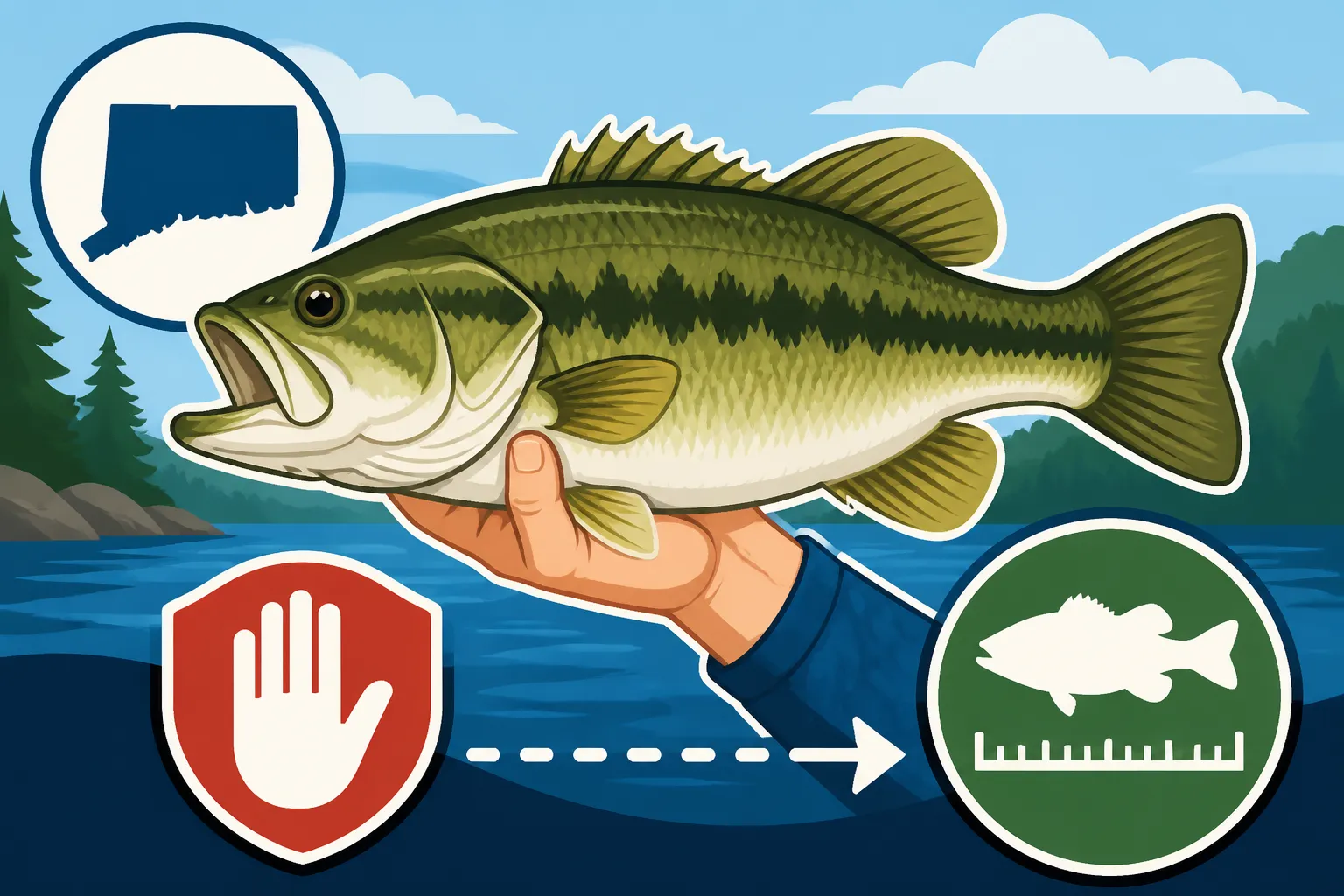
Now, let's get down to brass tacks: what's the general rule for largemouth bass in Connecticut? For most of the state's waters, the standard regulation is a 12-inch minimum length limit. This means any largemouth bass you catch that measures under 12 inches from the tip of its snout to the end of its tail (with the tail compressed) must be immediately released back into the water unharmed.
Alongside this 12-inch minimum, there's also a daily creel limit, which typically restricts anglers to keeping no more than 6 bass per person per day. It’s crucial to remember that this daily limit applies to both largemouth and smallmouth bass combined. So, if you catch three legal largemouth and three legal smallmouth, you've reached your daily limit for "black bass." These statewide regulations are designed to provide a consistent baseline for conservation across the majority of Connecticut's diverse fishing spots.
However, and this is where it gets a little tricky, remember that "most waters" doesn't mean all waters. Connecticut has a fantastic array of lakes and ponds, and some of them have very specific, often more restrictive, rules to manage their unique fisheries. This is why always consulting the official Connecticut Angler's Guide is so important—it's your bible for navigating these nuances. You can find invaluable information on Reading the Connecticut Fishing Guide to ensure you're always up to date.
Catch and Release for Largemouth Bass
Even if a bass meets the minimum length limit, many anglers choose to practice catch and release, especially for larger, older fish that are important breeders. This is a highly encouraged practice, particularly for anglers who are passionate about the long-term health of our fisheries. However, simply tossing a fish back isn't enough; proper catch and release techniques are vital to ensure the fish's survival.
When you decide to release a bass, handle it as little as possible. Wet your hands before touching the fish to protect its protective slime coat, which is its first line of defense against disease. Use a de-hooking tool or needle-nose pliers to remove the hook quickly and gently. If the fish is deeply hooked, especially in the gills, it might be best to cut the line as close to the hook as possible rather than tearing delicate tissues. Support the fish horizontally, never vertically by its jaw, as this can damage its internal organs. Allow the fish to recover in the water, holding it gently upright until it swims away under its own power. Sometimes, a gentle forward and backward motion can help push water through its gills, aiding recovery. By following these practices, you significantly increase the chances of that bass surviving to fight another day, grow bigger, and contribute to future generations. For more tips on targeting these fish, check out our guide on How to Catch Largemouth Bass in Connecticut.
Specific Waterbody Exceptions and Special Rules
While the 12-inch minimum and 6-fish daily limit are the general rule of thumb for largemouth bass in Connecticut, it’s absolutely critical to understand that many waterbodies have their own distinct regulations. Ignoring these specific rules can lead to fines and penalties, but more importantly, it can undermine the very conservation efforts designed to protect these unique fisheries. These exceptions are not arbitrary; they are carefully crafted by the CT DEEP based on scientific surveys, fish population dynamics, and specific management goals for individual lakes and ponds.
Largemouth Bass Regulations on Trophy Ponds and Lakes
Connecticut is home to several "trophy" bass waters, designated as such because of their potential to produce exceptionally large largemouth bass. These waters often have more restrictive regulations aimed at fostering these big fish and providing a unique angling experience. For example, some lakes might have a higher minimum length limit, perhaps 16 or 18 inches, or even a slot limit. A slot limit means you can keep fish below a certain size and above another size, but fish within a specified "slot" (e.g., between 12 and 16 inches) must be released. This protects the prime breeding-size fish.
A prime example of a waterbody with special regulations for bass is Candlewood Lake. While not specifically a largemouth-only trophy lake, it's famous for its overall bass fishing. Specific sections or even the entire lake might have unique rules designed to manage its significant bass population. For Candlewood, anglers often encounter stricter creel limits or length requirements depending on the season and species. Other lakes, such as Lake Zoar or Lake Lillinonah, might also have special rules to consider, often tied into specific management plans for those particular impoundments. It's always a good idea to consult the CT DEEP fishing guide for the exact details on your chosen fishing spot. When largemouth bass spawn in Connecticut, their vulnerability increases, making careful management even more important.
Understanding Lake-Specific Management Plans
The CT DEEP doesn't just throw darts at a map to decide regulations. Each special regulation waterbody is typically part of a comprehensive management plan. These plans are developed through extensive research, including electrofishing surveys, creel surveys (talking to anglers about their catches), and studying growth rates and population health. The goal is to tailor regulations to what's best for that specific body of water and its fish.
For instance, a lake that has a history of stunted bass growth due to overpopulation of smaller fish might have a regulation encouraging the harvest of smaller bass, perhaps with no minimum length limit, to thin out the population and allow the remaining fish to grow larger. Conversely, a lake where trophy bass are the primary focus might have a much higher minimum length limit or a slot limit to protect those prime breeding and growing fish. These plans are dynamic; they're reviewed and adjusted periodically as conditions change and new data becomes available. Always treat the Connecticut Angler's Guide as your go-to resource because it contains all these site-specific rules, which often override the general statewide rules. Ignoring these detailed rules could lead to unknowingly breaking the law, even if you’re following the statewide minimum. If you're looking for great places to catch bass, check out our list of the Best Bass Fishing Lakes in Connecticut.
Catching Largemouth Bass in State Parks
Many of Connecticut’s beautiful State Parks offer fantastic fishing opportunities, often in serene ponds and smaller lakes. While some state park waters might adhere to the statewide largemouth bass regulations, others can have unique rules, especially if they are part of a special management area or are stocked with other species. For example, some ponds might be designated as "trophy trout ponds," and while you might catch bass there, the primary regulations might focus on trout, and bass rules could be different.
It’s not uncommon for state park ponds, especially smaller ones, to have either more restrictive regulations or even catch-and-release only policies for certain species to protect their often-fragile ecosystems. Before heading out to a specific state park pond, always check the CT DEEP regulations for that particular waterbody. Information for state parks can usually be found listed individually in the Angler's Guide. Always cross-reference the specific park or pond name with the regulations listed to avoid any unpleasant surprises. For a broader overview of fishing spots, you might want to look into the Connecticut State Park Fishing Guide.
Practical Tips for Anglers
Understanding the regulations is one thing, but putting them into practice on the water is another. There's nothing worse than catching a fish you think is a keeper, only to realize later you measured it incorrectly or misinterpreted a rule. Being prepared with the right tools and knowledge can save you a headache and ensure you're always fishing responsibly and legally.
Measuring Your Largemouth Bass Accurately
Getting an accurate measurement of your largemouth bass is absolutely crucial, especially when it's close to the legal limit. A few fractions of an inch can make all the difference between a legal fish and one that needs to be released. Here's how to do it correctly:
First, always use a reliable measuring device. A flexible tape measure can work in a pinch, but a hard, flat measuring board is far superior. Many companies make specialized fishing measuring boards – you can often find a good, sturdy one on Amazon that has a solid stop at one end and clear markings.
Here's the step-by-step process:
- Wet Your Hands: Before you even touch the fish, wet your hands thoroughly. This protects the bass's delicate slime coat, which is vital for its health and prevents disease.
- Handle Gently: Cradle the fish gently and keep it as horizontal as possible. Avoid holding it by the jaw vertically, as this can dislocate its jaw or damage internal organs, especially on larger bass.
- Place on Measuring Board: Lay the fish flat on your measuring board. Slide its nose (snout) all the way up against the stationary end of the board.
- Compress the Tail: Gently squeeze the tail fin together (compress it) to get the maximum length. The measurement is taken from the tip of the snout to the end of the compressed tail.
- Read the Measurement: Read the marking directly under the tip of the compressed tail.
- Quick Release: If the fish is undersized, or if you plan to release it anyway, get it back into the water as quickly and gently as possible. Don't keep it out of the water longer than necessary for a photo and measurement.
Remember, if there’s any doubt, it’s always best to err on the side of caution and release the fish. A healthy fish returned to the water can grow larger and provide sport for another day. It also ensures you're never in violation of the law.
Essential Gear for Responsible Bass Fishing
Beyond just a measuring device, having the right gear can make a huge difference in your ability to fish responsibly, especially when it comes to adhering to length limits and practicing effective catch and release.
- Measuring Board/Tape: As mentioned, a dedicated measuring board is ideal for accuracy and ease of use. If you're just starting, even a simple, clearly marked tape measure permanently affixed to your tackle box can work.
- Needle-Nose Pliers or De-Hooking Tool: These are indispensable for quickly and safely removing hooks, especially if a fish is deeply hooked. The quicker and cleaner the hook removal, the better the fish's chances of survival.
- Landing Net (Rubberized Mesh): A net with a rubberized or knotless mesh is much gentler on fish scales and slime coats than traditional knotted nylon nets. It helps you control the fish for measurement and hook removal without causing undue stress or injury.
- Appropriate Tackle: Using the right size hooks and tackle for the species you're targeting can also minimize harm. Circle hooks, for instance, are designed to hook fish in the corner of the mouth, making for easier, less damaging releases compared to J-hooks that can be swallowed. While not always mandatory for bass, it’s a good practice.
- Camera (Optional, for Catch & Release): If you plan to take photos, do it quickly and while supporting the fish properly. Long photo sessions can be detrimental to a fish’s health.
Having these tools readily accessible means you’re always prepared to measure, release, or retain your catch legally and ethically. It reflects a commitment to the sport and to conservation.
Staying Informed with CT DEEP Resources
The regulations for fishing in Connecticut are not set in stone; they can and do change. New scientific data, population shifts, environmental factors, and even angler input can all lead to modifications in length limits, creel limits, and seasonal rules. That's why staying updated is just as important as knowing the current rules.
The absolute best and most authoritative source for all Connecticut fishing regulations is the official Connecticut Angler's Guide, published annually by the CT DEEP. You can access this guide in several ways:
- Online: The CT DEEP website hosts the current Angler's Guide as a downloadable PDF. This is arguably the easiest way to always have the latest information at your fingertips, even on your phone or tablet when you're out fishing.
- Printed Copies: Physical copies are typically available at bait and tackle shops, town clerk offices, and various CT DEEP offices around the state. It's always a good idea to grab a physical copy to keep in your tackle box or boat.
- CT DEEP Fisheries Division: If you have specific questions or can't find information for a particular waterbody, don't hesitate to reach out to the CT DEEP Fisheries Division directly. They are there to help anglers understand and comply with regulations.
Make it a habit to review the guide at the beginning of each fishing season, and even periodically throughout the year, especially if you plan to explore new fishing spots or target different species. Regulations like Connecticut fishing license age requirements and your Connecticut fishing license expiration date are also detailed in this guide. Don't risk a Connecticut fishing without a license penalty or a fine for an illegal fish; stay informed! Even carrying a digital version is acceptable, as detailed in Printing or Carrying a Digital Fishing License in Connecticut.
The Broader Picture: Conservation and the Future of Bass Fishing
Fishing is more than just a hobby; for many of us, it's a way of life, a connection to nature, and a source of peace and excitement. But the ability to enjoy this pursuit depends entirely on the health of our fish populations. Understanding and adhering to regulations, especially length limits for species like largemouth bass, plays a much larger role than simply avoiding a ticket—it's about ensuring a vibrant future for the sport we love.
The Role of Anglers in Largemouth Bass Conservation
As anglers, we are on the front lines of conservation. We are the eyes and ears on the water, and our actions have a direct impact on the fish we pursue. Every time you consciously release an undersized bass, handle a fish with care, or choose to practice catch and release for a healthy keeper, you're actively contributing to the sustainability of the fishery. It’s not just the responsibility of the state; it's a shared commitment.
Beyond just following the rules, responsible anglers can also contribute by reporting any suspicious activity, such as poaching or pollution, to the CT DEEP. Participating in angler surveys, even informal ones at bait shops, helps fisheries biologists gather valuable data. And teaching new anglers, especially younger generations, about ethical angling practices and the importance of conservation instills a respect for nature that will carry forward. We all want to see healthy populations of largemouth bass thriving in Connecticut waters, and our individual choices on the water collectively make that happen. For those passionate about this, understanding Largemouth Bass Fishing in Connecticut beyond just regulations is key.
How Regulations Evolve and Why
It’s easy to sometimes feel like regulations are arbitrary or overly complicated. But behind every length limit, creel limit, or seasonal closure is a scientific rationale. The CT DEEP employs fisheries biologists who continuously monitor fish populations, water quality, and environmental factors. They use various techniques, from netting and electrofishing surveys to analyzing historical catch data, to get a clear picture of how fish populations are faring.
Regulations are a dynamic tool, constantly reviewed and adjusted. If a population of largemouth bass shows signs of decline, or if surveys indicate that fish aren’t reaching optimal size, regulations might be tightened. Conversely, if a population is thriving and exceeding conservation goals, regulations might be relaxed slightly to allow for more harvest. These changes are often communicated well in advance, usually in the updated annual Angler’s Guide. Sometimes, regulations are changed to address specific issues like the prevalence of Invasive Fish Species in Connecticut Waters or to protect Endangered and Protected Fish Species in Connecticut that share habitats. This adaptive management approach ensures that the rules are always serving the best interests of the fish and the angling public, balancing recreational opportunities with ecological sustainability.
Summary of Connecticut Largemouth Bass Regulations
Here's a quick overview of the typical regulations for largemouth bass in Connecticut, though always consult the official CT DEEP Angler's Guide for the most current and specific details for your chosen fishing spot.
| Regulation Type | Statewide Standard | Common Special Regulations | Purpose |
|---|---|---|---|
| Minimum Length Limit | 12 inches | 16 inches, 18 inches, or "no minimum" | Ensure spawning, promote growth, manage population density. |
| Daily Creel Limit | 6 fish (largemouth & smallmouth combined) | 2 fish, 4 fish, or "catch & release only" | Prevent overharvest, maintain healthy population size. |
| Special Waters | Most lakes, ponds, rivers | Designated "trophy" waters, certain state park ponds | Tailored management for unique fishery goals or sensitive habitats. |
| Measurement Method | Tip of snout to end of compressed tail | Same | Standardized, accurate measurement. |
This table provides a general snapshot, but remember, the Angler's Guide is the definitive source for all regulations.
Disclaimer
The information provided in this article is for general guidance only and is based on publicly available information at the time of writing. Fishing regulations in Connecticut can change, and specific rules often apply to individual waterbodies. It is the angler's sole responsibility to consult the most current official Connecticut Angler's Guide published by the Connecticut Department of Energy and Environmental Protection (CT DEEP) before engaging in any fishing activity. Failure to do so may result in penalties. Always prioritize safety and responsible angling practices.