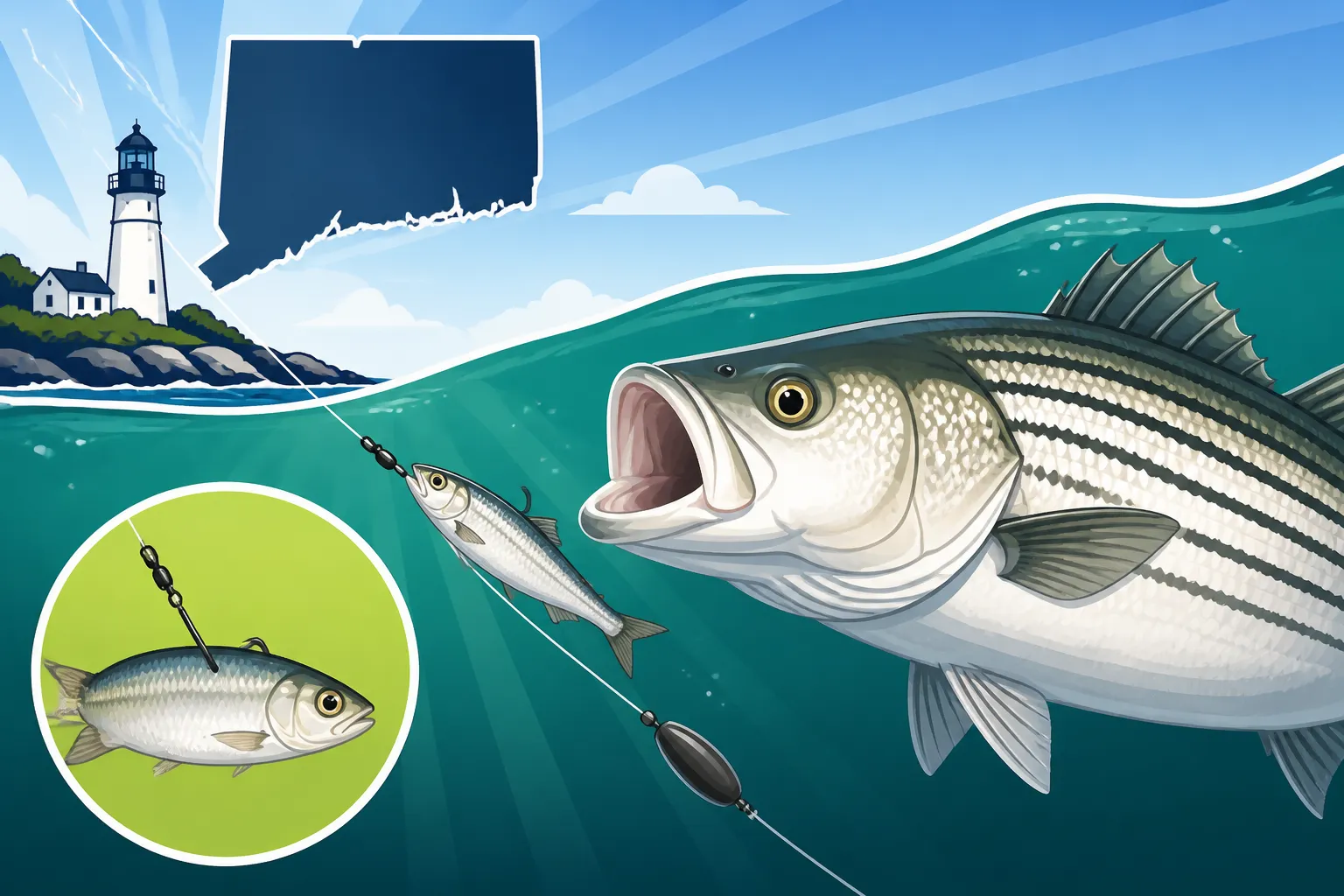
Best live-lining technique for striped bass with bunker
Trying to land a truly massive striped bass in Connecticut waters can feel like chasing a ghost sometimes, especially when those big cows are fixated on a particular baitfish. If you've ever watched stripers explode on a school of bunker, you know there's almost nothing more effective than presenting a live one right in front of them. This comprehensive guide will walk you through the absolute best live-lining techniques using bunker to entice those trophy striped bass right here in our local waters.
Understanding Striped Bass and Bunker Dynamics in Connecticut Waters
Before you even think about dropping a line, it's crucial to understand the intricate relationship between striped bass and their favorite meal: the Atlantic menhaden, or "bunker" as we lovingly call them. These two species are intimately linked, and knowing their habits is the first step to successful live-lining. It's not just about putting bait in the water; it's about understanding the entire ecosystem that makes this technique so potent.
Why Bunker are the Ultimate Striper Bait
Let's be honest, bunker are like crack for striped bass. They're big, oily, and they swim in massive schools, making them an irresistible target for a hungry striper looking for a substantial meal. When a school of bunker moves into an area, it's like ringing the dinner bell for every predator around. The sheer size of an adult bunker means a striper doesn't have to expend much energy to get a full belly. Plus, their high oil content leaves a strong scent trail in the water, attracting stripers from a good distance away, even when visibility is low or currents are strong. This is why when you're live-lining, a lively, healthy bunker is worth its weight in gold – it's constantly sending out those distress signals and oily attractants that stripers can't ignore.
Where and When to Find Bunker Schools
Finding the bunker is often half the battle. In Connecticut, you'll typically find large schools of bunker moving into Long Island Sound and up tidal rivers from late spring through fall. Keep an eye out for visual cues: huge, dark "nervous water" patches on the surface, often accompanied by diving birds like gulls and ospreys. Sometimes, you'll see the telltale "splashing" of bunker being harassed by predators from below. Popular areas include the major river mouths, harbors, and larger bays, especially where there's good tidal flow. Early mornings and late evenings are often prime times, but bunker can be active throughout the day. A good pair of binoculars can be your best friend for spotting distant schools, and a fish finder will show dense bait balls beneath the surface. Knowing the Striped Bass Migration Along the Connecticut Coast can also help you predict when and where these baitfish will concentrate.
Identifying Striper Feeding Behavior on Bunker
Once you've located the bunker, the next step is to figure out if stripers are actually feeding on them. This is where observation becomes key. Look for classic signs of a striper blitz: violent surface explosions as bass crash through schools of bait, often sending bunker flying out of the water. Birds diving repeatedly into the same area are a huge giveaway – they're keying in on the same commotion. Subsurface activity might be harder to see, but watch for sudden changes in the bunker school's movement, like tight balls forming or quick evasive maneuvers. Your fish finder will also confirm this, showing large arches or blobs of fish beneath the bunker schools. Sometimes, a subtle ripple or boil is all you'll get, so pay close attention.
Essential Gear for Live-Lining Bunker
Using the right gear isn't just about making the fight easier; it's about successfully presenting your bait, minimizing stress on the fish (especially with those required circle hooks!), and ensuring you don't lose that trophy fish of a lifetime. Skimping on tackle here can lead to heartbreak. You want a setup that's robust and reliable.
Rod and Reel Setup for Big Stripers
For live-lining bunker for big striped bass, you're going to need some serious backbone. A medium-heavy to heavy action conventional rod, typically in the 7 to 8-foot range, is ideal. This length gives you enough leverage for casting and fighting, while the heavy action allows you to throw a substantial bait and apply pressure to large fish. Match this with a quality conventional reel capable of holding at least 250-300 yards of 50-65 lb braided line. Look for a reel with a smooth, powerful drag system, as it will be put to the test. Brands known for their durability and performance are always a safe bet. If you're looking to upgrade your setup, you can find a wide selection of robust rods and reels on Amazon that are perfect for this kind of fishing.
Terminal Tackle: Hooks, Leaders, and Swivels
This is where the rubber meets the road. For hooks, the Connecticut Circle Hook Requirement for Striped Bass means you'll be using circle hooks, which is fantastic for fish conservation. Choose strong, sharp circle hooks in sizes ranging from 8/0 to 12/0, depending on the size of your bunker and the target stripers. A 9/0 or 10/0 is a good all-around choice.
Your leader material should be fluorocarbon, typically 50-80 lb test, about 3-5 feet long. Fluorocarbon is nearly invisible in water and has excellent abrasion resistance, which is critical when fishing around structure or sharp-toothed bluefish. Connect your main line to your leader with a high-quality barrel swivel, usually 80-100 lb test, to prevent line twist. Make sure all your knots are strong and well-tied – a good Palomar knot or improved clinch knot on your hook and leader connection will serve you well. For a reliable selection of all your terminal tackle, from hooks to swivels, checking online retailers like Amazon can save you a trip to multiple stores.
The Importance of Fresh, Healthy Bunker
A lively bunker is your best advertisement for a hungry striper. A dying, sluggish bunker isn't going to get nearly as much attention. The best way to ensure freshness is to catch your own bunker using a cast net or snagging treble hooks, ideally in the same area you plan to fish. Once caught, immediately transfer them to a large, well-aerated livewell. Avoid overcrowding your livewell, and keep the water circulating and cool. A good livewell with a robust pump and aeration system is a non-negotiable for live-lining. If you don't have one, or need to upgrade, reliable aerator pumps and even portable bait buckets can be found on Amazon to keep your bait frisky. The longer and livelier your bunker stays, the better your chances of hooking into a big one.
Step-by-Step Live-Lining Techniques with Bunker
Now that you've got your gear and your bait, it's time to talk technique. Live-lining isn't just tossing a bait out; it's about presentation, understanding currents, and knowing how to entice that striper. These methods cater to different situations you might encounter on the water.
The Freeline Method
The freeline method is arguably the most natural and often the most effective technique when stripers are actively feeding on the surface or in the upper water column. It's all about letting your live bunker swim as naturally as possible, with minimal resistance.
To set up, simply hook your bunker through the nose, just above the nostrils, or through the back just in front of the dorsal fin. The nose hook allows the bunker to swim more freely and naturally. With a freeline, you attach your leader and hook directly to your main line (via a swivel). Cast your bunker out gently, preferably upstream or up-current from where you suspect stripers are holding. Engage your reel and let the bunker swim naturally with the current. Keep a light retrieve on the reel, just enough to stay in contact with the bait, allowing it to move freely. Watch your line closely for any sudden movement or jerks, as this is often a sign of a striper investigating or taking the bait. This technique is especially potent during prime feeding times, often around the Best time of day to catch striped bass on the incoming tide.
The Weighted Method for Deeper Water
When stripers are holding deeper, perhaps around submerged structure, or when currents are too strong for a freeline, you'll need to add some weight. This method ensures your bunker gets down to where the fish are hiding.
Start with the same leader and hook setup, but this time, add an egg sinker or a three-way swivel rig. For an egg sinker, thread it onto your main line above your swivel. This allows the weight to slide freely on the main line, so when a striper picks up the bait, it feels less resistance. Weights can range from 1/2 ounce to several ounces, depending on the current and depth. For a three-way swivel rig, tie your main line to one eye, your leader (with bunker) to a second eye, and a short dropline (6-12 inches) with a sinker to the third eye. This keeps your bait and weight separated, preventing tangles and allowing the bunker more freedom. Lower your weighted bunker slowly to the desired depth or down to the bottom, bumping it along the structure. This is an excellent technique when you're fishing areas like the deeper channels or drop-offs in Long Island Sound Fishing Guide or around known reefs and wrecks.
Kite Fishing or Ballooning for Striped Bass
For a truly unique and effective presentation, especially in open water or when you want to keep your bait away from the boat, kite fishing or ballooning with live bunker is a game-changer. These methods suspend your bait right on the surface or just below, making it irresistible to cruising stripers without spooking them with your vessel.
For ballooning, simply tie a sturdy fishing balloon (or even a robust party balloon) to your main line, a few feet above your leader and hooked bunker. Inflate the balloon with air, and let the wind and current carry your live bunker out and away from the boat. The balloon acts like a bobber, keeping your bait at a set depth (usually just subsurface) and covering a wide area. Kite fishing involves a specialized fishing kite that, once launched, uses the wind to carry your line and bait even further out. A release clip on the kite line holds your main line, releasing it when a fish strikes. Both methods are fantastic for stealth and covering lots of water. While often seen in offshore fishing, they can be incredibly effective on vast stretches of Long Island Sound for discerning stripers.
Setting the Hook and Fighting the Fish
With circle hooks, the "set the hook" motion is very different from traditional J-hooks. When a striper takes your live bunker, resist the urge to violently yank the rod. Instead, let the fish take the bait and swim away with it. As the line tightens and the rod loads up, simply reel steadily, applying increasing pressure. The circle hook is designed to slide into the corner of the fish's mouth as pressure is applied, resulting in a solid, jaw-hooked fish that's easier to release safely.
Once hooked, the fight begins. Striped bass are powerful fish, especially those larger models. Keep a good bend in your rod, maintain steady pressure, and let your drag do its job. Don't try to horse the fish in too quickly. Pump the rod, gaining line on the downward stroke, and be prepared for strong runs. If you're using braided line, be mindful of its lack of stretch – a smooth drag is paramount. For more on handling these magnificent fish, check out our guide on How to Catch Striped Bass in Long Island Sound.
Live-Lining Strategies for Different Connecticut Scenarios
Connecticut offers a diverse range of fishing environments, from calm estuaries to powerful rips in Long Island Sound. Adapting your live-lining strategy to these different scenarios is key to consistent success.
Live-Lining in Shallow Bays and Estuaries
Shallow bays and estuaries, particularly around the mouths of rivers like the Connecticut or Housatonic, can be fantastic for live-lining, especially during the spring and fall migrations. Stripers often cruise these warmer, shallower waters, ambushing baitfish. Here, the freeline method truly shines.
Focus your efforts around natural structure like marsh edges, submerged grass beds, oyster reefs, and channel edges. These are prime ambush points. In these shallower areas, it's critical to be stealthy. Approach quietly, use an electric trolling motor if possible, and make gentle casts. Keep an eye out for subtle signs of feeding, like small boils or nervous bait. Present your bunker so it drifts naturally through these suspected feeding zones. Early mornings and late evenings, or even after dark, tend to be the most productive times in these areas, as stripers are less wary under low light conditions. You might even find success fishing these spots at night, which we cover in depth in our guide to Night Fishing for Striped Bass in Connecticut.
Targeting Stripers Around Reefs and Ledges
Offshore reefs, rock piles, and ledges in Long Island Sound are classic striper haunts, providing structure, current breaks, and abundant forage. These spots are perfect for the weighted live-lining method.
Anchor up-current of the structure, or drift slowly over it, lowering your weighted bunker directly into the strike zone. You want your bait to bounce along the bottom or hover just above the structure where stripers will be waiting in ambush. Pay close attention to your fish finder to identify key depths and any bait or fish marks. Adjust your weight as necessary to maintain contact with the bottom without getting constantly snagged. Stripers will often hold on the current-facing side of a reef, waiting for disoriented bait to drift by. This is where those strong fluorocarbon leaders come into play, protecting your line from abrasive rocks and sharp teeth.
Open Water Trolling and Drifting with Bunker
Sometimes, stripers aren't concentrated around structure; they're roaming vast expanses of open water, following schools of bunker. In these situations, covering ground is essential, and trolling or drifting with live bunker can be incredibly effective.
When trolling, rig your bunker with a small, discreet keel weight or a simple three-way swivel setup to keep it swimming naturally at a desired depth. Maintain a very slow speed, just enough to give your bunker a lifelike swimming motion without dragging it unnaturally. You can use multiple lines, staggered at different depths, to cover more of the water column. When drifting, simply deploy several freeline or lightly weighted bunker lines and let the boat drift with the current over productive areas. This allows your bait to move slowly and naturally, covering a wider swath than a single cast. Always keep an eye on your fish finder for schools of bait and any larger marks that might indicate feeding stripers. This technique is often effective when trying to locate schools of Striped Bass Fishing in Long Island Sound in less defined areas.
Night Fishing with Live Bunker
Night fishing for striped bass, especially trophy-sized ones, is a truly special experience in Connecticut. Under the cover of darkness, big stripers become bolder, moving into shallower areas and feeding aggressively. Live-lining bunker at night is a prime tactic.
All the techniques mentioned above – freeline, weighted, or even ballooning – can be adapted for night fishing. The key is to be even more attuned to your senses. Listen for splashes, watch for subtle movements on your line, and rely on your other senses. Use a headlamp sparingly, preferably with a red light setting, to avoid spooking fish. Stripers often key in on the vibrations and scent of a live bunker in the dark, so a lively bait is paramount. Focus on areas with good tidal flow, current rips, and around structures that hold bait during the day. The largest stripers are often most active after the sun goes down, making this a fantastic time to pursue a personal best.
Quick Reference for Live-Lining Bunker Gear
| Gear Component | Recommended Specifications | Purpose |
|---|---|---|
| Rod | 7-8 ft, Medium-Heavy to Heavy action, Conventional | Leverage, casting large bait, fighting powerful fish |
| Reel | Conventional, holds 250-300 yds 50-65 lb braid, smooth drag | Line capacity, strong drag for big stripers |
| Main Line | 50-65 lb Braided Line | Strength, sensitivity, minimal stretch |
| Leader | 50-80 lb Fluorocarbon, 3-5 ft length | Abrasion resistance, low visibility, shock absorption |
| Hook | 8/0 – 12/0 Circle Hook (strong, sharp) | Required by CT law, excellent hook-up ratio in jaw corner, fish friendly |
| Swivel | 80-100 lb Barrel Swivel (quality) | Prevents line twist, strong connection points |
| Sinker | 1/2 oz to several ounces (Egg or Bank/Pyramid) | Gets bait to depth, helps counter current |
| Livewell | Large, well-aerated with strong pump | Keeps bunker healthy and lively, crucial for effective live-lining |
Remember, while the gear is important, understanding fish behavior and adapting your technique to the conditions will always be your greatest asset on the water. Make sure you're up-to-date on all the Connecticut Saltwater Fishing Regulations by Species before heading out!
Disclaimer
This article is for general informational purposes only and does not constitute professional advice. Laws, prices and regulations vary by location and change over time. Consult a qualified professional for guidance on your specific situation.