How to fish a run and pool trout stream
Fishing a run-and-pool trout stream can feel like trying to solve a puzzle with a constantly shifting board. You might find yourself staring at sections of water, wondering where on earth the trout could be holding, or what presentation would even reach them in that churning current. Many anglers, especially those used to stillwaters, struggle to "read the river" effectively and end up casting blindly. This guide is designed to demystify these dynamic environments, offering clear, actionable strategies to help you confidently approach and successfully fish Connecticut's beautiful run-and-pool trout streams.
Decoding the Anatomy of a Run-and-Pool Stream
Understanding the different components of a run-and-pool stream is your first step to unlocking its secrets. These distinct areas each hold trout for different reasons, offering varied feeding opportunities and protective cover. Ignoring this underlying structure is like trying to navigate a city without a map – you might get lucky, but you're probably missing out on the best spots.
What is a Run?
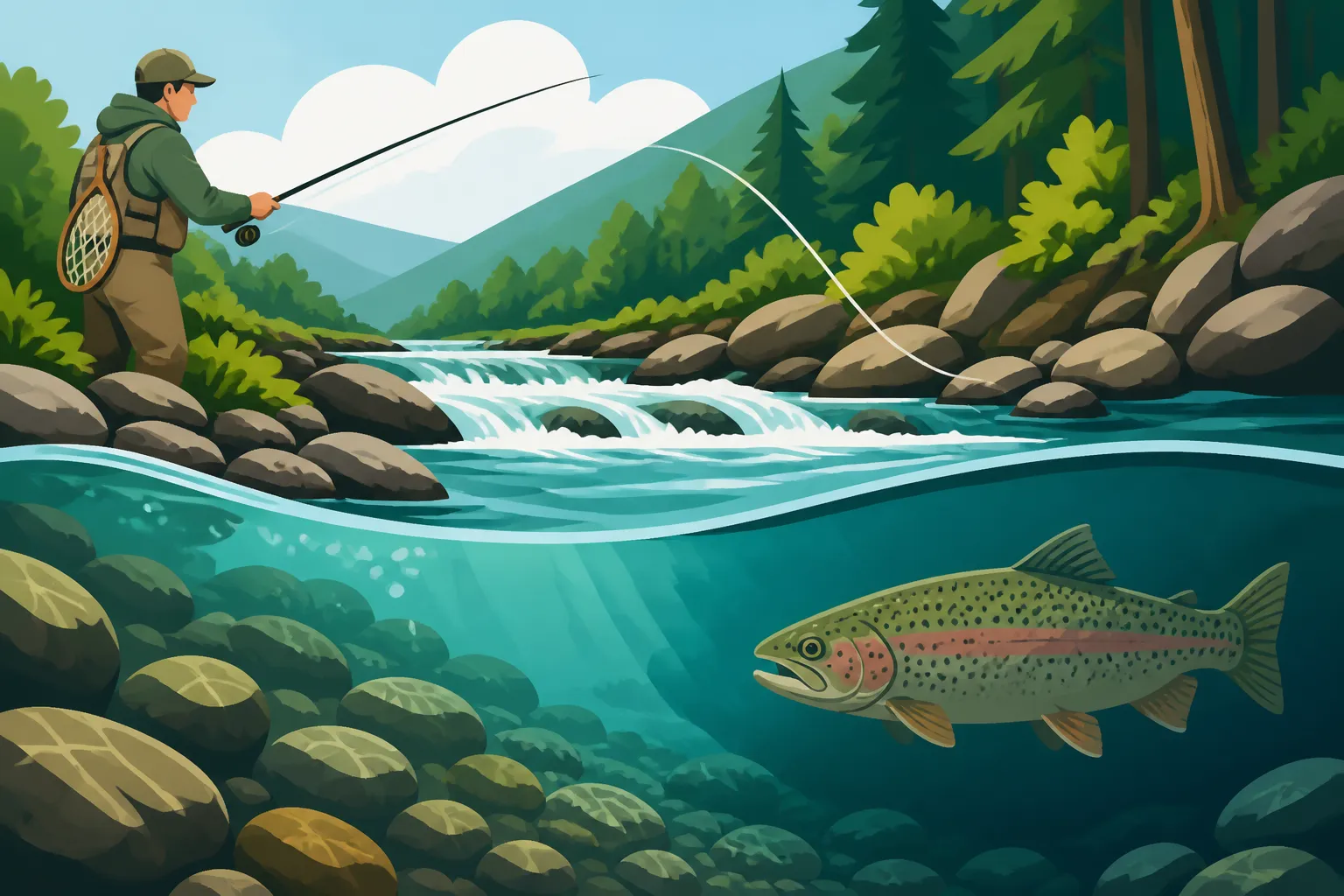
Runs are typically the faster-moving, shallower sections of a stream, characterized by a more uniform current. Think of them as the conveyor belts of the trout world, constantly delivering food. This swift flow provides excellent oxygenation, which trout love, especially during warmer months. However, the lack of deep cover means fish here are often actively feeding or seeking out subtle current breaks.
You'll often find runs just below a riffle or upstream of a deeper pool. The bottom structure in a run can vary from small gravel to larger rocks, creating a complex flow that, while fast, also creates small pockets of calmer water. Trout will often position themselves in these micro-eddies, expending minimal energy while waiting for insects, baitfish, or terrestrial morsels to drift by. Learning how to properly drift a fly or bait through these zones is key to success.
The Secrets of a Pool
Pools are the deeper, slower-moving sections of the stream, often found downstream of a run or a waterfall. These are the trout's living rooms and safe havens. They offer refuge from predators, a break from strong currents, and often provide more stable water temperatures during extreme weather. While trout certainly feed in pools, their activity level might be lower than in runs, as they don't have the constant conveyor belt of food.
When you approach a pool, visualize it as a sanctuary. The deepest parts offer security, while the edges and structure within (like logs, rocks, or undercut banks) provide ambush points. Large, wary trout often reside in pools, especially those with plenty of cover. Patience and a stealthy approach are paramount here. You'll need to think about how your presentation can entice a less active fish without spooking it.
Riffles and Tailouts
Riffles are the shallowest, fastest, and often noisiest parts of a stream, where the water tumbles over rocks and gravel, creating a highly oxygenated environment. They're like the stream's kitchen, where many aquatic insects hatch and get dislodged, becoming easy targets for hungry trout. Fishing in these aerated zones can be incredibly productive, especially during insect hatches.
The "tailout" is the shallow, gradually sloping section at the very end of a pool, where the water begins to speed up again before transitioning into a riffle or another run. These areas are fantastic feeding grounds because they act as a natural funnel, concentrating food as it exits the calmer water of the pool. Trout will often stack up in tailouts, facing upstream, ready to intercept anything drifting by. Don't overlook these transition zones; they can often yield some of the most aggressive strikes.
Essential Gear for Navigating and Fishing
Having the right equipment is crucial for a comfortable and effective day on a run-and-pool stream. It's not just about catching fish; it's about staying safe, being adaptable, and enjoying the experience. Skimping on the right gear can lead to discomfort, frustration, or even dangerous situations.
Waders and Boots: Safety First
Waders are practically non-negotiable for serious stream anglers. They allow you to get into the water, move freely, and access prime fishing locations that are unreachable from the bank. Stockingfoot waders, worn with separate wading boots, are often preferred for their comfort, durability, and the superior ankle support and traction offered by specialized boots. Good wading boots, especially those with felt or studded rubber soles, are paramount for safety on slick, rocky streambeds.
When choosing waders, consider their breathability, especially for warmer weather, to prevent overheating. Neoprene waders are great for cold water, but breathable models are more versatile. Always ensure your wading belt is snug to prevent water from rushing in if you take an unexpected dip. You can find a vast selection of high-quality waders and boots on Amazon, with options for every budget and preference, ensuring you stay dry and safe. Before heading out, it's also a good idea to refresh your memory on Wading Techniques for Connecticut Trout Streams to ensure you're approaching the water safely and effectively.
Rods, Reels, and Line Choices
Your rod and reel setup will largely depend on whether you prefer fly fishing or spin fishing. For fly anglers, a 7-foot to 9-foot rod in a 3-weight to 5-weight range is typically ideal for most Connecticut trout streams. A medium-fast action rod offers a good balance of delicate presentation and the power to handle larger fish or windy conditions. Pair this with a matching reel and a weight-forward floating line.
Spin fishermen will benefit from a lightweight, sensitive rod in the 5-foot to 7-foot range, with a fast or extra-fast action. This allows for precise casting of small lures and baits. A small spinning reel (size 1000-2000) spooled with 4-8 pound test monofilament or fluorocarbon line is perfect. Fluorocarbon is especially useful for its low visibility and abrasion resistance, which is a huge advantage when fishing for wary trout in clear water.
Tackle Box Essentials for Trout
No matter your chosen method, a well-stocked tackle box (or fly box) is crucial. For spin fishermen, this means a variety of small inline spinners (Mepps, Panther Martin, Rooster Tail), small spoons, and miniature stickbaits. Soft plastics, like small tube jigs or grubs, can also be incredibly effective when fished on light jig heads. Always carry a selection of split shot and small swivels.
Fly anglers should have an assortment of flies to match local hatches. This includes nymphs (Pheasant Tail, Hare's Ear, Prince Nymph), dry flies (Elk Hair Caddis, Adams, Parachute Adams), and streamers (Woolly Bugger in various colors). Don't forget tippet in various sizes (from 4x to 6x), strike indicators, and forceps for hook removal. Many specialized fly tying materials and pre-tied flies are readily available through online retailers like Amazon, making it easy to replenish your supply. For those planning a trip, consider reviewing Fly Patterns for Connecticut Trout Streams to ensure your fly box is perfectly matched for the local insect life.
Strategic Approaches to Fishing Runs and Pools
Once you understand the stream's layout and have your gear ready, it's time to put your strategy into action. Each section of a run-and-pool stream demands a slightly different approach to maximize your chances of success. Approaching these sections haphazardly will often lead to frustration rather than fish.
Fishing the Runs Effectively
When fishing a run, the key is to present your bait or lure naturally with the current. For spin fishermen, casting slightly upstream and across the current, then allowing your lure to drift naturally downstream while reeling just enough to maintain tension, is often the most effective method. Inline spinners and small spoons work well here, as their action is enhanced by the current. Make sure your retrieve matches the current speed – too fast and it looks unnatural; too slow and it might snag.
Fly anglers will find success with nymphing techniques in runs. A high-stick nymphing approach, keeping as much line off the water as possible, allows for a drag-free drift that mimics natural insects. You'll often want to add some weight (split shot or heavy nymphs) to get your flies down to where the trout are holding near the bottom. Focus on drifting your flies through current seams and around any visible structure. Remember to cast upstream of your target to allow enough time for your flies to sink and drift naturally.
Conquering the Pools
Pools require a more subtle and patient approach. Because the current is slower, trout have more time to inspect your offering. For spin fishermen, casting a small soft plastic jig or a very lightly weighted bait (like a worm or mealworm) and allowing it to slowly sink and drift through the deeper sections can be deadly. Long, slow retrieves with small crankbaits or suspending jerkbaits can also elicit strikes from larger, less active fish. Cast to the edges, undercuts, and around submerged logs first, then work your way to the deeper middle.
Fly anglers often employ streamers or even larger nymphs in pools. Casting a streamer across and down-current, then retrieving it with varying strips and pauses, can imitate a baitfish or a larger aquatic insect, provoking an aggressive chase. Dry flies can also work in pools, especially during hatches when trout are rising, but presentation must be delicate to avoid spooking fish in the calm water. It’s a great idea to read up on Best Techniques for Early Spring Trout if you're hitting the pools when water temperatures are still on the cooler side.
Tackling Riffles and Transition Zones
Riffles, despite their churning appearance, can be incredibly productive. Trout here are often opportunistic feeders, darting out from behind rocks to grab dislodged insects. For spin fishermen, a small, brightly colored inline spinner cast upstream and retrieved quickly enough to stay above the bottom, but slow enough to look natural, can be very effective. The key is short, accurate casts into the pockets of calmer water behind rocks.
Tailouts, where pools begin to narrow and speed up, are prime feeding areas. Trout will often stack up in these funnel zones. Both fly and spin anglers can find success by presenting offerings that drift naturally into the tailout from the slower water of the pool. For fly anglers, a dry-dropper rig, with a visible dry fly suspending a small nymph, can be excellent for covering both the surface and subsurface in these productive areas. For spin anglers, casting a small jig or spinner into the main flow just as it quickens can often trigger a strike.
Reading the Water Like a Pro
The ability to "read the water" is what separates consistently successful anglers from those who just cast and hope. It's about understanding where trout are likely to be, based on current, cover, and food sources. This skill takes time and practice, but knowing what to look for will accelerate your learning curve.
Identifying Prime Holding Lies
Trout, being efficient predators, will always seek out spots where they can expend minimal energy while having access to food and safety. These are called "holding lies." Look for undercut banks, where the current has carved out a cave-like refuge under the bank itself. Large boulders create current breaks and eddies, offering perfect ambush points. Fallen trees or log jams provide both cover and a buffet of terrestrial insects.
Anywhere the current changes speed or direction, creating a seam or an eddy, is a potential holding lie. Trout will sit on the slower side of a current seam, waiting for food to drift past on the faster side. Observe the flow: where does the water slow down? Where are there obvious obstructions? These are the spots that demand your attention and a careful presentation.
Understanding Current and Seams
The current is arguably the most important factor in a trout stream. It dictates where food goes, where oxygen is highest, and where fish choose to reside. Understanding how different currents interact is key. A "current seam" is the distinct line where two different currents meet, often a fast current meeting a slower one. These seams are superhighways for food and classic trout holding spots.
You'll also notice eddies, which are areas of swirling or reverse current, usually behind large obstructions like rocks or logs. Trout often sit in the calmest part of an eddy, waiting for food to swirl within reach. Pay attention to how your line and indicator drift in different currents; mastering a drag-free drift through these varied flows is a fundamental skill for trout fishing. A useful resource for specific regulations, such as Connecticut Trout Management Area Regulations, often provides clues about fish behavior in different water types.
Environmental Factors to Consider
Beyond the physical structure of the stream, environmental factors play a huge role in trout behavior. Water temperature is critical: trout are cold-water fish, and their activity levels are heavily influenced by it. Early mornings and evenings in summer, or mid-day in spring and fall, are often the best times. Water clarity also dictates your approach; clear water demands stealthier tactics and finer tippets, while slightly off-color water might allow for more aggressive presentations.
Barometric pressure changes can also affect fish activity. A falling barometer often signals an approaching storm, sometimes triggering a pre-front feeding frenzy. Rising water levels after rain can bring in new food sources, but also reduce visibility. Always be mindful of the weather and how it might be influencing the trout's mood and location.
Remember to always check the local Connecticut Fishing Regulations Explained before heading out, as rules for specific species, limits, and seasons can vary.
Stream Section and Technique Quick Reference
| Stream Section | Characteristics | Prime Holding Lies | Recommended Spin Fishing Techniques | Recommended Fly Fishing Techniques |
|---|---|---|---|---|
| Run | Fast, uniform current, moderate depth | Current breaks, large rocks, small eddies | Cast upstream, drift small spinners/spoons | Upstream nymphing (weighted), dry-dropper rigs |
| Pool | Deep, slow current, calm water | Undercut banks, logs, deep pockets | Slow retrieve jigs/soft plastics, suspending lures | Streamers (strip retrieve), large nymphs, delicate dry flies |
| Riffle | Shallow, fast, turbulent water over rocks | Behind larger rocks, current seams | Small spinners (quick retrieve), small jigs | Short-line nymphing, dry flies (during hatch) |
| Tailout | End of pool, water speeds up into run | Funnel points, transition zone | Cast into main flow, small jigs/spinners | Nymphs (drift into current), dry-dropper rigs |
| Eddy | Swirling/reverse current, calm pocket | Calm center, downstream side of obstruction | Slow jigging, dead drift bait/plastic | Nymphs (dead drift), small streamers |
Disclaimer
This article is for general informational purposes only and does not constitute professional advice. Laws, prices and regulations vary by location and change over time. Consult a qualified professional for guidance on your specific situation.