Best trolling spread for striped bass
One of the most common frustrations for striped bass anglers, especially when they're out on the vast waters of Long Island Sound, is how to consistently entice those elusive big fish while trolling. It’s not just about putting a lure in the water; it’s about creating an irresistible presentation that mimics a school of baitfish or a lone, vulnerable meal. This guide will walk you through the art and science of setting up the best trolling spread for striped bass, helping you optimize your chances of a successful hookup.
Understanding the Fundamentals of a Trolling Spread
Trolling for striped bass isn't just dragging a line behind the boat; it's about creating a complex, multi-layered presentation in the water column. Think of your boat as the orchestrator of a mobile buffet for hungry stripers. The goal of a "spread" is to present multiple baits at varying depths and distances from the boat, covering as much water as possible and appealing to stripers holding at different levels or preferring different presentations.
This isn't a one-size-fits-all approach. The ideal spread changes based on conditions like water depth, current, baitfish presence, and even the time of day. Having a diverse spread allows you to experiment simultaneously, quickly identifying what the fish are keying in on without having to constantly switch out every single lure. It's about maximizing your odds by putting a variety of options right in front of the fish, mimicking how a natural school of baitfish might look to a predator.
The beauty of a well-executed trolling spread is its ability to imitate a school of fleeing baitfish, triggering the predatory instincts of a striper. When done correctly, each lure moves in a synchronized yet individual dance, creating vibrations and visual cues that shout "dinner!" to any lurking bass. This strategic arrangement of lines also helps prevent tangles, a common headache for any angler running multiple rods.
Essential Components for an Effective Striped Bass Trolling Spread
To build a truly effective trolling spread for striped bass, you need to understand the various pieces of equipment that work together. Each component plays a vital role in presenting your lures at the right depth, distance, and action. Skimping on any of these can lead to frustration and missed opportunities.
Rods and Reels for Trolling
When you're pulling heavy rigs like umbrella teasers or large Mojos, you need robust gear. Heavy-action conventional rods in the 6 to 7-foot range are typically ideal. These rods have the backbone to handle the drag of multiple lures, absorb the shock of a strike from a powerful striped bass, and provide the leverage needed to fight a big fish. Many anglers opt for composite rods that offer a good blend of sensitivity and power.
Pair these rods with conventional reels that have a high line capacity and a smooth, reliable drag system. Level-wind reels are popular for ease of use, ensuring even line retrieval. Your reel needs to hold a significant amount of line, as you'll often be letting out hundreds of feet to achieve the desired lure depth and distance. Consider reels designed for saltwater trolling, as they are built to withstand the corrosive marine environment and the demands of fighting large game fish.
Line Choices and Leader Materials
The mainline on your trolling outfit is crucial. Many anglers choose braided line for its thin diameter and zero stretch, which provides excellent sensitivity and allows for deeper dives with less weight. A 50-pound test braided line is a common choice, offering a good balance of strength and manageability. However, some prefer monofilament for its shock-absorbing qualities, especially when using lighter tackle or when fish are hitting aggressively.
Regardless of your mainline, a strong leader is absolutely essential. Striped bass have abrasive mouths, and heavy leaders help prevent break-offs. Fluorocarbon leaders, known for their invisibility underwater and abrasion resistance, are often preferred. The leader's strength can range from 60 to 100 pounds, depending on the size of fish you're targeting and the type of lure you're using. You can find a wide variety of these on Amazon, ensuring you have the right strength for your specific needs. The length of your leader will vary; some anglers prefer shorter leaders for umbrella rigs, while others use longer ones for single baits.
Lure Selection: Umbrella Rigs, Mojos, and Tubes
The lures you deploy are the stars of your spread, and having a diverse selection is key. Best Lures for Striped Bass in Long Island Sound provides more detail, but for trolling, certain types consistently perform well.
-
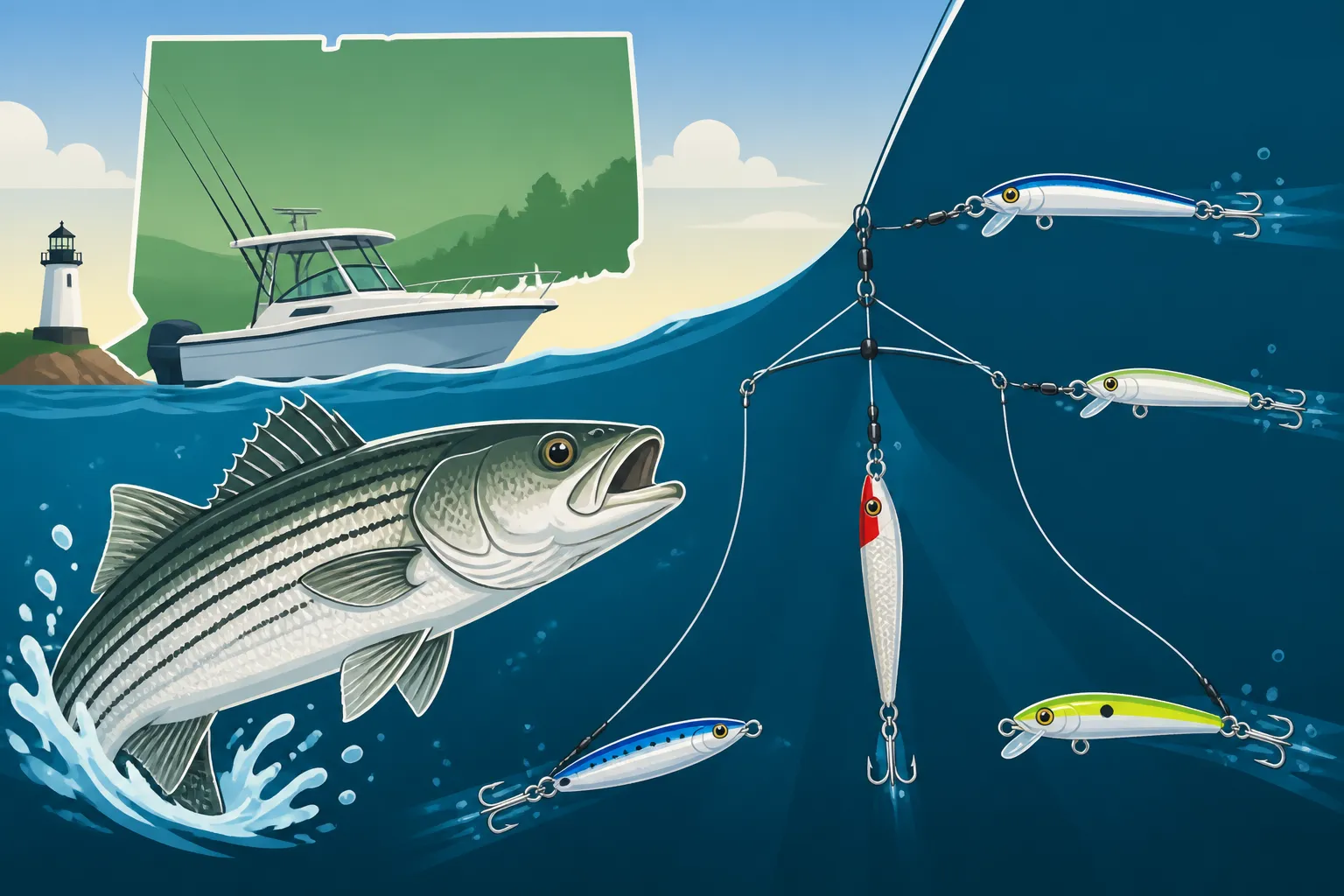
Umbrella Rigs: These are absolute workhorses for striped bass trolling. They consist of a main wire or bar with multiple teaser lures (often soft plastics or swimming plugs) attached, creating the appearance of a small school of baitfish. At the end of the rig, a larger "stinger" lure is typically placed, which is usually the one that gets hit. Umbrella rigs can be heavy and create a lot of drag, so match them with appropriate tackle. They are superb for mimicking schools of bunker or other forage.
-
Mojo Rigs: These consist of a heavy lead head, often dressed with bucktail and soft plastic, rigged on a strong leader. They are designed to be fished vertically or near the bottom and can be extremely effective when stripers are holding deep. You'll typically use a large weight (often 8 to 16 ounces, or even more) to get them down, making them ideal for downrigger applications or directly behind the boat. Mojo rigs are fantastic for imitating larger baitfish like pogies.
-
Trolling Tubes: These soft, flexible tubes, often rigged with a worm or squid imitator inside, create an enticing wriggling action in the water. They are usually trolled at slower speeds and can be fished with inline weights or on planer boards. Tubes are particularly effective when stripers are feeding on sand eels or worms, and their subtle action can sometimes draw strikes when other flashier lures fail.
Planer Boards and Downriggers
These devices are crucial for controlling the depth and horizontal spread of your lures. They allow you to cover a much wider area than simply dragging lines directly behind the boat.
-
Planer Boards: These boards, when deployed, use the boat's forward motion to pull your line out to the side, away from the prop wash and other lines. This allows you to present lures in undisturbed water and create a truly wide spread. Different sizes of planer boards are available, with larger boards capable of handling more drag and pulling multiple lines further out. Some common types include inline planer boards and mast systems. They are particularly effective for surface or shallow-running lures.
-
Downriggers: For targeting striped bass holding deeper in the water column, downriggers are indispensable. A downrigger uses a heavy cannonball weight to carry your fishing line down to a precise depth. Your line is attached to the cannonball with a release clip. When a fish strikes, the line releases from the clip, allowing you to fight the fish directly without the weight. Downriggers allow you to present lures at specific depths, which is critical when stripers are suspended or hugging bottom contours. They are often used with Mojo rigs or deep-diving plugs.
Terminal Tackle and Accessories
Don't overlook the small but mighty components. Swivels, snaps, and split rings should all be heavy-duty and saltwater-resistant. High-quality ball bearing swivels prevent line twist, especially when using spinning lures or umbrella rigs. Snaps should be robust enough to handle the strain of a heavy lure and a fighting fish. Having a good selection of extra hooks, leader material (perhaps a spool of Seaguar fluorocarbon from Amazon), and weights on hand is always a good idea. Pliers, line cutters, and a net or gaff designed for large fish are also essential on any trolling trip.
Strategic Deployment of Your Trolling Spread
Setting up your trolling spread effectively is where the art truly comes into play. It’s not enough to have the right gear; you need to know how to deploy it to maximize your chances. Think of it as painting a picture in the water, trying to entice a strike.
Staggering Lure Depth and Distance
The core principle of a successful trolling spread is staggering your lures both horizontally and vertically. This means running some lures deep, some shallow, some close to the boat, and some far behind. This covers more of the water column and makes your presentation look more natural, like a scattered school of baitfish.
A typical spread might involve a combination of tactics:
- Closest to the boat (and deepest): Heavy Mojo rigs or deep-diving plugs run directly behind the boat, sometimes with a dropper weight or on a short lead from a downrigger. These target fish directly beneath or just behind your boat's prop wash, which can sometimes attract curious stripers.
- Mid-range (and mid-depth): Umbrella rigs or medium-diving plugs, perhaps with inline weights, trolled a bit further back. These are often the strike magnets, especially when stripers are actively chasing bait.
- Farthest out (and shallower/wider): Lighter umbrella rigs, bucktails, or soft plastics deployed via planer boards. These stretch your spread out to the sides, hitting areas that might be less disturbed by the boat and presenting a more spread-out "school."
- Precisely controlled depth: Downriggers allow you to run lures at very specific depths, sometimes even bumping the bottom if you're targeting bottom-hugging stripers. You can run two downrigger lines, one on each side, at different depths to find the strike zone.
Consider the depth of the water you're fishing in. In shallower estuaries or near rocky shorelines, you'll need to be mindful of snags and might run a shallower spread. In the open waters of Long Island Sound Fishing Guide, you'll have more room to experiment with deeper presentations.
Trolling Speed and Direction
Your trolling speed is paramount. For most striped bass trolling, a speed between 2.5 and 4.5 knots is a good starting point, but it's not a hard and fast rule. The ideal speed will depend heavily on the type of lures you're using and what action you want them to impart. Umbrella rigs often perform best at slightly higher speeds to get their teasers swimming correctly, while tubes might require a slower pace for their wriggling action. Pay close attention to your rod tips; they should have a consistent, pulsing rhythm indicating your lures are swimming properly. If the tips are erratic or static, your speed might be off or you could have a tangle.
Direction also plays a significant role. Trolling with or against the current will affect your actual lure speed through the water, as well as the action of your baits. Many anglers find success by varying their course, making gradual S-turns or figure-eights. These turns cause the lures on the inside of the turn to slow down and sink slightly, while those on the outside speed up and rise. This change in action can often trigger a strike from a hesitant fish. Experiment with trolling over structure like reefs, ledges, or channels, which are known holding areas for striped bass.
Reading Your Sonar and the Water
Modern sonar technology is your best friend when trolling. Learn to interpret what your fishfinder is telling you. Are there bait balls? Are stripers suspended at a certain depth? Are they hugging the bottom? This information should directly influence how you deploy your spread. If you see fish at 30 feet, make sure you have lures running at or slightly above that depth.
Beyond the electronics, learn to read the water itself. Look for signs of baitfish, like nervous water, diving birds, or splashes. Observe current lines, temperature breaks, and changes in bottom structure. Often, stripers will be holding where bait is concentrated or along these environmental transitions. What striped bass eat in Long Island Sound provides excellent insight into the baitfish they key on, which can help you choose your lure types.
Troubleshooting and Adjusting Your Spread on the Water
Even the most carefully planned trolling spread needs constant adjustment. Conditions change, fish move, and what worked an hour ago might not be effective now. Being able to troubleshoot and adapt on the fly is a hallmark of a successful troller.
Dealing with Tangles and Fouled Lines
This is perhaps the most common frustration when trolling with multiple lines. Tangles can happen for many reasons: sharp turns, varying currents, different line lengths, or simply running too many lines too close together.
- Preventative Measures: Before deployment, ensure all your lines are spooled correctly. Use high-quality swivels to prevent line twist. When deploying, stagger your lines carefully, letting out the farthest/deepest lines first, then the next set, and so on. A good rule of thumb is to deploy your longest lines (farthest back or widest out on planer boards) first, then progressively shorter lines closer to the boat. This ensures they don't cross.
- Mid-Troll Tangles: If you suspect a tangle, don't panic. Slow the boat down or even put it in neutral, allowing the lines to fall back and often untangle themselves. If a line is fouled, reel it in slowly, identify the issue, and re-deploy. It’s better to take a few minutes to fix a tangle than to continue trolling with an ineffective or damaged lure.
Adjusting for Current and Wind
Long Island Sound is known for its strong currents, and wind can add another layer of complexity. Both can significantly affect your trolling speed and lure action.
- Current: When trolling with the current, your boat speed will need to be slower to maintain the desired lure action through the water. Going against the current will require more throttle. Pay attention to your GPS speed over ground versus your speed through water (if your boat has a paddlewheel sensor). The latter is often more indicative of how your lures are performing. Strong cross-currents can also sweep your lures sideways, potentially causing tangles.
- Wind: Wind can push your boat around, making it difficult to hold a straight course or maintain a consistent speed. Use your boat's motor to correct for wind drift. If the wind is creating chop, it can add extra action to your lures, which can sometimes be beneficial, but too much can make them unfish. Consider using heavier weights to keep your lures down in choppy conditions.
Adapting to Fish Activity and Baitfish Patterns
The behavior of striped bass and their prey can change rapidly. What worked in the morning might be useless by afternoon.
- No Bites? Change It Up: If you're not getting any strikes, don't keep doing the same thing. Change your speed, make sharper turns, try different depths, or swap out a few lures. Sometimes a slight change in lure color or size is all it takes. Check Best time of day to catch striped bass and Best trolling speed for striped bass in Long Island Sound for more specific advice.
- Following Bait: If you locate a school of bunker or other baitfish, adjust your spread to match their depth and appearance. If the stripers are crashing bait on the surface, pull in your deep lines and put out some topwater plugs or shallow-running umbrella rigs. If the bait is deep, get your Mojos and downriggers working. Using a digital fishing license, which you can easily Printing or Carrying a Digital Fishing License in Connecticut, allows you to quickly check regulations on the fly if you encounter unexpected species or need to verify limits for a sudden hot bite.
- Reading the Fight: When you do hook a fish, pay attention to which lure it hit and at what depth. This provides valuable clues about what the stripers are looking for. Replicate that successful setup on other rods if possible.
Maintaining Your Trolling Gear
Proper maintenance of your trolling gear is crucial for longevity and peak performance. Saltwater is incredibly corrosive, and heavy-duty gear takes a beating.
Cleaning and Storage Best Practices
After every trip, thoroughly rinse all your rods, reels, lines, and lures with fresh water. Pay special attention to reels, as salt can easily get into the gears and bearings. A light spray of corrosion-inhibiting lubricant on metal parts of your reels and any exposed terminal tackle is also a good idea. Store rods and reels in a dry, cool place, preferably in rod racks or cases to prevent damage.
Lures, especially umbrella rigs with multiple components, should be rinsed and allowed to air dry completely before storage. Check hooks for rust or dullness and replace or sharpen them as needed. Even a slight dulling can lead to missed hooksets. If you store your lures in tackle boxes, make sure they are dry to prevent corrosion and mildew.
Regular Gear Checks and Replacements
Before each season or even every few trips, give your gear a thorough inspection.
- Reels: Check the drag system for smoothness. Apply a thin layer of grease to gears and oil to bearings according to the manufacturer's recommendations. Look for any signs of corrosion or stiffness.
- Rods: Inspect guides for cracks or wear, especially around the inserts, which can fray your line. Check the reel seat for tightness and the rod blank for any stress cracks.
- Line: Examine your mainline for nicks, abrasions, or excessive wear. Even braided line can degrade over time, especially if exposed to UV light. Consider respooling your reels annually or bi-annually, depending on usage.
- Terminal Tackle: Regularly replace leaders, snaps, and swivels, especially if they show any signs of rust, bending, or abrasion. These small components are often the weakest link in your system, and a failure here means a lost fish. You can easily stock up on these essentials on Amazon. For safety, ensure your boat’s required equipment, such as life jackets (check Life Jacket Requirements for Connecticut Boaters), is also regularly inspected and maintained.
By meticulously planning your trolling spread, understanding your gear, and constantly adapting to the conditions, you'll dramatically increase your chances of connecting with Connecticut's impressive striped bass. Happy trolling!
Disclaimer
This article is for general informational purposes only and does not constitute professional advice. Laws, prices and regulations vary by location and change over time. Consult a qualified professional for guidance on your specific situation.