Best nymph rig for freestone streams
There's nothing quite like the subtle dance of a strike indicator pausing, dipping, or shooting sideways when nymphing for trout. But let's be honest, getting that perfect drift, especially in the turbulent, ever-changing flows of a freestone stream, can feel like trying to solve a complex puzzle with a blindfold on. The currents seem to grab your line, your flies don't get deep enough, or you're constantly snagging, and it's incredibly frustrating when you know the fish are there. This comprehensive guide is dedicated to unraveling that puzzle, showing you exactly how to construct and present the best nymph rig for the unique challenges and rewards of Connecticut's freestone streams.
Understanding Connecticut's Freestone Streams for Nymphing
Before we even talk about specific gear, it's crucial to understand the environment you're fishing. Freestone streams, unlike their tailwater cousins, are entirely dependent on natural precipitation and runoff, which makes them wonderfully wild but also inherently challenging. Ignoring these characteristics is often the first misstep anglers make when trying to perfect their nymphing game.
Characteristics of Connecticut Freestone Streams
Connecticut is blessed with an abundance of beautiful freestone streams, from the larger, more well-known rivers to countless smaller brooks carving through our wooded hills. Think about the upper sections of the Salmon River, the pristine runs of the Natchaug River, or even segments of the Farmington River West Branch before it becomes a true tailwater fishery. These waters share some common traits that dictate how we approach nymphing.
Firstly, their flows are incredibly dynamic. A heavy rainstorm or spring snowmelt can transform a gentle riffle into a raging torrent, while a prolonged dry spell can reduce larger runs to trickles. This means the depth, speed, and even the clarity of the water can change dramatically from one day to the next, sometimes even within a single fishing session. Anglers need a flexible approach. Secondly, the bottom structure is typically complex, composed of a mix of gravel, pebbles, rocks, and large boulders. This creates a mosaic of currents, eddies, and oxygenated pockets where trout love to hold and feed, but it also creates prime opportunities for your flies to snag. Lastly, while some freestone streams are regularly stocked, many also hold populations of wild and holdover trout, which tend to be warier and more attuned to natural presentations. You'll find sections teeming with stocked fish, especially following the Connecticut Trout Season and Stocking Rules, but also quieter reaches holding truly wild specimens.
Why Standard Nymph Rigs Often Fall Short
Many anglers come to freestone streams with a "one-size-fits-all" nymph rig, and quickly discover why it's not working. Perhaps they're using a short leader designed for stillwater or lake fishing, or a light tippet meant for delicate dry flies. The primary issue stems from not being able to achieve a truly drag-free drift that gets the flies down to the fish's feeding zone.
Imagine trying to drift a small nymph naturally past a hungry brown trout tucked behind a boulder in a freestone river. If your leader is too short, the faster surface currents will grab your fly line and indicator, pulling your flies unnaturally quickly through the slower water near the bottom. This "drag" immediately spooks discerning trout. Similarly, using too little weight means your flies never reach the fish, instead tumbling along just below the surface, while too much weight leads to constant snagging, lost flies, and a lot of re-tying frustration. European nymphing techniques, with their specialized leaders and direct contact, are incredibly effective in certain freestone situations, especially in pocket water, but they require a specific setup and approach that isn't always what anglers mean by a general "best nymph rig." For most situations, a well-tuned indicator nymph rig offers the versatility and effectiveness needed without the steep learning curve of more advanced contact nymphing.
Essential Components of Your Freestone Nymph Rig
Building the best nymph rig for freestone streams isn't about one magic bullet; it's about integrating several key components that work together harmoniously. Each part plays a vital role in achieving that elusive, drag-free drift and ensuring you can detect even the most subtle takes.
Leader Design for Natural Presentation
Your leader is the bridge between your fly line and your tippet, and its design is paramount for nymphing in varied currents. For freestone streams, a longer, tapered leader is usually your best friend. I typically opt for a 9 to 12-foot tapered leader, often starting with a 4X or 5X at the end of the taper. The length helps create separation from your fly line, which is thicker and more prone to being caught by surface currents, thus reducing drag. The taper allows for efficient energy transfer during casting while still offering a delicate presentation at the business end.
In particularly clear, low-water conditions, or when dealing with exceptionally spooky fish, I might even go a little longer, extending the butt section of my leader with a piece of heavier monofilament to reach 13-15 feet. Some anglers also incorporate a "sighter" section into their leader — a brightly colored monofilament or two-tone material – just above the tippet connection. This offers a visual aid for detecting strikes, especially if you're not using a traditional bobber-style indicator, and helps you maintain tension with your flies as they drift.
Tippet Choices: The Critical Connection
The tippet is the final, and often most critical, link in your nymphing rig. This is where your flies are attached, and it needs to be chosen carefully based on water conditions, fly size, and target species. When shopping for tippet, whether at your local fly shop or browsing online retailers like Amazon, you'll generally choose between fluorocarbon and monofilament.
| Tippet Material | Characteristics | Pros | Cons | Best Use |
|---|---|---|---|---|
| Fluorocarbon | High density, low stretch, high abrasion resistance | Sinks fast, nearly invisible underwater, very strong | Stiffer, can be more expensive | Deep nymphing, clear water, abrasive bottom conditions |
| Monofilament | Low density, high stretch, good knot strength | Floats (or sinks slowly), good shock absorption, flexible | More visible in water, less abrasion resistance | Dry-dropper rigs (indicator fly floats), topwater presentations |
| Co-polymer | Blend of mono and fluoro properties | Good balance of strength, flexibility, and invisibility | Not as specialized as pure mono or fluoro | General-purpose nymphing, versatile anglers |
For most freestone nymphing, especially when you need your flies to get deep quickly and remain unseen, fluorocarbon tippet is superior. It sinks faster than monofilament and has a refractive index very close to water, making it nearly invisible underwater. I usually carry 4X, 5X, and 6X fluorocarbon. 4X is great for larger nymphs in heavier water, while 5X is my go-to for general nymphing. If the water is crystal clear and low, or if I'm fishing very small flies (size 18 or smaller), I'll drop down to 6X. The length of your tippet section is also important. For an indicator rig, I typically start with 18-24 inches of tippet, but I'll often lengthen it in slower, clearer water or shorten it in faster, pocket water. Remember, good knot strength is vital, so practice your blood knots and surgeon's knots!
Strike Indicators: Your Eyes on the Water
Think of your strike indicator as your crucial early warning system. It tells you when your flies are at the right depth, when you've snagged, and most importantly, when a fish has inhaled your offering. The world of indicators is vast, but for freestone streams, you're looking for sensitivity, castability, and adjustability.
My personal favorites include the New Zealand wool strike indicators, which are incredibly light, sensitive, and don't create much splash on landing. They're highly visible, and you can trim them to size for different conditions. "Thingamabobber" indicators, those brightly colored plastic spheres, are also popular because they're extremely buoyant and easy to adjust up and down your leader, which is a huge plus when varying depths in a freestone stream. They might create a bit more splash than yarn, but their visibility and ease of use often outweigh that drawback. For smaller, brushy streams where stealth is paramount, a smaller, less obtrusive indicator is key, or even going without one and using a sighter or high-sticking approach if the water isn't too deep. The key is to choose an indicator that is just buoyant enough to suspend your flies and weight, but not so large that it creates undue drag or spooks fish.
Strategic Weighting for Depth Control
Getting your flies into the strike zone is half the battle, and that's where strategic weighting comes in. Freestone streams often have variable depths and strong currents, so you need the ability to adjust your weight quickly and effectively.
Split shot is the most common form of added weight. These small lead (or lead-free) crimp-on weights come in various sizes, from tiny "BB" shots to much heavier "AAA" or larger. I always carry an assortment. The beauty of split shot is its adjustability: you can add or remove it as needed to match the current and depth. I generally place my split shot 6 to 12 inches above my top fly. This allows the flies to drift more naturally below the weight. Be careful not to crimp it too hard on your tippet, as it can weaken the line. Another excellent option is tungsten putty or "slinky" weights. Tungsten putty is moldable and can be wrapped around the tippet or leader. It's less abrasive than split shot and can be shaped to be more hydrodynamic, allowing for a smoother drift. The challenge is often finding the perfect amount of weight. You want just enough to tick the bottom occasionally without constantly snagging. This takes practice and feel, and it's something you'll constantly be adjusting throughout your day on the water.
Nymph Selection for Connecticut Freestone Streams
No matter how perfectly constructed your rig is, it's useless without the right flies. For freestone streams, having a diverse selection of nymphs that imitate common aquatic insects is crucial. While matching the hatch is always ideal, often in nymphing, you're trying to imitate the larval and pupal stages of insects that are always present in the water, even when nothing is hatching.
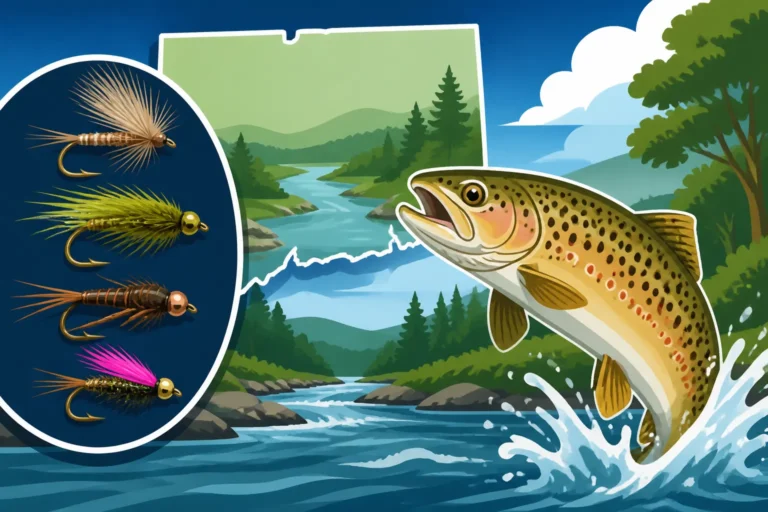
Start with generalist patterns that imitate a wide range of insects. The Pheasant Tail Nymph and Hare's Ear Nymph are absolute classics for a reason; they're incredibly versatile and effective, mimicking various mayfly and caddis species. For caddis, especially in the larger freestone rivers like the Housatonic River Trout Management Area, green or tan Caddis Larva patterns are deadly. The Prince Nymph, with its flashy white wings and dark body, is another great attractor pattern that fish simply can't resist. For faster, deeper water, especially earlier in the season, larger stonefly patterns (like a Pat's Rubber Legs or Kaufmann's Stonefly) can be very effective, as these insects live on the bottom in strong currents.
Consider the size of your nymphs as well. In clear, low water, smaller flies (size 16-20) will often elicit more strikes. When flows are higher or the water is a bit off-color, don't be afraid to go with larger patterns (size 10-14). It's always a good idea to have a variety of these essential patterns in different sizes and colors in your fly box. Many great assortments, including specific Fly Patterns for Connecticut Trout Streams, are readily available online through retailers like Amazon, ensuring you're prepared for whatever the stream throws at you.
Building Your Optimized Nymph Rig: Step-by-Step
Now that we've covered the individual components, let's put it all together. There are variations, of course, but the following standard indicator nymph rig is arguably the most versatile and effective setup for most freestone stream conditions in Connecticut.
The Standard Indicator Nymph Rig: The Go-To
This setup is your bread and butter for nymphing freestone streams. It's relatively easy to cast, highly adjustable, and offers excellent strike detection.
- Connect Your Leader: Begin by attaching your 9 to 12-foot tapered leader (e.g., a 4X or 5X leader) to the end of your fly line using a loop-to-loop connection or an Albright knot.
- Attach Your Indicator: Slide your chosen strike indicator (a Thingamabobber or a piece of New Zealand wool) onto your leader. For now, place it roughly 4-6 feet above the end of your tapered leader. You'll adjust this later to match the depth of the water you're fishing. A good rule of thumb is to set your indicator at 1.5 to 2 times the estimated depth of the water. For example, if you're fishing a 3-foot deep run, set your indicator about 4.5 to 6 feet from your bottom fly.
- Tie on Your Tippet: To the end of your tapered leader, tie on a section of fluorocarbon tippet. For general use, about 18-24 inches of 5X fluorocarbon is a solid starting point. Use a strong knot like a surgeon's knot or a blood knot.
- Attach Your First Nymph (Point Fly): To the end of this tippet section, tie on your first nymph. This will be your "point fly." Choose a heavier or larger nymph for this position, as it will act as your primary weight to get the rig down. A size 12-14 Pheasant Tail or Prince Nymph is a great choice.
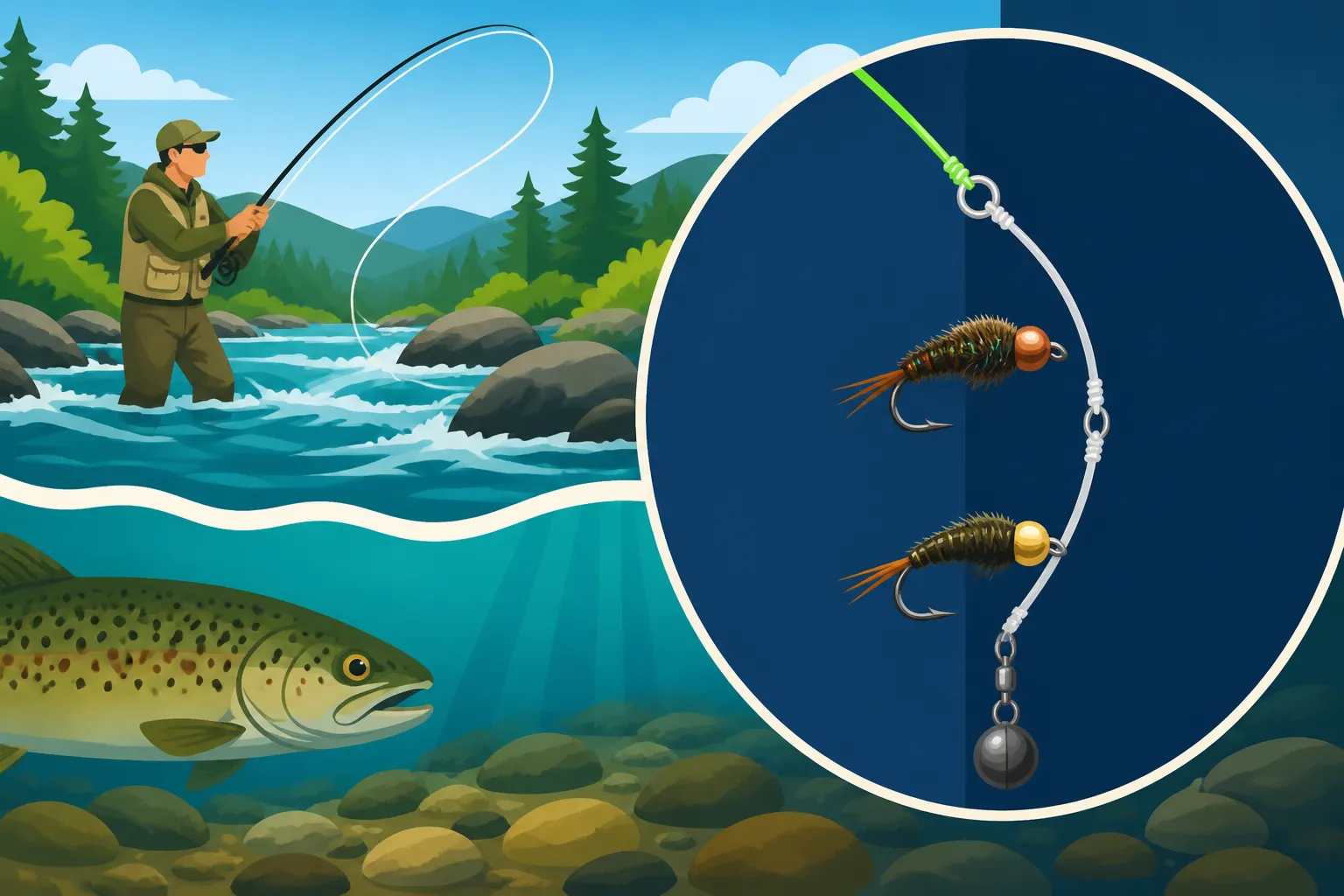
- Optional: Add a Dropper Nymph: This is where the tandem rig comes in, and it's incredibly effective. From the bend of your point fly's hook, tie on another 6-12 inches of lighter tippet (e.g., 6X fluorocarbon). To the end of this dropper section, tie on a second, usually smaller, nymph. This could be a size 16-20 Hare's Ear or a small Caddis Larva. This allows you to present two different flies at slightly different depths and gives the fish options.
- Add Split Shot (If Needed): If your flies aren't getting deep enough, add one or two small split shot (BB or B size) about 6-12 inches above your point fly. Adjust the amount and placement until you feel your flies occasionally ticking the bottom without constantly snagging.
This rig offers a balance of sensitivity, depth control, and natural presentation, making it an excellent all-around choice for nymphing in Connecticut's freestone rivers.
Tandem Nymph Rigs: Double the Trouble (for the Fish!)
The tandem nymph rig, essentially step 5 from above, is a fantastic strategy for freestone streams. It offers several distinct advantages that can significantly increase your catch rate. Firstly, it allows you to cover more of the water column. With two flies drifting at different depths, you're more likely to intersect a fish's feeding lane, which can vary day to day. One fly might be tumbling near the bottom, while the other rides slightly higher, imitating an emerger.
Secondly, it gives the trout more options. Sometimes fish are keying in on a specific insect size or color, and a tandem rig allows you to present two different patterns simultaneously, increasing your odds of offering what they want. You might use a heavier, attractor pattern (like a Prince Nymph or a stonefly) as your point fly to get depth, and then trail a smaller, more subtle emerger pattern (like a soft-hackle or an unweighted Pheasant Tail) as your dropper. This combination often proves irresistible. Just be mindful of tangles, especially when casting. A smooth, open loop cast will help keep your two flies from getting twisted.
Considering Euro Nymphing Rigs (Briefly)
While the focus here is on the versatile indicator nymph rig, it's worth briefly acknowledging Euro Nymphing, also known as French, Polish, or Czech nymphing. This technique is incredibly effective in specific freestone scenarios, particularly in faster, shallower pocket water or when targeting fish in very tight quarters. Instead of relying on a strike indicator floating on the surface, Euro nymphing employs a specialized, often very long, leader with a highly visible "sighter" section that acts as your strike detection. The rod tip is held high, maintaining direct contact with the flies and allowing for an incredibly sensitive feel for subtle takes.
This method minimizes drag almost completely, allowing for exceptionally natural drifts in complex currents. However, it typically uses very heavy, often jig-style, nymphs and requires a different casting stroke and intimate knowledge of water reading. While powerful, it's a specialized tool rather than a general "best nymph rig" for every situation. For anglers keen on expanding their repertoire, it's a worthwhile pursuit, especially for targeting specific trout in challenging pocket water where stealth and direct contact are paramount. But for the vast majority of freestone nymphing, the well-constructed indicator rig remains the workhorse.
Fishing Techniques and Presentation for Freestone Nymphing
Having the perfect nymph rig is only part of the equation; you also need to know how to use it effectively. Learning to read the water, achieve a drag-free drift, and execute proper hook sets are skills that will drastically improve your success on Connecticut's freestone streams.
Reading the Water for Success
Trout are efficient creatures; they want to expend the least amount of energy for the most food. This means they'll position themselves in places where food is abundant and easily accessible, but where they also have a break from the strongest currents. Learning to identify these "holding lies" is paramount to nymphing success, especially on rivers where fish are known to be elusive.
Look for areas where the current changes speed. This includes current seams (where fast water meets slow water), eddies behind boulders or submerged logs, and the slower water on the inside bends of a river. Plunge pools, formed where water cascades over rocks into a deeper basin, are also prime spots. The key is to think like a trout: where would you sit to avoid fighting the current all day but still have a conveyor belt of food coming to you? Often, the fastest surface currents are deceiving; the fish are usually much deeper, tucked into the slower water close to the bottom. Keep an eye out for any subtle disturbances on the water's surface, like rising foam lines or slight changes in color, as these often indicate a prime feeding lane. Many of the techniques for Wading Techniques for Connecticut Trout Streams also emphasize how to safely approach these holding lies.
Achieving a Drag-Free Drift: The Holy Grail
The term "drag-free drift" is thrown around a lot in fly fishing, and for good reason—it's the single most important factor in fooling trout with nymphs. Trout spend most of their lives eating insects that drift naturally with the current. Any unnatural drag on your flies will immediately signal "fake!" to a wary trout, especially the wilder, smarter fish found in Connecticut Catch and Release Fly Fishing Only Waters.
The goal is to have your indicator, leader, and flies all drifting at the exact same speed as the surrounding current. This means casting upstream of your target, allowing your rig to sink, and then constantly "mending" your fly line. Mending involves repositioning your fly line on the water to eliminate any slack or belly that the current might create, which would pull your flies unnaturally. If your indicator starts to speed up, slow down, or create a wake, it means you have drag. A good upstream mend involves picking up a section of your fly line and placing it slightly upstream, allowing your indicator and flies to continue their natural drift. Sometimes, a "downstream mend" is needed to prevent your line from speeding up ahead of your indicator. It takes practice and constant attention, but mastering the drag-free drift is arguably the biggest leap you can make in your nymphing game. Think of yourself as guiding your flies, not pulling them. You can find more specific guidance on this in guides like Drift Fishing for Trout in Connecticut Rivers.
Hook Setting and Fighting Freestone Trout
So, you've got your perfect rig, you've read the water, and you're achieving an impeccable drift. Now comes the moment of truth: the take. Nymph takes in freestone streams can range from a violent yank that almost rips the rod out of your hand to the most incredibly subtle hesitation or dip of your indicator. The latter is often the most common, and the easiest to miss.
When your indicator does anything out of the ordinary—pauses, twitches, shoots sideways, or even just sinks slightly deeper than it should—set the hook immediately. Don't wait to "feel" the fish; by then, it's often too late, or the fish has spit the hook. A proper hook set for nymphing is usually a gentle, upward sweep of the rod, rather than a hard, sideways snap. This allows the hook to seat firmly in the fish's mouth without breaking your lighter tippet.
Once you've hooked a fish, especially in a freestone river, the fight can be exhilarating. Trout in these waters are often strong and will use the current to their advantage. Keep your rod tip up, let your reel's drag do its job, and try to keep the fish out of any heavy current or submerged snags. If the fish runs downstream, follow it if you can. Be patient, apply steady pressure, and enjoy the reward of a perfectly executed nymphing presentation. Learning about general Fly Fishing for Trout in Connecticut techniques will also help hone these crucial skills.
Disclaimer
This article is for general informational purposes only and does not constitute professional advice. Laws, prices and regulations vary by location and change over time. Consult a qualified professional for guidance on your specific situation.