Best streamer patterns for Connecticut brown trout
Ah, the pursuit of Connecticut brown trout with streamers – it's a special kind of challenge, isn't it? These intelligent, often cagey fish can drive you absolutely batty, ignoring your perfect drifts and dainty dries. But when you finally crack the code with a big, juicy streamer, and that rod bends double, there's nothing quite like it. This guide is all about equipping you with the best streamer patterns and strategies to tempt those elusive browns in our beautiful Connecticut waters.
Understanding Brown Trout Behavior and Streamer Appeal
Brown trout are fascinating creatures, famous for their cunning and aggressive streaks. Unlike some of their trout cousins, especially when they grow larger, brown trout are highly predatory. They're not just sipping tiny mayflies off the surface; they're actively hunting, looking for a substantial meal. This is precisely where streamers come into their own.
Why Streamers Work on Brown Trout
Think about a brown trout's natural diet. Sure, they eat insects, but as they mature, their diet shifts significantly towards baitfish. Minnows, sculpins, dace, juvenile suckers, and even smaller trout become prime targets. These larger food sources offer more calories and are worth the energy expenditure of an aggressive chase. Streamers, by their very design, mimic these baitfish perfectly. They provide a bigger profile, more movement, and the illusion of a struggling or fleeing meal, which can trigger an instinctual predatory response from a brown trout.
It's not just about hunger, though. Brown trout are incredibly territorial, especially the larger, dominant individuals. A streamer invading their space can provoke an aggressive strike, even if the fish isn't actively feeding. This territorial defense mechanism is a huge reason why streamers are so effective, particularly when targeting those impressive, larger brown trout that might be holding in prime lies. You’re not just trying to make them eat; you’re making them mad, or making them think they’re missing out on an easy meal.
Key Characteristics of Effective Streamers
When you're sifting through endless patterns, trying to decide what might work, it helps to understand what makes a streamer truly effective for Connecticut brown trout. It's more than just a pretty fly; it's about matching the conditions and the fish's mood.
First, size and profile are paramount. While small patterns can sometimes tempt picky fish, brown trout often key in on larger meals. Streamers ranging from 2 to 5 inches are common, with some anglers even throwing larger articulated patterns up to 8 inches, especially when targeting trophy fish. The profile should generally imitate common forage fish in our local waters—think slender shiners, bulky sculpins, or even elongated eels. A fly that's too skinny or too fat compared to the prevalent baitfish might get ignored.
Next, movement and action are critical. A good streamer doesn't just sit there; it breathes, undulates, and pulses in the water. Materials like marabou, rabbit strip (zonker strips), and synthetic fibers are excellent for this because they absorb water and move enticingly with every twitch of the line or current eddy. Articulated streamers, which have multiple segments, are designed specifically to enhance this lifelike swimming action. Colors also play a huge role, from natural browns, olives, and whites to more aggressive chartreuses and oranges, depending on water clarity and light conditions. Often, a bit of flash can grab attention, but too much can sometimes spook wary fish in clear Connecticut streams.
Essential Streamer Patterns for Connecticut Waters
Choosing the right streamer can feel like an overwhelming task with the sheer number of options out there. But fear not, many of the most effective patterns are tried-and-true classics, while some modern designs offer exciting new possibilities for tempting those big brown trout.
Classic Patterns That Never Fail
These are the workhorses, the patterns that have filled countless creels and landed innumerable big fish for generations. Every serious streamer angler should have a good selection of these in their box.
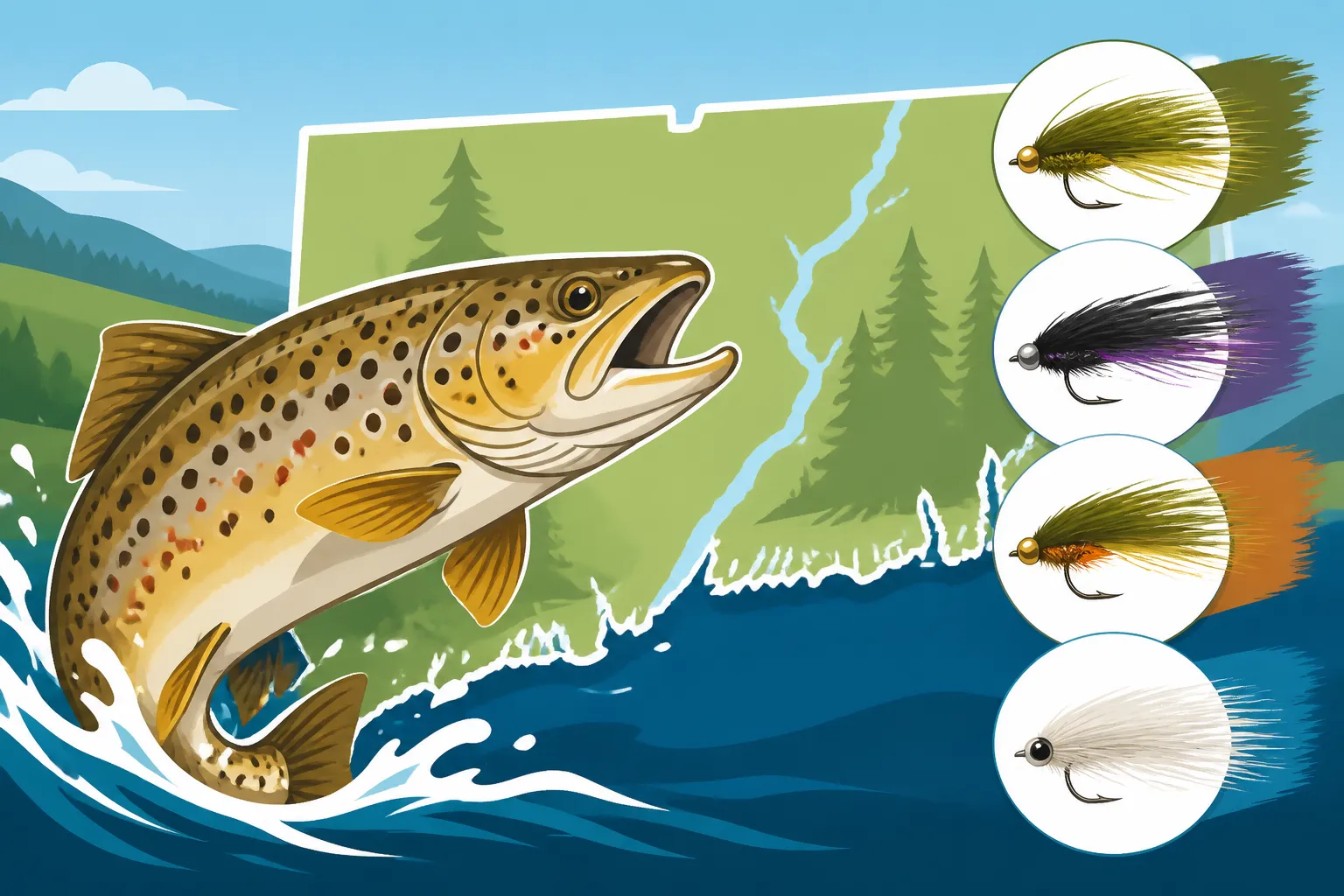
The Woolly Bugger is arguably the most versatile and effective streamer pattern ever created. Its simple design – a chenille body, marabou tail, and hackle collar – creates an incredible amount of movement and pulsation in the water. It can imitate anything from a leeches and baitfish to aquatic insects. For Connecticut brown trout, I always recommend carrying Woolly Buggers in black, olive, brown, and white, usually in sizes #4 to #10. You can fish them deep and slow, strip them fast, or even dead-drift them under an indicator. They are incredibly effective on rivers like the Farmington River West Branch and the Housatonic River Trout Management Area, especially when fished near structure or deep pools. You can find excellent quality Woolly Buggers, often in multi-packs, on sites like Amazon, making it easy to stock up.
Another legendary pattern is the Muddler Minnow. With its spun deer hair head, it perfectly imitates a sculpin or a small baitfish. The deer hair also makes it buoyant, allowing it to "swim" erratically just under the surface or be weighted to get deep. Muddlers in natural brown and olive, in sizes #4 to #10, are superb for fishing pocket water and rocky runs where sculpins hide. Their bulky profile and jerky movement are irresistible to aggressive browns.
The Zonker, tied with a strip of rabbit fur along its back, offers unmatched action. The rabbit strip breathes and wiggles enticingly, mimicking a slender baitfish like a shiner or dace. Natural colors like olive, black, and white are essential, typically in sizes #2 to #8. When stripped with short, sharp pulls, the Zonker truly comes alive, making it a fantastic choice for probing deeper runs and pools.
Modern and Articulated Streamers for Aggressive Browns
As fly tying has evolved, so have streamers. Modern patterns often incorporate synthetic materials, multiple articulation points, and innovative designs to create even more lifelike action and larger profiles, specifically targeting the biggest, most aggressive brown trout.
Articulated streamers, like the Game Changer series (developed by Blane Chocklett), are revolutionary. Built with multiple segments, often connected by articulation wire or shanks, they swim with an incredibly realistic, snake-like action that traditional single-hook flies can't replicate. These patterns typically imitate larger baitfish and can be highly effective for tempting trophy brown trout that are focused on bigger meals. They come in various sizes and colors, but often in the 4-8 inch range. While they can be a bit more challenging to cast due to their length and water-absorbing materials, the payoff can be huge.
Another fantastic modern choice is the Drunk & Disorderly. This pattern often features a deer hair head (similar to a popper) combined with a marabou or synthetic body, designed to dive and wobble erratically on the retrieve. It’s perfect for imitating a wounded or disoriented baitfish, triggering a strong predatory response. The erratic, unpredictable movement drives large brown trout absolutely wild, particularly in faster currents or choppy water.
Finally, patterns like the Sex Dungeon (developed by Kelly Galloup) are fantastic for aggressive fish. These are often articulated, heavily weighted, and tied with materials like rabbit fur and synthetic flash to create a large, pulsating profile. They are designed to be fished aggressively, getting deep quickly and maintaining a substantial presence in the water, which can be exactly what it takes to draw out a lunker brown from its hideout. These flies are often tied in olive, black, white, and natural baitfish colors. They are particularly effective when Best time of year for trophy brown trout in Connecticut is during the fall when browns are more territorial and feeding heavily.
Matching the Hatch or Baitfish with Streamers
While the classics and modern patterns are excellent all-around choices, sometimes you need to get more specific. "Matching the hatch" in the streamer world means identifying the prevalent baitfish in your fishing spot and selecting a streamer that closely imitates its size, shape, and color.
For example, if you're fishing a river known for sculpins, a bottom-dwelling, mottled fish, then patterns like the Sculpzilla, Conehead Sculpin, or a heavily weighted Muddler Minnow in olive, brown, or black are ideal. These flies should be fished close to the bottom, with short strips and pauses, mimicking the sculpin's darting movements. Many of Connecticut's Best Trout Streams in Connecticut have healthy sculpin populations.
If the resident forage is primarily shiners or dace, slender, silvery fish often found in schools, then patterns with a more elongated profile and flash are better. Think white or silver Zonkers, Clouser Minnows in white/chartreuse or grey/white, or even some of the more streamlined articulated patterns. These are excellent for imitating baitfish fleeing through the current or holding in deeper pools. When you're fishing on larger bodies of water, even smaller lakes in the state, understanding Brown Trout Habits in Connecticut Streams means knowing their food sources.
Don't forget black-nosed dace, another common forage fish in many Connecticut trout streams. Patterns that mimic their dark stripe and small size, often in brown or olive with a dark lateral line, can be highly effective. A small, dark Woolly Bugger or a dark-colored micro-Articulated Streamer can be perfect for imitating these agile baitfish. Finding a good selection of these specific imitations on platforms like Amazon can really round out your fly box.
Here’s a quick overview of some top streamer patterns:
| Streamer Pattern | Primary Imitation | Suggested Colors | Common Sizes (#) | Notes |
|---|---|---|---|---|
| Woolly Bugger | Leech, Sculpin, Minnow, Crawfish | Black, Olive, Brown, White | 4-10 | Incredibly versatile, great movement, essential for any trout angler. |
| Muddler Minnow | Sculpin, Fry, Grasshopper | Natural, Olive, Brown | 4-10 | Buoyant deer hair head creates erratic swimming action, good for topwater. |
| Zonker | Shiner, Dace, Small Baitfish | Olive, Black, White | 2-8 | Rabbit strip provides excellent movement, good for slender profiles. |
| Clouser Minnow | Baitfish (General) | White/Chartreuse, Grey/White | 2-6 | Good for deeper water, fast sink rate, excellent flash. |
| Game Changer | Larger Baitfish, Sculpin | Natural baitfish colors | 2-8 (articulated) | Multi-segmented for hyper-realistic swimming action, targets big fish. |
| Sex Dungeon | Large Baitfish, Sculpin | Olive, Black, Tan | 2-6 (articulated) | Bulky, aggressive, designed to trigger territorial strikes. |
Mastering Streamer Techniques for Connecticut Brown Trout
Having the best streamer patterns is only half the battle. Knowing how and where to present them is equally crucial, especially when you're dealing with the often-selective brown trout found in rivers like the Farmington River West Branch Trout Fishing.
Reading the Water for Brown Trout
Brown trout, especially larger ones, are masters of camouflage and efficiency. They'll hold in places where they can ambush prey with minimal effort, or where they feel safe and comfortable. When streamer fishing, you need to think like a predator.
Look for classic trout lies: deep pools, particularly those with varying current speeds. The head of a pool where food is funneled in, and the tail of a pool where current slows, are prime targets. Structure is your best friend: submerged logs, boulders, undercut banks, and even bridge abutments provide excellent ambush points. Brown trout love to hide in these spots, darting out to grab an unsuspecting baitfish.
Current seams are another key area. These are lines where two different currents meet, creating a natural conveyor belt for food. Casting a streamer along these seams allows it to drift naturally into a brown trout's feeding lane. In larger rivers like the Housatonic River Trout Management Area Fishing, these seams can be extensive. Don't overlook the shallow edges near deeper water, especially during low light conditions or when fish are cruising for easy meals. Often, the biggest browns will be in the spots that offer the most protection and the most food, and you might have to cast into some tight spots.
Retrieval Techniques to Entice Strikes
This is where streamer fishing truly becomes an art form. The way you move your streamer can be the difference between a fish following and a fish committing. There’s no single "best" retrieve; variety is key, and adapting to the conditions and the fish's mood is paramount.
The most common technique is the strip retrieve. After casting across or slightly upstream, let the streamer sink to the desired depth. Then, use short, erratic strips of your fly line to impart action to the fly. Vary the speed and length of your strips. Sometimes a quick, jerky retrieve is best, mimicking a panicking baitfish. Other times, a slow, deliberate strip with pauses can entice a sluggish fish. Think about a baitfish trying to escape – it rarely swims in a perfectly uniform manner.
Swinging a streamer is incredibly effective, especially in moderate to fast currents. Cast across and slightly downstream, then let the current do the work. The fly will "swing" across the river, presenting itself broadside to any fish holding in the current. During the swing, you can add small strips or twitches to make the fly pulse. The fish often strike aggressively at the end of the swing, just as the fly slows down. This technique is particularly deadly in classic trout runs and riffles.
Don't dismiss the dead-drift, even with streamers. In some situations, especially with heavily weighted patterns like a Sculpzilla, letting the streamer tumble naturally along the bottom, occasionally twitching it, can imitate a struggling or injured baitfish perfectly. This is often done with a nymphing rig or under an indicator in deeper water. Experiment with all these techniques, and don’t be afraid to combine them. A quick strip followed by a pause, then a swing, can often be the magic combination.
Gear Considerations for Streamer Fishing
While you can throw streamers on a standard trout setup, optimizing your gear will make a huge difference in casting efficiency, presentation, and ultimately, success. When you're pursuing Trout Fishing in Connecticut, the right gear can make all the difference.
For rods, a 6 to 8-weight fly rod is typically preferred for streamer fishing, especially if you're throwing larger, heavier, or articulated patterns. The added backbone helps punch through the wind, turn over big flies, and, most importantly, handle a larger, stronger fish. A rod in the 9-10 foot range offers better line control and casting distance. Brands like Orvis or Sage make excellent streamer rods, but there are plenty of great options for all budgets.
Your reel should be appropriately sized for your rod and line, with a smooth drag system. While you might not always be fighting a fish on the reel with trout, it's good to have that capability when you hook into a truly big brown.
Fly line is crucial. A weight-forward floating line can work, especially for smaller streamers or when fishing shallower water, but sinking tip lines or full sinking lines are often preferred. Sinking tips allow your streamer to get down quickly into the strike zone without dragging your entire line underwater. Various sink rates (e.g., Type III, Type VI) are available, allowing you to match the line to the depth and current speed you're fishing. A general-purpose 200-grain or 250-grain sinking tip line is a great starting point for many Connecticut waters.
For leaders, a shorter, stronger leader is typically used compared to nymphing or dry fly fishing. A 7.5-foot leader tapering to 0X or 1X (around 15-10 lb test) is a common choice. Some anglers even use straight fluorocarbon leader from the fly line to the fly for maximum abrasion resistance and invisibility. A small, strong snap swivel can also be used to quickly change flies, though some purists avoid them.
Seasonal Streamer Strategies for Connecticut's Rivers
The best streamer patterns and techniques can vary significantly depending on the time of year. Brown trout behavior is heavily influenced by water temperature, forage availability, and spawning cycles. Understanding these seasonal shifts is key to consistent success on Best Fly Fishing Rivers in Connecticut.
Spring Tactics: High Water and Hungry Fish
Spring is a fantastic time for streamer fishing in Connecticut. After a long winter, brown trout are often hungry and eager to bulk up. This is also when many rivers experience higher flows due to snowmelt and spring rains, which can dislodge baitfish and provide excellent cover for predatory trout. The Connecticut Trout Season and Stocking Rules also mean a fresh influx of stocked fish that can be very aggressive.
During high water, brown trout will often move to the softer edges, eddies, and slower pockets out of the main current. Focus your casts into these areas, using heavier, darker streamers like black or olive Woolly Buggers or Sex Dungeons. The high, often off-color water provides great camouflage for large flies and makes the fish less wary. Use a fast-sinking tip line to get your fly down quickly. An aggressive strip-strip-pause retrieve can often trigger violent strikes from opportunistic fish. Don't be afraid to fish bigger, bulkier flies during this time; the fish are looking for a meal that makes the effort worthwhile.
Summer Challenges: Low Flows and Nocturnal Feeding
Summer can be a trickier time for streamer fishing, especially during periods of low, clear water and high water temperatures. Brown trout become more sensitive to light and heat, often becoming more nocturnal in their feeding habits.
During the day, focus on the deepest, coolest pools and areas with heavy cover, like large boulders or undercut banks. Smaller, more natural-colored streamers (olive, brown, white) in sizes #8 to #12 can be more effective than large, flashy patterns. A slower, more deliberate retrieve is usually best, mimicking a struggling baitfish that might be an easy target. Consider fishing at dawn, dusk, or even at night when brown trout are most active and confident. Night fishing for large browns with dark, bulky streamers can be incredibly exciting, but requires extra caution and familiarity with your fishing spot.
It's crucial to remember that When Connecticut trout streams get too warm to fish (typically above 68-70°F), trout become stressed, and fishing can cause mortality, even with careful handling. If water temperatures are high, consider focusing on cooler, spring-fed streams or holding off until conditions improve.
Fall Fury: Spawning Runs and Aggressive Bites
Fall is arguably the prime time for trophy brown trout streamer fishing in Connecticut. As water temperatures drop and the days shorten, brown trout begin their spawning migration. They become incredibly aggressive and territorial, making them highly susceptible to streamers.
Focus on known spawning areas, but be respectful and avoid casting directly to redds (spawning beds). Target the larger, darker pools and deep runs just downstream of spawning areas, where large fish will stage before moving onto the redds. Orange, red, and brown streamers can be particularly effective during this time, mimicking dislodged salmon eggs or smaller trout. Patterns like the Sex Dungeon or larger articulated streamers can provoke powerful, territorial strikes. An aggressive, erratic retrieve often works best, making the streamer appear as an intruder to be chased away. This is truly the best opportunity to target those monster brown trout that lurk in our local rivers.
Winter Persistence: Deep Water and Slow Retrieves
While many anglers pack it in for the winter, dedicated streamer junkies know that cold water can hold some big surprises. Winter fishing is often about patience and targeting deep, slow-moving water where brown trout conserve energy.
During winter, brown trout are less active, and their metabolism slows down. They're still feeding, but they're less likely to chase a fast-moving fly. Concentrate on the deepest holes, slow pools, and even the slowest eddies. Use heavily weighted streamers to get down to the bottom quickly and keep them there. Black, olive, and natural white colors are often good choices. The key is a very slow, subtle retrieve. Think slow strips with long pauses, or even a dead-drift with occasional twitches. The fish won't move far to eat, so your presentation needs to be right on their nose, tempting them with an easy meal. While challenging, the reward of a big, bright brown trout against a snowy backdrop is an unforgettable experience.
Disclaimer
Fishing conditions and regulations in Connecticut can change rapidly. Always consult the latest Connecticut Department of Energy and Environmental Protection (DEEP) fishing guide before heading out. This guide is for informational purposes only and does not supersede official regulations. Stay safe and respect our natural resources.