Best technique for finding fall baitfish schools
The crisp air of autumn brings with it some of the most exciting fishing opportunities in Connecticut, but it also brings a unique challenge: finding the bait. While game fish like striped bass, smallmouth, and even trout are in a feeding frenzy, they're often tightly locked onto schools of baitfish that can be surprisingly elusive. This guide is all about equipping you with the techniques and understanding needed to pinpoint those vital baitfish concentrations, transforming your fall fishing from a hopeful cast into a targeted pursuit.
Why Fall Baitfish Schools Are So Crucial for Anglers
Fall is a season of urgency for many fish species. As water temperatures begin to drop, they sense the impending winter and kick their feeding into overdrive. This intense feeding behavior is often referred to as the "fall run" or "fall bite," and it's almost entirely dictated by the availability and concentration of baitfish. If you find the bait, you're usually just a cast away from the predators.
The Fall Feeding Frenzy: A Race Against Winter
Think of fall as the last big feast before the long slumber. Striped bass are migrating south, gorging themselves on bunker and spearing. Inland, largemouth and smallmouth bass are stacking up on shiners and alewives, trying to pack on as much weight as possible. Even trout, which are cold-water fish, are aggressively feeding to build reserves and prepare for spawning. This is why knowing where the baitfish are is not just helpful, it's absolutely essential. If you're casting aimlessly, you might as well be fishing in a bathtub. The energy conservation for predatory fish during this time means they're not going to chase widely dispersed food; they want big, easy meals, and that means bait balls.
Understanding this predatory drive helps you think like a fish. When you approach a new spot, your first question shouldn't be "Where are the bass?" but rather, "Where would the bass's food be right now?" This shift in perspective is what unlocks consistent success during the fall. It's a high-stakes game of hide-and-seek, and the baitfish are constantly moving, driven by currents, tides, and the relentless pursuit of hungry game fish.
Identifying Key Baitfish Species to Look For
Connecticut's waters, both fresh and salt, host a variety of baitfish that become critical during the fall. Knowing what you're looking for can help you identify patterns and predict movements. In Long Island Sound, Atlantic Menhaden, often called "bunker," are king. These oily, silvery fish school in massive numbers and attract hordes of striped bass, bluefish, and even false albacore. Smaller baitfish like silversides, spearing, and juvenile herring are also important forage, often found closer to shore or in estuaries. What Atlantic menhaden are and why they matter to striped bass can give you a deeper dive into this crucial species.
In freshwater environments, different species take center stage. Shiners, small perch, sunfish, and juvenile trout can all be prime targets for larger bass, pickerel, and holdover trout. Alewives, a type of herring, also ascend some rivers and lakes, forming dense schools that predatory fish will follow. Each species has its own habits and preferred habitats, so a little local knowledge goes a long way. For instance, knowing that bunker prefer warmer nearshore waters early in the fall before moving offshore can guide your initial search efforts.
Reading the Water: Visual Cues for Baitfish
Before you even turn on your electronics, your eyes are your most powerful tool for finding fall baitfish schools. The natural world often provides clear, undeniable signals if you know how to interpret them. Learning to observe and understand these visual cues can give you an immediate advantage.
Surface Activity and Bird Play: Nature's Fish Finders
One of the most exciting and obvious signs of baitfish is activity on the surface. Look for nervous water – subtle ripples, flashes, or boils that aren't caused by wind or current. This often indicates a school of baitfish being pushed up from below by predators. Bigger splashes, white water, or fish actively jumping out of the water are clear indicators of a full-blown feeding frenzy. When you see this, cast immediately. This is prime time.
Birds, particularly gulls and terns, are your best natural allies. They have a bird's eye view (pun intended!) and are quick to spot baitfish schools, especially when those schools are being driven to the surface by game fish. Pay close attention to their behavior. Gulls simply floating on the water are just resting. But gulls circling, diving, or especially plunging headfirst into the water are actively feeding, indicating that baitfish (and likely predators) are directly beneath them. Keep a good pair of binoculars, perhaps a waterproof pair you picked up from Amazon, handy for scanning the horizon for this kind of activity.
Current Seams and Structure: Baitfish Highways
Baitfish aren't just randomly swimming; they use structure and current to their advantage, often to hide or feed on plankton. Current seams, where two different currents meet, are natural highways for baitfish. The slower side of the seam often holds bait, while predators wait on the faster side, ready to ambush. Think of points, jetties, bridge pilings, and the mouths of rivers entering larger bodies of water. These are all prime locations for current seams to form.
Underwater structure also plays a huge role. In saltwater, rocky reefs, wrecks, mussel beds, and channel edges provide places for baitfish to congregate for protection and food. In freshwater, weed lines, submerged timber, rock piles, and sharp drop-offs are magnets for bait. Fish often use these structures as ambush points. Learning to identify these spots on a map or by observing the shoreline can give you a starting point. Baitfish will often "hold" on the edges or in the eddies created by these features.
Water Color and Temperature: Environmental Clues
Subtle changes in water color can sometimes indicate baitfish presence. For instance, a slightly stained or greenish water might hold more plankton, which baitfish feed on, thus attracting them. Murky water, on the other hand, might scatter baitfish or make them harder for predators (and you) to find. Look for areas where clear water meets cloudy water, as these transition zones can be very productive.
Water temperature is another critical factor, especially in the fall. As the air cools, surface water temperatures drop faster than deeper water. Baitfish often seek out slightly warmer pockets of water, which could be in shallower coves, near sun-drenched banks, or in areas influenced by warm effluent. Conversely, some baitfish might move to deeper, more stable temperatures. A good thermometer is an inexpensive but invaluable tool. Keep an eye on the weather patterns; a sudden cold snap can drive baitfish into deeper water very quickly. Consult resources like Connecticut Fishing Seasons by Month to get a general idea of how conditions change throughout the autumn.
Sonar and Electronics: Modern Baitfish Detection
While visual cues are fantastic, modern electronics can dramatically increase your efficiency in finding fall baitfish schools, especially when they're not on the surface or in clear view. A good fish finder is no longer a luxury; it's an essential tool for serious anglers.
Interpreting Your Fish Finder: Beyond the Arches
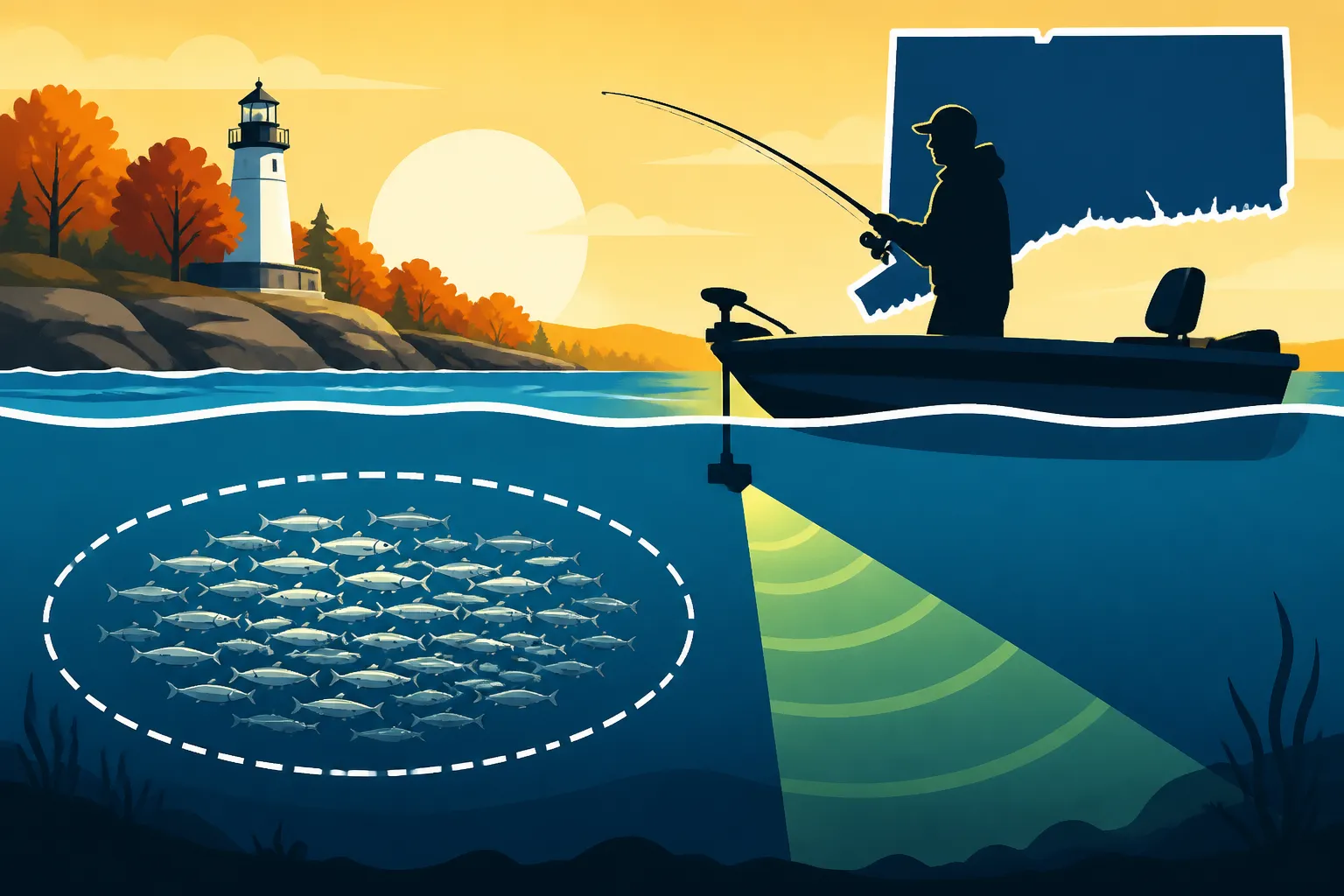
Most entry-level fish finders display baitfish as dense clouds or clumps of small dots on the screen. Don't expect to see distinct "arches" for individual baitfish; they're usually too small and too tightly packed. Instead, look for fuzzy, irregularly shaped masses. If these masses are near the bottom, they might be hiding. If they're suspended in the water column, especially with larger, defined arches (predators) nearby or underneath them, you're in business.
The density and shape of these baitfish signals can tell you a lot. A very tight, round ball often indicates bait being "balled up" by predators. A more elongated, scattered cloud might mean they're cruising or not under immediate threat. Adjusting your sensitivity (gain) is crucial. Too low, and you'll miss them; too high, and you'll get too much clutter. Many modern units, readily available on Amazon, have automatic settings, but learning to manually adjust them for different conditions will give you an edge. Practice in known baitfish areas to get a feel for what healthy schools look like on your specific unit.
Side Imaging and Down Imaging: Advanced Baitfish Detection
For those with more advanced electronics, side imaging and down imaging technologies offer incredible detail for locating baitfish schools that might be off to the sides of your boat or directly beneath it with photographic clarity. Down imaging provides a picture-like view directly below, making it easier to distinguish between a bait ball and underwater structure. You can often see the distinct shape of a bait school, even seeing individual baitfish within the mass if the resolution is high enough.
Side imaging is revolutionary for covering large areas quickly. Instead of just seeing what's directly under your boat, it scans out to the sides, often hundreds of feet. This allows you to spot massive bait schools that you might have otherwise driven right past. Imagine cruising along, and suddenly you see a huge, dark cloud of baitfish extending 50 feet to your port side. You can then turn your boat and investigate that school. It's especially useful for finding bait in open water or along subtle channel edges where they might be holding. Using these technologies effectively requires practice, but the rewards in terms of efficiency and success are immense.
GPS and Chartplotters: Marking and Returning to Productive Spots
Once you find a productive baitfish school, whether visually or with electronics, marking that spot on your GPS chartplotter is critical. Baitfish move, but they often move along predictable routes or return to certain areas, especially if there's structure, current, or favorable water conditions. A GPS allows you to save waypoints and track your movements, helping you identify patterns.
You can mark a spot where you saw birds diving, where your sonar lit up with bait, or even where you hooked a fish. Over time, you'll build a personal "map" of productive fall baitfish areas in places like Best Fishing Lakes in Connecticut or Best Fishing Rivers in Connecticut. This data becomes invaluable intelligence for future trips. Many chartplotters also allow you to overlay mapping data that shows contours, depths, and bottom composition, which can help you predict where baitfish might be holding even before you get there. Combining real-time sonar data with historical GPS waypoints creates a powerful system for consistent success.
Understanding Baitfish Behavior in Fall
Beyond the tools and visual cues, a deeper understanding of why baitfish behave the way they do in the fall is key to anticipating their movements and making more educated guesses about their location. They are driven by a mix of instinct, environmental factors, and the constant threat of predation.
Seasonal Movements and Depths: The Great Migration
As fall progresses, baitfish undertake significant movements. In saltwater, many species like menhaden begin a southward migration, often hugging the coastline or moving just offshore in Long Island Sound. This makes them highly accessible to shore anglers and boaters alike. Smaller baitfish might stay in estuaries longer, using the warmer, shallower water as a refuge before eventually moving out. How menhaden schools attract striped bass and bluefish is a great resource to understand their migratory patterns better.
In freshwater, baitfish may move from shallow summer haunts to deeper main lake basins or river channels as surface temperatures drop. They'll often school up tighter in these deeper zones, which provides a sense of security from aerial predators and keeps them in more stable water temperatures. Conversely, during brief warm spells, they might push back into shallower areas to feed on remaining insect larvae or plankton. These depth changes mean you need to be prepared to fish both shallow and deep, and your sonar becomes even more important.
Prey-Predator Dynamics: The Circle of Life
Baitfish are constantly under threat. This perpetual state of being hunted is what dictates much of their schooling behavior. They form large schools as a defensive mechanism, making it harder for individual predators to pick them off. However, this also makes them a prime target for larger predators who can corral and ambush these dense schools. The sight of a tight bait ball on your sonar is often the direct result of a game fish pushing them together.
Understanding this dynamic means recognizing that where there are baitfish, there are very likely predators. And where there are stressed baitfish (indicated by tight schools, erratic surface activity, or being pushed against a current seam), there are active predators. This interaction also affects their preferred locations. Baitfish will often seek refuge near structure or in areas with slightly lower visibility to avoid detection, while predators will patrol the edges of these safe zones, waiting for an opportunity.
Impact of Weather and Tides: External Influences
Weather and tides are powerful forces that significantly influence baitfish movements, especially in the fall. Strong winds can push baitfish against shorelines or into protected coves, making them easier for both predators and anglers to find. Calm, sunny days might see baitfish higher in the water column, while cloudy or stormy weather could drive them deeper.
Tides are paramount in saltwater. Incoming and outgoing tides create current, which baitfish use to travel and feed. Tidal rips, where currents are strong and turbulent, often churn up bait and disorient them, making them easy targets. Knowing the tide schedule and how it affects specific areas, especially in a dynamic waterway like Long Island Sound, is critical. Baitfish will often stage in certain areas on the incoming tide, move through a channel at peak tide, and then regroup in another area on the outgoing tide. Understanding these predictable movements, combined with monitoring conditions, is the ultimate secret to consistently finding those valuable fall baitfish schools. You might even find it helpful to read up on Best Time of Year to Fish in Connecticut to combine this knowledge with overall seasonal patterns.
To summarize some common baitfish and where they're often found in the fall:
| Baitfish Species | Primary Habitat (Fall) | Common Indicators (Fall) | Prime Predators Attracted | Best Detection Method |
|---|---|---|---|---|
| Atlantic Menhaden (Bunker) | Nearshore ocean, estuaries, deep channels | Large surface boils, diving gulls/terns, dark sonar clouds | Striped Bass, Bluefish, False Albacore | Visual, Sonar (Side/Down) |
| Silversides/Spearing | Shallow estuaries, protected coves, beaches | Nervous water, small splashes, subtle bird activity | Striped Bass (schoolies), Fluke, Bay Anchovies | Visual, Sonar (Fuzzy dots) |
| Alewives/Herring | Freshwater lakes, large rivers, tributary mouths | Surface jumps, subtle ripples, tight sonar schools | Largemouth Bass, Smallmouth Bass, Pike, Walleye | Visual, Sonar (Density) |
| Shiners (Golden/Emerald) | Freshwater ponds, lakes, slow river stretches | Flashes near cover, small surface activity, scattered sonar marks | Largemouth Bass, Smallmouth Bass, Trout, Pickerel | Visual, Sonar (Scattered) |
| Juvenile Perch/Sunfish | Freshwater lakes, weed edges, submerged structure | Visual near structure, small schools on sonar, occasional predator chases | Largemouth Bass, Pike, Trout | Visual, Sonar (Structured) |
Finding fall baitfish schools in Connecticut waters is less about luck and more about a combination of keen observation, smart use of technology, and a solid understanding of fish behavior. By honing these techniques, you'll be well on your way to intercepting those incredible fall feeding frenzies and enjoying some of the most productive fishing of the year. Remember to keep an eye on what other anglers are doing, too – sometimes a little shared intelligence can go a long way in finding the bite. Good luck out there!
Disclaimer
This article is for general informational purposes only and does not constitute professional advice. Laws, prices and regulations vary by location and change over time. Consult a qualified professional for guidance on your specific situation.