How to fish a spinnerbait for Connecticut lake bass
Ah, the spinnerbait! It's one of those classic lures that every serious bass angler in Connecticut needs to have tied on at some point. But if you've ever felt like your spinnerbait isn't quite getting the job done, or you're just not sure how to fish it effectively in our local lakes, you're not alone. Many anglers struggle to unlock its full potential. This guide is going to walk you through everything from choosing the right spinnerbait to mastering various retrieve techniques, helping you confidently target and catch more bass in Connecticut's diverse lake environments.
Why Spinnerbaits Reign Supreme for Connecticut Lake Bass
There’s a reason why spinnerbaits have stood the test of time, even with all the fancy new lures constantly hitting the market. For bass fishing in Connecticut's lakes, they offer an unbeatable combination of attributes that simply make them deadly. They're not just "another lure in the box"; they're often the lure that can turn a tough day around, especially when bass are feeling aggressive or when you're dealing with tricky cover.
The Irresistible Flash and Vibration
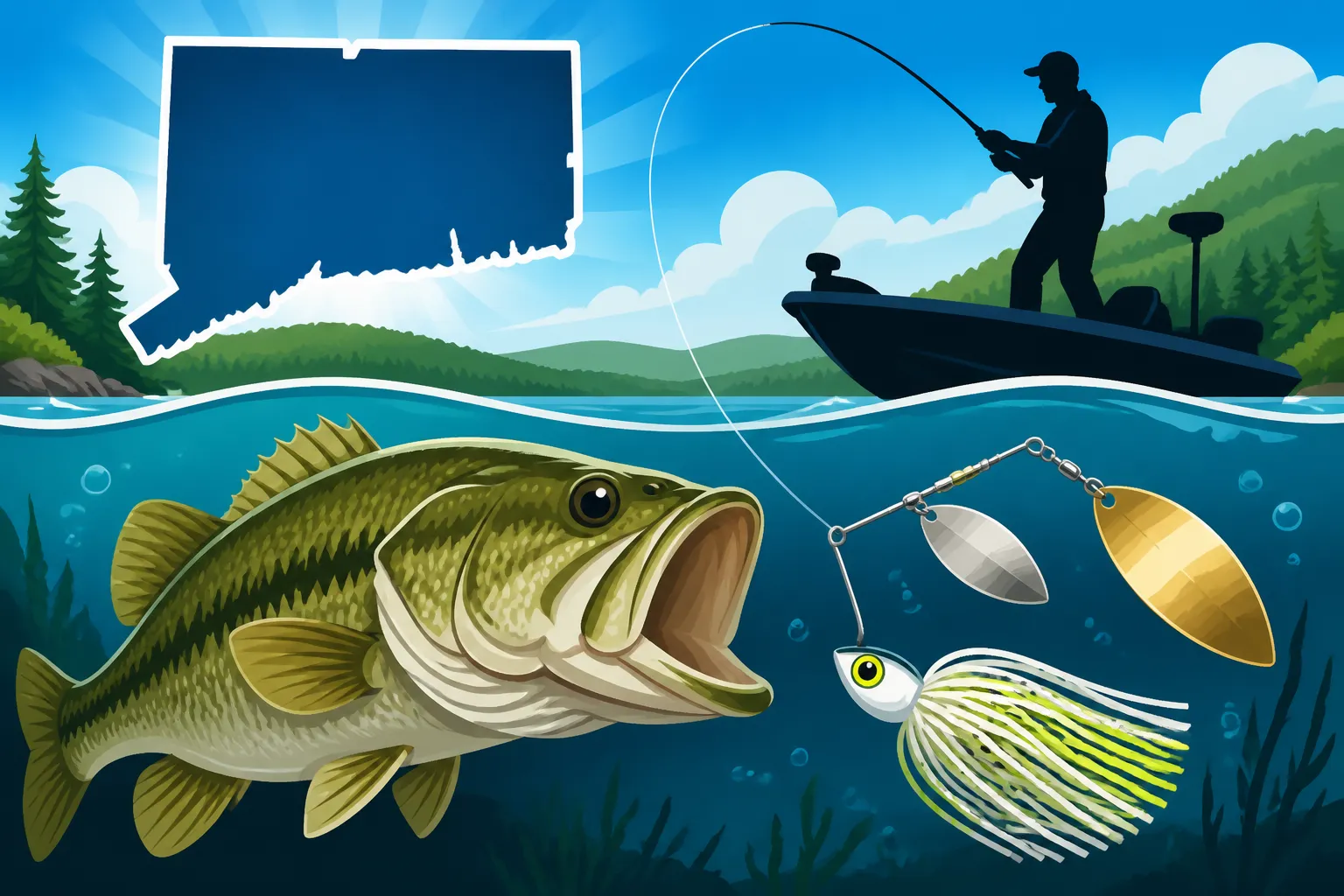
Imagine a school of panicked baitfish scattering through the water, each one flashing as it darts away. That's precisely the visual cue a spinnerbait delivers. The spinning blades create an incredible amount of flash, mimicking the scales of frantic baitfish. This visual appeal is amplified by the vibration – that subtle throb you feel in your rod tip as the blades rotate. This vibration travels through the water, creating a lateral line disturbance that bass can detect from a surprisingly long distance, even in murky water or low light conditions. It's like a dinner bell ringing underwater, calling out to hungry largemouth and smallmouth bass hiding in the weed lines or cruising the flats of lakes like Candlewood or Bantam. It’s this dual sensory attack that makes them so effective; bass see the flash and feel the throb, making them believe there’s an injured or fleeing meal right in front of them.
This combination is particularly potent in areas where baitfish like shiners, alewives, or perch are prevalent. When bass are actively feeding or ambushing prey, a spinnerbait replicates that fleeing action perfectly. Think about those overcast days, or early morning and late evening fishing – the flash is still visible, and the vibration is still detectable, often outperforming less intrusive lures. It's a fantastic choice when you need to cover water quickly and identify active fish, or when you're faced with conditions that limit visibility, making sight-based lures less effective.
Adaptability Across Connecticut's Diverse Lake Environments
One of the true superpowers of the spinnerbait is its incredible versatility. Our Connecticut lakes are not all the same; some are deep and clear, others are shallow and weedy, and many have a mix of rock, wood, and docks. A spinnerbait can shine in almost all of them. Unlike some lures that are specialized for specific depths or cover, a spinnerbait can be fished effectively from the surface down to deep weed edges, through thick hydrilla, over rocky bottoms, and around fallen timber or docks. This adaptability means you don't need to constantly re-tie or switch lures as you move from one type of structure to another within a lake.
For example, you can "burn" a lightweight spinnerbait just under the surface over submerged grass beds on Lake Lillinonah, or slow-roll a heavier one along the deep transition lines of Lake Zoar. Its weedless design, with the hook riding upright and protected by the wire frame and skirt, allows it to glide through heavy cover where other lures would snag instantly. This is a huge advantage when you're targeting those big bass that love to hide deep in the slop or snug up against submerged brush. If you're looking for Best Bass Fishing Lakes in Connecticut, a spinnerbait will be a key player no matter which body of water you choose to explore. Its ability to navigate tough cover means you can present a tempting meal right in the bass's living room without getting hung up constantly, saving you valuable fishing time and frustration.
Anatomy of an Effective Spinnerbait for Connecticut Bass
Understanding the different components of a spinnerbait isn't just for gearheads; it's crucial for maximizing its effectiveness on Connecticut's lakes. Each part plays a role in how the lure moves, flashes, vibrates, and ultimately, attracts bass. Choosing the right combination of blades, skirts, and head weight for the conditions you're facing can make all the difference between a productive day and one spent just casting aimlessly.
Blade Dynamics: Choosing the Right Flash and Thump
The blades are the heart of the spinnerbait, responsible for its flash and vibration. There are three primary types, and often, they're combined in tandem on a single lure:
- Colorado Blades: These are round, cupped blades that produce a lot of vibration (or "thump") and flash, but they also create significant drag, meaning they lift easily and retrieve slower. They're excellent in murky or stained water where bass rely more on their lateral line to detect prey, and in low light conditions (dawn, dusk, overcast days) where their exaggerated flash is key. They're also great for slow rolling in deeper water or around heavy cover. Think about fishing a chocolate milk pond after a heavy rain; a Colorado blade will stand out.
- Willowleaf Blades: Long and narrow, willowleaf blades produce less vibration but intense flash. They cut through the water efficiently, allowing for faster retrieves and deeper presentations with less drag. These are ideal for clear water, bright sunny days, or when you want to cover a lot of water quickly, mimicking fleeing baitfish. If you're targeting bass schooled up on a main lake point or over open water humps in clear lakes, willowleaf blades are often the ticket.
- Indiana Blades: A hybrid between Colorado and willowleaf, Indiana blades offer a good balance of flash and vibration. They're a solid all-around choice when you're unsure what the bass prefer or when conditions are mixed. They retrieve at a moderate speed and are a versatile option for many situations.
Most spinnerbaits feature a tandem blade setup, with a smaller blade (often a Colorado for thump) in front and a larger blade (often a willowleaf for flash) behind it. This combination provides the best of both worlds and is incredibly effective. Experimentation is key; what works best on Lake Waramaug might be different from what bass prefer on Mashapaug Lake.
Skirt Colors and Trailers: Mimicking Local Forage
The skirt is the "body" of the spinnerbait and provides the visual profile of the baitfish or creature you're trying to imitate. Skirts come in a dizzying array of colors and materials, and choosing the right one can be critical.
- Natural Colors: For clear water or when bass are finicky, natural colors like white, chartreuse, shad patterns (silver/white), or perch patterns (greens, yellows, oranges) are excellent. These mimic the common forage found in Connecticut lakes. If you know bass are keying in on specific baitfish, try to match the color and profile as closely as possible.
- Bright/Vibrant Colors: In stained or muddy water, or on dark, overcast days, brighter colors like pure chartreuse, bright orange, or even black/blue can be more effective. These create a more visible silhouette and a stronger contrast against the water, making them easier for bass to spot.
- Trailer Considerations: Adding a soft plastic trailer to your spinnerbait's hook can greatly enhance its appeal. Grubs, small swimbaits, or creature baits in complementary colors can add bulk, action, and scent (if scented). This is especially useful when bass are short-striking the lure or when you want to slow down your retrieve even further. You can find an incredible variety of spinnerbait skirts and soft plastic trailers on Amazon, allowing you to customize your presentation for any condition. The added bulk of a trailer can also make your spinnerbait "hang" in the strike zone a little longer, giving a hesitant bass more time to commit.
Head Weight and Shape: Navigating Depths and Cover
The weight and shape of the spinnerbait head determine how deep and fast it can be fished, as well as its snag resistance.
- Weight: Spinnerbaits typically range from 1/4 oz to 1 oz or more. Lighter weights (1/4 – 3/8 oz) are great for shallow water, burning just under the surface, or when bass are feeding higher in the water column. Heavier weights (1/2 oz and up) allow you to fish deeper, maintain better contact with the bottom in wind, or retrieve faster without the lure blowing out of the water. If you're exploring different depths on a deep lake like Candlewood or aiming to How to pattern bass on an unfamiliar Connecticut lake, having a range of weights is essential.
- Shape: Most spinnerbait heads are designed to be somewhat weedless, often resembling a bullet or a fish head. The more streamlined the head, the better it will typically come through dense cover like weeds or wood. Some heads are designed with a flatter bottom, which can help them "plane" up in the water column more easily, or "thump" off the bottom with a slight rocking motion. A good general-purpose head shape will serve you well in most Connecticut lake scenarios, but if you're consistently fishing extremely heavy cover, seeking out a more hydrodynamic, weed-shedding design can save you a lot of grief.
Mastering the Retrieve: Bringing Your Spinnerbait to Life
Once you understand the components, the next step is learning how to present your spinnerbait effectively. The retrieve is where the magic truly happens – it's how you bring that lure to life and convince a bass it's worth chasing. On Connecticut's lakes, bass can be moody, so having a few different retrieve styles in your arsenal will significantly increase your success rate.
The Versatile Steady Retrieve
This is the bread and butter of spinnerbait fishing and often the first technique anglers learn. It's exactly what it sounds like: a continuous, steady reeling motion. The key here is to experiment with speed. Some days, bass want a fast, erratic retrieve that mimics a fleeing baitfish. Other times, a slow, methodical pace is what triggers a strike, making the lure appear more like an injured or disoriented fish.
Start by making a cast, allowing the spinnerbait to sink to your desired depth. Then, begin a consistent retrieve, keeping your rod tip slightly elevated. Pay close attention to your line and feel for any subtle taps or changes in pressure, which often indicate a strike. This retrieve is fantastic for covering water quickly and locating active fish, especially along weed lines, points, and flats. It allows the blades to work their magic, creating constant flash and vibration. If you're on a productive lake and the bass are active, this simple yet effective retrieve can be incredibly powerful. It's a great way to start your day, assess the fish's mood, and cover a lot of territory without overthinking things.
Slow Rolling for Deep or Reluctant Bass
When the bass are holding deeper, are less aggressive, or the water is colder (think early spring or late fall), a slow roll can be incredibly effective. This technique involves using a heavier spinnerbait (1/2 oz or more) and retrieving it just fast enough for the blades to turn, allowing the lure to "slow roll" along the bottom or deep within the cover.
The goal is to keep the spinnerbait in the strike zone for as long as possible. Let your lure sink to the bottom after casting, then begin a very slow, steady retrieve, occasionally bumping it off rocks, stumps, or the tops of submerged weeds. This contact with the bottom often triggers a reaction strike. The "thump" of Colorado blades is particularly effective for slow rolling, as the exaggerated vibration helps bass find the lure even in low visibility or when they're sluggish. This technique is a fantastic choice for probing deep weed edges, submerged timber, or rocky humps in Connecticut lakes. When you're fishing Best Bass Fishing Techniques for Candlewood Lake in cooler months, a slow roll can be the ticket to finding those deeper, bigger fish.
Erratic Actions: Yo-Yoing and Stop-and-Go
Sometimes, a steady retrieve just isn't enough to tempt a finicky bass. That's when you need to introduce some erratic action. The yo-yo retrieve involves letting the spinnerbait sink, then quickly lifting your rod tip to make it dart up, followed by letting it fall again on a semi-slack line. This up-and-down motion can perfectly mimic a dying baitfish or one struggling to swim, often triggering a powerful reaction strike.
The stop-and-go retrieve is another excellent way to add variety. Instead of a continuous reel, you'll reel a few cranks, pause briefly (allowing the spinnerbait to fall slightly), then reel again. The pause can be just enough for the blades to stop spinning and the skirt to flare, giving the bass a different look and often provoking a strike as the lure "dies" in the water. These techniques are particularly useful when fishing around isolated pieces of cover like a single stump, a rock pile, or when working a drop-off, allowing you to keep the lure in the strike zone longer and present it in a way that predatory bass can't resist.
Burning and Waking: High-Speed Aggression
When bass are highly active, aggressive, and feeding near the surface, burning or waking a spinnerbait can lead to some explosive strikes.
- Burning: This involves retrieving the spinnerbait at maximum speed, often with the rod tip held high to keep the lure just below the surface. The blades create a frantic blur, and the lure creates a visible bulge or wake on the water. This is an excellent technique for covering shallow flats, running over the tops of submerged grass, or when bass are chasing baitfish in open water during warmer months. It triggers reaction strikes from fast-moving, aggressive fish.
- Waking: Similar to burning, waking focuses on keeping the spinnerbait right on the surface, creating a distinct "V" wake behind it as the blades churn the water. This is a visual feast for bass looking up for prey and can be incredibly exciting when a bass explodes on the surface. This technique is best on calm days or in protected coves where the surface disturbance is clearly visible. If you're fishing best largemouth bass lakes in Connecticut during the summer, these high-speed tactics can be incredibly productive, especially around dawn and dusk.
Essential Gear for Spinnerbait Success on Connecticut Lakes
Having the right rod, reel, and line can significantly enhance your spinnerbait fishing experience and, more importantly, your catch rate. It’s not just about having any tackle; it’s about having the right tackle that allows you to cast accurately, detect subtle bites, and effectively fight a strong bass hooked on a moving bait.
Rod Selection: Power, Action, and Length
For spinnerbait fishing, you'll generally want a rod with a medium-heavy to heavy power and a moderate-fast to fast action.
- Power: Medium-heavy power gives you the backbone needed to cast heavier spinnerbaits, drive a hook through a bass's jaw, and extract fish from heavy cover. A heavy power rod is excellent for really thick vegetation or targeting trophy bass.
- Action: A moderate-fast action means the rod will flex a bit more into the middle section, which is fantastic for spinnerbaits. This slightly softer tip helps in a few ways: it allows bass to engulf the moving lure without feeling too much resistance, and it acts as a shock absorber during the fight, preventing hooks from tearing out, especially when a bass makes a sudden run or head shake. A fast action can still work, offering more sensitivity, but you might need to adjust your hookset to be more of a sweep than a hard snap.
- Length: Rods between 6'6" and 7'6" are common. A 7-foot rod is a great all-around choice for many anglers, offering good casting distance and accuracy. Longer rods (7'3" – 7'6") excel at longer casts, covering more water, and providing more leverage to steer fish out of heavy cover, which can be a huge benefit when fishing weedy areas in Connecticut lakes. For a versatile selection of quality bass fishing rods, check out options on Amazon.
Reel Considerations: Matching Speed to Technique
The right reel gear ratio can make a big difference in how effectively you fish different spinnerbait retrieves.
- High Gear Ratio (7.0:1 and up): Reels with higher gear ratios are ideal for "burning" or "waking" spinnerbaits, allowing you to retrieve line quickly and keep the lure high in the water column. They're also great for quickly reeling in slack line after a long cast or when a bass charges toward the boat.
- Medium Gear Ratio (6.3:1 to 6.8:1): This is a versatile range that works well for the steady retrieve and stop-and-go techniques. It offers a good balance of retrieve speed and power, suitable for most spinnerbait applications. If you only have one reel, a medium gear ratio is a safe bet.
- Low Gear Ratio (5.0:1 to 5.4:1): These slower reels provide maximum power and are perfect for "slow rolling" heavier spinnerbaits in deep water or around heavy cover. The slower retrieve speed helps you maintain blade rotation at a crawling pace, keeping the lure in the strike zone longer without over-cranking.
Having a couple of reels with different gear ratios allows you to quickly adapt to what the bass are telling you, whether they want a fast chase or a slow, tempting meal.
Line Choices: Maximizing Performance and Sensitivity
Your fishing line is the crucial connection between you and the lure, and choosing the right type is vital for spinnerbait success.
- Fluorocarbon Line: Many anglers prefer fluorocarbon for spinnerbaits due to its low stretch, high sensitivity, and invisibility underwater. This allows you to feel subtle bites and deliver a solid hookset. Its sinking nature can also help keep your spinnerbait a bit deeper, which is great for slow rolling. Use 12-20 lb test, depending on the cover.
- Monofilament Line: Monofilament, or mono, has more stretch than fluorocarbon, which can be an advantage. The stretch acts as an additional shock absorber, helping prevent bass from tearing free from the hook, especially with reaction strikes. It also floats, which can be useful for keeping lighter spinnerbaits higher in the water column for burning or waking. 12-20 lb test is appropriate.
- Braided Line: Braid offers incredible strength, zero stretch, and high sensitivity. It's excellent for fishing extremely heavy cover where you need to muscle bass out of thick weeds or wood. However, its high visibility and lack of stretch can sometimes be a disadvantage, as bass might see the line in clear water, and the lack of give can lead to hooks pulling free. If using braid, consider tying on a 15-20 lb fluorocarbon leader to mitigate visibility. You can find a vast selection of all these line types on Amazon.
| Blade Type | Shape | Primary Action | Best Conditions | Retrieve Speed | Vibration/Thump | Flash Intensity |
|---|---|---|---|---|---|---|
| Colorado | Round, Cupped | Thump & Lift | Murky Water, Low Light, Cold Water, Heavy Cover | Slow | High | High |
| Willowleaf | Long, Narrow | Flash & Cut | Clear Water, Bright Sun, Open Water, Sparse Cover | Fast | Low | Very High |
| Indiana | Oval | Balance | All-Around, Mixed Conditions, Moderate Cover | Moderate | Medium | Medium |
Advanced Tips for Dominating Connecticut Lake Bass with Spinnerbaits
Now that you've got the basics down, let's dive into some more nuanced strategies that can truly elevate your spinnerbait game on Connecticut's bass-filled lakes. These are the little tweaks and observations that experienced anglers make to turn an average day into an exceptional one.
Targeting Prime Structure and Cover
Understanding where bass hide is paramount. Spinnerbaits excel at fishing various types of structure and cover, but knowing which ones to focus on at any given time can significantly improve your odds.
- Weed Lines: These are classic bass ambush points. Cast your spinnerbait parallel to the weed line, or across points where the weeds meet open water. Experiment with retrieving it just above the weeds or occasionally ticking the tops of them. Remember, bass often sit just inside or outside the weed edge, so target both.
- Submerged Timber and Laydowns: Fallen trees, brush piles, and stumps are magnets for bass. Make accurate casts right up against these targets, allowing your spinnerbait to deflect off the wood. The deflection often triggers a reactionary strike. The weedless nature of a spinnerbait makes it much easier to fish these snaggy areas than a crankbait or jerkbait.
- Rock Piles and Riprap: Bass love rocks, especially smallmouth. Cast your spinnerbait and slow roll it along rocky banks, over submerged rock piles, or through riprap areas. The clatter of the blades against the rocks can attract attention.
- Docks: Docks provide shade, cover, and ambush points. Pitch or skip your spinnerbait under and around docks, letting it fall before beginning your retrieve. The shadows are often where the biggest bass lurk, so learning Best technique for fishing docks and laydowns is invaluable.
- Points and Transitions: Any point extending into a lake, or areas where different types of cover meet (e.g., rock to sand, weeds to open water), are high-percentage areas. Bass use these as travel routes and ambush spots. Fan-cast these areas thoroughly, varying your retrieve until you find what the fish want. Pay attention to how the bass are positioned and adjust your casting angles accordingly.
Enhancing Your Presentation with Trailer Hooks and Soft Plastics
Sometimes, bass are finicky, or they're just "short-striking" your spinnerbait, meaning they're hitting the tail end of the skirt but not getting hooked.
- Trailer Hooks: A trailer hook is a small, usually single-strand hook (often a straight shank or O'Shaughnessy bend) that you slide onto the main hook of your spinnerbait. It dramatically increases your hook-up ratio when bass are nipping at the lure's tail. Make sure the trailer hook points upward, matching the main hook, to maintain weedlessness. This small addition can make a huge difference, especially on days when the bite is tough.
- Soft Plastic Trailers: As mentioned before, adding a soft plastic grub, swimbait, or paddle tail to your spinnerbait can be a game-changer. It adds bulk, changes the profile, and provides extra action. A curly tail grub adds undulating movement, while a small paddle tail swimbait creates more vibration. Experiment with colors that complement or contrast with your spinnerbait's skirt. Sometimes, a bright chartreuse trailer on a white spinnerbait can provide just the right "pop" to entice a strike. You can find a huge array of these on Amazon, ready to customize your presentation. The added profile and subtle action can make a hesitant bass commit fully.
Adapting to Changing Lake Conditions
Connecticut's weather and lake conditions can change rapidly, and successful spinnerbait fishing means adapting.
- Water Clarity: In clear water, opt for more natural skirt colors and willowleaf blades for maximum flash. In stained or muddy water, use brighter colors (chartreuse, white) and Colorado blades for increased vibration.
- Light Conditions: On bright, sunny days, shiny chrome or nickel blades work well. On cloudy days or in low light, gold blades often provide more contrast.
- Water Temperature: In colder water (early spring, late fall), slow down your retrieve significantly. Use heavier spinnerbaits and slow roll them near the bottom. In warmer water, bass are more active, so faster retrieves, burning, and waking can be very effective. Knowing Connecticut Fishing Seasons by Month can help you anticipate these changes. Also, understanding What water temperature smallmouth bass prefer (which applies to largemouth too) can guide your retrieve speed and depth.
- Wind: Wind can be your friend! It breaks up the surface, making your presence less noticeable to bass, and it concentrates baitfish. Use the wind to your advantage by casting with it for longer distances. When retrieving, the wind can help push your boat, allowing for effective drifts along productive banks. However, strong winds can make it harder to feel subtle bites, so be extra vigilant. Also, remember to consider Cold Front Fishing Tactics for Connecticut Bass as spinnerbaits can be great even then, especially with a slow roll.
Precision Casting: Getting Into Tight Spots
Accuracy is key with spinnerbaits, especially when targeting bass holding tight to cover. Bass in Connecticut lakes often won't travel far to hit a lure, so getting your spinnerbait right into their strike zone is crucial. Practice pitching, flipping, and roll casting to place your lure accurately around docks, overhanging branches, and tight pockets in weed beds. The better you are at placing your lure exactly where it needs to be, the more strikes you'll get. A well-placed cast that deflects off a stump or lands perfectly on a weed seam is often the one that gets eaten.
Learning to cast with precision isn't just about avoiding snags; it's about maximizing your opportunities. A spinnerbait that lands too far from the cover might go unnoticed, while one that splashes down right on the target is much more likely to draw an immediate reaction. It takes practice, but the rewards are well worth the effort.
Disclaimer
This article is for general informational purposes only and does not constitute professional advice. Laws, prices and regulations vary by location and change over time. Consult a qualified professional for guidance on your specific situation.