Where tiger trout are stocked in Connecticut
For anglers in Connecticut, the allure of something truly unique often sparks a special kind of excitement, and few fish fit that bill quite like the tiger trout. Many of us have heard whispers or seen fleeting photos of these stunning, distinctively patterned fish, leaving us wondering where on earth we might actually encounter one in our local waters. This guide aims to clear up the mystery, shedding light on the fascinating nature of tiger trout and, most importantly, where the Connecticut Department of Energy and Environmental Protection (DEEP) might stock these rare beauties for anglers like us to pursue.
Understanding the Elusive Tiger Trout
Before we dive into the "where," it's worth understanding what makes the tiger trout such a special catch. This isn't your average rainbow or brown trout. Tiger trout are a unique hybrid, a cross between a brown trout and a brook trout, and their distinctive markings are truly something to behold.
What Makes a Tiger Trout Unique?
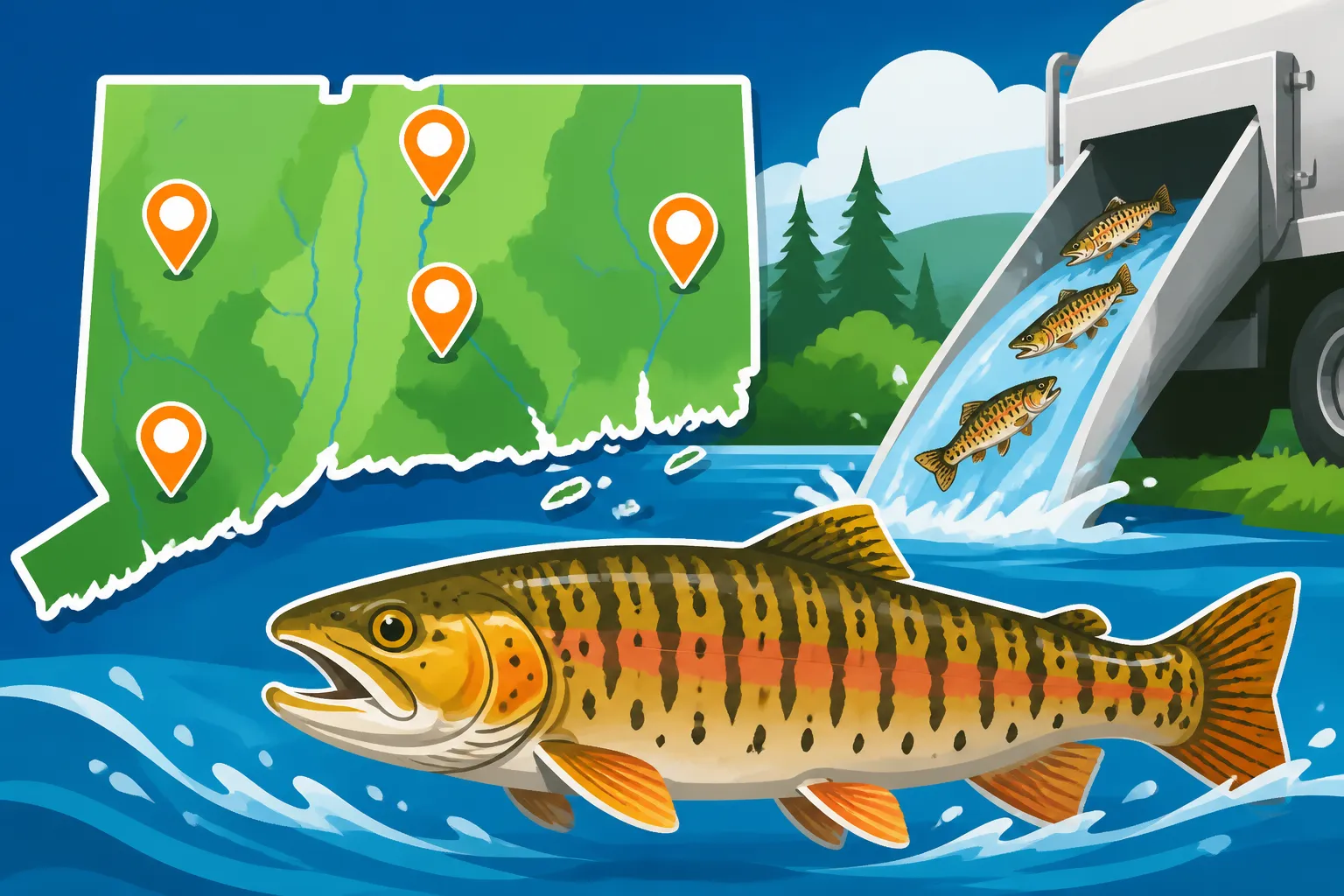
Imagine the intricate patterns of a tiger, but on a fish. That's essentially what you get with a tiger trout. Their bodies are typically a dark, mottled olive green to brownish color, adorned with an intricate, maze-like pattern of dark vermiculations (worm-like markings) that contrast sharply with their lighter background. This striking pattern is why they're named after tigers, and it makes them instantly recognizable among other trout species. They also tend to have a more streamlined, elongated body shape compared to some of their relatives.
Beyond their looks, tiger trout are also unique because they are sterile. This means they cannot reproduce, which is a key factor in why they aren't found naturally and are only present where agencies like the CT DEEP decide to stock them. Their sterility makes them an ideal candidate for "trophy" stocking programs, as they won't outcompete native species for spawning grounds or introduce genetic anomalies. They grow at a good pace and can offer a challenging fight, making them a prize for any angler. If you're looking to learn more about identifying different species, our Trout Species Identification Guide for Connecticut is a great resource.
The Hybrid Nature: Brown Trout Meets Brook Trout
The scientific name for tiger trout is Salmo trutta x Salvelinus fontinalis, reflecting their parentage. Brown trout (Salmo trutta) are known for their hardiness and ability to thrive in a variety of conditions, often growing to substantial sizes. Brook trout (Salvelinus fontinalis), on the other hand, are Connecticut's only native trout species, celebrated for their vibrant colors and preference for cold, clean water. The combination of these two species results in a fish that often inherits the best traits of both – a robust nature, beautiful aesthetics, and an eagerness to strike a well-presented lure or fly. Because they are hybrids, these fish are laboratory-created, not something you'd find occurring widely in the wild.
The creation of these hybrids is a controlled process, typically done in hatcheries. This control allows for specific management goals, such as introducing a unique fishing experience without impacting wild populations. It's a testament to the blend of science and sport that fishery managers employ to enhance recreational opportunities.
Connecticut's Approach to Stocking Tiger Trout
Unlike rainbow or brown trout, which are stocked in vast numbers across countless waters, tiger trout stocking in Connecticut is a much more targeted and often limited affair. The CT DEEP typically views tiger trout as a specialty fish, destined for specific programs or particular water bodies where they can offer a unique angling experience.
Why Connecticut Stocks Tiger Trout Selectively
The primary reason for selective stocking of tiger trout boils down to their purpose: they are often intended to be a "trophy" fish or to provide a novel angling opportunity. They aren't stocked for general consumption or to bolster overall trout populations in the same way rainbows and browns are. Instead, they add an exciting element for anglers who appreciate their rarity and distinctive appearance. Since they are sterile, they also don't contribute to the natural breeding cycle, so the investment in stocking them is purely for recreational value.
The DEEP might stock them in waters that already support healthy populations of other trout species, adding variety without disrupting the ecosystem. Their unique genetics also mean they might exhibit slightly different feeding behaviors or preferences than other trout, presenting a new challenge for seasoned anglers. This approach allows the DEEP to manage fishing pressure and provide a special reward for those who put in the effort to find them. For a broader look at stocking efforts, check out Connecticut Trout Season and Stocking Rules.
The Role in "Trophy" Programs
Tiger trout often play a significant role in what are sometimes referred to as "trophy" or "bonus" stocking programs. These programs are designed to offer anglers the chance to catch larger, more unusual fish. While not every stocked tiger trout will be a monster, they generally grow well and provide a substantial fight. This can draw anglers to specific waters, spreading out fishing pressure and giving a boost to local angling communities.
These programs also create a sense of anticipation and excitement. Anglers might actively seek out waters known for receiving tiger trout, adding another layer to their fishing adventures. It's about more than just catching fish; it's about the thrill of the chase and the possibility of landing something truly special. Pairing the right gear, like a medium-action spinning rod with quality monofilament line, which you can often find readily on Amazon, can make all the difference when you hook into one of these spirited fish.
Specific Waters Where You Might Find Tiger Trout in Connecticut
Now for the crucial information: where can you actually try your luck for these beautiful fish? While the CT DEEP's stocking plans can vary year to year based on hatchery production and management goals, there are certain types of waters and specific locations that have historically received, or are good candidates for, tiger trout stockings. It's important to remember that these are often limited in number compared to other trout.
Historically Stocked Lakes and Ponds
Tiger trout are typically stocked in lakes and larger ponds, rather than smaller streams or rivers. This is partly due to their size potential and partly because these waters can often support a wider variety of trout species without excessive competition. While the DEEP doesn't always announce specific tiger trout drops publicly with great fanfare, persistent anglers often track their presence through catch reports and local fishing forums.
Some of the larger, colder lakes and ponds in Connecticut have been known to receive tiger trout. These are often waters that also support good populations of other coldwater species. For instance, deeper, clear lakes with ample forage and cold pockets of water are ideal. Always consult the most recent Connecticut Fishing Guide or the DEEP's website for the most current stocking information. It’s always best to be informed on the Reading the Connecticut Fishing Guide for up-to-date information.
- Lakes with Coldwater Habitat: Think of lakes that are deep enough to maintain cold water temperatures throughout the summer, providing thermal refuge for trout. These are prime candidates for any specialized trout stocking.
- Larger Pond Systems: Some of the state's bigger ponds, especially those managed for trout, might occasionally see tiger trout introduced. These are usually waters with good public access.
Rivers and Streams with Special Regulations
While less common than in lakes, certain rivers or sections of rivers that fall under special trout management regulations might occasionally receive tiger trout. These are typically waters where catch-and-release is encouraged, or where specific gear restrictions are in place to promote trophy fish opportunities.
- Trout Management Areas (TMAs): Connecticut has several Trout Management Areas (TMAs) that are managed intensively for trout fishing. While they primarily focus on brown, rainbow, and brook trout, the occasional tiger trout could be introduced to further enhance the fishing experience. These areas often have excellent water quality and forage. For more details, you can explore Connecticut Trout Management Area Regulations.
- Trophy Trout Streams: Similar to TMAs, some streams are specifically managed for trophy-sized trout. The goal here is to grow larger fish, and a tiger trout certainly fits that bill, offering an exciting and unique challenge. The Farmington River, for example, is renowned for its trout fishing and could theoretically be a candidate for special stockings, though official announcements would be the best source. For those interested in this legendary river, Connecticut Farmington River Trophy Trout Stream Rules offers further insights.
It's truly a "needle in a haystack" situation sometimes, but that's part of the thrill! Keep an eye on local fishing reports and the CT DEEP's annual stocking lists, as these are your best bet for finding specific locations.
Tactics for Targeting Tiger Trout
Catching a tiger trout is often a matter of luck and persistence, but employing the right techniques can certainly increase your odds. Since they are a hybrid of brown and brook trout, they tend to exhibit behaviors from both, making them adaptable but also keen on certain presentations.
Best Baits and Lures
Tiger trout are generally aggressive feeders, taking a wide variety of offerings. Their diet typically consists of smaller baitfish, insects, and crustaceans, so mimicking these natural food sources is key.
- Spinning Gear:
- Small Spinners: Classic trout spinners like Mepps Aglias or Panther Martins in silver, gold, or black-and-yellow patterns are often highly effective. The flash and vibration can trigger an aggressive strike.
- Small Spoons: Kastmasters or Little Cleos, especially in a silver or gold finish, can imitate baitfish well. Vary your retrieve speed to find what the fish prefer on any given day.
- Minnow Imitations: Small crankbaits or stickbaits, particularly those resembling shiners or small trout, can be deadly. Brands like Rapala or Berkley make excellent choices that you can often find on Amazon.
- Inline Weights and Worms/PowerBait: While less "sporting" for some, a classic nightcrawler or a dab of scented PowerBait fished on the bottom or under a bobber can definitely entice a bite, especially for recently stocked fish.
- Fly Fishing:
- Streamers: Since tiger trout often feed on baitfish, streamers are an excellent choice. Patterns like Woolly Buggers (olive, black, white), Clouser Minnows, or sculpin imitations can be very productive. Dead-drifting or stripping these aggressively can trigger a chase.
- Nymphs: When they're keying in on subsurface insects, various nymph patterns like Pheasant Tails, Hare's Ears, or Prince Nymphs can work well. European nymphing techniques might also prove effective in rivers.
- Dry Flies: While perhaps not their primary diet, if there's a good hatch happening, a tiger trout won't pass up an easy meal on the surface. Having a few standard dry fly patterns (Elk Hair Caddis, Adams) in your fly box is always a good idea. To expand your fly pattern knowledge, consider our guide on Fly Patterns for Connecticut Trout Streams.
Optimal Times and Locations
Understanding where and when to present your offerings can significantly boost your success.
- Dawn and Dusk: Like most trout, tiger trout are often most active during the low-light periods of dawn and dusk. This is when they are more likely to move into shallower water to feed, making them more accessible to anglers.
- Cloudy Days: Overcast conditions can extend these feeding windows throughout the day, as the reduced light makes them feel more secure.
- Structure and Cover: In lakes and ponds, look for underwater structure like submerged logs, rock piles, ledges, or weed lines. These areas provide ambush points and cover. In rivers, target deeper pools, current seams, and areas around large rocks or fallen trees. Tiger trout are opportunists and will hold in places where food is funneled to them.
- Temperature: Tiger trout, being a hybrid of cold-water species, prefer cool water. In the warmer months, they will retreat to deeper, colder sections of lakes or spring-fed areas in rivers. In spring and fall, they might be found throughout the water column as temperatures are more uniform. Knowing the Best water temperature for trout fishing in Connecticut can be incredibly helpful.
- Recently Stocked Waters: If you know a water body has recently received a stocking of tiger trout (or any trout, for that matter), focusing your efforts in the days immediately following the stocking can yield results. Freshly stocked fish are often less wary and more eager to strike.
Equipment Recommendations
Having the right gear will make your tiger trout pursuit more enjoyable and effective.
- Rods: A light to medium-light spinning rod (6-7 feet) with a fast action is ideal for casting small lures and detecting subtle bites. For fly fishing, a 4-6 weight rod (8.5-9 feet) is versatile enough for most situations.
- Reels: Pair your spinning rod with a reliable spinning reel in the 1000-2500 size range, spooled with 4-6 pound test monofilament or fluorocarbon line. For fly fishing, a matching reel with a weight-forward floating line will cover most scenarios. You can find excellent options for both rod and reel setups, even combo kits, on Amazon, often at various price points to suit any budget.
- Terminal Tackle: Always carry a selection of swivels, snaps, and appropriate leader material. Fluorocarbon leader (4-6 lb test) is a great choice as it's nearly invisible underwater and more abrasion-resistant.
- Net: A fine-mesh landing net is crucial for safely landing and releasing these beautiful fish, especially if you plan to photograph them.
Conserving Connecticut's Unique Fishery
Catching a tiger trout is a memorable experience, and being a responsible angler ensures that these opportunities continue for future generations. Practicing catch and release, especially for trophy-sized fish, helps maintain the special nature of these stockings.
Catch and Release Best Practices
Because tiger trout are often part of a "trophy" program and are stocked in limited numbers, practicing catch and release is highly encouraged. This allows other anglers to enjoy the thrill of catching these unique fish and helps spread out the angling experience.
- Minimize Handling: Try to keep the fish in the water as much as possible. If you must handle it, do so with wet hands and support its body horizontally. Avoid squeezing or touching its gills.
- De-hook Quickly: Use needle-nose pliers or a de-hooking tool to remove hooks quickly and cleanly. If the fish is deeply hooked, it may be best to cut the line as close to the hook as possible.
- Revive Carefully: If the fish seems stressed, hold it gently in the water, facing into the current, until it regains its strength and swims away on its own.
- Barbless Hooks: Consider using barbless hooks, or crimping down the barbs on your hooks. This makes de-hooking much easier and causes less damage to the fish.
By following these simple practices, you contribute to the health of Connecticut's fisheries and ensure that the rare and beautiful tiger trout can continue to grace our waters for years to come.
Disclaimer
This article is for general informational purposes only and does not constitute professional advice. Laws, prices and regulations vary by location and change over time. Consult a qualified professional for guidance on your specific situation.