Connecticut Fishing License Age Requirements
Figuring out who needs a fishing license in Connecticut and at what age can feel like trying to untangle a particularly stubborn fishing knot – confusing and a little frustrating! No one wants to head out to their favorite pond or piece of coastline only to realize they've overlooked a crucial regulation, especially when planning a fun day with family or friends. This comprehensive guide is here to clear up all the mystery around Connecticut fishing license age requirements, ensuring you and your loved ones can enjoy the state's incredible waters legally and stress-free.
The Foundation: Understanding Connecticut's General Age Rules
Connecticut, like many states, has specific age guidelines for who needs a fishing license. These rules are put in place not to make things difficult, but to help manage the state's fisheries, fund conservation efforts, and ensure sustainable fishing for generations to come. When you buy a license, you're directly contributing to stocking programs, habitat restoration, and enforcement that keeps our waters healthy and abundant.
The Standard: Anglers Age 16 and Over
The most fundamental rule in Connecticut is that if you are 16 years of age or older, you must possess a valid fishing license to fish in the state's public waters. This applies whether you're a resident or a non-resident. It doesn't matter if you're fishing in freshwater lakes, rivers, or streams, or if you're casting lines in the saltwater of Long Island Sound; once you hit that 16th birthday, a license becomes a requirement. It’s a common benchmark for many outdoor activities, marking the transition from a youth exemption to adult responsibility in the eyes of the law.
Think of it this way: your 16th birthday isn't just about getting a driver's permit; it's also about taking on the responsibility of contributing to the conservation of Connecticut's natural resources. If you're planning on being out on the water, be it a quiet morning on the Farmington River or a bustling pier along the coast, ensure you’ve squared away your paperwork. You can learn all about the general requirements in our detailed Connecticut Fishing License Guide for 2026.
Key Exemptions to the 16 and Over Rule
While 16 is the magic number, there are a few important exceptions to be aware of. These are designed to encourage participation or acknowledge specific circumstances, but it’s crucial to understand them fully to avoid any misunderstandings with environmental conservation police.
One significant exemption often involves private waters. If you're fishing in a private pond or lake that is entirely enclosed within private property and has no connection to public waters (meaning fish cannot move freely between them), a state fishing license may not be required. However, this is a tricky area, and it's always best to err on the side of caution and verify with the property owner or even the Connecticut Department of Energy and Environmental Protection (DEEP) if you're unsure. The vast majority of waters where people typically fish are considered public and therefore require a license for those aged 16 and up.
Another common scenario involves certain fishing events or designated "Free Fishing Days" that the DEEP occasionally sponsors. These days are specifically designed to allow anyone, regardless of age or license status, to try fishing without needing a permit. They're fantastic opportunities to introduce new anglers to the sport. However, these are typically limited events, and you can't rely on them for regular fishing throughout the year. For the full scoop on where and how to get your license, check out our guide on Where and How to Buy a Connecticut Fishing License.
Youth Anglers: Encouraging the Next Generation
Connecticut is truly dedicated to fostering a love for fishing in its younger residents and visitors. The state understands that encouraging children to get outdoors and connect with nature is vital, and removing barriers like license requirements is a great way to do that.
Children Under 16 Fish for Free
This is excellent news for families! Children under the age of 16 are not required to possess a fishing license in Connecticut. This means if you have a 10-year-old, a 12-year-old, or even a 15-year-old budding angler, they can cast their lines in any public water without needing to purchase a permit. This policy is a fantastic incentive for parents, guardians, and mentors to take kids fishing, making it an accessible and affordable family activity.
Imagine a beautiful Saturday morning at a local pond like Hopeville Pond or one of the many state park lakes; your child can try their hand at catching bluegill or bass, experiencing the thrill of a tug on the line without any administrative hurdles. For younger anglers just starting out, a basic spinning rod and reel combo, easily found on Amazon, makes a fantastic first setup, durable enough for learning and inexpensive enough for new adventures. This exemption removes a potential financial barrier, allowing families to focus on the joy of the experience. It also means that organized youth fishing derbies or educational programs often don't require individual licenses for the young participants, further simplifying access.
The Youth Fishing Passport Program
Beyond simply not requiring a license, Connecticut actively promotes youth fishing through programs like the Connecticut Youth Fishing Passport, Explained. While not a license in itself, this passport is a free, voluntary program designed for young anglers, particularly those between the ages of 12 and 15, who might be approaching the age where a license becomes necessary. It serves as an educational tool, introducing participants to various aspects of fishing, conservation, and ethical angling practices.
The passport often includes activities, challenges, and opportunities to earn badges or prizes, making fishing an engaging and rewarding experience. It's a stepping stone to understanding the full responsibilities of licensed anglers, encouraging good habits before they officially turn 16. Even though participants don't need a license for the program, it helps them learn about fish identification, regulations, and the importance of healthy aquatic ecosystems. This initiative helps bridge the gap between casual childhood fishing and becoming a responsible, licensed angler, ensuring a smooth transition when that 16th birthday arrives.
Senior Anglers and Disabled Residents: Honoring and Supporting Our Community
Connecticut recognizes the valuable contributions of its senior citizens and provides support for residents with disabilities, including specific provisions related to fishing licenses. These programs are designed to make fishing more accessible and affordable for these important segments of our community.
Free Lifetime Licenses for Senior Residents
One of the most cherished programs in Connecticut is the Connecticut Senior Free Lifetime Fishing License. This incredible benefit allows resident anglers aged 65 and older to obtain a lifetime fishing license at no cost. This means once you reach 65 and apply, you're set for life—no more annual renewals, no more worrying about expiration dates. It’s a wonderful way to acknowledge a lifetime of contributions and allow seniors to continue enjoying the peaceful and exciting sport of fishing.
To qualify for this lifetime license, you must be a Connecticut resident and provide proof of age, usually a valid ID like a driver's license. The lifetime license typically covers both inland and marine fishing, making it an "All-Waters" equivalent, which simplifies things immensely for seniors who might enjoy fishing both freshwater and saltwater environments. This eliminates the annual cost and administrative hassle, leaving more time and resources for what truly matters: getting out on the water. Many senior anglers find great joy in sharing their knowledge and passion with grandchildren, making these free licenses even more impactful for family outings.
Accommodations for Disabled Residents and Veterans
Connecticut also extends license fee exemptions and special considerations to residents with disabilities and qualifying veterans. These programs aim to remove barriers and ensure that everyone has the opportunity to experience the therapeutic and recreational benefits of fishing. Detailed information can be found regarding a Connecticut Fishing License for Disabled Residents or even specific provisions for Connecticut fishing license for disabled veterans.
Eligibility for these discounted or free licenses typically requires official documentation proving a qualifying disability or veteran status. The application process usually involves submitting specific forms to the DEEP. These licenses are a testament to Connecticut's commitment to inclusivity, understanding that fishing can be a vital part of rehabilitation, recreation, and overall well-being for individuals facing unique challenges. It’s important for eligible individuals to familiarize themselves with the specific criteria and application procedures, as they can vary based on the nature of the disability or veteran status. Such support ensures that more people can enjoy the natural beauty and angling opportunities Connecticut offers.
Diving Deeper: License Types and Non-Resident Rules
Understanding the general age requirements is one thing, but knowing which type of license you need once you hit 16, or how non-resident rules apply, adds another layer of important detail. Connecticut's waters offer diverse fishing experiences, from tranquil trout streams to the bustling Long Island Sound, and the licenses reflect this variety.
Inland, Marine, and All-Waters Options for Different Ages
For those aged 16 and over, whether resident or non-resident, Connecticut offers different license types to match your fishing preferences. You might need an Inland Fishing License if you only plan to fish freshwater bodies like the Connecticut River or Candlewood Lake. Conversely, if your passion lies in saltwater fishing, chasing striped bass or fluke in Long Island Sound, a Marine Waters Fishing License is your go-to. For the angler who loves both, the All-Waters Fishing License provides comprehensive coverage, allowing you to seamlessly transition between freshwater and saltwater fishing without needing two separate permits. Our guide on Connecticut Inland vs Marine vs All-Waters License, Explained breaks down the nuances of each.
It's important to remember that for children under 16, these distinctions don't apply, as they don't require any license. However, for a 16-year-old planning their first purchase, understanding these options is crucial to ensure they're legally covered for their chosen fishing spots. Additionally, certain species, like trout and salmon, often require an additional stamp on top of your base fishing license, regardless of your age (as long as you're 16+). This Connecticut Trout and Salmon Stamp, Explained is a separate fee that helps fund the state's robust trout stocking programs. Even senior residents with a free lifetime license typically need to purchase this stamp if they intend to fish for or keep trout and salmon.
Non-Resident Age Rules and Specific Licenses
For anglers visiting Connecticut from other states, the age requirements for needing a license remain the same: 16 years and older. However, the costs for non-resident licenses are generally higher than for residents. Connecticut understands that visitors may only be in the state for a short period, so they offer flexible options. Non-residents aged 16 and over can choose from various licenses, including annual inland, marine, or all-waters licenses, or opt for short-term permits.
For example, if you're just visiting for a long weekend and want to try your luck in a freshwater lake, a Connecticut nonresident 3-day inland fishing license cost might be perfect. Similarly, a 3-day marine license is available for those focusing on the Sound. These shorter-term options provide flexibility and can be more economical for transient anglers compared to purchasing a full annual license. Even if you're a non-resident, the under-16 exemption still applies, meaning your kids can fish for free. You can find a complete breakdown of costs in our article on Resident vs Nonresident Fishing License Costs in Connecticut. It's always a good idea for non-residents to plan ahead and secure their license before hitting the water, especially if they’re driving a distance to reach a prime fishing spot.
Practicalities: Carrying Your License and Consequences
Understanding the age requirements is the first step; knowing how to properly carry your license and the repercussions of not following the rules is equally important. No one wants a fun day on the water to end with a fine or a frustrating encounter with law enforcement.
Digital vs. Physical: Always Have Proof
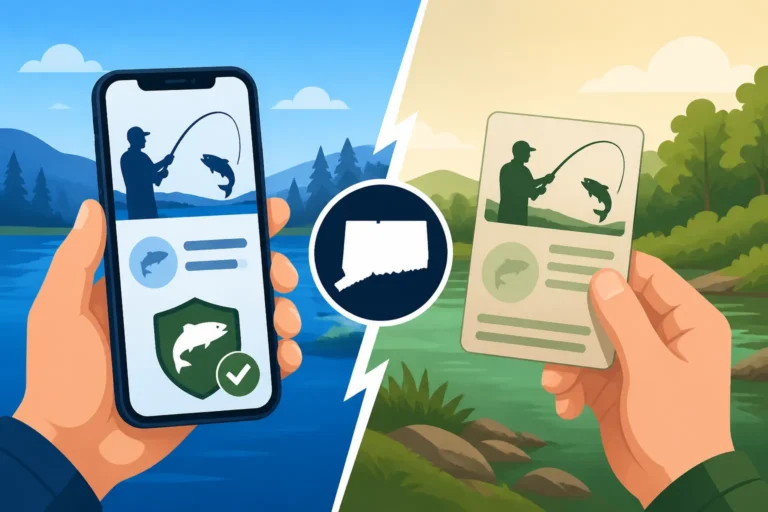
Once you've obtained your fishing license, whether it's for yourself or you're a senior with a lifetime permit, it is imperative that you carry proof of it while fishing. Connecticut allows anglers the flexibility to carry either a physical copy of their license (printed paper) or display it digitally on a smartphone or other electronic device. This is a huge convenience, as we all know how easy it is to forget a piece of paper. However, the key is that it must be readily available for inspection by a DEEP Environmental Conservation Police Officer. Our guide on Printing or Carrying a Digital Fishing License in Connecticut goes into more detail.
If you're under 16 and don't require a license, it's still a good idea for accompanying adults to be aware of the rules. While your child doesn't need to present anything, an officer might ask their age if they appear close to the 16-year-old cutoff. For those who are 16 or older, ensure your license is easily accessible. You don't want to be fumbling through multiple layers of gear or trying to find a weak phone signal to pull up a digital copy. Being prepared shows respect for the regulations and ensures a smooth interaction. It’s also wise to keep your physical license in a waterproof wallet or a dedicated pocket in your fishing vest, like one you might find on Amazon, to protect it from the elements.
The Consequences of Fishing Without a License
Fishing without a required license in Connecticut is not just a minor oversight; it's a violation of state law, and there are penalties. The exact fines can vary depending on the specific circumstances, such as whether it's a first offense, but generally, you're looking at a fine that significantly outweighs the cost of a license. Beyond the monetary penalty, there could be other consequences, such as confiscation of fishing gear or even, in more severe or repeated cases, a loss of fishing privileges. We cover this in depth in our article on Fishing Without a License in Connecticut: Penalties.
It's critical for every angler aged 16 and above to understand that this is a serious matter. Environmental Conservation Police Officers regularly patrol Connecticut's waters, from remote trout streams to popular fishing piers, to ensure compliance. Their job is to protect the resource, and proper licensing is a cornerstone of that effort. Trying to "get away with it" is simply not worth the risk. It's far better to invest a small amount in a license, contribute to conservation, and enjoy your time on the water with complete peace of mind, knowing you're fishing legally and responsibly.
Planning Your Fishing Adventures with Age in Mind
When you're organizing a fishing trip in Connecticut, especially one involving multiple generations or a group with varying ages, keeping the license requirements straight can save you a lot of hassle and ensure everyone has a fantastic time.
Family Fishing Outings: Fun for All Ages
Connecticut offers countless opportunities for memorable family fishing trips. Whether you're heading to a stocked pond for some panfish action or trying your luck for bass in a larger lake, knowing who needs what can simplify your planning. For instance, if you have grandparents (aged 65+) who are residents, they might already have their free lifetime licenses. Parents and older teens (16+) will need their appropriate inland, marine, or all-waters licenses. And the best part? All the kids under 16 can join in the fun without needing a license at all!
This tiered system makes it incredibly accessible for multi-generational outings. Imagine a day at a spot like Gardner Lake or the public access points on the Naugatuck River, where everyone, from the youngest to the oldest, can participate in the joy of fishing. You might be teaching your grandchild how to bait a hook, while your parent is enjoying the tranquility of the water, and your spouse is casting for bigger game. Having good gear that suits everyone, from child-sized rods to sturdy tackle boxes (which you can easily find on Amazon), makes the experience even better. For ideas on where to go, check out our guide to Best Family-Friendly Fishing Spots in Connecticut. Always confirm local regulations for specific bodies of water, as some may have unique rules even within general state guidelines.
Group Trips and Charter Boat Considerations
If you're planning a group fishing trip, perhaps with friends who are all 16+, each person will need their own individual license. However, a common scenario where license requirements can differ slightly is when booking a fishing charter or guide. Many licensed charter captains operate under a "boat license" or a blanket permit that covers all paying passengers on board, meaning individual anglers might not need their own state fishing license while on that specific trip.
It is absolutely crucial to clarify this directly with your charter captain before you book or embark on your trip. Do not assume you're covered. Some charters require every individual angler aged 16+ to have their own state license, while others provide coverage as part of the charter fee. This is a vital question to ask to avoid any last-minute surprises or legal issues on the water. Reputable captains will be transparent about their requirements. For a deeper dive into this, consult our article on Do You Need Your Own Fishing License for a Connecticut Charter?. Regardless of individual license needs, all passengers must still adhere to Connecticut's fishing regulations regarding catch limits, size restrictions, and season dates for specific species.
Table: Connecticut Fishing License Age Requirements at a Glance
To make things a little easier to digest, here's a quick summary of the main age-related fishing license requirements in Connecticut:
| Age Group | Resident Status | License Required | Notes |
|---|---|---|---|
| Under 16 Years Old | Resident | No | Can fish all public waters (freshwater & saltwater) without a license. Encourage participation! |
| Under 16 Years Old | Non-Resident | No | Can fish all public waters (freshwater & saltwater) without a license. |
| 16 to 64 Years Old | Resident | Yes | Requires annual Inland, Marine, or All-Waters license. Trout/Salmon Stamp extra if targeting those species. |
| 16 to 64 Years Old | Non-Resident | Yes | Requires annual Inland, Marine, All-Waters, or 3-day short-term license. Trout/Salmon Stamp extra. |
| 65 Years Old and Over | Resident | No (Lifetime) | Free Lifetime license available for residents aged 65+. Typically covers All-Waters. Trout/Salmon Stamp extra. |
| 65 Years Old and Over | Non-Resident | Yes | Requires annual Inland, Marine, All-Waters, or 3-day short-term license. No free senior option for non-residents. |
| Disabled Residents | Resident | May be Free/Reduced | Specific eligibility required; often free or reduced cost. Trout/Salmon Stamp extra. |
| Qualifying Veterans | Resident | May be Free/Reduced | Specific eligibility required; often free or reduced cost. Trout/Salmon Stamp extra. |
| On a Charter Boat | Varies | Check with Captain | Some charters cover passengers under their master license; others require individual licenses. Always confirm! |
This table provides a concise overview, but always remember to dig into the details, especially for specific license types like the Connecticut Boating Laws for Anglers if you're operating a vessel, or additional stamps for trout and salmon.
Disclaimer
Please note that fishing regulations, including license requirements and age exemptions, can change. While every effort has been made to provide accurate and up-to-date information in this guide, it is always the angler's responsibility to consult the most current Connecticut Department of Energy and Environmental Protection (DEEP) fishing guide or website before heading out. This content is for informational purposes only and does not constitute legal advice.