Best tide to book a striped bass charter
Trying to figure out the absolute perfect moment to hit the water for striped bass can feel like cracking a secret code, especially when you're shelling out for a charter. It's not just about showing up with your gear; knowing when the fish are most likely to be active can make all the difference between a memorable day of bending rods and a slow, quiet trip. This guide will walk you through the ins and outs of tides, how they influence those magnificent striped bass, and how you can use this knowledge to book the best possible charter experience in Connecticut's waters.
Understanding Tides and Striped Bass Behavior
The ocean, and by extension, our saltwater estuaries and harbors in Connecticut, is a dynamic place, constantly ebbing and flowing with the rhythm of the tides. For us anglers, these tidal movements aren't just pretty scenery; they're the lifeblood of the fishing experience, especially when you're after a powerful species like striped bass. These fish are incredibly tuned into the underwater currents, and understanding this relationship is your first step to a successful outing.
The Basics of Tidal Flow and Current
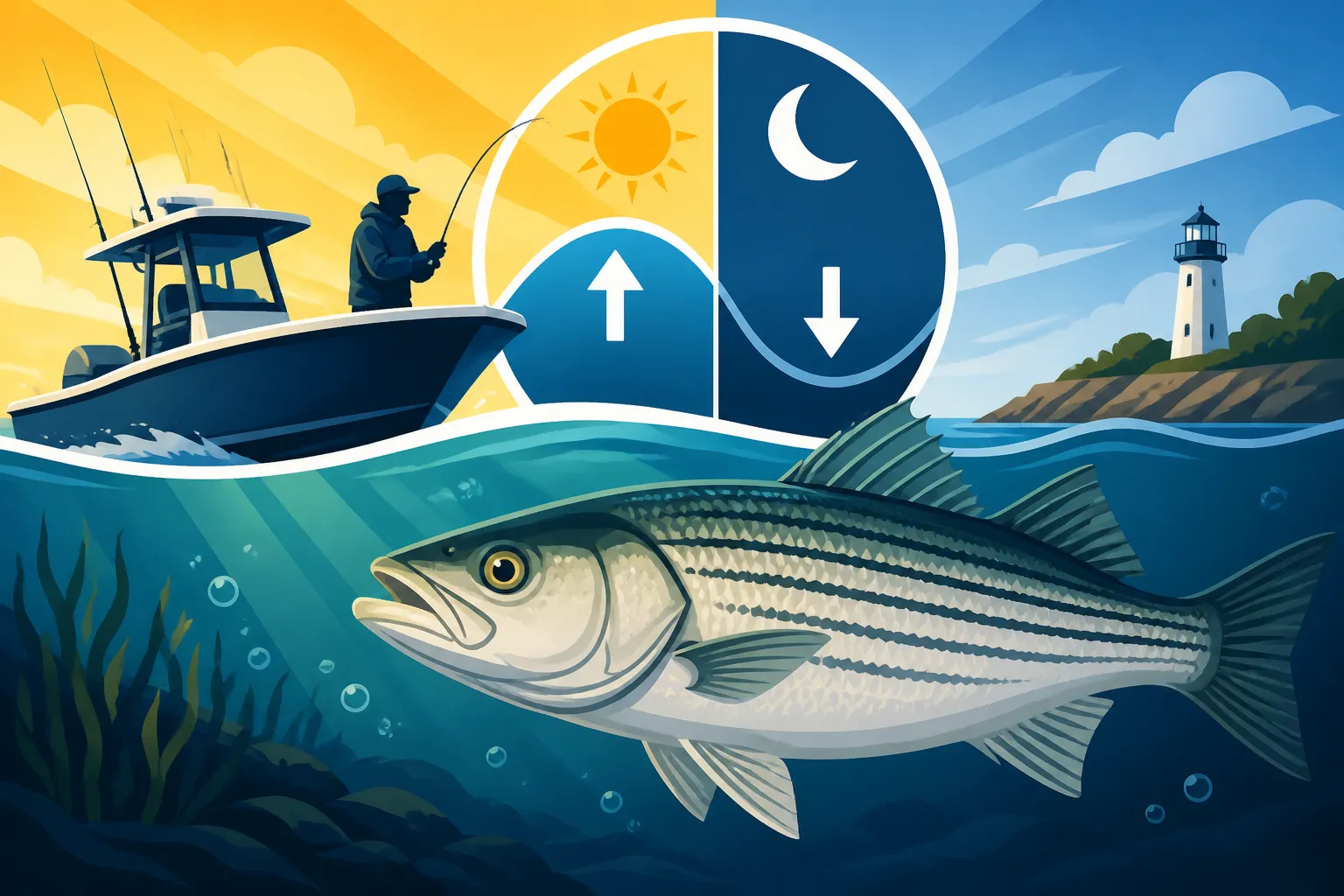
Let's break down what tides actually mean for the water around us. You've got your high tide, which is when the water reaches its highest level, pushing furthest up rivers and into coves. Conversely, low tide is when the water retreats to its lowest point, exposing mudflats and rocky shores. In between these two extremes, you have the "incoming" or "flood" tide, where the water is rushing in, and the "outgoing" or "ebb" tide, where the water is rushing back out towards the open sound.
These movements create currents, and it's these currents that really get the striped bass going. The speed and direction of the current change constantly. Near the peak of high tide or the bottom of low tide, there's a period often called "slack tide" where the water movement slows down significantly, sometimes almost pausing before reversing direction. This brief stillness is a critical detail that many anglers overlook or misunderstand.
How Striped Bass React to Tidal Changes
Striped bass are opportunistic predators, and they thrive in moving water because it does a few key things for them. First, moving water disorients baitfish and other prey, making them easier targets. Imagine trying to swim against a strong current—you'd be expending a lot of energy, and maybe not paying as much attention to predators lurking nearby. That's exactly what happens to baitfish like bunker or spearing. Second, currents carry food. Whether it's small crabs dislodged from the bottom or schools of baitfish being swept along, a good current brings the cafeteria to the striped bass.
These fish often position themselves strategically in currents, using structure like rocks, jetties, rips, or submerged humps as ambush points. They'll face into the current, waiting for an easy meal to be delivered to them, expending minimal energy while maximizing their feeding opportunities. Knowing this, it becomes clear why the right tide is so crucial. A strong current means active feeding for striped bass, while slack water can often mean a lull in the action as the fish disperse or simply become less aggressive. It's all about energy efficiency for these predators, and moving water makes hunting easier.
Identifying the "Best" Tides for Striped Bass Charters
When it comes to pinpointing the prime tide for striped bass, there's a general consensus among seasoned anglers and charter captains, but it's not a one-size-fits-all answer. Different locations and fishing techniques can sometimes favor different parts of the tidal cycle. However, understanding the most common and productive scenarios will significantly boost your chances of booking a successful trip.
The Power of Moving Water
For most striped bass fishing in Connecticut, especially in areas like Long Island Sound where tidal currents are pronounced, moving water is king. This means the periods during the incoming (flood) and outgoing (ebb) tides are generally the most productive. These are the times when the currents are strongest, stirring up bait and encouraging striped bass to feed actively.
During an incoming tide, water pushes into estuaries, harbors, and along the coastline. This can bring in warmer, saltier water and often pushes schools of baitfish into more confined areas, making them easier for stripers to ambush. Many anglers love the incoming tide, especially around structures like jetties, rocky points, and river mouths, where stripers can set up to intercept prey. This is a fantastic time for chasing Striped Bass Fishing in Long Island Sound.
The outgoing tide also offers excellent opportunities. As the water rushes out, it can pull baitfish out of shallow bays and coves, concentrating them at choke points like harbor entrances, channels, and river mouths. This mass exodus of bait creates a feeding frenzy scenario for waiting striped bass. Many of the larger, resident stripers will use these currents to their advantage, particularly in deeper channels and rips. Often, the last two hours of the outgoing tide and the first two hours of the incoming tide are considered peak times, as the current is building or subsiding, offering that sweet spot of strong, but not overwhelming, flow.
The Bite During Slack Tide
Now, what about slack tide? This is often misunderstood. For many species, and in many situations, slack tide is considered a slow period. The currents die down, and with less water movement to disorient bait or carry food, striped bass can become less active and disperse. They might just hang out, conserving energy, rather than actively hunting.
However, calling slack tide "bad" is too simplistic. There are specific scenarios where slack tide can actually be quite good. If you're fishing very deep water or targeting striped bass that are holding tight to structure like shipwrecks or deep rock piles, slack tide can make it easier to present your lures or bait directly to them without fighting strong currents. For techniques like vertical jigging or bait fishing right on the bottom, the calm of slack tide can sometimes be an advantage. It gives the fish more time to inspect your offering. So, while typically not the best time for a charter focused on aggressive feeding, a knowledgeable captain might still find success during this period, especially in certain unique spots or when the fish are concentrated. It’s all about the captain’s local knowledge of striped bass habits.
Here's a quick overview of how different tidal phases typically impact striped bass fishing:
| Tidal Phase | Current Strength | Striped Bass Behavior | General Fishing Outlook | Best for (Typical) |
|---|---|---|---|---|
| Incoming Tide | Building to Strong | Active feeding, ambushing bait, moving into new areas | Excellent | Trolling, casting to structure, live-lining bait, working rips and channels |
| High Slack | Minimal | Less active, dispersed, resting | Fair to Slow | Deep-water vertical jigging, careful bait presentation on structure, specific spots |
| Outgoing Tide | Building to Strong | Active feeding, ambushing bait, moving out of areas | Excellent | Trolling, casting to structure, live-lining bait, working river mouths and egress points |
| Low Slack | Minimal | Less active, dispersed, resting | Fair to Slow | Deep-water vertical jigging, careful bait presentation on structure, specific spots |
Factors Beyond Just the Tide
While understanding the tides is undeniably crucial, it's just one piece of the puzzle when planning your striped bass charter. The ocean ecosystem is incredibly complex, and several other environmental factors can significantly influence how those stripers feed, regardless of what the tide chart says. A great captain, like those you can find on platforms such as FishingBooker, will consider all these elements.
Time of Day, Moon Phase, and Weather
Think about your own hunger levels throughout the day; fish are no different, though their appetites are more tied to survival. The time of day plays a massive role. Dawn and dusk are universally recognized as prime feeding times for striped bass. The low light conditions give them an advantage over their prey, making them feel safer to move into shallower water or more exposed areas to hunt. Even during a less-than-ideal tide, fishing at first light or last light can often turn a slow day into a productive one. Many Night Fishing Charters for Striped Bass specifically target the dark hours for this very reason, as big stripers often become more aggressive under the cover of darkness.
The moon phase directly affects the strength of the tides. Full and new moons create "spring tides" with stronger tidal pulls and more extreme highs and lows. Quarter moons result in "neap tides" with weaker tidal currents. Stronger currents often mean more active feeding, so booking around a full or new moon can sometimes align with more aggressive fish. Of course, this isn't always a guarantee, but it's a factor experienced captains consider.
Weather conditions are also incredibly impactful. A sudden cold front can put stripers into a funk, making them lethargic. Conversely, a warm, overcast day with a light chop can be ideal. Rain can sometimes stir up bait and create runoff, drawing stripers to river mouths. Wind direction and strength can also affect water clarity, bait movement, and even how comfortable you'll be on the boat. A choppy sea might make fishing challenging, but it can also break up the water's surface, providing cover for stripers. It's a delicate balance, and a good captain will always have a plan for whatever the weather throws their way.
The Captain's Local Knowledge
This is perhaps the single most important "factor beyond the tide" that you can't overlook. A top-notch charter captain isn't just a boat driver; they are an oracle of local fishing wisdom. They spend hundreds of days a year on the water, observing patterns, tracking fish movements, and understanding how all these variables—tides, moon, weather, water temperature, bait presence—interact in specific locations.
For example, a captain might know a particular rip that only fishes well on the last two hours of an outgoing tide, or a specific reef that holds big stripers during the slack period of a neap tide because baitfish congregate there. They've learned these nuances through years of trial and error. This kind of nuanced understanding of Where to Find Striped Bass in Long Island Sound is priceless. When you book a charter, you're not just paying for the boat and gear; you're investing in this invaluable expertise. Don't be afraid to ask about their tidal strategies when you're inquiring about a trip, whether you're contacting them directly or through a service like FishingBooker. Their insights will far outweigh anything a general tide chart can tell you.
Booking Your Charter with Tides in Mind
So, you're ready to chase those Connecticut striped bass, and you've got a grasp on how tides play into the whole equation. Now, let's talk practical steps for booking your charter to maximize your chances of success. It’s not just about picking a date; it’s about communicating your goals and letting the experts guide you.
Communicating with Your Charter Captain
This is where the rubber meets the road. When you're looking to book a Best Fishing Charters in Connecticut, especially for a specific target like striped bass, open communication with the captain is key. Don't be shy about asking questions related to tides. You might start by saying something like, "I'm really hoping for some active striped bass fishing. What tidal phases do you typically find most productive for them in the areas you fish?"
A good captain will appreciate your informed interest and will be happy to explain their strategy. They might suggest specific dates or times that align with what they know to be the "best" tides for their particular fishing grounds and methods. For instance, if they specialize in live-lining bait in strong currents, they'll guide you toward dates with more pronounced tidal swings. If they have a secret spot that fishes best on a certain part of the tide, they'll factor that into their recommendations. Remember, they want you to have a successful trip just as much as you do! When exploring options on a platform like FishingBooker, many captains will list their target species and even mention preferred techniques, which can give you clues about their tidal preferences before you even pick up the phone.
Using Online Resources for Planning
While your captain's knowledge is paramount, it never hurts to do a little homework yourself. There are numerous online resources that provide tide charts for various locations along the Connecticut coastline. These charts will give you the predicted times for high tide, low tide, and the slack periods in between. You can use these to get a general idea of the tidal flow for potential dates you're considering.
However, remember that these are predictions and localized conditions can vary. A tide chart for New London might be slightly different from one for Greenwich due to geography. Also, current strength can be influenced by factors like river outflow and wind. Use these resources as a guide to initiate the conversation with your captain, rather than as a definitive booking tool. Your captain can tell you how the published tide times translate into actual fishable currents in their specific spots. Many anglers find it helpful to look up the Connecticut Fishing Season Dates and Closures to ensure their desired species are open for harvest before diving into tide charts.
Ultimately, booking the "best tide" for a striped bass charter is a blend of understanding the science of tides, appreciating the art of fish behavior, and, most importantly, leveraging the deep expertise of your chosen charter captain. By asking the right questions and trusting their experience, you set yourself up for an incredible day on the water, chasing those magnificent striped bass.
Disclaimer
This article is for general informational purposes only and does not constitute professional advice. Laws, prices and regulations vary by location and change over time. Consult a qualified professional for guidance on your specific situation.