Panfish Species Identification Guide for Connecticut
It’s a common scenario: you’re out on a peaceful Connecticut lake or pond, reeling in a small, feisty fish, and you think to yourself, "Is this a sunfish? A perch? Are they all just 'panfish'?" The truth is, while many small, edible freshwater fish fall under the umbrella term "panfish," there are distinct species with unique characteristics. This guide will help you confidently identify the most common panfish you’re likely to encounter in Connecticut waters, understanding their traits, habitats, and how to tell them apart, ensuring you know exactly what’s on the end of your line.
Understanding What "Panfish" Truly Means
Before we dive into individual species, let's clarify what "panfish" actually refers to. It's not a scientific classification but rather a colloquial term used by anglers. Essentially, a panfish is any freshwater fish that is small enough to be cooked whole in a frying pan, typically ranging from a few ounces to a couple of pounds. These fish are generally abundant, relatively easy to catch, and offer fantastic table fare, making them a beloved target for anglers of all ages and skill levels, especially those looking for a relaxing day on the water or introducing children to fishing.
Why Panfish are So Popular in Connecticut
Panfish hold a special place in the hearts of Connecticut anglers for a multitude of reasons. For starters, they are incredibly accessible. You don't need fancy gear or a boat to catch them; a simple rod and reel, a bobber, and some worms are often all it takes. This low barrier to entry makes them perfect for beginners, and many lifelong anglers started their journey by catching their first bluegill or perch. Think about a lazy summer afternoon at a local pond, like Hopeville Pond or Mansfield Hollow Lake, with a bucket of worms and a simple setup – that’s the quintessential panfish experience. They're also widely distributed across the state, inhabiting nearly every freshwater body from small farm ponds to large lakes and slow-moving rivers.
Beyond accessibility, panfish are known for their feisty fight, especially for their size, and their delicious taste. There's nothing quite like a freshly caught panfish, lightly breaded and fried, after a successful day on the water. Their abundance also means that bag limits are often generous, allowing anglers to bring home a decent meal without worrying about overfishing. This combination of ease, availability, fighting spirit, and culinary appeal ensures panfish remain a staple target in Connecticut's freshwater fishing scene, making them a great option for a family-friendly fishing trip.
Differentiating Panfish from Other Small Freshwater Fish
While "panfish" is a broad term, it's important to distinguish these species from other small freshwater fish that might not fit the bill. For example, juvenile bass or trout, while small, aren't typically considered panfish in the same recreational sense, mainly because they are often gamefish targeted for larger sizes or protected by specific regulations. The key difference lies in their adult size, growth patterns, and typically, their culinary perception. Panfish species like sunfish, crappies, and perch reach their full adult size while still being "pan-sized."
Consider a small trout, for instance. While you might catch a pan-sized rainbow trout from a stocked stream, you wouldn't typically lump it into the "panfish" category because its species has the potential for much larger growth, and it's often managed differently under Connecticut Trout Limit and Possession Rules. Similarly, a small largemouth bass might fit in a pan, but anglers usually release them to grow into trophy fish. Panfish, on the other hand, are enjoyed at their common adult sizes. Understanding this distinction helps anglers appreciate each species for what it is and follow appropriate regulations.
The Ubiquitous Bluegill: Connecticut's Friendly Flipper
The bluegill (Lepomis macrochirus) is arguably the most recognizable and widespread panfish in Connecticut. If you've ever cast a line into a local pond or lake, chances are you've caught a bluegill. They are often the first fish many children catch, sparking a lifelong love for angling. These hardy little fish thrive in a variety of freshwater environments, from the shallow, weedy coves of Candlewood Lake to the slow-moving sections of the Connecticut River tributaries, and just about every small pond in between. Their eager bite and plentiful numbers make them an ideal target for a relaxed day of fishing.
Key Identification Features of Bluegill
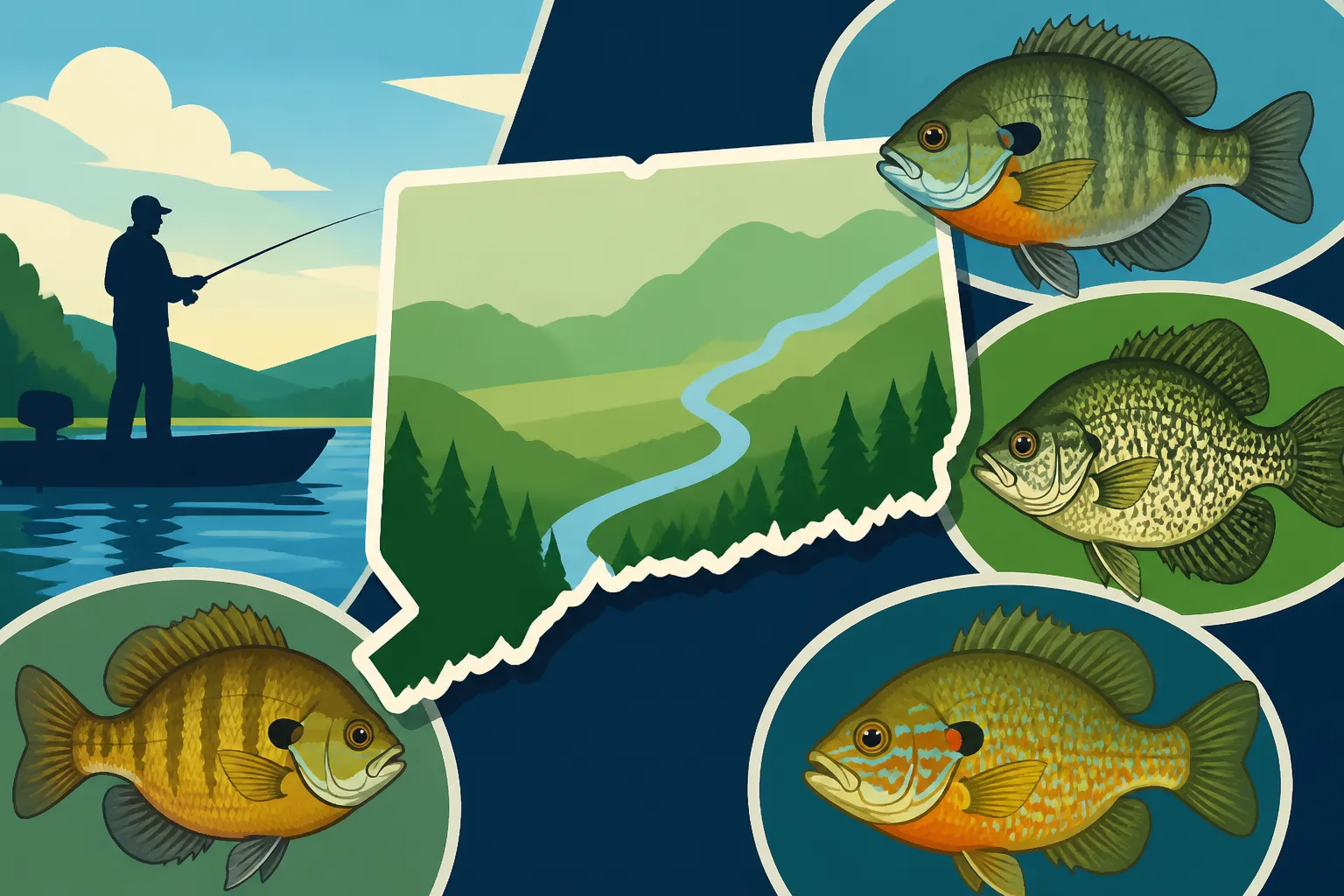
Bluegill are generally quite easy to identify once you know what to look for. Their body is typically deep and compressed, giving them a "plate-like" appearance from the side. The most distinctive feature is a small, dark, and flexible flap at the back edge of their gill cover, which is entirely black or dark blue and lacks any red or orange trim. This "ear flap" is often the easiest way to differentiate them from other sunfish. Their color can vary greatly depending on habitat and diet, ranging from olive-green or dark brown on the back to lighter, yellowish flanks with distinct vertical bars (though these bars can fade).
Many bluegill also display a prominent dark spot at the base of their dorsal fin. The belly usually ranges from white to yellow, and during spawning season, male bluegill can develop vibrant orange or reddish-orange chests, making them particularly striking. Their mouths are relatively small, which is why tiny hooks and baits are often most effective. You'll notice their fins are usually dark, sometimes with a bluish tint, and their pectoral fins are pointed and quite long, often extending past their eye when pressed forward. This combination of features, particularly the solid black ear flap, is your tell-tale sign of a bluegill.
Bluegill Habitat, Diet, and Behavior
Bluegill are truly adaptable fish, thriving in warm, shallow, and vegetated waters. They love areas with submerged weeds, lily pads, fallen trees, and docks—anything that provides cover from predators and ambush points for prey. In larger bodies of water, they often school up around these structures. During the spring and early summer, you'll find them in very shallow water for spawning, creating circular "beds" on hard bottoms, which are easily visible if you're quietly observing from shore. This is a prime time to target them, as they are aggressive in defending their nests.
Their diet is quite varied, making them receptive to a wide range of baits. Bluegill are primarily insectivores, feasting on aquatic insects, insect larvae, small crustaceans, and even tiny snails. They're also not above nibbling on plant matter or fish eggs. Because of their diverse diet and small mouths, they respond well to small live baits like worms, grubs, and crickets. Artificial offerings like tiny jigs, flies, and spinners also work wonders. If you're looking for a reliable setup, a light action rod, 2-4 pound test line, and a small hook (#8 or #10) with a piece of a nightcrawler is an Amazon classic for bluegill, promising consistent action. They are typically most active during the day, especially in the mornings and evenings.
Pumpkinseed Sunfish: A Jewel of the Shallowness
Another common and beautifully colored panfish you’ll encounter in Connecticut is the pumpkinseed sunfish (Lepomis gibbosus). Often found alongside bluegill, these fish are truly a sight to behold with their intricate patterns and vibrant hues, making them a favorite for both casual and dedicated anglers who appreciate their aesthetic appeal. Like bluegill, they are quite widespread across the state, inhabiting many of the same lakes, ponds, and slow-moving river sections.
Distinguishing Pumpkinseed Sunfish Features
The pumpkinseed sunfish is often confused with the bluegill, but a few key characteristics set it apart. The most striking difference is the vivid splash of red or orange along the trailing edge of their gill flap (the "ear flap"). Unlike the bluegill's solid black flap, the pumpkinseed's flap will almost always have this distinct colored spot, often rimmed with white or yellow. Their body is also deep and compressed, but their overall coloration tends to be more ornate and iridescent.
Look for a mosaic of speckled patterns, often with iridescent greens, blues, oranges, and yellows across their olive-to-brown back and sides. They usually have wavy, broken lines or dots of iridescent blue and green on their cheeks and gill covers. The pumpkinseed's mouth is even smaller than a bluegill's, reinforcing the need for tiny baits and hooks. Their pectoral fins are also pointed, but generally not quite as long as those of a bluegill. When you catch one, take a moment to admire its intricate beauty – they truly live up to their "jewel of the shallowness" nickname.
Pumpkinseed Habitat and Preferred Baits
Pumpkinseeds share many habitat preferences with bluegill, favoring shallow, warm, and vegetated waters. You'll find them lurking among weed beds, around submerged brush, and near docks, especially in the calmer coves of lakes and ponds. They are often found in slightly shallower water than bluegill, and sometimes in waters with a bit more clarity. Areas with a mix of sandy patches and emergent vegetation, like those found in smaller recreational ponds, are prime pumpkinseed territory.
Their diet consists mainly of aquatic insects, small crustaceans, and snails. They are particularly adept at crushing snail shells with their pharyngeal teeth. This dietary preference means that tiny baits like small worms, mealworms, grubs, and even pieces of corn or bread can be very effective. Fly anglers will also find success with small nymphs and wet flies. Because of their smaller mouths, downsizing your hooks to a #10 or #12 can significantly increase your hook-up ratio. A light ultralight rod and reel combo, spooled with 2-pound test, is a perfect setup for feeling those subtle pumpkinseed bites. For specific insights into catching these little fighters, check out our guide on Best Techniques for Panfish in Connecticut.
Crappies: The Delectable Duo (Black and White)
When anglers talk about panfish, crappies are almost always at the top of the list, and for good reason. Connecticut is home to two distinct species: the black crappie (Pomoxis nigromaculatus) and the white crappie (Pomoxis annularis). Both are highly sought after for their delicious, flaky white meat and their tendency to school in large numbers, offering exciting fishing opportunities. While similar in many ways, understanding their subtle differences can help you become a more effective crappie angler.
Black Crappie: Speckled Beauty
The black crappie is generally the more common of the two species in Connecticut. They have a deep, compressed body, similar to sunfish, but are typically larger. Their most distinguishing feature is the irregular pattern of black spots and blotches distributed over their silvery-white to gold-green body. These spots tend to be more random and scattered, almost like a speckled appearance, rather than forming distinct bars. Another key identifier is the number of dorsal spines: black crappie almost always have 7 or 8 dorsal spines.
Black crappie also tend to have a slightly concave or "dished-in" profile from their forehead to their dorsal fin, giving their head a somewhat "pointy" appearance. Their mouth is relatively large compared to sunfish, extending back to below or past the middle of their eye. They can grow quite large for a panfish, often exceeding a pound, making them a prized catch. Their dorsal and anal fins are nearly identical in shape and size, which is a common characteristic of crappies.
White Crappie: Barred Bargain
White crappie, while present in Connecticut, are generally less common or found in more specific locations than their black crappie cousins. They share the deep, compressed body shape. The primary identification feature for white crappie is the presence of 5 to 7 distinct vertical bars on their silvery-white sides. These bars are usually more organized and less blotchy than the black crappie's spots. The number of dorsal spines is another key differentiator: white crappie typically have 6 dorsal spines.
Their body profile is also a bit different, often appearing less "dished-in" than the black crappie, with a straighter slope from the forehead to the dorsal fin. Like the black crappie, their mouth is large. White crappie can also grow to impressive sizes, often reaching or exceeding a pound, offering a similar fantastic fight and table quality. Knowing these subtle differences in spotting patterns and spine count can help you accurately identify which crappie species you've landed.
Crappie Habitat, Feeding, and Fishing Tactics
Both black and white crappie prefer clear, deep waters with plenty of submerged structure. They gravitate towards brush piles, fallen trees, docks, bridge pilings, and weed lines in lakes and slow-moving rivers. They are often found suspended in the water column rather than hugging the bottom like sunfish. During the spawn (late spring/early summer), they move into shallower waters, often in protected coves, similar to sunfish, but will quickly retreat to deeper cover once done. For places to target these, many anglers find success in larger lakes like Lake Zoar or Candlewood Lake.
Crappies are primarily piscivores, meaning they feed on smaller fish, but they also eat large insects and crustaceans. This predatory nature makes them susceptible to minnows, small jigs, and small crankbaits. When targeting crappies, look for schools using a fish finder or by slowly working areas with cover. Tiny jigs (1/32 to 1/8 ounce) tipped with a small plastic grub or a live minnow are incredibly effective. A sensitive ultralight rod is crucial for detecting their often subtle bites. Many crappie anglers employ a vertical jigging technique or suspend baits under a bobber around structure. Checking out the fishing aisles on Amazon for crappie-specific jigs and lures can give you a good starting point for your tackle box.
Yellow Perch: The Striped Delicacy
The yellow perch (Perca flavescens) is another highly esteemed panfish in Connecticut, particularly valued for its firm, delicious flesh. Known for their distinctive appearance and schooling behavior, these fish are a favorite target for ice anglers, but they provide great action year-round. They are widely distributed across the state, inhabiting many lakes, ponds, and larger rivers.
Yellow Perch Identification Markings
Yellow perch are perhaps one of the easiest panfish to identify due to their very distinct and consistent markings. Their body is elongated and somewhat oval-shaped, rather than the deep, compressed body of sunfish or crappies. The most prominent feature is their vibrant golden-yellow to brassy-green coloration on their sides, interrupted by 6 to 8 dark, vertical bars that extend from their back to their belly. These bars are typically well-defined and quite noticeable.
Their dorsal fins are separate, with the first being spiny and the second soft-rayed. The lower fins – pelvic, anal, and caudal (tail) – often have a distinctive reddish or orange tint, which becomes more pronounced during spawning season. Yellow perch have a moderately sized mouth and two dorsal fins, which is a key characteristic separating them from other panfish. The body is covered in small, rough scales, giving them a somewhat "toothy" feel when you handle them. These combined features make them unmistakable.
Yellow Perch Habitat and Seasonal Behavior
Yellow perch are versatile and can be found in a wide range of freshwater habitats, including large lakes, medium-sized ponds, and slow-moving rivers. They prefer clear to moderately turbid waters with a soft bottom and some aquatic vegetation or structure, but they are also quite comfortable in open water. Unlike sunfish that often hug dense cover, perch will cruise in schools, often at various depths, looking for food.
Their behavior is highly seasonal. In the warmer months, you might find them in shallower to mid-depths, especially around weed lines and drop-offs. As waters cool in the fall, they tend to move deeper, schooling up in preparation for winter. This schooling behavior makes them a prime target for ice fishing, where anglers often catch them one after another once a school is located. In spring, they congregate in shallower areas to spawn over submerged vegetation or brush. Their predatory nature means they're constantly on the move, searching for prey.
Effective Baits and Techniques for Yellow Perch
Yellow perch are opportunistic feeders, preying on insects, small crustaceans, snails, and especially smaller fish and fish eggs. This diverse diet means they can be caught using a variety of baits and techniques. Live baits like small minnows, worms (especially red worms or pieces of nightcrawlers), and grubs are incredibly effective. Small jigs tipped with plastic grubs, maggots, or wax worms also produce excellent results.
During open water season, drifting with a bait rig or casting small spinners and spoons can be productive. For ice fishing, small jigging spoons or tungsten jigs tipped with a grub or a minnow head are the go-to choices. When you find one perch, you're likely to find many more, so staying put and working the area thoroughly is often rewarded. A light action rod is perfect for feeling the subtle "tap-tap" of a perch bite, and using light line (2-4 lb test) will increase your success. Our guide Best Techniques for Ice Fishing Pike might offer some relevant tips for winter fishing in general, even though perch are a different species.
Other Common Connecticut Panfish You Might Encounter
While bluegill, pumpkinseed, crappies, and yellow perch are the stars of the panfish world in Connecticut, there are a few other species that anglers might encounter that fit the "panfish" description. These fish also offer fun angling opportunities and contribute to the rich biodiversity of our state's freshwater ecosystems.
Rock Bass: The Red-Eyed Renegade
The rock bass (Ambloplites rupestris) is a fascinating, though perhaps less common, panfish in many Connecticut waters. These fish are known for their distinctive red eyes and robust, olive-brown to bronze bodies, often adorned with dark spots arranged in rows. They have a more elongated body shape than sunfish, but are thicker-bodied than a yellow perch. A key identification feature is the presence of 10 to 12 dorsal spines, which is more than most other sunfish. Their mouth is also larger than a bluegill or pumpkinseed.
Rock bass, true to their name, absolutely love rocky habitats. You'll find them in lakes, rivers, and large streams, always near rocky bottom structures, rip-rap, boulders, or submerged timber. They prefer clear, cool water. They are aggressive predators, feeding on insects, crustaceans, and small fish. They're often caught on small spinners, jigs, and live baits like worms or minnows, especially when fishing around their preferred rocky cover. If you're exploring Best Fishing Rivers in Connecticut with rocky sections, you might just stumble upon these feisty little fighters.
White Perch: A Salty-Freshwater Hybrid
The white perch (Morone americana) is a unique panfish in Connecticut because it can thrive in both freshwater and brackish (partially salty) environments, and even fully saltwater. In freshwater lakes and ponds, they are a popular target. Unlike yellow perch with their distinct vertical bars, white perch have a sleeker, silvery body that is often described as iridescent, sometimes with a faint olive-green or grayish tint on the back fading to silver on the sides and belly. They lack the prominent bars of the yellow perch.
White perch have two dorsal fins, but unlike yellow perch, the first and second dorsal fins are often connected or very close together. Their body is deep but compressed, almost resembling a small striped bass (they are, in fact, cousins to striped bass). They have a relatively large mouth. You'll often find them schooling in open water or around structure in larger lakes like Gardner Lake, or in the brackish estuaries of rivers flowing into Long Island Sound Fishing Guide. They feed on small fish, crustaceans, and aquatic insects. They respond well to small jigs, sabiki rigs (in saltwater/brackish), and live baits like small worms or pieces of clam. They are excellent eating, with firm, white flesh.
Comparing Connecticut's Common Panfish Species
To help solidify your identification skills, here’s a quick comparison table of the most common panfish species found in Connecticut. Keep in mind that coloration can vary, but the structural and marking details are usually consistent.
| Feature | Bluegill | Pumpkinseed Sunfish | Black Crappie | White Crappie | Yellow Perch | Rock Bass | White Perch |
|---|---|---|---|---|---|---|---|
| Body Shape | Deep, compressed | Deep, compressed | Deep, compressed | Deep, compressed | Elongated, oval | Robust, elongated | Deep, compressed, sleek |
| Gill Flap (Ear) | Solid black flap, no red/orange rim | Black flap with a prominent red/orange spot | No distinct colored flap | No distinct colored flap | No distinct colored flap | No distinct colored flap | No distinct colored flap |
| Coloration | Olive/brown back, yellowish sides, faint vertical bars | Iridescent greens/blues, mottled patterns, wavy lines on face | Silvery-white to gold-green with irregular black spots | Silvery-white with 5-7 vertical bars | Golden-yellow to brassy-green with 6-8 dark vertical bars | Olive-brown/bronze with dark spots in rows | Silvery, sometimes faint olive/gray on back |
| Dorsal Spines | 10-12 | 10-12 | 7-8 | 6 | Two separate fins (spiny & soft) | 10-12 | Two dorsal fins (often connected) |
| Mouth Size | Small | Very Small | Large | Large | Moderate | Large | Large |
| Key ID Tip | Solid black "ear" | Red/orange spot on "ear" | Irregular spots, 7-8 dorsal spines | Vertical bars, 6 dorsal spines | Vertical bars, two separate dorsal fins | Red eyes, rocky habitat, robust build | Silvery, no bars, often in brackish/estuaries |
The Importance of Proper Identification and Regulations
While panfish are generally abundant and have fewer stringent regulations compared to prized game fish like trout or bass, knowing how to identify them accurately is still incredibly important. This isn't just about satisfying curiosity; it's about adhering to fishing regulations and understanding the ecosystems you're enjoying. Different species might have different daily creel limits, size restrictions, or even specific seasonal rules, although panfish generally have quite liberal rules.
Always consult the official Reading the Connecticut Fishing Guide or the Connecticut Department of Energy and Environmental Protection (CT DEEP) website for the most current regulations. Misidentifying a fish could lead to unintentional violations. For instance, while you might catch dozens of bluegill, you wouldn't want to accidentally keep a small bass if it doesn't meet the legal size limits. Understanding the species also helps you appreciate the local environment and the role each fish plays. So, the next time you feel a tug on your line, take a moment to really look at your catch. You might be surprised by the beautiful diversity of panfish swimming in Connecticut's waters!
Disclaimer
This article is for general informational purposes only and does not constitute professional advice. Laws, prices and regulations vary by location and change over time. Consult a qualified professional for guidance on your specific situation.