Common Carp in Connecticut Waters
It's easy to dismiss certain fish species, especially those often labeled as "rough fish" or even "trash fish" by anglers focused on trout or bass. Common carp, with their broad bodies and bottom-feeding habits, often get a bad rap in Connecticut. But if you're overlooking these powerful, abundant fish, you're truly missing out on some incredible action right in your backyard. This guide is here to shed light on common carp in Connecticut waters, from understanding their biology and behavior to mastering the techniques needed to catch them, proving they're worthy adversaries that offer thrilling angling experiences.
The Truth About Common Carp in Connecticut
For many years, common carp have been viewed with a certain disdain in recreational fishing circles across Connecticut. This perception, unfortunately, has kept countless anglers from discovering what a truly exciting and challenging species they can be. It's time to re-evaluate our understanding of these fascinating fish.
Dispelling Myths: Are They Really "Trash Fish"?
Let's address the elephant in the room: the "trash fish" label. This moniker is largely unfair and outdated. Historically, carp were introduced for food and sport, and in many cultures, they are highly revered. The idea that they are undesirable often stems from misunderstandings about their ecological impact or a preference for more "glamorous" game fish. However, any angler who has hooked into a large common carp can attest to their incredible fighting power. These fish don't jump like a bass or make screaming runs like a striped bass, but they pull with a relentless, heavy force that can test your tackle and your stamina. Imagine feeling like you've hooked a stubborn log, only for it to slowly, powerfully start moving, stripping line against a tight drag. That's the carp experience. They are big, strong, and plentiful, offering a fantastic opportunity for anglers looking for a robust challenge, especially during times when other species might be less active.
Where Did Common Carp Come From?
The common carp is not native to North America, including Connecticut. Their journey to our local waters is a tale of deliberate introduction. Originating from Asia and Eastern Europe, these fish were intentionally brought to the United States in the mid-19th century, primarily by the U.S. Fish Commission. The idea was that they would become a valuable food source and sport fish, especially for burgeoning immigrant communities. They were incredibly hardy, grew quickly, and could thrive in a wide range of water conditions, making them seem like the perfect candidate for aquaculture and stocking. By the late 1800s, carp had been widely distributed across the country, often via railway car, finding their way into nearly every major river system and countless lakes and ponds. While their popularity as a food fish waned in subsequent decades in the U.S., their adaptability meant they quickly established self-sustaining populations, including throughout Connecticut's diverse waterways, where they remain a prominent species today.
The Carp's Role in Connecticut's Ecosystem
Given their non-native status, it's natural to wonder about the common carp's impact on Connecticut's aquatic ecosystems. Carp are notorious bottom-feeders. They use their sensitive mouths to root around in the substrate, foraging for insects, crustaceans, plant matter, and detritus. This "mud-grubbing" behavior can stir up sediments, increasing water turbidity. In heavily populated carp waters, this turbidity can reduce light penetration, hindering the growth of submerged aquatic vegetation, which is crucial habitat for many native fish and invertebrates. It can also release nutrients from the bottom, potentially contributing to algal blooms. However, the exact extent of their negative impact is a subject of ongoing debate and varies greatly depending on the specific water body and carp population density. In many larger, well-established ecosystems, carp coexist with native species, and their presence is just another facet of the ecological tapestry. While they might not be everyone's favorite, understanding their role helps us appreciate the complexity of our freshwater environments.
Identifying Common Carp and Their Habits
Knowing what you're looking for, and where to look, is half the battle when targeting any fish, and common carp are no exception. They have distinct features and predictable habits that, once understood, make them easier to locate and catch in Connecticut Fishing Season Dates and Closures.
Key Identification Features
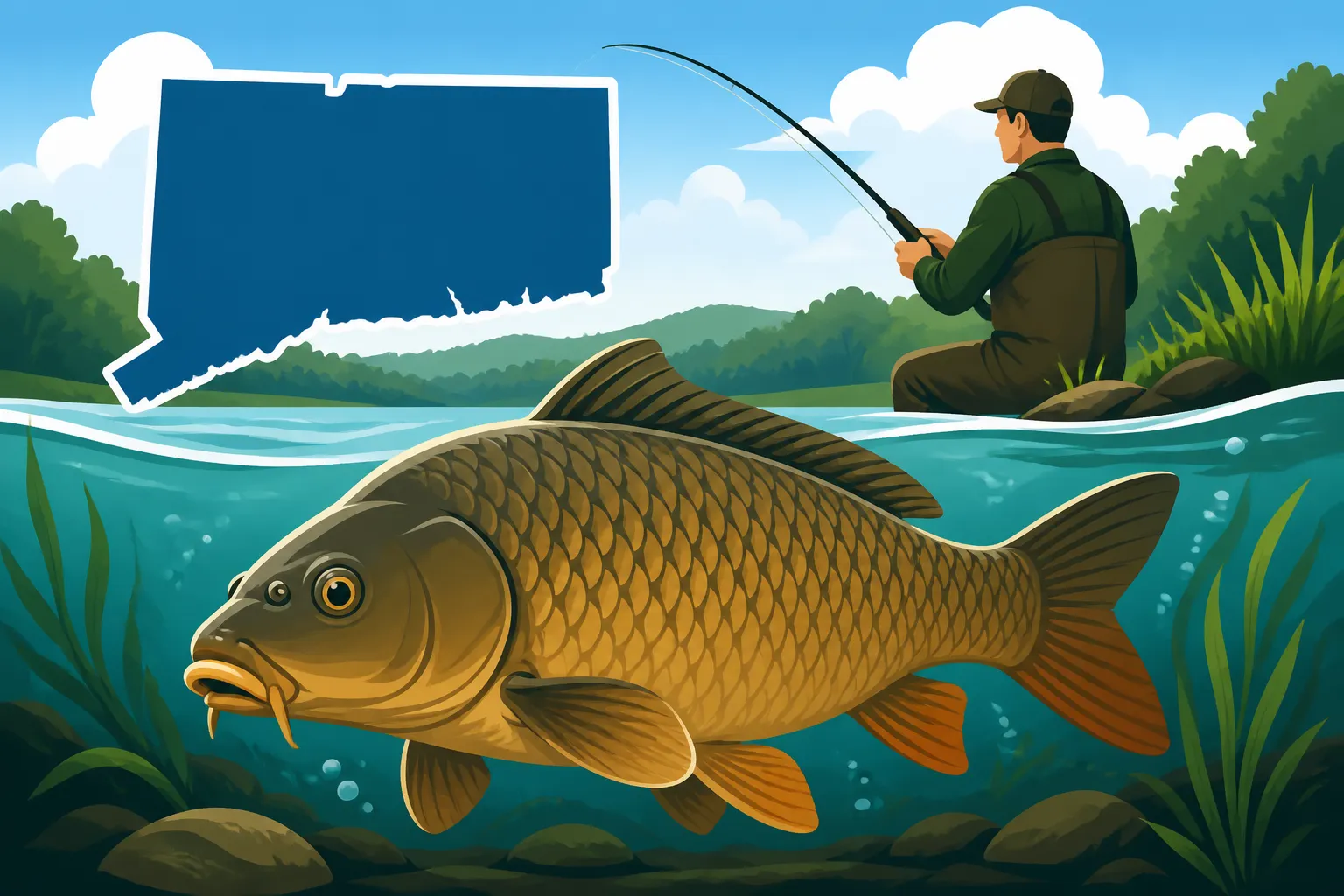
Common carp are pretty unmistakable once you know what to look for. They have a deep, robust body that is often golden-brown or olive on the back, fading to a yellowish or white belly. Their scales are large and distinct, almost armor-like, especially compared to some other freshwater species. The most tell-tale feature, however, is their mouth. It's protrusible, meaning it can extend forward, allowing them to suck up food from the bottom. Crucially, they possess two pairs of prominent barbels (whisker-like sensory organs) on either side of their upper jaw. These barbels are key for distinguishing them from other similar-looking species like buffalo or even some large goldfish. Buffalo species, for instance, lack these barbels entirely, and while large goldfish might have a similar body shape, they typically don't have barbels or have very small ones. Young carp can sometimes be confused with juvenile koi, but wild carp usually have a more subdued coloration and a less ornamental body shape. When you land one, take a moment to admire its raw power and unique appearance.
A quick visual reference can help:
| Feature | Common Carp | Buffalo Fish (e.g., Bigmouth) | Large Goldfish |
|---|---|---|---|
| Body Shape | Deep, stout, torpedo-like | Deep, but more elongated, less stout | Variable, often compact, rounder |
| Scales | Large, distinct, often irregular pattern | Large, but smoother, more uniform | Large, but can be iridescent/metallic |
| Mouth | Protrusible, downturned, sucker-like | Terminal (at end of snout), usually smaller | Small, terminal |
| Barbels | Two pairs (4 total), prominent | None | Absent or very small, often single pair |
| Dorsal Fin | Long, single, with serrated spine on leading edge | Long, single, no serrated spine | Long, single, often flowing in ornamental types |
| Coloration | Golden-bronze, olive, brownish-yellow | Silvery-bronze, darker on back | Orange, red, gold, white, black (highly varied) |
What Common Carp Eat in Connecticut
Carp are true omnivores and opportunistic feeders, which is part of their success story in diverse environments like Best Fishing Lakes in Connecticut and Best Fishing Rivers in Connecticut. Their diet is incredibly varied, reflecting what's available in their specific habitat. On the bottom, they'll vacuum up insect larvae, worms, small crustaceans like crayfish, snails, and mussels. They also readily consume plant matter, including aquatic weeds, seeds, and algae. If there's detritus – decaying organic material – they'll filter that too. This broad diet means they can thrive in nutrient-rich ponds, slow-moving rivers, and even the calmer sections of larger lakes. Because they're so adaptable, they also quickly learn to associate certain smells and tastes with food sources introduced by humans. This makes them highly susceptible to baits like corn, dough balls, and specialized boilies, which mimic natural food sources or provide a concentrated attractant. Understanding their omnivorous nature is key to selecting the right bait.
Where to Find Carp in Connecticut Waters
Common carp are ubiquitous in Connecticut's freshwater systems. You'll find them in almost any body of water that isn't a fast-flowing, pristine trout stream. They prefer warmer, slower-moving or stagnant waters with soft, muddy bottoms where they can easily root for food. Think large lakes, reservoirs, ponds, and the broader, calmer sections of rivers like the Connecticut River. Look for them in shallow bays, coves, and areas with dense aquatic vegetation, especially during warmer months. They'll also patrol drop-offs, submerged humps, and the edges of channels.
During different seasons, their preferred locations can shift. In spring, they often move into very shallow, sun-warmed areas for spawning and intense feeding. In summer, they might retreat to slightly deeper, cooler water during the hottest parts of the day, but will still visit shallows during dawn and dusk. In fall, they'll feed heavily to bulk up for winter, often in areas where food sources are plentiful before temperatures drop. Even in winter, while less active, they can be found congregated in deeper holes or depressions in lakes and rivers, offering ice fishing opportunities in some areas. Patience and observation are key; look for signs like muddy water, subtle rises, or even rolling fish near the surface.
Prime Connecticut Waters for Common Carp
Connecticut boasts a wealth of waters where common carp thrive, offering fantastic opportunities for anglers willing to seek them out. While they might not be the primary target species for everyone, their widespread presence means you're rarely far from a good carp spot. For more general information on fishing various locations, check out Best Time of Year to Fish in Connecticut.
Lakes and Ponds Known for Large Carp
Many of Connecticut's larger lakes and public ponds hold robust populations of common carp, some growing to impressive sizes. These stillwater environments provide the perfect habitat: ample food, soft bottoms for foraging, and plenty of space to grow. Reservoirs, state park ponds, and town lakes with a history of nutrient input often have thriving carp populations. Anglers consistently report good carp fishing in lakes like Bantam Lake, though often overlooked for its pike and bass, or in the larger impoundments within state parks that aren't managed primarily for trout. These waters often have extensive shallow flats that warm up quickly in spring, drawing in hungry carp. Shoreline access is usually good, making them ideal for bank-fishing setups targeting these bottom-dwellers, and you can find many tips in Bank Fishing Techniques for Connecticut Lakes. Patience is essential, but the rewards—a hard-fighting carp that could easily exceed 15 or 20 pounds—are well worth it.
River Systems with Thriving Carp Populations
Beyond lakes and ponds, Connecticut's larger river systems are also prime carp territory. The sheer size and diversity of habitat in rivers like the Connecticut River make them ideal for carp. Look for slower-moving sections, oxbows, backwaters, and deep holes where the current is minimal and the bottom is rich with sediment and organic matter. Tributaries that feed into larger rivers can also concentrate carp, especially during spawning season or when foraging for specific food items. The Connecticut River, for instance, has areas with vast, silty flats perfect for carp. These river systems often hold some of the largest carp in the state, as the constant flow of nutrients provides an endless food supply, allowing fish to grow to truly exceptional sizes. Don't be surprised to encounter carp pushing 30 pounds or more in these environments. Exploring different sections of these major rivers can unlock incredible carp fishing adventures.
Seasonal Movements and Best Times to Target Carp
Carp, like most fish, exhibit seasonal movements tied to water temperature, spawning cycles, and food availability. Understanding these patterns can significantly increase your success rate.
-
Spring (Pre-spawn & Spawning): As water temperatures rise into the 50s and 60s Fahrenheit, carp become incredibly active, feeding heavily in preparation for spawning. They move into shallower bays, coves, and river backwaters, often in just a few feet of water. This is an excellent time to target them, as they are actively foraging. Spawning itself, usually when water temperatures hit the mid-60s to low 70s, sees them splashing and thrashing in very shallow, vegetated areas. While they might be less interested in feeding during the actual spawn, the pre-spawn bite can be fantastic.
-
Summer (Active Feeding): During the peak of summer, carp remain highly active feeders. They may move into deeper water during the hottest parts of the day to find cooler temperatures, but they will still visit shallower areas during dawn, dusk, and even throughout the night. Look for them around weed lines, submerged structures, and deeper channels. Early morning and late evening can be particularly productive as they cruise for food.
-
Fall (Pre-winter Feeding): As temperatures begin to drop in autumn, carp engage in another period of intense feeding to build up fat reserves for the colder months. They will often congregate in specific areas where food sources are abundant, such as around fruit trees dropping into the water, or areas with dense concentrations of aquatic insects. This can be another fantastic time for targeting larger fish before they become more lethargic.
-
Winter (Dormancy): In winter, carp's metabolism slows significantly. They become less active and often gather in deeper, warmer pockets of water in lakes and rivers. While challenging, they can still be caught through the ice in some areas, or by deep-water bait fishing in open water, but success rates are generally lower than in other seasons.
Techniques and Tackle for Catching Connecticut Carp
Carp fishing has a dedicated following, and for good reason. It requires patience, keen observation, and often, specialized tackle. You don't need to break the bank, but having the right tools can make all the difference in landing these powerful fish. While many anglers focus on specific trout regulations, it's always wise to be aware of Connecticut Fishing Regulations Explained for all species you might encounter.
Essential Gear for Carp Angling
When it comes to carp fishing, you need gear that can handle a strong, sustained fight. Forget ultralight setups; you'll want something robust.
- Rods: A medium-heavy to heavy spinning or baitcasting rod, typically 7 to 10 feet long, is ideal. The longer length helps with casting heavier baits and rigs, and provides better leverage when battling a powerful fish. Many specialized "carp rods" are available, designed for sensitivity and backbone.
- Reels: Pair your rod with a sturdy spinning reel (size 4000-6000) or a baitcasting reel capable of holding a good amount of line. Reels with a "baitrunner" or "free spool" feature are particularly popular for carp, allowing a fish to take line without feeling resistance before you engage the drag.
- Line: Monofilament line in the 12-20 lb test range is a good all-around choice, offering stretch and abrasion resistance. Braided line (20-40 lb test) can also be used, especially in heavy cover, as it offers superior strength and sensitivity, though it requires a fluorocarbon or mono leader for stealth.
- Banksticks/Rod Pods: Since carp fishing often involves waiting, a sturdy rod holder is essential. Banksticks (single rods pushed into the ground) or a full rod pod (holding multiple rods) will keep your rods secure and allow you to relax between bites.
- Landing Net: A large, soft-mesh landing net is crucial for safely landing big carp. Many nets specifically designed for carp are deeper and wider to accommodate the fish's broad body. You can find a wide selection of these specialized items, from rods and reels to landing nets and baitrunner reels, readily available on Amazon, often with detailed reviews from other carp anglers.
Best Baits and Rigs for Common Carp
Carp are attracted to a variety of baits, but some are consistently more effective than others due to their smell, taste, and texture.
- Sweet Corn: This is perhaps the most classic and effective carp bait. Canned whole kernel corn is cheap, readily available, and carp absolutely love it. Use multiple kernels on a hook or thread several onto a hair rig.
- Dough Balls: A simple mixture of flour, water, and sometimes cornmeal, bread, or even flavored extracts, can make a fantastic bait. The consistency is key—it needs to be firm enough to stay on the hook during the cast but soft enough for the carp to easily ingest.
- Boilies: These are perhaps the most popular specialized carp bait, especially for serious European-style carp anglers. Boilies are hard, round baits made from a mixture of fishmeal, milk proteins, bird food, and attractants, then boiled to preserve them. They come in countless flavors and sizes and are designed to be used with a hair rig. Many unique flavors and varieties of boilies can be purchased through Amazon, allowing you to experiment.
- Method Feeders and Hair Rigs: These are advanced rigs highly effective for carp. A method feeder is a small, weighted feeder that holds a compressed ball of groundbait (chum) and releases it slowly, creating an attractive scent cloud around your hook bait. A hair rig is a clever setup where the bait is tied to a "hair" (a short length of line) that hangs off the hook, rather than being threaded onto the hook itself. This allows the hook to penetrate cleanly when the carp sucks in the bait, improving hook-up rates.
- Other Baits: Worms, bread, small crayfish, and even hot dogs can also work. The key is to experiment and see what the carp are feeding on in your specific spot.
Bank Fishing vs. Boat Fishing for Carp
Both bank fishing and boat fishing can be effective for carp, each with its own advantages and challenges.
- Bank Fishing: This is the most common and accessible way to target carp in Connecticut. Many lakes, ponds, and river sections offer excellent shore access. The advantages include ease of setup, no boat required, and the ability to carry a good amount of gear (multiple rods, bait buckets, chairs, etc.). You can often find carp cruising near the shore, especially in shallow, weedy areas. The challenge can be limited casting distance if the fish are far out, and potentially dealing with heavy bankside vegetation. Pre-baiting a spot from shore over several days can be incredibly effective, drawing carp into your fishing zone. This approach is similar to many Bank Fishing Techniques for Connecticut Lakes that target other species.
- Boat Fishing: Fishing from a boat, kayak, or canoe offers greater mobility and access to areas inaccessible from shore. You can reach submerged structures, deeper channels, and secluded coves where large carp might be holding. This is particularly advantageous on larger bodies of water like the Connecticut River or expansive lakes. Challenges include the need for a boat and associated gear, and potentially having to anchor precisely over a desired spot. Kayaks offer a stealthy approach, allowing you to paddle quietly into productive areas without spooking fish. Whether from shore or boat, remember that quietness and minimal disturbance are often key to success when targeting wary carp.
The Sport of Carp Fishing: Catch and Release and Beyond
Carp fishing is about more than just the catch; it's about the experience, the challenge, and responsible angling. This often-misunderstood species provides incredible sport, and treating them with respect is paramount. For information on other fish species, including Invasive Fish Species in Connecticut Waters, you can explore more resources.
Practicing Responsible Catch and Release
Given the size and fighting power of common carp, responsible catch and release practices are essential for their well-being. These are robust fish, but proper handling ensures they swim away healthy to fight another day.
- Large Landing Net: As mentioned earlier, a large, soft-mesh landing net is crucial. It supports the fish's entire body, preventing injury to fins, scales, and internal organs as you bring it to shore or into the boat.
- Unhooking Mat: For larger carp, an unhooking mat is highly recommended. This padded mat provides a safe, soft surface to place the fish while you remove the hook, preventing damage to its slime coat and belly, especially on hard, rocky, or abrasive ground. Many different styles of unhooking mats are available on Amazon, ranging from simple foldable mats to more elaborate cradles.
- Barbless Hooks: Consider using barbless hooks, or crimping down the barb on your barbed hooks. This makes hook removal much easier and quicker, reducing stress on the fish. Carp have tough mouths, so hook retention is generally not an issue with barbless hooks.
- Minimize Time Out of Water: Keep the fish out of the water for the absolute minimum time necessary, especially if you plan to take a photo. If possible, keep the fish partially submerged while unhooking or holding it for a quick picture.
- Support the Fish's Weight: When lifting a large carp, always support its body horizontally, especially its belly, to avoid internal organ damage. Never hold a large carp vertically by the mouth or gills.
- Gentle Release: Release the fish gently back into the water, holding it upright until it regains its strength and swims away on its own.
The Culinary Side of Carp
While catch and release is common practice for sport carp anglers, it's also worth noting that common carp are indeed edible, and in many parts of the world, they are a prized food fish. The "Are Carp Good to Eat from Connecticut Waters?" question often brings up mixed opinions. In North America, carp developed a reputation as a muddy-tasting fish, particularly when caught from stagnant or polluted waters. However, when harvested from clean, flowing water or prepared correctly, they can be quite delicious. Their flesh is firm and flaky, though it can be bony.
Traditional preparation methods often involve smoking, baking, or frying, with techniques used to mitigate any "muddy" flavor, such as soaking the fillets in milk or saltwater. In European and Asian cuisines, carp is a staple, often celebrated during holidays and special occasions. If you're curious, try harvesting a smaller carp (under 5-7 pounds) from a clean river or lake and experimenting with different recipes. Just be sure to check any local fish consumption advisories for the specific body of water you're fishing.
Getting Involved: Carp Fishing Communities in Connecticut
Carp fishing, while often a solitary pursuit, also fosters a strong, passionate community. In Connecticut, and across the globe, dedicated carp anglers share knowledge, tips, and experiences.
- Online Forums and Social Media Groups: Many online forums and Facebook groups are dedicated to carp fishing in North America and specifically in New England. These platforms are fantastic resources for asking questions, sharing catches, learning about new techniques, and discovering local hot spots. Searching for "Connecticut carp fishing" or "New England carp angling" will likely connect you with these communities.
- Local Tackle Shops: Your local bait and tackle shop can be an invaluable source of information. The staff often know which local waters are producing good carp and can offer advice on specific baits and rigs that are working. They might also be able to connect you with other local carp enthusiasts.
- Carp Fishing Tournaments and Events: While less common than bass or trout tournaments, dedicated carp fishing events and even smaller, friendly competitions do exist. These are great opportunities to meet like-minded anglers, learn from experienced practitioners, and enjoy the camaraderie of the sport. Keep an eye out for local club announcements or check national carp angling organizations for events near Connecticut.
Engaging with the carp fishing community can deepen your appreciation for this often-overlooked species and unlock new strategies and spots. It’s a niche within fishing that provides a unique blend of challenge, relaxation, and connection to nature.
Disclaimer
This article is for general informational purposes only and does not constitute professional advice. Laws, prices and regulations vary by location and change over time. Consult a qualified professional for guidance on your specific situation.