Sea Lamprey in Connecticut Rivers
For many anglers in Connecticut, the sight of a sea lamprey can be a little unsettling, sparking worries about parasites and ecological damage. It’s understandable to feel a pang of concern when you see a creature that looks like something out of a sci-fi movie, especially one known for attaching to fish. But here in our beautiful Connecticut rivers, the sea lamprey tells a much different and far more nuanced story than the one often heard about them in other parts of the country. This guide aims to clear up common misconceptions and shed light on the truly unique and often beneficial role these fascinating, ancient fish play in our local waterways.
Understanding the Sea Lamprey: Not Your Average Fish Tale
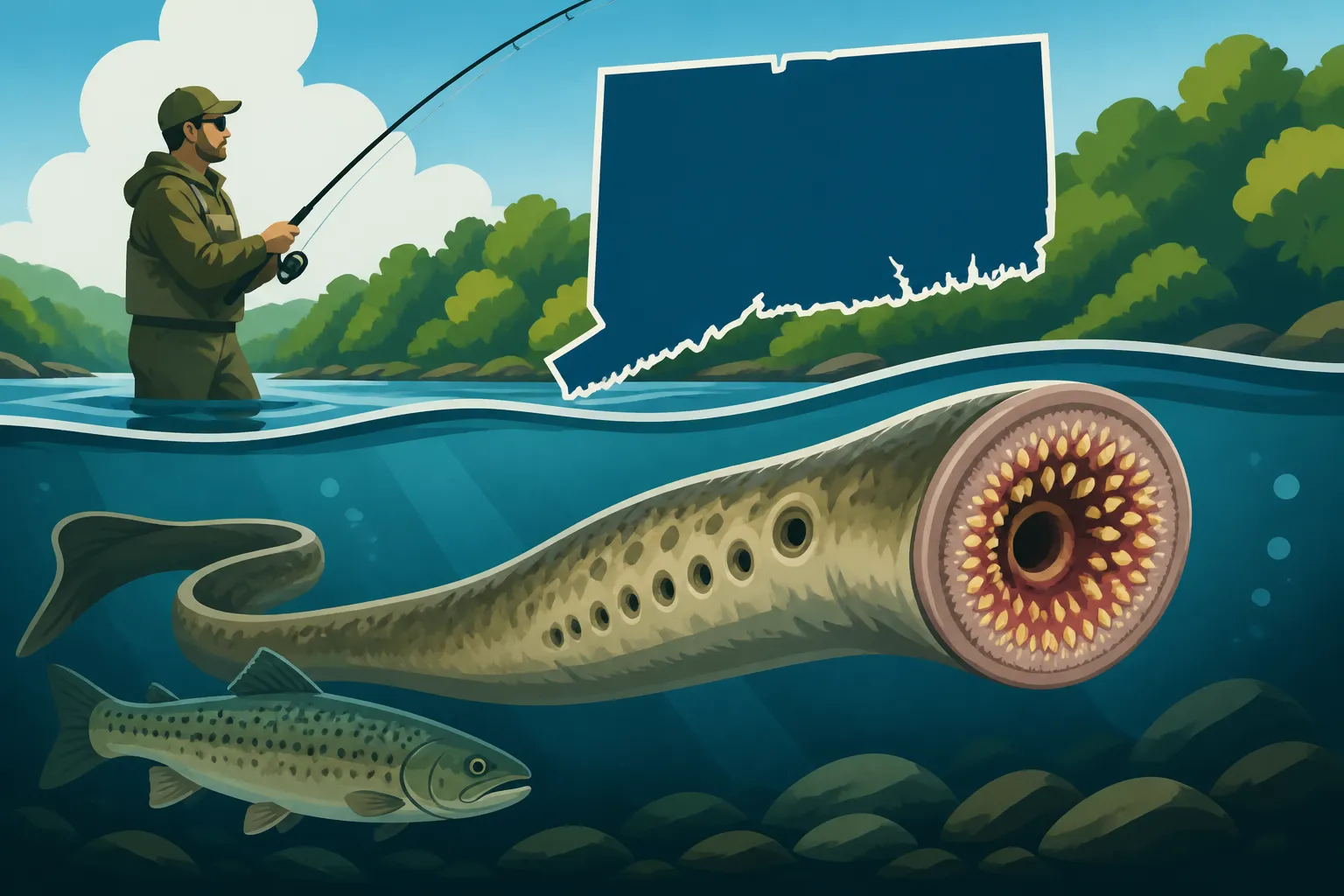
The sea lamprey, with its distinct eel-like body and circular, sucker-like mouth, has garnered a somewhat fearsome reputation. However, much of this reputation is based on its invasive behavior in the Great Lakes, where it is not native. In Connecticut, and indeed along much of the Atlantic coast, the sea lamprey is a native species, and its presence is a natural part of our riverine and marine ecosystems. Understanding this fundamental difference is key to appreciating their role here at home.
What Exactly is a Sea Lamprey?
Let's dive into the fascinating biology of this ancient creature. The sea lamprey (scientific name Petromyzon marinus) is often mistakenly called an "eel," but it's not an eel at all. It's actually a jawless fish, belonging to a group called Agnatha, which means it’s one of the most primitive vertebrates on Earth, predating most other fish species. Its body is smooth and scaleless, typically dark brown or olive green on the back, fading to lighter shades on the belly, and can grow quite large, sometimes reaching lengths of 2 to 3 feet. Instead of jaws, it possesses a round, tooth-lined oral disc which it uses to attach to other fish.
While this parasitic feeding habit might sound alarming, in its native environment, the sea lamprey evolved alongside its hosts. Many marine fish species, like striped bass and even some sharks, have coexisted with sea lampreys for millennia, developing natural resistances or behaviors that allow them to survive a lamprey attachment. Think of it like a natural predator-prey relationship; it's part of the wild food web. The problematic reputation usually comes from regions where lampreys were introduced and found naive fish populations, but that's a different scenario entirely from what we see in our Best Fishing Rivers in Connecticut.
The Life Cycle of a River Dweller
The life cycle of a sea lamprey is truly remarkable and involves significant transformations, much like an insect undergoing metamorphosis. It starts its life in freshwater, migrates to saltwater to mature, and then returns to freshwater to spawn.
Their journey begins with eggs laid in gravel nests, or "redds," in the upper reaches of clean, flowing rivers. These eggs hatch into tiny, worm-like larvae known as ammocoetes. These filter-feeding larvae spend several years, often five to seven, burrowed in the sandy or silty bottoms of calm river sections, where they feed on microscopic organisms. They are completely harmless at this stage, playing an ecological role in cleaning the water and serving as a food source for other bottom-dwelling creatures. During this phase, you’d never even know they were there unless you specifically sought them out with specialized sampling gear.
After several years as ammocoetes, they undergo a dramatic metamorphosis, transforming into their parasitic adult form. Their eyes develop, their mouth transforms into the characteristic oral disc, and they develop internal organs for saltwater life. Once transformed, these juvenile lampreys migrate downstream to the ocean, typically Long Island Sound, where they spend a year or two feeding on various marine fish. It's during this oceanic phase that they grow to their full size and develop their strength. Finally, driven by an instinct older than memory, they return to freshwater rivers to spawn, create new redds, and complete their life cycle, after which they die, returning valuable nutrients to the ecosystem.
Here’s a quick overview of their life stages:
| Life Stage | Location | Duration | Primary Activity | Ecological Role |
|---|---|---|---|---|
| Egg | Freshwater | Days to weeks | Development | Source of energy for aquatic invertebrates |
| Ammocoete (Larva) | Freshwater | 5-7 years | Filter feeding, burrowing | Sediment cleaning, food for other fish/invertebrates |
| Metamorphosis | Freshwater | Weeks to months | Transformation | Transition phase |
| Adult (Parasitic) | Saltwater | 1-2 years | Feeding on marine fish | Predator, part of marine food web |
| Adult (Spawning) | Freshwater | Weeks | Reproduction, nest building | Nutrient cycling post-spawn, support river health |
Sea Lampreys in Connecticut Rivers: A Native Presence
It's crucial to differentiate the sea lamprey's role in Connecticut from its well-publicized invasive status in the Great Lakes. The story of sea lampreys in our local waters is one of historical presence and ecological integration, not a foreign invasion. They are an anadromous species, meaning they live in the ocean but migrate to freshwater to spawn, much like salmon, shad, and even American Eel in Connecticut Rivers.
Distinguishing Connecticut's Native Sea Lampreys
Connecticut’s sea lamprey populations are part of a naturally occurring, established ecosystem. For thousands of years, these lampreys have been swimming up rivers like the Connecticut River, the Housatonic, and others to spawn. This means that the fish species in Long Island Sound and our rivers have co-evolved with sea lampreys. Unlike in the Great Lakes, where the introduction of sea lampreys through man-made canals devastated fish populations that had no natural defenses, our native fish are equipped to handle lamprey attachments.
You might occasionally see a striped bass or a large bluefish with a healed lamprey scar, which is simply evidence of a successful interaction in their natural environment. It's a testament to the resilience of our native fish species and the balanced predator-prey dynamics that have been in place for centuries. There's no widespread concern from the Connecticut Department of Energy and Environmental Protection (DEEP) about sea lampreys decimating fish stocks here because they are simply doing what they have always done.
Essential Role in the Ecosystem
Despite their somewhat intimidating appearance, sea lampreys play several vital roles in the health of Connecticut's river and coastal ecosystems. As anadromous fish, their migrations are critical for moving nutrients between marine and freshwater environments.
When adult lampreys migrate upstream to spawn and subsequently die, their decaying bodies release valuable marine-derived nutrients into the freshwater system. This influx of nutrients can benefit aquatic invertebrates and other fish species, essentially fertilizing the river. During their larval (ammocoete) stage, they act as filter feeders, helping to improve water quality by consuming detritus and microorganisms, much like freshwater mussels. They are also a food source for various predators, including fish-eating birds, otters, and even larger fish, particularly during their vulnerable larval and downstream migration phases. So, while they are predators themselves during their marine life, they also contribute to the broader food web. Their very presence indicates a healthy, connected river system capable of supporting migratory species. This is often why efforts to remove dams are celebrated; they don't just help salmon or shad, but all migratory fish like lamprey as well, supporting the overall biodiversity. You can learn more about how different fish utilize our rivers in guides like Connecticut River Shad Fishing and Connecticut River Striped Bass Fishing.
The Migratory Journey: Anadromy and Connecticut's Rivers
The migratory life of a sea lamprey is one of nature's great spectacles, though often unseen by the casual observer. Their incredible journey from the deep ocean back to the headwaters of our rivers is a testament to their powerful instincts and adaptability. It's a cycle that underpins the health of many of our larger river systems.
Spawning Runs and River Systems
In Connecticut, sea lampreys begin their upstream migration in late spring to early summer, typically peaking in May and June. During this period, you might catch a glimpse of them as they navigate fish ladders or leap up small rapids in pursuit of their spawning grounds. They are incredibly strong swimmers, capable of surmounting significant obstacles. Major river systems like the Connecticut River, the Housatonic River, and even smaller coastal rivers with good flow and habitat, become highways for these migrating adults.
These spawning runs are a critical event. They're not unlike the more famous salmon or shad runs, where immense numbers of fish travel upstream to reproduce. However, lampreys often go unnoticed because they aren't typically targeted by anglers and their movements can be more subtle. During this time, they cease feeding and rely entirely on stored energy reserves to complete their arduous journey, find a mate, build a nest, and deposit their eggs. It's a one-way trip, culminating in their death, but ensuring the survival of the next generation. This timing often overlaps with various Connecticut Fishing Seasons by Month, so anglers might observe them firsthand.
Habitat Requirements for Spawning
Successful sea lamprey reproduction depends on specific habitat conditions within our rivers. They seek out areas with clean, well-oxygenated flowing water, typically gravelly bottoms in riffles or runs. Here, the males and females work together to construct shallow, circular depressions in the riverbed, known as redds, by moving stones with their oral discs. This nesting behavior exposes clean gravel, which is essential for the eggs to settle and receive adequate oxygen.
Once the eggs are laid and fertilized, they adhere to the gravel and are covered by the adults, offering some protection. The newly hatched ammocoetes then drift downstream to calmer, softer-bottomed areas, usually where there's a mix of sand and silt. These areas, often in slow-moving backwaters or eddies, become their homes for the next several years. The availability of these distinct habitats – upstream gravel for spawning and downstream silt for larval rearing – is crucial for a healthy sea lamprey population. Rivers that have undergone habitat restoration, such as dam removals or efforts to improve water quality, often see a resurgence in migratory fish species, including the often-overlooked sea lamprey. This delicate balance of habitat is a key aspect of managing our aquatic resources, as outlined in publications like the Connecticut Fishing Regulations Explained.
Impact and Management: Coexistence in Connecticut
Understanding the sea lamprey's native status helps us frame its impact and the management approaches in Connecticut. While concerns are valid, they are often rooted in narratives from non-native contexts. Here, our approach is about understanding and coexisting with a natural component of our environment.
Perceived Threats vs. Ecological Reality
Let's address the elephant in the room: the common perception of sea lampreys as a destructive invasive species. This perception is largely driven by their catastrophic impact on fish populations in the Great Lakes, where they were introduced via shipping canals in the 19th century. In that foreign environment, species like lake trout, which had no natural defenses against the lamprey's parasitic feeding, suffered immense losses. This led to extensive control programs using lampricides.
However, in Connecticut's marine and riverine systems, the ecological reality is vastly different. Here, sea lampreys are native. The fish they prey upon in Long Island Sound – species like striped bass, bluefish, and even various groundfish – have evolved alongside them for thousands of years. They often survive lamprey attacks, evidenced by the healed scars you might see on a large striper. The population dynamics are naturally balanced; lampreys don't decimate host populations because doing so would ultimately lead to their own decline. Instead, they are part of a long-standing predator-prey relationship that contributes to natural selection, potentially even strengthening the gene pools of host species over millennia. The DEEP does not consider sea lampreys in Connecticut to be an invasive threat, but rather a species that plays a natural, albeit sometimes misunderstood, role.
Conservation and Monitoring Efforts
Given their native status, the management of sea lampreys in Connecticut is not about eradication, but about conservation, monitoring, and understanding their role in the broader ecosystem. The Connecticut DEEP monitors lamprey populations primarily as an indicator of river health and the success of fish passage projects. For instance, efforts to remove old dams or install modern fish ladders on rivers like the Connecticut River or the Eightmile River directly benefit sea lampreys by opening up more spawning habitat. These efforts are often aimed at helping other anadromous fish like shad, alewives, and Atlantic salmon, but lampreys reap the rewards too, strengthening the entire migratory fish community.
These fish passage improvements are crucial. When historical dams blocked their path, lamprey populations, along with other migratory species, suffered. Restoring access allows them to reach pristine upstream spawning grounds, which is vital for their reproduction. Monitoring involves counting lampreys at fishways and sometimes conducting larval surveys to assess reproductive success. This data helps biologists understand the overall health of our river systems and the connectivity between freshwater and saltwater environments. This kind of work is integral to the comprehensive Connecticut Fishing Regulations Explained and broader conservation strategies.
Angler Interactions and What to Do
As an angler in Connecticut, you might encounter sea lampreys, particularly during their spring and early summer spawning runs in rivers. You might see them attached to a large fish you've caught in Long Island Sound, or observe them attempting to climb fish ladders or rapids in freshwater rivers.
If you catch a fish with a lamprey attached, the best course of action is generally to leave the lamprey alone. It will usually detach on its own if the host fish is removed from the water for a brief period. Do not attempt to forcibly remove a lamprey with tools, as this can cause more harm to the host fish than the lamprey itself. If you manage to land a lamprey on a hook (which is rare, as they don't typically bite bait), handle it carefully. They can be slippery, and their mouth parts are surprisingly strong. Most anglers simply release them unharmed. Some people, curious about aquatic life, might even pick up a book on fish identification from a retailer like Amazon to learn more about these fascinating creatures. Remember, they are a native species here, and observing them is part of appreciating the natural wonders of our state.
Frequently Asked Questions about Sea Lampreys in Connecticut
It's natural to have questions about a creature as unique and sometimes misunderstood as the sea lamprey. Let's tackle some of the most common inquiries I hear from fellow anglers and outdoor enthusiasts in Connecticut.
Are Sea Lampreys Bad for Fish in Connecticut?
This is perhaps the most common question, and it's a really important one to clarify. In Connecticut, no, sea lampreys are generally not bad for fish populations in the damaging way they are perceived in the Great Lakes. The key difference, as we've discussed, is their native status along the Atlantic coast. Our marine and anadromous fish species have evolved with sea lampreys for millennia.
Think of it like deer and coyotes in a forest. Coyotes are predators, and they take deer, but they don't wipe out the deer population; they're part of a natural balance. Similarly, sea lampreys are natural predators in our marine ecosystem. They feed on various marine fish, and some fish will succumb to attacks, but the overall populations remain healthy. The natural predator-prey relationship helps to cull weaker or sick individuals, and the surviving fish often develop immunity or avoidance behaviors. So, while an individual fish might suffer from a lamprey attachment, the species as a whole in Connecticut is robust enough to handle this natural predation. You won't find the Connecticut DEEP implementing control measures for sea lampreys here because they are not considered a detrimental force to the health of our fish stocks. For comparison, consider how specific regulations are put in place for managing game fish like Connecticut Striped Bass Slot Limit and Season when populations need protection.
Can You Eat Sea Lamprey?
This question often comes with a bit of a disgusted expression, but it's a valid one! Believe it or not, yes, sea lamprey is eaten in certain cultures, particularly in parts of Europe like Portugal, Spain, and Finland. They are considered a delicacy by some, prepared in various traditional ways, often roasted or stewed. In the past, they were even a food source in parts of North America.
However, in Connecticut, harvesting sea lampreys for consumption is not a common practice, nor is it explicitly regulated by general fishing licenses. There isn't an established fishery for them, and most anglers would likely find them unappetizing due to their appearance and high fat content. If you were to consider it, you would need to be absolutely sure about current Connecticut Fishing Regulations Explained regarding their harvest, as regulations can change. Also, like any wild-caught fish, you'd want to be mindful of any local consumption advisories for the waters you're fishing. Generally, for most people in Connecticut, the answer is "you could, but you probably won't find yourself wanting to, or needing to, and there's no cultural tradition for it here."
How Can I Help or Report Sightings?
For anglers and concerned citizens who want to contribute to our understanding of Connecticut's aquatic ecosystems, reporting sea lamprey sightings can be valuable, especially if you notice anything unusual. While common sightings of lampreys in their native rivers during spawning runs are expected and normal, any observations that seem out of the ordinary can be useful to local fisheries biologists.
If you see sea lampreys in an area where they historically haven't been able to access (e.g., above a dam that has recently had fish passage restored, which is a positive sign!), or if you notice a significant number of fish in distress due to lamprey attachments (which would be very unusual for native populations), you can contact the Connecticut DEEP Fisheries Division. They appreciate reports from the public as it helps them monitor our waterways. You can find contact information for relevant departments on the DEEP website. Additionally, supporting organizations that advocate for river restoration and dam removal helps all migratory fish species, including the sea lamprey, by ensuring they have access to healthy spawning and rearing habitats. Being an informed and engaged angler is one of the best ways to help our environment, and you can stay informed by regularly checking resources like Reading the Connecticut Fishing Guide. Sometimes, even ordering a good field guide to fish of the Northeast from Amazon can help you identify species and notice what's normal or abnormal in our local waters.
Disclaimer
This article is for general informational purposes only and does not constitute professional advice. Laws, prices and regulations vary by location and change over time. Consult a qualified professional for guidance on your specific situation.